Spring reading 2026

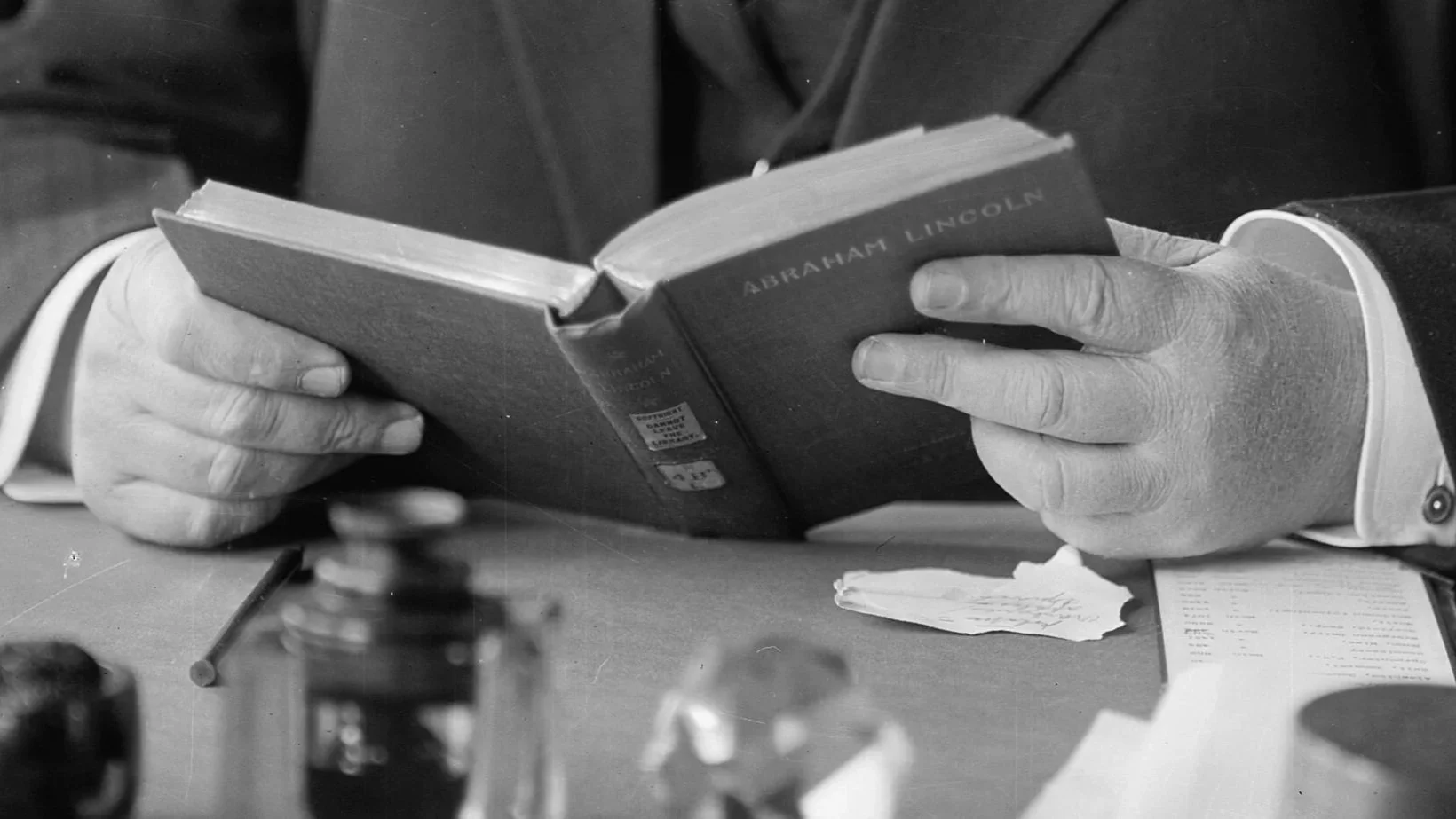
William Howard Taft reading at his desk c. 1904. The label pasted to the spine reads: “Copyright. Cannot Leave the Library.”

As personally difficult as this spring has been, with thirty-three books down—and almost perfectly divided between fiction and non-fiction—this turned out to be a stellar season for reading. Not only did I bulk up my non-fiction reading after a couple years of fiction-heavy lists, I also read more sci-fi and fantasy than usual. Almost all of it, of whatever genre, was good. I had to make myself leave things out of the list below, the ruthlessly selected best of the season.

The way I divide the year for these posts is always a bit arbitrary, but for the purposes of this one, “spring” is everything from New Year’s Day to the end of classes last week. As usual I present these in no particular order, and with my one audiobook “read” marked with an asterisk.

That said, I hope y’all enjoy and can find something good to read below:

Favorite non-fiction

On Conan Doyle, by Michael Dirda—A succinct and insightful overview of Conan Doyle’s life and work, with special attention to the Holmes stories as well as his more often overlooked work: Professor Challenger in The Lost World, the Hundred Years’ War novels The White Company and Sir Nigel, and the Napoleonic adventures of Brigadier Gerard. I was especially interested to learn more about Conan Doyle himself: his personal life and character, his intelligence and work ethic, and even his much-derided interest in spiritualism and fairies.

The First King of England: Æthelstan and the Birth of a Kingdom, by David Woodman—A solid new biography of Alfred the Great’s grandson, the first king of a unified kingdom of England, that gives a lot of attention to the complicated political situation of the time and just how much we can and can’t know about what was going on. Occsionally this means extended parsing of primary sources rather than narrative, which may not appeal to the general reader, but that comes with the territory. An Æthelstan biography is also going to be a historiographical paper to some extent and I think Woodman balances it all well. I used The First King of England as an example of the judicious use of incomplete sources for historical inferences here.

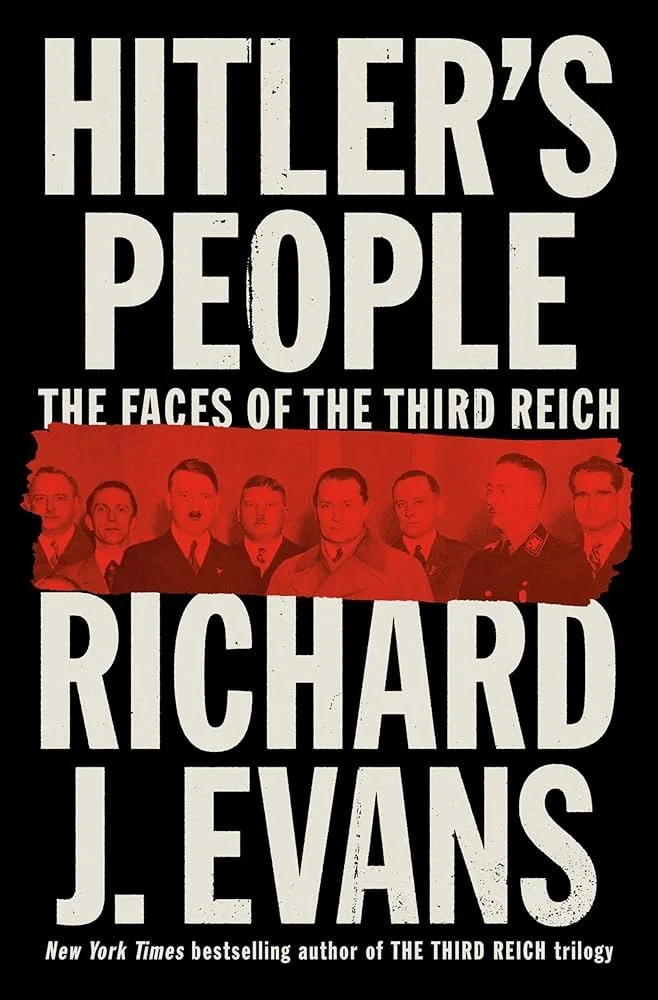
Hitler’s People: The Faces of the Third Reich, by Richard J Evans—This is an insightful series of character sketches of people from all levels of the Reich, starting with a 100-page biography of Hitler himself (which I’d love to see the publisher break out as its own little paperback, an ideal classroom text) and the Nazi Party’s elite (Göring, Goebbels, Himmler, Speer, and the like) down through the functionaries and ideologues and enablers (e.g. Heydrich, Eichmann, Hess, Hans Frank, Franz von Papen) to the ordinary people doing the work of the Reich: the generals, the gunmen who traveled Eastern Europe massacring Jews, the camp guards, the propagandists, and even the ordinary citizen. Evans has chosen good subjects and, taken together, these sketches give the reader a top-to-bottom feel for the culture of the Reich and how it worked—especially with regard to dimensions of the regime that don’t get as much attention, like labor organization or even motherhood—as well as the sheer variety of people it involved. Not all of them were motivated by the same things and not all of them explained or justified their participation the same way.

The Desecration of Man, by Carl Trueman—A more narrowly focused “how we got here” account from Trueman, this time looking specifically at how a changing understanding of anthropology—how we answer “What is man?”—was meant to liberate but has instead undermined and destroyed. Full review on the blog here.

The Nine Lives of Christopher Columbus, by Matthew Restall—An interesting multi-layer biography of Columbus, one that starts with the man (about whom, contrary to a widespread myth, we can know quite a lot), his goals and pretensions (he was a single-mindedly ambitious climber), and what he actually accomplished and follows his various “lives” through the five hundred years since: as a symbol of Manifest Destiny, an icon of Italian-American patriotism, a would-be Catholic saint, a progressive scapegoat for all the bad that has happened in the Western hemisphere ever since. Wide-ranging, deeply researched, fair to Columbus the man—warts and all—and attentive to how his character and actions have been interpreted in shifting contexts. I learned a lot from this book.

Class Clown: The Memoirs of a Professional Wiseass, by Dave Barry—A funny and often moving memoir covering everything from Barry’s childhood in New York and his early years in journalism to some of his antics as a reporter and his work since retirement. Hugely enjoyable.

Honorable mentions:

  • The Sleep You’re Longing For: How Rest Connects Us to Happiness, Healing, and Hope*, by Ken Wytsma—A helpful short guide to sleep, sleep problems, and some of the ways we can make life more generally restful, not just grudgingly recharging for a few hours at night.

  • The Way of Dante: Going Through Hell, Purgatory, and Heaven with C. S. Lewis, Dorothy L. Sayers, and Charles Williams, by Richard Hughes Gibson—A series of expanded lectures on Dante’s reception and interpretation by Williams, Lewis, and Sayers that illuminates all four. I was especially intrigued to learn how late Sayers came to Dante, and with what overwhelming gusto she embraced the Comedy.

  • Cicero: A Very Short Introduction, by Yelena Baraz—Exactly what it says on the tin: a short overview of Cicero’s life, legal and political career, and his literary and philosophical work. An approachable place to start and just over a hundred pages. Would pair well with reading his letters, speeches, or especially late essays like On Old Age or On Duties.

Special mentions

I’ve started including these “special mentions” sections for books that are neither straightforward fiction nor non-fiction as usually understood. Most of the time this is epic poetry. This time you’ve got not just any epic but the original, the very first, as well as some important primary sources for American history.

Gilgamesh, translated by Simon Armitage—A new translation of the epic that prioritizes coherence and readability above the precise indication of every gap and mystery in the text as it has come down to us. At that it succeeds admirably and was a pleasure to read. It was exciting and moving and conveyed the foreignness of the ancient world in an approachable and readable way. This is likely the version I’d recommend to people coming to Gilgamesh for the first time.

An interesting side issue: In his introduction, Armitage states forthrightly that he does not know the languages concerned and worked from literal translations by experts, which to me raises the question of how much this can be called a “translation” in the normal sense of the word, but Alan Jacobs persuasively argues here that Armitage’s project to craft a Gilgamesh that “will be exciting, that will make the text vivid” is a worthy one.

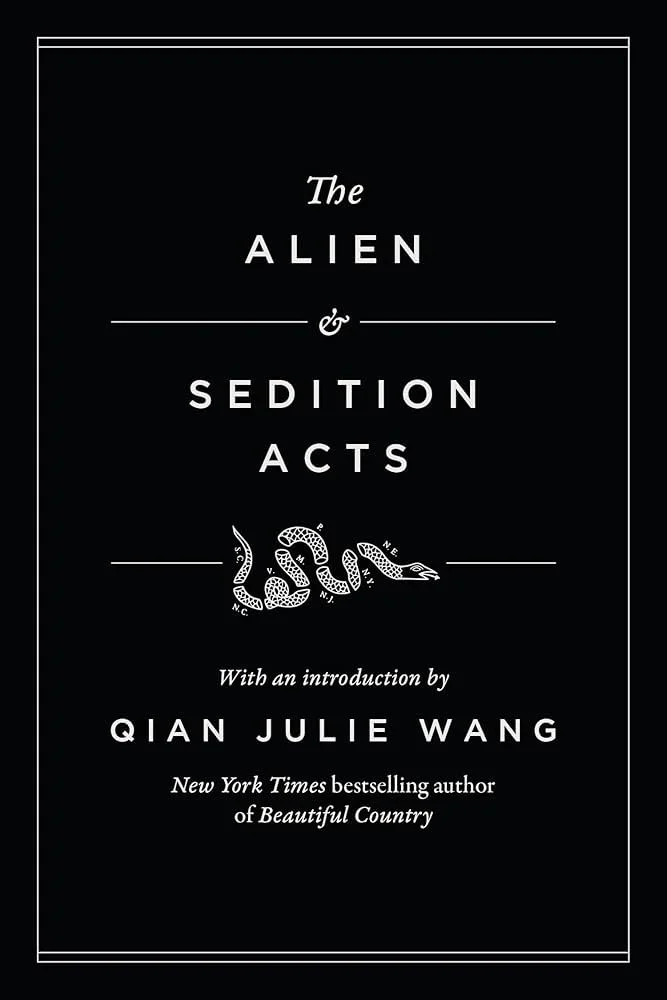
The Alien and Sedition Acts—Part of a new series from Modern Library, this volume collects four laws signed by John Adams over about a month in the summer of 1798—bills that extended the timeline for naturalization, empowered the president to arrest and deport foreigners, and criminalized written or spoken criticism of Congress and the president—and the Jefferson- and Madison-authored Kentucky and Virginia Resolutions that challenged them.

The laws themselves are bad enough, but most galling are the responses by several state legislatures to the resolutions, all of which assert that, nah, the violation of the 1st and 10th Amendments is in fact constitutional, that Kentucky and Virginia are the real threats, and that anyone who loves the union should back up whatever the president does in time of crisis. (Notably, these responses all come from northern and New England states. Massachusetts goes out of its way to praise the wisdom of Adams, an obsequious defense of its hometown boy.) The longest document, Madison’s background notes on the Virginia Resolution, is an angry masterclass on federalism, the proper relationship between state and central governments, the danger of the loose interpretation of the constitution pioneered by Alexander Hamilton (mentioned, but not by name) and the failure of the states to protect their prerogatives.

The introduction, by a civil rights lawyer who has written about growing up as an illegal alien, suggests the publication of these texts now is some kind of gotcha to the current administration’s immigration policies, but the documents themselves are much, much more concerned about states’ rights and free speech. What the book really shows is that the violation of the 10th Amendment, the federal government’s bent toward setting itself up in newer and more expansive spheres of authority, the expectation that the states fall into line behind whatever the executive wants, and the desire to curtail speech in the name of preventing the spread of false information are as old as the Republic. The Antifederalists’ fears of an overreaching, tyrannical federal government, something all conservatives should be concerned about, were not fulfilled in Obama, LBJ, FDR, or even Woodrow Wilson, but came true almost immediately. A sobering consideration.

Favorite fiction

This section will be somewhat shorter not out of any lack of good reading—this was an exceptional spring for fiction—but because I managed to review a lot of these in full, dedicated posts of their own. I’ve linked to those below.

Mars in Aries, by Alexander Lernet-Holenia—In the days leading up to World War II, an Austrian cavalry reservist falls in with a strange crowd and becomes infatuated with the mysterious woman at their center. Then he’s deployed, and his recurring visions of past people and events start to merge with reality. Perhaps my favorite Lernet-Holenia so far. Full review on the blog here.

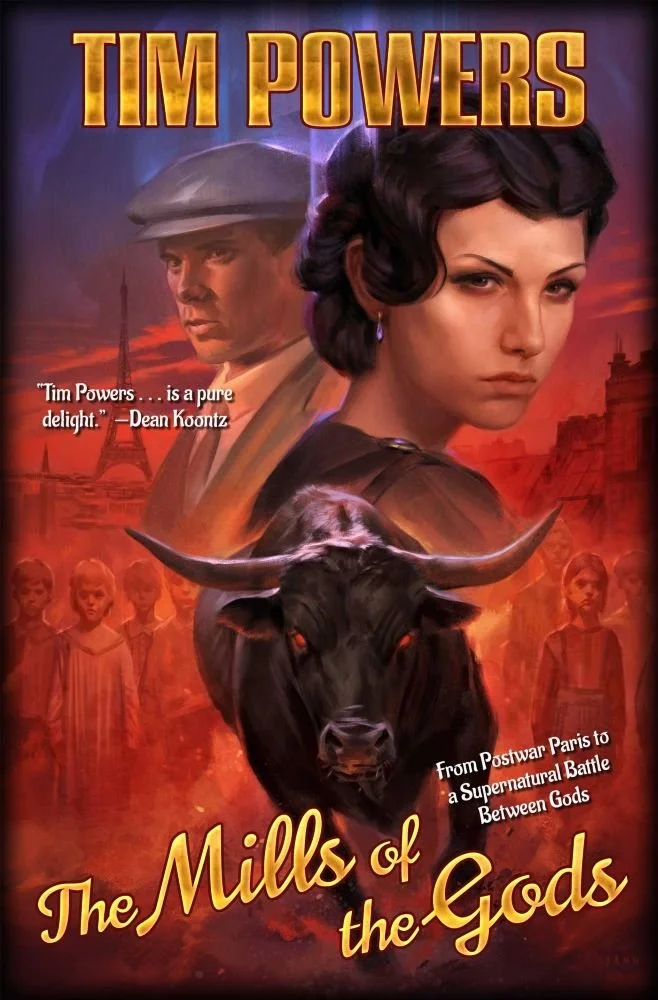
The Mills of the Gods, by Tim Powers—One I had hoped to review in full but couldn’t find the time to. Powers’s latest takes place in 1920s Paris, where expat American illustrator Harry Nolan finds himself involved with a young woman named Vivi and both end up on the run from the sauteurs, a centuries-old secret society striving for immortality by stealing into the bodies of specially prepared newborns. The sauteurs are dangerous and possessive of their target bodies, and Vivi’s most especially. Together, Harry and Vivi must free her and, with clues gathered from Ernest Hemingway, Pablo Picasso, and a sympathetic and helpful Gertrude Stein, unearth the true history of the sauteurs and defeat them permanently. The plot moves briskly and I was absorbed from the first chapter. I greatly enjoyed the Parisian setting, the cameos by Lost Generation artistic figures, and the connections to the ancient world Powers establishes for the sauteur cult. (As deadly and satanically parasitic as the villains are, I mercifully did not find them as spiritually oppressive as the succubi of The Stress of Her Regard.) But I most liked the relationship between Harry and Vivi. Both the First World War veteran Harry and intended sauteur host-body Vivi are damaged goods in need of redemption, and while they begin in mutual suspicion and work together out of necessity they move, over the course of the novel, through collaboration and friendship to something, not coincidentally, full of grace. A beautiful and moving ending caps a breakneck supernatural adventure.

A Rough Shoot, by Geoffrey Household—A lean, tightly-focused thriller from the author of Rogue Male. An English businessman and veteran of World War II surprises what he thinks are poachers on his patch of rented hunting land and accidentally kills one. His effort to cover it up embroils him in deeper, more complicated, and more far-reaching events than he could have anticipated. Full review on the blog here.

State of Siege, by Eric Ambler—An English engineer working in postwar Indonesia has finished his contract and hopes to fly home but finds himself, and a casual date, in the center of a military revolution. Fast-moving and suspenseful while also sweeping in scope, this is almost certainly my favorite of Amber’s post-WWII novels. Full review on the blog here.

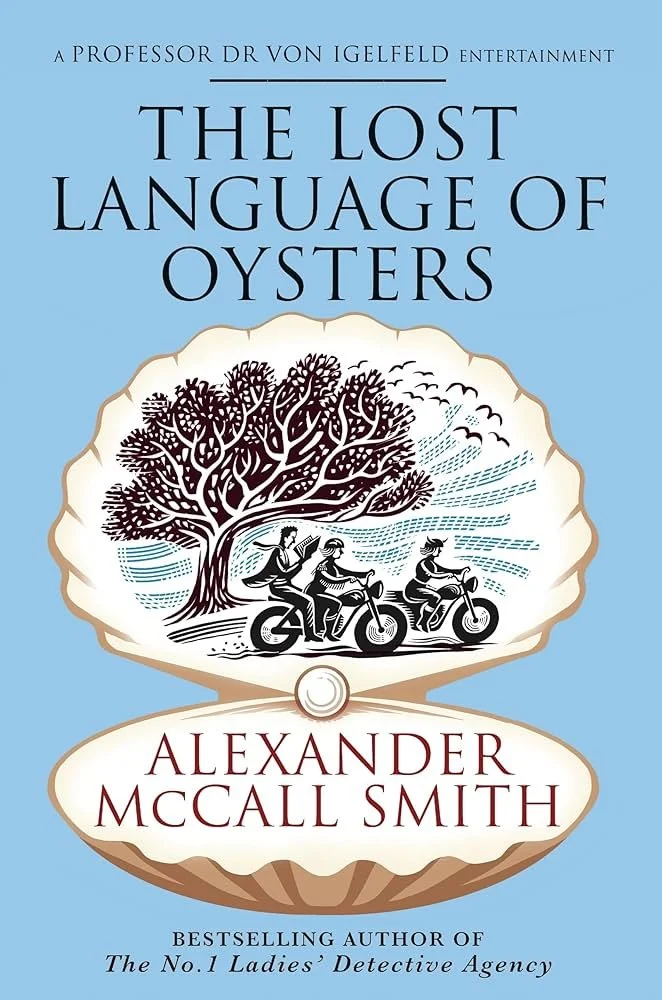
The Lost Language of Oysters, by Alexander McCall Smith—The latest in McCall Smith’s long-running series about hapless German philologist Professor Dr Dr Moritz-Maria von Igelfeld, this is a unified novel rather than a collection of interrelated short stories and finds the good Professor jockeying for status with a pesky old colleague and, to his own surprise, falling in love with an American linguist after she gives him a ride on her motorcycle. The more recent entries in the series are gentler and don’t have some of the darkness or ironic bite of the earlier ones, but they are always enjoyable, funny, and—just occasionally—surprisingly sweet. This one has some particularly good twists and surprises and a great ending.

Other Paths to Glory, by Anthony Price—Paul Mitchell, a young military historian studying a battle on the Western Front, receives two strange visits on the same day: the first is with two intimidating, authoritative men who are clearly not what they say they are; the second is with an assassin who throws him into a canal in an attempt to stage a suicide. The first two men, Audley and Colonel Butler, who were introduced in Price’s The Labyrinth Makers (which I briefly reviewed here), come to Mitchell’s aid and together they return to the former battlefield. What could be hidden there that would lead to murder and, with a secret international conference about to occur nearby, a threat to world peace? Another good thriller with a historical dimension from Price.

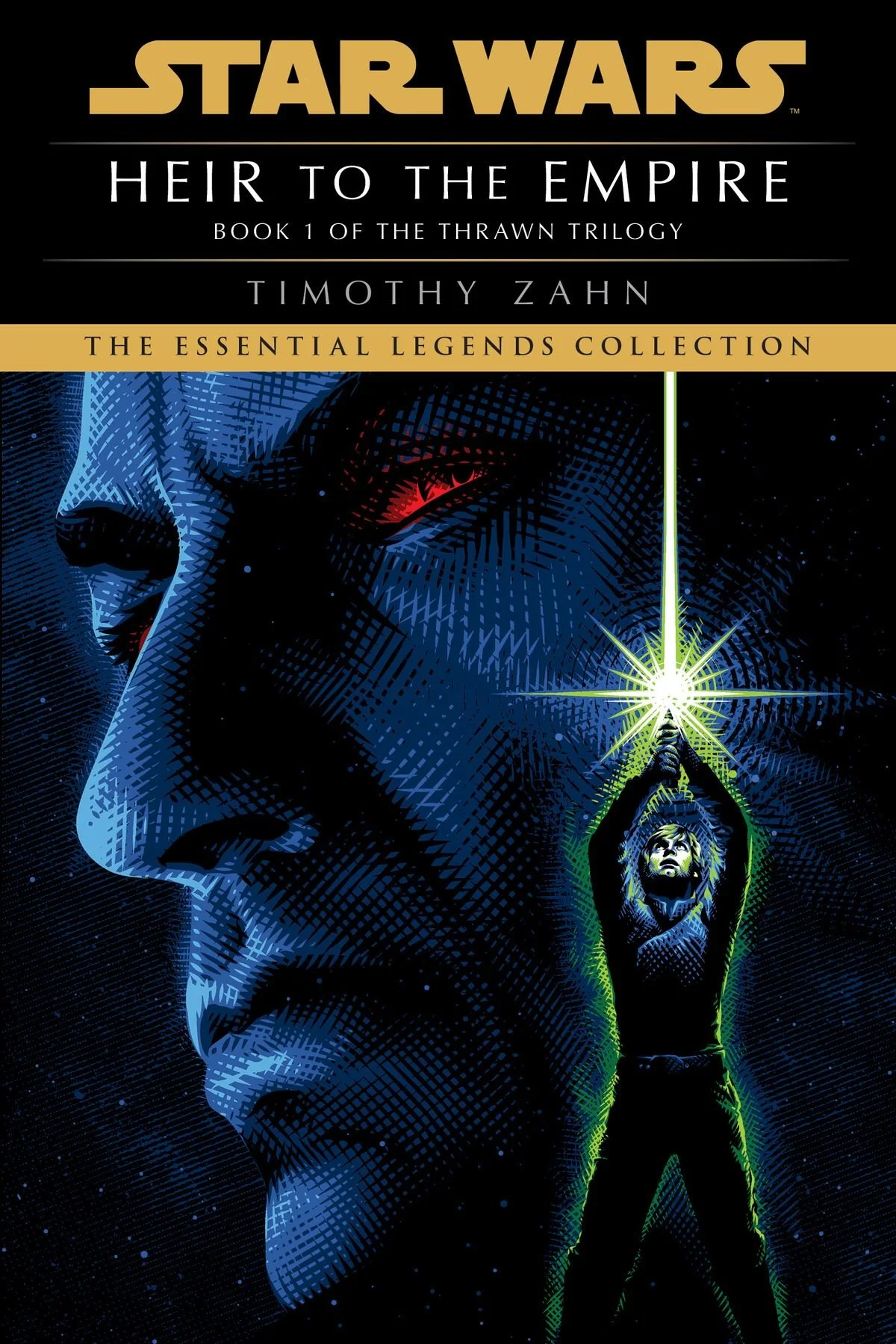
Heir to the Empire, by Timothy Zahn—My first Star Wars novel. Picking up a few years after The Return of the Jedi, this story follows the New Republic—formerly the Rebellion—through instability and infighting in the aftermath of success and the emergence of a new threat from the Empire, the skilled and intelligent Grand Admiral Thrawn. A fun read, and truer to the spirit and characters of the originals than much of what’s been sold as Star Wars since. Full review on the blog here.

Honorable mentions:

  • The High Crusade, by Poul Anderson—Vintage sci-fi with a fun hook—knights mustering for a crusade in medieval England encounter aliens, commandeer their ship, and set off on a crusade across the stars—that actually delivers. Brisk and enjoyable.

  • Spy Hook, by Len Deighton—The beginning of Deighton’s second Bernie Samson trilogy. A former secret agent murdered, a slush fund missing, old colleagues back from the dead, and Samson’s burgeoning romance with a younger woman threatened. Not quite as tight as the Game Set Match books but an involving story with a lot of surprises.

  • Beast in the Shadows, by Edogawa Rampo—An eerie, atmospheric, disturbing short novel in which a woman who believes she is being stalked approaches a crime novelist for help. Rampo was a devotee of Poe (Edogawa Rampo is his pen name, a Japanese near-equivalant of Edgar Allan Poe) and it shows clearly: concision, intricate construction, darkness, a beautiful tormented woman, violence, and insanity. Bleak but enthralling.

  • The Chrysalids, by John Wyndham—A young boy living in a farm community that, following a nuclear war, has reorganized itself around an intense religious vigilance for genetic mutation questions what he’s learned about mutants and realizes that his gift for telepathy, which he had always taken for granted, may be endangering him and his friends. Not my favorite Wyndham but a brilliantly imagined situation with a suspenseful final third.

Favorite kids’ books

The Raven: The Classic Poem, by Edgar Allan Poe, illustrated by Chloe Bristol—A beautifully illustrated new edition of Poe’s masterpiece, with moody, atmospheric but kid-friendly pictures. Full review on the blog here.

Bones and Berserkers, by Nathan Hale—A fun anthology of short horror stories—some true, some fictional, several somewhere in-between—by one of my kids’ favorite graphic novelists. Full review on the blog here.

Corduroy, by Don Freeman—A teddy bear for sale in an apartment store wants a home and finds unexpected fulfilment. I somehow made it to adulthood without having read Corduroy. I read it to our twins and just about lost it. A simple, beautiful and moving story with a lot of emotional and even spiritual depth.

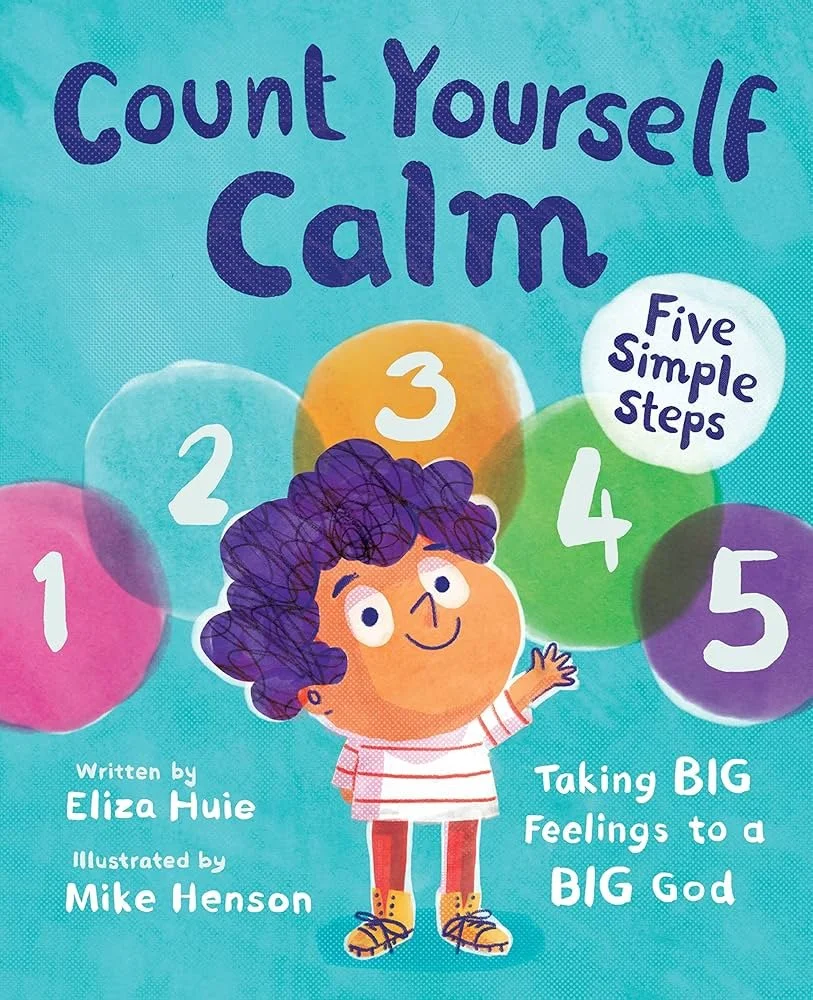
Count Yourself Calm, by Eliza Huie, illustrated by Mike Henson—We got our own copy of this picture book after an occupational therapist worked through it with one of our kids. It helps create a simple routine for calming anger, fear, frustration, and other “BIG feelings,” per the subtitle, by counting down gifts from God: parts of creation that bring us joy, the gifts he’s given us, the people who love us, and more. Simple and helpful for both kids and adults!

Ember Falls, by SD Smith—The second of Smith’s Green Ember fantasy series about anthropomorphic rabbits Heather and Picket; another fun adventure and a worthy followup to the original.

Looking ahead

I’m already into the reading for this year’s John Buchan June—the fifth June since I began this event!—so be on the lookout for that to begin in just a few weeks. I’ve also got a lot of other good fiction and non-fiction lined up and I hope to slow things down a bit for a few older, longer novels in the late summer or fall. In the meantime, thanks for reading, and I hope this list will have led you to something you can enjoy this summer!

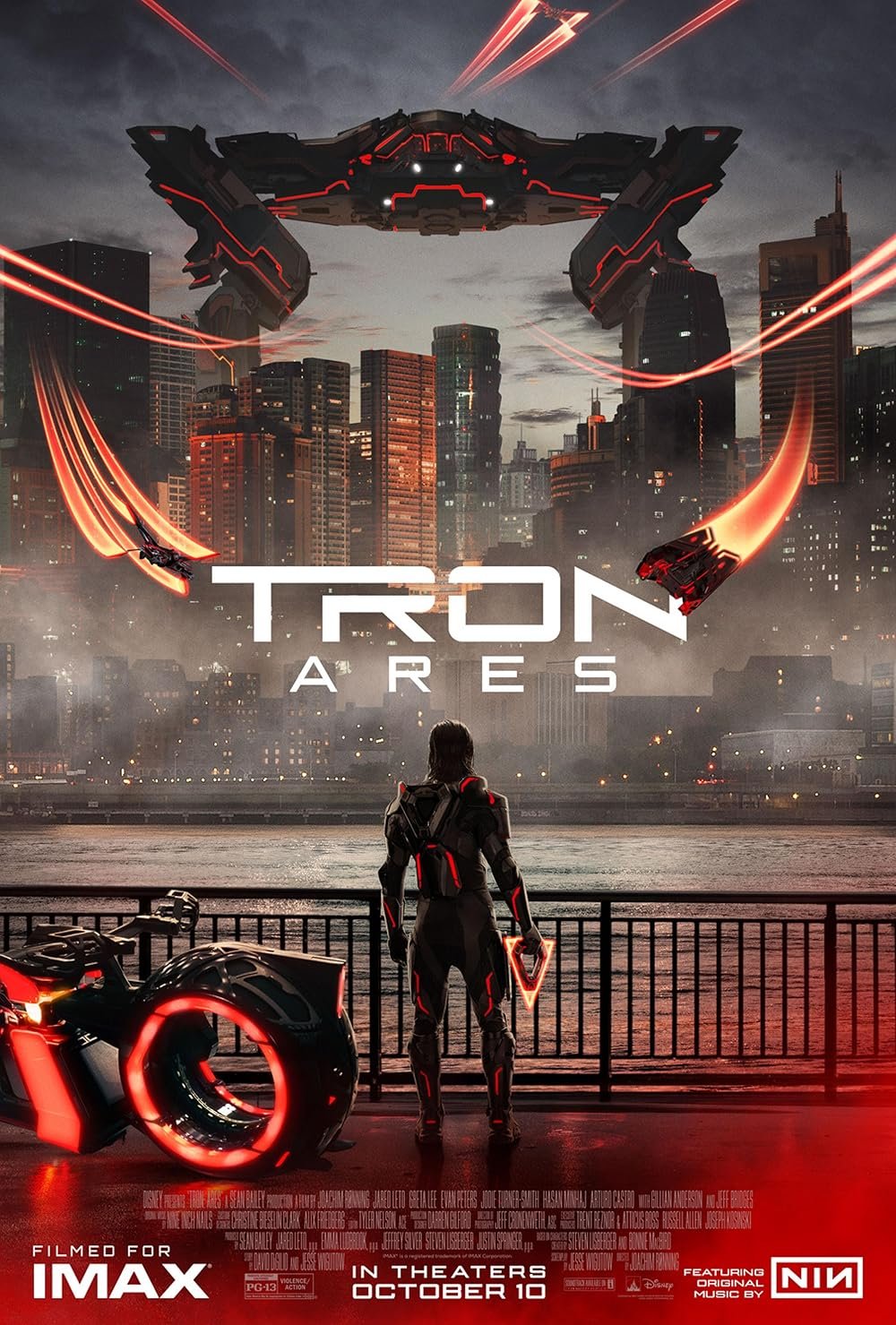
Tron: Ares

Scientists at Disney generate a sequel to Tron and Tron: Legacy

I was one of the handful of people who saw Tron: Ares in theatres last fall. I love and enjoy Tron: Legacy beyond its merits and have shared it with my kids, who revere it, and if Tron: Ares had turned out to be good I planned to take them. I never did—not because it wasn’t good but because it was neither good nor bad enough for me to make up my mind about. I decided to give it another look at home when it came out on Blu-ray. That finally happened this month.

The plot, in brief: Tron: Legacy ended with the escape of a purely digital person into flesh-and-blood reality, and the new film’s very loose connection to that one is in the vast potential latent in the ability to transfer digital assets to reality. Kevin and Sam Flynn’s old company Encom is trying to develop this power to solve all the problems in the world. Old Encom rival Dillinger Systems wants to 3D-print weapons, vehicles, and expendable soldiers to sell to the military. Both are headed by Wunderkind CEOS: Encom by Eve Kim, who struggles to keep her idealistic sister’s dream of ending scarcity alive, and Dillinger by the ruthless Julian Dillinger, under the watchful but impotent eye of his mother Elisabeth.

Into this computer arms race steps the Ares of the title. Ares is a combat program created by Dillinger and trained on countless cycles of simulated combat, death, and regeneration. Dillinger shows him off to investors as the crowning achievement of his project. The problem is that Ares—and everything else generated from the system—only lasts twenty-nine minutes in the real world before disintegrating. This fact drives both Kim and Dillinger’s pursuit of “the permanence code.”

Through a little friendly corporate espionage, including the use of Ares to penetrate and exploit Encom’s servers in search of the code, Dillinger learns that Kim may have recovered it from old files hidden away by her sister. From this point forward it’s a race for Kim to bring the code safely back to Encom, for Dillinger to stop her and take it—through increasingly desperate means—and for Ares, who has begun questioning his programming, to decide what action to take.

Tron: Ares has a number of weaknesses, the chief of which is that the villain is much, much more interesting than either of the heroes. Eve Kim and friends are annoying do-gooders whom the screenwriters have worked too hard to make plucky and likeable, and Ares, as played by Jared Leto, is too convincingly robotic. Evan Peters’s Julian Dillinger, on the other hand, shows cunning and intelligence from his first scene and an amoral pragmatism barely restrained by the influence of his mother, played with chilly and ambiguous control by Gillian Anderson. The moment Julian has an opportunity to take decisive but irreversible action against his greatest rival, he struggles, but only so much. His lifetime of seizing every opportunity that will benefit himself has led to this, and even though he knows it’s wrong and we know that he’ll choose it, we see and feel the weight of the temptation crush him. Peters is likely the best thing in the movie.

This imbalance affects the entire film. It may be a cliche to point out how bad Jared Leto is since everyone online has been dogpiling him for months, but some cliches become cliches because they’re true. (My kids also insist I point out that he has weird hair. In a more artistic vein, my daughter noted that Ares, as a character, is more interesting in the first few minutes when he wears a mask. The moment Jared Leto’s vapid face is revealed, the mystery dissipates. A sharp observation, I’m proud to say.)

That said, the plot, which is simple but effective despite the banality of the movie’s heroes and escalates nicely heading into the final act, the production design and look of the film, the music, the special effects, and the action scenes make up for a lot. Despite the complexity of some of what the movie is offering, it’s intuitively presented—my kids had no trouble following it. I’ve seen director Joachim Rønning take some flak for Tron: Ares as an unimaginative hired gun, but I think the visual storytelling and style of the film serve the story well. I don’t find Nine Inch Nails’ electronic score as enjoyable by itself as I still do Daft Punk’s incredible Tron: Legacy score, but it works well within the movie.

No one should go into a Tron movie looking for deep ideas. As much as I love Tron: Legacy, its Kevin Flynn is given to some silly opining about how much his video game world will challenge the foundational thought of all of civilization. Spoken like a true techbro. Kim and Dillinger, at least, are less prone to philosophizing. (There is an irony in how this movie asks us to root for the good AI overlords against the bad ones; I found myself wishing both could fail. A touch of tonedeafness on the part of the producers.)

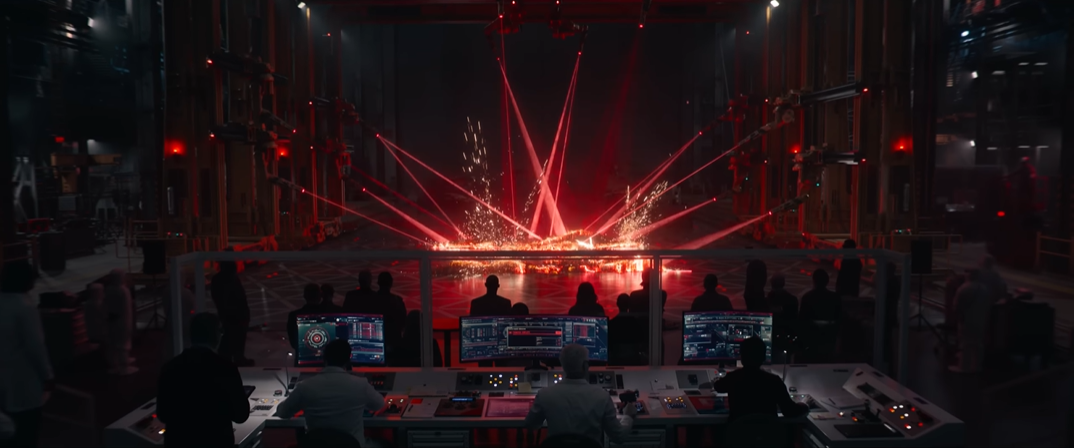
But Tron: Legacy and now Tron: Ares do deliver some great action. My kids found the buildup to the climactic sequence, in which Dillinger, having lost control of his own programs, sees his facility print and dispatch lethal weapons tech into the city in pursuit of Kim and Ares, unbearably suspenseful. It’s well-set up and well-executed, and the Terminator-like indestructabilty of Dillinger’s chief henchman posed an intense added threat.

Tron: Ares does not measure up to Tron: Legacy, but it tries to develop one small element of the latter in interesting ways and has satisfying, enjoyable Tron-flavored action. One can’t help but wonder how much better it might have been with a few tweaks, including someone in the title role with more visible depth than Jared Leto (which wouldn’t have happened, as he produced the movie). Having waited several months to rewatch it with my kids, I found myself liking it much more the second time around, not least since they responded so strongly to it.

Impressing kids is not everything, but it’s not nothing, and—following on from The Fantastic Four: First Steps—I’m pleased to have shared it with them. If there are more flawed but enjoyable and workmanlike adventures out there, we’ll take them.

Heir to the Empire

Well, here was a pleasant surprise. Though I’ve been aware of the legion of Star Wars novels that have been available since I was in elementary school, I’ve never read any, suspecting that their quality would lie somewhere between a Wookieepedia article and the usual movie tie-in novel. But over the years Timothy Zahn’s Thrawn Trilogy has gotten consistent enough praise for me to notice, and the strong recommendations of several of y’all whose taste I trust finally convinced me to check out the first volume, Heir to the Empire.

This novel picks up a few years after the original film trilogy ended. Han Solo and Princess Leia have married and are expecting twins. Leia, slowly undergoing her own Jedi training under Luke, learns that the twins will be especially strong with the Force. Luke begins the story troubled by the division with the Rebellion—now billing itself as the New Republic—especially internal factions attempting to assert themselves against the Rebellion’s more established leaders. Like many rebellions, success may prove to be the worst thing that could happen to it.

This vulnerability of the New Republic, struggling for both legitimacy and unified purpose as the Empire crumbles, arises as the Empire calls up a new leader to deal with the threat to its hegemony. Grand Admiral Thrawn, a blue-skinned, red-eyed being who has spent years campaigning in imperial backwaters, replaces Darth Vader. Thrawn views his predecessor as an unhinged mystic who catastrophically failed the Empire. He approaches defeating the New Republic with a combination of icy rationality and art. A connoisseur of painting and sculpture from worlds all over the Galaxy, Thrawn believes that understanding an opponent’s cultural background is as important in defeating them as pure logistics.

Not that the logistics don’t matter. The destruction of the second Death Star has created a manpower shortage across the Empire. Thrawn’s recruits are young and inexperienced, their training rushed and their discipline and protocol incomplete at best. Further, there is a shipping shortage across the Galaxy.

It’s this logistical problem that slowly becomes the center of the plot and draws the different characters together, as the New Republic dispatches Han to negotiate hiring smugglers as ad hoc transport—including some familiar characters from Han’s past—and Thrawn lays plans of his own for commandeering the vessels the Empire needs.

The one important plot element I haven’t mentioned here is the wild card: Mara Jade, a woman employed by one of the crime lords Han approaches about working for the New Republic. Mara is cagey about her past even with her boss, has an impressive breadth of technical skills she picked up who knows where, is familiar with the Force and lightsabers, and yearns to kill Luke Skywalker. But the less revealed about her, her background, and her quest to confront and kill Luke the better.

There’s much more going on in the story than even the above may suggest—including a trip to the Wookiee home world, a rogue leftover Jedi with a taste for mind control, and a race of brutal assassins Thrawn puts on the scent of Leia and her twins—and the richness with which Zahn evokes the world of the original trilogy is one of its pleasures. Heir to the Empire gives us a situation that believably continues that seen at the end of Return of the Jedi and introduces new complexity and depth to both the Rebellion and the Empire. But best of all, it provides an excellent villain. Thrawn is coolheaded, canny, skilled in both long-term strategy and tactical improvisation, and his insistence that culture matters combines menacingly with a typical Imperial willingness to use force. He proves a genuine threat to both the New Republic and to the familiar characters we care about.

But Zahn also manages to do what Disney failed at twenty years on: using the originals and their world to drive off in new directions that aren’t mere pastiche. Everything in Heir to the Empire feels truer to the original films and—perhaps even more importantly—plausible and true to real life than anything in the Disney trilogy. As I’ve noted elsewhere, it’s no wonder fans of books like this are ticked off with Disney.

But if Heir to the Empire stands out in comparison with something like The Last Jedi, that’s because it was already good in its own right. The quality of the writing itself is middling, improving over the course of the novel, but the plotting, characterization, and thoroughness of the world imagined by Zahn is outstanding. Heir to the Empire is solid genre fiction, which I’ve argued before no one should turn up their nose at, and enjoyable from beginning to end. I look forward to reading the rest of the trilogy.

Notes on Christopher Nolan’s best movie

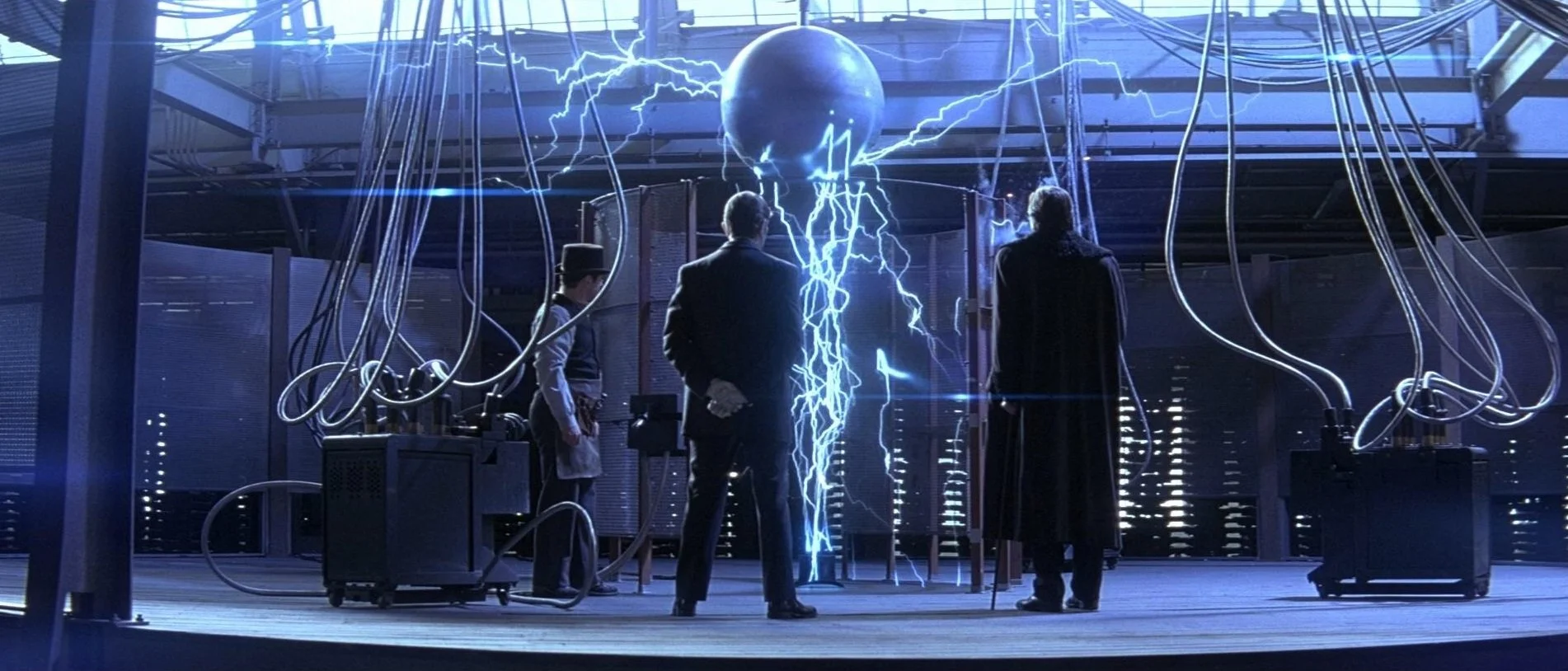
Alley (Andy Serkis), Nikola Tesla (David Bowie), and Angier (Hugh Jackman) in Tesla’s Colorado laboratory in The Prestige (2006)

A few days ago I started rereading The Prestige, by Christopher Priest, a World Fantasy Award winner about Victorian magicians locked in a mutually destructive rivalry. I last read it as a senior in college almost twenty years ago. It’s very good—much richer and more absorbing than I remembered—and rereading the book has also got me thinking about Christopher Nolan’s film adaptation.

The book and the film are quite different (Priest was, it’s worth noting, in awe of the movie) but I don’t intend to examine those differences here. The movie has been one of my favorites since it came out and has rewarded years of viewing. But what I’ve realized now, to my surprise, is that after almost two decades and seven more films, The Prestige remains Nolan’s best movie.

I write this as a fan of Nolan—not a fanboy, but a fan, someone who likes and appreciates what he does and looks forward to each new Nolan project. I don’t intend to disparage his more recent movies, most of which I’ve liked. I just think that, with hindsight, The Prestige stands out as a work produced 1) at the height of Nolan’s powers and 2) before he became distracted by some of the qualities that have defined—and occasionally weakened—his subsequent movies.

Some notes toward refining my argument:

  • Technically The Prestige is pretty much perfect. Wally Pfister’s anamorphic cinematography is beautiful and atmospheric and incorporates handheld work for a subtle contemporary feel without succumbing to the Bourne-style chaos of the mid-2000s. It also, like Barry Lyndon and Amadeus, allowed for shooting by candlelight. (Read American Cinematographer’s article on The Prestige; I ate this up when the movie came out.) The film feels real and authentic, a mood enhanced by the costume and set design, which establish the easily-caricatured Victorian London as a real place.

  • Also on the technical side: the editing (by Lee Smith, who has cut several other Nolan movies) is excellent, probably the best of Nolan’s career. It’s really the editing that makes this movie. Though The Prestige tells its story along multiple chronological timelines, jumping forward and backward in time with occasional flashes forward or backward as characters remember or reflect, it does so effortlessly. Despite its complexity it is easy to follow and requires almost no internal explanation.

  • The music by David Julyan is, as so often with Nolan’s films, there to enhance atmosphere and mood rather than to soar on memorable leitmotifs. It does its job perfectly, without distraction or—as in the last few Nolan films—drowning out dialogue.

  • The performances are also excellent, the standouts being Hugh Jackman and Christian Bale, both of whom play two roles. This is where rewatching The Prestige most pays off—once you know what’s going on with Alfred Borden it’s easy to see, through Bale’s performance, that he’s two people with distinct, conflicting personalities: one cautious and softspoken, one aggressive and brash. This has the unique effect of making the ending more powerful after the twist has been revealed.

  • Of course, all of this technical and artistic craft is in the service of a good story, which is the best reason to watch any movie. There are plenty of technically admirable movies that are not interesting, entertaining, or meaningful. The Prestige is all of these.

Why The Prestige stands out so much in retrospect: it has, on paper, a lot of Nolan’s tics and preoccupations—multiple identities, family tragedy, crime, deception, the nature of reality, and memory—but allows them to arise naturally from the story. By contrast:

  • Music: I enjoy some Nolan movie soundtracks (Interstellar is perhaps the last great one), but since Inception they have gotten more bombastic and intrusive. This is, perhaps, emblematic of the rest of my complaints below.

  • The Prestige was the last of Nolan’s movies to be shot before he began his ongoing experiment with large-format filmmaking, especially IMAX. He has used this as more than a gimmick—like 3D, which he rightly avoided—but it’s hard to avoid the feeling that the form has started to overwhelm the story. The frequent switching between formats and aspect ratios in his more recent movies is also just distracting. I find myself wishing more and more for a film with a single consistent visual technique, especially one as wonderful as what Nolan and Pfister created in The Prestige.

  • More seriously, even if we disregard form or technique, the structure of Nolan’s movies since has become a more and more overt, obvious part of the story. Where The Prestige smoothly moves the audience back and forth through several different timelines, both trusting the audience enough to understand and expertly editing the film to make its structure intuitive and invisible, his movies since Inception call attention to their structure and require frequent, heavy-handed exposition. (Despite these efforts, the “[Nolan movie] ending explained” genre on YouTube continues to thrive.)

  • Related: The Prestige uses, like many of Nolan’s movies before and since, non-linear storytelling. Again, it does so effortlessly and without calling attention to itself. More recent movies like Dunkirk, Oppenheimer, and most obviously and incomprehensibly Tenet use it as a flourish. When some critics wonder whether this kind of chronological tossed salad is necessary for these stories, they’re not being unreasonable.

  • I wouldn’t call The Prestige a special effects movie, but several sequences rely heavily on effects—Tesla’s lab, Angier’s transporter machine, and subtle shots of the Borden twins working together. They’re seamlessly integrated, even the digital effects Nolan now has a reputation for shunning. Nolan’s insistence on practical stuntwork and in-camera effects is laudable, but it sometimes feels—like the large format film—like a gimmick that is taking over his movies. Witness all the jokes online about Nolan finding real cyclopes or having his actors throw real thunderbolts for his Odyssey project.

  • Finally, The Prestige is rich, dense, intricately plotted, but tight, running just over two hours. With the exception of Dunkirk, which Nolan said he wanted to feel like the third act of a much larger story, every movie from The Dark Knight on has been two and a half hours long or longer. I like or love several of these, but the feeling of sprawl and self-indulgence is palpable, especially when the increasingly showy plots require multiple scenes of people talking about what’s going on for the audience’s benefit.

In short, The Prestige perfectly unites story and form. Nolan continues to make good movies, but with their increasing emphasis on spectacle, teasing structure, and technical gimmickry, he has never quite struck the same balance he did in The Prestige.

Again, these are note and observations. Perhaps more thoughts later, especially once I’ve finished rereading the novel and watched the movie again.

I’ll end by noting that Nolan and his brother Jonathan, with whom he co-wrote the screenplay, did an excellent job adapting Priest’s novel. This second reading impresses upon me more than the first just how difficult this story would be to construct for the screen. I’m glad they took the effort—and over several years, which I think may be yet another factor distinguishing The Prestige from the films since—because the story is brilliant, surprising, suspenseful, and moving, and deserved to be told well.

The Butt-Covering Chronicles

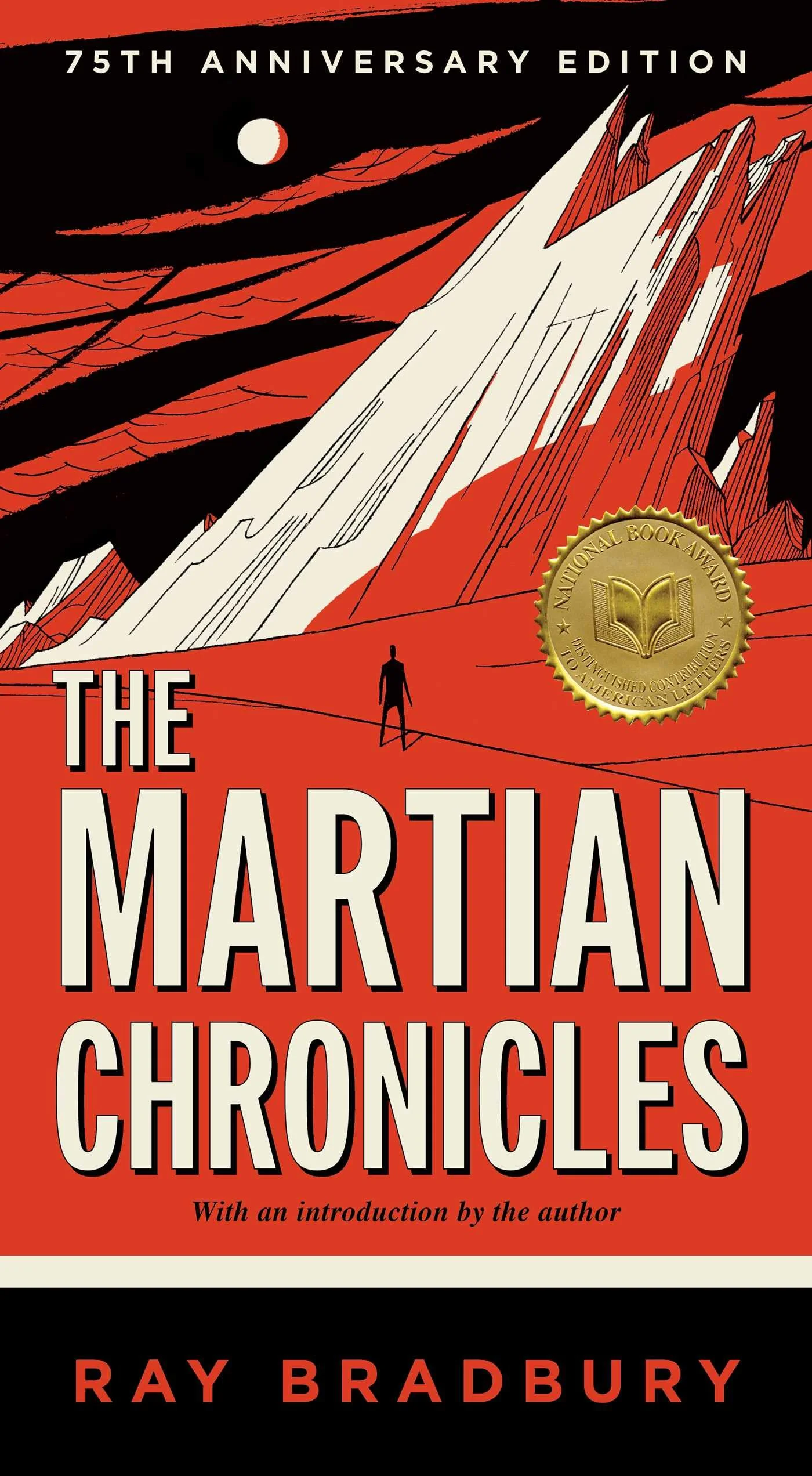
Simon & Schuster has just published a new 75th anniversary paperback of The Martian Chronicles, by Ray Bradbury. This edition includes a short essay by Bradbury detailing his process of drafting and revising the stories that make up the Chronicles and expounding some of the philosophical assumptions behind them. It’s an interesting short introduction to the book—especially for anyone interested in a writer’s process and craft—but even more interesting is the “Editor’s Note” that precedes it.

The note begins with some information about the provenance of the essay, which was written shortly after Bradbury submitted the manuscript for The Martian Chronicles in the fall of 1950 and was rediscovered in his papers in the 2000s, but concludes with this, where the real purpose of the note becomes clear:

“How I Wrote My Book” refers to cultural touchstones (e.g., authors, books, music, politics) that may not resonate with today’s reader. Perhaps more disturbing will be some of the words and phrases Bradbury uses. Simply put, the language of the 1950s was not politically correct. Yet “How I Wrote My Book” offers fascinating insight into Bradbury’s creative process and is, at the same time, a powerful, at times urgent, commentary on Bradbury’s beliefs, thoughts, and fears about humanity and our world. And while expressions used by Bradbury in this essay may be anachronistic, his message is timeless and rings as true today as it did seventy-five years ago.

After reading it with mounting contempt I told my wife about it. Had I misunderstood? she wondered. Maybe the note was referring to the stories, not Bradbury’s essay. So I checked again today and, no, the note is very specifically getting defensive about Bradbury’s introductory essay.

And what shocking material in Bradbury’s essay prompted this note? Having gone through the essay twice, I’m still not actually sure. One reads a note like this expecting to run into racial slurs, but there is nothing obviously offensive in anything Bradbury writes. He even goes out of his way to condemn fascism, Stalinism, and Joe McCarthy and to praise imaginative freedom in the kind of stirring, well-intentioned liberal peroration formerly beloved of English teachers.

My best guess is that Bradbury’s frequent use of “man” and “mankind” in discussing human exploration of space, the use of “his” as a generic pronoun (as opposed to now, when every imaginary writer or student is always pointedly “she”), a hypothetical “Mr and Mrs Joe Smith from Ashtabula,” and one sympathetic comparison of his Martians to Indians are the “disturbing” language the editor wants to prepare us for.

(Also, how can expressions you use in your own time be “anachronistic”? Bradbury didn’t slip into Old English or some future Anglo-Martian creole. This is just silly.)

At least the publisher didn’t censor or rewrite Bradbury’s essay. The irony of past attempts to censor Fahrenheit 451 probably ruled that out. But I was left wondering what kind of mealy-mouthed weenie wrote this, or even thought using up a whole page for it was a good idea in the first place. Notably, while an “editor’s note,” there is no editor named anywhere in the book. No one wanted to put his name on this—or, more likely, hers.

Last year I looked at some publisher’s notes and copyright page notices in recent reprints of Agatha Christie as a way to chart the hopeful trend away from “updates” and the “removal of offensive terms” toward their unexpurgated publication. Such notes are an improvement over stealth edits and censorship, but as long as this butt-covering instinct remains the work of authors who are no longer here to defend themselves will be in danger.

I ran across this new copy of The Martian Chronicles in Walmart. Just around the corner on an endcap were boxes of those cheap, faux-leather reprints of public domain classics. (Curiously, these are also published under the Simon & Schuster umbrella.) After reading this note I picked up a few of those that were likely suspects for censorship—Treasure Island, a fat volume of Lovecraft—and saw this in 8-point type at the bottom of the copyright page:

These works have been published in their original form to preserve the author’s intent and style.

Exactly right. Simple, to the point, and all the explanation necessary. More of this, and less of the editor’s note above.

The masculine urge to zap space bugs

This week on my commute I’ve been taking a break from podcasts to revisit a novel I last read in college, Robert Heinlein’s Starship Troopers. It’s been about twenty years.

I faintly remember being disappointed by it, but not much else. I still wish it had more action, but with the benefit of twenty years of growing up, studying, reading, and learning from life, I can see that the problem with my first read was me. Under the sci-fi adventure premise and WWII-memoir-in-space style, Starship Troopers is an uncommonly rich and complicated book.

This passage from relatively late in the story struck me especially sharply. The protagonist, Johnny Rico, joined the Mobile Infantry straight out of high school, during peacetime. While training, war broke out with the “bugs,” the most notorious early incident of which was a bug attack on Buenos Aires that “smeared” the entire city—including Johnny’s parents. Or so he thinks. As he departs his original ship for OCS, he bumps into his father, now an NCO despite being in his mid-40s.

Johnny’s father had strongly disapproved of joining up, so not only his survival but his about-face on military service surprises Johnny. He assumes his father joined to avenge his mother. Not so. Johnny’s enlistment awakened something long dormant in his father:

“Your mother’s death released me for what I had to do… even though she and I were closer than most, nevertheless it set me free to do it. I turned the business over to Morales—”

“Old man Morales? Can he handle it?”

“Yes. Because he has to. A lot of us are doing things we didn’t know we could. I gave him a nice chunk of stock—you know the old saying about the kine that tread the grain—and the rest I split two ways, in a trust: half to the Daughters of Charity, half to you whenever you want to go back and take it. If you do. Never mind. I had at last found out what was wrong with me.” He stopped, then said very softly, “I had to perform an act of faith. I had to prove to myself that I was a man. Not just a producing-consuming economic animal… but a man.”

There’s a lot going on here. Running through it is a strong strand of Ernst Jünger—who like Heinlein proved controversial for being clear, unsparing, and uncategorizable within the permissible simplistic divisions—and the word “man” means Johnny’s father is not only making a statement about himself, masculinity, and courage, though that is the obvious surface-level meaning, but about what people are and ought to be.

What I immediately thought of was a short but poignant line from Dr Johnson, who has been much on my mind lately. In his Life of Samuel Johnson Boswell quotes him as saying, on the topic of war:

 
Every man thinks meanly of himself for not having been a soldier, or not having been at sea.
— Samuel Johnson
 

An apt description of Johnny’s father, who is a fairly minor but memorable character, and a lot of the rest of us. I had my own abortive brush with the service after grad school, the kind of thing that was clearly not meant to be (a little too old, a little too slow) and worked out well in the end. I wouldn’t change a thing. But thinking back on it still causes me a pang of “what if” every so often. Fortunately we have imagination and stories, and the examples of the men who did soldier, who did go to sea.

Starship Troopers might be a “controversial classic,” as the most recent paperback calls it, but that it resonates so strongly with itself, with other great literature, and with a powerful impulse inside most men, an impulse either fulfilled for felt forever as accusation, is a clear mark of its worth.

For a recap of some of the controversy, a good examination of some of the nuance in the book, and a very good critique of the film adaptation, which was an deliberate act of vandalism, see this piece from American Reformer. For a similar premise with different themes and a strikingly different tone but similarly powerful social critique and more action, read The Forever War, by Joe Haldeman, a novel I’ve read or listened to a number of times.

UFO

I’m going to start this review in an odd place—with online criticism. As I read Garrett Graff’s UFO: The Inside Story of the US Government’s Search for Alien Life Here—and Out There I looked through the one- and two-star reviews on Goodreads and saw lots of complaints that UFO doesn’t cover a specific sighting or incident, or doesn’t cover it in enough detail, or leaves out a reader’s favorite “researcher” (or skeptic), or—at the extreme end—that Graff is in the pocket of the CIA and his book is a psyop.

Leaving that last tinfoil hat line of criticism aside, the other disappointed or angry reviewers missed a crucial detail about a book like UFO: it is a survey.

When I introduce my courses at the beginning of every semester—I’m set to repeat this speech bright and early Wednesday morning—I explain what I mean by “survey” by talking about hiking back home. From the top of a mountain, as one surveys the view, one does not examine every tree, climb every peak, or dip into every hollow, one simply takes in a literal overview. Surveying the view provides context. This, in a metaphorical sense, is what makes a class like my Western Civ I or US History II or a book like Graff’s UFO useful—it gives an overall shape to the thicket of specifics in which it is easy to get lost.

From saucers to Tic Tacs

Graff narrates the history of UFO sightings and the many attempts to research and understand them from the immediate post-war world of the mid-1940s through the recent past. UFOs and aliens—two topics that we tend to forget don’t necessarily overlap—have become such an archetypal staple of our culture that we tend to forget how different the world was when they emerged.

Beginning with the Roswell incident in 1947, Graff tells the story through three major interweaving narrative threads. First are major incidents that shaped and directed the UFO phenomenon, including the initial Arnold sightings; the Mantell incident, in which a P-51 pilot crashed in pursuit of a high-altitude object; the Lonnie Zamora incident in Socorro, New Mexico; the Betty and Barney Hill and Pascagoula abductions; the Phoenix lights; and the Flying Tic Tac. The second thread, the one most clearly indicated in the book’s subtitle, consists of the various often halfhearted attempts by the US military and federal government to assess and understand UFOs.

The last thread of the story, interweaving with the previous two, consists of the researchers, a wide and colorful cast including Project Blue Book’s J Allen Hynek, celebrity astronomer Carl Sagan, Jacques Vallée, former intelligence officer Luis Elizondo, and a host of enthusiasts and cranks and shysters who sought to profit from the various phases of the UFO craze. Graff gives good attention to the rifts between these individuals and groups, especially those who, like Hynek, sought a genuinely scientific approach and viewed the feel-good peacenik messaging of people like George Adamski’s “contactees” as a distraction from real research and who was, in his turn, looked down upon by figures like Sagan.

These three aspects—the institutional, the personal, and the incidents themselves—and the decades-long perspective Graff offers are especially helpful in seeing how the phenomenon unfolded, first as flying saucers, then as UFOs, and recently as UAPs. The postwar context also helps explain the US military’s initial keen interest and later apathy. Once the military had determined UFOs were not Soviet weaponry or an intergalactic threat, they lost interest and ceded the field to the enthusiasts—who had been itching to take control anyway.

The historical perspective the book offers also demonstrates clearly how the mythology evolved and just how much time it had to do so. Hynek and the Air Force’s investigations went on in fits and starts and the long, slow process of declassification of projects like Mogul, the nuclear-monitoring balloons responsible for some early sighting and the Roswell debris, also fed speculation. Notably, Roswell was forgotten until its reemergence in the lore during the 1980s, when it was recontextualized as an important event—with lots of suspicious new testimonial—by UFO hobbyists.

Surprises and sympathies

That point about mythology brings me to the two surprises UFO gave me. First, early in the book, Graff quotes Carl Jung, who lived long enough to see flying saucer enthusiasm through its earliest phases and who viewed the mania—whatever the reality behind it—as the genesis in real time of a new world mythology.

This insight may not explain the entire phenomenon but is clearly correct. Viewed in chronological order, without the cross-pollination of details from different stories and the projection of later elements of the mythology backward onto earlier parts,* it is easy to see the UFO phenomenon evolving and growing in intensity and complexity—from sightings to encounters to abductions to speculation about government treaties with aliens and underground bases full of reverse-engineered alien tech. UFOs, which are ambiguous enough to mean different things to almost everyone, provide a decentralized, do-it-yourself mythology for an age of disenchantment and materialistic science.**

The second great surprise for me stems directly from the narrative shape UFO’s survey offers, and that is the sympathies I developed for different groups of researchers. UFO includes a number of cads and frauds, the kind of “flying saucer people” Charles Portis’s Gringos so sharply parodies, but beyond these low-hanging fruit are two different groups of genuine scientists who engaged with the UFO phenomenon.

The first include people like Hynek, who worked for decades with the Air Force and then on his own to understand what people were seeing and—increasingly from the early 1960s—encountering and even boarding. Men like Hynek did actual field work—when they had the funding and the manpower, anyway—visiting sites, talking to witnesses, and making a good-faith effort to sort genuine unidentified objects from those that had clear this-worldly causes. Further, they were open-minded enough to change their minds and acknowledge mistakes, which became a key part of Hynek’s story specifically.

Meanwhile, the second group are those like Carl Sagan, who dabbled in UFO research before contenting themselves with ivory tower activities—gazing deep into the navel of the Fermi paradox, fussing with the arbitrary numbers in the Drake Equation, hypothesizing about Dyson spheres as a measure of civilizational progress, fretting over the best ways to encode stick figures in signals to be transmitted to distant stars, opining on the insignificance of earth and its human inhabitants, begging for more and more taxpayer money, and occasionally abandoning spouses. For all their posture of superiority to men like Hynek, it was the latter who seemed to have his feet more firmly planted in the real world, who most directly engaged with the real, particular mysteries of the phenomenon. Not all UFO researchers are created equal.

UFO therefore does what it sets out to do: provide an overview of the history of UFO sightings and abduction stories from the perspective of researchers, both military- and government-affiliated and private enthusiasts. The book covers about eighty years of an complex and controversial topic in just over 400 pages and even manages to work in lots of odd side stories—the men in black, UFO cultists, the Majestic 12 documents, and the attitudes of various presidents to UFOs among them. Graff simplifies and excludes of necessity, but what he includes is very good, and he proves remarkably evenhanded in his treatment of ambiguous evidence.

Caveats

That said, UFO does have flaws.

The first I’d point out is a matter of emphasis. Given that Graff’s focus on the noteworthy “unexplained” cases from the early Air Force investigations, it is easy to miss that the overwhelming majority of UFO reports were and are “explained”: misidentifications, panics, and fakes. The noise-to-signal ratio is lopsidedly noise. This fact is present in UFO, between the lines—the wearying quality of UFO investigation, at least for a sincere, scientific mind, comes through clearly—but could have used closer attention.

Second, UFO has numerous puzzling footnotes, many of which have little to do with the passage they annotate. Others seem to be there to take potshots at figures like J Edgar Hoover or to work in information Graff presumably turned up for his previous book on Watergate. Most of them could be cut.

A third flaw is thematic. Graff makes much of the openness of non-Western religions and Mormons like Harry Reid to life on “other worlds.” He implies more than once that scientific resistance to extraterrestrial life stems, directly or indirectly, from Christianity, which in his telling limits intelligent life to earth and would be threatened by its existence elsewhere. This is a myth reinforced by the pronouncements of the irreligious. Here, contra that idea, are the evangelical Michael Heiser and Catholic Jimmy Akin on actual Christian approaches to life on other planets. This is a minor point but an annoying one.

The fourth flaw has more to do with the subject itself. As UFO folklore spread and evolved it grew enormous. A survey like this must be selective, and Graff mostly selects well. But the later chapters, covering the 1980s to the present, felt rushed compared to the earlier sections, and it is here that there is some merit to accusations that Graff has omitted crucial material. The most obvious example is Bob Lazar, a man I take to be a fraud but whose testimony has had a death grip on UFO enthusiasts for decades. He is not even mentioned. Given Lazar’s purported background at Area 51, this material is firmly within the book’s subject area and could have been useful in conveying how the phenomenon has evolved in the recent past, especially considering how often he comes up in UFO discussions now. Again, not everything can—or should—make it into a book like this, but bringing in Lazar and emphasizing the increasing influence of Erich von Däniken’s ancient astronauts theories, among other recent aspects of the movement, could have strengthened the later passages of the narrative.

The final flaw with UFO is something I rarely bring up, but that is presentation. UFO has the most typos, misspellings, and syntactical mistakes of any professionally published book I’ve ever read. Every chapter has multiple errors. I don’t take this to be Graff’s fault, but it’s so pervasive it’s worth mentioning. If Graff ever produces a second edition, I hope the publisher will take more care over this.

Conclusion

Even with those quibbles in mind, UFO is a timely, useful, and enjoyable book, covering a vast amount of material from numerous perspectives. With new if inconsequential UFO revelations every year and more and more rampant speculation, especially in the podcasting world, where the last eighty years of material can frantically crossbreed newer and more powerful conspiracy theories, having a survey view of how this all began should prove helpful to anyone interested in the topic. UFO may not cover everything, but it offers a detailed and nuanced look at the people and events that gave rise to our present obsessions with the little green men.

* “Greys,” for example, which come into the mythology relatively late with later versions of Betty and Barney Hill’s story before being heavily popularized by Whitley Strieber (whom Graff writes about) in the 1980s, are often inserted into modern visual interpretations of earlier incidents like the Eagle River “pancakes from outer space” incident (which Graff does not include), in which a Wisconsin farmer encountered the occupants of a UFO and afterward described them in entirely humanoid terms. Later depictions frequently substitute greys for what he described.

** As I have theorized here recently, UFOs and aliens offer the thrill of the gothic within non-threatening materialistic modern parameters.

Godzilla Minus One

A confession: When I watched Gladiator II Sunday afternoon and later sat down to review it, I struggled to view it on its own terms—not only because it was a middling sequel to one of my favorite movies but also because the night before I had watched one of the best movies I’ve seen in years: a moving historical drama with great characters, rich themes of fear, duty, and love, a fast-moving, exciting plot… and a radioactive monster. That movie is Godzilla Minus One.

The story begins in the final days of World War II, as Koichi Shikishima lands his rickety fighter plane on a small island airstrip. Shikishima is a kamikaze pilot and had been on his way to attack the American fleet when he developed engine trouble. The mechanics, the only personnel on the island, find nothing wrong with his plane. Before any uncomfortable conversations can occur or Shikishima can leave to complete his mission, a gigantic creature known to the locals as Godzilla rises out of the ocean and wipes out the airfield crew—all but Shikishima and the lead mechanic, who blames Shikishima, who was too terrified during the attack to jump into his plane and fire his guns at the monster, for his men’s deaths.

Back in Japan following the surrender, Shikishima finds his family home destroyed. A crochety neighbor, Sumiko, gives him the bad news—his parents were killed in the firebombing. When she realizes that he is a kamikaze pilot who came back from the war alive, she heaps him with shame. Shikishima is thus left living literally in the ruins of his former life.

Things change when he runs into Noriko, a homeless young woman whom Shikishima first meets as she flees arrest for theft. As she runs through a crowded market she bumps into him, presses a baby girl into his arms, and runs on. Unsure of what to do, he waits, unable to leave the baby and uncertain of where to look. Noriko finds him as evening comes on and explains that the baby, Akiko, is not hers, but the child of a woman killed in the firebombing. Noriko swore to look after her little girl.

Shikishima takes them in and, slowly, over the next few years, the three build new lives for themselves, Noriko looking after Akiko and Shikishima taking whatever work he can find to provide for them. Purely through the habit of sharing a house, relationships form, albeit strictly in one direction. Akiko, as she learns to talk, calls Shikishima “daddy,” a title he reminds her does not belong to him. Noriko, clearly, loves Shikishima, and yet he remains closed off. When his coworkers learn that Shikishima and Noriko are not married and misunderstand the situation, demand that he marry her. But he cannot, he thinks, because his war never actually ended.

The best work that Shikishima finds is minesweeping, well-paying but dangerous work aboard a small, slow wooden fishing boat with a crew of eccentrics—old salt Akitsu, naval weapons expert Noda, and Mizushima, a young man drafted too late in the war to see action. It is here, with this group, that Shikishima encounters Godzilla again.

Atomic weapons testing in the Pacific—we are explicitly shown the Bikini Atoll test—has transformed the monster from a huge deep-sea lizard to a monster that towers over cities and can breathe a “heat ray” with the power of an atomic bomb. In the process of fighting the monster off as he approaches Japan, Shikishima and his crewmates also learn that Godzilla can also heal quickly from even severe wounds. Godzilla’s first attack on Tokyo is genuinely terrifying—and tragic for Shikishima.

The rest of the film is concerned with the attempts of a freelance group of ex-Imperial Navy men to stop Godzilla. A demilitarized Japan has no official power to help and the American occupiers are more concerned with the Soviets, so it is up to Shikishima and others to take care of the problem themselves. Fortunately—or unfortunately, given Shikishima’s long-fermenting deathwish—they have found a way to use Shikishima’s peculiar wartime training to their advantage.

That’s more of a plot summary than I intended to write, but Godzilla Minus One is not just a monster movie, it’s a genuine, moving human drama with a well-realized historical setting and characters whose plights immediately involve us. Unlike a lot of similar disaster or monster movies, Godzilla Minus One has no unlikeable characters, no cheap comedy sidekicks, no hateful villains. All of them are worth spending time with and all of them matter. (This is, in fact, a thematic point.) This human dimension gives the monster attack scenes—whether aboard a fishing boat, in the heart of Tokyo, or racing across the countryside—weight, suspense, and excitement. I haven’t been this tense in a movie in a long time.

The story also proves surprisingly moving because, again, unlike a lot of similar recent movies, it dares to explore deep themes and treats them seriously. Most prominent among these is duty. Time and time again, when Shikishima is presented with something he must do—shoot at a monster, take care of a baby, marry the girl who loves him—he freezes. Shikishima’s arc is to move from fleeing duty, to passively accepting duty, to embracing it willingly. And yet without something else to temper it, his final, fearless embrace of duty could lead to precisely the kind of cold, bloodyminded sacrifice that got him into the cockpit of a flying bomb during the war. What that something is, what gives meaning to duty, I leave for y’all to discover.

When it came out last year, Godzilla Minus One was lauded for its special effects, and rightly so. The film looks amazing. The effects complement the story perfectly and are, for the most part, seamless. For long stretches I was so involved in the story that I forgot I was watching a computer-generated lizard chasing a boat or stomping around Tokyo. That this film did so much on a fraction of the budget of even the most modest Marvel movie should put Hollywood to shame—and remind us that it’s story and characters that make movies, not VFX.

I missed this one when it was briefly in theatres near me, but that made the sweet surprise of Godzilla Minus One all the more overwhelming when I finally watched it last weekend. If you’re looking for the perfect combination of sci-fi monster action and grounded, thematically rich drama, Godzilla Minus One is one of the rare films that will meet that need. And it does so brilliantly.

Further notes on aliens and the gothic

A few weeks ago when I mulled over the taxonomy of UFO believers as laid out in a recent New Atlantis essay, I mentioned my pet theory that aliens had worked their way into a cranny in the cultural imagination formerly occupied by the gothic. I wrote:

Where the Romantics, when in search of a tingly spine, went to windswept moors under the light of the full moon, relict beasts of bygone ages, decaying houses full of dark family secrets, and the inexplicable power of the supernatural—to the otherworldly of the past—if we want the same sensations in the present we go to the strange lights in the night sky, the disappearance, the abduction, cold intelligences from the future, decaying governments full of secrets, and the inexplicable power of interstellar technology.

(I first propounded this theory a few months ago when I volunteered, very early one morning, to help my wife prepare bottles and medicine for the twins. She had not had her coffee yet and is grateful for your readership.)

I’m speaking very generally, of course, but a few of the specific, superficial things that suggest a parallel between the stories emerging from the gothic and the UFO phenomenon include:

  • Remote, lonely locations

  • Nighttime—ghosts, werewolves, vampires, and greys all apparently being nocturnal

  • Individuals or, perhaps, a small, intimate group being targeted

  • A sense that the otherworldly is fixated on or preying upon specific people

  • A psychological arc that grows from uneasiness to dread and often ends in paralyzing terror

  • Inexplicable phenomena and occult powers (occult in the sense of hidden or unknown)

  • Relatedly, unpredictable comings and goings

  • Ambiguous and minimal physical evidence

I could probably come up with a longer list, but these immediately suggest themselves. Again, all of the above are superficial general parallels and there are plenty of exceptions—about which more below—but if you were to construct either a gothic or alien story, it would probably have most or all of those traits. But there are deeper and more important qualities that both have in common:

  • Their intrusive quality, the way the uncanny or extraterrestrial is perceived as breaking in upon normal life from somewhere else

  • Their subsequent disruptive effect upon the normal

  • The dense secrecy surrounding them

This gets us really close to the semi-religious dimensions of both, the mysterious, scary, and disruptive being neighbors to awe.

To summarize, the alien story was able to supplant the gothic because both scratch the same itch: otherworldly, slightly or overtly scary, and with religious overtones.

Two caveats:

I think the rest of my superficial observations hold true, though: the widely-reported “Phoenix lights” were seen at night and Lonnie Zamora and Kenneth Arnold, to pick two daytime incidents, were individuals in out-of-the-way places. All three of the deeper similarities remain. I’d even say that the superficial things—individuals alone in remote places at night—are probably best explained as setting the necessary mood for the intrusion of the mysterious.

Note that I’m treating all of the UFO stuff as fictional, just like the gothic. Remember that I’m mostly a “disinformation non-enjoyer,” though I do enjoy the aesthetic, atmospheric side of all of it. I think the overwhelming majority of UFO sightings are sufficiently explained by terrestrial factors or simple fraud, though some—with unimpeachably honest people seeing something inexplicable, like Zamora and the others in the video linked above—remain tantalizingly unexplained.

I’m also interested in what UFOs say about culture, symptomatically. Why do these stories appeal? I think my “scratching the same itch” theory explains some of it, and yet this is where the most significant difference between the gothic and UFOs comes in:

  • The gothic is historically-oriented. When intrusion and disruption occurs, it is the forgotten past intruding on the present. Hence the roles of old houses, family secrets, and medieval monsters.

  • The UFO phenomenon is future-oriented. The intrusion and disruption are those of the future breaking into a less advanced past—our present. Hence the roles of laboratories and military facilities, government secrets, and monsters from outer space.

The shift from a delight in the spooky rooted in the past to a delight in the spooky giving us hints about the future is a significant one, and not easily summarized here. Food for thought.

Summer reading 2024

Though I’m thankful to say that, compared to where I was at the end of the spring, I’ve wrapped up the summer and begun the fall semester feeling refreshed and rejuvenated, my reading has still been unusually fiction-heavy. That’s not necessarily a bad thing—all work and no play, after all—but I do mean to restore some balance. I look forward to it.

“Summer,” for the purposes of this post, runs from approximately the first week or two of summer classes to today, Labor Day. Since there’s a lot more fiction and non-fiction this time around, I mean to lead off with the smattering of non-fiction reading that I enjoyed. And so, my favorites, presented as usual in no particular order:

Favorite non-fiction

While I only read a handful of non-fiction of any kind—history, biography, philosophy, theology, you name it—almost all of them proved worthwhile. They also make an unusually idiosyncratic list, even for me:

An Illustrated History of UFOs, by Adam Allsuch Boardman—A fun, wonderfully illustrated picture book about UFOs and all sorts of UFO-adjacent phenomena. Not deep by any means and only nominally skeptical, this book is surprisingly thorough, with infographic-style tables of dozens of different purported kinds of craft, aliens both cinematic and purportedly real, and brief accounts of some legendary incidents from Kenneth Arnold and the Roswell crash to Betty and Barney Hill’s abduction, Whitley Strieber’s interdimensional communion, and the USS Nimitz’s “flying Tic Tac.” If you grew up terrified to watch “Unsolved Mysteries” but also wouldn’t think of missing it, this should be a fun read. See here for a few sample illustrations.

Histories and Fallacies: Problems Faced in the Writing of History, by Carl Trueman—A concise, sensible, and welcoming guide to some of the pitfalls of historical research and writing. Trueman is especially good on the dangers of historical theories, which naturally incline the historian to distort his evidence the better to fit the theory. There are more thorough or exhaustive books on this topic but this is the one I’d first recommend to a beginning student of history. I mentioned it prominently in my essay on historiography at Miller’s Book Review back in July.

Three Philosophies of Life, by Peter Kreeft—A short, poetic meditation on three Old Testament wisdom books: Ecclesiastes and Job, two of my favorite books of the Bible, and Song of Songs, a book that has puzzled me for years. Kreeft presents them as clear-eyed dramatizations of three worldviews, the first two of which correctly observe that life is vain and full of suffering, with the last supplying the missing element that adds meaning to vanity and redemption to pain: God’s love. An insightful and encouraging short book.

Homer and His Iliad, by Robin Lane Fox—Who was Homer and what can we know about him? Was he even a real person? And what’s so great about his greatest poem? This is a wide-ranging, deeply researched, and well-timed expert examination of the Iliad and its author, thoroughly and convincingly argued. Perhaps the best thing I can say about Lane Fox’s book is that it made me fervently want to reread the Iliad. My favorite non-fiction read of the summer. Full-length review forthcoming.

Always Going On, by Tim Powers—A short autobiographical essay with personal stories, reminiscences of Philip K Dick, nuts and bolts writing advice, aesthetic observations, and philosophical meditations drawing from Chesterton and CS Lewis, among others. An inspiring short read.

The Decline of the Novel, by Joseph Bottum—An excellent set of literary essays on the history of the novel in the English-speaking world; case studies of Sir Walter Scott, Dickens, Thomas Mann (German outlier), and Tom Wolfe; and a closing meditation on popular genre fiction—all of which is only marginally affected by a compellingly argued but unconvincing thesis. I can’t emphasize enough how good those four case study chapters are, though, especially the one on Dickens. Full dual review alongside Joseph Epstein’s The Novel, Who Needs It? on the blog here.

Favorite fiction

Again, this was a fiction-heavy summer in an already fiction-heavy year, which was great for me while reading but should have made picking favorites from the long list of reads more difficult. Fortunately there were clear standouts, any of which I’d recommend:

On Stranger Tides, by Tim Powers—An uncommonly rich historical fantasy set in the early years of the 18th century in the Caribbean, where the unseen forces behind the new world are still strong enough to be felt and, with the right methods, used by new arrivals from Europe. Chief among these is Jack Chandagnac, a former traveling puppeteer who has learned that a dishonest uncle has cheated him and his late father of a Jamaican fortune. After a run-in with seemingly invincible pirates, Jack is inducted into their arcane world as “Jack Shandy” and slowly begins to master their arts—and not just knot-tying and seamanship. A beautiful young woman menaced by her own deranged father, a trip to Florida and the genuinely otherworldly Fountain of Youth, ships crewed by the undead, and Blackbeard himself further complicate the story. I thoroughly enjoyed On Stranger Tides and was recommending it before I was even finished. That I read it during a trip to St Augustine, where there are plenty of little mementos of Spanish exploration and piracy, only enriched my reading.

Journey Into Fear, by Eric Ambler—An unassuming commercial traveler boards a ship in Istanbul and finds himself the target of a German assassination plot. Who is trying to kill him, why, and will he be able to make it to port quickly enough to survive? As much as I loved The Mask of Dimitrios back in the spring, Journey into Fear is leaner, tighter, and more suspenseful. A wonderfully thrilling read.

The Kraken Wakes, by John Wyndham—Another brilliant classic by Wyndham, an alien invasion novel in which we never meet or communicate with the aliens and the human race always feels a step behind. Genuinely thrilling and frightening. Full review on the blog here.

Mexico Set, by Len Deighton—The second installment of Deighton’s Game, Set, Match trilogy after Berlin Game, this novel follows British agent Bernard Samson through an especially tricky mission to Mexico City and back as he tries to “enroll” a disgruntled KGB agent with ties to an important British defector. Along with some good globetrotting—including scenes in Mexico reminiscent of the world of Charles Portis’s Gringos—and a lot of tradecraft and intra-agency squabbling and backstabbing, I especially appreciated the more character-driven elements of this novel, which help make it not only a sequel but a fresh expansion of the story begun in Berlin Game. Looking forward to London Match, which I intend to get to before the end of the year.

LaBrava, by Elmore Leonard—A former Secret Service agent turned Miami photographer finds himself entangled in an elaborate blackmail scheme. The mark: a former Hollywood femme fatale, coincidentally his childhood favorite actress. The blackmailers: a Cuban exile, a Florida cracker the size of a linebacker, and an unknown puppet master. Complications: galore. Smoothly written and intricately plotted, with a vividly evoked big-city setting and some nice surprises in the second half of the book, this is almost the Platonic ideal of a Leonard crime novel, and I’d rank only Rum Punch and the incomparable Freaky Deaky above it.

Night at the Crossroads, by Georges Simenon, trans. Linda Coverdale—Two cars are stolen from French country houses at a lonely crossroads and are returned to the wrong garages. When found, one has a dead diamond smuggler behind the wheel. It’s up to an increasingly frustrated Inspector Maigret to sort through the lies and confusion and figure out what happened. An intricate short mystery that I don’t want to say much more about, as I hesitate to give anything at all away.

Epitaph for a Spy, by Eric Ambler—A stateless man spending some hard-earned cash at a Riviera hotel is, through a simple mix-up, arrested as a German spy. When the French police realize his predicament and his need to fast-track his appeal for citizenship, they decide to use him to flush out the real spy. Well-plotted, suspenseful, and surprising, with a great cast of characters. My favorite Ambler thriller so far this year. There’s also an excellent two-hour BBC radio play based on the book, which Sarah and I enjoyed on our drive back from St Augustine.

The Light of Day, by Eric Ambler—One more by Ambler, which I also enjoyed. Arthur Simpson, a half-English, half-Egyptian smalltime hood involved in everything from conducting tours without a license to smuggling pornography is forced to help a band of suspicious characters drive a car across the Turkish border. He’s caught—and forced to help Turkish military intelligence find out what the group is up to. Published later in Ambler’s long career, The Light of Day is somewhat edgier, but also funnier. It’s more of a romp than a heavy spy thriller, with wonderfully sly narration by Arthur himself. I greatly enjoyed it. Do yourself a favor, though, and read it without looking at any summaries, even the one on the back of the book. My Penguin Modern Classics paperback gave away a major plot revelation. I still enjoyed it, but have to wonder how much more I might have with that important surprise left concealed.

Runner up:

Swamp Story, by Dave Barry—A wacky crime novel involving brothers who own a worthless Everglades bait shop, potheads trying to make their break into the world of reality TV, a disgraced Miami Herald reporter turned birthday party entertainer, a crooked businessman, Russian mobsters, gold-hunting ex-cons, and a put-upon new mom who finds herself trying to survive all of them. Fun and diverting but not especially funny, which some of Barry’s other crime thrillers have managed to be despite going darker, I still enjoyed reading it.

John Buchan June

The third annual John Buchan June included five novels, a short literary biography of one of Buchan’s heroes, and Buchan’s posthumously published memoirs. Here’s a complete list with links to my reviews here on the blog:

Of this selection, my favorite was almost certainly The Free Fishers, a vividly imagined and perfectly paced historical adventure with a nicely drawn and surprising cast of characters. “Rollicking” is the word Ursula Buchan uses to describe it in her biography. An apt word for a wonderfully fun book. A runner up would be Salute to Adventurers, an earlier, Robert Louis Stevenson-style tale set in colonial Virginia.

Rereads

I revisited fewer old favorites this season than previously, but all of those that I did were good. As usual, audiobook “reads” are marked with an asterisk.

Conclusion

I’m looking forward to more good reading this fall, including working more heavy non-fiction back into my lineup as I settle into the semester. I’m also already enjoying a couple of classic rereads: Pride and Prejudice, which I’ve been reading out loud to my wife before bed since early June, and Shadi Bartsch’s new translation of the Aeneid. And, of course, there will be fiction, and plenty of it.

I hope my summer reading provides something good for y’all to read this fall. As always, thanks for reading!