The Inklings Detective Agency

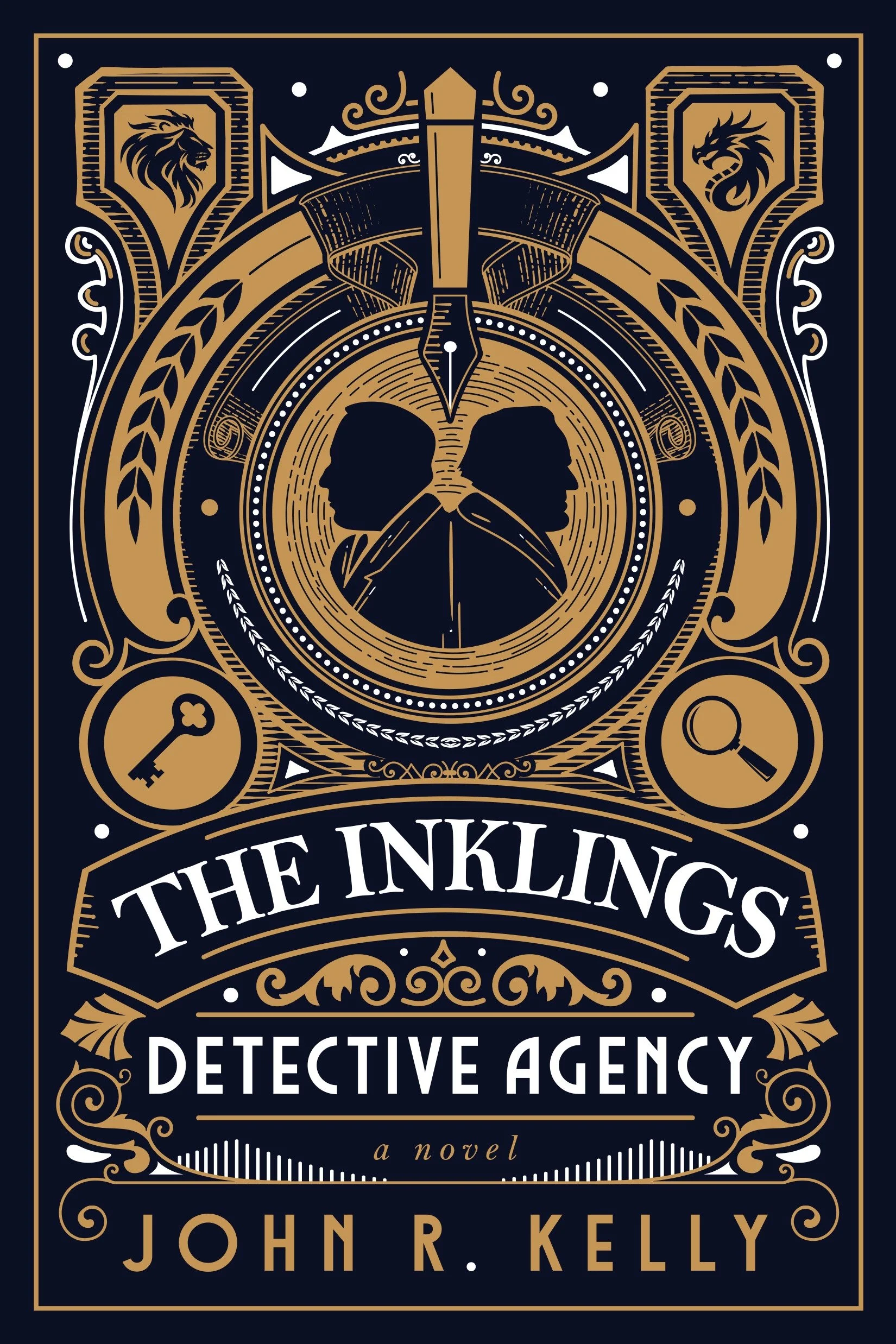
A couple weeks ago I was grateful to receive a copy of John R Kelly’s debut novel The Inklings Detective Agency. We follow each other on Instagram and he had referred me to his publisher as someone who might enjoy the book. He was right.

The novel takes place across three weeks in December 1936. Michaelmas Term has ended and Oxford is preparing for the Christmas holiday. In the opening chapter, Pembroke College don JRR Tolkien is late for the weekly meeting of the Inklings at the Eagle and Child pub. When he arrives the Lewis brothers, CS “Jack” and Warren “Warnie” Lewis, are absent, down with a mild cold at their house outside town, but other members including Adam Fox and Hugo Dyson are there to introduce Tolkien to a special guest. The stocky older man who slips into the room where they usually meet has heard of the Inklings through some unnamed source and believes they can help him solve a mystery. Not just any mystery—though the Inklings, before the events of his novel, have dabbled in solving minor local crimes—but a murder.

Multiple murders, in fact. Two British lords have died under curious circumstances in the last few months. The causes of death were written off as accident or suicide but the Inklings’ guest is certain both were murdered. Both died on a full moon and both were members of a small secret society dedicated to the occult and made up of other members of the British elite. The other members fear for themselves now, especially with another full moon approaching.

The request is impressive enough, but the man offering the work is a yet greater surprise: Sir Arthur Conan Doyle, creator of Sherlock Holmes himself, who is supposed to have died six years before.

The Inklings take the case and, once Tolkien visits Jack Lewis at home and fills him in on the details, their investigation begins. Learning more about the murders and, even more importantly, the victims and their connections through the secret society will take the Inklings to the theaters and working class flats of London, to the depths of the Bodleian Library, to a Christmas party hosted by the famed Detection Club, to a stately country house in the Cotswolds, and to a cold, gloomy castle on the banks of Loch Ness. Along the way they meet Dorothy Sayers, Agatha Christie, GK Chesterton, and the sinister Aleister Crowley.

These historical and literary cameos and the place afforded even to obscure members of the Inklings like Fox, Dyson, Nevill Coghill, and Lord David Cecil give The Inklings Detective Club the feel of an Argonautica for 1930s British mystery fiction. Like Apollonius of Rhodes, Kelly assembles an all-star team of characters and enjoys bouncing them off each other. The plot is almost beside the point—but it’s still good, engaging and genuinely mysterious, only slowly revealing itself—as, like Jason and his Argonauts, one of the book’s joys is simply to imagine hanging out with this crowd.

Kelly also opens the book with an author’s note explaining that he has fudged the timeline. He gives Chesterton, who died before the story takes place, six extra months to live and Charles Williams, who had corresponded with Lewis during the 1930s, joins the Inklings in person a few years early. This lies within the bounds of dramatic license, I think, but also serves a plot purpose. Without spoiling anything, when Sir Arthur Conan Doyle reveals that he had faked his own death in 1930, it prepares us for other, more dramatic returns from the grave.

My only complaints: The Inklings, for a gang of academics and bourgeois professionals, seem to leap a little too easily into their roles as private eyes, and I could not accept Tolkien as the bad cop of the group, deceiving and leveraging evidence against a potentially useful witness. There were also a few too many anachronisms. A minor but revealing one: throughout, women are always referred to as Ms. regardless of marital status. (I first noticed this with Janie Moore, the woman who lived with Jack and Warnie Lewis until her death in 1951 and who was always “Mrs Moore” in writing.) I don’t know that the author can be blamed for this specific problem; it seems like the kind of thing an overzealous copyeditor might goof up. But the handful of little distractions like that distract precisely because the book is otherwise so thoroughly and vividly imagined—the locations, the travel (by car or, more charmingly, by train), the clothes, the wintry 1930s atmosphere.

And the most vivid and enjoyable part is certainly the characters. Lewis, Owen Barfield, and Hugo Dyson seemed to me the best-realized of the Inklings, but two supporting characters steal every scene in which they appear. The first is Crowley, whom Kelly positions as a dark counterpart to Lewis and company. Crowley, an occultist notorious in his lifetime for his satanism and perverse lifestyle, is not as well known today but Kelly imbues him with an authentic air of degraded but intelligent wickedness. In what might be a sequel hook near the end, another character compares Crowley to Holmes’s Moriarty. I’d be up for just such a sequel.

The other standout supporting character is Dorothy Sayers, whose wry humor and puckish personality enliven the plot significantly through the middle of the book. If Tolkien and Lewis are the lead detectives in this case, Sayers is the worldly-wise informant who wants to help but also wants something in return. She’s great fun, and has more of a role to play in the story than one might immediately suspect.

The Inklings Detective Agency is a risky sort of book but enormously enjoyable to read. It’s a strong debut for Kelly and I hope he gets the chance to write many more such novels.

Spring reading 2026

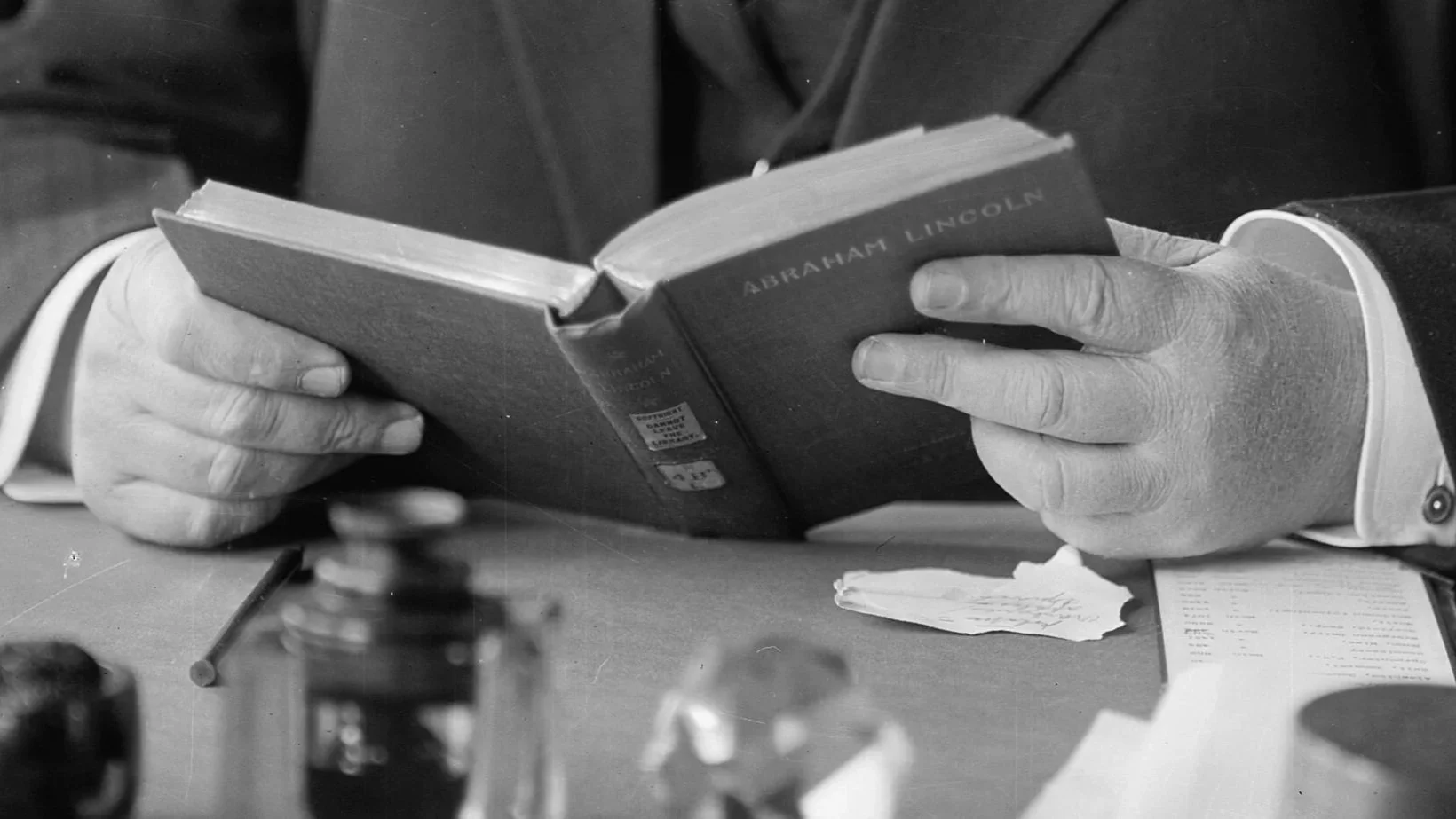
William Howard Taft reading at his desk c. 1904. The label pasted to the spine reads: “Copyright. Cannot Leave the Library.”

As personally difficult as this spring has been, with thirty-three books down—and almost perfectly divided between fiction and non-fiction—this turned out to be a stellar season for reading. Not only did I bulk up my non-fiction reading after a couple years of fiction-heavy lists, I also read more sci-fi and fantasy than usual. Almost all of it, of whatever genre, was good. I had to make myself leave things out of the list below, the ruthlessly selected best of the season.

The way I divide the year for these posts is always a bit arbitrary, but for the purposes of this one, “spring” is everything from New Year’s Day to the end of classes last week. As usual I present these in no particular order, and with my one audiobook “read” marked with an asterisk.

That said, I hope y’all enjoy and can find something good to read below:

Favorite non-fiction

On Conan Doyle, by Michael Dirda—A succinct and insightful overview of Conan Doyle’s life and work, with special attention to the Holmes stories as well as his more often overlooked work: Professor Challenger in The Lost World, the Hundred Years’ War novels The White Company and Sir Nigel, and the Napoleonic adventures of Brigadier Gerard. I was especially interested to learn more about Conan Doyle himself: his personal life and character, his intelligence and work ethic, and even his much-derided interest in spiritualism and fairies.

The First King of England: Æthelstan and the Birth of a Kingdom, by David Woodman—A solid new biography of Alfred the Great’s grandson, the first king of a unified kingdom of England, that gives a lot of attention to the complicated political situation of the time and just how much we can and can’t know about what was going on. Occsionally this means extended parsing of primary sources rather than narrative, which may not appeal to the general reader, but that comes with the territory. An Æthelstan biography is also going to be a historiographical paper to some extent and I think Woodman balances it all well. I used The First King of England as an example of the judicious use of incomplete sources for historical inferences here.

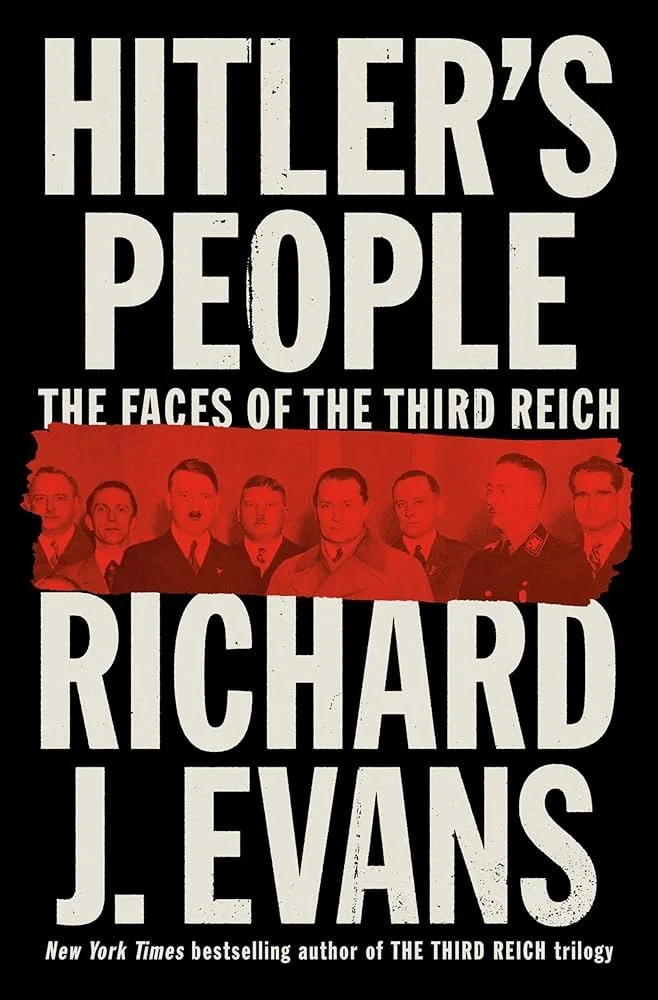
Hitler’s People: The Faces of the Third Reich, by Richard J Evans—This is an insightful series of character sketches of people from all levels of the Reich, starting with a 100-page biography of Hitler himself (which I’d love to see the publisher break out as its own little paperback, an ideal classroom text) and the Nazi Party’s elite (Göring, Goebbels, Himmler, Speer, and the like) down through the functionaries and ideologues and enablers (e.g. Heydrich, Eichmann, Hess, Hans Frank, Franz von Papen) to the ordinary people doing the work of the Reich: the generals, the gunmen who traveled Eastern Europe massacring Jews, the camp guards, the propagandists, and even the ordinary citizen. Evans has chosen good subjects and, taken together, these sketches give the reader a top-to-bottom feel for the culture of the Reich and how it worked—especially with regard to dimensions of the regime that don’t get as much attention, like labor organization or even motherhood—as well as the sheer variety of people it involved. Not all of them were motivated by the same things and not all of them explained or justified their participation the same way.

The Desecration of Man, by Carl Trueman—A more narrowly focused “how we got here” account from Trueman, this time looking specifically at how a changing understanding of anthropology—how we answer “What is man?”—was meant to liberate but has instead undermined and destroyed. Full review on the blog here.

The Nine Lives of Christopher Columbus, by Matthew Restall—An interesting multi-layer biography of Columbus, one that starts with the man (about whom, contrary to a widespread myth, we can know quite a lot), his goals and pretensions (he was a single-mindedly ambitious climber), and what he actually accomplished and follows his various “lives” through the five hundred years since: as a symbol of Manifest Destiny, an icon of Italian-American patriotism, a would-be Catholic saint, a progressive scapegoat for all the bad that has happened in the Western hemisphere ever since. Wide-ranging, deeply researched, fair to Columbus the man—warts and all—and attentive to how his character and actions have been interpreted in shifting contexts. I learned a lot from this book.

Class Clown: The Memoirs of a Professional Wiseass, by Dave Barry—A funny and often moving memoir covering everything from Barry’s childhood in New York and his early years in journalism to some of his antics as a reporter and his work since retirement. Hugely enjoyable.

Honorable mentions:

  • The Sleep You’re Longing For: How Rest Connects Us to Happiness, Healing, and Hope*, by Ken Wytsma—A helpful short guide to sleep, sleep problems, and some of the ways we can make life more generally restful, not just grudgingly recharging for a few hours at night.

  • The Way of Dante: Going Through Hell, Purgatory, and Heaven with C. S. Lewis, Dorothy L. Sayers, and Charles Williams, by Richard Hughes Gibson—A series of expanded lectures on Dante’s reception and interpretation by Williams, Lewis, and Sayers that illuminates all four. I was especially intrigued to learn how late Sayers came to Dante, and with what overwhelming gusto she embraced the Comedy.

  • Cicero: A Very Short Introduction, by Yelena Baraz—Exactly what it says on the tin: a short overview of Cicero’s life, legal and political career, and his literary and philosophical work. An approachable place to start and just over a hundred pages. Would pair well with reading his letters, speeches, or especially late essays like On Old Age or On Duties.

Special mentions

I’ve started including these “special mentions” sections for books that are neither straightforward fiction nor non-fiction as usually understood. Most of the time this is epic poetry. This time you’ve got not just any epic but the original, the very first, as well as some important primary sources for American history.

Gilgamesh, translated by Simon Armitage—A new translation of the epic that prioritizes coherence and readability above the precise indication of every gap and mystery in the text as it has come down to us. At that it succeeds admirably and was a pleasure to read. It was exciting and moving and conveyed the foreignness of the ancient world in an approachable and readable way. This is likely the version I’d recommend to people coming to Gilgamesh for the first time.

An interesting side issue: In his introduction, Armitage states forthrightly that he does not know the languages concerned and worked from literal translations by experts, which to me raises the question of how much this can be called a “translation” in the normal sense of the word, but Alan Jacobs persuasively argues here that Armitage’s project to craft a Gilgamesh that “will be exciting, that will make the text vivid” is a worthy one.

The Alien and Sedition Acts—Part of a new series from Modern Library, this volume collects four laws signed by John Adams over about a month in the summer of 1798—bills that extended the timeline for naturalization, empowered the president to arrest and deport foreigners, and criminalized written or spoken criticism of Congress and the president—and the Jefferson- and Madison-authored Kentucky and Virginia Resolutions that challenged them.

The laws themselves are bad enough, but most galling are the responses by several state legislatures to the resolutions, all of which assert that, nah, the violation of the 1st and 10th Amendments is in fact constitutional, that Kentucky and Virginia are the real threats, and that anyone who loves the union should back up whatever the president does in time of crisis. (Notably, these responses all come from northern and New England states. Massachusetts goes out of its way to praise the wisdom of Adams, an obsequious defense of its hometown boy.) The longest document, Madison’s background notes on the Virginia Resolution, is an angry masterclass on federalism, the proper relationship between state and central governments, the danger of the loose interpretation of the constitution pioneered by Alexander Hamilton (mentioned, but not by name) and the failure of the states to protect their prerogatives.

The introduction, by a civil rights lawyer who has written about growing up as an illegal alien, suggests the publication of these texts now is some kind of gotcha to the current administration’s immigration policies, but the documents themselves are much, much more concerned about states’ rights and free speech. What the book really shows is that the violation of the 10th Amendment, the federal government’s bent toward setting itself up in newer and more expansive spheres of authority, the expectation that the states fall into line behind whatever the executive wants, and the desire to curtail speech in the name of preventing the spread of false information are as old as the Republic. The Antifederalists’ fears of an overreaching, tyrannical federal government, something all conservatives should be concerned about, were not fulfilled in Obama, LBJ, FDR, or even Woodrow Wilson, but came true almost immediately. A sobering consideration.

Favorite fiction

This section will be somewhat shorter not out of any lack of good reading—this was an exceptional spring for fiction—but because I managed to review a lot of these in full, dedicated posts of their own. I’ve linked to those below.

Mars in Aries, by Alexander Lernet-Holenia—In the days leading up to World War II, an Austrian cavalry reservist falls in with a strange crowd and becomes infatuated with the mysterious woman at their center. Then he’s deployed, and his recurring visions of past people and events start to merge with reality. Perhaps my favorite Lernet-Holenia so far. Full review on the blog here.

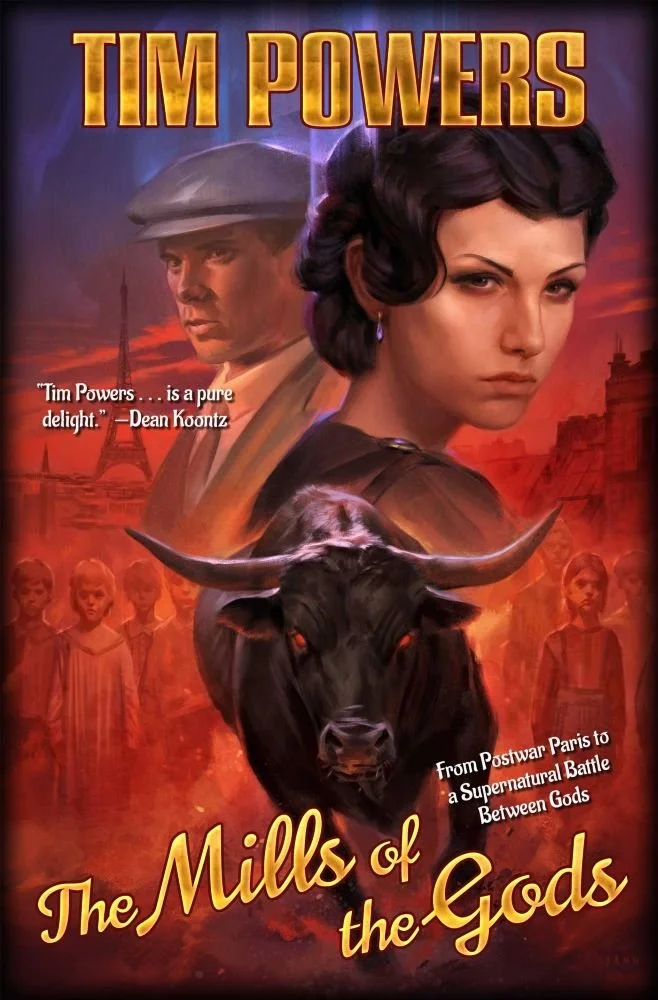
The Mills of the Gods, by Tim Powers—One I had hoped to review in full but couldn’t find the time to. Powers’s latest takes place in 1920s Paris, where expat American illustrator Harry Nolan finds himself involved with a young woman named Vivi and both end up on the run from the sauteurs, a centuries-old secret society striving for immortality by stealing into the bodies of specially prepared newborns. The sauteurs are dangerous and possessive of their target bodies, and Vivi’s most especially. Together, Harry and Vivi must free her and, with clues gathered from Ernest Hemingway, Pablo Picasso, and a sympathetic and helpful Gertrude Stein, unearth the true history of the sauteurs and defeat them permanently. The plot moves briskly and I was absorbed from the first chapter. I greatly enjoyed the Parisian setting, the cameos by Lost Generation artistic figures, and the connections to the ancient world Powers establishes for the sauteur cult. (As deadly and satanically parasitic as the villains are, I mercifully did not find them as spiritually oppressive as the succubi of The Stress of Her Regard.) But I most liked the relationship between Harry and Vivi. Both the First World War veteran Harry and intended sauteur host-body Vivi are damaged goods in need of redemption, and while they begin in mutual suspicion and work together out of necessity they move, over the course of the novel, through collaboration and friendship to something, not coincidentally, full of grace. A beautiful and moving ending caps a breakneck supernatural adventure.

A Rough Shoot, by Geoffrey Household—A lean, tightly-focused thriller from the author of Rogue Male. An English businessman and veteran of World War II surprises what he thinks are poachers on his patch of rented hunting land and accidentally kills one. His effort to cover it up embroils him in deeper, more complicated, and more far-reaching events than he could have anticipated. Full review on the blog here.

State of Siege, by Eric Ambler—An English engineer working in postwar Indonesia has finished his contract and hopes to fly home but finds himself, and a casual date, in the center of a military revolution. Fast-moving and suspenseful while also sweeping in scope, this is almost certainly my favorite of Amber’s post-WWII novels. Full review on the blog here.

The Lost Language of Oysters, by Alexander McCall Smith—The latest in McCall Smith’s long-running series about hapless German philologist Professor Dr Dr Moritz-Maria von Igelfeld, this is a unified novel rather than a collection of interrelated short stories and finds the good Professor jockeying for status with a pesky old colleague and, to his own surprise, falling in love with an American linguist after she gives him a ride on her motorcycle. The more recent entries in the series are gentler and don’t have some of the darkness or ironic bite of the earlier ones, but they are always enjoyable, funny, and—just occasionally—surprisingly sweet. This one has some particularly good twists and surprises and a great ending.

Other Paths to Glory, by Anthony Price—Paul Mitchell, a young military historian studying a battle on the Western Front, receives two strange visits on the same day: the first is with two intimidating, authoritative men who are clearly not what they say they are; the second is with an assassin who throws him into a canal in an attempt to stage a suicide. The first two men, Audley and Colonel Butler, who were introduced in Price’s The Labyrinth Makers (which I briefly reviewed here), come to Mitchell’s aid and together they return to the former battlefield. What could be hidden there that would lead to murder and, with a secret international conference about to occur nearby, a threat to world peace? Another good thriller with a historical dimension from Price.

Heir to the Empire, by Timothy Zahn—My first Star Wars novel. Picking up a few years after The Return of the Jedi, this story follows the New Republic—formerly the Rebellion—through instability and infighting in the aftermath of success and the emergence of a new threat from the Empire, the skilled and intelligent Grand Admiral Thrawn. A fun read, and truer to the spirit and characters of the originals than much of what’s been sold as Star Wars since. Full review on the blog here.

Honorable mentions:

  • The High Crusade, by Poul Anderson—Vintage sci-fi with a fun hook—knights mustering for a crusade in medieval England encounter aliens, commandeer their ship, and set off on a crusade across the stars—that actually delivers. Brisk and enjoyable.

  • Spy Hook, by Len Deighton—The beginning of Deighton’s second Bernie Samson trilogy. A former secret agent murdered, a slush fund missing, old colleagues back from the dead, and Samson’s burgeoning romance with a younger woman threatened. Not quite as tight as the Game Set Match books but an involving story with a lot of surprises.

  • Beast in the Shadows, by Edogawa Rampo—An eerie, atmospheric, disturbing short novel in which a woman who believes she is being stalked approaches a crime novelist for help. Rampo was a devotee of Poe (Edogawa Rampo is his pen name, a Japanese near-equivalant of Edgar Allan Poe) and it shows clearly: concision, intricate construction, darkness, a beautiful tormented woman, violence, and insanity. Bleak but enthralling.

  • The Chrysalids, by John Wyndham—A young boy living in a farm community that, following a nuclear war, has reorganized itself around an intense religious vigilance for genetic mutation questions what he’s learned about mutants and realizes that his gift for telepathy, which he had always taken for granted, may be endangering him and his friends. Not my favorite Wyndham but a brilliantly imagined situation with a suspenseful final third.

Favorite kids’ books

The Raven: The Classic Poem, by Edgar Allan Poe, illustrated by Chloe Bristol—A beautifully illustrated new edition of Poe’s masterpiece, with moody, atmospheric but kid-friendly pictures. Full review on the blog here.

Bones and Berserkers, by Nathan Hale—A fun anthology of short horror stories—some true, some fictional, several somewhere in-between—by one of my kids’ favorite graphic novelists. Full review on the blog here.

Corduroy, by Don Freeman—A teddy bear for sale in an apartment store wants a home and finds unexpected fulfilment. I somehow made it to adulthood without having read Corduroy. I read it to our twins and just about lost it. A simple, beautiful and moving story with a lot of emotional and even spiritual depth.

Count Yourself Calm, by Eliza Huie, illustrated by Mike Henson—We got our own copy of this picture book after an occupational therapist worked through it with one of our kids. It helps create a simple routine for calming anger, fear, frustration, and other “BIG feelings,” per the subtitle, by counting down gifts from God: parts of creation that bring us joy, the gifts he’s given us, the people who love us, and more. Simple and helpful for both kids and adults!

Ember Falls, by SD Smith—The second of Smith’s Green Ember fantasy series about anthropomorphic rabbits Heather and Picket; another fun adventure and a worthy followup to the original.

Looking ahead

I’m already into the reading for this year’s John Buchan June—the fifth June since I began this event!—so be on the lookout for that to begin in just a few weeks. I’ve also got a lot of other good fiction and non-fiction lined up and I hope to slow things down a bit for a few older, longer novels in the late summer or fall. In the meantime, thanks for reading, and I hope this list will have led you to something you can enjoy this summer!

Kreeft on Job

detail from Job Rebuked by his Friends, by William Blake

I’ve been reading Peter Kreeft’s Three Philosophies of Life, a short examination of Ecclesiastes, Job, and Song of Solomon as visions of competing worldviews, bit by bit over the last month or so. Appropriately, over the weekend I read the section on Job—theme: Life as Suffering—while getting over an illness. Here are two passages that struck me:

First, from Kreeft’s introductory remarks:

Though bottomlessly mysterious, [the Book of Job] is also simple and obvious in its main “lesson”, which lies right on the surface in the words of God to Job at the end. Unless you are Rabbi Kushner, who incredibly manages to miss the unmissable, you cannot miss the message. If Job is about the problem of evil, then Job’s answer to that problem is that we do not know the answer. We do not know what philosophers from Plato to Rabbi Kushner so helpfully but hopelessly try to teach us: why “bad things happen to good people”. Job does not understand this fact of life, and neither do we. We “identify” with Job not in his knowledge but in his ignorance.

Identifying with Job in his ignorance is an elegant way to put it. Job doesn’t know at the beginning of the book—the Accuser executes his plan to have Job curse God without any forewarning—and Job still doesn’t know at the end, and yet he is satisfied. Cf. Chesterton’s comments on Job, which I quoted here two years ago in connection with another great ancient confrontation with Not Knowing: The Epic of Gilgamesh.

In the final third of the section on Job, Kreeft leaves the Problem of Evil behind and turns his attention to what he calls “The Problem of Faith versus Experience.” Here he engages in exactly my kind of comparative history:

In previous ages, especially the Middle Ages, which were strong on reason but weak on psychological introspection, and attention to feeling and experience, the crucial problem was the relation between faith and reason. . . . In our age, which is weak on reason (and even doubts reason’s power to discover or prove objective truth) and strong on psychology and experience, the crucial problem is the relation between faith and experience. Today many more people lose their faith because they experience suffering and think God has let them down than lose their faith because of any rational argument. Job is a man for all seasons but especially for ours. His problem is precisely our problem.

I’ve seen compelling arguments that conversion is often if not always pre- or sub-rational. CS Lewis’s account of his acquiescence to God in Surprised by Joy comes to mind. Traveling in the opposite direction, compare the recent evangelical phenomenon of “deconstruction,” which seems primarily to be a process of publicly washing off political cooties (Christians have been mean to gays! Christians owned slaves! Christians voted for Trump!) rather than a Christopher Hitchens- or Bertrand Russell- or Friedrich Nietzsche-style coldly reasoned apostasy.

Kreeft published this book in 1989, yet here he foresees our not only postmodern but post-truth world and the need for an apologetics based not solely on rational argument. Alister McGrath is the theologian I’m most familiar with who has made a deliberate effort at this.

Three Philosophies of Life has been excellent so far, not least because Ecclesiastes and Job are two of my favorite books of the Bible. I look forward to the final part on Song of Solomon, “Life as Love.” While Ecclesiastes and Job have spoken to me where I am for years, Song of Solomon has always been something of a mystery to me. Having read Kreeft’s examination of Job, I’m prepared to embrace that.

The Pale Blue Eye

Speaking of breaking the basic rules of fair play in a whodunit, my first fiction read of 2023 was the historical mystery thriller The Pale Blue Eye, by Louis Bayard. I first heard of this novel late last year when the teaser for the Netflix film adaptation arrived. A lifelong Poe devotee, I was immediately intrigued. I dithered over whether to read the novel as I have had some of my own Poe-related fiction simmering for a few years, but as I don’t have Netflix and the basic premise wouldn’t leave me alone, I decided to go for it.

I read it in just a few days right after the New Year. I’ve been thinking about and reconsidering it ever since.

The film has been out a while now so the broad outlines of the story should be familiar. Retired New York City constable Gus Landor is called one fine autumn day to meet with the commandant of the United States Military Academy at West Point. The commandant, Sylvanus Thayer, tells Landor that one of the Academy’s cadets has been found hanged. Thayer has already ruled out suicide, as after the victim was discovered his body was cut down and his heart cut out. The corpse they removed to the infirmary. The heart has yet to be found. Thayer asks Landor to investigate, both to find the killer and to protect the Academy, which is still new, untested, and the object of suspicion among some citizens of the young republic.

Landor, a consumptive who lives continuously aware of his impending death, agrees to his request with some strict conditions and begins. He questions witnesses, examines the body, searches the barracks, and goes over the grounds of the Academy and the place near the Hudson where the body was found. In the course of his searches he meets a first-year cadet from Virginia, one Edgar A Poe, who offers Landor one sharp bit of advice and disappears. His curiosity piqued, Landor later seeks Poe out at a local tavern and the two strike up an odd partnership built around solving the crime—part crime-fighting duo, part mentor-protégé, part estranged father and orphaned son.

Their partnership is deepened and tested when more cadets are murdered and, even more disturbingly, evidence mounts of some kind of satanic worship extending right into the ranks of the Academy itself.

I don’t want to give much more away, as the unfolding of the investigation, the accumulation of clues, and the working relationship between Landor and Poe is one of The Pale Blue Eye’s great joys. It is also, as it turns out, one of its great frustrations.

Before I get into the one major spoiler, let me praise the two best features of the novel. First, the narrative voice: wry, sardonic, blunt and straightforward but with a finely honed poetic edge, Landor tells his story in such a way that a reader is guaranteed to be hooked. Even when the story’s pacing flagged—as it does in a few places near the middle—I was drawn along by Landor’s narration, which never lost my interest.

The other strength of The Pale Blue Eye is its portrait of young Poe. His semester and a half at West Point is often passed over as a biographical curiosity, but Bayard gives Poe’s time there a central place in his life story and brings this young man, burdened with a hard background and self-sabotaging flaws but buoyed by a tremendous trust in his own gifts, to vibrant life. (Bayard’s interpretation owes too much to Poe biographer Kenneth Silverman, who psychologized and pathologized and autobiographized Poe’s work to death, but that angle is probably only discernible to the enthusiast.) I’ve seen some readers complain that the novel is dull whenever Poe is “offscreen”; I disagree, but it does take on an irresistible energy whenever he appears.

That said, I’ve been reflecting on The Pale Blue Eye ever since I finished it not only because I enjoyed it so much, but because its conclusion, its climactic revelation, was such a cheat: it turns out that the first murdered cadet was killed by Landor himself.

In my post about Glass Onion’s failure to play fair with its audience, I mentioned Ronald Knox’s ten commandments of detective fiction. Knox’s rules had been on my mind because of that movie and I sought out the specific rules again because of this novel. In the case of The Pale Blue Eye, rules seven and eight are broken: “The detective himself must not commit the crime” and “The detective is bound to declare any clues he may discover.”

Given the structure and narration of The Pale Blue Eye, violating the one necessitates violating the other. Landor, having already murdered the first victim when the novel begins, withholds key information—namely, that the cadet had been one of several who had gangraped Landor’s daughter, an act that drove her to suicide. Instead, Landor misleads, telling everyone he meets and us, the readers, directly, that his daughter has left him. This is left as vague as possible: perhaps she ran off with a man, perhaps she died… somehow. Landor’s own tuberculosis offers the reader a red herring by association. His tragic backstory, when it is alluded to, is only a tragic backstory, presented with no apparent connection to the events at the Academy because Landor never gives any specifics regrading what happened to his daughter.

The point is that, until Landor explains precisely what happened in the final pages of the book, the reader could never have guessed at these relationships or events. Even when, about halfway through, I first darkly suspected that Landor was involved in the first murder I told myself it couldn’t be—there was nothing to base that suspicion on. Once Landor confesses to Poe and the reader, it recasts not only the meaning of every event in the book like a good twist should, but the very premise of the story itself. It just doesn’t work. The reader rejects it. The revelation is meant to be a tragic surprise but feels like a betrayal, a betrayal compounded in the last few pages by absurdity as Landor, somehow, narrates throwing himself over the same cliffs where his daughter killed herself.

As I mentioned last time, rules are made to be broken, and I didn’t look up Knox’s rules to hold The Pale Blue Eye accountable for some minor breach of protocol. I despise that use of rules for fiction. (Here’s the worst offender, an utterly arbitrary and stupid measure that many readers take as gospel.) But rules like Knox’s exist for a reason. Think of them less as an imposition of external standards on how to tell a story and more an empirical record of what doesn’t work.

A master, fully cognizant of the rules and of the risks he runs in purposefully breaking one, might get away with it. I’ve mentioned Agatha Christie in this connection before. But more often you will get a novel like this one.

The Pale Blue Eye is a case study in taking such risks and failing. It is brilliantly and often poetically written, full of well-realized characters, spooky gothic atmosphere, evocative and realistic Jacksonian-era period details, and a striking portrait of a real person at a formative moment in his life. But its final twist undermines the entire novel up to that point, making the reader doubt whether it was worth the investigation at all.

Devotion and Glass Onion

Jonathan Majors and Glen Powell as Jesse Brown and Tom Hudner in Devotion, and Daniel Craig as Benoit Blanc in Glass Onion

My family’s Thanksgiving Break arrived just in time this year, giving both my wife and I some much-needed rest and our kids a lot of good time at home, all together. As an added bonus, the break started off well for me when my father-in-law took me to see a movie, and then my wife and I spent the evening of Black Friday on a date that included steaks and another movie. And what is more, both movies were good. After months of nothing interesting in cinemas, this has been a good couple of days.

The films are Devotion and Glass Onion. I intended to review Devotion the morning after seeing it, but just because I’m on break doesn’t mean I’m not busy. After seeing Glass Onion last night with my wife and wanting to review that, too, I decided to put together a joint review of both. I hope one or both of these will sound appealing to y’all, and that you’ll find something here to enjoy.

Devotion

Devotion, based on the book by Adam Makos, tells the true story of Ensign Jesse Brown and Lieutenant Tom Hudner, naval aviators who saw action in the Korean War. The movie transpires over the course of 1950, when Hudner was transferred to a naval air station in Rhode Island and met Brown, the first African-American naval aviator and therefore still a curiosity to outsiders despite being mostly accepted by his fellow pilots. When their commander assigns them as wingmen for fighter training, Hudner and Brown test each other in skill and daring, slaloming through the masts of sailboats and buzzing a house in the nearest town. It’s friendly and professional, but they’re also clearly feeling each other out.

The early tensions of the Cold War loom in the background, and after their squadron is issued powerful and dangerous new aircraft—the F4U Corsair—Brown and Hudner deploy to the Mediterranean and finally to Korea. Here, late in the year, after the Chinese intervene and stream across the Yalu River into North Korea, overrunning American and UN positions and surrounding and pinning down Marine units at the Chosin Reservoir, Brown and Hudner provide close air support, attacking ground targets, strafing Chinese units as they mass for attack, blowing up bridges. It’s facing MiGs and anti-aircraft fire in Korea that will most sorely test Brown and Hudner’s skills and friendship.

As played by Jonathan Majors and Glen Powell (also of Top Gun: Maverick, making this his second naval aviation role this year), Brown and Hudner are a study in contrasts. Brown is stolid, stoic, but with something simmering just below the surface; Hudner is gregarious and upbeat but by no means naïve. Brown is a married family man and a teetotaler; Hudner is single, on the prowl, and doesn’t mind throwing one back with the boys.

One could call this standard buddy movie material but Majors and Powell play it with great skill and subtlety, making Brown and Hudner feel like real men with real depth to them, and so what begins as a professional relationship with some low-key rivalry grows into a friendship that takes on great weight and meaning by the end. The more they get to know each other, the more each grows. Iron sharpeneth iron.

The acting is good across the board, especially Majors and Powell but also Christina Jackson as Brown’s wife Daisy, who takes the usually thankless role of the wife waiting for her husband back home and gives it serious heart. As strong as Brown and Hudner’s relationship becomes over the course of Devotion, it’s Hudner’s relationship with Daisy that gives the film is greatest emotional weight. Fittingly, they have a coda together.

The main draws for me were the aviation and the Korean War setting. Both are excellently done in Devotion. Korea doesn’t get much attention nowadays—it has really earned its nickname of “The Forgotten War”—and I’m glad to see a good film that provides a small but clear window into the topic. The film stresses both the continuities of this conflict with World War II (having fought in that war gives an aviator an authority that even rank doesn’t) and change (the integration of the armed forces, most obviously, as well as a change in opponents). The handful of battle scenes showing the ground conflict are well-executed—a nighttime attack in which more and more and more Chinese troops appear in the flickering, wavering light of flares was even scary.

The aviation also proved excellent. I’ve learned since watching Devotion that director JD Dillard insisted on practical effects, real aircraft, and real flying wherever possible, and the film has a strong sense of verisimilitude and authenticity as a result. The filmmakers’ painstaking attention to detail makes everything feel real. Devotion’s flying sequences may not have quite the palpable sensory thrill of Top Gun: Maverick, but they’re close, and for the same reasons. The combination of practical effects and real planes with Erik Messerschmidt’s rich, moody, classically styled cinematography also means that Devotion looks great, far better than a comparable film like Midway.

Furthermore, the aviators in this film act and talk like real pilots, worrying over things like weather, visibility, maintenance, windspeed and direction, the approach when landing on an aircraft carrier, and more. Brown, for example, excels in his F8F Bearcat but worries about the overwhelming torque and limited cockpit visibility in the Corsair. This is not just about verisimilitude, but sets up important events later in the movie. It’s just good, solid filmmaking.

I have not yet read Makos’s book and can’t vouch for the truthfulness or accuracy of every detail of Devotion’s story. Certainly some aspects of the film feel like stock Hollywood elements, especially a racist Marine who keeps reappearing and challenging Brown. But the rest strikes me as true to the source material. I especially liked that a crucial moment in the plot is motivated by the respect Brown and a white aviator have for each other because they’re both Southerners. The respect afforded all the characters in all their particularity gives the film a complexity that makes not only the action but the situation feel real.

Devotion’s refusal to make sweeping statements, avoiding political grandstanding or simplistic caricature in favor of closely examining the friendship between two wingmen, makes it a more subtle, nuanced, mature examination of racial division and healing—not to mention comradeship, courage, professionalism, and love—than I’ve seen anywhere in a long time. But more than that, it’s a well-crafted and moving telling of an important true story, and that alone makes it worth seeing.

Glass Onion

Following up my review of Devotion with a review of Glass Onion means going from the sublime to the ridiculous. And that’s not necessarily a bad thing.

Glass Onion opens (in May 2020, the last halcyon days of the pandemic before society started eating itself) with a series of oddballs receiving an elaborate puzzle box. Communicating with each other by phone, they work their way through the puzzles to receive a signed invitation to a private island getaway from an old acquaintance, tech billionaire Miles Bron (Ed Norton). They convene in Greece for the boat ride to the Glass Onion, Miles’s elaborate, showoffy mansion where he keeps a Porsche on display on the roof (since there are no roads on the island) and has rented the Mona Lisa from the Louvre. The guests are Claire (Kathryn Hahn), an annoying liberal politician from New England; Birdie (Kate Hudson), an annoying fashionista with a talent for saying stupidly offensive things and is being kept from her phone by her assistant (Jessica Henwick); Duke (Dave Bautista), an annoying manosphere Twitch streamer who arrives with his girlfriend, Whiskey (Madelyn Cline); and Lionel (Leslie Odom Jr), who is just a scientist.

But two unexpected guests arrive as well. One is Benoit Blanc (Daniel Craig), who has no connection with Miles but has dark forebodings about unexplained invitations to gatherings like this. The other is Andi (Janelle Monáe), a cofounder of Miles’s tech company who was elbowed out of her leadership role, her fortune, and more. She was invited, but it was clearly pro forma. No one expected her to come, and they are disturbed that she has. Blanc notes, observes, hypothesizes.

Blanc is also greatly bothered. Miles has planned this get-together as a murder mystery roleplaying game. Why would he suggest the idea of himself, murdered, to a house full of people who wouldn’t mind doing exactly that?

I can’t write much more without giving anything away, and I certainly don’t want to do that. But a clue as to what to expect from Glass Onion arrives early, delivered by Yo-Yo Ma, of all people, at a bizarre Covid party held at Birdie’s penthouse apartment. When a music box in Miles’s puzzle begins playing a classical tune, Yo-Yo Ma explains that the tune is Bach’s Little Fugue in G Minor, a fugue being a seemingly simple tune that, when played back and layered over itself, changes, revealing extraordinary complexity and unexpected surprises. The central metaphor of a glass onion, which is both layered and clear at the same time, also suggests a great deal about the way the film works.

And that is one of the joys of Glass Onion—the complexity, the careful construction, the doubling back and revelation. It had a lot of genuine surprises and was brilliantly crafted. I’d even rate its plotting as better than Knives Out. The other joy is the humor. Glass Onion is hilarious from beginning to end, with a lot of well-earned laughs deriving from character and well-executed setups and punchlines, not just references and allusions as in a lot of other comedy these days. There’s also plenty of pure silliness, but the fact that a lot of the jokes also work as plot points or signposts for the viewer points back to the quality of the film’s construction.

The cinematography is good, the costumes and sets are great, and the performances—cartoonish as the characters are—are good. Craig is especially good as Blanc. In the first half of the movie I wondered why Blanc, who was mostly cool and collected in Knives Out, was so befuddled and buffoonish in this one. But in the second half… And Janelle Monáe, whose natural sanctimony I usually find off-putting, was truly brilliant in a role that turns out to be a bit of a fugue or glass onion itself.

I did have a few misgivings about Glass Onion. The setup and middle act were brilliant, but the film missteps tonally in the end. Some of the climactic action is bothersomely childish. Again, I can’t elaborate without giving too much away. And while the characters were all wildly entertaining and well-performed, they were still broad caricatures whose foibles and flaws felt like familiar types and some of the jokes at their expense were low-hanging fruit. Dave Bautista’s manosphere influencer, for instance, rants about masculinity and is obsessed with guns but lives at home with his mom. Got it. One suspects Rian Johnson spends way too much time online. Fortunately, almost all of the characaters reveal more about themselves as the film goes on, doubling back, layering.

But these are minor problems. Knives Out, the first Benoit Blanc mystery, was one of my favorite movies of the year when it came out in 2019. I wrote that it “was the most fun I’ve had at the movies this year.” That’s probably also true of Glass Onion.

Conclusion

I’m glad to say that after a long cinematic dry spell this year, I’ve gotten to see two good films in just a matter of days. Devotion and Glass Onion are solid, well-constructed movies and well worth seeing in theatres. Glass Onion in particular is a Netflix film and as far as I know will only be in theatres for a week. I hope y’all will check it and Devotion out.

Happy Thanksgiving!

Striding Folly

This week I read a little collection of Lord Peter Wimsey stories I picked up at Mr. K's in Asheville, Striding Folly. This book includes only three stories, but its still appealing for two reasons: Lord Peter is always fun, and these are the last three Lord Peter stories Sayers wrote. One of them, "Talboys," was not even published during her lifetime.

StridingFolly.jpg

The title story, "Striding Folly," is an odd little puzzle. An elderly chess enthusiast, tormented by a strange dream about the folly on a nearby hillside, has a mysterious foreign-sounding visitor on the night he usually expects to play chess with the local landowner. Later that night, the old man, guided by his dream, wanders up to the tower and finds the landowner murdered. The crime scene has been arranged to cast suspicion on him, and no one will believe his alibi. Lord Peter shows up in, quite literally, the last two pages to sort things out. 

"Striding Folly" is a strange story but has some wonderfully gothic, apocalyptic atmosphere, and that will (almost) always win me over.

The second story, "The Haunted Policeman," begins with Lord Peter and his wife Harriet welcoming their first baby, a son named Bredon, into the world. Peter is then shooed away, after the fashion of that era, and finds himself lounging around outside their London flat, where he meets a policeman who has just had a strange experience that, like the elderly chess player, no one will believe. 

The solution to this mystery is a bit pat for my taste, but the increasing intoxication of both Lord Peter and the policeman as the latter recounts his story is immensely entertaining.

The last story, "Talboys," written in 1942 but not published until the 1970s, was my favorite. The mystery is minor—a farmer near Lord Peter's country seat complaining about stolen peaches—but the story is a lot of fun. Lord Peter, Harriet, and their now three boys are hosting Miss Quirk, a guest sent to them by relatives. Miss Quirk and Harriet have a number of humorous exchanges about childrearing and corporal punishment, Miss Quirk being a childless expert on children thanks to her reading about all the latest theories. You know the type. 

A lot of the story consists of Lord Peter trying to investigate the peach incident and corral his oldest son, who loves peaches and has been behaving suspiciously, without provoking know-it-all commentary from Miss Quirk. The ending brings these plot threads together in a hilarious and satisfying punchline.

Definitely check out Striding Folly if you enjoy short mysteries of the more genteel variety, especially if you like them with a good dash of wry humor. It may help if you're already familiar with other Wimsey stories (I've listened to Gaudy Night on a roadtrip, which is my sole past experience with Lord Peter and Harriet's relationship), but if not they should still be thoroughly enjoyable.