Spring reading 2026

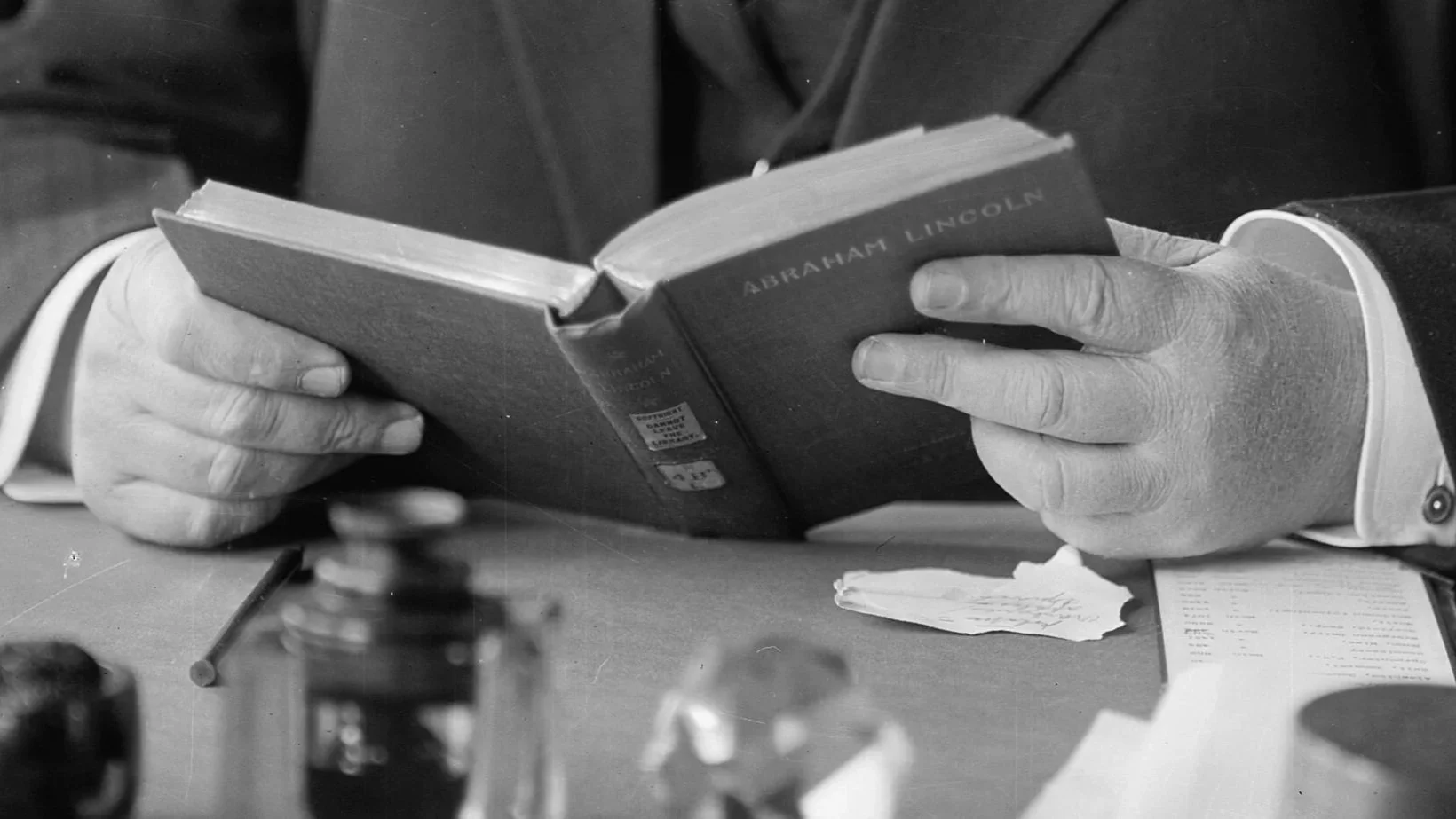
William Howard Taft reading at his desk c. 1904. The label pasted to the spine reads: “Copyright. Cannot Leave the Library.”

As personally difficult as this spring has been, with thirty-three books down—and almost perfectly divided between fiction and non-fiction—this turned out to be a stellar season for reading. Not only did I bulk up my non-fiction reading after a couple years of fiction-heavy lists, I also read more sci-fi and fantasy than usual. Almost all of it, of whatever genre, was good. I had to make myself leave things out of the list below, the ruthlessly selected best of the season.

The way I divide the year for these posts is always a bit arbitrary, but for the purposes of this one, “spring” is everything from New Year’s Day to the end of classes last week. As usual I present these in no particular order, and with my one audiobook “read” marked with an asterisk.

That said, I hope y’all enjoy and can find something good to read below:

Favorite non-fiction

On Conan Doyle, by Michael Dirda—A succinct and insightful overview of Conan Doyle’s life and work, with special attention to the Holmes stories as well as his more often overlooked work: Professor Challenger in The Lost World, the Hundred Years’ War novels The White Company and Sir Nigel, and the Napoleonic adventures of Brigadier Gerard. I was especially interested to learn more about Conan Doyle himself: his personal life and character, his intelligence and work ethic, and even his much-derided interest in spiritualism and fairies.

The First King of England: Æthelstan and the Birth of a Kingdom, by David Woodman—A solid new biography of Alfred the Great’s grandson, the first king of a unified kingdom of England, that gives a lot of attention to the complicated political situation of the time and just how much we can and can’t know about what was going on. Occsionally this means extended parsing of primary sources rather than narrative, which may not appeal to the general reader, but that comes with the territory. An Æthelstan biography is also going to be a historiographical paper to some extent and I think Woodman balances it all well. I used The First King of England as an example of the judicious use of incomplete sources for historical inferences here.
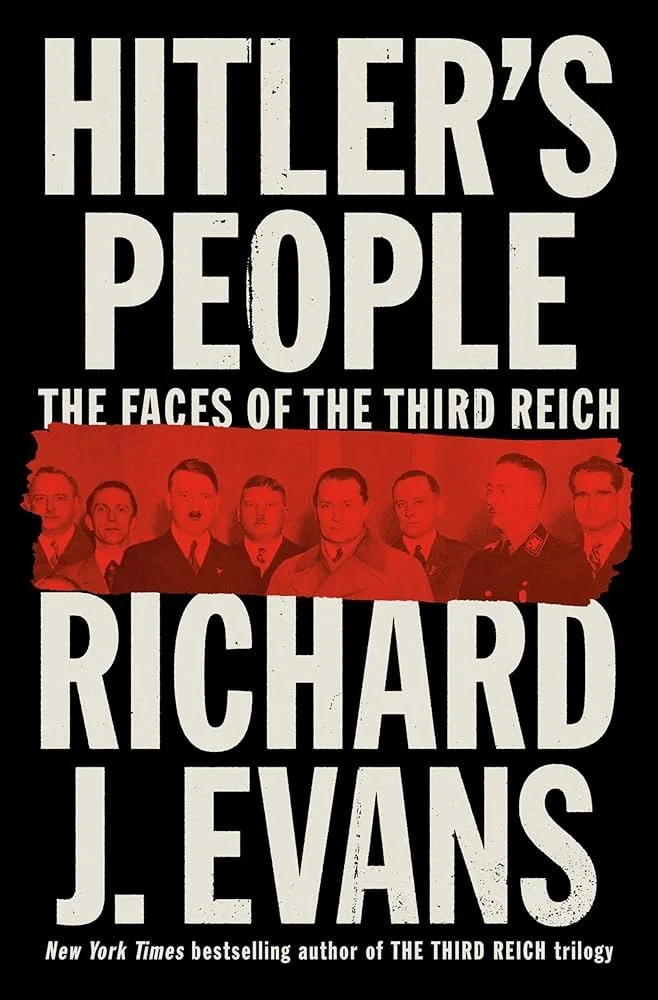
Hitler’s People: The Faces of the Third Reich, by Richard J Evans—This is an insightful series of character sketches of people from all levels of the Reich, starting with a 100-page biography of Hitler himself (which I’d love to see the publisher break out as its own little paperback, an ideal classroom text) and the Nazi Party’s elite (Göring, Goebbels, Himmler, Speer, and the like) down through the functionaries and ideologues and enablers (e.g. Heydrich, Eichmann, Hess, Hans Frank, Franz von Papen) to the ordinary people doing the work of the Reich: the generals, the gunmen who traveled Eastern Europe massacring Jews, the camp guards, the propagandists, and even the ordinary citizen. Evans has chosen good subjects and, taken together, these sketches give the reader a top-to-bottom feel for the culture of the Reich and how it worked—especially with regard to dimensions of the regime that don’t get as much attention, like labor organization or even motherhood—as well as the sheer variety of people it involved. Not all of them were motivated by the same things and not all of them explained or justified their participation the same way.

The Desecration of Man, by Carl Trueman—A more narrowly focused “how we got here” account from Trueman, this time looking specifically at how a changing understanding of anthropology—how we answer “What is man?”—was meant to liberate but has instead undermined and destroyed. Full review on the blog here.

The Nine Lives of Christopher Columbus, by Matthew Restall—An interesting multi-layer biography of Columbus, one that starts with the man (about whom, contrary to a widespread myth, we can know quite a lot), his goals and pretensions (he was a single-mindedly ambitious climber), and what he actually accomplished and follows his various “lives” through the five hundred years since: as a symbol of Manifest Destiny, an icon of Italian-American patriotism, a would-be Catholic saint, a progressive scapegoat for all the bad that has happened in the Western hemisphere ever since. Wide-ranging, deeply researched, fair to Columbus the man—warts and all—and attentive to how his character and actions have been interpreted in shifting contexts. I learned a lot from this book.

Class Clown: The Memoirs of a Professional Wiseass, by Dave Barry—A funny and often moving memoir covering everything from Barry’s childhood in New York and his early years in journalism to some of his antics as a reporter and his work since retirement. Hugely enjoyable.

Honorable mentions:

  • The Sleep You’re Longing For: How Rest Connects Us to Happiness, Healing, and Hope*, by Ken Wytsma—A helpful short guide to sleep, sleep problems, and some of the ways we can make life more generally restful, not just grudgingly recharging for a few hours at night.

  • The Way of Dante: Going Through Hell, Purgatory, and Heaven with C. S. Lewis, Dorothy L. Sayers, and Charles Williams, by Richard Hughes Gibson—A series of expanded lectures on Dante’s reception and interpretation by Williams, Lewis, and Sayers that illuminates all four. I was especially intrigued to learn how late Sayers came to Dante, and with what overwhelming gusto she embraced the Comedy.

  • Cicero: A Very Short Introduction, by Yelena Baraz—Exactly what it says on the tin: a short overview of Cicero’s life, legal and political career, and his literary and philosophical work. An approachable place to start and just over a hundred pages. Would pair well with reading his letters, speeches, or especially late essays like On Old Age or On Duties.

Special mentions

I’ve started including these “special mentions” sections for books that are neither straightforward fiction nor non-fiction as usually understood. Most of the time this is epic poetry. This time you’ve got not just any epic but the original, the very first, as well as some important primary sources for American history.

Gilgamesh, translated by Simon Armitage—A new translation of the epic that prioritizes coherence and readability above the precise indication of every gap and mystery in the text as it has come down to us. At that it succeeds admirably and was a pleasure to read. It was exciting and moving and conveyed the foreignness of the ancient world in an approachable and readable way. This is likely the version I’d recommend to people coming to Gilgamesh for the first time.

An interesting side issue: In his introduction, Armitage states forthrightly that he does not know the languages concerned and worked from literal translations by experts, which to me raises the question of how much this can be called a “translation” in the normal sense of the word, but Alan Jacobs persuasively argues here that Armitage’s project to craft a Gilgamesh that “will be exciting, that will make the text vivid” is a worthy one.
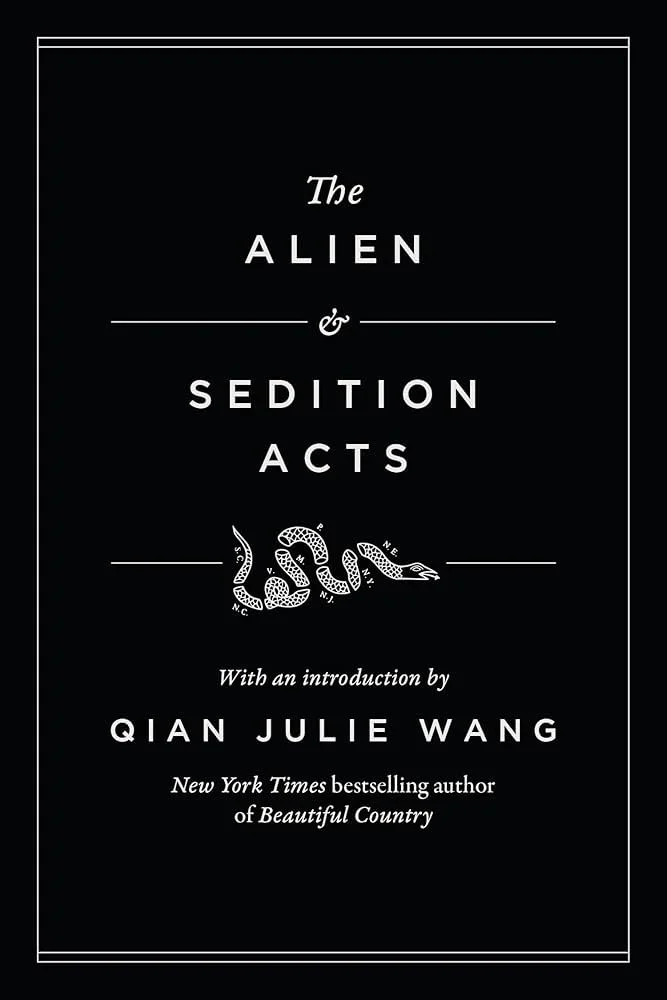
The Alien and Sedition Acts—Part of a new series from Modern Library, this volume collects four laws signed by John Adams over about a month in the summer of 1798—bills that extended the timeline for naturalization, empowered the president to arrest and deport foreigners, and criminalized written or spoken criticism of Congress and the president—and the Jefferson- and Madison-authored Kentucky and Virginia Resolutions that challenged them.

The laws themselves are bad enough, but most galling are the responses by several state legislatures to the resolutions, all of which assert that, nah, the violation of the 1st and 10th Amendments is in fact constitutional, that Kentucky and Virginia are the real threats, and that anyone who loves the union should back up whatever the president does in time of crisis. (Notably, these responses all come from northern and New England states. Massachusetts goes out of its way to praise the wisdom of Adams, an obsequious defense of its hometown boy.) The longest document, Madison’s background notes on the Virginia Resolution, is an angry masterclass on federalism, the proper relationship between state and central governments, the danger of the loose interpretation of the constitution pioneered by Alexander Hamilton (mentioned, but not by name) and the failure of the states to protect their prerogatives.

The introduction, by a civil rights lawyer who has written about growing up as an illegal alien, suggests the publication of these texts now is some kind of gotcha to the current administration’s immigration policies, but the documents themselves are much, much more concerned about states’ rights and free speech. What the book really shows is that the violation of the 10th Amendment, the federal government’s bent toward setting itself up in newer and more expansive spheres of authority, the expectation that the states fall into line behind whatever the executive wants, and the desire to curtail speech in the name of preventing the spread of false information are as old as the Republic. The Antifederalists’ fears of an overreaching, tyrannical federal government, something all conservatives should be concerned about, were not fulfilled in Obama, LBJ, FDR, or even Woodrow Wilson, but came true almost immediately. A sobering consideration.

Favorite fiction

This section will be somewhat shorter not out of any lack of good reading—this was an exceptional spring for fiction—but because I managed to review a lot of these in full, dedicated posts of their own. I’ve linked to those below.

Mars in Aries, by Alexander Lernet-Holenia—In the days leading up to World War II, an Austrian cavalry reservist falls in with a strange crowd and becomes infatuated with the mysterious woman at their center. Then he’s deployed, and his recurring visions of past people and events start to merge with reality. Perhaps my favorite Lernet-Holenia so far. Full review on the blog here.
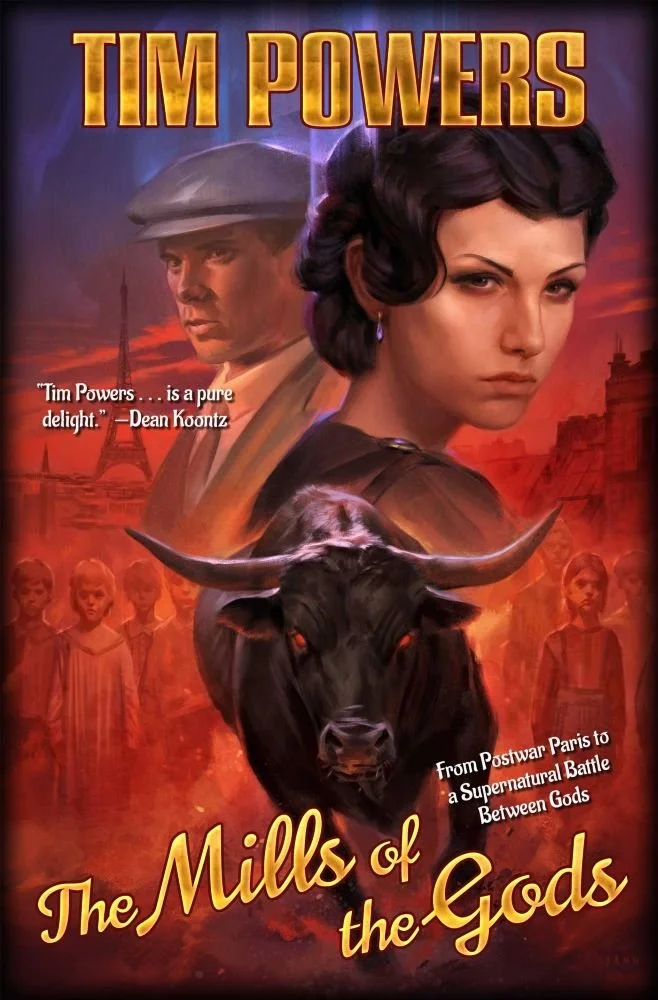
The Mills of the Gods, by Tim Powers—One I had hoped to review in full but couldn’t find the time to. Powers’s latest takes place in 1920s Paris, where expat American illustrator Harry Nolan finds himself involved with a young woman named Vivi and both end up on the run from the sauteurs, a centuries-old secret society striving for immortality by stealing into the bodies of specially prepared newborns. The sauteurs are dangerous and possessive of their target bodies, and Vivi’s most especially. Together, Harry and Vivi must free her and, with clues gathered from Ernest Hemingway, Pablo Picasso, and a sympathetic and helpful Gertrude Stein, unearth the true history of the sauteurs and defeat them permanently. The plot moves briskly and I was absorbed from the first chapter. I greatly enjoyed the Parisian setting, the cameos by Lost Generation artistic figures, and the connections to the ancient world Powers establishes for the sauteur cult. (As deadly and satanically parasitic as the villains are, I mercifully did not find them as spiritually oppressive as the succubi of The Stress of Her Regard.) But I most liked the relationship between Harry and Vivi. Both the First World War veteran Harry and intended sauteur host-body Vivi are damaged goods in need of redemption, and while they begin in mutual suspicion and work together out of necessity they move, over the course of the novel, through collaboration and friendship to something, not coincidentally, full of grace. A beautiful and moving ending caps a breakneck supernatural adventure.

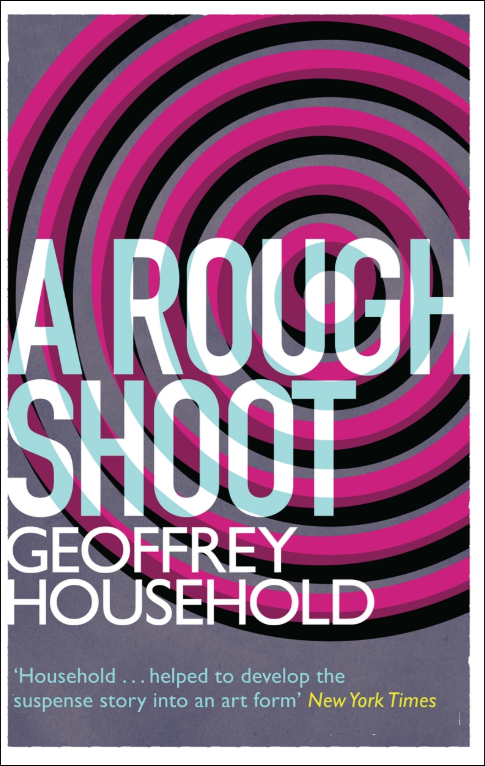
A Rough Shoot, by Geoffrey Household—A lean, tightly-focused thriller from the author of Rogue Male. An English businessman and veteran of World War II surprises what he thinks are poachers on his patch of rented hunting land and accidentally kills one. His effort to cover it up embroils him in deeper, more complicated, and more far-reaching events than he could have anticipated. Full review on the blog here.

State of Siege, by Eric Ambler—An English engineer working in postwar Indonesia has finished his contract and hopes to fly home but finds himself, and a casual date, in the center of a military revolution. Fast-moving and suspenseful while also sweeping in scope, this is almost certainly my favorite of Amber’s post-WWII novels. Full review on the blog here.
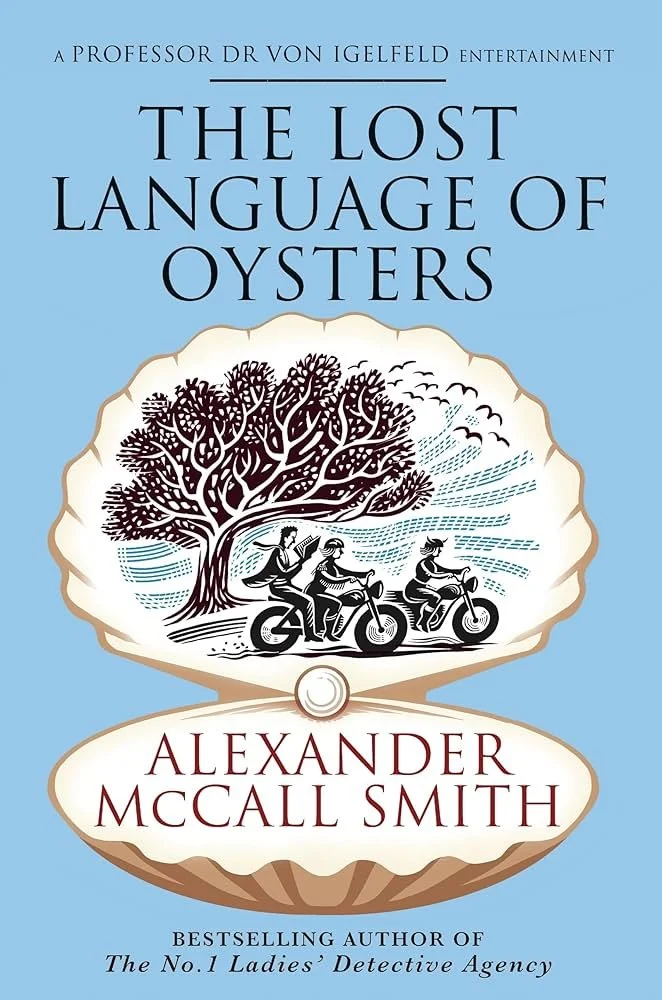
The Lost Language of Oysters, by Alexander McCall Smith—The latest in McCall Smith’s long-running series about hapless German philologist Professor Dr Dr Moritz-Maria von Igelfeld, this is a unified novel rather than a collection of interrelated short stories and finds the good Professor jockeying for status with a pesky old colleague and, to his own surprise, falling in love with an American linguist after she gives him a ride on her motorcycle. The more recent entries in the series are gentler and don’t have some of the darkness or ironic bite of the earlier ones, but they are always enjoyable, funny, and—just occasionally—surprisingly sweet. This one has some particularly good twists and surprises and a great ending.

Other Paths to Glory, by Anthony Price—Paul Mitchell, a young military historian studying a battle on the Western Front, receives two strange visits on the same day: the first is with two intimidating, authoritative men who are clearly not what they say they are; the second is with an assassin who throws him into a canal in an attempt to stage a suicide. The first two men, Audley and Colonel Butler, who were introduced in Price’s The Labyrinth Makers (which I briefly reviewed here), come to Mitchell’s aid and together they return to the former battlefield. What could be hidden there that would lead to murder and, with a secret international conference about to occur nearby, a threat to world peace? Another good thriller with a historical dimension from Price.

Heir to the Empire, by Timothy Zahn—My first Star Wars novel. Picking up a few years after The Return of the Jedi, this story follows the New Republic—formerly the Rebellion—through instability and infighting in the aftermath of success and the emergence of a new threat from the Empire, the skilled and intelligent Grand Admiral Thrawn. A fun read, and truer to the spirit and characters of the originals than much of what’s been sold as Star Wars since. Full review on the blog here.

Honorable mentions:

  • The High Crusade, by Poul Anderson—Vintage sci-fi with a fun hook—knights mustering for a crusade in medieval England encounter aliens, commandeer their ship, and set off on a crusade across the stars—that actually delivers. Brisk and enjoyable.

  • Spy Hook, by Len Deighton—The beginning of Deighton’s second Bernie Samson trilogy. A former secret agent murdered, a slush fund missing, old colleagues back from the dead, and Samson’s burgeoning romance with a younger woman threatened. Not quite as tight as the Game Set Match books but an involving story with a lot of surprises.

  • Beast in the Shadows, by Edogawa Rampo—An eerie, atmospheric, disturbing short novel in which a woman who believes she is being stalked approaches a crime novelist for help. Rampo was a devotee of Poe (Edogawa Rampo is his pen name, a Japanese near-equivalant of Edgar Allan Poe) and it shows clearly: concision, intricate construction, darkness, a beautiful tormented woman, violence, and insanity. Bleak but enthralling.

  • The Chrysalids, by John Wyndham—A young boy living in a farm community that, following a nuclear war, has reorganized itself around an intense religious vigilance for genetic mutation questions what he’s learned about mutants and realizes that his gift for telepathy, which he had always taken for granted, may be endangering him and his friends. Not my favorite Wyndham but a brilliantly imagined situation with a suspenseful final third.

Favorite kids’ books

The Raven: The Classic Poem, by Edgar Allan Poe, illustrated by Chloe Bristol—A beautifully illustrated new edition of Poe’s masterpiece, with moody, atmospheric but kid-friendly pictures. Full review on the blog here.

Bones and Berserkers, by Nathan Hale—A fun anthology of short horror stories—some true, some fictional, several somewhere in-between—by one of my kids’ favorite graphic novelists. Full review on the blog here.

Corduroy, by Don Freeman—A teddy bear for sale in an apartment store wants a home and finds unexpected fulfilment. I somehow made it to adulthood without having read Corduroy. I read it to our twins and just about lost it. A simple, beautiful and moving story with a lot of emotional and even spiritual depth.

Count Yourself Calm, by Eliza Huie, illustrated by Mike Henson—We got our own copy of this picture book after an occupational therapist worked through it with one of our kids. It helps create a simple routine for calming anger, fear, frustration, and other “BIG feelings,” per the subtitle, by counting down gifts from God: parts of creation that bring us joy, the gifts he’s given us, the people who love us, and more. Simple and helpful for both kids and adults!

Ember Falls, by SD Smith—The second of Smith’s Green Ember fantasy series about anthropomorphic rabbits Heather and Picket; another fun adventure and a worthy followup to the original.

Looking ahead

I’m already into the reading for this year’s John Buchan June—the fifth June since I began this event!—so be on the lookout for that to begin in just a few weeks. I’ve also got a lot of other good fiction and non-fiction lined up and I hope to slow things down a bit for a few older, longer novels in the late summer or fall. In the meantime, thanks for reading, and I hope this list will have led you to something you can enjoy this summer!
Len Deighton, RIP

I was sorry to learn yesterday that novelist Len Deighton had died Sunday, aged 97. Deighton has an important place in the history of the spy novel and the thriller and a well-earned reputation for style, precision, and craftsmanship in his fiction. His excellence in these areas sets him apart from many of his successors in both genres.

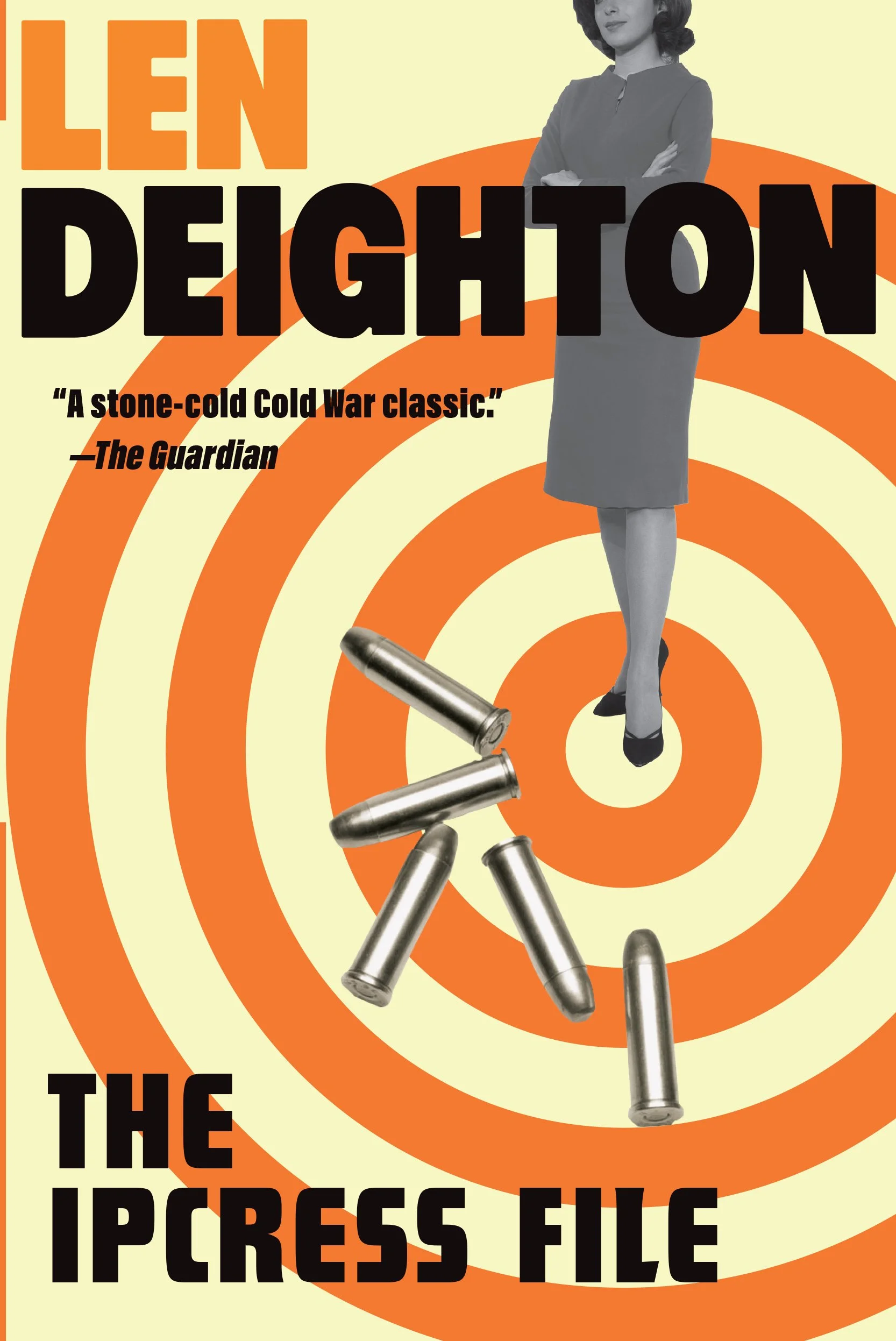
I can’t remember when or where I first heard Deighton’s name. I seem to always have been aware of it. As my interest in the thriller genre deepened, his name came up more and more often as an innovator, an influence, and one of the masters. Shortly after Sarah and I married—when I had the first draft of Dark Full of Enemies on ice—I found a used copy of his name-making first novel, The IPCRESS File, and dove into it.

Here’s where my story may depart from other fans’: I didn’t care much for it. I found it disjointed and hard to follow. But it stuck with me—I still can’t say why. When I finished it I was dissatisfied but wanted to read more, and suspected that not getting The IPCRESS File was due to some failure on my part. I had to be missing something.

Fast forward some years and, after almost picking it up at the used book store many time, I splurged on Grove Atlantic’s new paperback of Berlin Game, the first in his Game Set Match trilogy centered on British spy Bernie Samson. I loved it from the first page, and followed it quickly with Mexico Set and London Match. I was irrevocably a Deighton fan. Bomber was one of my three favorite fiction reads last year. And I was delighted to learn, as I started collecting the new reissues, that Deighton was still alive in his late nineties.

He hadn’t published much more than afterwords to his previous work or this short, gossipy memoir of Ian Fleming and Kevin McClory in thirty years, since the final Bernie Samson novel, Charity. As one of his obituaries put it, he simply “appeared to switch off his word processor and, without fanfare, retire.” As was his right. But, just like with Charles Portis, I wonder what further joys we might have had of him.

You can get further details of Deighton’s life from the articles and memorials I’ve gathered below. What I most appreciate about Deighton is his work, of course, which is detailed without being overstuffed, technical without getting bogged down in irrelevant minutiae or wrecking the pacing, intricately plotted without turning his characters into automatons, character-driven without navel-gazing. Few thriller writers since have struck such a precise balance.

And his tone: I’ve seen his voice or characters or storytelling called “cynical” in a number of places, often in an attempt to belittle the thriller writers who came before him, but I don’t see it. Bomber may reflect bitterly the waste and confusion of modern war but it is intensely earnest. Deighton’s work is characterized not so much by cynicism as a studied wryness, an awareness of the tragedy and futility of the world that is often appropriate to the situations in his books, and just as often a life-saving skill. Not that his stories are grim or nihilistic. His ironic sense of humor pervades his books, adding an edge where needed and taking the edge off when things get grim. Deighton was an artist and brought a sharp sense of proportion to his craft.

Beyond the books, I appreciated his self-effacing manner in the handful of interviews he gave and his unmysterious nuts-and-bolts approach to his work. He had no pretensions, just dedication and skill. In this he was like another favorite writer: Elmore Leonard. Listening to both was a pleasure, and I’ve learned a lot from both. We all could. We shall not see their like again.

The Guardian had an unusually but justifiably long obituary that is well worth your time to read. Here’s a shorter BBC obit that is also worthwhile, and a sweet personal reminiscence by food journalist Tim Hayward on his surprising chance to interview Deighton. You can listen to the interview here or, if you can’t get that link to work (I couldn’t), on Apple Podcasts here. Finally, here are two older interviews that I’ve enjoyed and revisited several times—one with Melvyn Bragg for the BBC in 1977 and a studio interview for Thames TV in 1983. I blogged about a few comments from the former, about the writer’s duty to entertain, almost exactly a year ago.

Len Deighton, artist, entertainer, and exacting literary craftsman, RIP.

A Rough Shoot

Geoffrey Household knew how to open a thriller. His most famous book, Rogue Male, published in 1939 and which I read just over three years ago, begins with its unnamed protagonist in the hands of an unnamed central European dictatorship’s unnamed secret police, who have tortured him nearly to death and are about to dispose of him using a convenient cliff. Believe it or not, the situation escalates from there.

A Rough Shoot, published in 1951, continues this tradition. Roger Taine, a former British Army infantry colonel and now a salesman and family man, is walking the patch of Dorset farmland to which he’s purchased the hunting rights when he spots two men in the bushes. The sun is going down and he can’t see clearly what they’re doing, but they seem to be rigging up traps and he assumes them to be poachers. When one of them, backing through the hedge on hands and knees, presents his backside as a target, Taine decides to give the poachers a painful scare. He levels his shotgun and gives the man a load of birdshot.

The man collapses and his companion flees. Taine realizes that something has gone wrong. He approaches the man he shot where he lies unmoving on the ground and rolls him over. The men had been putting down big triangular stakes for some kind of device and, when Taine shot him, the man had fallen chest-first onto one of them.

None of this is a spoiler—it all happens in the first three pages. The rest of the novel is Taine’s attempt to deal with the consequences and discover who the two men were and what they were doing.

A Rough Shoot, like Rogue Male, has the Buchanesque qualities of vividly realized landscapes and the continuous chase. Taine’s predicament evolves as newer and greater dangers present themselves, keeping the ongoing action fresh and exciting. From Taine’s attempt to conceal the body and his realization that more and more suspicious men are poking around his shoot, asking questions of the tenant farmer and landowner and wanting to find out more about him, to his meeting with an former Polish commando whose story of exile, unofficial espionage, and a rising neo-fascism coordinating itself across Western Europe, A Rough Shoot escalates continuously in tension and stakes. What begins as a personal crisis for Taine—he is guilty, by his estimation, of manslaughter at least—turns into a tiny local battle in the ruins and upset of the postwar.

I can’t say much more without revealing too many specifics, but Taine’s business, wife, and children are inevitably drawn into a plot begun by Taine’s one impetuous, high-spirited act, and the first half’s smothering tension of concealment, silence, and stalking—the suspense of hunting—gives way in the final third to the chase: the prey flushed, the hunters pursuing.

I reflected a couple years ago on what it must have been like, in the 1940s and 50s, to visit the bookstalls and see a steady stream of novels like this—unpretentious gems of pure craft and enjoyment—flowing from publishers. Reading A Rough Shoot, a slender novel with no chapter divisions, just steadily building story, I could imagine myself traveling by train and needing a good page turner. A Rough Shoot would have fit the bill back then and, thanks to the strength of its simple but tense and Household’s exquisite craft, it still does. It’s inventive and exhilarating and was one of the joys of our recent time snowed in. This is only the second Household thriller I’ve read, but there will be more.

Game Without Rules

I can’t remember where I first saw Game Without Rules recommended, though I think it was John Wilson recommending it, but I’m glad I sought it out. I’ve read a lot of great espionage fiction over the last several years—Buchan, Ambler, Fleming, Le Carré, Deighton—and this collection of stories by Michael Gilbert offers some of the most intricately constructed, surprising, suspenseful, and plain enjoyable spy stories I’ve come across.

Published in 1967, Game Without Rules collects eleven short stories about Mr Calder and Mr Behrens, agents for a British intelligence service during the early-1960s height of the Cold War. Now retirement-age, they live near each other in a quaint Kentish village where Mr Behrens lives with his aunt and keeps bees and Mr Calder spends quiet days with Rasselas, his Persian deerhound. They have pints in the village and drop in on each other once a week to play backgammon. And just occasionally their handler, Mr Fortescue, a seemingly unremarkable bank manager, calls them up to London on a mission only their organization can complete.

The missions are classic spy stuff. In the first story they discover a corpse left over from World War II that hints at a deep-cover mole they must identify. Later, Mr Calder and Mr Behrens bring down a ring of drug and pornography smugglers. In another, they track the progress of a young agent along a Soviet exfiltration route through Europe, hoping to uncover its operations but risking detection and death. In another, the two take part in an urgent Christmas Eve assignment in Bonn—recovering equipment, helping a defector escape—with a snowstorm threatening from the sky and East German operatives moving in on the ground. In yet another, they provide security for the young boarding school student who has unexpectedly inherited the throne of his father’s unnamed Middle Eastern kingdom and who must be shielded from kidnappers and enemy agents seeking kompromat. In the final story, they confront a German agent with a decades-old grudge and no remaining reasons to hold back from revenge.

Double agents, enemy tech, infiltration, exfiltration, and assassination may seem familiar, but these stories are intricately plotted and written with effortless economy—some are rich enough for novels but run a tight twenty pages—and always surprising. They’re also witty. Humor—wordplay, wry observations, and frustrated sarcasm between the two—works throughout to dissolve tension and reveal character, not least that of Gilbert’s two aging operatives.

Mr Calder and Mr Behrens are now some of my favorite spy characters. Gilbert characterizes them minimally. One is short and bald, the other barrel-chested. It’s sometimes hard to remember which is which, but they have distinct personalities that make their missions together fun to read. Both are in their late 50s at at the youngest (a dossier at the beginning lists them as born in 1910 and 1913, but there is an ambiguous allusion in one story to Mr Calder having served in World War I) and have both spent decades in espionage, being recruited in the 1930s and serving in important intelligence and special operations roles during World War II, so they’re in their early 60s at least. They’re experienced, capable, skilled—in multiple languages, marksmanship, and practical tradecraft—and utterly dependable. Their friendship is revealed through their professionalism with each other rather than in spite of it.

Imagine the cozy bonhomie of Frog and Toad combined with the ruthlessness of Fleming’s Bond and the most hard-bitten pragmatism of Le Carré. “In this job,” Mr Behrens tells another agent after a high-stakes assignment that was nearly botched, “there is neither right nor wrong. Only expediency.” One senses this is bluff, as this expressed coldbloodedness is belied by his dedication to fighting Communism—the Soviets are, refreshingly, always presented as evil—and by his actions in other stories, especially when it comes to saving Mr Calder.

One realizes just how much one has come to feel for the pair in the penultimate story, in which Mr Fortescue worries that Mr Calder, who has started plotting the genealogy of Prometheus on a giant paper chart, is going mad—an unsurprising turn for someone who has lived so much of his life under cover. Dispatched to London to look for him, Mr Behrens takes Rasselas with him. Their genuine distress over Mr Calder is moving, and makes the revelation at the end of the story all the more surprising and satisfying.

I’ve looked back through Game Without Rules and, of the eleven stories, can’t select any of them as in any way weak or unsatisfying. This has been some of my most purely enjoyable reading in a while, especially in the spy genre. I read it aloud to my wife before bed over the last four weeks, and we both loved it. If you’re looking for some strong, well-crafted stories that combine mystery, thriller, and espionage with some subtle character work, I can’t recommend it highly enough.

Judgment on Deltchev

Eric Ambler’s career as a novelist has two distinct phases. The first began in the mid-1930s with tense thrillers set in a Europe still coping with the effects of the First World War, not the least of which was the rise of dictatorships and authoritarian movements and the hulking influence of Soviet Russia. The second, in which Ambler resumed writing fiction after a break taken during the Second World War, began in the early 1950s and continued until his death.

Judgment on Deltchev is the first of this second phase, Ambler’s first novel since Journey into Fear eleven years before.

Published in 1951, Judgment on Deltchev takes place in the years immediately following the end of the Second World War. Foster, an English playwright, has been hired as a kind of stunt correspondent to attend the trial of “Papa” Deltchev in an unnamed Eastern European country. Prior to the war, Deltchev had been a mildly leftwing agrarian. During the war he had refused to collaborate with the Nazi occupiers. Following the war he attempted to prevent Soviet takeover and the installation of a Communist puppet government. Having failed, he is accused of conspiring with foreign powers against his own people.

The novel begins as Foster arrives. His contact is Georghi Pashik, a shabby, unkempt international press agent whom Foster immediately dislikes. Foster feels guilty, telling himself that he is only repulsed by Pashik’s smell. But Pashik is shifty, passive aggressive, and manipulative, and his air of forced geniality both irritates and conceals much. It is not the first time Foster will delude himself.

The trial is a transparent fraud—a show trial. Foster, alive to the need of the new Stalinist regime to demolish Deltchev with lies and agitprop in order to prevent him being seen as a martyr, observes the scripted denunciations for a few days. At first Foster is impressed by Deltchev’s resolution in the face of mistreatment—he has been denied his diabetes medication by his jailers—but he gradually stops attending. Something about the trial suggests something in the charges is true. That bothers him. Further, it slowly becomes clear to Foster that the real story is outside the courtroom.

Foster meets Deltchev’s family: an impressive, haughty wife and a beautiful daughter, both under constant military guard. The daughter asks him to deliver a private message to a friend. When Foster arrives at the address, he finds a corpse, and someone else who has been stalking him.

Who is the dead man? Why was he killed? What has Foster gotten himself into? Intrigue, betrayal, an assassination plot—against whom? by whom?—the last remainders of a pre-war military secret society bent on revenge, spies for the regime among the other journalists, the lurking, looming influence of the Soviets, the inescapable threat of imprisonment, torture, and deportation, Pashik’s deceptive behavior, and attempts on Foster’s own life further complicate his simple reporting assignment.

Judgment on Deltchev is a good book. Well paced, suspenseful, its plausibly drawn fictitious environment creates an oppressive atmosphere of paranoia that steadily builds, from the first chapter, through expert foreshadowing. It is striking that Ambler, after a decade away from novels, returned so immediately to form. That first phase of Ambler’s career described above, it must be said, produced the classics—Journey into Fear, Epitaph for a Spy, The Mask of Dimitrios. The second phase begun by Judgment on Deltchev never quite approaches those heights of tension and excitement. And yet, from this novel on, they have something those earlier novels did not: perspective.

In Ambler’s novels of the 1930s, Soviet agents sometimes appear as allies. Never quite straightforwardly good guys, they still help the protagonists and are presented sympathetically—unlike the Nazi and Fascist agents or the cosmopolitan gangsters who oppose them. These characters are conventional anti-Fascist elements of the time. But as for so many others, the Nazi-Soviet Pact and the partition of Poland clarified things for Ambler. Participation in the war and observation of Stalin’s brutal swallowing of Eastern Europe strengthened his convictions. Judgment on Deltchev reckons with the lies, envy, backstabbing, and tyranny imposed upon millions, ostensibly in their names, and the hollow legal theatre that consolidated these regimes.

The books following this one, the second-phase books, often have a more sweeping scope, suggesting the upheaval of entire regions—the wreck of post-war Germany and Greece in The Schirmer Inheritance and post-war Malaya and Indonesia in Passage of Arms, the Middle East of Palestinian terrorism in The Levanter—and taking place across longer, more intricate timelines. They also have an extra guardedness about them, seldom ending neatly, often with the protagonist’s name smeared as part of an agitprop campaign. The scale of the danger, somehow, has increased. This perspective, gained over Ambler’s decade away from his novels, enriches Judgment on Deltchev and even those later novels that quite don’t measure up to his greatest.

In Here Lies, Ambler reflects on his “happy return to writing thrillers” in this book. American reviews were mixed—readers there just wanted a rehash of The Mask of Dimitrios, apparently. His fellow Britons had a different reaction

In England, the letters I received about the book were all more or less abusive. I was a traitor in the class war struggle, a Titoist lackey and an American imperialist cat’s-paw. One message was a single piece of used toilet paper. The single piece was a delicate touch, I thought; it spoke of careful premeditation.

Ambler had struck a nerve. He was doing something right.

Judgment on Deltchev feels a lot like one of Ambler’s earlier thrillers—the everyman protagonist who gets in over his head in a complicated foreign place—but crossed with Darkness at Noon and a dash of Animal Farm in earnestness and import. This is not just a good thriller, it has a clear-eyed vision of a time and place about which too many still deceive themselves.

The Ambler paradox

Last night I finished reading Judgment on Deltchev, Eric Ambler’s first postwar novel and a masterpiece of plotting, tension, and especially foreshadowing. (Seriously—if I ever teach creative writing in any capacity, I will assign this or another of Ambler’s early thrillers to teach foreshadowing.) It also has many of Ambler’s sharp, wry observations.

Here’s one from near the end. The narrator, Foster, an English playwright commissioned to report on a show trial unfolding in an unnamed Balkan country, finds himself entangled like many another Ambler protagonist in the preexisting schemes of people much more nefarious and capable than he is. Gradually he becomes a pawn.

In a passage foreshadowing some of what is to come, Foster notes that the Stalinist puppet regime, later, will scapegoat him, condemning him as an agent of British intelligence (among other things), an accusation he finds painfully hard to deny:

With the newspapers it was not difficult; I did as I had been asked and referred them to the Foreign Office. With friends and acquaintances it was less simple. It is, I find, extraordinarily embarrassing to be described in print as a member of the British secret service. The trouble is that you cannot afterwards convince people that you are not. They reason that if you are a member you will still presumably have to say that you are not. You are suspect. If you say nothing, of course, you admit all. Your denials become peevish. It is very tiresome.

A bit of coy reverse psychology suggests itself but is both dangerous and unattractive for the fundamentally honest man:

Probably the only really effective denial would be a solemn, knowing acknowledgment that there might be some truth in the rumour. But I can never bring myself to it. Foreign Office or no Foreign Office, I have to explain what really happened.

There’s a threshold of secrecy and paranoia beyond which all denials are confirmations. This kind of ambiguity offers security for the professional but proves an inescapable trap for the passerby who blunders into this world. It’s a dangerous place for the mind and soul. Witness the conspiracy theorists who go down the rabbit hole deep enough to get into this everything-proves-my-theory mindset. Per Forster, “it is very tiresome.”

It is also a great device for creating irony and tension. Ambler’s thrillers are built on the overlapping realities of the professional intriguer and the bourgeois amateur, and his characters, ordinary people tainted by their contact with these other worlds, have to live with the paradox that their good-faith denials sink them deeper in suspicion. More than one of his narrators uses the telling of the story to try to clear their name and strike back at critics.

The first of Ambler’s novels that I read was The Mask of Dimitrios (aka A Coffin for Dimitrios) early last year. Here’s a similarly trenchant set of observations I quoted from that book at the time, and here’s my full review. Back in the spring I also read and reviewed The Levanter, which features another strong dose of the paradox.

The Courts of the Morning

This year’s John Buchan June enters the home stretch today with one of Buchan’s later thrillers, a South American adventure featuring filibustering European adventurers, American big business, kidnapping, regime change, guerrilla warfare, sabotage, and two favorite recurring characters—The Courts of the Morning.

After a introduction by Richard Hannay in which he explains some of the background to the novel’s events, The Courts of the Morning picks up with Sir Archibald Roylance and his new bride Janet as they begin an overdue honeymoon. They decide to visit the small, prosperous Republic of Olifa on South America’s Pacific Coast. Meanwhile, Sandy Arbuthnot, now Lord Clanroyden, has grown restless in peacetime Britain—always the first tremor of adventure in a Buchan novel—and set off into the wild as a knight errant.

Olifa impresses Archie and Janet. Economically booming thanks to its copper deposits, the republic boasts a thriving capital city with both picturesque Latin American charm and every modern convenience, a smooth, charming president with modern ideas, a modern transportation network, and a modern, motorized army and air force staffed and advised by officers collected from around the world. Modernness—their guide insistently emphasizes it.

And yet, the more Archie and Janet see of Olifa, the more unease they detect. It takes enormous effort to get permission to tour the copper mines in the arid Gran Seco region near the mountains, as if someone is hiding something, and the presence of the mining company’s paramilitary guards and police forces strikes a discordant note. Castor, head of the mining conglomerate and de facto ruler of the Gran Seco, strikes Archie and Janet as superficially charming and cultured but cold, methodical, and ruthlessly pragmatic toward his workers, who sometimes end up in cities looking like the used up husks of human beings. The old families of Olifa, people who can trace their ancestry back to the soldiers of Pizarro, are unhappy. They resent the protection of a class of international mercenaries, and Castor’s mining has gained the unwelcome attention of the United States, which has begun to throw its weight around in Olifa in order to protect its interests in the mines.

Olifa sits poised between two fates: to become a commercial satellite of the United States or to become a vestigial attachment to Castor’s mining company.

Sandy and another old Buchan stalwart, the American spymaster John S Blenkiron, reappear. They’ve been spying on Olifa and Castor both as outsiders and, having infiltrated Castor’s operation, from the inside. They have uncovered extensive abuses by the company, which has functionally enslaved the local Indians and used a powerful local narcotic to keep employees like Castor’s bodyguards compliant, as well as Castor’s personal ambitions: to sweep away “the debris of democracy” in Olifa, establish himself as ruler, and use economic power to sow discord in the divided, restless United States.

With this intelligence in hand, Sandy and Blenkiron convince Archie to join them in a plot to foil Castor and shore up Olifa’s independence through revolution. Having kidnapped Castor and whisked him into protective isolation in the remote coastal plateau known as the Courts of the Morning, Blenkiron leads the mines and the Gran Seco in open revolt to Olifa’s government while Sandy takes to the hills and wages a guerrilla war with the help of the Indians. Castor, watched over by Janet and Barbara Dasent, an old acquaintance from America who has fallen for Sandy, bides his time, waiting—and slowly being transformed.

Even this thin summary covers only the first part of The Courts of the Morning. The civil war sparked by Sandy and Blenkiron goes on for weeks and becomes more and more complex. Castor’s drug-addicted “Conquistadors” reenter the story, kidnapping Janet Roylance in one of the novel’s most suspenseful scenes, and become the most dangerous, unpredictable element in the plot against Castor. This is a rich, detailed, busy novel.

Perhaps too busy. Buchan’s fictional Olifa is convincingly imagined—much better than the Evallonia of his later, more straightforwardly Ruritanian novel The House of the Four Winds—and the war unfolds plausibly. An extended passage late in the book in which Olifa’s commanding general surveys the military situation is thoroughly thought-out and casts what we’ve already read of Archie and Sandy’s adventures into realistic relief. But, as multiple Buchan biographers, the John Buchan Society, and contemporary reviewers have pointed out, this level of detail sometimes overwhelms the novel. JB Priestley, in his review at the time, captures exactly my experience of the novel:

It begins very well indeed with a convincing South American republic, mysterious copper mines in the mountains and a first-class villain on the grand scale. Somewhere about halfway through I found myself losing interest. To begin with, there is no longer any mystery. Then the villain begins to change character, and nobody effective takes his place. And the long and involved accounts of guerrilla warfare that take up most of the later chapters seemed to me below the usual Buchan level of interest. In many ways this is a more ambitious tale than most of his old ‘thrillers’ but it does not seem to me so successful.

With the outbreak of the revolt, the mystery and espionage end, and the novel follows parallel tracks of war and spiritual transformation. It is good—I was not as disappointed as Priestley professed himself earlier in that review—but does not fully deliver on the promise of the absorbing opening chapters.

I’m struck that Buchan returned so often in his later fiction—here, in Castle Gay a year later, in The Blanket of the Dark a year after that, and in A Prince of the Captivity in 1933—to the kidnapping of a villain as a plot element. In all of these stories there is some hope that, cut off from their power and networks of cronies and henchmen, the villains can reconnect with something they have forgotten and repent and use their gifts for good—transformed by the renewing of their minds.

It doesn’t always work. In The Courts of the Morning it does, but this development is only partly convincing. Would Castor, under the influence of a woman like Janet, really turn from his greed, ruthlessness, and lust for power and embrace the cause of Olifa? I have my doubts, but was carried along by the story despite them. Others have flatly rejected it. You’ll have to read The Courts of the Morning for yourself to decide.

And read it you should. Despite the ponderous campaigning of the second half and its debatable conversion of Castor, The Courts of the Morning is good entertainment. There is intrigue and action aplenty, kidnappings and rescues, airplane crashes and sabotage campaigns, and many near misses. And however convincing one finds Castor’s change of heart, the climactic chapter, a nighttime assault on an old Olifero family’s home and a showdown between the last remaining groups of antagonists, is suspenseful and moving.

The Courts of the Morning is, in its way, a fantasy novel, and Buchan’s attention to sub-creating Olifa is one of the book’s joys. Discovering the country alongside Archie and Janet in the first chapters of the novel is almost as fun as the emerging mystery itself. And this vivid, realistic account of Olifa gives weight to the struggle in the majority of the book—whether Olifero nationalists who wish to wrest control of their homeland back from both the mining tycoons and the Yanquis, the Indians who wish to be left alone, or even the déraciné, mercenary henchmen of Castor’s company, the stakes are clear and important. It matters who wins.

The story is also thematically rich. The characters at various points discuss the laxness that comes with affluence, the dilution or corruption of national cultures by wealth and globalism, the abuse of power when centralized in a single man, the fleeting, fallible natures of all governments, and, as mentioned, the need not only for political but for spiritual transformation. Without the latter the former will mean nothing.

But my primary interest in this book, and perhaps the best reason to read it beyond enjoyment, is to see two favorite characters as the protagonists of their own novel. One of the delights of reading through Buchan’s vast body of fiction is the large cast who drift in and out of each other’s stories. Archie and Sandy are two of the most frequent supporting characters. Both appear in Richard Hannay’s First World War adventures (Greenmantle, Mr Standfast) and Archie plays a crucial role in the Sir Edward Leithen adventure John Macnab, which is where he meets and falls in love with Janet.

Blenkiron also appears and others are namedropped, but Archie and Sandy, so often side characters, did not disappoint. Archie and Janet turn out to have a much more eventful honeymoon than they could have imagined, with their devotion to each other as well as their courage tested, and Sandy again proves himself a master of disguise, of irregular warfare, and—for the first time—of a woman’s heart. He also faces a challenge he has never faced before: the allure of earthly power.

The Courts of the Morning has its flaws, but it is an engrossing adventure with enough suspenseful set pieces to satisfy any Buchan fan. It may not be top-tier Buchan, but it is entertaining, and it offers a rare glimpse of two favorite characters on their own, embracing danger, and emerging triumphant and beloved.

A Prince of the Captivity

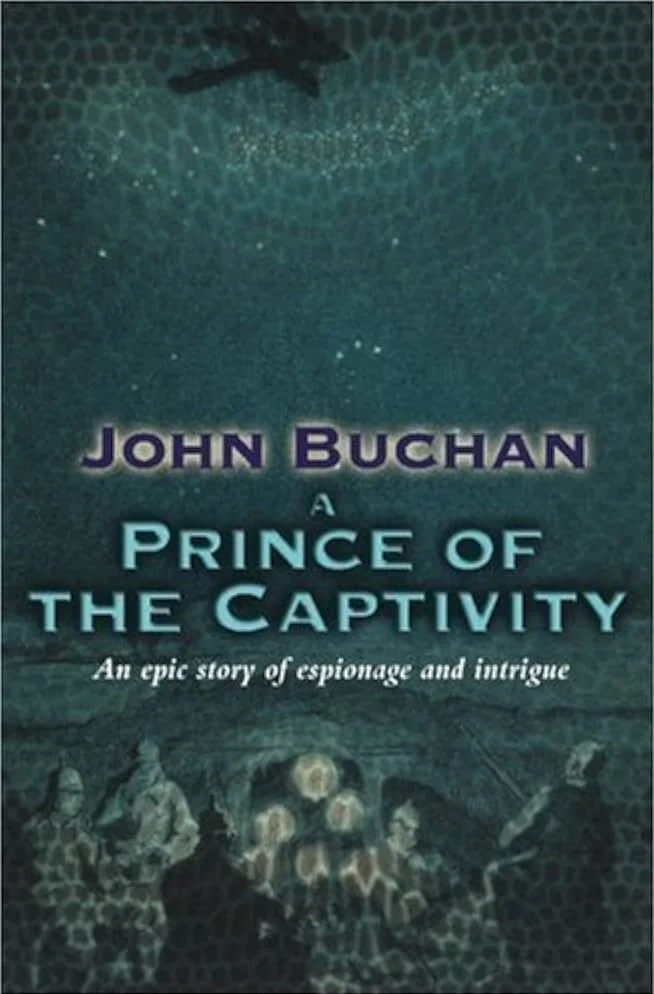
John Buchan June enters its second half today with one of Buchan’s lesser known works, a sprawling tale of a man’s spiritual journey through shame, prison, war, espionage, and politics, ending with a final showdown between himself alone and the agents of a group clearly meant to be the Nazis. This is the 1933 novel A Prince of the Captivity.

The story begins just before the First World War. Adam Melfort, an honorable officer whose life is devoted to the army, is drummed out of the military and tried and imprisoned for forgery. It is clear to those in the know that he has taken the fall for his wife, a fashionable spendthrift who tried to extract more than her usual allowance from a wealthy uncle. Their imprudent marriage ends when his wife, as a final thank you for covering for her, divorces Adam during his prison sentence.

Adam’s loss of his commission and his imprisonment rob him not only of time but purpose. In prison, he ruminates. He retreats into memories of his son Nigel, he and his wife’s only child, who died of a fever at age five. He imagines Nigel and himself on a favorite island off the west coast of Scotland—visions that will grow more vivid and more powerful over the next years.

After prison, war comes. Adam, adrift, desperately wishes to be of service but cannot return to the army. A friend connects him to the intelligence service, and after being tested in both body and mind by eccentric figures like the elderly Mr Scrope or Macandrew, a man with a Scottish name who is clearly a European Jew, he is sent to Belgium, behind German lines, as a spy. He excels at his job and by the time of his hairsbreadth escape from German counterintelligence he has established a vast network feeding vital information to the British.

The end of the war casts Adam adrift again. When Jim Falconet, an American millionaire with an interest in exploration, goes missing in Greenland, far north of the Arctic Circle, Adam sets himself the task of finding and rescuing him. He does so at enormous risk and through massive, arduous effort, with the two men—eventually all that is left of either Falconet’s original expedition and Adam’s rescue team—alternately nursing one another back to health through the long march southward.

Falconet, once returned to civilization, agrees to Adam’s request to downplay his role in the rescue. He will prove valuable ally to Adam in what lies ahead.

After this first third of the book, A Prince of the Captivity settles into politlcal and business intrigue. Adam’s experiences in the war and the near-death of his Arctic rescue mission convince him that what the world needs is strong, principled leadership to save it from the barbarism left in the wake of the war. When friends suggest that he is the one most suited to the leadership role he so wishes to see filled, he disagrees. His job, as he sees it, is to midwife the man or men who will help save civilization.

He sets his sights on three—Kenneth Armine, a young aristocrat and old friend, a people-person whose wife, Jackie, comes to love and respect Adam; Joe Utlaw, an up-and-coming Labour politician; and Frank Alban, Jackie’s brother, a young Anglican churchman with a powerful gift for speaking and persuading. All three, representatives of the aristocracy, the workers, and the Church, with their natural gifts, good character, and connection to the people have enormous potential to become exactly the leader Adam hopes to see set the world right.

And yet Adam, despite enormous efforts on their behalf, finds himself stymied at every time. His plans and hopes for all three, through various circumstances, come to nothing. Present in each failure and intimately involved at some crucial point is a man Adam has known about for years, Warren Creevey.

An admired and much-sought-after public intellectual and a well-connected and fantastically successful businessman, Creevey has interests everywhere, travels widely, and seems to know everything. Scrope, Adam’s mentor from his intelligence days, predicts early in the novel that Adam and Creevey will find themselves on opposite sides of some great contest and will be forced into confrontation. Adam, who naturally enough dislikes Creevey—and the feeling is mutual—tries to avoid and ignore him. By the final act of the novel, that strategy has become impossible.

The final portion of the story involves German politics, which one need not be reminded were unstable during the 1920s. Hermann Loeffler, the intelligence officer who came closest to capturing Adam during the war, has slowly emerged as a leading moderate and unifier but is opposed by the Communists on one side and, on the other, a group called the Iron Hands. Both desire “short cuts,” but the Iron Hands develop a special reputation for unscrupulous tactics and violence. When they become a clear danger both to Loeffler and to Creevey, Adam lays plans to intervene.

The climax of the novel, taking place at a high Alpine retreat to which Creevey has been kidnapped and smuggled for his own safety, brings the two rivals together for their long-anticipated confrontation. Present also is Jackie, who will turn out to have an important role to play, and slowly closing in from all directions are the henchmen of the Iron Hands.

A Prince of the Captivity is one of Buchan’s longer novels, with a plot playing out over about a decade and sprawling across wartime espionage, Arctic survival, practical politics, and social commentary on the dislocated world of 1920s Britain. Each component part is well done. The sections on Adam’s recruitment into the world of espionage—more grounded, unglamorous, and harder-edged than the seat-of-the-pants amateur adventures of Richard Hannay—feels very much like a precursor to John le Carré and are especially good. Adam’s rescue mission to the Arctic is perhaps my favorite section of the novel, and one of the most dramatic and compelling in any of Buchan’s novels. And the climactic struggle in the mountains, in which Adam’s story is brought full-circle and the longings created by his deep wounding at the start of the story are finally fulfilled, is powerfully moving.

But between these episodes, the middle sections, in which Adam very deliberately works his way through the social fabric of Britain in search of his new leaders, felt not just like a change of pace but a bit of a letdown. Most of Buchan’s contemporaneously-set novels of the 1920s and 30s, when he was serving as an MP, involve the nitty-gritty of practical politics at some point, but seldom does it dominate their plots the way it dominates A Prince of the Captivity. While all of the characters are finely drawn—especially Jackie and Utlaw—and the story intricately and believably plotted, it drags.

This is probably intentional. Adam’s work is laborious and Buchan conveys this vividly. But it is not as fun or compelling as the earlier chapters. Only as Adam’s plans begin to unravel and he is once again placed on the backfoot does the pace revive.

That is the only criticism I can level against A Prince of the Captivity. The plot, after all, is secondary to Adam’s character. The language I used in the introduction, of Adam undertaking a “spiritual journey,” comes from biographer Andrew Lownie. What Adam is searching for, in a metaphor introduced by Macandrew, a staunch Zionist who hopes the war will provide an opportunity for his people to reestablish their homeland, is a personal Jerusalem. The story is therefore one of pilgrimage.

Having honorably taken the blame for his wife’s crime and lost everything, Adam spends these years searching for purpose and belonging, taking on bigger and bigger tasks—from simply being useful in the murky, disreputable world of spies to saving a man’s life to saving civilization. Only in the final pages, in developments I don’t want to spoil, does he find the peace that has eluded him and everyone around him for the entire story.

Even as I read A Prince of the Captivity I was aware that Buchan was doing a lot more with this story than was immediately detectable on the surface. Though I’m not confident I grasped everything in Adam’s rivalry and final contest with Creevey, it moved me and has stayed with me. I see more and more in it and it continues to escape me. A Prince of the Captivity is not my favorite of Buchan’s novels, but it has several episodes as gripping as anything in his best novels and is the one I feel most compelled to revisit, and soon.

Intelligence in 1066

Harold Godwinson listens to a messenger in the Bayeux Tapestry

This morning on my commute I listened to the latest Rest is History Club bonus episodes. Among the questions Holland and Sandbrook fielded was one about the intelligence networks available during the Norman Conquest. Could William have known what Harold was doing before he sailed from Normandy?

Such questions are ultimately, per Holland, “unanswerable,” though it is not quite true that, as Sandbrook says, there is “no evidence.” The following passage from Wace’s Roman de Rou, which I cited and expanded upon in my master’s thesis, comes immediately to mind. From Glyn Burgess’s translation:

One of the knights in the area [of Pevensey] heard the noise and the shouting coming from the peasants and villeins, who saw the great fleet arrive. He was well aware that the Normans were coming with the intention of taking possession of the land. He took up position behind a mound so that no one could see him; he stood there watching how the great fleet arrived. He saw the archers emerging from the ships and afterwards the knights disembarking. He saw the carpenters, their axes, the large numbers of men, the knights, the building material thrown down from the ships, the construction and fortification of the castle and the ditch built all around it, the shields and the weapons brought forth. Everything he saw caused him great anguish. He girded on his sword and took his lance, saying he would go to King Harold and give him this news. Then he set out, sleeping late and rising early. He travelled extensively night and day in search of Harold, his lord, and found him beyond the Humber, where he had dined in a town. Harold was acting with great arrogance. He had been beyond the Humber and defeated his brother Tostig; things had gone very well for him. . . . Harold was returning joyfully and behaving with great arrogance, when a messenger gave him news of the sort which made him think differently. Suddenly the knight who had come from Hastings arrived.

‘The Normans have arrived’, he said, ‘and established themselves in Hastings. They intend to take the land from you, unless you can defend it. They have already built a castle with brattices and a ditch.’

Later, in a passage I’d forgotten about until rereading it this morning, Duke William benefits from similar intelligence:

In the land there was a baron, but I do not know his name, who had loved the duke greatly and become one of his close advisers; he would never have wanted things to go wrong for William, if he could manage it. He sent him word privately that he had come with insufficient forces; he had few men, he believed, to accomplish what he had undertaken. There were too many people in England and it was very difficult to conquer. In true faith he advised him, and in sincere love sent him word, that he should withdraw from the country and go back to his land before Harold arrived; he was afraid that things would go badly wrong for him.

Wace is a late, poetic source and is problematic for reasons both obvious (his portrait of Harold as a hubristic usurper) and subtle (using post-Conquest feudal terms like “baron” and “knight” and “villein” in an Anglo-Saxon context), but here he presents a plausible picture of what is now called HUMINT or human intelligence. It jibes with many, many other stories from the world before signals intelligence and aerial and satellite surveillance, a world of eyewitnesses desperately offering actionable information to their side’s leadership—something they can only do as quickly as the fastest horse can carry them—not to mention a world of rumor, uncertainty, and, in the case of the anonymous Anglo-Saxon lord who feeds information to William, secret betrayal.

Further, it jibes with the Bayeux Tapestry, which several times shows messengers bringing word to Harold, William, and others and the recipients listening intently, and other sources like the Anglo-Saxon Chronicle. When the Chronicle writes, over and over in every extant version, that Harold “was informed” or “came to know” of some new development, we should probably picture something like what Wace describes.

The evidence is extremely limited and raises as many questions as it answers, but it gives us enough for reasonable inferences. It also—and this is why I remembered the story so many years later—offers a rare glimpse of the men involved in these campaigns at the ground level. Who can read Wace’s account of that anonymous thegn, alerted by the people fleeing in terror and watching from behind a hill as the invasion proceeds unopposed, and not feel his “great anguish”?

You can read the whole passage of Wace in an older translation at Project Gutenberg here.

The Levanter

Among his many skills, Eric Ambler excelled at two of the basic varieties of thriller: the breakneck and the slow burn. In one, the pace picks up quickly and puts the characters through an unrelenting series of escalating obstacles. In the other, a single obstacle may steadily build in threat and intensity until a final catastrophe. Both rely on a mastery of pacing. Ambler had it, and The Levanter offers a good example of the latter, the slow burn.

A later work in Ambler’s long career, The Levanter takes place over about two months in 1970. Three different characters narrate portions of the story: Lewis Prescott, an American reporter who has stumbled into the events after the fact; Teresa Malandra, the secretary and mistress of an English industrialist; and Michael Howell, the industrialist himself, third-generation heir of Agence Howell, a manufacturing and shipping firm with connections all over the Mediterranean and Middle East.

When the story begins, Howell has successfully navigated several of the perils of decolonization in Syria, working with the emerging socialist government to avoid losing his family’s business to various nationalization schemes. This involves working closely with corrupt government officials, including Syrian military intelligence and a government go-between with connections to Second-World powers: Maoist China, East Germany, the Soviet Union.

Busy enough keeping the family business afloat and its reputation untarnished following a series of failed production schemes imposed by the government, Howell is surprised to discover, thanks to Teresa, large unexplained orders of chemicals buried in the company accounts. With government pressure and hostility building, he decides to investigate the moment he finds out. This means a late night trip with Teresa to one of the plants dedicated to producing consumer batteries.

Howell finds the factory, which is supposed to be closed, open, brightly lit, and with teams of men working on producing fulminate of mercury—explosives. Armed men accost him and Teresa, and when the night watchman arrives he reveals himself as Salah Ghaled, the notorious leader of a hardline Palestinian terrorist organization too extreme even for Arafat and the PLO.

Ghaled and his men need Howell alive. His men are making detonators for bombs and trying to get incomplete Soviet rockets into a usable condition. Howell will be useful for them. Ghaled forces him and Teresa to swear their allegiance to his organization and to sign confessions of complicity in the murder of a former member—an internal hit Ghaled publicly blames on the Israelis. He then has Howell order the manufacture of missing parts and arrange shipping aboard a company cargo ship. Thrust deeper into Ghaled’s plot, little by little Howell pieces together what Ghaled is planning.

On Herzl Day, an upcoming Israeli national holiday, Ghaled aims to detonate dozens of remotely armed bombs hidden in Tel Aviv. Hence the detonators. He plans to coordinate the bombing with his rockets, launched from offshore and aimed at the coast, a strip of popular beach lined with hotels, restaurants, and homes. The Agence Howell ship will carry him on to Egypt the same day, where he will hold a press conference claiming responsibility and making the usual Palestinian talking points. Howell is horrified.

He also realizes that, since not only Ghaled but other key members of his organization all got jobs at Agence Howell through government influence, his government contacts are in on the plot. He cannot turn to the authorities. In desperation he uses a business trip to inform Israeli intelligence, but his contact is skeptical and offers little help unless Howell can provide more information than he has. If Ghaled is to be stopped, it may be up to Howell himself.

The other Ambler slow-burn thriller that The Levanter resembles most is Cause for Alarm, in which an English engineer working in Mussolini’s Italy just before the outbreak of World War II slowly uncovers sinister goings-on within the tidy order of his factory. In both novels, Ambler puts a lot of effort into making the industrial and commercial setting feel believable well before introducing espionage and terrorism. There’s a lot of looking through ledgers and blueprints, making sure products are up to spec, and arranging shipping and payments. This would be dull in any other writer’s hands. Ambler, through a careful, steady drip of foreshadowing and underestimated threats, instead uses such workaday details to build suspense.

Where The Levanter bests Cause for Alarm, though, is in its use of setting. Ambler exceled at evoking the real-life cosmopolitan, polyglot worlds of international crossroads, from the Aegean and the Balkans in The Mask of Dimitrios to postwar Malaysia and Indonesia in Passage of Arms. The Levanter, with ties to both the Cold War and the unending multidirectional conflicts of the Middle East, is no exception. Ghaled, one of Ambler’s most vivid and believable villains, is a European-educated Palestinian Islamist who is as resentful toward the PLO, the Baathists, and the Jordanian monarchy as he is hostile toward Israel. His education and Marxist ideology are European and his weapons Russian, Chinese, and East German. The Agence Howell has dealings all over the Eastern Mediterranean and its ships and factories have multiethnic crews and captains. Teresa is Italian and Howell himself, despite his seemingly English name and business sense, is mostly Armenian and Cypriot. He and Ghaled are, in dramatically different senses, both men without a country, the one a businessman and the other a zealot.

In addition to a realistic and authentically complicated setting, The Levanter is also cleverly written. I mentioned above that it is narrated by Howell, Teresa, and Prescott, an American reporter who otherwise plays no role in the events of the story. The muddle of Howell’s predicament, the leverage Ghaled and the Syrian government use against him, and the outcome of the story lead to media controversy, a controversy fully exploited by Palestinian activists. The novel is Howell’s attempt, with Prescott’s encouragement, to set the record straight. His testy, finger-wagging narration proves both fun to read and disturbing—how would I, or any of us, were we forced into a bind like this, ever hope to exonerate ourselves?

The Levanter is not Ambler’s best or most exciting thriller, but it is one of his most involving and, above all, one of the most plausible. The overwhelming feeling it imparts throughout is that if something like this were to happen, this is exactly how it would happen. Its emphasis is not on action and gadgetry, though both play a role, but on cunning, desperation, bloodlust, and the weakness of human nature. Though set in 1970, the world it takes place in and the characters who people it still feel recognizable and all too real.