Spring reading 2026

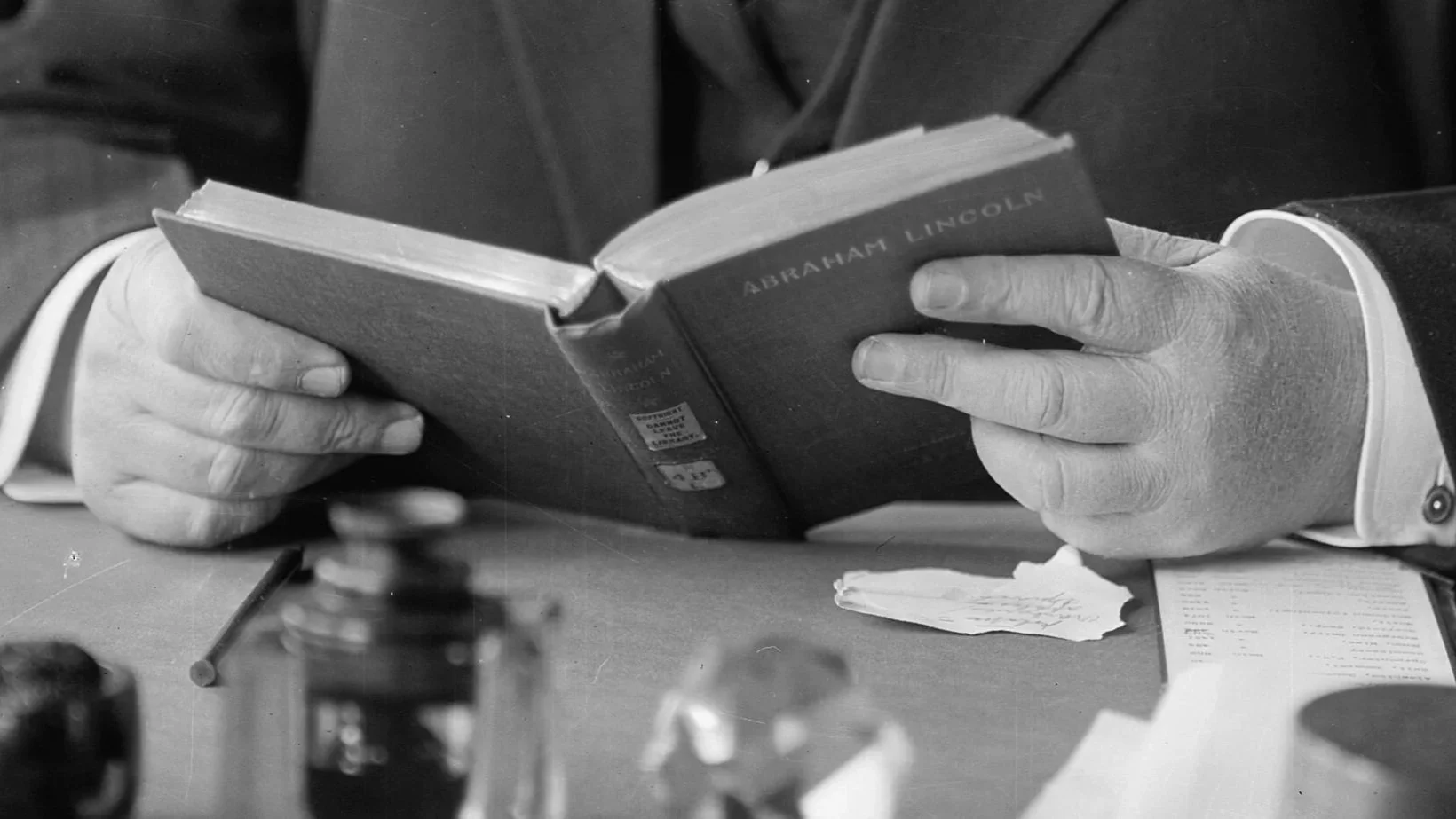
William Howard Taft reading at his desk c. 1904. The label pasted to the spine reads: “Copyright. Cannot Leave the Library.”

As personally difficult as this spring has been, with thirty-three books down—and almost perfectly divided between fiction and non-fiction—this turned out to be a stellar season for reading. Not only did I bulk up my non-fiction reading after a couple years of fiction-heavy lists, I also read more sci-fi and fantasy than usual. Almost all of it, of whatever genre, was good. I had to make myself leave things out of the list below, the ruthlessly selected best of the season.

The way I divide the year for these posts is always a bit arbitrary, but for the purposes of this one, “spring” is everything from New Year’s Day to the end of classes last week. As usual I present these in no particular order, and with my one audiobook “read” marked with an asterisk.

That said, I hope y’all enjoy and can find something good to read below:

Favorite non-fiction

On Conan Doyle, by Michael Dirda—A succinct and insightful overview of Conan Doyle’s life and work, with special attention to the Holmes stories as well as his more often overlooked work: Professor Challenger in The Lost World, the Hundred Years’ War novels The White Company and Sir Nigel, and the Napoleonic adventures of Brigadier Gerard. I was especially interested to learn more about Conan Doyle himself: his personal life and character, his intelligence and work ethic, and even his much-derided interest in spiritualism and fairies.

The First King of England: Æthelstan and the Birth of a Kingdom, by David Woodman—A solid new biography of Alfred the Great’s grandson, the first king of a unified kingdom of England, that gives a lot of attention to the complicated political situation of the time and just how much we can and can’t know about what was going on. Occsionally this means extended parsing of primary sources rather than narrative, which may not appeal to the general reader, but that comes with the territory. An Æthelstan biography is also going to be a historiographical paper to some extent and I think Woodman balances it all well. I used The First King of England as an example of the judicious use of incomplete sources for historical inferences here.

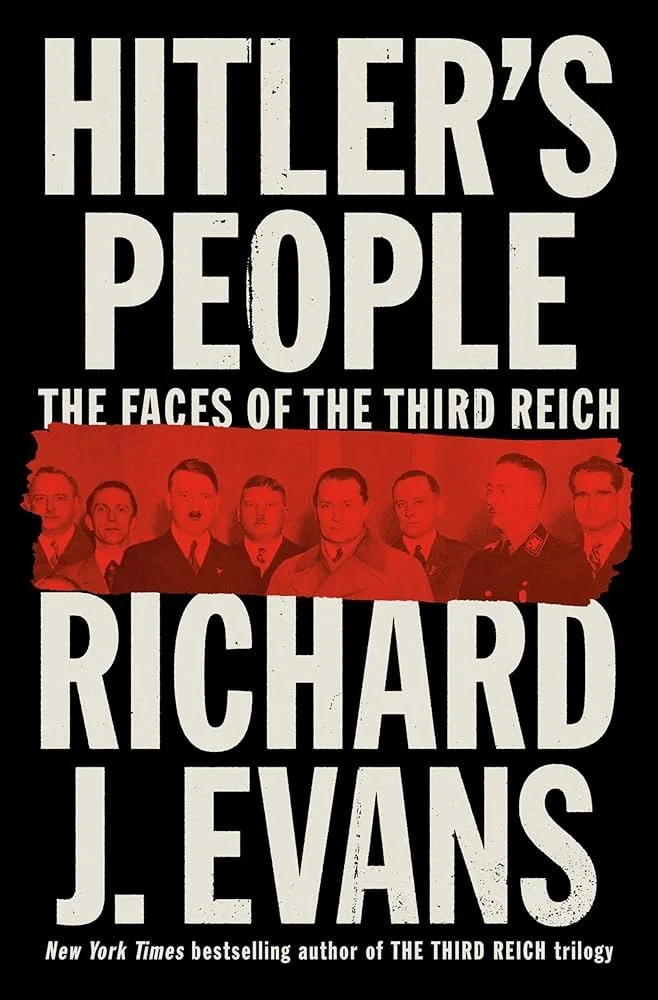
Hitler’s People: The Faces of the Third Reich, by Richard J Evans—This is an insightful series of character sketches of people from all levels of the Reich, starting with a 100-page biography of Hitler himself (which I’d love to see the publisher break out as its own little paperback, an ideal classroom text) and the Nazi Party’s elite (Göring, Goebbels, Himmler, Speer, and the like) down through the functionaries and ideologues and enablers (e.g. Heydrich, Eichmann, Hess, Hans Frank, Franz von Papen) to the ordinary people doing the work of the Reich: the generals, the gunmen who traveled Eastern Europe massacring Jews, the camp guards, the propagandists, and even the ordinary citizen. Evans has chosen good subjects and, taken together, these sketches give the reader a top-to-bottom feel for the culture of the Reich and how it worked—especially with regard to dimensions of the regime that don’t get as much attention, like labor organization or even motherhood—as well as the sheer variety of people it involved. Not all of them were motivated by the same things and not all of them explained or justified their participation the same way.

The Desecration of Man, by Carl Trueman—A more narrowly focused “how we got here” account from Trueman, this time looking specifically at how a changing understanding of anthropology—how we answer “What is man?”—was meant to liberate but has instead undermined and destroyed. Full review on the blog here.

The Nine Lives of Christopher Columbus, by Matthew Restall—An interesting multi-layer biography of Columbus, one that starts with the man (about whom, contrary to a widespread myth, we can know quite a lot), his goals and pretensions (he was a single-mindedly ambitious climber), and what he actually accomplished and follows his various “lives” through the five hundred years since: as a symbol of Manifest Destiny, an icon of Italian-American patriotism, a would-be Catholic saint, a progressive scapegoat for all the bad that has happened in the Western hemisphere ever since. Wide-ranging, deeply researched, fair to Columbus the man—warts and all—and attentive to how his character and actions have been interpreted in shifting contexts. I learned a lot from this book.

Class Clown: The Memoirs of a Professional Wiseass, by Dave Barry—A funny and often moving memoir covering everything from Barry’s childhood in New York and his early years in journalism to some of his antics as a reporter and his work since retirement. Hugely enjoyable.

Honorable mentions:

  • The Sleep You’re Longing For: How Rest Connects Us to Happiness, Healing, and Hope*, by Ken Wytsma—A helpful short guide to sleep, sleep problems, and some of the ways we can make life more generally restful, not just grudgingly recharging for a few hours at night.

  • The Way of Dante: Going Through Hell, Purgatory, and Heaven with C. S. Lewis, Dorothy L. Sayers, and Charles Williams, by Richard Hughes Gibson—A series of expanded lectures on Dante’s reception and interpretation by Williams, Lewis, and Sayers that illuminates all four. I was especially intrigued to learn how late Sayers came to Dante, and with what overwhelming gusto she embraced the Comedy.

  • Cicero: A Very Short Introduction, by Yelena Baraz—Exactly what it says on the tin: a short overview of Cicero’s life, legal and political career, and his literary and philosophical work. An approachable place to start and just over a hundred pages. Would pair well with reading his letters, speeches, or especially late essays like On Old Age or On Duties.

Special mentions

I’ve started including these “special mentions” sections for books that are neither straightforward fiction nor non-fiction as usually understood. Most of the time this is epic poetry. This time you’ve got not just any epic but the original, the very first, as well as some important primary sources for American history.

Gilgamesh, translated by Simon Armitage—A new translation of the epic that prioritizes coherence and readability above the precise indication of every gap and mystery in the text as it has come down to us. At that it succeeds admirably and was a pleasure to read. It was exciting and moving and conveyed the foreignness of the ancient world in an approachable and readable way. This is likely the version I’d recommend to people coming to Gilgamesh for the first time.

An interesting side issue: In his introduction, Armitage states forthrightly that he does not know the languages concerned and worked from literal translations by experts, which to me raises the question of how much this can be called a “translation” in the normal sense of the word, but Alan Jacobs persuasively argues here that Armitage’s project to craft a Gilgamesh that “will be exciting, that will make the text vivid” is a worthy one.

The Alien and Sedition Acts—Part of a new series from Modern Library, this volume collects four laws signed by John Adams over about a month in the summer of 1798—bills that extended the timeline for naturalization, empowered the president to arrest and deport foreigners, and criminalized written or spoken criticism of Congress and the president—and the Jefferson- and Madison-authored Kentucky and Virginia Resolutions that challenged them.

The laws themselves are bad enough, but most galling are the responses by several state legislatures to the resolutions, all of which assert that, nah, the violation of the 1st and 10th Amendments is in fact constitutional, that Kentucky and Virginia are the real threats, and that anyone who loves the union should back up whatever the president does in time of crisis. (Notably, these responses all come from northern and New England states. Massachusetts goes out of its way to praise the wisdom of Adams, an obsequious defense of its hometown boy.) The longest document, Madison’s background notes on the Virginia Resolution, is an angry masterclass on federalism, the proper relationship between state and central governments, the danger of the loose interpretation of the constitution pioneered by Alexander Hamilton (mentioned, but not by name) and the failure of the states to protect their prerogatives.

The introduction, by a civil rights lawyer who has written about growing up as an illegal alien, suggests the publication of these texts now is some kind of gotcha to the current administration’s immigration policies, but the documents themselves are much, much more concerned about states’ rights and free speech. What the book really shows is that the violation of the 10th Amendment, the federal government’s bent toward setting itself up in newer and more expansive spheres of authority, the expectation that the states fall into line behind whatever the executive wants, and the desire to curtail speech in the name of preventing the spread of false information are as old as the Republic. The Antifederalists’ fears of an overreaching, tyrannical federal government, something all conservatives should be concerned about, were not fulfilled in Obama, LBJ, FDR, or even Woodrow Wilson, but came true almost immediately. A sobering consideration.

Favorite fiction

This section will be somewhat shorter not out of any lack of good reading—this was an exceptional spring for fiction—but because I managed to review a lot of these in full, dedicated posts of their own. I’ve linked to those below.

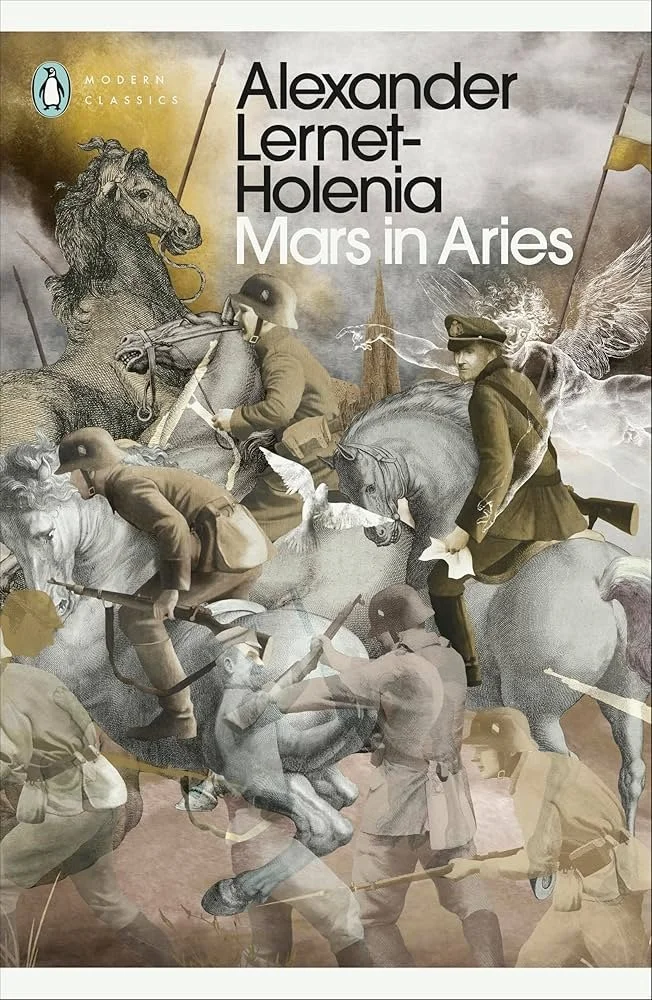
Mars in Aries, by Alexander Lernet-Holenia—In the days leading up to World War II, an Austrian cavalry reservist falls in with a strange crowd and becomes infatuated with the mysterious woman at their center. Then he’s deployed, and his recurring visions of past people and events start to merge with reality. Perhaps my favorite Lernet-Holenia so far. Full review on the blog here.

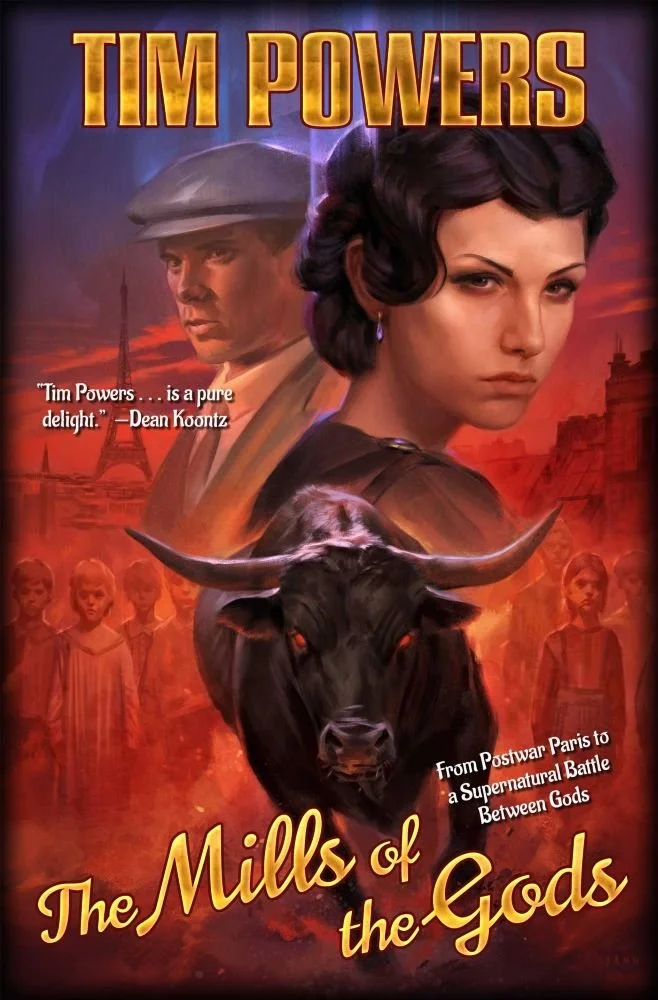
The Mills of the Gods, by Tim Powers—One I had hoped to review in full but couldn’t find the time to. Powers’s latest takes place in 1920s Paris, where expat American illustrator Harry Nolan finds himself involved with a young woman named Vivi and both end up on the run from the sauteurs, a centuries-old secret society striving for immortality by stealing into the bodies of specially prepared newborns. The sauteurs are dangerous and possessive of their target bodies, and Vivi’s most especially. Together, Harry and Vivi must free her and, with clues gathered from Ernest Hemingway, Pablo Picasso, and a sympathetic and helpful Gertrude Stein, unearth the true history of the sauteurs and defeat them permanently. The plot moves briskly and I was absorbed from the first chapter. I greatly enjoyed the Parisian setting, the cameos by Lost Generation artistic figures, and the connections to the ancient world Powers establishes for the sauteur cult. (As deadly and satanically parasitic as the villains are, I mercifully did not find them as spiritually oppressive as the succubi of The Stress of Her Regard.) But I most liked the relationship between Harry and Vivi. Both the First World War veteran Harry and intended sauteur host-body Vivi are damaged goods in need of redemption, and while they begin in mutual suspicion and work together out of necessity they move, over the course of the novel, through collaboration and friendship to something, not coincidentally, full of grace. A beautiful and moving ending caps a breakneck supernatural adventure.

A Rough Shoot, by Geoffrey Household—A lean, tightly-focused thriller from the author of Rogue Male. An English businessman and veteran of World War II surprises what he thinks are poachers on his patch of rented hunting land and accidentally kills one. His effort to cover it up embroils him in deeper, more complicated, and more far-reaching events than he could have anticipated. Full review on the blog here.

State of Siege, by Eric Ambler—An English engineer working in postwar Indonesia has finished his contract and hopes to fly home but finds himself, and a casual date, in the center of a military revolution. Fast-moving and suspenseful while also sweeping in scope, this is almost certainly my favorite of Amber’s post-WWII novels. Full review on the blog here.

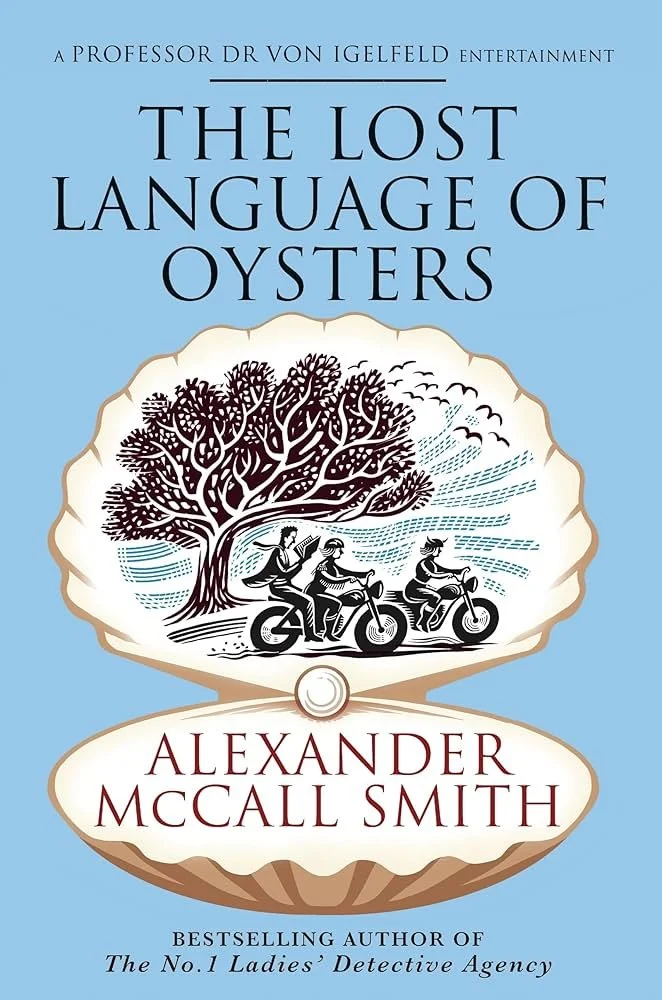
The Lost Language of Oysters, by Alexander McCall Smith—The latest in McCall Smith’s long-running series about hapless German philologist Professor Dr Dr Moritz-Maria von Igelfeld, this is a unified novel rather than a collection of interrelated short stories and finds the good Professor jockeying for status with a pesky old colleague and, to his own surprise, falling in love with an American linguist after she gives him a ride on her motorcycle. The more recent entries in the series are gentler and don’t have some of the darkness or ironic bite of the earlier ones, but they are always enjoyable, funny, and—just occasionally—surprisingly sweet. This one has some particularly good twists and surprises and a great ending.

Other Paths to Glory, by Anthony Price—Paul Mitchell, a young military historian studying a battle on the Western Front, receives two strange visits on the same day: the first is with two intimidating, authoritative men who are clearly not what they say they are; the second is with an assassin who throws him into a canal in an attempt to stage a suicide. The first two men, Audley and Colonel Butler, who were introduced in Price’s The Labyrinth Makers (which I briefly reviewed here), come to Mitchell’s aid and together they return to the former battlefield. What could be hidden there that would lead to murder and, with a secret international conference about to occur nearby, a threat to world peace? Another good thriller with a historical dimension from Price.

Heir to the Empire, by Timothy Zahn—My first Star Wars novel. Picking up a few years after The Return of the Jedi, this story follows the New Republic—formerly the Rebellion—through instability and infighting in the aftermath of success and the emergence of a new threat from the Empire, the skilled and intelligent Grand Admiral Thrawn. A fun read, and truer to the spirit and characters of the originals than much of what’s been sold as Star Wars since. Full review on the blog here.

Honorable mentions:

  • The High Crusade, by Poul Anderson—Vintage sci-fi with a fun hook—knights mustering for a crusade in medieval England encounter aliens, commandeer their ship, and set off on a crusade across the stars—that actually delivers. Brisk and enjoyable.

  • Spy Hook, by Len Deighton—The beginning of Deighton’s second Bernie Samson trilogy. A former secret agent murdered, a slush fund missing, old colleagues back from the dead, and Samson’s burgeoning romance with a younger woman threatened. Not quite as tight as the Game Set Match books but an involving story with a lot of surprises.

  • Beast in the Shadows, by Edogawa Rampo—An eerie, atmospheric, disturbing short novel in which a woman who believes she is being stalked approaches a crime novelist for help. Rampo was a devotee of Poe (Edogawa Rampo is his pen name, a Japanese near-equivalant of Edgar Allan Poe) and it shows clearly: concision, intricate construction, darkness, a beautiful tormented woman, violence, and insanity. Bleak but enthralling.

  • The Chrysalids, by John Wyndham—A young boy living in a farm community that, following a nuclear war, has reorganized itself around an intense religious vigilance for genetic mutation questions what he’s learned about mutants and realizes that his gift for telepathy, which he had always taken for granted, may be endangering him and his friends. Not my favorite Wyndham but a brilliantly imagined situation with a suspenseful final third.

Favorite kids’ books

The Raven: The Classic Poem, by Edgar Allan Poe, illustrated by Chloe Bristol—A beautifully illustrated new edition of Poe’s masterpiece, with moody, atmospheric but kid-friendly pictures. Full review on the blog here.

Bones and Berserkers, by Nathan Hale—A fun anthology of short horror stories—some true, some fictional, several somewhere in-between—by one of my kids’ favorite graphic novelists. Full review on the blog here.

Corduroy, by Don Freeman—A teddy bear for sale in an apartment store wants a home and finds unexpected fulfilment. I somehow made it to adulthood without having read Corduroy. I read it to our twins and just about lost it. A simple, beautiful and moving story with a lot of emotional and even spiritual depth.

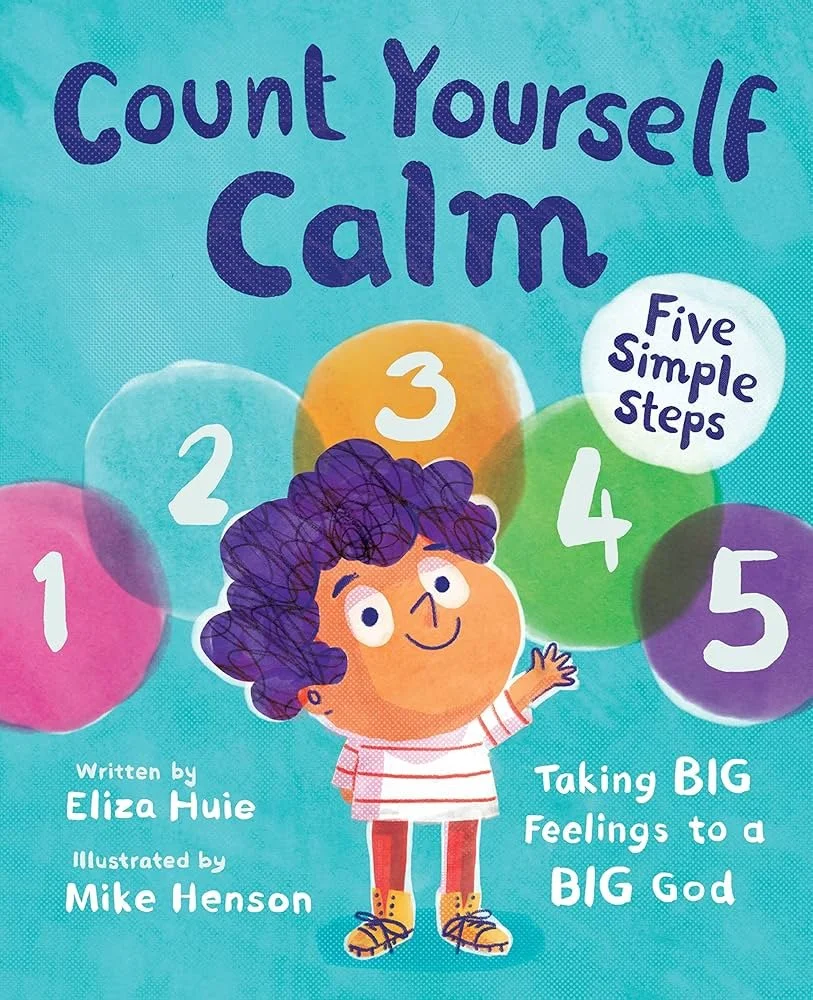
Count Yourself Calm, by Eliza Huie, illustrated by Mike Henson—We got our own copy of this picture book after an occupational therapist worked through it with one of our kids. It helps create a simple routine for calming anger, fear, frustration, and other “BIG feelings,” per the subtitle, by counting down gifts from God: parts of creation that bring us joy, the gifts he’s given us, the people who love us, and more. Simple and helpful for both kids and adults!

Ember Falls, by SD Smith—The second of Smith’s Green Ember fantasy series about anthropomorphic rabbits Heather and Picket; another fun adventure and a worthy followup to the original.

Looking ahead

I’m already into the reading for this year’s John Buchan June—the fifth June since I began this event!—so be on the lookout for that to begin in just a few weeks. I’ve also got a lot of other good fiction and non-fiction lined up and I hope to slow things down a bit for a few older, longer novels in the late summer or fall. In the meantime, thanks for reading, and I hope this list will have led you to something you can enjoy this summer!

Just as nasty as the enemy

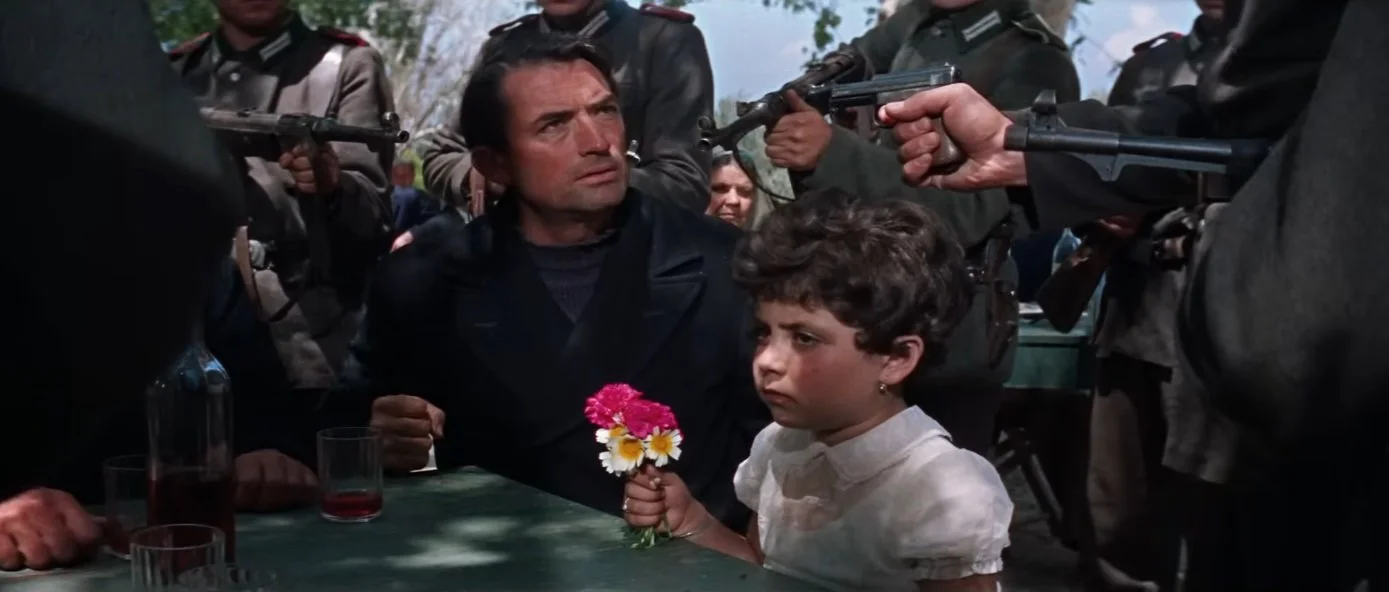
Gregory Peck in The Guns of Navarone (1961)

Despite YouTube’s thrumming ecosystem of amateur film criticism, there are precious few video essays on movies from before the Star Wars era, much less classic war movies. So it was a pleasant surprise to discover this nine-minute video (from five years ago) unpacking a little of what makes The Guns of Navarone great.

The host rightly starts with the strength of The Guns of Navarone’s story—a cast of interesting characters on a dangerous mission, wonderful scenery, a Mission: Impossible-like situation requiring a multi-part plan using all of the characters’ skills to accomplish. This is only right. The story should be good first; only then can interesting themes or lessons or philosophical implications emerge to be examined. Navarone has both: scope and depth.

As the host gives attention to the movie’s moral and philosophical dimension he highlights the contested pragmatic or utilitarian ethics of the men on the mission. The man who came up with the plan, Major Franklin (Anthony Quayle), is horribly injured while infiltrating enemy territory and, now viewed by some of the others (and himself) as a burden upon the team’s time and resources and a danger to the mission, there is a brief debate about what to do. Andrea Stavrou (Anthony Quinn), the hardened local guerrilla, suggests shooting Franklin and moving on. Captain Mallory (Gregory Peck), now the leader of the team and an old friend of Franklin’s, nixes that and they take Franklin along.

Franklin later tries to shoot himself—a calculated, coldly rational solution to the obstacles created by his injury rather than an act of desperation. Demolitions expert Corporal Miller (David Niven), Franklin’s most doggedly loyal subordinate, stops him. This is a pure act of love, and Miller, who has been comic relief up to this point, functions as the film’s conscience for the rest of the movie. (We learn during the briefing that Miller once blew up a Nazi headquarters in North Africa without damaging the orphanage nextdoor. This is presented as evidence of his skill with explosives but it also suggests an attempt to fight justly that is absent in the others, like Spanish Civil War knife-fighter Brown or “born killer” Spiros.)

Captain Mallory (Gregory Peck) has a quiet word with Franklin. Miller, unable to listen, at first interprets this as a moment of moral suasion, one old friend trying to reason with another. But Mallory is actually feeding Franklin false information—the mission has been canceled—that could play to their advantage if Franklin is captured and interrogated.

Mallory does his best to protect Franklin and the rest of the team but they do end up captured, and, when they manage to escape, Mallory leaves Franklin behind. His argument is that Franklin needs medical attention that they can’t give him. But he also has the secret knowledge that Franklin might be useful.

When Miller learns this—in later circumstances I won’t spoil—he is appalled: “Oh, I misjudged you. You’re rather a ruthless character, Captain Mallory.”

Not entirely, however. Mallory appears conflicted, as well he should be. (This is my favorite Peck performance, by the way.) Earlier in the film, in private conversation with Franklin long before Franklin’s accident, Mallory confesses to having ruined Andrea’s life through a gesture of chivalry earlier in the war, which he blames on “my stupid Anglo-Saxon decency.” But he’s gotten wiser since then: “To win a war you have to be just as nasty as the enemy. What worries me is that we’re likely to wake up one morning and find out we’ve become even nastier.”

It’s a rare film that raises this as a possibility for the good guys, especially in the main character’s argument for himself.

The thing is, Mallory’s ploy works—the Germans do get the false intelligence and do strip the defenses of the team’s target. But that’s not a neat resolution. We see Franklin being tortured and must assume that, offscreen, he broke. In Miller’s words, Mallory has “used up” his old friend for the sake of the mission. Mallory’s utilitarian arguments don’t withstand Miller, and Miller’s attempt to treat Mallory as coldly as he has treated Franklin ends in obvious regret. Both men, for different reasons, have tried to play the pragmatist and learned the hard way that it’s wrong.

And Franklin is only one instance of the damage wrought by the mission. Mallory’s self-accusing worries and Miller’s accusations are allowed to stand, even in light of the team’s ultimate success. What is permissible to win? An ever-necessary question.

Like The Bridge on the River Kwai, which similarly throws characters with distinct, conflicting worldviews at each other in a dangerous situation, The Guns of Navarone lets all of this grow organically out of the characters and story. It doesn’t feel forced, which makes it more powerful and also means that the action-packed adventure I thrilled to as a kid has grown deeper and weightier as I’ve gotten older. A rare accomplishment.

Mars in Aries

Last year I discovered the work of Alexander Lernet-Holenia, an Austrian novelist, playwright, screenwriter, and soldier. He served in the Austro-Hungarian Army during the First World War and as an Austrian reservist in the Wehrmacht, Austria having been consumed by the Third Reich in the Anschluß, in the Second. His work—at least what I’ve read so far, and I’m always looking for more—is atmospheric and uncanny, with his protagonists descending or arriving unexpectedly in worlds in which the invisible is made manifest and layered over the day-to-day.

Baron Bagge, the novella I reviewed for Miller’s Book Review last summer, does this with an Austrian cavalryman in the First World War. Count Luna, about an Austrian businessman convinced that a former rival who died in the concentration camps is haunting him, does this in the aftermath of the Second World War. Mars in Aries not only takes place during the Second World War, it was written and published—and banned—while it was yet ongoing.

Mars in Aries tells the story of Lieutenant Wallmoden who, we learn on the first page, is not the novel’s hero, simply its main character. The story takes place over a month or so in the late summer of 1939 as Wallmoden, an Austrian reservist, volunteers to join his unit rather than wait to be called up for mobilization by the Germans. He whiles away this peacetime service talking to his brother officers, conducting training exercises, and—occasionally—experiencing visions.

In an especially vivid one that occurs during training, Wallmoden is leading troops across a field near a village when he finds himself surrounded by ghosts. An army doctor assures him he is in good health, but it unsettles Wallmoden to have experienced this after conversations with another officer, a man of a mystical bent and with an interest in spiritualism, about whether or not one can tell if another person is an apparition.

Being of a well-off background and an officer, Wallmoden also makes social calls. It is during one of these that he meets Baroness Pistohlkors. She claims to have been born in the United States and briefly married there before being dumped—all the result of a misunderstanding—and remarrying a consumptive nobleman who moved her back to Europe and promptly died. Still young and breathtakingly beautiful, she is a titled and wealthy widow. An old man who is, strangely, often in her company, insinuates to Wallmoden that despite the two marriages the Baroness is still a virgin.

Wallmoden finds the old man offputting, the Baroness’s foreign friends strange, and her behavior stranger still—why, for instance, does she sometimes speak to only one other person at parties? or disappear before the parties end? and why do the handful of people who know her warn him of her bad reputation?—but he is smitten.

In just a few weeks, heedless of whatever she has earned a reputation for, he develops a passion for her, but the Baroness plays hard to get. Only after Wallmoden’s dogged pursuit does she, one day, agree to meet him for a tryst. They set a date and time for their rendezvous and Wallmoden returns to his camp.

That night the army deploys.

Wallmoden’s unit drives from Vienna to the Slovakian border with Poland preparatory to the German invasion. Wallmoden is unaware of the geopolitical maneuvers by the higher powers, never named, who control world politics, and is preoccupied with letting Baroness Pistohlkors know why he missed their meeting and with scheduling a belated one. He also continues to have visions or waking dreams, like a crawfish migration across the road leading over the Polish border or a ghostly encounter with two bathing girls from some past time, an encounter invisible to everyone else and that leaves no sign behind except a pair of wet footprints.

I don’t want to reveal anything further. I’ve already worked to conceal a lot about the plot. Wallmoden eagerly awaits word from the Baroness, the invasion comes and his unit strikes into Poland, he gets some surprising bad news, and has a yet more surprising encounter after being wounded. The story ends with a stunning reversal, with Wallmoden content but—both literally and metaphorically—nowhere near where he wanted to be.

Mars in Aries may well be my favorite of Lernet-Holenia’s books so far. It has the atmosphere of Baron Bagge and the absorbing ambiguity of Count Luna, as well as a satisfying streak of mystery. It works as both a romance and a war novel. The first half, in which we follow Wallmoden on his desperate bid for Baroness Pistohlkors’s heart, should prove especially poignant to anyone who ever felt unrequited love, and the second half, covering the invasion of Poland, utterly swamps the first. Lernet-Holenia, basing the book on his own experiences in the Wehrmacht, makes the invasion viscerally real—hot, dusty, exhausting, a parade of destruction and casual violence. The harsh reality of these scenes—to which I’ll return momentarily—make the reversal at the end that much more surprising.

The title, an astrological sign, does not reflect any actual celestial alignments during the invasion but apparently does suggest passion and aggressive desire. This is thematically appropriate, but the novel’s original title, The Blue Hour (Die blaue Stunde), a slang term used within the story for brief romantic trysts, works well on several levels, too.

As an additional layer of interest, Mars in Aries was published in 1941 and immediately banned by the Nazis. Actually banned, as in: sale was legally prohibited and the print run put in storage and destroyed. Reading it now, its apparent inoffensiveness—a love story with some mystical elements—may obscure what the Propaganda Ministry objected to. While the novel portrays German victory in Poland, it shows soldiering as unromantic, unheroic, and laborious; some of Wallmoden’s fellow officers openly talk about annihilating civilian settlements; the Poles, though rarely seen by Wallmoden, accordingly have an tone of underdog heroism; and some of the strange social gatherings in the first half of the novel suggest criminal activity—as a few other characters point out to Wallmoden—including Resistance work.

Fortunately, Lernet-Holenia had kept his publisher’s proofs and used them to republish the book after the war. I’m glad he did, and that the combined might of real censorship and Allied bombing couldn’t erase Mars in Aries.

This is an unusual novel, with a unique combination of romance, the uncanny or even gothic, and realistic warfare, and its climax is a suspenseful and moving surprise. Mars in Aries is beautifully written, exceptionally well-crafted, and, at about 200 pages, compact and powerful. I look forward to rereading it soon.

The Cruel Sea

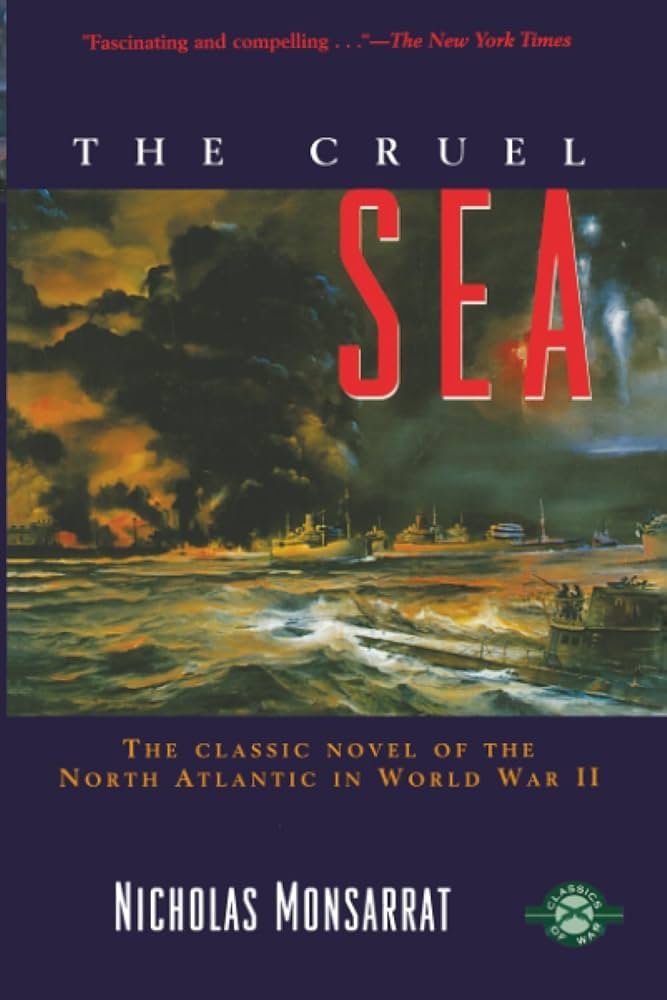
Several years ago I read CS Forester’s 1955 World War II novel The Good Shepherd, a short, intense story about an American destroyer captain as he attempts to protect a convoy through the worst of the U-boats’ hunting grounds in the North Atlantic. Though told in the third person, it is intensely, claustrophobically internal, bringing the reader into intimate contact with both the calculating mind and physical punishment of its protagonist over the worst 72 hours of his career. It’s excellent, one of my favorite reads that year. The Cruel Sea, published in 1951 by Royal Navy veteran Nicholas Monsarrat, is even better.

Beginning in a Scottish shipyard in the fall of 1939, The Cruel Sea introduces the captain, Commander George Ericson, a dedicated but undistinguished officer who already has a long career behind him, as he takes command of a newly constructed corvette, the HMS Compass Rose. He also meets his three junior officers—the untried Lockhart and Ferraby, a journalist and bank clerk fresh out of officer training, and the experienced but boorish Australian Bennet.

As the Compass Rose is fitted for anti-submarine duty in the North Atlantic, the reader gets to know the ship, its crew, and these central characters. Ericson is well-trained, disciplined, and eager. Lockhart, an unattached former freelancer, begins the war single and with few connections to make him fearful of combat; he’s cool and a quick learner. Ferraby, only twenty, utterly inexperienced and with a new wife at home, is uncertain and often unmanned by his lack of skill. Bennet, cowardly and lazy, pounces on that. Testing the new ship and undertaking its first missions into the warzone strains and exposes weak points in Compass Rose’s leadership. New officers and crew, like the posh, university-educated Morell, who has a flighty actress wife back home in London, and Baker, a young man obsessed with women despite his lack of experience with them, further complicate matters.

I don’t want to give much away about the plot. The Cruel Sea is not plot-driven. Having established its characters and their task—a task they’ll labor at almost without pause for six years—the story hums along on two brilliantly combined storytelling elements.

The first is the day-to-day reality of convoy duty and actual combat, both of which Monsarrat describes unromantically and with startling clarity. The drudgery and physical misery come through palpably, as do the horrors Compass Rose’s crew confront on nearly every mission. Sailors incinerated by the burning oil leaking from a torpedoed tanker, survivors discovered floating in their lifejackets weeks too late, a man dying of third-degree burns as a hapless officer rubs ointment on his exposed muscles, men wounded, drowned, frozen, blown to pieces—Monsarrat never embellishes or wallows in his descriptions, and the simplicity and directness of his narration makes it all the more disturbing and moving.

The second key element is the character of the men themselves, especially leaders. War, The Cruel Sea impresses upon us firmly, depends as much on relationships and leadership as it does on technology. This is a character study spread across six years of danger, combat, and death, and the smooth functioning of superiors and subordinates, their mutual trust, and the judgements each is empowered to make are as crucial as sonar, signal lamps, or depth charges.

Personal character matters. More than one man is wrecked by a bad relationship with a woman. The book’s title emphasizes the cruelty of the sea, but the torture some characters are put through by unfaithful wives rivals the sea for unfeeling destructiveness. Other men lead dissipated lives ashore or lives otherwise marked by moral weakness. Compass Rose’s greatest trial—again, I don’t want to spoil any specific incidents—painfully exposes the strong and the bad.

One incident I will describe, one of the most famous in the book and one included in the trailer for the 1953 film adaptation, combines the stress and danger and technical demands of combat with the problem of personal character and responsibility. In Compass Rose’s worst mission, a convoy to Gibraltar that is almost annihilated by U-boats, Ericson steers the corvette toward a group of men who survived the sinking of their ship and are struggling in the water. As he approaches he learns that Compass Rose has picked up a strong sonar signal directly underneath the survivors. It is almost certainly a U-boat. Ericson must decide in an instant: pick up the survivors and let the U-boat get away—and possibly even torpedo Compass Rose—or drop depth charges into the middle of the struggling men. He orders the depth charges launched. He lives with the consequences for the rest of the book.

The novel’s six-year span, with characters coming and going and the scene occasionally shifting to the homefront, to the Arctic convoy route to Murmansk, or even to Brooklyn, gives the reader a sharp sense of the experience of the war, especially its long years of struggle before success and the escalation of the violence. The first two-thirds are a bleak grind. The harshness of the work, the unrelenting danger, and the horrors and personal stresses the characters are subjected to hardens or dulls them by turns. They feel they have not only been caught in a machine, but worry about becoming machinelike themselves. Ericson struggles with memories of a softer, more flexible earlier stage of the war; a young sailor who went AWOL to check on his wife might have been let off with a warning in 1939, though by 1944 the same man committing the same offense would be sent to prison, and Ericson feels he must shut down even good-natured joking among his offers in order to maintain discipline. Lockhart, self-protective, closes himself off to all but his captain, but finds himself falling in love with a beautiful Wren and must decide whether to commit with the war unfinished.

Only late in the book do the characters realize that there is an end in sight, a sense that brings its own anxieties with it. By the time two of the central surviving characters stand together on the bridge of a different ship, different men from those they began the novel as six years before, we feel their gratitude that the war is over but understand why it is a muted, subdued gratitude—exhaustion, and much more besides.

I don’t want to give the impression that The Cruel Sea is especially dour. It has frequent moments of wit and levity of the best British kind—wry, understated, often dark—and its characters are a pleasure to spend time with. But precisely because Monsarrat has peopled his novel with such lifelike, sympathetic characters, when they suffer and die it is as powerful and agonizing as their good times were enjoyable. By the end the story has reminded us, in case we forgot, that every life has shares of joy and loss. Monsarrat makes us feel both.

Despite overlap in subject matter, the comparison I began with is not entirely fair. Both are excellent novels. But where The Good Shepherd concerns one man, a captain, over three days, The Cruel Sea follows multiple members of a ship’s crew across the entire duration of the war. The Good Shepherd is a minutely focused portrait of a leader in his most acutely stressful moment. The Cruel Sea, on the other hand, vast, changeable, dangerous, and beautiful like the sea itself, is an epic.

Merrill’s Marauders

Jeff Chandler as Gen Frank Merrill inspects his exhausted men before the final assault In Merrill’s Marauders (1962)

There’s a scene in Norman Mailer’s war novel The Naked and the Dead in which the recon squad at the center of the story are ordered to drag an artillery piece into position in the jungle. They must first get it across a river and then up a muddy, deeply rutted track to the top of a hill with no mechanical assistance. It takes all day. And it’s agonizing. Mailer makes the reader feel—for pages and pages—the messy, clumsy, impossible effort as well as the inevitable frustration when the gun finally slips loose and slides right back down the hill into the river. The reader ends the chapter as exhausted as Mailer’s soldiers.

Precisely that note of weariness and exhaustion is the salient mood of Merrill’s Marauders, an unusual 1962 World War II movie I recently rewatched with my sons after an interval of many years.

I don’t intend this post as a proper review—if you’ve found your way here you probably already know something about the movie—but I do want to draw attention to this aspect of exhaustion. Few of the classic 1950s and 60s World War II films approach their subject with the attention to labor, repetitiveness, and sheer tiredness that Merrill’s Marauders does.

Briefly, Merrill’s Marauders tells the true story of a special US Army unit deployed to Burma in support of British efforts there. Burma is a neglected corner of the war anyway, and the unfamiliarity of the story as well as its realistic, serious depiction of the wastage and attrition of the campaign make it worthwhile viewing.

This is despite the movie being quite rough around the edges. Wikipedia diplomatically calls it an “economical historical epic,” which being translated is “low budget movie.” It shows in different ways, most obviously and jarringly in a sequence incorporating stock footage from Battle Cry, a film about Marines in the Pacific, into a film about the US Army in Burma.

That Merrill’s Marauders works at all can be credited to its director. Sam Fuller was himself a veteran of the war and would go on to write and direct The Big Red One based yet more directly on his experiences. Presented with this story and a small budget, Fuller mostly dealt with his constraints artfully and used his funding where it could make the most difference. The film begins in medias res, with the Marauders already worn out and their numbers depleted after weeks on the march in the jungle, and it ends not with the final great battle to take their objective but on a character-centered moment just before the action—a daring move that works perfectly. That’s the writing. Technically, a pair of mid-film assault sequences are staggeringly well executed, as is a climactic defense against a banzai attack.

Action punctuates the separate acts of the story but the subject is really the men themselves, their leader, General Merrill, and their exhaustion. At several points in the film they are declared used up by the unit surgeon, utterly incapable of more, and yet when they receive new orders they pick up and carry on. There is heroism in the combat scenes but a no less extraordinary heroism in the long marches through jungle and over mountains in between. One senses that Fuller, a combat infantryman himself, understood well the drain of boredom and endless work and wanted the audience to feel it in their bones.

Where Merrill’s Marauders differs most starkly from the scene I opened with from The Naked and the Dead is in its earnestness. Mailer’s novel is a bitter, cynical story in which endurance and courage are rewarded with yet more pointless hardship. Merrill’s Marauders believes in its men and their work. The war is terrible and wastes good men, but their unromantic, plodding tenacity is something to be admired.

The film’s best moment, for me, and one that illustrates beautifully the place Merrill’s Marauders reserves for sincerity and goodness, is not General Merrill’s final scene—a calvary-like passion complete with pietà—but a quiet one near the middle. The Marauders, despite their weary, malnourished, disease- and leech-ridden condition, have liberated a strategically important rail junction from the Japanese. While Merrill considers the situation, his men sack out anywhere they can sit or lie down. The Burmese natives appear—they’re all women and children, a fact with dark implications that the film wisely leaves us to intuit. An old woman approaches one of the toughest sergeants in the unit and gratefully offers him rice. He breaks down weeping before he can finish eating it.

If few of the classic war movies portray the weariness and sheer effort of the war as little more than a discomfort or inconvenience, fewer still offer us moments like that.

Merrill’s Marauders is a unique little movie, telling a unique story with the sharp perspective of a veteran spiritually unwearied by cynicism. It’s worth checking out if you haven’t seen it, or revisiting if you have.

Eight Hours from England

Anthony Quayle (1913-89) in Albania during World War II

If you grew up, as I did, on classic war movies, you might not know the name Anthony Quayle but you’ll probably know his face. Quayle appeared in many of the great war films of the 1950s and 60s, including Lawrence of Arabia and The Guns of Navarone, often playing earnest, well-intentioned officers frustrated by ugly reality. That is certainly the case in the two films I named, and to judge from Quayle’s 1945 war novel Eight Hours from England, which was based on his experiences with the Special Operations Executive in Albania, he didn’t have to strain his imagination to portray those characters.

Eight Hours from England covers a few months in the winter of 1943-44. Major John Overton, a decent man with several years of experience in the war, has returned to England on leave. The homefront bores him, and his unrequited love for Ann, the woman he has hoped for years to marry, convinces him to accept an offer of a new mission on a whim. He bids Ann good bye, struggling to express his yearning for her, and leaves.

His trip east is long and frustrating. He arrives in more than one staging area unannounced and has to wait for orders. When he is finally redirected to Albania, which was not the mission he initially agreed to, he goes along with it, a knight errant ready for any quest.

He arrives in Albania by boat in the middle of the night, wide-eyed and eager to get to work. The officer he is replacing has become standoffish, hiding in a cave and refusing to have anything to do with the Albanian guerrillas he was sent to help. Overton determines to make a better job of it. With a handful of other British commandos, a few American intelligence officers, and an Italian officer who, his country having lost and swapped sides following Mussolini’s ouster, is committed to helping the Allies, Overton sets out to connect with the locals as well as the two groups fighting both the Germans and each other: the Balli and the Partisans.

The Partisans are Communist guerrillas backed by the Soviets, and claim to have both huge numbers and an insatiable need for materiel—weapons, ammunition, clothing, food, medicine, even blankets. They also regularly attack the anti-Communist civilians. The Balli, on the other hand, are the local anti-Communist resistance who have made the grave mistake of partnering with the Germans in order to eradicate the Partisans.

Acting as a go-between, hiking back and forth across the mountains trying both to liaise with the locals—who care more about finding pretexts to demand British cash than anything else—and to convince the Balli and the Partisans to cooperate, Overton finds his earnestness fading. The Albanians, whom he regarded as colorful potential allies when he landed, come to look more and more thuggish and untrustworthy. His work grinds him down physically and mentally, especially after he receives word by radio of a major British operation in the Balkans that needs all the local help he can organize. And, lurking in the background, busy but hidden from view, are the Germans.

The impossibly rugged terrain, the remoteness from home and people making the decisions, the backwater hit-and-run fighting, the betrayals by local “allies,” the seeming fruitlessness of one’s efforts, and the bloody small-minded rivalries among the locals, whose backward customs and moneygrubbing pettiness and simple thievery Overton gradually grows fed up with—I have to wonder how much Eight Hours from England would resonate with veterans of Afghanistan.

This is an unusual war novel in that it is not action-oriented. Quayle’s story is a drama of logistics, organization, and diplomacy. The Germans appear only occasionally and at great distance, visible as lines of trucks on the other side of a valley or as gray dots setting up heavy weapons far below, but their threat is omnipresent. False alarms send Overton and his group scrambling to fallback positions and hideouts more than once. And the difficulty of communication—with headquarters, with each other—as well as bringing in supplies is clear. To charge their radio batteries they need petrol; to get petrol they must bring it in by boat; to request it on the next boat, they need the radio; and when it arrives they have to keep the Albanians from stealing it. Eight Hours from England is a novel of what goes on behind the scenes of special operations, and of just how unbearably frustrating and exhausting war can be even when—perhaps especially when—there is no fighting.

Quayle conveys all of this beautifully, with vivid descriptions of the people and landscapes. (The actual landscapes, by the way. The locations Quayle names are all real. Here’s the base where he entered and left Albania. Some of his equipment is still there.) Quayle captures the impossibility of Overton’s situation and makes the reader feel it, as well as making it clear that, whatever the outcome of the war of the Allies against the Axis, Albania will not enjoy a simple happy ending.

I read Eight Hours from England in the recent paperback edition published by the Imperial War Museum as part of its Wartime Classics series. There are sixteen books in the series and I already have several more lined up for this year. Eight Hours from England was a good place to start. Strongly and imaginatively written, it brings the reader into a complicated, often overlooked side of World War II and dramatizes it brilliantly.

Hill 112

Men of the 8th Rifle Brigade in Normandy, June 29, 1944

In a passage from The Everlasting Man that I’ve referenced and quoted here many times, even way back at the very beginning of this blog, GK Chesterton argues that what fiction can evoke better than history is the feeling of living through an event. When historians neglect subjective experience—“the inside of history,” what it was like to live there and then and see those things—then “fiction will be truer than fact. There will be more reality in a novel; yes, even in a historical novel.”

But the historians and the novelists need not oppose one another. What was it like? has been one of my animating questions since I was a child, a question at the forefront of my mind as both an historian and a novelist. Combined correctly, the craft of the historian and the art of the novelist can, as Chesterton suggests, give the reader a powerfully truthful feel for the past. And I haven’t seen that done better recently than in Hill 112, the latest novel from the great historian of Ancient Rome and novelist Adrian Goldsworthy.

Hill 112 tells the story of three school friends serving in the British Army during the Second World War. Mark Crawford is a fresh new lieutenant in the infantry. Bill Judd, a working class contrarian, is a private and machine gunner in the same battalion is Mark. And James Taylor is a lieutenant in an armored reconnaissance unit with four Sherman tanks under his command.

When the novel begins on June 6, 1944, D-Day of Operation Overlord, James and his unit are waiting to go ashore on Gold Beach and Mark and Judd are encamped back in England, keeping up a mind-numbing regimen of training meant to prepare them to deploy to Normandy. As James and his tanks land and move into the hedgerow country in search of the Germans, Mark and Judd wait and wait, biding their time through route marches and lectures on venereal disease and handling personal drama. They are in love with the same girl, who doesn’t seem to have time for either of them, and they discover a terrible homefront secret when Evans, a young Welsh private, is caught deserting with Mark’s pistol.

Meanwhile, after a few days of traffic and confusion James’s unit meets the enemy. His first encounters with the Germans are surprising, exhilarating, and harrowing, and while he escapes these with his life, he has to replace both his tank and members of his crew. And not for the last time. After a few weeks of James’s motoring through the countryside—down narrow hedge-lined lanes, through the tight medieval streets of tiny villages, and across open fields of chest-high green wheat that German anti-tank shells part like the sea as they blast toward his tank—Mark and Judd’s unit takes ship for Normandy. Soon, both they in their infantry battalion and James in his tank squadron are fighting at the center of horrendous bloodletting in the battle for a piece of high ground just south of Caen: Hill 112.

In this novel, Goldsworthy does one of my favorite things in historical fiction: simply dropping the readers into a situation in medias res and inviting us to watch. It works brilliantly. The main action plays out over about about five weeks, from D-Day to July 11 (D+35). It begins immediately, as James waits to drive his Sherman ashore, and its forward momentum never lets up. Even the quiet moments of reflection, as when James thinks back on his recent engagement to the girlishly romantic Penny, who has given him a surprising good luck charm, or when Judd remembers his dalliance with leftwing politics, or when Mark broods over a terrible accident that occurs during his first assault, carry us onward into the hard work of the campaign. There is always more to do. Even the novel’s ending powerfully brings this home.

That feeling of neverending work is, after all, a crucial part of the experience of war. All three men come, at some point, to feel as though nothing else exists outside the war. For James especially, thinking ahead to “after the war,” when he and Penny will marry, begins to feel hopeless.

But the work is also dangerous, and Goldsworthy realistically captures the continuous danger of the war. Even on a mission to seek out and destroy the enemy, combat begins and ends suddenly and never goes according to plan. Men die not only of grisly wounds in combat—shot by rifle, pistol, or machine gun; shredded by shrapnel; burned up by incendiary grenades, blown apart by mines; decapitated or cut in half by artillery or killed outright by the concussion of an explosion—but unexpectedly and by accident. One of the lead reconnaissance tanks in James’s unit rolls over into an underwater crater immediately after landing on Gold Beach, and friendly fire happens on multiple occasions. The attrition and turnover in each unit is realistic and punishing. By the end, the three protagonists—and by extension we, the readers—are surrounded by new guys whose names they can’t even remember.

This is not to say that Hill 112 is a continuously grim slog. The darkness, as in real life, is lightened here and there with banter and gallows humor. James’s crew, with its mix of farmboys and Cockneys, is especially fun, and the novel’s many colorful side characters enrich the story: the fearless Captain Dorking-Jones, the Canadian Gary Cooper lookalike Buchanan, the serial deserter Reade, the veteran tanker Martin, who has two kids back home and tells James bluntly that he won’t take undue risks in combat, and O’Connor, a veteran not only of earlier theatres of the war but of Spain, who teaches Judd and his mates more practical soldiering than all their camp lecturers combined.

Goldsworthy writes in a lengthy and informative afterword that giving modern readers a sense of what it was like was one of his goals for Hill 112. He succeeded brilliantly. I’ve read many of Goldsworthy’s histories—one of my very first paid writing jobs was this review of his excellent book Pax Romana—and several of his other novels set on the Roman frontier during the reign of Trajan. I have enjoyed those novels, but Hill 112 is by far his finest fiction: immediately and continuously engaging, peopled with strong characters, exciting, horrifying, and profoundly moving. I heartily recommend it. Where were novels like this when I was a kid?

Godzilla Minus One

A confession: When I watched Gladiator II Sunday afternoon and later sat down to review it, I struggled to view it on its own terms—not only because it was a middling sequel to one of my favorite movies but also because the night before I had watched one of the best movies I’ve seen in years: a moving historical drama with great characters, rich themes of fear, duty, and love, a fast-moving, exciting plot… and a radioactive monster. That movie is Godzilla Minus One.

The story begins in the final days of World War II, as Koichi Shikishima lands his rickety fighter plane on a small island airstrip. Shikishima is a kamikaze pilot and had been on his way to attack the American fleet when he developed engine trouble. The mechanics, the only personnel on the island, find nothing wrong with his plane. Before any uncomfortable conversations can occur or Shikishima can leave to complete his mission, a gigantic creature known to the locals as Godzilla rises out of the ocean and wipes out the airfield crew—all but Shikishima and the lead mechanic, who blames Shikishima, who was too terrified during the attack to jump into his plane and fire his guns at the monster, for his men’s deaths.

Back in Japan following the surrender, Shikishima finds his family home destroyed. A crochety neighbor, Sumiko, gives him the bad news—his parents were killed in the firebombing. When she realizes that he is a kamikaze pilot who came back from the war alive, she heaps him with shame. Shikishima is thus left living literally in the ruins of his former life.

Things change when he runs into Noriko, a homeless young woman whom Shikishima first meets as she flees arrest for theft. As she runs through a crowded market she bumps into him, presses a baby girl into his arms, and runs on. Unsure of what to do, he waits, unable to leave the baby and uncertain of where to look. Noriko finds him as evening comes on and explains that the baby, Akiko, is not hers, but the child of a woman killed in the firebombing. Noriko swore to look after her little girl.

Shikishima takes them in and, slowly, over the next few years, the three build new lives for themselves, Noriko looking after Akiko and Shikishima taking whatever work he can find to provide for them. Purely through the habit of sharing a house, relationships form, albeit strictly in one direction. Akiko, as she learns to talk, calls Shikishima “daddy,” a title he reminds her does not belong to him. Noriko, clearly, loves Shikishima, and yet he remains closed off. When his coworkers learn that Shikishima and Noriko are not married and misunderstand the situation, demand that he marry her. But he cannot, he thinks, because his war never actually ended.

The best work that Shikishima finds is minesweeping, well-paying but dangerous work aboard a small, slow wooden fishing boat with a crew of eccentrics—old salt Akitsu, naval weapons expert Noda, and Mizushima, a young man drafted too late in the war to see action. It is here, with this group, that Shikishima encounters Godzilla again.

Atomic weapons testing in the Pacific—we are explicitly shown the Bikini Atoll test—has transformed the monster from a huge deep-sea lizard to a monster that towers over cities and can breathe a “heat ray” with the power of an atomic bomb. In the process of fighting the monster off as he approaches Japan, Shikishima and his crewmates also learn that Godzilla can also heal quickly from even severe wounds. Godzilla’s first attack on Tokyo is genuinely terrifying—and tragic for Shikishima.

The rest of the film is concerned with the attempts of a freelance group of ex-Imperial Navy men to stop Godzilla. A demilitarized Japan has no official power to help and the American occupiers are more concerned with the Soviets, so it is up to Shikishima and others to take care of the problem themselves. Fortunately—or unfortunately, given Shikishima’s long-fermenting deathwish—they have found a way to use Shikishima’s peculiar wartime training to their advantage.

That’s more of a plot summary than I intended to write, but Godzilla Minus One is not just a monster movie, it’s a genuine, moving human drama with a well-realized historical setting and characters whose plights immediately involve us. Unlike a lot of similar disaster or monster movies, Godzilla Minus One has no unlikeable characters, no cheap comedy sidekicks, no hateful villains. All of them are worth spending time with and all of them matter. (This is, in fact, a thematic point.) This human dimension gives the monster attack scenes—whether aboard a fishing boat, in the heart of Tokyo, or racing across the countryside—weight, suspense, and excitement. I haven’t been this tense in a movie in a long time.

The story also proves surprisingly moving because, again, unlike a lot of similar recent movies, it dares to explore deep themes and treats them seriously. Most prominent among these is duty. Time and time again, when Shikishima is presented with something he must do—shoot at a monster, take care of a baby, marry the girl who loves him—he freezes. Shikishima’s arc is to move from fleeing duty, to passively accepting duty, to embracing it willingly. And yet without something else to temper it, his final, fearless embrace of duty could lead to precisely the kind of cold, bloodyminded sacrifice that got him into the cockpit of a flying bomb during the war. What that something is, what gives meaning to duty, I leave for y’all to discover.

When it came out last year, Godzilla Minus One was lauded for its special effects, and rightly so. The film looks amazing. The effects complement the story perfectly and are, for the most part, seamless. For long stretches I was so involved in the story that I forgot I was watching a computer-generated lizard chasing a boat or stomping around Tokyo. That this film did so much on a fraction of the budget of even the most modest Marvel movie should put Hollywood to shame—and remind us that it’s story and characters that make movies, not VFX.

I missed this one when it was briefly in theatres near me, but that made the sweet surprise of Godzilla Minus One all the more overwhelming when I finally watched it last weekend. If you’re looking for the perfect combination of sci-fi monster action and grounded, thematically rich drama, Godzilla Minus One is one of the rare films that will meet that need. And it does so brilliantly.

Notes on the Churchill kerfuffle

V for Victory? Or accidentally signaling the best response to his critics?

Speaking of The Bridge on the River Kwai, in a revealing moment early in the film the antagonist, Col Saito, speaking to his British counterpart about prisoners who had been shot in an escape attempt, shows pride in his enemy’s behavior: “For a brief moment between escape and death… they were soldiers again.”

Well, last week, for a brief moment between TikTok and college football, people cared about history again.

Background and backlash

Briefly, last week podcaster Darryl Cooper of Martyr Made appeared in an interview with Tucker Carlson on Twitter. Carlson feted Cooper as “the best and most honest popular historian” in America, fulsome hyperbole that did Cooper no favors once the discussion started and Cooper ventured his unconventional opinions about World War II. These resulted in immediate controversy.

While early reporting on the interview floated a number of possible points of outrage, including wobbly suggestions of Holocaust denial and—more accurately and damningly—Cooper’s dark insinuations about the Zionists who had financial connections to Winston Churchill, the controversy eventually settled around Cooper’s examination of Churchill’s decision-making and leadership, and not least his description of Churchill as a “psychopath” and “the chief villain” of the war. Churchill’s crimes? Having needlessly antagonized Hitler before the war, bullheadedly refused peace offers during the war, and pushed for things like the strategic bombing of German cities. Cooper even repeats the meme-level cheap shot that Churchill was “a drunk.” (He wasn’t.)

Journalistic outrage-baiting ensued, all conducted in the breathless tone with which I assume Puritans reported the discovery of witches. I found it pretty rich that the same media that justified and celebrated anti-Churchill protests and vandalism in 2020 used a podcaster’s profanation of the same man for clicks. Well, it worked. I couldn’t escape this story as it unfolded.

I don’t intend to wade into the details. Churchill biographer Andrew Roberts, to whom I have referred many times here on the blog, handled those with aplomb in a blistering essay for the Washington Free Beacon. Read that, then follow it up with Roberts’s appearance on the School of War podcast in an episode that dropped just last night. The past week has produced many more apologias for Churchill and critiques of Cooper, but Roberts has done the work and is worth listening to on any subject he’s researched.

For his part, Cooper posted a characteristically discursive response on his Substack, which you can read here.

Hyperreality and post-literate history

What I found interesting and, at first, a little baffling about the controversy from the beginning was the… prosaicness of some of Cooper’s views. Churchill as warmonger, Churchill as manipulator of America, Churchill as the real instigator of the bloodiest war in history, even Churchill as drunk—these are all pretty pedestrian contrarian takes. Pat Buchanan published a book laying out many of these arguments sixteen years ago, and he was drawing on a current of anti-Churchill interpretation that was already decades old. (Roberts does a good job explaining some of the historiography of this controversy on School of War.)

The fact that such perspectives are and ought to be old news to anyone who has studied Churchill or the Second World War even a little bit suggests that most people—journalists, media personalities, podcasters, and the general public—simply haven’t.

For most people, Churchill is a recognizable character with no depth in a simplistic good-and-evil tale rather than a complex real person living through uncertain and dangerous times. This reduction of the man to the icon means that an attack of Cooper’s kind will generate either outrage at the profanation of a sacred image (when, again, we should have heard all this before) or the frisson of the conspiracy theorist discovering forbidden (false) knowledge. Beyond Cooper’s bad history, the fact that this interview generated the controversy that it did is revealing.

It’s this broader context that I’m most interested in, and two essays in particular offer a lot of food for thought in response.

First, writing at Compact, Matthew Walther sees the Carlson-Cooper interview and the resulting controversy as symptoms of a “post-literate history,” there being an “epistemic gulf between the current consensus . . . of practicing historians on any given subject and the attitudes of the ordinary person of general education.” The appetite of the public for charismatic purveyors of dark, hidden truths—usually old, debunked ideas that can still be used to surprise the ignorant—is part of the problem, but historians and educators generally share the blame. Take a few minutes and read the whole essay.

Second, Sebastian Milbank, one of my favorite writers at The Critic, published an essay this morning that only glances across the Cooper controversy as an example of our present absorption into “hyperreality,” an imaginary world shaped by social media that, through information overload and partisan polarization, turns real people and things into symbols and erodes discernment, judgement, and wisdom. Simplification, detachment from reality, the reduction of knowledge and rival truth claims to mere content, and the “openness to everything” of online hyperreality create an environment in which false views appear more inviting, and not only for the ignorant or wicked:

Anyone with a modicum of knowledge will be able to spot the huge gaps in Cooper’s argument here. But what is more interesting is how he came to embrace such a grotesque viewpoint. Cooper isn’t stupid, or wicked, or even ill-informed in a conventional sense. Instead, we could say that he is “overinformed”. He is the product of hyperreality, supersaturated with information to the point that his analytical faculties and sense of reality breaks down. One gets a sense of this in the interview alone, where he describes reading, not systematically, but omnivorously, consuming over eighty books for his podcast on Israel/Palestine, and not being able to recall all the titles.

Milbank’s essay is longer and richer than the discussion surrounding Cooper—and Milbank includes a favorite passage about madness from Chesterton—so be sure to read the whole thing. For an even more dramatic parallel case, including another pertinent Chesterton quotation, see Jonathon Van Maren’s essay on Candace Owens at the European Conservative here.

Caveats and crankery

Churchill lived a long time and involved himself in a lot of things, not always successfully. Far from the “correct” view being the flawless and burnished bronze lion of British defiance in the face of tyranny, Churchill is open to legitimate lines of critique that historians still debate. Irish and Australian critics, for dramatically different reasons, sometimes take a more negative view of Churchill, and he is the object of an entire subfield of anti-imperialist Indian criticism. But all of this is despite the role he played in World War II, and all of these grievances and arguments are subject to evaluation according to the evidence.

Which is the first place Cooper fails. And when Cooper asserts that the reactions to his interview are evidence that he’s correct, he fails even more seriously by falling into a trap I’ve written about here before: crankery.

Cooper is not, as Carlson tried to puff him, an historian. I’ve tried to avoid pointing this out but others, like Niall Ferguson, have been much less polite about it. Cooper is, however, as Walther and Milbank’s essays suggest, a gifted autodidact. But the problem for autodidacts in any field is that their enthusiasm is not a substitute for the basic intellectual formation that formal, guided study by those that have already mastered the subject provides. There is a moral dimension to this as well—enthusiasm and omnivorous reading are no substitutes for sound historical judgement or simple human wisdom.

And so the autodidact blunders into plausible but false theories that, owing to gaps they aren’t even aware of, become their entire frame of reference. “Everything becomes reduced down to a single question or thesis,” as Milbank puts it. Their world view is complete, but too small, according to Chesterton. And if, when questioned on their interpretation, they double down, attack their questioners, or begin to distort their evidence, they risk becoming a crank. Once they begin referring to “them” and an undefined “establishment” with knowing contempt, they’re already there.

This is, more than anything, a good example of why education in history and the humanities more broadly still matters.

Recommended reading

Churchill’s memory lives among those very few men—like Lincoln and Napoleon—who inspire a continuous flow of books. The following are those that I most often recommend:

  • Churchill, by Sir John Keegan—An excellent and approachable short biography from a great military historian.

  • The Duel: The Eighty-Day Struggle Between Churchill and Hitler, by John Lukacs—A good look at a specific episode of Churchill’s life, from his appointment as Prime Minister in May 1940 into the summer, with Hitler’s activities at the same time told in quite revealing parallel.

  • Winston’s War: Churchill 1940-1945, by Max Hastings—An excellent study of Churchill’s time as Prime Minister, with a lot of attention devoted to his frustrating relationship with the United States. A good antidote to at least one of Cooper’s claims.

  • Churchill: Walking with Destiny, by Andrew Roberts—The big one, a massive and deeply researched comprehensive biography by an expert who, as I said above, has done the work. It shows.

  • Moral Combat: Good and Evil in World War II, by Michael Burleigh—If you’re interested in the moral and ethical questions raised by the war, this is a more serious and better researched consideration of them than you’ll get from the Carlson interview.

I’d recommend any one of these for a more detailed and nuanced grasp of a great man than any podcast or social media interview can possibly provide.

On the term “assault rifle”

German troops in the Battle of the Bulge carrying (inset) The Sturmgewehr-44, the original assault rifle

Years ago* I wrote an Amazon review for a book on the militarization of American police forces, and among the biggest surprises that came my way when lots of people chose to comment on that review was the accusation that I was “liberal” or otherwise anti-gun because, in the course of describing the military equipment increasingly adopted by even small local police forces, I had used the term assault rifle.

This struck me as an odd reaction. Assault rifle, I thought, may be an awkward politics-adjacent term with probably too-broad connotations but it still denotes a specific thing as precisely as possible. I found it entirely appropriate to use, not least since the author of the book I was reviewing used it, but I still found myself avoiding it over the next few years. Eventually, I became annoyed enough by online arguments about guns—all of which, on both sides, shared a highly emotive imprecision in how they talked about the subject—that I started a blog post with the same title as this one, only to abandon it in incomplete draft form a year or two ago. Why bother?

Well, over the weekend Ian McCollum of Forgotten Weapons** posted an excellent “mild rant” on precisely this topic: “What is an ‘assault rifle?’” Like me, he was surprised to find himself getting flamed for using the term; like me, he discerned that this had a lot to do with political rather than technical, definitional factors; but unlike me, he took a firm line and expressed it well.

McCollum starts with an assault rifle’s three basic characteristics:

  • It has select-fire capability, i.e., it can fire in more than one mode, e.g. fully automatic, semi-automatic, and/or burst

  • It feeds ammunition from detachable magazines, as opposed to a belt or internal magazine

  • It fires an intermediate rifle cartridge, i.e. a cartridge larger than a pistol cartridge but smaller than full-sized rifle cartridges

This is succinct and technically precise. Stray from these parameters, he notes, and what you have is not an assault rifle. Civilian AR-15s, for instance, that fire an intermediate rifle cartridge and use detachable magazines but can only fire in semi-automatic are not assault rifles—they are simply semi-automatic rifles. An automatic weapon fed from a belt is not an assault rifle, but a machine gun—even if it fires an intermediate cartridge, like the M249 SAW.

Because that third factor—the intermediate cartridge—is decisive. For example, a select-fire weapon with detachable magazines that fires a full-sized rifle cartridge is a light machine gun (like the BAR or Bren); a select-fire weapon with detachable magazines that fires pistol cartridges is a submachine gun (like the Thompson, the MP40, or the UMP). In fact, the term submachine gun was coined to distinguish the smaller, one-man “trench brooms” developed near the end of and immediately following the First World War from the big crew-served belt-fed machine guns—the Maxim, the Vickers, the Spandau—that had already become horribly familiar. Take a look at when the term submachine gun originates and becomes more common. Firearms terminology can be messy, but as in so many other things, a little understanding of history helps.

This is especially true of the term assault rifle. As McCollum points out, assault rifle is a translation of the German Sturmgewehr, a term coined—according to some stories by Hitler himself—to distinguish a newly developed service rifle from its predecessors. The rifle was the Sturmgewehr-44 or StG-44. It was select-fire, fed from a detachable magazine, and it fired an intermediate cartridge, a shortened version of the 7.92mm Mauser rifle round. This proved its key innovation, both for practical reasons (modern infantry combat typically occurs within a few hundred yards, making a rifle that can hit a target 2,000 yards away a waste for all but snipers) and economic ones (reducing the amount of raw materials per round, giving Hitler’s war machine literally more bang for its buck).

Whoever coined the term, it was a helpful designation for a new thing—no previous weapon did precisely what the StG-44 did in the way the StG-44 was designed to do it, and it set the standard for a whole new variety of firearms. Whatever their design, military rifles ever since have been defined according to the StG-44’s characteristics.

And yet there’s that pesky Sturm.***

The word had appealing propaganda value to the Germans and retains it in English, assault being “scary military language” to a large class of politically active people. This has laden a useful and specific term with political connotations. As McCollum notes, assault rifle is often mentally bundled up with assault weapon, virtually meaningless verbiage used for legislation intended to create a “blanket prohibition on firearms that had a military appearance” (emphasis mine), usually related to accessories that don’t materially alter the lethality of the weapons in question.

The result is two political camps: one that, operating either in ignorance or bad faith, makes sweeping statements about vaguely defined “assault weapons” in pursuit of even more sweeping legislation, and another camp that has reacted to this rhetoric by avoiding the term assault rifle in the belief that it using it gives aid and comfort to the enemy. As McCollum puts it, they think calling an assault rifle an assault rifle is “surrendering to the people who want to ban guns.”

But the opposite is actually true. McCollum:

We should use the term assault rifle in its technically proper context because to do otherwise would be to essentially surrender the use of language to people who are deliberately misusing it in an attempt to pass legislative agendas.

McCollum is right. If our language is to have any set meaning, it depends on knowledgeable people of good faith to insist on precise definitions and careful usage. Changing our vocabulary to avoid words tainted by political debate is to play an Orwellian game that those of good faith can’t win. And, as should be clear anywhere you care to look, there is far more at stake in this than a single firearms term of art.

More if you’re interested

CJ Chivers’s The Gun is a deeply researched and authoritative history of automatic weapons from the Gatling gun through the first truly automatic weapon, the Maxim gun, through the submachine gun and light machine gun eras until settling into the dueling developments of the AK-47 and AR-15/M-16. Along the way he gives brief space to the StG-44 and notes its crucial role in the rise of the assault rifle. I highly recommend it.

Speaking of the StG-44, Forgotten Weapons has done several great videos on the rifle over the years. You can check out two good ones, including a range demonstration, here and here, and a comparison with a more famous early assault rifle, the AK-47, here.

Notes

* By a weird coincidence, I posted that review ten years ago today.

** I think I discovered Forgotten Weapons while researching the Griswold and Gunnison revolver for Griswoldville. I had seen demonstrations of reproduction pistols but McCollum offered a solid history and technical breakdown that proved very helpful. You can watch that here. Subsequently, when casting about for names for minor characters in my most recent book, The Snipers, I settled on “McCollum” for a member of the team that makes the climactic assault.

*** Apparently some people want to translate Sturmgewehr using the most literal cognate available in English: storm. But as several native German speakers point out in the comments on McCollum’s video, assault is a standard, unremarkable, accurate translation for Sturm. The “storm” the German word is related to is not the kind predicted by the local weatherman, but the kind undertaken by medieval infantry scrambling up siege ladders or Washington’s Continental regulars at Yorktownstorming the ramparts. This obviously means “assault.”