Spring reading 2026

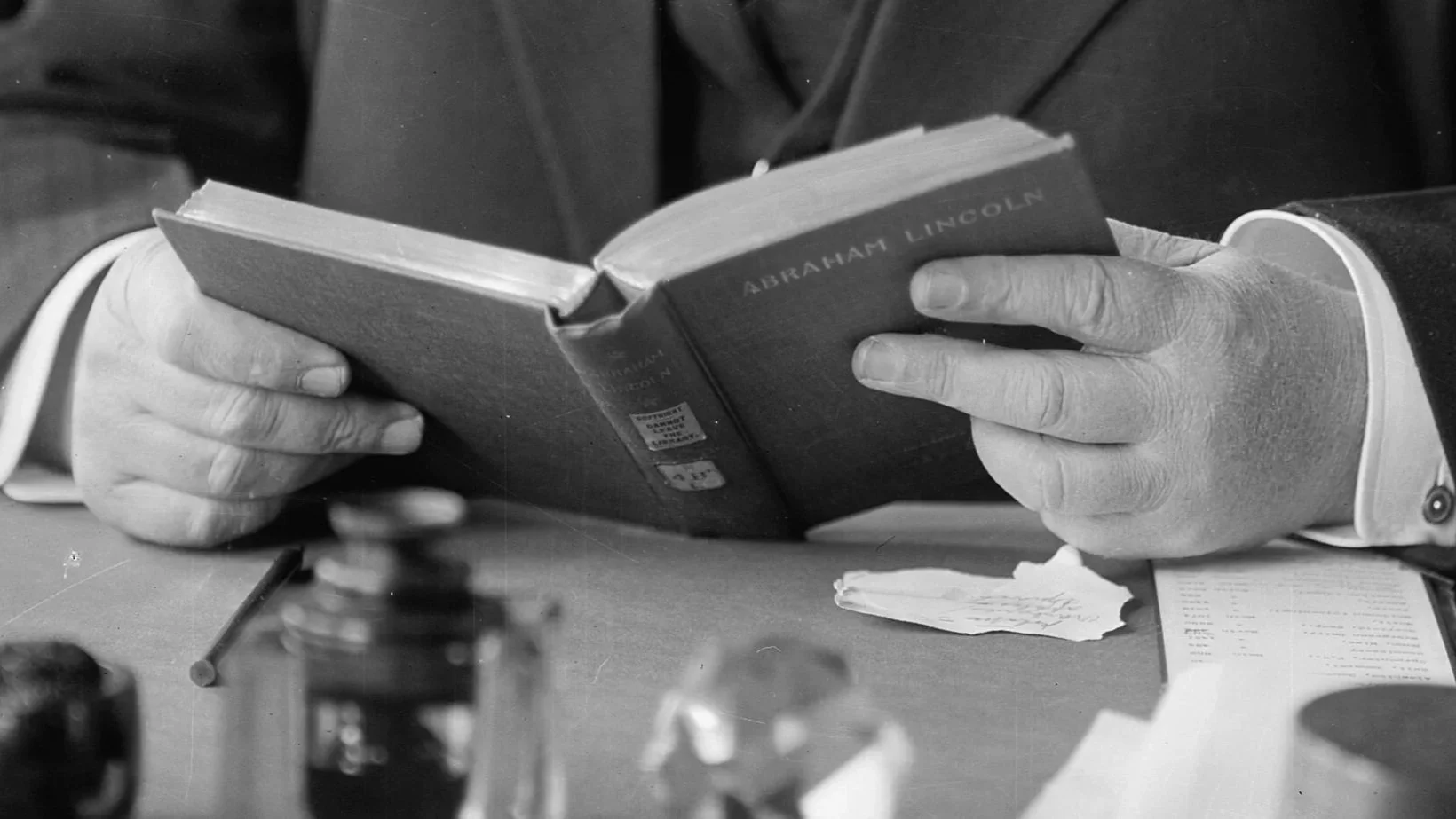
William Howard Taft reading at his desk c. 1904. The label pasted to the spine reads: “Copyright. Cannot Leave the Library.”

As personally difficult as this spring has been, with thirty-three books down—and almost perfectly divided between fiction and non-fiction—this turned out to be a stellar season for reading. Not only did I bulk up my non-fiction reading after a couple years of fiction-heavy lists, I also read more sci-fi and fantasy than usual. Almost all of it, of whatever genre, was good. I had to make myself leave things out of the list below, the ruthlessly selected best of the season.

The way I divide the year for these posts is always a bit arbitrary, but for the purposes of this one, “spring” is everything from New Year’s Day to the end of classes last week. As usual I present these in no particular order, and with my one audiobook “read” marked with an asterisk.

That said, I hope y’all enjoy and can find something good to read below:

Favorite non-fiction

On Conan Doyle, by Michael Dirda—A succinct and insightful overview of Conan Doyle’s life and work, with special attention to the Holmes stories as well as his more often overlooked work: Professor Challenger in The Lost World, the Hundred Years’ War novels The White Company and Sir Nigel, and the Napoleonic adventures of Brigadier Gerard. I was especially interested to learn more about Conan Doyle himself: his personal life and character, his intelligence and work ethic, and even his much-derided interest in spiritualism and fairies.

The First King of England: Æthelstan and the Birth of a Kingdom, by David Woodman—A solid new biography of Alfred the Great’s grandson, the first king of a unified kingdom of England, that gives a lot of attention to the complicated political situation of the time and just how much we can and can’t know about what was going on. Occsionally this means extended parsing of primary sources rather than narrative, which may not appeal to the general reader, but that comes with the territory. An Æthelstan biography is also going to be a historiographical paper to some extent and I think Woodman balances it all well. I used The First King of England as an example of the judicious use of incomplete sources for historical inferences here.
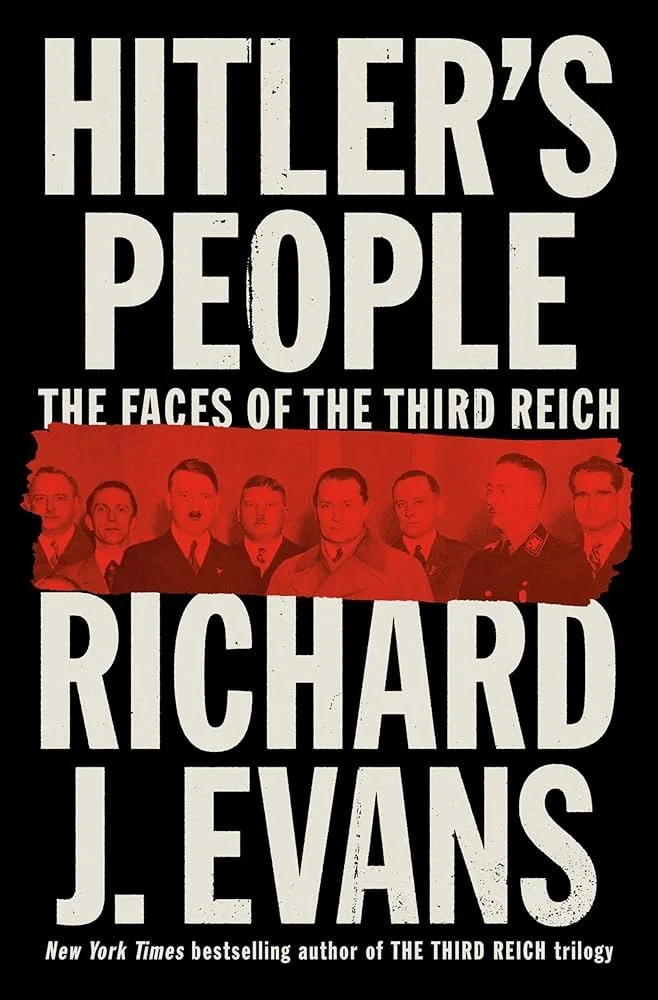
Hitler’s People: The Faces of the Third Reich, by Richard J Evans—This is an insightful series of character sketches of people from all levels of the Reich, starting with a 100-page biography of Hitler himself (which I’d love to see the publisher break out as its own little paperback, an ideal classroom text) and the Nazi Party’s elite (Göring, Goebbels, Himmler, Speer, and the like) down through the functionaries and ideologues and enablers (e.g. Heydrich, Eichmann, Hess, Hans Frank, Franz von Papen) to the ordinary people doing the work of the Reich: the generals, the gunmen who traveled Eastern Europe massacring Jews, the camp guards, the propagandists, and even the ordinary citizen. Evans has chosen good subjects and, taken together, these sketches give the reader a top-to-bottom feel for the culture of the Reich and how it worked—especially with regard to dimensions of the regime that don’t get as much attention, like labor organization or even motherhood—as well as the sheer variety of people it involved. Not all of them were motivated by the same things and not all of them explained or justified their participation the same way.

The Desecration of Man, by Carl Trueman—A more narrowly focused “how we got here” account from Trueman, this time looking specifically at how a changing understanding of anthropology—how we answer “What is man?”—was meant to liberate but has instead undermined and destroyed. Full review on the blog here.

The Nine Lives of Christopher Columbus, by Matthew Restall—An interesting multi-layer biography of Columbus, one that starts with the man (about whom, contrary to a widespread myth, we can know quite a lot), his goals and pretensions (he was a single-mindedly ambitious climber), and what he actually accomplished and follows his various “lives” through the five hundred years since: as a symbol of Manifest Destiny, an icon of Italian-American patriotism, a would-be Catholic saint, a progressive scapegoat for all the bad that has happened in the Western hemisphere ever since. Wide-ranging, deeply researched, fair to Columbus the man—warts and all—and attentive to how his character and actions have been interpreted in shifting contexts. I learned a lot from this book.

Class Clown: The Memoirs of a Professional Wiseass, by Dave Barry—A funny and often moving memoir covering everything from Barry’s childhood in New York and his early years in journalism to some of his antics as a reporter and his work since retirement. Hugely enjoyable.

Honorable mentions:

  • The Sleep You’re Longing For: How Rest Connects Us to Happiness, Healing, and Hope*, by Ken Wytsma—A helpful short guide to sleep, sleep problems, and some of the ways we can make life more generally restful, not just grudgingly recharging for a few hours at night.

  • The Way of Dante: Going Through Hell, Purgatory, and Heaven with C. S. Lewis, Dorothy L. Sayers, and Charles Williams, by Richard Hughes Gibson—A series of expanded lectures on Dante’s reception and interpretation by Williams, Lewis, and Sayers that illuminates all four. I was especially intrigued to learn how late Sayers came to Dante, and with what overwhelming gusto she embraced the Comedy.

  • Cicero: A Very Short Introduction, by Yelena Baraz—Exactly what it says on the tin: a short overview of Cicero’s life, legal and political career, and his literary and philosophical work. An approachable place to start and just over a hundred pages. Would pair well with reading his letters, speeches, or especially late essays like On Old Age or On Duties.

Special mentions

I’ve started including these “special mentions” sections for books that are neither straightforward fiction nor non-fiction as usually understood. Most of the time this is epic poetry. This time you’ve got not just any epic but the original, the very first, as well as some important primary sources for American history.

Gilgamesh, translated by Simon Armitage—A new translation of the epic that prioritizes coherence and readability above the precise indication of every gap and mystery in the text as it has come down to us. At that it succeeds admirably and was a pleasure to read. It was exciting and moving and conveyed the foreignness of the ancient world in an approachable and readable way. This is likely the version I’d recommend to people coming to Gilgamesh for the first time.

An interesting side issue: In his introduction, Armitage states forthrightly that he does not know the languages concerned and worked from literal translations by experts, which to me raises the question of how much this can be called a “translation” in the normal sense of the word, but Alan Jacobs persuasively argues here that Armitage’s project to craft a Gilgamesh that “will be exciting, that will make the text vivid” is a worthy one.
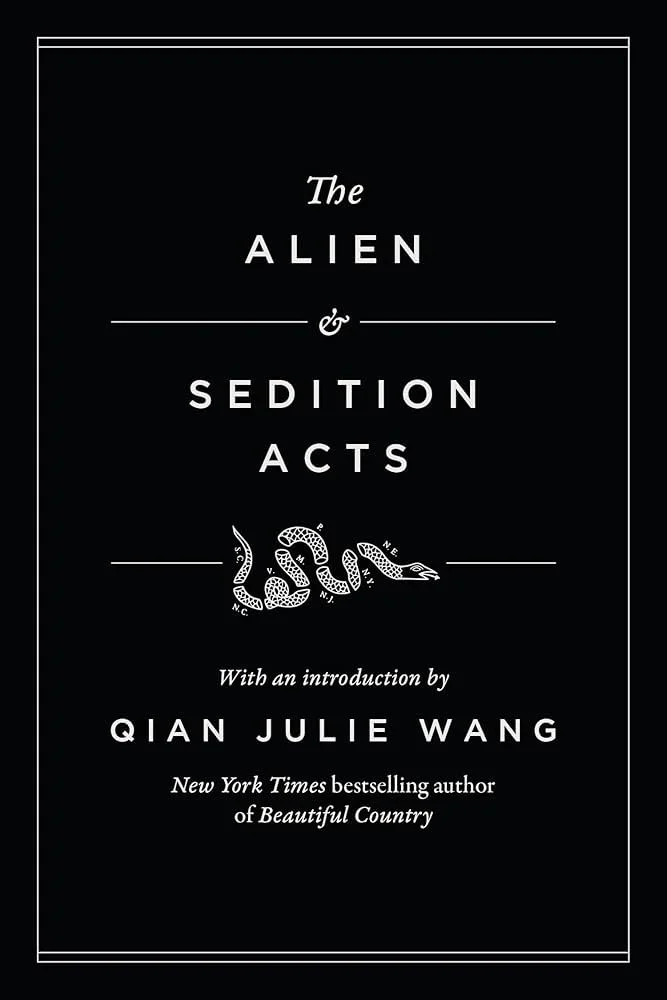
The Alien and Sedition Acts—Part of a new series from Modern Library, this volume collects four laws signed by John Adams over about a month in the summer of 1798—bills that extended the timeline for naturalization, empowered the president to arrest and deport foreigners, and criminalized written or spoken criticism of Congress and the president—and the Jefferson- and Madison-authored Kentucky and Virginia Resolutions that challenged them.

The laws themselves are bad enough, but most galling are the responses by several state legislatures to the resolutions, all of which assert that, nah, the violation of the 1st and 10th Amendments is in fact constitutional, that Kentucky and Virginia are the real threats, and that anyone who loves the union should back up whatever the president does in time of crisis. (Notably, these responses all come from northern and New England states. Massachusetts goes out of its way to praise the wisdom of Adams, an obsequious defense of its hometown boy.) The longest document, Madison’s background notes on the Virginia Resolution, is an angry masterclass on federalism, the proper relationship between state and central governments, the danger of the loose interpretation of the constitution pioneered by Alexander Hamilton (mentioned, but not by name) and the failure of the states to protect their prerogatives.

The introduction, by a civil rights lawyer who has written about growing up as an illegal alien, suggests the publication of these texts now is some kind of gotcha to the current administration’s immigration policies, but the documents themselves are much, much more concerned about states’ rights and free speech. What the book really shows is that the violation of the 10th Amendment, the federal government’s bent toward setting itself up in newer and more expansive spheres of authority, the expectation that the states fall into line behind whatever the executive wants, and the desire to curtail speech in the name of preventing the spread of false information are as old as the Republic. The Antifederalists’ fears of an overreaching, tyrannical federal government, something all conservatives should be concerned about, were not fulfilled in Obama, LBJ, FDR, or even Woodrow Wilson, but came true almost immediately. A sobering consideration.

Favorite fiction

This section will be somewhat shorter not out of any lack of good reading—this was an exceptional spring for fiction—but because I managed to review a lot of these in full, dedicated posts of their own. I’ve linked to those below.

Mars in Aries, by Alexander Lernet-Holenia—In the days leading up to World War II, an Austrian cavalry reservist falls in with a strange crowd and becomes infatuated with the mysterious woman at their center. Then he’s deployed, and his recurring visions of past people and events start to merge with reality. Perhaps my favorite Lernet-Holenia so far. Full review on the blog here.
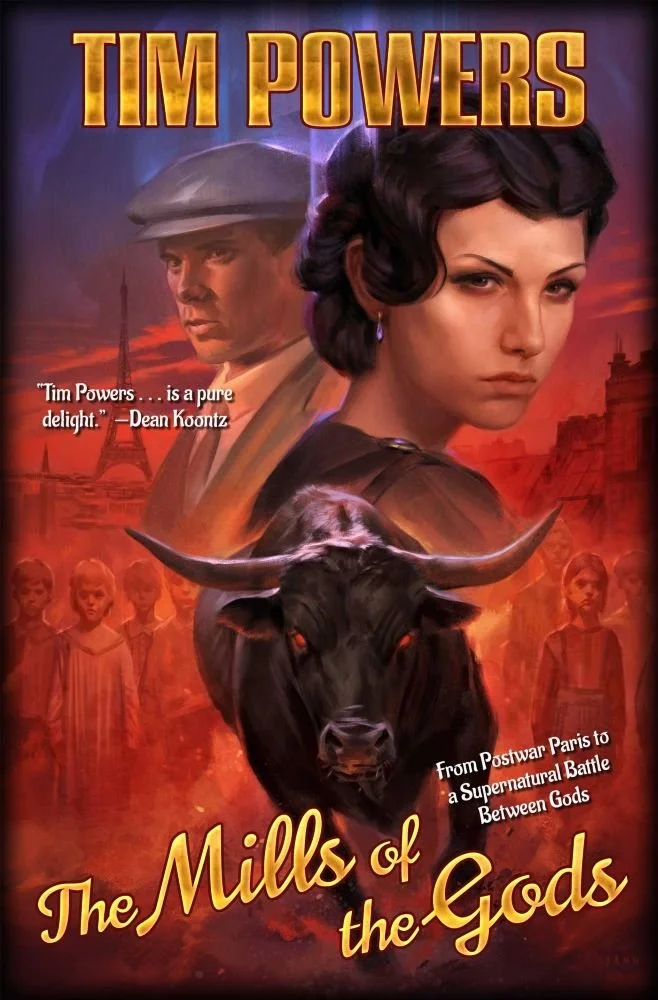
The Mills of the Gods, by Tim Powers—One I had hoped to review in full but couldn’t find the time to. Powers’s latest takes place in 1920s Paris, where expat American illustrator Harry Nolan finds himself involved with a young woman named Vivi and both end up on the run from the sauteurs, a centuries-old secret society striving for immortality by stealing into the bodies of specially prepared newborns. The sauteurs are dangerous and possessive of their target bodies, and Vivi’s most especially. Together, Harry and Vivi must free her and, with clues gathered from Ernest Hemingway, Pablo Picasso, and a sympathetic and helpful Gertrude Stein, unearth the true history of the sauteurs and defeat them permanently. The plot moves briskly and I was absorbed from the first chapter. I greatly enjoyed the Parisian setting, the cameos by Lost Generation artistic figures, and the connections to the ancient world Powers establishes for the sauteur cult. (As deadly and satanically parasitic as the villains are, I mercifully did not find them as spiritually oppressive as the succubi of The Stress of Her Regard.) But I most liked the relationship between Harry and Vivi. Both the First World War veteran Harry and intended sauteur host-body Vivi are damaged goods in need of redemption, and while they begin in mutual suspicion and work together out of necessity they move, over the course of the novel, through collaboration and friendship to something, not coincidentally, full of grace. A beautiful and moving ending caps a breakneck supernatural adventure.

A Rough Shoot, by Geoffrey Household—A lean, tightly-focused thriller from the author of Rogue Male. An English businessman and veteran of World War II surprises what he thinks are poachers on his patch of rented hunting land and accidentally kills one. His effort to cover it up embroils him in deeper, more complicated, and more far-reaching events than he could have anticipated. Full review on the blog here.

State of Siege, by Eric Ambler—An English engineer working in postwar Indonesia has finished his contract and hopes to fly home but finds himself, and a casual date, in the center of a military revolution. Fast-moving and suspenseful while also sweeping in scope, this is almost certainly my favorite of Amber’s post-WWII novels. Full review on the blog here.
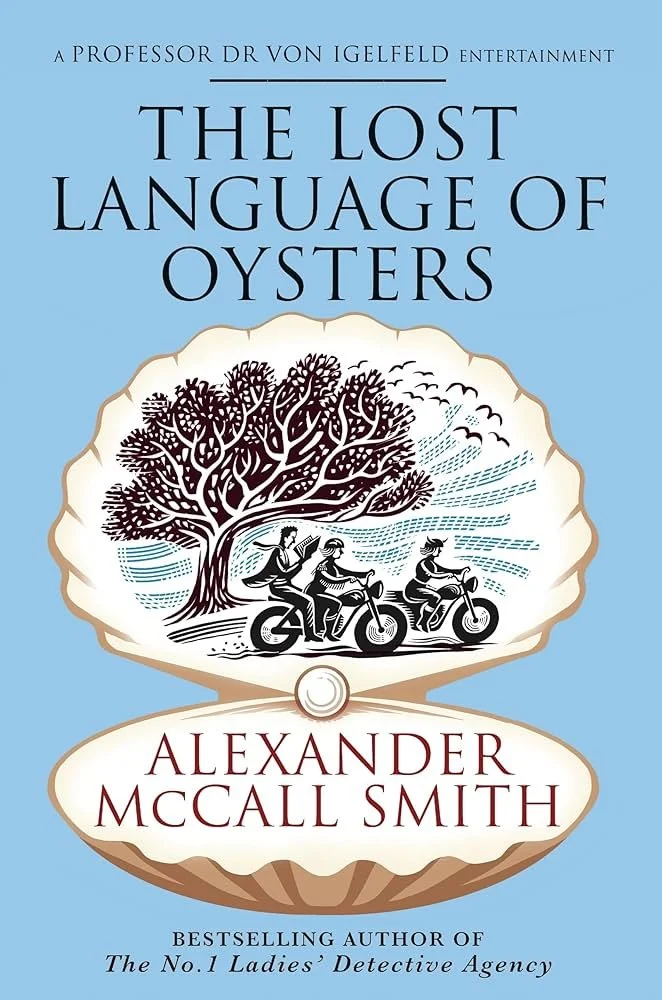
The Lost Language of Oysters, by Alexander McCall Smith—The latest in McCall Smith’s long-running series about hapless German philologist Professor Dr Dr Moritz-Maria von Igelfeld, this is a unified novel rather than a collection of interrelated short stories and finds the good Professor jockeying for status with a pesky old colleague and, to his own surprise, falling in love with an American linguist after she gives him a ride on her motorcycle. The more recent entries in the series are gentler and don’t have some of the darkness or ironic bite of the earlier ones, but they are always enjoyable, funny, and—just occasionally—surprisingly sweet. This one has some particularly good twists and surprises and a great ending.

Other Paths to Glory, by Anthony Price—Paul Mitchell, a young military historian studying a battle on the Western Front, receives two strange visits on the same day: the first is with two intimidating, authoritative men who are clearly not what they say they are; the second is with an assassin who throws him into a canal in an attempt to stage a suicide. The first two men, Audley and Colonel Butler, who were introduced in Price’s The Labyrinth Makers (which I briefly reviewed here), come to Mitchell’s aid and together they return to the former battlefield. What could be hidden there that would lead to murder and, with a secret international conference about to occur nearby, a threat to world peace? Another good thriller with a historical dimension from Price.

Heir to the Empire, by Timothy Zahn—My first Star Wars novel. Picking up a few years after The Return of the Jedi, this story follows the New Republic—formerly the Rebellion—through instability and infighting in the aftermath of success and the emergence of a new threat from the Empire, the skilled and intelligent Grand Admiral Thrawn. A fun read, and truer to the spirit and characters of the originals than much of what’s been sold as Star Wars since. Full review on the blog here.

Honorable mentions:

  • The High Crusade, by Poul Anderson—Vintage sci-fi with a fun hook—knights mustering for a crusade in medieval England encounter aliens, commandeer their ship, and set off on a crusade across the stars—that actually delivers. Brisk and enjoyable.

  • Spy Hook, by Len Deighton—The beginning of Deighton’s second Bernie Samson trilogy. A former secret agent murdered, a slush fund missing, old colleagues back from the dead, and Samson’s burgeoning romance with a younger woman threatened. Not quite as tight as the Game Set Match books but an involving story with a lot of surprises.

  • Beast in the Shadows, by Edogawa Rampo—An eerie, atmospheric, disturbing short novel in which a woman who believes she is being stalked approaches a crime novelist for help. Rampo was a devotee of Poe (Edogawa Rampo is his pen name, a Japanese near-equivalant of Edgar Allan Poe) and it shows clearly: concision, intricate construction, darkness, a beautiful tormented woman, violence, and insanity. Bleak but enthralling.

  • The Chrysalids, by John Wyndham—A young boy living in a farm community that, following a nuclear war, has reorganized itself around an intense religious vigilance for genetic mutation questions what he’s learned about mutants and realizes that his gift for telepathy, which he had always taken for granted, may be endangering him and his friends. Not my favorite Wyndham but a brilliantly imagined situation with a suspenseful final third.

Favorite kids’ books

The Raven: The Classic Poem, by Edgar Allan Poe, illustrated by Chloe Bristol—A beautifully illustrated new edition of Poe’s masterpiece, with moody, atmospheric but kid-friendly pictures. Full review on the blog here.

Bones and Berserkers, by Nathan Hale—A fun anthology of short horror stories—some true, some fictional, several somewhere in-between—by one of my kids’ favorite graphic novelists. Full review on the blog here.

Corduroy, by Don Freeman—A teddy bear for sale in an apartment store wants a home and finds unexpected fulfilment. I somehow made it to adulthood without having read Corduroy. I read it to our twins and just about lost it. A simple, beautiful and moving story with a lot of emotional and even spiritual depth.

Count Yourself Calm, by Eliza Huie, illustrated by Mike Henson—We got our own copy of this picture book after an occupational therapist worked through it with one of our kids. It helps create a simple routine for calming anger, fear, frustration, and other “BIG feelings,” per the subtitle, by counting down gifts from God: parts of creation that bring us joy, the gifts he’s given us, the people who love us, and more. Simple and helpful for both kids and adults!

Ember Falls, by SD Smith—The second of Smith’s Green Ember fantasy series about anthropomorphic rabbits Heather and Picket; another fun adventure and a worthy followup to the original.

Looking ahead

I’m already into the reading for this year’s John Buchan June—the fifth June since I began this event!—so be on the lookout for that to begin in just a few weeks. I’ve also got a lot of other good fiction and non-fiction lined up and I hope to slow things down a bit for a few older, longer novels in the late summer or fall. In the meantime, thanks for reading, and I hope this list will have led you to something you can enjoy this summer!
Something special and small

I mentioned last month that I’ve been doing a leisurely reread of Chesterton’s Orthodoxy. I finished it last night which, being Maundy Thursday, the evening before Good Friday, turned out to be perfect timing.

I did a blog event I called Chestertober a couple years ago but wasn’t able to follow it up last fall. I’m considering reviving it this year. If I can manage it, Orthodoxy will be one of the major books I mean to review. It was my introduction to Chesterton twenty years ago—I recall reading it during the summer of what must have been 2006—and proved genuinely revelatory. It’s frequently quoted for a reason. I could pull out a dozen passages per chapter, minimum, and comment on them at length and still find more to consider and work through on another reading.

For now, as part of observing and thinking about Good Friday, here are two that leapt out at me in the final chapter last night.

First, near the end, as Chesterton ties together the book’s arguments, he narrows his focus briefly from broad philosophical and cultural conflicts to the mischaracterization of Christianity as “something weak and diseased” and the character of Christ himself, who has often been portrayed as “a gentle creature, sheepish and unworldly”:

The diction used about Christ has been, and perhaps wisely, sweet and submissive. But the diction used by Christ is quite curiously gigantesque

Instead of looking at books and pictures about the New Testament I looked at the New Testament. There I found an account, not in the least of a person with his hair parted in the middle or his hands clasped in appeal, but of an extraordinary being with lips of thunder and acts of lurid decision, flinging down tables, casting out devils, passing with the wild secrecy of the wind from mountain isolation to a sort of dreadful demagogy; a being who often acted like an angry god—and always like a god. . . . The diction used about Christ has been, and perhaps wisely, sweet and submissive. But the diction used by Christ is quite curiously gigantesque; it is full of camels leaping through needles and mountains hurled into the sea. Morally it is equally terrific; he called himself a sword of slaughter, and told men to buy swords if they sold their coats for them. That he used other even wilder words on the side of non-resistance greatly increases the mystery; but it also, if anything, rather increases the violence.

A brilliantly concise summary of the moralistic “be nice” Jesus manufactured out of a variety of ulterior motives and the man we actually encounter in the Gospels. The contrast is perhaps most striking if one returns to the Gospels after several years, or reads them straight through in a reader’s Bible—a topic I intend to write about one of these days—rather than parceling them out in discrete episodes or tidied up storybook versions. And the “extraordinary” quality of Christ is nowhere more apparent than in the events of Holy Week.

Second, and most personally moving to me, was the book’s penultimate paragraph. Having considered the way paganism, for all its strengths and admirable qualities, still left men in despair, the state to which Christianity’s critics threaten to return the world, Chesterton closes Orthodoxy with his most important point:

The mass of men have been forced to be gay about the little things, but sad about the big ones. Nevertheless (I offer my last dogma defiantly) it is not native to man to be so. Man is more himself, man is more manlike, when joy is the fundamental thing in him, and grief the superficial. Melancholy should be an innocent interlude, a tender and fugitive frame of mind; praise should be the permanent pulsation of the soul. Pessimism is at best an emotional half-holiday; joy is the uproarious labour by which all things live. Yet, according to the apparent estate of man as seen by the pagan or the agnostic, this primary need of human nature can never be fulfilled. Joy ought to be expansive; but for the agnostic it must be contracted, it must cling to one corner of the world. Grief ought to be a concentration; but for the agnostic its desolation is spread through an unthinkable eternity. . . . Christianity satisfies suddenly and perfectly man's ancestral instinct for being the right way up; satisfies it supremely in this; that by its creed joy becomes something gigantic and sadness something special and small.

I did not recall this passage from previous readings; it had not stuck out to me or stuck with me. That changed this time.

Man is more himself, man is more manlike, when joy is the fundamental thing in him, and grief the superficial.

I’ve mentioned before the struggle that this winter and spring have been, of the insomnia and depression and paranoia and exhaustion. The melancholy of January grew so deep during our back-to-back weekends of ice and snow that I picked up Orthodoxy precisely because of its early passages on madness. Chesterton has a reputation for rescuing diseased minds from the brink and, though whatever I was going through wasn’t that severe, I reckoned I needed it. And it worked.

But to begin with madness—reaching for an old favorite as a comfort at a time when I felt like I was losing my mind—and to end with the above passage… that felt truly providential. Reading last night, I recognized myself from two months ago. Grief, melancholy, pessimism—these are my natural bent anyway but had somehow become “the fundamental thing.” Something had gone badly wrong. But far from mere description, this passage is also prescriptive. It can feel like this state lasts forever, but thanks to Christ these will only be temporary.

Already they have been lifting. Good Friday is a chance to remember that they will, if not now, be lifted forever. They’ve already been conquered, reduced to “something special and small.”

I hope this is an encouragement to y’all as it has been to me. If you haven’t read Orthodoxy, do so. I first picked it up because I had learned, somewhere, somehow, of Chesterton’s influence on CS Lewis. But I’ve read and reread it over the years on its own merits. Every time I enjoy my favorite parts again, and every time some part I had never noticed before touches something in me that I never knew needed help.

Richard Cory and ambiguity

One of my favorite poets is Edwin Arlington Robinson. Though both popular and respected in his day, winning the Pulitzer for poetry three times, he seems largely forgotten now. I suspect this is largely a matter of timing: he mastered traditional form and meter, especially the sonnet and villanelle, just as Pound and Eliot and company were coming along to blow it all up.

Robinson’s skill also makes his tightly constructed verse seem effortless, even conversational. It’s clear and understandable—something else the modern poetry establishment, which came more and more to resemble a clique or cult, won’t abide—and mines powerful emotions from everyday scenes and images. Perhaps his best-known poems in this regard are a series of character sketches describing people from a fictitious New England village: “Reuben Bright,” “Aaron Stark,” “Luke Havergal,” “Cliff Klingenhagen,” and my personal favorite—read it and you’ll get why—“Miniver Cheevy.”

Another favorite, and one of Robinson’s most memorable, challenging, and dark, is “Richard Cory.” Take a minute and read it—I’m going to spoil it.

In sixteen lines, Robinson introduces us to a handsome, elegant, popular, courteous, and, yes, wealthy local gentleman, a man with everything going for him. Envy is perhaps too strong a word for the community’s attitude—Richard Cory is too well respected, if not beloved, to warrant envy—but the anonymous speaker of the poem makes it clear that Richard Cory lives in a world everyone else only aspires to. And then Richard Cory kills himself.

I still feel the shock of the final line all the years later, and the bitter irony with which it reframes the entire preceding poem. There is some ambiguity there—was Richard Cory discontent? ungrateful? depressed?—but the import is fairly clear: money can’t buy happiness, and you never know what troubles afflict someone of seemingly greater privilege than you.

The Simon and Garfunkel version, released on Sounds of Silence in 1966, traffics in a different kind of ambiguity. It’s less than three minutes long—listen to it here.

Paul Simon, in adapting Robinson’s poem, makes some noteworthy thematic changes. Where Robinson began with the impression Richard Cory gave his neighbors on the street and mentions his wealth last, Simon leads off with his wealth and even explains where it came from—an inheritance from his banker father, though we’re told later he owns a factory—highlighting the extent of his property and influence. “He had everything a man could want,” in this version, “Power, grace, and style,” which is the reverse of the human view Robinson gives us. (Simon also updates the outward signs of Richard Cory’s wealth for the swingin’ sixties with “the orgies on his yacht.”)

But the biggest change is the inclusion of a chorus, in which the anonymous speaker of Robinson’s poem, one of Richard Cory’s neighbors, comments on his own situation:

But I, I work in his factory
and I curse the life I’m living
and I curse my poverty
and I wish that I could be (3x)
Richard Cory.

The chorus comes around three times and, on its final repetition, which comes immediately after the announcement of Richard Cory’s suicide, it takes on a powerful irony. Much the way Richard Cory’s fate in the last line of Robinson’s original changes the feeling and meaning of the rest of the poem, in Simon’s lyric version it changes the tone and meaning of the chorus.

This is where the ambiguity arises. Just what kind of envy—certainly the appropriate word here—is the speaker revealing?

If Simon has directly addressed his adaptation anywhere, I haven’t seen it. But an interpretation I’ve run across again and again online takes the final repetition of the chorus to be an admission by the speaker that he wants, like Richard Cory, to kill himself. (This is the interpretation presented in the Wikipedia summary, which cites no sources.)

I don’t think this is correct. For one, it makes the speaker far too individual, where in both Robinson and the rest of Simon’s version the “we” and the “I” stand in for the whole community. It’s also nihilistic in a way I don’t feel jibes with the rest of the song or Simon’s general oeuvre. But, most importantly, I think it has a simpler, more straightforward meaning related to that of the original poem: people don’t learn. The desire for wealth and material comfort lead us to overlook, ignore, or wish away the problems that come with them. We all know money doesn’t buy happiness—it’s a cliche for a reason—but who actually lives as if they know that? Literature and mythology, not to mention real life, are full of people who choose wealth and success knowing it will destroy them.

The yearning-for-suicide reading, which is rooted in an apparent ambiguity, bothers me. I think it’s a misreading of the song, yes, but I also think ambiguity, which can be a valuable tool in the hands of a purposeful artist, is overvalued today. The ambiguous ending is a mainstay of twee arthouse cinema. But ambiguity ceases to be cute when applied to suicide.

While feeling down and exhausted over the last month I’ve been doing a slow reread of Chesterton’s Orthodoxy. Chesterton’s light and frothy reputation is belied by his serious treatment of a subject like suicide. Here he is in Chapter V, “The Flag of the World,” writing forcefully about the deadly sin at the heart of it:

Not only is suicide a sin, it is the sin. It is the ultimate and absolute evil, the refusal to take an interest in existence; the refusal to take the oath of loyalty to life. The man who kills a man, kills a man. The man who kills himself, kills all men; as far as he is concerned he wipes out the world. His act is worse (symbolically considered) than any rape or dynamite outrage. For it destroys all buildings: it insults all women. . . . [H]e is a mere destroyer; spiritually, he destroys the universe.

The power of Robinson’s poem and Simon’s song derives from the assumed heinousness of Richard Cory’s act. That’s why it’s shocking in both. His wealth, personal elegance, and position in life only make it ironic, not less terrible. If Richard Cory’s suicide is just one more option, one a person with far more reasons to be bitter might justifiably desire to take, the entire story loses its meaning and weight.

Maybe that’s what Simon intended. I don’t know—but it would ruin the song. As good a song as it is, Robinson’s poem, in its structure and its properly used ambiguity, is better, and better for us.

Artistic appreciation comes first

I was revisiting Chesterton’s Everlasting Man over the weekend and was struck by this passage in the opening paragraph of Chapter V, “Man and Mythologies”:

It seems strangely forgotten nowadays that a myth is a work of imagination and therefore a work of art. It needs a poet to make it. It needs a poet to criticize it. There are more poets than non-poets in the world, as is proved by the popular origin of such legends. But for some reason I have never heard explained, it is only the minority of unpoetical people who are allowed to write critical studies of these popular poems. We do not submit a sonnet to a mathematician or a song to a calculating boy; but we do indulge the equally fantastic idea that folk-lore can be treated as a science. Unless these things are appreciated artistically they are not appreciated at all.

That last line is gold.

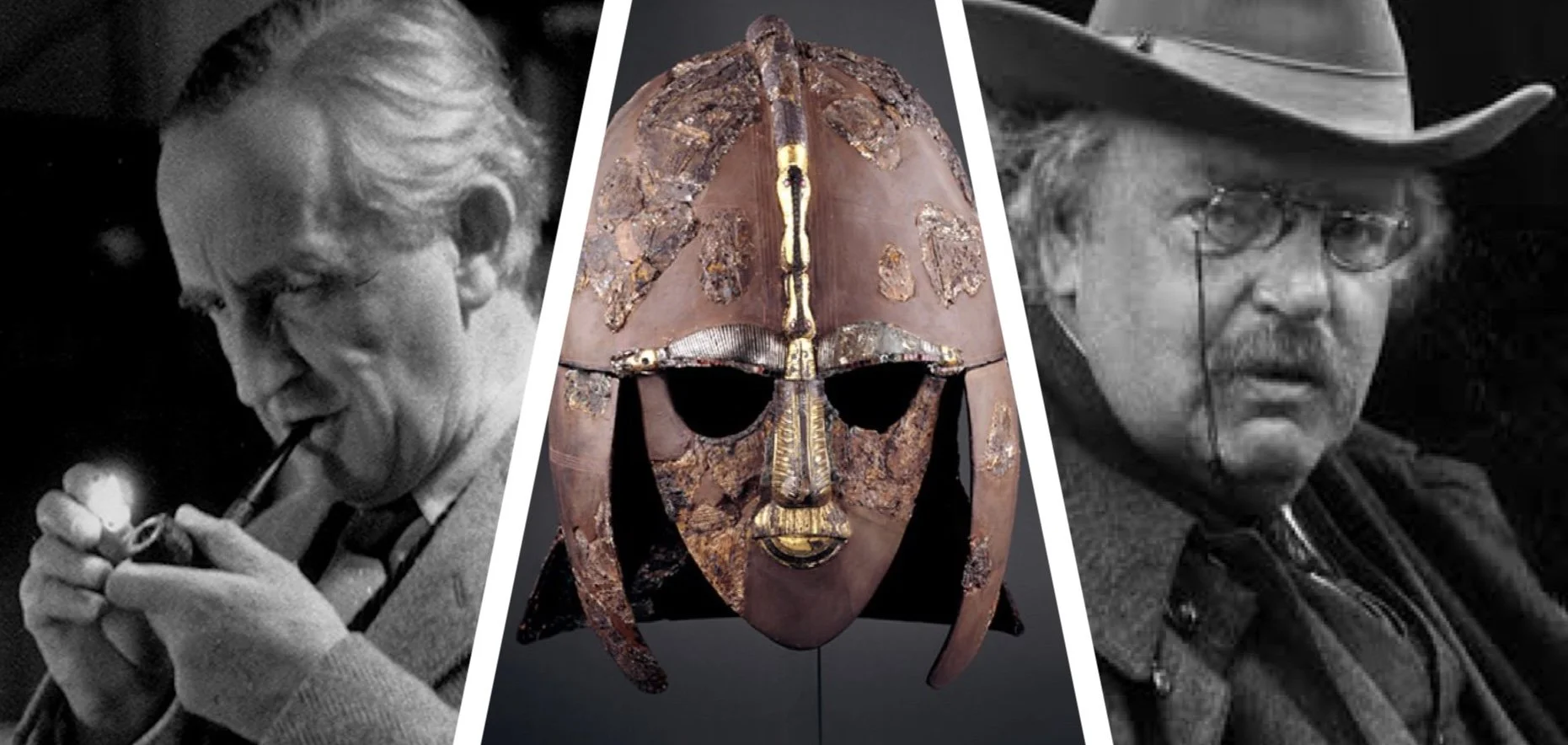
What I found striking was that Chesterton is essentially making the same point about understanding and interpreting mythology in general that Tolkien was in his lecture “Beowulf: The Monsters and the Crtiics.”

Unless these things are appreciated artistically they are not appreciated at all.
— GK Chesterton

Early on Tolkien asks “why should we approach this, or indeed any other poem, mainly as an historical document?” And after summarizing the many prevailing angles of scholarship—and sometimes mere prejudice—from which Victorian and early 20th century scholars dismissed Beowulf as worthy of study, he argues: “[I]t is plainly only in consideration of Beowulf as a poem, with an inherent poetic significance, that any view of conviction can be reached or steadily held.”

And he makes his point about the misunderstood—or simply missed—artistic purpose of the poet in a famous allegory:

A man inherited a field in which was an accumulation of old stone, part of an older hall. Of the old stone some had already been used in building the house in which he actually lived, not far from the old house of his fathers. Of the rest he took some and built a tower. But his friends coming perceived at once (without troubling to climb the steps) that these stones had formerly belonged to a more ancient building. So they pushed the tower over, with no little labour, in order to look for hidden carvings and inscriptions, or to discover whence the man’s distant forefathers had obtained their building material. Some suspecting a deposit of coal under the soil began to dig for it, and forgot even the stones. They all said: ‘This tower is most interesting.’ But they also said (after pushing it over): ‘What a muddle it is in!’ And even the man’s own descendants, who might have been expected to consider what he had been about, were heard to murmur: ‘He is such an odd fellow! Imagine his using these old stones just to build a nonsensical tower! Why did not he restore the old house? He had no sense of proportion.’ But from the top of that tower the man had been able to look out upon the sea.

This is not to deny the value of doing the historical, cultural, and linguistic spadework to gain better understanding of mythology and its place in a given culture. That would be an overcorrection, as Tom Shippey has argued, in Beowulf and the North Before the Vikings, that Tolkien’s lecture unintentionally swung the pendulum too far away from studying Beowulf for its history, so that Beowulf and Hrothgar are assumed to have the historicity of Leda and the swan.

These things require balance, but the artistic and imaginative—what Chesterton elsewhere in the same book called “the inside of history”—must come before historical parsing and sociological datamining. Once the artistic purpose is understood, what the myth-makers were hoping to see or show us from the top of their construction, the rest will fall more clearly into place.

Casting Chesterton

Last week on his microblog, Alan Jacobs shared the news that the BBC has ordered a new series called “The Detection Club.” Per the BBC’s press release, the show will follow Dorothy Sayers, Agatha Christie, and GK Chesterton as they team up to solve mysteries in 1930s London. The show is set to shoot next year.

Jacobs briefly considers the cast, which is as yet unknown. I have little or no opinion on who would make a good Sayers or Christie, but the idea of someone playing Chesterton in a drama immediately caught my interest. A few informal thoughts if I were the one casting Chesterton:

Prerequisites: Chesterton was unusually tall (6’4”), fat (fluctuating but often near 300 lbs), and had a mustache. These, plus a small pince-nez spectacles, a crumpled hat, and a cape and walking stick should factor into a bare-minimum visual impression. (Cf my old Churchill-in-a-box post.)

Chesterton late in life, c. 1931

Jacobs notes with regret that, with the death of Richard Griffiths a few years ago, “the ideal for GKC” is lost. I’m not sure I agree. My perception may be skewed by having only ever seen Griffiths as Uncle Vernon in Harry Potter, but though matching some of the superficial particulars for Chesterton—tall, fat, wild-haired, mustachioed—he had a sinister air that I’d find insurmountable. The attitude or air or even vibe of an actor playing a real person is as important as appearance, I think.

Someone adept at capturing a historical figure’s vibe without looking much like him is Timothy Spall. He came to mind on the strength of his performances as Churchill (in The King’s Speech) and David Irving (in Denial). It’s a commonplace to call a gifted character actor a chameleon, but Spall is the real deal. He’d have a lot to work against—he’s too short and, at least in the last few films I saw him in, too thin for Chesterton—but I think he could convey the strange combination of puckishness and intelligence that a Chesterton should have. He may also be too old but, if the series is set in the 1930s, that may be appropriate for the end of Chesterton’s life.

Similar: Eddie Marsan, another favorite of mine. Marsan is a smidge taller than Spall and looks a smidge more like the actual Chesterton. (He’s also a London native, like Chesterton.) That said, he tends to play either intense or petulant men, which wouldn’t work, as a Chesterton needs generosity of spirit and literally enormous bonhomie to be believable.

A somewhat obvious choice—who would probably resist the potential typecasting—is Mark Williams, who has played Father Brown since 2013. Williams is taller than either Spall or Marsan, heavyset (sometimes, anyway), and can do friendly absentmindedness better than just about anybody. Playing Chesterton would be a natural extension of his Father Brown, not least since he has always played Father Brown more like Chesterton than the Father Brown of the short stories, anyway.

An unusual possibility that occurred to me almost immediately: Nick Frost. Frost is about the same height as Spall but I wouldn’t have guessed it—he looks bigger onscreen. With a mustache and pince-nez I think he could very well look the part, and I think he’d sell Chesterton’s good humor.

A final serious suggestion: Mark Addy, who is tall, heavyset, looks more like Chesterton in the face, and can do both comedy and drama well. That said, he tends to be more restrained—or at least less manic—than some of these other options, though that might work well for an aging Chesterton.

All of this is predicated on the BBC treating the project seriously, of course. The presence of Christie as a character gives me pause, as I just recently noted the habitual malice toward her work among those adapting it for TV and film. Christie, Sayers, and Chesterton were all serious Christians and one hopes the show doesn’t avoid, downplay, or simply ignore that fact in favor of whatever the progressive posture du jour is when the series goes into production. The casting will show the BBC’s hand.

What I most hope they avoid is obvious Funny Fat Man stunt casting: James Corden or whoever. A fun mystery centered on affectionate, respectful portraits of three great writers sounds immensely appealing to me right now. One more farce sending up the dead and their vanished world does not.

Austen on seeing nothing

In Volume II, chapter IX of Emma, Emma and Harriet Smith got shopping Highbury. When simple, pliable Harriet takes too long over her muslin purchase, Emma gets bored:

Emma went to the door for amusement.—Much could not be hoped from the traffic of even the busiest part of Highbury;—Mr. Perry walking hastily by, Mr. William Cox letting himself in at the office-door, Mr. Cole’s carriage-horses returning from exercise, or a stray letter-boy on an obstinate mule, were the liveliest objects she could presume to expect; and when her eyes fell only on the butcher with his tray, a tidy old woman travelling homewards from shop with her full basket, two curs quarrelling over a dirty bone, and a string of dawdling children round the baker’s little bow-window eyeing the gingerbread, she knew she had no reason to complain, and was amused enough; quite enough still to stand at the door. A mind lively and at ease, can do with seeing nothing, and can see nothing that does not answer.

This is a striking moment to me, because Austen includes few such slice-of-life moments in her novels. And yet here we have the ordinary goings-on in the village of Highbury. I can easily imagine this scene painted by George Caleb Bingham, who was five years old when Emma was published or, if he could rein in his instincts for meanness and satire, Hogarth.

So there’s the surprising social realist note to the passage, and the affectionate homeliness of the scene, but it was the last line that struck me:

 
A mind lively and at ease, can do with seeing nothing, and can see nothing that does not answer.
 

I read that three times and my wife and I stopped to talk about it. I had struggled earlier in the day to express some of what I worry about as a generation raised on constant technological stimulation ages. What will those lulled by constant noise do with the long final silences of their lives? What will those with no attention span do with endless inactivity? Will they have anything of their own to fill that time?

Here Austen sums up the best alternative: a mind sufficiently self-furnished to be comfortable in “boredom,” a mind capable not only of encountering but of embracing and enjoying “nothing.”

Because Emma is not really bored watching her neighbors in Highbury, and what they are doing is not really nothing. Per Chesterton, “There is no such thing on earth as an uninteresting subject; the only thing that can exist is an uninterested person.” My fear is that modern technology and our culture of content consumption and ceaseless stimulation will render many minds void even of the ability to be interested. And what happens then?

I have recently grown uncomfortable even with my own habit of listening to podcasts on my commute. Ages ago I used this time to think. I got ideas and worked on them later. Now I fill it with other people’s talk—good talk, talk I engage with and learn from, but still other people’s talk. I’ve begun to suspect that more silences would be good for my mind and imagination.

Emma famously starts with a list of the heroine’s strengths—“handsome, clever, and rich.” She can’t really take credit for these things, and she also has significant flaws. Part of the point of the novel is her growth in maturity and virtue, which brings her character into alignment with her natural gifts. And I think she owes no small part of that growth to the formation of her mind—not book-smart, as Mr Knightley points out early on, but sharpened and receptive, even when “at ease.”

The Man Who Was Thursday: A Nightmare

Chestertober, my informal, monthlong exploration of GK Chesterton’s fiction, concludes with his best novel and the one that has always been my favorite: The Man Who Was Thursday: A Nightmare.

Where to begin? I think with a favorite line from Flannery O’Connor, who once wrote that “A story is good when you continue to see more and more in it, and it continues to escape you.” Any time I reflect on that line, this is one of the few books that comes to mind, vividly and specifically.

The Man Who Was Thursday is Gabriel Syme, an English poet who, when the novel begins, is at a garden party in a fashionable London suburb. There he finds himself in conversation with the beautiful Rosamund and her testy brother Lucian, who, like Syme, is a poet. He takes himself dreadfully seriously and the puckish Syme can’t resist goading him. Finally, dared to prove that he really means what he says in his nihilistic modernist poetry, Lucian reveals that he is an anarchist. He invites Syme to a meeting of his anarchist terrorist cell that very night.

“Your offer,” Syme says, “is too idiotic to refuse.”

Syme and Lucian arrive early and, just before the others enter, Syme repays Lucian for his dangerous revelation with one of his own—he is an undercover cop.

In a masterfully suspenseful scene, Lucian, who is nominated for a position on the supreme anarchist council under the codename Thursday, attempts to downplay the violence of their group. Syme denounces him—the path to success among radicals—and is elected the new Thursday, at which point he is whisked downriver to Westminster. There, at a luxurious breakfast on a balcony overlooking Leicester Square, Syme meets the five other members of the council and the man behind them all, Sunday.

The other members—Monday, Tuesday, Wednesday, Friday, and Saturday—are all grotesques. One is a cadaverous German professor named de Worms, another a crooked French aristocrat, another, one Dr Bull, a man who grins ominously from behind opaque sunglasses. But their leader is the most frightening of all. Sunday, an enormous man, a giant who fills Syme’s senses with his overpowering presence, announces that he has uncovered a spy among their number. Syme thinks he has failed just as he’s begun, but it turns out to be one of the other members, a Pole named Gogol who tears off his wig and beard to reveal a Cockney policeman underneath. After threatening Gogol with death, Sunday sends him on his way.

Sunday then reveals the council’s plot: the Tsar is en route to Paris for a meeting with the President of France. Wednesday, the French marquis, is to blow them up with a bomb when they meet in three days. Syme’s goals at this point become clear: stop the assassination and bring down Sunday—the former because he is a policeman, the latter because Sunday terrifies him.

But as Syme leaves Leicester Square he discerns that he is being followed. After failing to elude his tail, he turns and confronts him. It is Friday, the elderly Professor de Worms, who insistently asks whether Syme is a policeman. When Syme finally denies it, the professor is crestfallen: “‘That’s a pity,’ he said, ‘because I am.’”

With astonishment and frustration, Syme and Professor de Worms realize that three of the seven anarchists at the council meeting were actually undercover detectives. Only their ignorance of the fact prevented them from moving against Sunday on the spot. They determine to stop Sunday’s plot together by forcing Saturday, Dr Bull, to reveal the marquis’s plans for carrying out the bombing. Once they find and interrogate the inscrutable Dr Bull, a scene in which the hapless Syme and Professor de Worms struggle to break through the man’s defenses, it turns out that he, too, is a policeman.

From this point on, the three race to cross the Channel and find and stop the marquis—who turns out to be a policeman.

One by one, every member of the supreme anarchist council, the organization working to overthrow the entire world, has been revealed to be an undercover agent of the forces of law and order. And one by one, each reveals that he was recruited by the same man—a Scotland Yard official who questioned them in a completely darkened room in which, despite their inability to see him, they felt awed and overpowered by his presence. Each has derived an extra measure of strength for his work from remembering that interview. Each wants to please their unseen boss by defeating Sunday.

After repeatedly cheating death by fighting a duel against an expert swordsman and fleeing a zombie-like mob in northern France, Syme and his allies, eventually including Gogol and the menacing council secretary, who is second only to Sunday himself, decide to turn the tables on Sunday by returning to England and confronting him.

“This is more cheerful,” said Dr. Bull; “we are six men going to ask one man what he means.”

“I think it is a bit queerer than that,” said Syme. “I think it is six men going to ask one man what they mean.”

What they discover defies expectations or explanation.

A story is good when you continue to see more and more in it, and it continues to escape you.
— Flannery O'Connor

Likewise, The Man Who Was Thursday defies easy summary or explanation. It’s hard to describe the plot without giving too much away, but I’ve tried to avoid spoiling important episodes, major plot points, and most especially the ending. It’s also hard to describe, period. See again that quotation from Flannery O’Connor.

A good place to begin is that subtitle: A Nightmare. The subtitle, as I noted earlier this month, is easy to overlook, especially once one has started reading, but important for both stylistic and thematic reasons.

Artistically, Chesterton’s most effective tool in establishing a nightmare feeling, and the one that sets The Man Who Was Thursday most clearly apart from all of his other fiction, is pacing. This novel maintains a breakneck speed that creates a sense of barely controlled panic as crisis flows into crisis and surprise piles upon surprise. There is no lag or dull spot and Chesterton metes out his surprises and twists expertly. Kingsley Amis, in a line commonly reprinted as a blurb on paperback copies, called The Man Who Was Thursday “the most thrilling book I have ever read.” High praise, and well earned.

The book’s atmosphere and tone are also crucial. Chesterton evokes better and more subtly than any other writer the feeling of being in a nightmare. Anyone who has dreamt of being chased will know the feeling. Over and over again, Syme is followed or chased by enemies of obscure purpose who always keep up with him no matter how hard he strives to get away. And, as in a dream, the familiar—Chesterton, a lifelong Cockney, sets the first half of the book in a believable and realistic London—mutates almost imperceptibly. Under the influence of this paranoia, which prefigures that of the political thrillers of John Buchan and his successors, home becomes a foreign battlefield, nothing appears quite right, and the human face and form both prove horrifyingly changeable.

But alongside the pursuit and paranoia of the nightmare is the reversal. Enemies turn out to be allies, being chased turns into chasing, disguises do not conceal, and, in the climax, the villain flees his accusers only to welcome them. The reversal, the inversion, the topsy-turvy turning of the world on its head—this is one of Chesterton’s recurring motifs and the great load-bearing structure of this novel.

It is also the key to Sunday, who is both a threat and the solution to the threat, both feared and trusted, both hated and loved, both a destroyer of the world and its creator and preserver.

I can say little more without revealing too much. The Man Who Was Thursday can be described, even spoiled, but must be read. It has to be dreamt.

When Chesterton published this book in 1908, he had taken a live issue, the waves of anarchist terrorism and assassination in both Europe and America at that time, and used it to explore doubt and despair and madness. The plot, in a way hard to explain but easy to describe, provides an answer by rejecting the question. On this read-through, as I read the novel’s concluding scenes, with Sunday and the six policemen of his council reunited, I thought of a passage from Chesterton’s “Introduction to the Book of Job” in which Chesterton describes how Job, after all his questions, finds himself

suddenly satisfied with the mere presentation of something impenetrable. Verbally speaking the enigmas of Jehovah seem darker and more desolate than the enigmas of Job; yet Job was comfortless before the speech of Jehovah and is comforted after it. He has been told nothing, but he feels the terrible and tingling atmosphere of something which is too good to be told. The refusal of God to explain His design is itself a burning hint of His design. The riddles of God are more satisfying than the solutions of man.

Chesterton’s message is all the more powerful because, unlike some of the other novels we’ve read this month, it is never made explicit, much less preached.

I’ve read elsewhere that readers wrote to Chesterton to tell him that The Man Who Was Thursday had saved them from despair. I can believe it. This time through, my fourth or fifth in about fifteen years, I finished it feeling steadied and content, something I had not expected to get out of this rereading. I finally understood. The Man Who Was Thursday is not just witty, surrealist fun and genuinely thrilling espionage action, it is an allegory that strikes to the heart through the imagination.

Our world is no more settled or peaceful than it was in Chesterton’s time. If you’re feeling that, especially if you’re feeling that right now because of the forces at work to destroy civilization—whichever forces you think they might be—The Man Who Was Thursday may be the nightmare you need. A paradox worthy of its author.

GKC and me

Last week Paul Kingsnorth, a writer I’ve enjoyed and admired since reading his experimental historical novel The Wake almost a decade ago, posted an appreciation of Chesterton and The Everlasting Man on his Substack. The Everlasting Man vies with Orthodoxy and The Man Who Was Thursday as my favorite Chesterton book so I was interested in Kingsnorth’s thoughts, but it’s his introduction, in which he describes how he came to read Chesterton, that I found most arresting.

Briefly, Kingsnorth discovered Chesterton almost by accident as a godless environmental activist, finding in his work—beginning with The Napoleon of Notting Hill—a salve for the “push-and-pull of apparently conflicting tendencies and views” inside himself. He learned to love Chesterton for his localism and rejection of both socialism and capitalism but had no time for Chesterton’s Christianity. Only after his own conversion did he find that it was Chesterton’s Christianity that undergirded and gave shape to the rest.

Though the specifics are different, the trajectory of Kingsnorth’s story resonates with me—as does the feeling that Chesterton was, at first, a private discovery: “I liked G. K. Chesterton before anyone else did.”

My first GKC—The paperback reprint of Orthodoxy that I read in college

My own story with Chesterton begins, like I suspect many people’s does, with CS Lewis. I started reading Lewis as a freshman in college and somehow became aware of Chesterton as an influence on him. When I stumbled onto an Image paperback of Orthodoxy in Barnes and Noble one day as a sophomore or junior, I snapped it up. At some point I bought matching paperbacks of Saint Francis of Assisi and Saint Thomas Aquinas: The Dumb Ox. I still have all three.

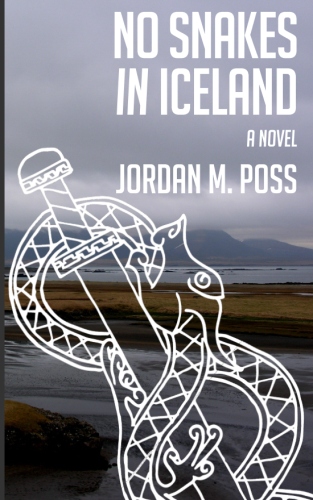
I ended up reading Orthodoxy the same summer I took my deep dive into the Icelandic sagas, the reading of which resulted in No Snakes in Iceland a few years later—that was one formative summer—and read the other two as a burgeoning medievalist sometime before I graduated.

At Clemson I dug into The Everlasting Man, which I even managed to work into my master’s thesis, and from there I read everything else I could get my hands on—What’s Wrong with the World, Heretics, Eugenics and Other Evils, Magic, A Short History of England, Charles Dickens, The Ballad of the White Horse, the Autobiography, Father Brown, and criticism and essays galore. Chesterton’s work startled, amused, confused, and stretched me. I marveled at his range. I collected quotations by the bushel. I remember testing the longsuffering of a friend by texting—in the primordial texting days, with only a ten-digit keypad to type on—a whole paragraph of Eugenics and Other Evils during an argument.

Like Gabriel Syme in The Man Who Was Thursday, I had deeply felt but essentially shapeless and purposeless convictions in college, and the chaotic environment of opinion and argument into which I was thrust after a pretty tranquil upbringing as well as personal upheaval in grad school proved difficult for me. Lewis helped over those years, as did Peter Kreeft. Chesterton continued their work and challenged me even more than they did. He tested many of my assumptions, forcing me to rethink or abandon some and affirming and reinforcing others. He helped give my beliefs a consistent shape. It took years for me to recognize just how much he changed me.

Only much, much later did I become aware of the subculture—or, when I’m feeling less charitable, the industry—that has grown up around Chesterton. And by then that world’s Chesterton didn’t feel much like the Chesterton I had sat at the feet of for a decade. Kingsnorth nods unmistakably toward the kind of Chesterton cosplayer I’m thinking of. I’m not knocking those Chesterton fans—I’m glad he still has enough readers to keep his books in print—but I feel like we’re adoring different Chestertons. Theirs is all tweedy whimsy and cigar smoke and strained cheerfulness and the same endlessly repeated decontextualized quotations and really bad attempts to write like Chesterton. (Don’t attempt to write like him, ever.) Their Chesterton strikes me as a cartoon, a simplification, without the thread of darkness and lifelong self-examination running through the real man.

And yet, their Chesterton is present in the real Chesterton. He contains multitudes. Like the undercover detectives in The Man Who Was Thursday, we’re all pursuing the same gigantic, surprising, seemingly unknowable man, and there is healthy unity in that. As Kingsnorth puts it, “I don’t resent their incursion on my turf, though. Indeed, I welcome them into the fold of true believers.”

But that feeling of difference and my natural un-clubbableness has kept Chesterton a somewhat private love. Which has, with a completely appropriate sense of paradox, made it that much better when I discover that a new acquaintance is also a fan. To bring Lewis back in, he wrote that “[t]he typical expression of opening Friendship would be something like, ‘What? You too?’” That feeling is a joy when shared with anyone who stumbled into Chesterton the way I did, and cherishes his work the way I do.

I greatly enjoyed getting Kingsnorth’s perspective, especially his story. You can read all of his reflections on GKC as well as his takeaways from The Everlasting Man here. You can read his conversion story, which came as a great and welcome surprise to me when I stumbled across it, at First Things here.

Chestertober concludes later this week with The Man Who Was Thursday: A Nightmare. The subtitle is important. Stay tuned for that.

The Flying Inn

When I began this monthlong celebration of Chesterton’s fiction with his first novel, The Napoleon of Notting Hill, I noted that the novel balances his storytelling capabilities and his love of ideas in combat perfectly, unlike some of his other fiction in which the ideas drown the narrative. Today Chestertober enters its final week with a museum-quality example of a Chesterton story overpowered by its ideas, the 1914 satire The Flying Inn.

Set in the near future, The Flying Inn begins with a peace settlement between Britain and her allies and the Ottoman Empire at the end of a long war. Though presented as a treaty among equals, it soon becomes clear that the Turks have had the better of the agreement, as the treaty obligates the British to abide by Muslim religious laws—specifically the prohibition of alcohol. The British signatory to the treaty, Lord Ivywood, a cold and unimaginative bureaucratic tyrant, immediately enacts the ban through roundabout legislation related to inns and pubs. Another signatory, the Irish naval hero Patrick Dalroy, resigns in protest and returns to Britain disillusioned but not defeated.

Ivywood and his cronies’ method is to ban not alcohol itself, but to require a public sign—as for a pub or inn—to be displayed outside any establishment serving alcohol. They then eliminate all the inn signs in Britain.

All but one—the sign of The Old Ship. This is an inn run by Humphrey Pump, an old friend of Dalroy’s, and when the ban goes into effect Dalroy, enraged, pries up the sign, takes a wheel of cheese and the one remaining cask of rum in The Old Ship, and hits the road. If the law says you can only serve alcohol wherever there’s an inn sign, Dalroy ensures there will always be both.

While Dalroy and “Hump” travel the countryside between the fictional beach town of Pebbleswick and London, an Islamic “Prophet of the Moon” named Misysra Ammon goes to work on the people, attempting to convince them of the rightness of prohibition and the cultural and historical superiority of Islam. The people, including the object of Ivywood’s intentions, Lady Joan Brett, mostly giggle, but Misysra finds a better reception among the elite, who need little encouragement to indulge their power-hungry vanity, their oikophobia, and their superficial love of the foreign.

The bulk of The Flying Inn is an old-fashioned picaresque, with Dalroy and Hump falling into slapstick scrapes involving pro-Prohibition rallies, vegetarian banquets, diet cranks, modern art, and a poet who has a conversion experience. Everywhere they go, Dalroy plants his sign, Hump starts pouring, and a grateful crowd gathers—to the befuddlement and humiliation of some establishment figure who tries to stop it.

Ivywood, in multiple attempts to crush Dalroy, fiddles with the law, amending it to enforce prohibition through legal nitpicking. Dalroy outmaneuvers him every time, and between his growing folk-hero status and popular outrage at the treaty that has visited an unwanted theocracy upon England, public opinion turns on Ivywood. The thrilling climactic action, with a mob of ordinary people marching on Ivywood’s stately country house—which, imperceptibly, has come to resemble a Turkish palace complete with harem—is a great revolt against the remote, all-powerful, but incompetent tyranny. The people, thirsting, finally call it to account.

The Flying Inn has an arresting hook—Islamic law imposed on Britain!—but while that has generated some comment and notoriety a hundred years after the fact online, it is not really Chesterton’s point. Neither is the alcohol at the center of the story, which misled the novel’s first batch of critics. If The Napoleon of Notting Hill is a hymn to the local, The Flying Inn is a populist anthem—in the best sense of a tribute to the people and a condemnation of those who would presume to rule them.

Chesterton’s target, the aloof, bloodless, but cruel Lord Ivywood, won’t confront Dalroy but tries to work behind the scenes, slipping in new regulations here and ratcheting up his program of reform there, all without consulting the object of his schemes—the people. He is a stand-in for all the soft despots of modern progressive bureaucracy who treat the public as raw material to be shaped and nudged into compliance with a revolutionary vision, for their own good.

The abuses of know-it-alls in high places was a topic Chesterton returned to again and again, perhaps most ferociously in Eugenics and Other Evils. In the Eugenics movement, Chesterton saw an elite who, like Lord Ivywood prohibiting alcohol, strove to deprive ordinary people of one of their only joys in life—the gift of children. Their pursuit of some external ideal—the purity of Islam for Lord Ivywood, the purity of genetic hygiene for the Eugenicists—ends up destroying the little things that give life meaning.

And as with so many such despots, his chief targets are the simple good things that even the poor can enjoy. Ivywood sees an inn and thinks only of the alcohol, which he must prohibit in order to “help” and reform the people, but does not think of the networks of friends who gather there or the relief they feel to enjoy a drink with each other after work. In The Flying Inn, not only Lord Ivywood but all the other cranks in the book have made similar errors of priority. (Reading about Peaceways, the milk-drinking colony, or Lord Ivywood’s hypocritical vegetarian party, one thinks of Orwell’s critique of the diet obsessive as someone “willing to cut himself off from human society in the hopes of adding five years onto the life of his carcase.”) It is Dalroy, the outlaw, who actually helps the people, not by providing alcohol but the occasion and excuse for community.

The Flying Inn has something important to say, one of Chesterton’s most enduring messages. But it does not work very well as a novel. Though filled with amusing episodes, fun takedowns of everything from modern art to the experts who can explain away anything, and a handful of colorful characters, it has a ragged, discursive structure and little forward momentum—a fact underscored by my rereading The Man Who Was Thursday for next week, a book that starts fast and never lets up. Lady Joan has little to do throughout, Misysra the prophet flits aimlessly in and out of the story, and many of the other characters are flat stand-ins for the movements and isms Chesterton wishes to critique. In The Flying Inn, the ideas are foremost, the story a distant second. Enjoy it though I did, of the novels by Chesterton that I’ve read, it is the weakest.

That said, it is still worth reading as a critique of managerial progressivism, of an elite that seeks to shield itself from accountability while manipulating the public, and the very notion of the nanny state. And, in Lord Ivywood, Chesterton has created one of his best villains, a prototype of all the tyrants of CS Lewis’s own near-future dystopia That Hideous Strength, who similarly cloak their control-freak inhumanity in gentleness and advancement, and all the smothering tyrants of our own time.

One wonders who our Dalroys will turn out to be, and whether our culture as it stands today is even capable of producing one among its legions of Ivywoods.

Magic

This inaugural Chestertober continues with a brief dramatic interlude. The rest of this month I’m looking at Chesterton’s novels, but this week the subject is his first play, written at the behest of Chesterton’s old friend and philosophical sparring mate George Bernard Shaw, 1913’s Magic.

Magic takes place in the drawing room and grounds of a wealthy Duke but begins in a remote part of his garden on a cool drizzly evening. An Irish girl named Patricia, the Duke’s niece and ward, is searching the woods for fairies when she encounters a cloaked and hooded man. She takes him to be a giant fairy and reacts with awe but he is, in fact, the Conjurer, a magician arriving to perform for the Duke and his guests.

The Duke is an eccentric of the type familiar from Chesterton’s stories. He speaks in barely connected, allusive fragments and, though friendly, remains aloof through sheer inscrutability. He donates generously to rival causes—to both a vegetarian activist group and a group trying to stop vegetarianism, for example—and is meeting two men with petitions for support. One is Dr Grimthorpe, a skeptical doctor who used to know Patricia’s family in Ireland and believes her to be crazy but harmless, and the other is the Rev Smith, a broadminded Church of England clergyman more interested in social causes than religion. The Duke asks them to join him for the Conjurer’s performance, which will begin once Patricia’s brother Morris arrives.

Morris has been living in the United States for years and returns very “practical,” which is to say: materialistic, pragmatic, and aggressively skeptical. He scoffs at Patricia’s story of having met a fairy in the woods and, when the Conjurer arrives and reveals himself to be a mere magician, humiliates her. Patricia’s embarrassment turns to resentment. Morris looks over the Conjurer’s props and declares that he knows the secret to all of them. What he would really love to know, he says, are the secrets behind the tricks great religious leaders used to fool people:

Morris: Well, sir, I just want that old apparatus that turned rods into snakes. I want those smart appliances, sir, that brought water out of a rock when old man Moses chose to hit it. I guess it's a pity we've lost the machinery. I would like to have those old conjurers here that called themselves Patriarchs and Prophets in your precious Bible…

Patricia: Morris, you mustn't talk like that.

Morris: Well, I don't believe in religion…

Doctor: [Aside.] Hush, hush. Nobody but women believe in religion.

At this point, an already frustrated and embarrassed Patricia declares that she will perform “another ancient conjuring trick . . . The Vanishing Lady!” and leaves.

Morris becomes belligerent with the Conjurer, especially once the Conjurer moves a painting and knocks over a chair, apparently by magic. “Do you reckon that will take us in?” Morris asks. “You can do all that with wires.” The Conjurer concedes the point and Morris, in a sweeping rant against superstition, asserts that Joshua could no more stop the sun than a priest or magician could change the color of the red lamp shining at the end of the garden. As soon as he says this, the lamp turns blue.

Morris goes mad, working himself into a frenzy trying to determine how the Conjurer did it. When pressed, the Conjurer, with no satisfaction at having bested a critic but rather a spirit of deep sadness, reveals his secret: it was magic. He commanded devils to do it for him and they did.

The third and final act begins with Morris insane and confined to bed and the other characters attempting, one by one, to persuade the Conjurer to help him. The Duke offers to pay for the real secret behind the lamp trick. The doctor tries to get him to reveal the trick, assuming it must be so simple that it will make Morris laugh and break the hold of the madness that has taken him. Smith, the clergyman, attempts to reason sympathetically with the Conjurer. Only Patricia, to whom the Conjurer confesses that he fell in love with her the moment he saw her in the garden, is able to change his mind.

I’ll leave the details of precisely how Magic concludes for you to discover. Brisk, surprising, lighthearted but earnest, and steadily escalating in tension, this is a wonderful short play and was critically praised—including by Shaw—when it premiered in the fall of 1913, 111 years ago next month.

It’s easy to see why. Magic excels at the one thing Chesterton always used his stories for: pitting worldviews against each other. The whimsical, half-serious folk-spirituality of Patricia; the sentimental, largely political do-gooder formal religion of the Rev Smith; the liberal-minded but shapeless and ineffectual humanitarianism of the wealthy Duke; and the scientific materialism of the Doctor and, more aggressively, Morris all run up against something that they don’t believe in and are forced to confront its reality. Just as each character disbelieves in magic for different reasons, each reckons with its use by the Conjurer in different ways.

Perhaps the most sympathetic character besides the Conjurer is the Rev Smith. A Christian socialist and establishment figure, Smith is nevertheless not an object of mockery—Chesterton’s stage directions make it clear that Smith is “an honest man, not an ass.” (By contrast the Duke “though an ass, is a gentleman.”) In one of the play’s most dramatic scenes, the Conjurer furiously dresses Smith down for enjoying a position based on the supernatural when he is too urbane to believe in spirits:

Conjurer: . . . I say these things are supernatural. I say this was done by a spirit. The Doctor does not believe me. He is an agnostic; and he knows everything. The Duke does not believe me; he cannot believe anything so plain as a miracle. But what the devil are you for, if you don't believe in a miracle? What does your coat mean, if it doesn't mean that there is such a thing as the supernatural? What does your cursed collar mean if it doesn't mean that there is such a thing as a spirit? [Exasperated.] Why the devil do you dress up like that if you don't believe in it? [With violence.] Or perhaps you don't believe in devils?

Smith: I believe… [After a pause.] I wish I could believe.

Conjurer: Yes. I wish I could disbelieve.

Smith, chastened, confronted his his own lack of faith despite his position, is transformed—one might say converted. This is a subtle but powerful character arc, and a clear counterpart to Morris’s absolute refusal to believe in what he has seen. One, confessing himself unable but willing to believe, is saved; the other goes mad.

Madness is, of course, a major theme of Chesterton’s writings throughout his career but especially early on, and in Magic he suggests that madness is ultimately the only alternative to faith.

This is not to say that Magic is a sermon. Far from it. The balance of art and ideas which I’ve been exploring since we began the month with The Napoleon of Notting Hill is perfectly struck in Magic. Chesterton creates and sustains a mood of wonderful ambiguity from the first scene and maintains it throughout, and each character is permitted his or her own say. The result is a play that dramatizes exceptionally well the humility needed to face reality, especially those realities we often ignore or exclude, and the arrogance that leads to damnation.