A Lodge in the Wilderness

Last week I reviewed a unique entry in John Buchan’s bibliography—the only children’s book he published in his lifetime. This week John Buchan June continues with another unique item, this one more a curiosity than anything: part novel, part philosophical dialogue, part political treatise, the 1906 book A Lodge in the Wilderness.

The book first introduces us to eccentric multi-millionaire Francis Carey, who after making his fortune in various business and government concerns throughout the British Empire, has established himself in a lavish country house in Kenya called Musuru. Every summer Carey invites eighteen people—nine men and nine women—to join him at Musuru for dinners, hunting, and intellectual conversation about the pressing issues of the day. A Lodge in the Wilderness is an account of one of these events.

Buchan briefly describes all eighteen of Carey’s guests, including a Conservative lord, a big game hunter, an ex-soldier with long experience of the Empire, a journalist, a Jewish financier, and a representative of the intelligence service. The female characters are mostly the wives of influential men but show themselves politically well-connected and informed and, as both Buchan biographers Andrew Lownie and Ursula Buchan point out, their contributions to Carey’s conversations are taken seriously. Nevertheless, most of the characters are ciphers and, after a chapter or two, become hard to distinguish. They are, as Lownie puts it, “merely mouthpieces for the book’s ideas.”

The two that give the story personality are Hugh Somerville and Lady Flora Brune, apparently based on Buchan himself and Susie Grosvenor, whom he would marry a year after the book’s publication. Hugh and Lady Flora become friends and the first hints of a romance kindle between the two, and their flirtations and conversations, which serve as interstitial episodes between the long dinner-time discussions, provide the most story A Lodge in the Wilderness has to offer.

Over the course of a month or so, Carey treats his guests to lion hunts, tours of his beautiful and seemingly endless mountainside gardens, field trips to missions and other colonial points of interest, and many intensely academic discussions of Empire.

And that’s about all there is to it. Though A Lodge in the Wilderness makes concessions to the novelistic form, especially small episodes of excitement like Hugh’s near-miss during the lion hunt, nothing resolves. I was prepared for this in the philosophical dimension of the book—which can only raise questions and suggest ways forward, and to which I’ll return shortly—but it was disappointing that, having developed Hugh and Lady Flora’s young romance so successfully, they do not get any kind of last-chapter send-off suggesting what will become of their relationship. A rare loose end for Buchan.

This is a reminder that the entire purpose of the book is philosophical and political. Written in Buchan’s early thirties after his return from the Transvaal in South Africa, where he had served as private secretary to colonial governor Lord Milner, A Lodge in the Wilderness is a response to changing policy and cultural attitudes toward the Empire back home. Better attuned critics than I, especially those who were alive at the time, have seen in the book’s characters stand-ins for real-life political figures, not least Cecil Rhodes. Buchan’s goal in the book is to lay out and examine the problems facing the British Empire as it stood during the Edwardian period, charitably work through opposing ideas, and suggest an ideal to strive toward—an ideal both of form and function.

Among the topics of discussion are the political basis of the Empire, its potential future structure and the role subject peoples will play democratically, and even—perhaps most interestingly—the aesthetic effects of imperialism on British culture. All of this is examined in excruciating detail. I wrote above that A Lodge in the Wilderness is “part philosophical dialogue,” and Hugh even reads Plato in the garden at one point, but there is really very little back-and-forth at dinner. The characters mostly make speeches, sometimes reading long poems or newspaper articles aloud to the whole party, with occasional pushback from someone else and an eventual attempt at synthesis. (Hegel is invoked more than once, an infallible sign one is in danger of being bored.)

Buchan seems to have known that not everyone would enjoy this. Halfway through, Lady Flora tells Hugh, “I do so wish . . . that they wouldn't all talk in paragraphs.” One sympathizes, as well as appreciating the self-aware laugh.

Some recent readers, to judge by reviews on sites like Goodreads, take some of the characters’ viewpoints as Buchan’s own and object to what they see as promotion of eugenics or a lust for conquest. Buchan, charitable to a fault, allows his characters to have opinions he disagreed with in order to offer a better alternative. His own views are sometimes difficult to parse but a number of important points show through clearly.

The view of the Empire that Buchan presents is benevolent and idealistic but hard to understand in the specifics. Negatively, he explicitly rules out conquest for its own sake, the equation of largeness and territorial size with goodness, the suppression and subordination of subject peoples, and the exploitation of the Empire for profit. Violence in an empire is inevitable but not to be sought out, enjoyed, or glorified. He also makes it clear that any backwardness or primitivism among non-European peoples is due not to race but to culture and opportunity, and he cautions against both denigrating native peoples and exaggerating their primitiveness as unspoiled goodness. He is neither jingo nor Social Darwinist.

What Buchan envisions instead is an ennobling enterprise that will make high moral, spiritual, and even physical demands of the imperialists, who will set an example for the complacent bourgeoisie at home. (Buchan’s critique of the middle class as apathetic and compromised is surprisingly sharp.) The purpose of the Empire is the spread of improvement—technologically, economically, and morally—and the eventual advancement and participation of all the peoples within its reach.

This view is essentially globalist, undergirded by a whiggish view of history. What sets Britain’s apart from other imperial projects, he suggests, is its long accidental development of the rule of law and the importance accorded to liberty. Having come into world power without plan or direction, the Empire is Britain’s opportunity deliberately to spread the good of liberty through order. In a phrase of Chesterton’s—who, no imperialist, would probably disapprove of me using it—the Empire at its best would “make room for good things to run wild.”

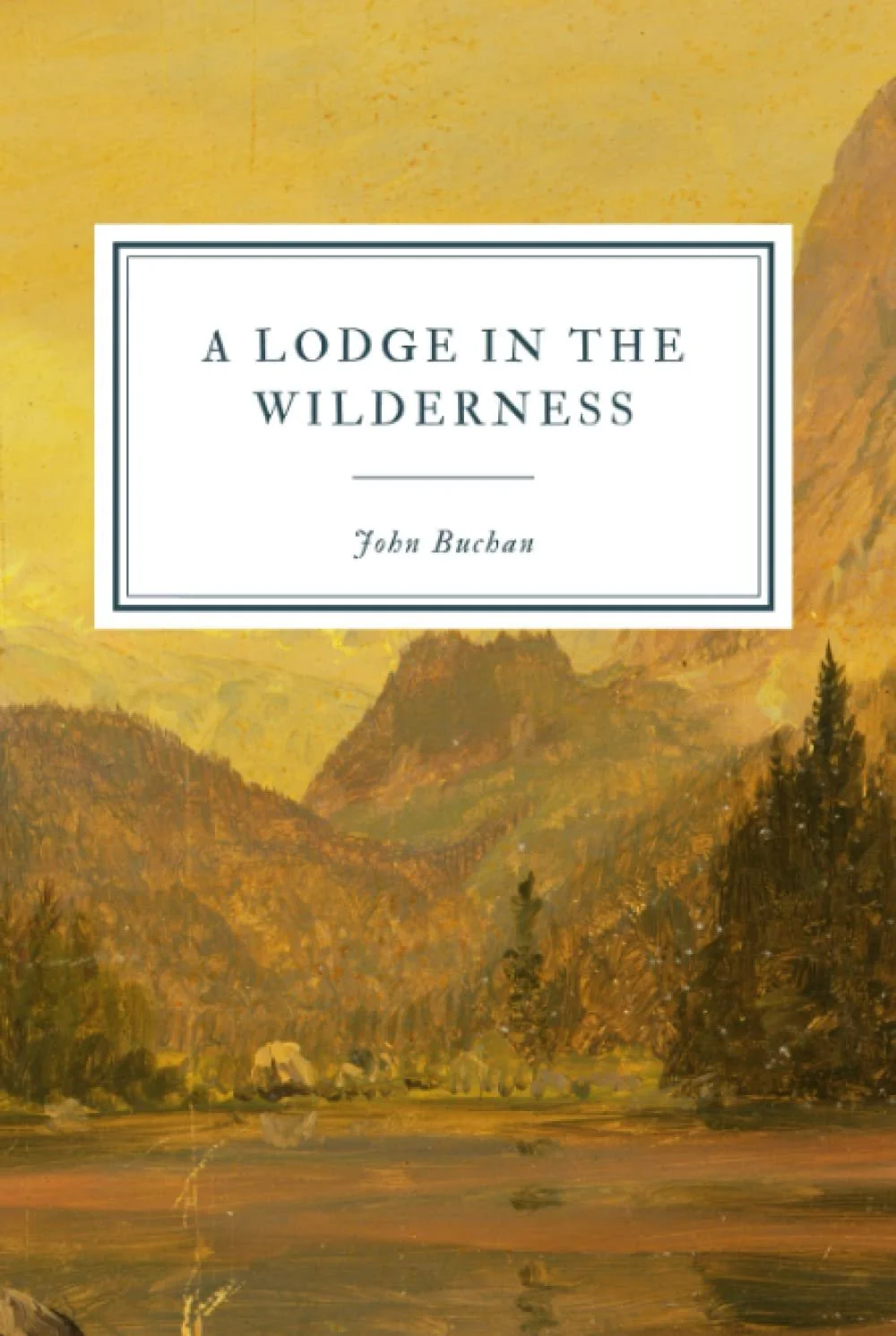
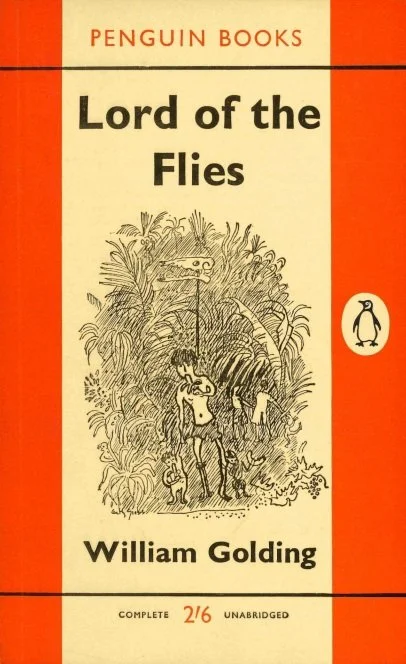
All of this should suggest to you that A Lodge in the Wilderness is now almost entirely of historical significance. It’s the only Buchan book I’ve read that I’d call a slog. (It doesn’t help that the cheap paperback I read has numerous text-recognition errors and formatting problems. If you do check this book out, avoid the edition whose cover I used above.) A Lodge in the Wilderness is informative as the dream of empire held by one principled, hopeful, well-intentioned man, and interesting as a strange outlier among Buchan’s fiction, but it is unsatisfying as a novel and will be unrewarding for the casual reader. I’m glad I read it but I very much doubt that I will ever revisit it.

Buchan’s Augustus

To my surprise and joy, today marks the beginning of my fifth John Buchan June here on the blog. When I began this project five years ago it was a bit of a lark, a way to reclaim my birth month from other, more obnoxious themed celebrations. Since then it’s become a major part of my reading and intellectual life, has put me in touch with some wonderful people, and has become one of my favorite seasons of the writing year.

As I’ve run short on Buchan’s novels—I hope to cover the last few I haven’t read this month—I’ve branched out into his short stories and non-fiction. In the last couple years I’ve read two of his short biographies: a literary-critical introduction to Sir Walter Scott and a pithy, elegant little life of Julius Caesar. Today I start John Buchan June with one of Buchan’s best full-size biographies: Augustus.

I won’t recapitulate Augustus’ life in detail here. Buchan begins with the boy Octavian, whose background of an unassuming equestrian ancestry and close relation to the most charismatic and powerful man of the day would prove surprisingly advantageous in the aftermath of Caesar’s assassination. Named his adopted son and heir in Caesar’s will, Octavian seemingly came from nowhere but was well-connected enough—thanks to those family ties to Caesar—and sober enough—thanks to that middle-class upbringing—to step into the role and navigate its numerous immediate hazards.

Among these were the courting of his favor and largesse by numerous people with ulterior motives and the rivalry created with Mark Antony, one of Caesar’s most trusted subordinates, the moment he was named as heir. Caesar’s assassins were still at large and fellow-travelers like Cicero, respected by the senatorial partisans and implacably hostile to Antony, hoped to use moral suasion and appeals to tradition to bring young Octavian to their side. But Octavian and Antony reconciled, revoked the amnesty given to the assassins, and proscribed political enemies they had formerly shielded from each other. A bloodbath ensued, “the darkest stain upon Octavian’s record.” Cicero was murdered, Brutus and Cassius killed themselves following military defeat, and Rome passed beyond the possibility of restoring the Republic.

Perhaps, anyway. That’s a what-if game that Buchan doesn’t really play, which is appropriate to his subject. He presents the future Augustus as canny and cautious, a man whose lack of imagination served him well in a situation too complicated and treacherous to treat with romance or fantasy.

This becomes most apparent in the latter half of Augustus, after civil war has again broken out, Octavian has defeated Antony and Cleopatra, and offered to relinquish his dictatorial power only to have it reaffirmed and expanded by the Senate. Now the Princeps, first citizen, he begins what to Buchan is his true work—rebuilding, restructuring, shoring up, and strengthening for the long haul.

Two things distinguish Augustus as both a biography and a work of literature. The first is Buchan’s scholarship. Those who rate Buchan as a mere entertainer and skilled craftsman of adventure stories miss an important aspect of the man. Deeply educated in and passionate about the classics, his knowledge of Greek and Roman literature informed his entire life and undergirds even his fiction—most obviously in novels about relict paganism like The Dancing Floor or Witch Wood but also in the education, moral framework, and long historical perspective shared by his heroic characters.

But his love of the classics was not limited ready quotations or the encyclopedic familiarity of the amateur. He had a sharp understanding of historiography. In the preface of Augustus he explains his use of the available sources, their biases and limitations, and makes his judgments clear throughout. He uses them critically, carefully dissecting and comparing in order to construct as a true a picture of events as possible—not with the intense ideological skepticism to which we have grown accustomed in many of our classicists—and complements the literary sources with the latest findings from the still-growing fields of archaeology and papyrology. Augustus, as a work of history, is meticulously constructed and judicious in its use of evidence. It holds up, and would pair well with a more recent biography by a scholar of similar sensibility, like Adrian Goldsworthy’s Augustus: First Emperor of Rome.

Buchan’s scholarship, like his writing, is excellent but not showy. Several chapters late in the book offer thematic looks at the Empire under Augustus. One examines Augustus’s family and friendships, another the social and religious reforms Augustus, with limited success, attempted to institute, but the most interesting is an imaginary tour of the Empire from east to west. Buchan impresses upon the reader not only the geography of the Augustan world but the immense variety encompassed by it—ancient, thriving, desirable Egypt; the slightly past-prime glories of Greece; the villages and smithies of Gaul; rugged, fragmented Spain; the difficulties and dangers of travel by sea; and rumors of other faraway places like Britain and future troubles among the Germans beyond the Rhine and, much more subtly and of an entirely unprecedented kind, Judaea.

The second great strength of Buchan’s Augustus, and one of the traits that most distinguishes it from modern histories of the same period, is its pervasive emphasis on character. Personality, virtues, and vices matter to Buchan, as do the cultures that produce them. People are not ciphers moved about by sociological forces and statistical trends beyond anyone’s understanding. Choices are not an illusion, but reveal character and have consequences.

Augustus therefore abounds in incisive character sketches. I wrote last month about Buchan’s final assessment of Cicero, but his portraits of other key players like Brutus, Agrippa, Cleopatra—whom he rightly takes down a peg—the poets Virgil and Horace, Augustus’s wife Livia, his ne’er-do-well daughter Julia, the brutish, shortsighted Antony, and, late in the story, Varus enliven the story and drive its events.

Perhaps the two best are of Augustus’s lifelong friend, ally, and lieutenant, Agrippa, and of Augustus himself. Upon Agrippa’s death, Buchan sums him up not only as a skilled combat leader but an able logistician and administrator whose friendship with Augustus made everything the latter achieved possible and yet nursed no resentments or private ambitions. Indeed, Buchan notes that even “gossiping Roman annalists, who found specks on every other sun, never suggested scandal or criticism about his public or private life,” living simply and honestly even after victory over Antony and the rise of Augustus to undisputed preeminence. That Augustus could enjoy the friendship and loyalty of a man like Agrippa, Buchan writes, reflects well on both.

Close-lipped, tenacious, cautious and yet intrepid, he is amazing, but he is not attractive. . . . He took desperate risks, but only after meticulous calculation. He is the least romantic of great men.

As for Augustus, the book is his, and Buchan’s most compelling character sketch is that which emerges over the course of the entire book. The contrast with Julius Caesar, whose late career and death drive the early chapters and first bring Octavian to prominence, is striking. Where Caesar was stirring, robust, magnetic, and driven by almost visible flashes of genius, Augustus was physically brittle, cagey, cautious, and lacked imagination in the way one might enjoy poetry while never being carried away by a daydream. Crucially, this son of the workaday equestrian class was always ready for the long, arduous work of building and lacked the aristocratic Caesar’s ego and destructive simplifying impulse. The difference between the uncle and adopted heir was that between boldness and prudence. Buchan explicitly invokes Aristotle’s phronesis. “Close-lipped, tenacious, cautious and yet intrepid,” he writes, Augustus “is amazing, but he is not attractive. . . . He took desperate risks, but only after meticulous calculation. He is the least romantic of great men.”

Buchan published Augustus in 1937, shortly after being appointed Governor-General of Canada by King George V. Buchan’s long concern for the fragility of civilization and the hard work of governing, unblurred by any illusions about human nature, are at the forefront of this work. Having reluctantly accepted his new position but dutifully embraced its burdens, it is easy to see why the principled, nose-to-the-grindstone character of Augustus appealed to him. (I will also not be the first to point out that, like Augustus, Buchan suffered immensely from recurrent lifelong illnesses, another point of kinship.) The result is one of Buchan’s best non-fiction books. Augustus was both critically well-received, even being adopted as a classroom text by one of the classicists he consulted, and commercially successful.

Last year I took some issue with Buchan’s presentation of Julius Caesar. I think his portrait of Augustus, which is sympathetic and admiring but by no means uncritical, especially with regard to the compromises Octavian made to survive early on, is impeccable. Where Caesar manipulated and destroyed, Octavian inherited a mess and, as Augustus, made the best of it. Buchan’s assessment that it was only because of Augustus that something of Rome remained to be destroyed by the barbarians centuries later is traditional but surely correct.

Buchan avoids making Augustus about his own time—“History does not repeat itself except with variations, and it is idle to look for exact parallels,” a point I wholeheartedly endorse—but he does pause over the present in the final paragraphs. “Once again the crust of civilization has worn thin,” he writes, in words that will be familiar from early in his fiction career, “and beneath can be heard the muttering of primeval fires.” The problems of Buchan’s day were not new; Augustus had faced them before in different form. But what troubled Buchan was the willingness of many moderns to cast off the hard work of self-governance, to “experiment with unknown forces” like shameless wars of aggression as a means of strengthening society and the hitherto undiscovered science of racial purity, and to embrace mob politics and dictatorship.

Imagining a resurrected Augustus surveying the world in 1937, Buchan concludes on a chilling note: “when this expert in mechanism observed the craving of great peoples to enslave themselves and to exult hysterically in their bonds, bewilderment would harden to disdain in his masterful eyes.”

The same must certainly be true—with variations—ninety years later. This is reason enough to read Augustus, but that it is also a fine work of history, an insightful study of human character, and a brilliantly readable narrative from a great author are the chief reasons to seek it out, enjoy it, and learn from it.

* * * * *

As mentioned previously, I read Augustus in a reprint by House of Stratus, a publisher that seems to be defunct, but the entirety of Buchan’s book is available in a carefully presented online version from the University of Chicago, with helpful additional commentary and footnotes by the scholars who transcribed it, here. This by itself is a testament to the virtues of Buchan’s book.

I hope to read another of Buchan’s major biographies—likely Oliver Cromwell, which will make even tougher demands on my sympathies than Julius Caesar—before the end of the month. Stay tuned, and thanks for joining me for another John Buchan June.

Buchan on Cicero

As previously mentioned, I’m already working toward this year’s John Buchan June. Right now I’m reading Buchan’s excellent 1936 biography Augustus. Last year I enormously enjoyed his concise and insightful Julius Caesar while dissenting from his overall positive interpretation of Caesar’s character and career; Augustus, which was published a few years later, I’m enjoying more wholeheartedly.

This is despite my misgivings about the fall of the Republic and Octavian’s role in it, of course. Buchan covers that well, including an incident I am especially interested in: the betrayal and murder of Cicero. Following an explanation, in Book II, Chapter 1, of Octavian and Antony’s reconciliation and their agreement to proscribe formerly protected political enemies—“the darkest stain upon Octavian’s record”—Buchan relates Cicero’s death this way:

Among the first to die was Cicero. He had little estate, only debts, but Antony could not forgive the lash of the Philippics. Plutarch has told the tale of that winter afternoon in the wood by the sea‑shore when the old man stretched out his frail neck to the centurion’s sword, and of that later day in Rome when the head was fixed by Antony's order above the Rostra, and “the Romans shuddered, for they seemed to see there, not the face of Cicero but the image of Antony’s soul.” He met his death in the high Roman fashion—the only misfortune of his life, says Livy, which he faced like a man. The verdict is scarcely fair; juster is the comment of the same historian that he was so great a figure that it would require a Cicero to praise him adequately.

A succinct but evocative description, and a good defense against Livy’s jibe. If you haven’t read Plutarch’s account, you can read that starting at section 47 here. And of course I dramatized this moment in my first novella.

Buchan continues with a broader reflection on Cicero’s character and times:

In the wild years when the Roman Republic fell, the thinker and the scholar does not fill the eye in the same way as the forthright man of action, and Cicero is dim in the vast shadow of Julius [Caesar]. His weaknesses are clear for a child to read, his innocent vanity, his lack of realism, his sentimentality about dead things, his morbid sensitiveness, his imperfect judgment of character, his frequent fits of timidity. The big head, the thin neck, the mobile mouth of the orator could not dominate men like the eagle face of Julius. He failed and perished because he was Cicero. The man of letters in a crisis, who looks round a question, cannot have the single-hearted force of him who sees the instant need. Yet it is to be remembered that he could conquer his natural timorousness and act on occasion with supreme audacity, a far greater achievement than the swashbuckling valour of an Antony.

Buchan is always attentive to personal character and this is an excellent insight. Cicero’s courage was rarer and of a different kind than that of a fearless brute like Antony, and therefore more virtuous. Physical confrontation cost Antony nothing; but Cicero knew, when confronting a Clodius or especially a Catiline, that he was in real danger and acted anyway.

Buchan continues his ascent to a final, sweeping consideration of the moral framework Cicero prefigured:

And let it be remembered, too, that it was Cicero’s creed which ultimately triumphed. His dream came true. His humanism and his humanity made him the prophet of a gentler world. The man to whom St. Augustine owed the first step in his conversion,⁠ who was to St. Ambrose a model and to St. Jerome “rex oratorum,” the scholar whose work was the mainspring of the Renaissance, has had an abiding influence on the world. While others enlarged the limits of the Roman empire, he “advanced the boundaries of the Latin genius.”

As much as I love Cicero, this is perhaps stretching it a bit—but only a bit. St Augustine, in a passage from the Confessions, Book III, that Buchan footnotes, invokes Cicero’s philosophical work as a praeparatio evangelica:

In the ordinary course of study, I fell upon a certain book of Cicero, whose speech almost all admire, not so his heart. This book of his contains an exhortation to philosophy, and is called Hortensius. But this book altered my affections, and turned my prayers to Thyself O Lord; and made me have other purposes and desires. Every vain hope at once became worthless to me; and I longed with an incredibly burning desire for an immortality of wisdom, and began now to arise, that I might return to Thee.

When I wrote my novella about Cicero’s death I was unaware of or had forgotten Cicero’s role in St Augustine’s life, but my narrator too ends with a nameless hope that Cicero’s example has seeded in him, a hope for a world purified by self-sacrifice. I’m heartened, all these years later, to know I wasn’t trying something too outlandish.

Buchan concludes the chapter covering Octavian and Antony’s rapprochement with a reflection on the relationship between Cicero and Octavian, concluding that the two had merely been using each other for political ends. I’m not sure it was strictly cynical, and I was surprised by this passage because Buchan’s own account suggests mutual respect if not affection between the older and younger man. But in the following chapter, reflecting on Brutus, whom Buchan views as entirely overrated thanks to Shakespeare, Buchan pays his final and finest tribute to Cicero:

Brutus was a rarer species, who both impressed and puzzled his contemporaries. . . . Brutus had a solemn condescending manner, a hard face, a pedantic style in speech and writing, and a stiff ungracious character. He was capable of extreme harshness, as he showed in his treatment of the Asian cities before Philippi, and he was to the last degree avaricious. There was little principle about him when his investments were in question, and he extorted forty-eight per cent from one wretched Cypriote community.⁠ His philosophy of life was not profound, and he died abjuring his creed.⁠ He was an egotist and a formalist, yet he won an extraordinary prestige, for to his contemporaries he seemed the living embodiment of certain ancient virtues which had gone out of the world. . . . History has by one of its freaks perpetuated this repute, and he remains the “noblest Roman” when in truth he was a commonplace example of aristocratic virtues and vices. Cicero was in a far truer sense the last republican.

Greatly enjoying this so far. I’ve emphasized Buchan’s insight into character here, but his lifelong interest in statecraft—heightened, no doubt, by becoming Governor-General of Canada during the writing of the book (the preface is signed and dated from Government House, Ottawa)—is also clearly on display and entirely appropriate to its subject.

I’m reading a paperback reprint from Stratus House, but you can find the entirety of Buchan’s Augustus online here.

Spring reading 2026

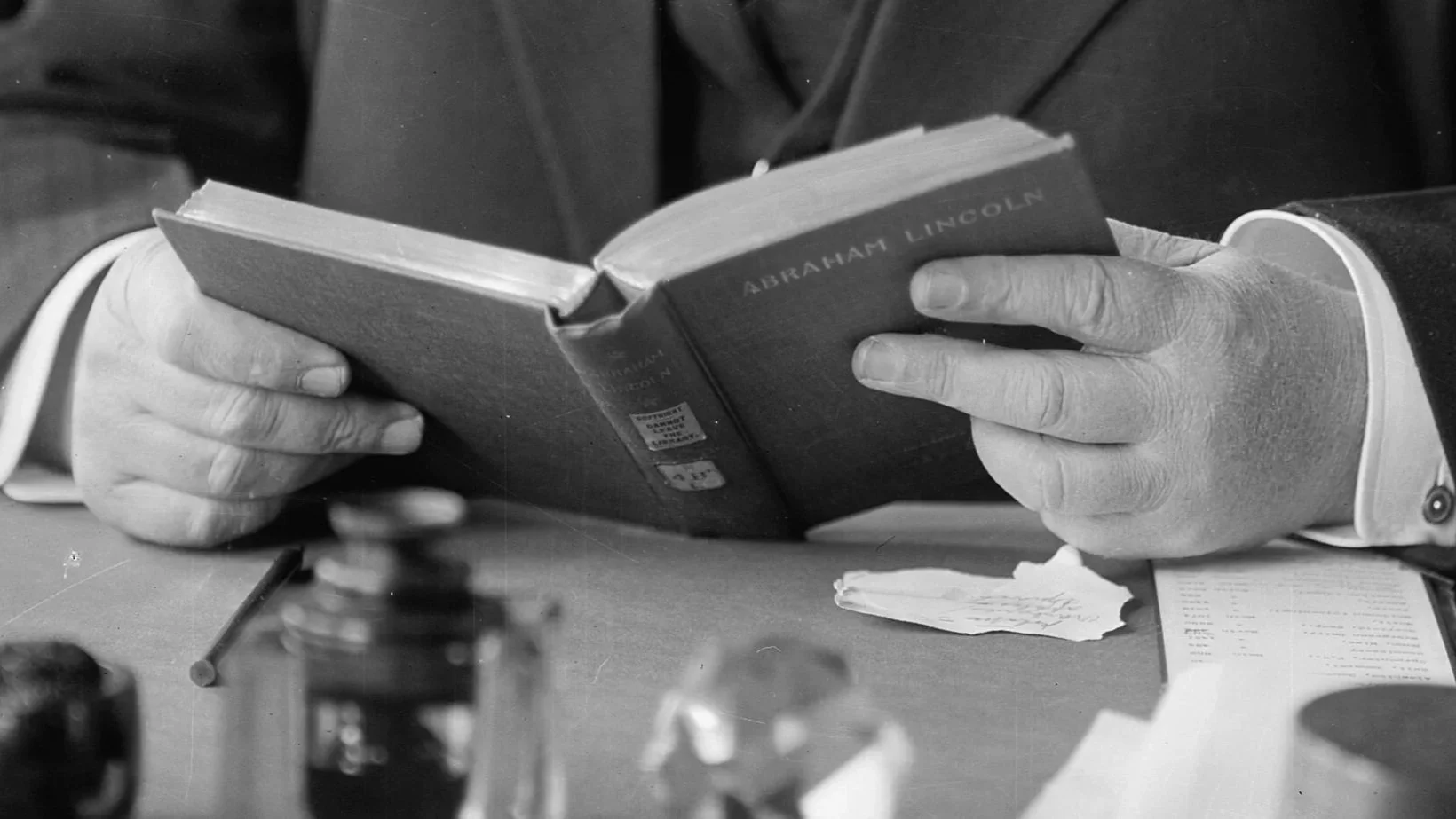
William Howard Taft reading at his desk c. 1904. The label pasted to the spine reads: “Copyright. Cannot Leave the Library.”

As personally difficult as this spring has been, with thirty-three books down—and almost perfectly divided between fiction and non-fiction—this turned out to be a stellar season for reading. Not only did I bulk up my non-fiction reading after a couple years of fiction-heavy lists, I also read more sci-fi and fantasy than usual. Almost all of it, of whatever genre, was good. I had to make myself leave things out of the list below, the ruthlessly selected best of the season.

The way I divide the year for these posts is always a bit arbitrary, but for the purposes of this one, “spring” is everything from New Year’s Day to the end of classes last week. As usual I present these in no particular order, and with my one audiobook “read” marked with an asterisk.

That said, I hope y’all enjoy and can find something good to read below:

Favorite non-fiction

On Conan Doyle, by Michael Dirda—A succinct and insightful overview of Conan Doyle’s life and work, with special attention to the Holmes stories as well as his more often overlooked work: Professor Challenger in The Lost World, the Hundred Years’ War novels The White Company and Sir Nigel, and the Napoleonic adventures of Brigadier Gerard. I was especially interested to learn more about Conan Doyle himself: his personal life and character, his intelligence and work ethic, and even his much-derided interest in spiritualism and fairies.

The First King of England: Æthelstan and the Birth of a Kingdom, by David Woodman—A solid new biography of Alfred the Great’s grandson, the first king of a unified kingdom of England, that gives a lot of attention to the complicated political situation of the time and just how much we can and can’t know about what was going on. Occsionally this means extended parsing of primary sources rather than narrative, which may not appeal to the general reader, but that comes with the territory. An Æthelstan biography is also going to be a historiographical paper to some extent and I think Woodman balances it all well. I used The First King of England as an example of the judicious use of incomplete sources for historical inferences here.

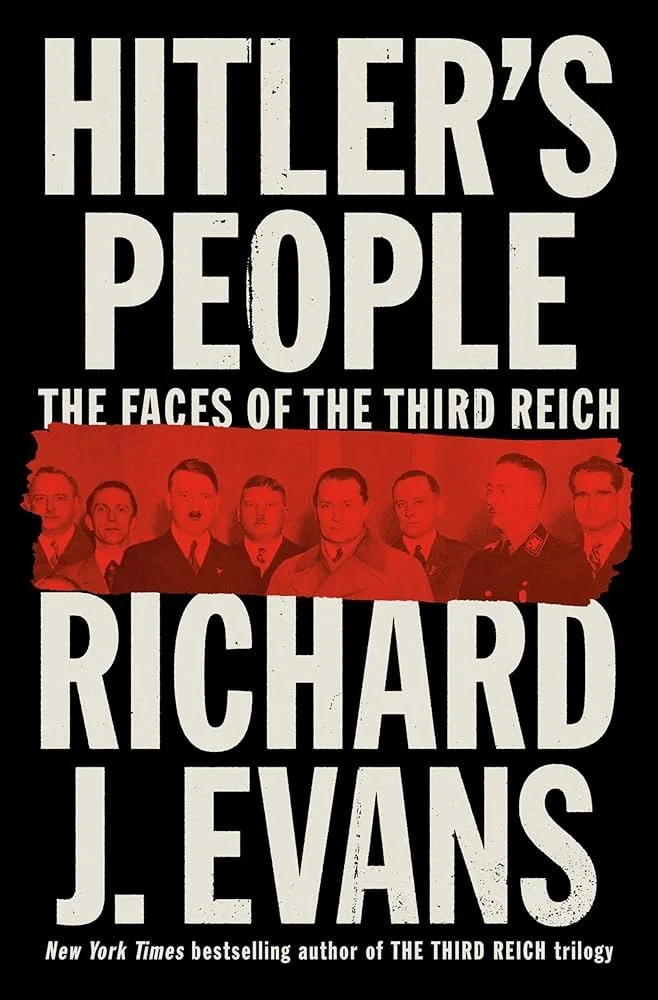
Hitler’s People: The Faces of the Third Reich, by Richard J Evans—This is an insightful series of character sketches of people from all levels of the Reich, starting with a 100-page biography of Hitler himself (which I’d love to see the publisher break out as its own little paperback, an ideal classroom text) and the Nazi Party’s elite (Göring, Goebbels, Himmler, Speer, and the like) down through the functionaries and ideologues and enablers (e.g. Heydrich, Eichmann, Hess, Hans Frank, Franz von Papen) to the ordinary people doing the work of the Reich: the generals, the gunmen who traveled Eastern Europe massacring Jews, the camp guards, the propagandists, and even the ordinary citizen. Evans has chosen good subjects and, taken together, these sketches give the reader a top-to-bottom feel for the culture of the Reich and how it worked—especially with regard to dimensions of the regime that don’t get as much attention, like labor organization or even motherhood—as well as the sheer variety of people it involved. Not all of them were motivated by the same things and not all of them explained or justified their participation the same way.

The Desecration of Man, by Carl Trueman—A more narrowly focused “how we got here” account from Trueman, this time looking specifically at how a changing understanding of anthropology—how we answer “What is man?”—was meant to liberate but has instead undermined and destroyed. Full review on the blog here.

The Nine Lives of Christopher Columbus, by Matthew Restall—An interesting multi-layer biography of Columbus, one that starts with the man (about whom, contrary to a widespread myth, we can know quite a lot), his goals and pretensions (he was a single-mindedly ambitious climber), and what he actually accomplished and follows his various “lives” through the five hundred years since: as a symbol of Manifest Destiny, an icon of Italian-American patriotism, a would-be Catholic saint, a progressive scapegoat for all the bad that has happened in the Western hemisphere ever since. Wide-ranging, deeply researched, fair to Columbus the man—warts and all—and attentive to how his character and actions have been interpreted in shifting contexts. I learned a lot from this book.

Class Clown: The Memoirs of a Professional Wiseass, by Dave Barry—A funny and often moving memoir covering everything from Barry’s childhood in New York and his early years in journalism to some of his antics as a reporter and his work since retirement. Hugely enjoyable.

Honorable mentions:

  • The Sleep You’re Longing For: How Rest Connects Us to Happiness, Healing, and Hope*, by Ken Wytsma—A helpful short guide to sleep, sleep problems, and some of the ways we can make life more generally restful, not just grudgingly recharging for a few hours at night.

  • The Way of Dante: Going Through Hell, Purgatory, and Heaven with C. S. Lewis, Dorothy L. Sayers, and Charles Williams, by Richard Hughes Gibson—A series of expanded lectures on Dante’s reception and interpretation by Williams, Lewis, and Sayers that illuminates all four. I was especially intrigued to learn how late Sayers came to Dante, and with what overwhelming gusto she embraced the Comedy.

  • Cicero: A Very Short Introduction, by Yelena Baraz—Exactly what it says on the tin: a short overview of Cicero’s life, legal and political career, and his literary and philosophical work. An approachable place to start and just over a hundred pages. Would pair well with reading his letters, speeches, or especially late essays like On Old Age or On Duties.

Special mentions

I’ve started including these “special mentions” sections for books that are neither straightforward fiction nor non-fiction as usually understood. Most of the time this is epic poetry. This time you’ve got not just any epic but the original, the very first, as well as some important primary sources for American history.

Gilgamesh, translated by Simon Armitage—A new translation of the epic that prioritizes coherence and readability above the precise indication of every gap and mystery in the text as it has come down to us. At that it succeeds admirably and was a pleasure to read. It was exciting and moving and conveyed the foreignness of the ancient world in an approachable and readable way. This is likely the version I’d recommend to people coming to Gilgamesh for the first time.

An interesting side issue: In his introduction, Armitage states forthrightly that he does not know the languages concerned and worked from literal translations by experts, which to me raises the question of how much this can be called a “translation” in the normal sense of the word, but Alan Jacobs persuasively argues here that Armitage’s project to craft a Gilgamesh that “will be exciting, that will make the text vivid” is a worthy one.

The Alien and Sedition Acts—Part of a new series from Modern Library, this volume collects four laws signed by John Adams over about a month in the summer of 1798—bills that extended the timeline for naturalization, empowered the president to arrest and deport foreigners, and criminalized written or spoken criticism of Congress and the president—and the Jefferson- and Madison-authored Kentucky and Virginia Resolutions that challenged them.

The laws themselves are bad enough, but most galling are the responses by several state legislatures to the resolutions, all of which assert that, nah, the violation of the 1st and 10th Amendments is in fact constitutional, that Kentucky and Virginia are the real threats, and that anyone who loves the union should back up whatever the president does in time of crisis. (Notably, these responses all come from northern and New England states. Massachusetts goes out of its way to praise the wisdom of Adams, an obsequious defense of its hometown boy.) The longest document, Madison’s background notes on the Virginia Resolution, is an angry masterclass on federalism, the proper relationship between state and central governments, the danger of the loose interpretation of the constitution pioneered by Alexander Hamilton (mentioned, but not by name) and the failure of the states to protect their prerogatives.

The introduction, by a civil rights lawyer who has written about growing up as an illegal alien, suggests the publication of these texts now is some kind of gotcha to the current administration’s immigration policies, but the documents themselves are much, much more concerned about states’ rights and free speech. What the book really shows is that the violation of the 10th Amendment, the federal government’s bent toward setting itself up in newer and more expansive spheres of authority, the expectation that the states fall into line behind whatever the executive wants, and the desire to curtail speech in the name of preventing the spread of false information are as old as the Republic. The Antifederalists’ fears of an overreaching, tyrannical federal government, something all conservatives should be concerned about, were not fulfilled in Obama, LBJ, FDR, or even Woodrow Wilson, but came true almost immediately. A sobering consideration.

Favorite fiction

This section will be somewhat shorter not out of any lack of good reading—this was an exceptional spring for fiction—but because I managed to review a lot of these in full, dedicated posts of their own. I’ve linked to those below.

Mars in Aries, by Alexander Lernet-Holenia—In the days leading up to World War II, an Austrian cavalry reservist falls in with a strange crowd and becomes infatuated with the mysterious woman at their center. Then he’s deployed, and his recurring visions of past people and events start to merge with reality. Perhaps my favorite Lernet-Holenia so far. Full review on the blog here.

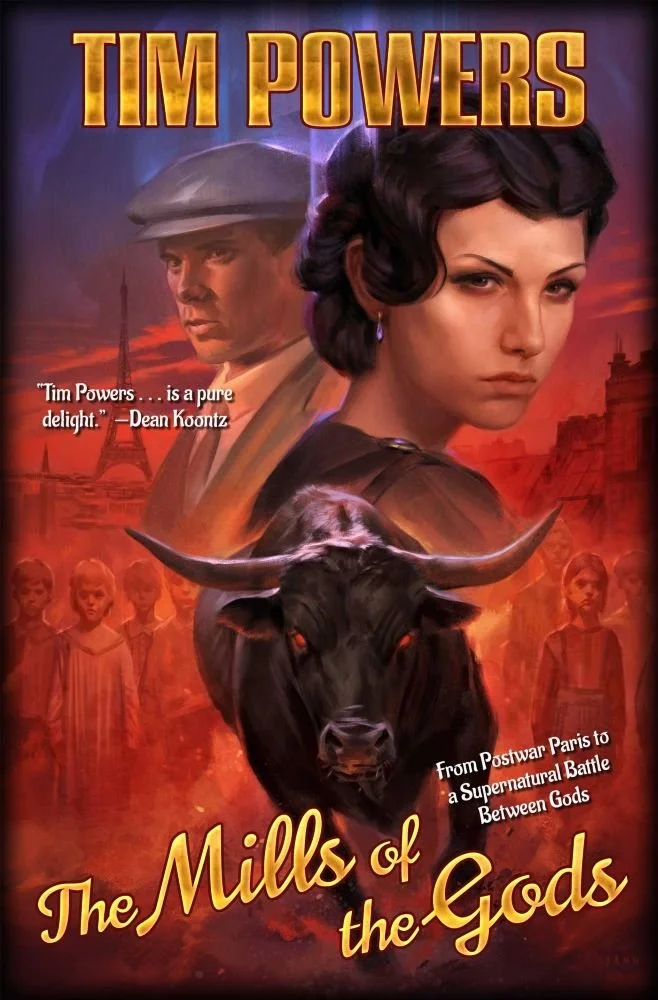
The Mills of the Gods, by Tim Powers—One I had hoped to review in full but couldn’t find the time to. Powers’s latest takes place in 1920s Paris, where expat American illustrator Harry Nolan finds himself involved with a young woman named Vivi and both end up on the run from the sauteurs, a centuries-old secret society striving for immortality by stealing into the bodies of specially prepared newborns. The sauteurs are dangerous and possessive of their target bodies, and Vivi’s most especially. Together, Harry and Vivi must free her and, with clues gathered from Ernest Hemingway, Pablo Picasso, and a sympathetic and helpful Gertrude Stein, unearth the true history of the sauteurs and defeat them permanently. The plot moves briskly and I was absorbed from the first chapter. I greatly enjoyed the Parisian setting, the cameos by Lost Generation artistic figures, and the connections to the ancient world Powers establishes for the sauteur cult. (As deadly and satanically parasitic as the villains are, I mercifully did not find them as spiritually oppressive as the succubi of The Stress of Her Regard.) But I most liked the relationship between Harry and Vivi. Both the First World War veteran Harry and intended sauteur host-body Vivi are damaged goods in need of redemption, and while they begin in mutual suspicion and work together out of necessity they move, over the course of the novel, through collaboration and friendship to something, not coincidentally, full of grace. A beautiful and moving ending caps a breakneck supernatural adventure.

A Rough Shoot, by Geoffrey Household—A lean, tightly-focused thriller from the author of Rogue Male. An English businessman and veteran of World War II surprises what he thinks are poachers on his patch of rented hunting land and accidentally kills one. His effort to cover it up embroils him in deeper, more complicated, and more far-reaching events than he could have anticipated. Full review on the blog here.

State of Siege, by Eric Ambler—An English engineer working in postwar Indonesia has finished his contract and hopes to fly home but finds himself, and a casual date, in the center of a military revolution. Fast-moving and suspenseful while also sweeping in scope, this is almost certainly my favorite of Amber’s post-WWII novels. Full review on the blog here.

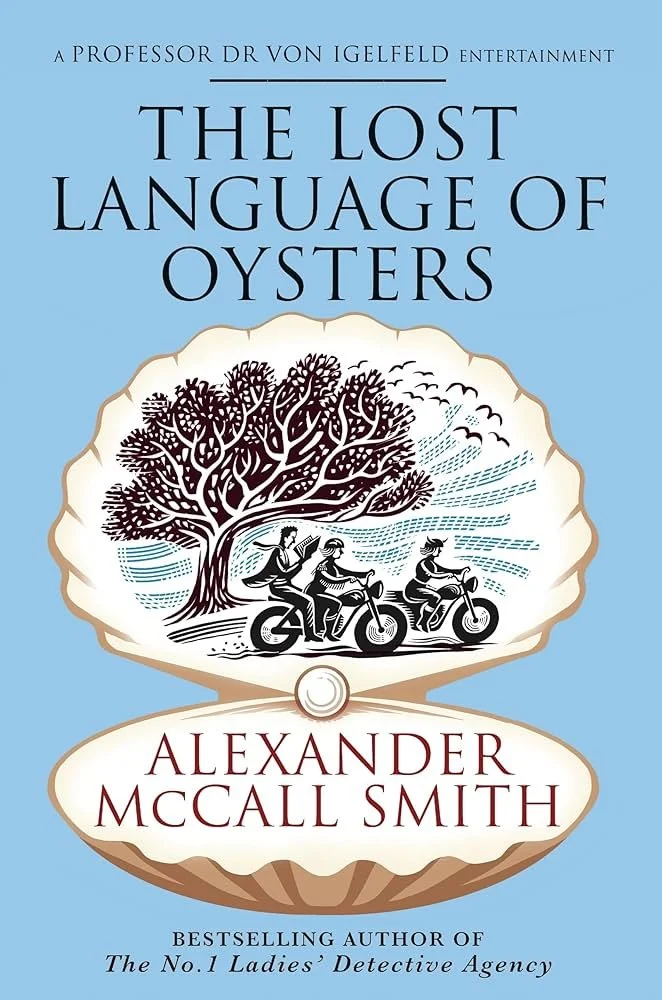
The Lost Language of Oysters, by Alexander McCall Smith—The latest in McCall Smith’s long-running series about hapless German philologist Professor Dr Dr Moritz-Maria von Igelfeld, this is a unified novel rather than a collection of interrelated short stories and finds the good Professor jockeying for status with a pesky old colleague and, to his own surprise, falling in love with an American linguist after she gives him a ride on her motorcycle. The more recent entries in the series are gentler and don’t have some of the darkness or ironic bite of the earlier ones, but they are always enjoyable, funny, and—just occasionally—surprisingly sweet. This one has some particularly good twists and surprises and a great ending.

Other Paths to Glory, by Anthony Price—Paul Mitchell, a young military historian studying a battle on the Western Front, receives two strange visits on the same day: the first is with two intimidating, authoritative men who are clearly not what they say they are; the second is with an assassin who throws him into a canal in an attempt to stage a suicide. The first two men, Audley and Colonel Butler, who were introduced in Price’s The Labyrinth Makers (which I briefly reviewed here), come to Mitchell’s aid and together they return to the former battlefield. What could be hidden there that would lead to murder and, with a secret international conference about to occur nearby, a threat to world peace? Another good thriller with a historical dimension from Price.

Heir to the Empire, by Timothy Zahn—My first Star Wars novel. Picking up a few years after The Return of the Jedi, this story follows the New Republic—formerly the Rebellion—through instability and infighting in the aftermath of success and the emergence of a new threat from the Empire, the skilled and intelligent Grand Admiral Thrawn. A fun read, and truer to the spirit and characters of the originals than much of what’s been sold as Star Wars since. Full review on the blog here.

Honorable mentions:

  • The High Crusade, by Poul Anderson—Vintage sci-fi with a fun hook—knights mustering for a crusade in medieval England encounter aliens, commandeer their ship, and set off on a crusade across the stars—that actually delivers. Brisk and enjoyable.

  • Spy Hook, by Len Deighton—The beginning of Deighton’s second Bernie Samson trilogy. A former secret agent murdered, a slush fund missing, old colleagues back from the dead, and Samson’s burgeoning romance with a younger woman threatened. Not quite as tight as the Game Set Match books but an involving story with a lot of surprises.

  • Beast in the Shadows, by Edogawa Rampo—An eerie, atmospheric, disturbing short novel in which a woman who believes she is being stalked approaches a crime novelist for help. Rampo was a devotee of Poe (Edogawa Rampo is his pen name, a Japanese near-equivalant of Edgar Allan Poe) and it shows clearly: concision, intricate construction, darkness, a beautiful tormented woman, violence, and insanity. Bleak but enthralling.

  • The Chrysalids, by John Wyndham—A young boy living in a farm community that, following a nuclear war, has reorganized itself around an intense religious vigilance for genetic mutation questions what he’s learned about mutants and realizes that his gift for telepathy, which he had always taken for granted, may be endangering him and his friends. Not my favorite Wyndham but a brilliantly imagined situation with a suspenseful final third.

Favorite kids’ books

The Raven: The Classic Poem, by Edgar Allan Poe, illustrated by Chloe Bristol—A beautifully illustrated new edition of Poe’s masterpiece, with moody, atmospheric but kid-friendly pictures. Full review on the blog here.

Bones and Berserkers, by Nathan Hale—A fun anthology of short horror stories—some true, some fictional, several somewhere in-between—by one of my kids’ favorite graphic novelists. Full review on the blog here.

Corduroy, by Don Freeman—A teddy bear for sale in an apartment store wants a home and finds unexpected fulfilment. I somehow made it to adulthood without having read Corduroy. I read it to our twins and just about lost it. A simple, beautiful and moving story with a lot of emotional and even spiritual depth.

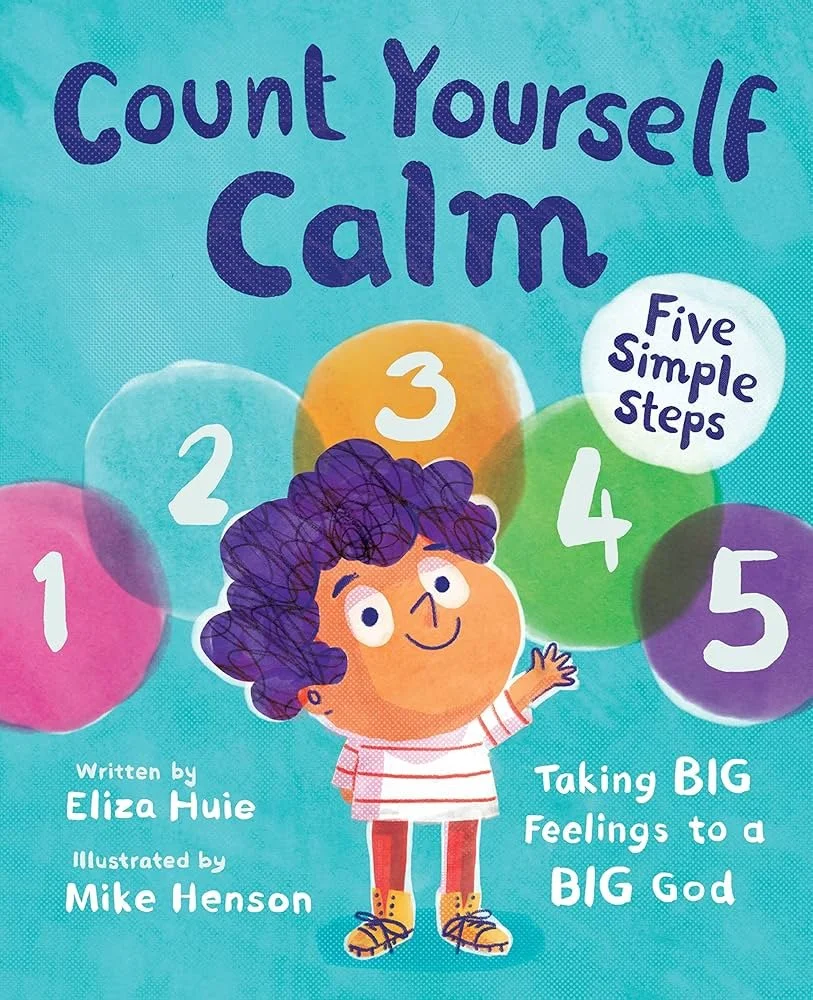
Count Yourself Calm, by Eliza Huie, illustrated by Mike Henson—We got our own copy of this picture book after an occupational therapist worked through it with one of our kids. It helps create a simple routine for calming anger, fear, frustration, and other “BIG feelings,” per the subtitle, by counting down gifts from God: parts of creation that bring us joy, the gifts he’s given us, the people who love us, and more. Simple and helpful for both kids and adults!

Ember Falls, by SD Smith—The second of Smith’s Green Ember fantasy series about anthropomorphic rabbits Heather and Picket; another fun adventure and a worthy followup to the original.

Looking ahead

I’m already into the reading for this year’s John Buchan June—the fifth June since I began this event!—so be on the lookout for that to begin in just a few weeks. I’ve also got a lot of other good fiction and non-fiction lined up and I hope to slow things down a bit for a few older, longer novels in the late summer or fall. In the meantime, thanks for reading, and I hope this list will have led you to something you can enjoy this summer!

Another justice

Julia Jentsch as Sophie Scholl in Sophie Scholl: Die letzten Tage (2005)

The past two weeks in my Western Civ II class I’ve been teaching the interwar period and the Second World War. By coincidence, I have two things fresh on my mind:

First, I recently finished reading Hitler’s People: The Faces of the Third Reich, by Richard J Evans. This collection of profiles and capsule biographies of people from every level of the Reich—from Hitler himself to ordinary citizens—concludes with a look at some commonalities: bourgeois backgrounds, decent education, a humiliating loss of status at some early point in life. Evans does not mention them specifically in his conclusion, but broken homes and religious apostasy feature in a nontrivial number of these lives.

Second, I recently listened to a Rest is History Club bonus episode with Jonathan Freedland, whose latest book tells the story of a German anti-Nazi resistance group. Freedland, in the course of the interview, notes that a significant factor in both motivating and sustaining the actions of many members of the ring was a deep Christian faith that allowed them to see beyond the Nazis and the Reich, to prioritize God above state and live sub specie aeternitatis.

In class Monday I mentioned to my students the story of the White Rose and recommended Sophie Scholl: The Final Days to them. Few movies tell a true story better or better demonstrate the truths to be inferred from the two items above.

Briefly, the film dramatizes the last several days of Sophie Scholl’s life in 1943. Scholl, her brother Hans, and a group of friends—Lutheran, Catholic, and Orthodox—had begun the White Rose as an anonymous protest against the Nazis’ conduct of the war. They drafted, printed, and secretly distributed leaflets denouncing Hitler’s leadership, the mass murder on the Eastern Front, where Hans had served, and the Reich’s top-to-bottom disregard for human life. Hans and Sophie were caught leaving stacks of their final leaflet outside the lecture halls at the University of Munich, and within days had been interrogated by the Gestapo, tried by hanging judge Roland Freisler in a specially convened Volksgerichthof (People’s Court), and guillotined.

The Scholl siblings had some steel in them, standing up to both the Gestapo, the Reich’s most brutal kangaroo court, and the threat and promise of death, and the film—which is very closely based on fact, including verbatim recreations of interrogations and the trial proceedings—shows us why.

There is their faith, invoked again and again and the source of their perspective. Hitler and the Reich hold no terror for them—these can only kill the body. Revealingly, the Scholls’ appeal to eternity and the City of God (he is never mentioned, but St Augustine heavily influenced the White Rose) are not so much disregarded by Gestapo investigator Robert Mohr or Judge Freisler as they are simply unintelligible. These two, the nose-to-the-grindstone cop and the ideologue, are alike so wedded to the State, the Party, and the Spirit of the Age that anything deviating from their devotion is worthy only of mockery and destruction. Evil cannot understand good.

Second, and inextricably linked with the Scholls’ faith, are their parents. Robert and Magdalena Scholl show up in the middle of the Volksgerichthof’s proceedings and demand a chance to testify. Freisler shouts them down and has them removed from the courtroom. Later, given a chance to see their daughter a final time, they praise her—“You did the right thing”—and tell her to remember Jesus. Like them, Sophie invokes the transcendent: “We’ll meet in eternity.”

Where do children get such faith and strength? Their parents. The film shows most clearly where the Scholls got their courage in their father’s one line as he is hustled out of Freisler’s courtroom, the line that still strikes me most powerfully: “Es gibt noch eine andere Gerechtingkeit!

There is another justice. A promise to the faithful, no matter how terrible the suffering; a threat to the wicked, not matter how temporarily successful.

When introducing Lenin, Stalin, Mussolini, and Hitler in class a few weeks ago, I noted as an aside specifically for my male students that if they planned to have children they should take care to be good dads. All four of these dictators, and many others besides, not to mention many of their underlings, had terrible relationships with their fathers. The regularity with which the tyrannical, unfaithful, or absent father crops up in Evans’s book is telling. Hans and Sophie Scholl—not to mention the Stauffenbergs and Bonhoeffers—offer a positive counterexample and a challenge. We need more Robert Scholls than ever.

Sophie Scholl: The Final Days is well worth your time. I own the recent Blu-ray of the movie, but the entire thing is available on YouTube (with English subtitles available in the closed captioning button). I strongly recommend it.

No aristocracy worth its salt

This week Before They Were Live dropped a new episode on Moana 2, which I haven’t seen, but Michial and Josh’s discussion of the film’s manifold weaknesses got me thinking about one of the biggest flaws in Frozen.

A few years ago I ranted about the dam in Frozen II—a badly imagined piece of infrastructure that has no use beyond serving as a cack-handed metaphor for the film’s political message. But that dam is not the first useless thing affecting the plot of a Frozen movie. I want to look at the first film’s villain, Prince Hans, and more specifically Arendelle’s useless aristocracy.

Here’s the rub: Prince Hans arrives early in the film and he and Anna, Queen Elsa’s younger sister, fall instantly in love. He swans around in a secondary role for a while until the climactic twist: Hans does not love Anna and, as the youngest son of another kingdom’s dynasty, as deliberately insinuated himself into Arendelle’s royal family to await an opportunity to take over. With Elsa feared and effectively outlawed and Anna mortally wounded by Elsa’s ice powers, Hans refuses Anna the kiss that will save her life, tells the handful of nobles hanging around the court that she’s dead, seizes control of Arendelle, and leads the attempt to eliminate Elsa. Boo, hiss.

I’m heartened to learn that I’m not the first person to criticize Hans as a villain. Others have pointed out the thin to nonexistent foreshadowing of his ulterior motives and the fact that his actions earlier in the film are counterproductive to his plot. (He’s also, in keeping with the political valence of the dam in Frozen II, more of a feminist device than a character, but more on that later.) These are legitimate complaints but not my chief problem with him.

The biggest problem with Hans, his plot, and Frozen’s climax is Arendelle’s useless aristocracy. I actually use this as a negative example when lecturing on the medieval nobility in Western Civ. Imagine: the youngest son of a foreign royal family shows up in a kingdom just emerging from a regency and ingratiates himself with the princess who is second in line to the throne. And consider the climax, when Hans, the only person allowed to talk to the severely ill princess, appears and tells the leading men that Anna is dead. Somewhere else. Trust me, bros. And they do.

A real aristocracy would have sniffed out Hans’s intentions in about ten seconds. No aristocracy worth its salt would have missed this, or failed to act against it. They would have sworn oaths to Elsa and her family and had roles to play under her rule and with respect to each other, roles they would fiercely protect. They would have duties and prerogatives. If they had somehow let things get to the point of Hans announcing Anna’s death, they would have demanded evidence. Immediately. He would have been an object of suspicion from beginning to end. A Bismarck, a John of Gaunt, a William Marshal, an Eorl Godwin, or your pick of the Percys, Hohenzollerns, or Carolingians would have eaten Hans alive.

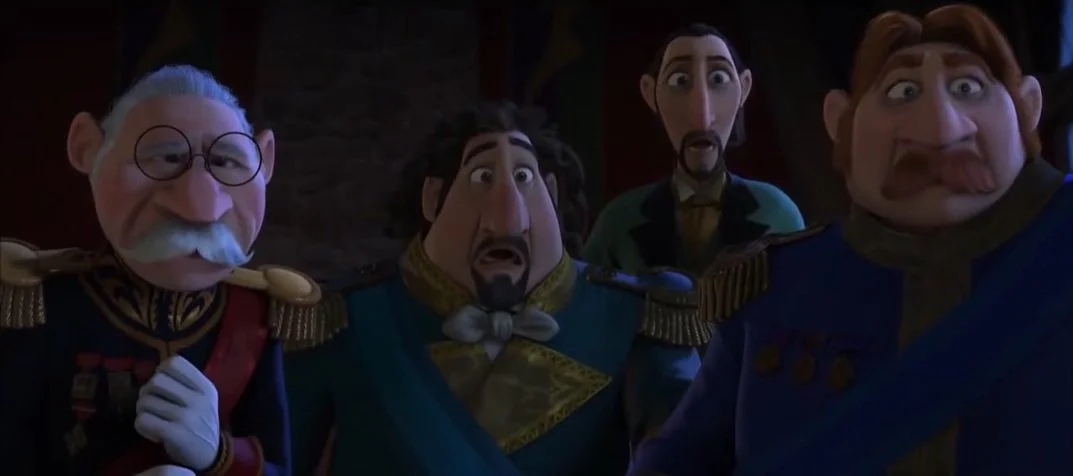
But Arendelle does not have an aristocracy worth its salt. There are only four other men in the room when Hans makes his bid for control and one of them is a foreign diplomat. The rest are nameless drones in uniforms and sashes. This curiously empty kingdom must be either an absolute monarchy, with Elsa at the top and no mediating ranks between her and the people, or have an unseen, unmentioned parliament that has reduced the monarch to a figurehead—which I strongly doubt, if Elsa’s throne is as desirable as Hans thinks it is.

You could try to excuse this as the necessary simplicity of a children’s film, but children’s films don’t have to be simple. It’s more a cliche born of a typical American incuriosity regarding nobility, Americans being incapable of imagining aristocrats as having functions and not just being privileged people who are excusable as targets of scorn and envy. Frozen’s feminist underpinnings are also a factor, feminist ideology—whatever the movement’s other merits—being a universal machine for making complex reality stupidly oversimplified. Google Prince Hans and see how often the cliche “toxic” comes up. He’s a powerful man and other powerful men are just going to trust him and follow him.

Again, study history, even a little bit.

Hans and the Arendelle nobility aren’t just unrealistic—though it’s fun to nitpick and, when I point this out in class, to see students recognize it as a flaw based on what we’ve learned about the past. The real problem is that the combined lack of imagination and ideological cliche evidenced in Hans weaken the story. Like the dam in Frozen II, he’s there to make a point and reinforce a message, not to live and breathe.

A real aristocracy—the kind that patronized the courtly love poets and commissioned altarpieces and cathedrals—wouldn’t have made this mistake.

Weimar notes

Militants of the Communist Spartacist Uprising in Berlin, January 1919

When I finished Frank McDonough’s book The Weimar Years last month I had hoped to write a full review, but time, sickness, and a host of other complications meant I had to be content with a long paragraph in my non-fiction reading year-in-review. Unfortunately, the single-paragraph summation I hold myself to for those posts meant I could only raise a few issues that I had a lot of thoughts about, gesture toward them, and move on.

Here are two—both more or less about terminology or rhetoric—that I’ve been mulling anew under the influence of McDonough’s book and a few unrelated factors.

Right and left

After finishing The Weimar Years and celebrating Christmas, I caught up on some club episode of The Rest is History. The one I was most excited for was a live show Holland and Sandbrook presented at Royal Albert Hall last spring. The subject: Wagner.

Holland and Sandbrook begin their discussion by asking the audience to reconsider what they think they know about Wagner—a smart move. But this problem of terminology popped up immediately. You have heard it said, they essentially say, that Wagner is a right-wing figure, but I say unto you… he’s more of a left-winger. In their actual words, “a hippie.” But Wagner had “some right-wing opinions,” namely anti-Semitism. So: a leftie who is right-wing à la carte?

There’s an argument to be made for Wagner’s place on the left, given his role in the 1848 revolutions and his support for the overthrow of the Saxon monarchy as well as his generally bohemian lifestyle. But what precisely makes his anti-Semitism right-wing? And, from a certain kind of chest-thumping American view, supporting the overthrow of monarchies and seeking to create an all-encompassing national artform out of national myth could be spun as right-wing.

This was a great episode—and I especially appreciated Holland’s argument that Wagner’s music is not in itself anti-Semitic—but that left-right business neatly encapsulated much of my problem with this political frame.

Back to McDonough’s book. McDonough uses the language of left and right throughout but also, importantly, makes it clear what each of the dozen or so major German political parties of the 1920s wanted and stood for. Focusing on 1) goals, 2) methods, and 3) how these changed depending on circumstances explains much more, especially when it comes to the elephant in the room: the National Socialists—and yes, the Socialist part absolutely matters—who were themselves starkly divided along several political axes throughout the Weimar period. This is also considerably more helpful than a simple left-right spectrum when one reads of instances in which supposed opposites like the Nazis and the German Communist Party collaborated against the national government.

The terminology of right and left is rooted in a specific historical moment and the specific problems parties in that place and time argued and fought over. Unmoored from those specifics, I find it unserious. It’s a time-honored way to argue about vibes. I avoid it as much as possible when I teach modern history, invoking it only to give the point of view of people within the narrative I’m telling but not as neutral description.

“Democracy” vs this democracy

I didn’t get into the left-right thing in my paragraph on The Weimar Years but I did raise this question. Here’s what I wrote there:

But the epilogue, in which McDonough specifically blames Paul von Hindenburg for the death of “Weimar democracy,” is a bit of a fumble, as it is abundantly clear from McDonough’s own narrative—and even the earlier parts of the epilogue—that the Weimar Constitution had built-in weaknesses that were bound to weaken and undermine it. McDonough essentially faults Hindenburg for not believing in democracy hard enough. But if “democracy” in the abstract gave Germany this democracy in concrete, stubborn reality, it deserved to go.

Since finishing McDonough’s book I’ve browsed two new histories of Weimar from German historians: Vertigo: The Rise and Fall of Weimar Germany, by Harald Jähner and Fateful Hours: The Collapse of the Weimar Republic, by Volker Ullrich. (In the course of writing this I’ve also learned of a history of Weimar by Katja Hoyer, due out this summer.)

All of these (minus Hoyer’s book, for obvious reasons) do a bit of two-step around the concept of democracy: when the authors write about “democracy,” they sometimes mean the specific constitutional arrangements of the Weimar Republic—who voted, how, under what circumstances, how the Reichstag was constituted, who became chancellor and what authority they had, etc—and sometimes the concept of Democracy, in the abstract. The defeat and destruction of Weimar democracy is a tragedy for them because it means a defeat of Democracy.

But to paraphrase Burke, abstract democracy is not to be found; it inheres in sensible objects. It is useless to talk about Democracy without talking about the specifics of a given democracy, and a given democracy is only as valuable as its institutions and—one ought to add—the people who are using it. And as I wrote above, Weimar democracy was flawed from its inception because of the specifics of how it was designed and functioned and what options it made possible. Unstable, ineffective, hamstrung both by the outcome of a war it wasn’t responsible for and diplomatic agreements to which it consented, and—in the hands of feckless and corrupt politicians of all parties including the supposedly egalitarian socialists—unable to represent the people, it was a failure as a democracy long before Hitler seized power.

As I finished reading McDonough’s account and looked through those two other books—one more obviously leftist-oriented but both moaning and lamenting for Democracy throughout—I had a strange realization. The effect of switching from the collapse of actual Weimar democracy to a lament or apologia for Democracy in the abstract is suspiciously similar to “Real socialism has never been tried.” Democracy attracts the same mulish defensiveness as socialism. Both are the object of unwarranted faith. Neither can be blamed when they fail.

A confession

I started The Weimar Years shortly after the Charlie Kirk murder. Political violence openly celebrated by one side of the culture seemed like a good reason to familiarize myself with the broader narrative of Weimar.

That was a mistake, as looking for a useable, “relevant” past almost always is. Unfortunately historians of Weimar are just as prone to it. In both Jähner’s and Ullrich’s books I did a quick search for “Trump, Donald” in the index and guess what I found? Dumb parallels to the present, mentions of a specific political bugbear that will date their books as badly as a book I have on Mussolini that keeps bringing up George W Bush.

But McDonough doesn’t make this mistake, which is one of the great values of The Weimar Years. Throughout he emphasizes contingency and particularity: that things could have turned out other than how they did, something he makes clear through his detailed political narrative, and that Weimar Germany was a unique time and place offering no easy comparisons to our own. Pretending that Weimar tells us something or gives us insight into our enemies because there was political violence and politicians said mean things about their opponents is glib and misleading—for both the past and the present. The specifics matter.

So I confess to beginning McDonough’s book for the wrong reasons, but am glad I read it and for the sensibility of his approach, which brought me back to my senses. The closer I looked at Weimar, the less I saw of us, now. Which is as it should be. Not that we can’t learn anything from it, but we won’t until we understand it on its own terms.

More to come

I’m still trying to strengthen my grasp of Weimar. Of the two other books I’ve looked at, I may read Ullrich’s on the basis of his two-volume Hitler biography. He intones the ritual laments for Democracy in the portions I’ve read but his treatment of some of the specific topics and people I looked up struck me as more balanced than Jähner’s, which celebrates the hedonism and decay of the time. I may end up holding out for Hoyer this summer, as her book on the German Empire, Blood and Iron, was exceptionally good.

Young Washington trailer reaction

“COLD DEAD HANDS!” William Franklyn-Mille in Young Washington (2026)

Let me start with a favorite passage from Nathaniel Hawthorne, writing in 1858, less than sixty years after George Washington’s death:

 
Did anybody ever see Washington nude? It is inconceivable. He had no nakedness, but I imagine he was born with his clothes on, and his hair powdered, and made a stately bow on his first appearance in the world.
 

This is not only funny—and I love the reactions it gets from students—it succinctly gets at a problem with iconic historical figures. Some are so important, so mythic, that a version of them with ordinary human qualities stripped, planed, and sanded away supplants them in our historical imaginations. In American history this may be more true of George Washington than anyone else. Tellingly, even in commenting on this phenomenon Hawthorne gets something wrong: Washington didn’t wear powdered wigs.

Last week a new trailer for an Angel Studios release called Young Washington came to my attention—fortuitously as I was pulling up a video for my US History I class. The film appears to cover George Washington’s experiences during the first couple years of the French and Indian War, from the ill-fated patrol in which, as the 21-year old commander of a small force of Virginia militia, he accidentally precipitated a global war, through the Battle of the Monongahela, in which a British force was cut apart and nearly annihilated and where, as a volunteer aide-de-camp to the fatally wounded British General Edward Braddock, Washington helped save what was left of the army.

Here are Variety and The Hollywood Reporter with more details.

As it happens, this is one of my favorite stories to tell in class, and I’ve long thought it would make a great movie. So discovering a trailer for Young Washington has gotten me both excited and anxious.

If you want to get at the person beneath the mythology and iconography—especially of great and consequential leaders like Washington—it requires deep interest and long, purposeful study. Most people can manage perhaps one of these, more often neither. For them, a good historical movie can untangle the bundle of traits and props that make up the imaginary versions of historical figures, presenting them with a real human being perhaps for the first time. But the movie has to be good. The damage of a false movie portrait can be permanent.

What follows are rough impressions and questions based on this early trailer for Young Washington:

  • This teaser is heavy on battle scenes—not that I’m complaining. I’m pleased to see throughout the representation of regulars (paid, uniformed professionals), militia in a wide variety of clothing, and allied Indians on both sides. I doubt Young Washington will nail this the way The Last of the Mohicans did but that this complexity is so clearly visible even in this trailer is heartening.

  • Ben Kingsley plays Lieutenant Governor of Virginia Robert Dinwiddie. Dinwiddie was Scottish and twenty years younger than Kingsley when the French and Indian War broke out.

  • The Angel logo appears over what looks like Braddock’s expedition, which set out into the wilderness of western Pennsylvania with a long wagon train and no road. Great atmosphere in this shot.

  • Washington’s leather-looking coat at approx. 0:20 is a good spot to talk about uniforms and costumes. I’m not a mid-18th century guy but beyond the basic red-for-British/white-for-French the uniforms don’t look right to me. The leather coat is of a piece with modern Hollywood’s tendency to give the star slightly more contemporary-looking costumes, e.g. Orlando Bloom’s boot-cut hose in Kingdom of Heaven. The Revolutionary War spy series “Turn” gave Abraham Woodhull similar modern takes on 18th-century clothing: leather when everyone else is in wool, hipster toboggan, bad boy scowl. At least our young Washington isn’t constantly glowering.

  • Scenes of Washington surveying the Virginia wilderness: A+ for effort. Can’t comment on 18th-century surveying equipment but the outdoor clothing looks better than the uniforms and the landscape looks exactly right. People tend to forget Washington’s work as a surveyor (and his chance to get a look at what’s out there right before it became available to speculators) so it’s good to see him working his day job.

  • The film provides Jane Austen fans with a ball. Washington is accurately shown not wearing a wig but inaccurately—unless this is an accident of low light and color grading—as a brunette. Washington had red hair. He was also 6’2” at a time when that placed him head and shoulders above most other men, something you don’t really get here (but that HBO’s “John Adams” miniseries nailed). Even as a young man he was striking and physically imposing.

  • A French officer goads Washington with “You are not British yet they send you to speak for them. So that when you fail they’ll have someone to blame.” This introduces some sketchy interpretation. Washington and all the other colonials absolutely considered themselves British at this time. It’s a later nationalist myth that we strapping Americans had already discovered ourselves to be a new, independent species and were just waiting for the right time to buck off the shackles of the Old World. (Even the great Last of the Mohicans tacks into these waters a bit.) See Fred Anderson’s books below for more on that.

  • The wagon train in the woods features in a few quick shots, presumably of Braddock’s defeat at the Monongahela. Can’t comment at this point how accurately the film will portray the battle overall, but these shots capture the chaos well.

  • After the Battle of Jumonville Glen and his surrender at Fort Necessity (and I can’t be sure that anything in this trailer relates to that event), Washington left the Virginia militia to volunteer as a gentleman aide-de-camp to General Braddock, played by Andy Serkis. As with Kingsley’s Dinwiddie, we don’t get much to judge by here, but Braddock comes across as rather hostile to Washington—a bit of lordly British stereotype. Washington actually liked Braddock, wrote positively of him, and learned a lot during his month under his command.

  • Scenes of combat in the forest look appropriately messy, panicked, and dirty, with a mix of men fleeing and courageously holding their positions. It’s also atmospheric as heck. Points for that. The one thing we miss is the massive primeval trees of the colonial American woodlands, something no movie would probably be able to recreate now.

  • We also get Washington taking unofficial charge of part of the battle. Washington was not only physically large and powerful, he was ridiculously brave. You might know that he found multiple bulletholes in his coat following the Battle of the Monongahela (which Kingsley’s Dinwiddie seems to allude to at the beginning of the trailer) but he also had two horses shot out from under him. Braddock, before he was mortally wounded, also demonstrated immense courage and had several more horses killed beneath him. I’ll be curious to see how the film treats his relationship with Washington and how they’re depicted in battle. A lot of movies about heroic figures downplay the courage of others to make their subjects look better—a trap I hope they avoid.

  • Some other famous names associated with Braddock’s expedition: Daniel Morgan, Horatio Gates, Benjamin Franklin. Curious to know if any of these will show up in the film. It would make sense to include Franklin, as he later told stories—including in his Autobiography—of having tried to warn Braddock about his plan of attack.

  • A blink-and-you’ll-miss-it shot at 1:27 seems to show the moment Washington’s patrol started a global war: allied Iroquois leader Tanaghrisson “The Half-King” killing French officer Joseph Coulon de Jumonville in cold blood. Describing this moment never fails to startle students.

  • A final name-drop shot gives us an appropriately young-looking Young Washington. He doesn’t seem to have much human personality in this teaser but, well, it’s a teaser.

Lots to dig into here, and for what it’s worth I enjoyed the trailer—and picking it apart for historical clues. For now I’m curious but not particularly optimistic. I hope to be pleasantly surprised.

In the meantime, if you want make an effort to get at the real young Washington and his time—whether you end up seeing the movie or not—let me recommend the following:

  • For a good shorter biography that pays attention to Washington’s early experiences in the French and Indian War as well as his pre-Revolution life of surveying and land speculation: Washington’s Revolution: The Making of America’s First Leader, by Robert Middlekauff.

  • For the fascinating, underappreciated story of the French and Indian War, I’d recommend either of two books by Fred Anderson: The War That Made America: A Short History of the French and Indian War or, for a much more detailed version, his mammoth Crucible of War: The Seven Years’ War and the Fate of Empire in British North America, 1754-1766.

  • For Braddock’s expedition against Fort Duquesne specifically there’s Braddock’s Defeat: The Battle of the Monongahela and the Road to Revolution, by David Preston.

Young Washington just started shooting in Ireland last month and won’t be out until next July 4th, so who knows what the final product will be like? We certainly don’t need, per Hawthorne, Washington nude—even HBO didn’t give us that, shockingly—but if we can get past the stately bows and powdered wigs to the real young man who fought for king and crown in the French and Indian War, who struggled to master his temper, who trooped through the forest bearing chains and compass and later rifle and sword, and who wrote to his brother describing how “charming” the sound of whizzing bullets was, I’ll be glad.

Erzberger

After recent events I decided it was time I finally read up specifically on Weimar Germany. I started Frank McDonough’s recent year-by-year history The Weimar Years: Rise and Fall 1918-1933. It’s good so far. Night before last I read through McDonough’s account of 1921, one of the most famous and disturbing events of which was the murder of Matthias Erzberger.

Erzberger was a politician of the Catholic party Zentrum and had the dubious distinction, following revolution on the homefront and the abdication of the Kaiser in November 1918, of signing the armistice with France. This was a thankless and humiliating role that earned him the hatred of German nationalists, militarists, and anyone else upset by the outcome of the war. Erzberger soldiered on, embracing the new Republic and taking an active role in trying to help it survive. For this—and for being the man who signed the armistice—he was targeted by the Organisation Consul, a group of former military officers dedicated to avenging their defeat by killing off the men they held responsible.

On August 26, 1921, two members of the OC approached Erzberger while he was on a walk with a colleague. They “fired two shots at Erzberger’s head and back. He fell down an embankment, and the assassins followed him, finishing him off with two head shots.” They afterward fled to Hungary.

McDonough turns to the response to the murder with a damningly succinct introduction:

 
Such was the toxic nature of Weimar politics that the brutal assassination of Erzberger produced a mixed reaction.
 

As if assassination is not enough, the response itself is proof of the rot in the body politic. Read McDonough’s summary of the “mixed reaction” and see if it is not reminiscent of recent events:

On the centre left, there was a tremendous outcry. Numerous protest rallies were organised by the Social Democrats, the USPD and the Communists. In Berlin, 100,000 people turned out to express their outrage. Among the other mainstream parties, the murder was also unambiguously condemned. On the Right, however, a substantial minority greeted the murder with shameless glee. Hitler gave a tasteless speech in Munich in September which, identifying Erzberger as a November Criminal, essentially saying he got what he deserved. The Magdeburgische Zeitung (Magdeburg News) expressed ‘abhorrence’ for the murder, but added that Erzberger had been a ‘political racketeer and gambler’ who had made numerous political enemies.

Outcry on one side, glee on the other, and, in between, a certain amount of mealy-mouthed hemming and hawing about politically-motivated murder.

Weimar Germany is not 2025 America and 2025 America is not Weimar Germany. One could point to a thousand specific differences. But human nature, being unchanging at its core and bent toward evil, falls into familiar ruts whenever it finds sufficient excuse or opportunity to do so. According to the old saw, variously attributed but which I repeat often in class: history doesn’t repeat itself, but it rhymes.

Erzberger wasn’t the first and was by no means the last victim of such political violence in the Weimar era. (Less than a year later, the OC would assassinate Foreign Minister Walther Rathenau, an event you can read about from inside the conspiracy in Ernst von Salomon’s novel/memoir The Outlaws.) It’s worth considering, for all the people rightly shocked and grieved by such acts, what it will take to break the rhyme scheme.

On “not sucking”

Two things I saw early last week that I thought a lot about even at the time, but that not long afterward took on much greater weight:

First, after a social media algorithm served up an amusing comedy routine about Christian rock, I explored the comedian’s other work. His brand is explicitly “exvangelical,” and in addition to the usual contemptible rants, complaints, and progressive exhibitionism of that demographic, he has an ongoing series of videos called “Christians Who Don’t Suck.” The most recent video at the time profiled Nat Turner.

Turner was a slave preacher in Southampton County, Virginia. Inspired by visions he claimed to have received from God, in the late summer of 1831 he led a slave revolt that killed around sixty people. In his master’s house, where he began the uprising during the night, his men killed a baby sleeping in a crib. At another house they killed a bedridden old woman. At another a three-year old boy recognized the slaves riding into the yard and ran to greet them; they decapitated him. At a farm where a schoolhouse had been built for local children, his men arrived just as the children were being told to flee. Turner’s men—by this time riotously drunk on hard cider—rode them down and dismembered ten of them with axes.

This, apparently, is “not sucking.”

Second, a history account that I follow on Instagram shared something related to abolitionist terrorist John Brown. In the comments, when someone mentioned Brown’s Pottawatomie massacre, in which Brown, his sons, and some accomplices hacked five men to death with custom-made broadswords, someone who thought himself very clever indeed replied: “Thus always to slaveholders.”

Here’s the thing: none of Brown’s victims owned slaves. They were family farmers who had a mere difference of opinion with Brown, who settled on them as suitable targets for retaliation following what he perceived to be recent pro-slavery victories in the news. For this, they were roused from bed in the middle of the night, led away from their farms over the wailing and pleading of wives and mothers, and hacked to pieces, with Brown personally administering coups de grâce with his revolver. He would go on to plot a rebellion that, had it been successful, would have killed tens of thousands. It failed, but not before sixteen had been killed.

This is, presumably, also “not sucking.” Indeed, to go by that commenter’s words, it’s apparently a standard to be striven for.

I don’t remember the order in which I saw these two posts, but I ran across them on Monday and Tuesday of last week. I found the gloating tone, the posturing and virtue signaling, and especially the moral blindness of both annoying but not especially surprising. The self-congratulatory upright can talk a lot of smack about the long dead, especially when they’re ignorant of the details.

Then Wednesday happened.

I don’t have anything new to say about last week’s public political murder, but the gloating, posturing, and moral blindness of the responses following the event brought these posts about Brown and Turner back to mind, albeit more sharply and painfully defined.

One of my favorite history professors in college mentioned, as an offhand comment during class one day, that one should always beware of those willing to murder on principle. (He may even have been talking specifically about John Brown.) It took me a long time to grasp fully what he meant. One should also beware of those willing to excuse murder on principle.

This is why one’s perception and interpretation of history matter. One’s understanding of the past inevitably informs the present, and excusing the violence of a Turner or a Brown because they had the correct opinions creates the same incentive structure in the present. The person who can celebrate the long-ago slaughter of ordinary people in the name of high-minded political principle can also—it is abundantly clear—celebrate and excuse murder today. They even get the added joy of revisiting the moment over and over on video.

If only there were a way to describe these people.

I teach both of these events—Nat Turner’s revolt and John Brown’s career of bloodshed in both Kansas and Virginia—in detail as part of US History I. Both stories are well enough documented and complicated enough to rubbish easy celebration. Students will all agree that slavery was bad, but they almost always recoil from what Turner and Brown did about it—a salutary moral challenge offering a moment of genuine openness. I’ve linked to decent online articles about both above, but the books I routinely recommend to students on these topics are The Fires of Jubilee: Nat Turner’s Fierce Rebellion, by Stephen Oates, which is sympathetic to Turner’s plight as a slave but doesn’t soften or excuse the violence at all, and Midnight Rising: John Brown and the Raid that Sparked the Civil War, by Tony Horwitz. I’ve written about both here.

Crucially, while both books are about the evil men at the center of these stories, they also offer small points of hope, of people who actually “don’t suck.” During Turner’s revolt, a slave named Nelson saved the life of Lavinia Francis and her unborn child by hiding her from Turner’s men, and on the night of Brown’s Pottawatomie Creek massacre, Mahala Doyle’s stalwart defense of her sixteen-year old son John spared him from Brown and his men’s swords.

May we have more Nelsons and Mahala Doyles, people saving lives amidst slaughter, and fewer self-righteous, self-proclaimed heroes embracing it.