2025 in books: fiction
/
Gartenterrasse (detail), by Caspar David Friedrich
Happy New Year! After realizing yesterday that my annual reading list was nearing 5,000 words and wasn’t even finished, I decided to break it up and went ahead and published the non-fiction section. You can read that here if you missed it. Here’s the rest: fiction, kids’ books, and a simple list of the books I revisited in 2025.
As always, I hope y’all will find something good here to read in the new year. That said, in no particular order, here are my
Favorite fiction reads
The Friends of Eddie Coyle, by George V Higgins—A lean, tight, dialogue-heavy crime thriller about a washed up conman trying to make quick money by playing different criminal elements off each other, some gormless hoods trying to run guns, and the authorities who are closing in on them—if they can just figure out who’s up to what. Excellent, almost musical dialogue. When I noted this in my spring reading-in-review, I wrote that it “reads like an even more stripped down version of Elmore Leonard.” This summer I read a biography of Leonard (see yesterday’s post) and learned that, in fact, Leonard’s crime fiction sounds like The Friends of Eddie Coyle. It was a huge and openly acknowledged influence on him. A great short read and one I hope to revisit soon.
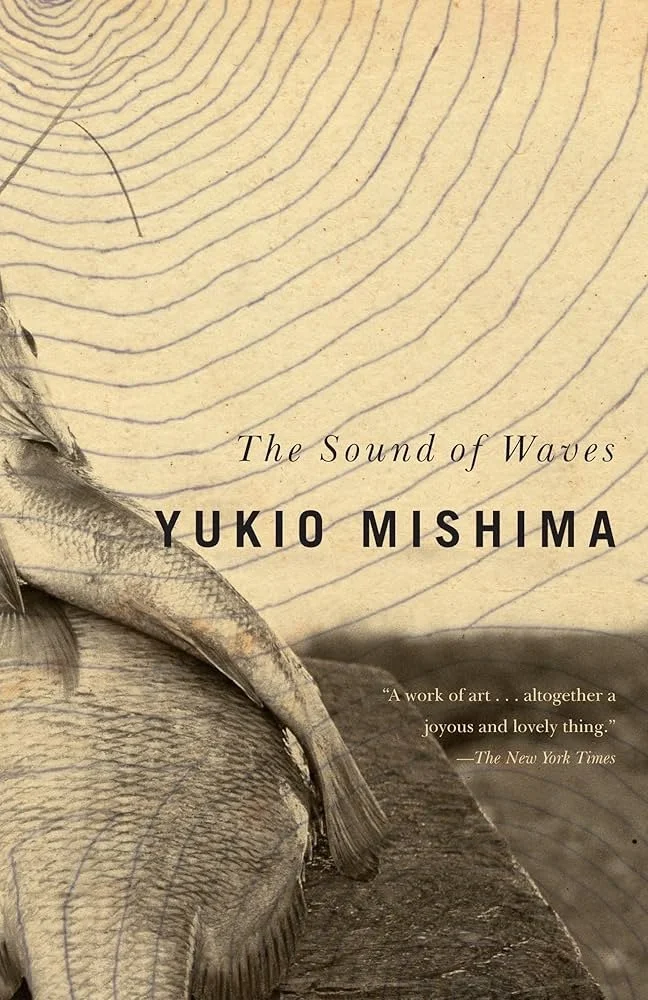
The Sound of Waves, by Yukio Mishima—Here’s a strange thing: a novel by Mishima with a happy ending. The story of a young man and young woman on a remote Japanese fishing island, where life in the 1950s continues, season by season, much as it has for hundreds of years, of love at first sight, of jealousy and gossip, of the beauty and resilience of local custom, and of the triumph of steadfastness. I think I read this in two days. It’s as powerfully sensual and moving as any of Mishima’s other work, but with a deep love of the ordinary.
Baron Bagge and Count Luna, by Alexander Lernet-Holenia—Two novellas from a great Austrian writer. Baron Bagge tells of ill-fated love born in the middle of WWI and Count Luna, a post-WWII story, concerns an aristocrat who believes a man killed in a concentration camp is haunting him. The former is a beautiful, ethereal vision; the latter is a fever dream. Full review of Baron Bagge at Miller’s Book Review here.
Game Without Rules, by Michael Gilbert—Two retirement-age spies in rural England fight the Cold War on their own terms, and with no diminishment of their skills or intelligence despite their age. A delightful collection of tightly-plotted, surprising, and thrilling short spy stories that run the gamut of the espionage genre while feeling fresh and exciting throughout. Full review on the blog here.
Payment Deferred, by CS Forester—Mr Marble is a impecunious banker with a dim, eager-to-please wife, two growing children, and a few habits—drinking, photography—that keep the family cash-strapped. When a long-lost relative unexpectedly arrives talking of his vast inheritance and lack of connections in Britain, Marble, a passive man all his life, acts impulsively and aggressively to get the money he needs. He poisons the man. (No spoilers: this is all in chapter one.) The rest of the novel is the tale of Marble’s slow descent into greater and greater paranoia and bolder and bolder sin. Based on my reading of The Good Shepherd, a later Forester novel, Forester was biblically literate, and while Payment Deferred rarely brings up religion, it is thematically suffused with Old Testament observations: “Be sure your sin will find you out” and “The wicked flee when no man pursueth,” among others. (It also brought to mind an old Jordan Peterson adage: If you think strong men are dangerous, wait until you see what weak men are capable of.) A grim but utterly absorbing 1920s British noir with a brutally ironic ending.
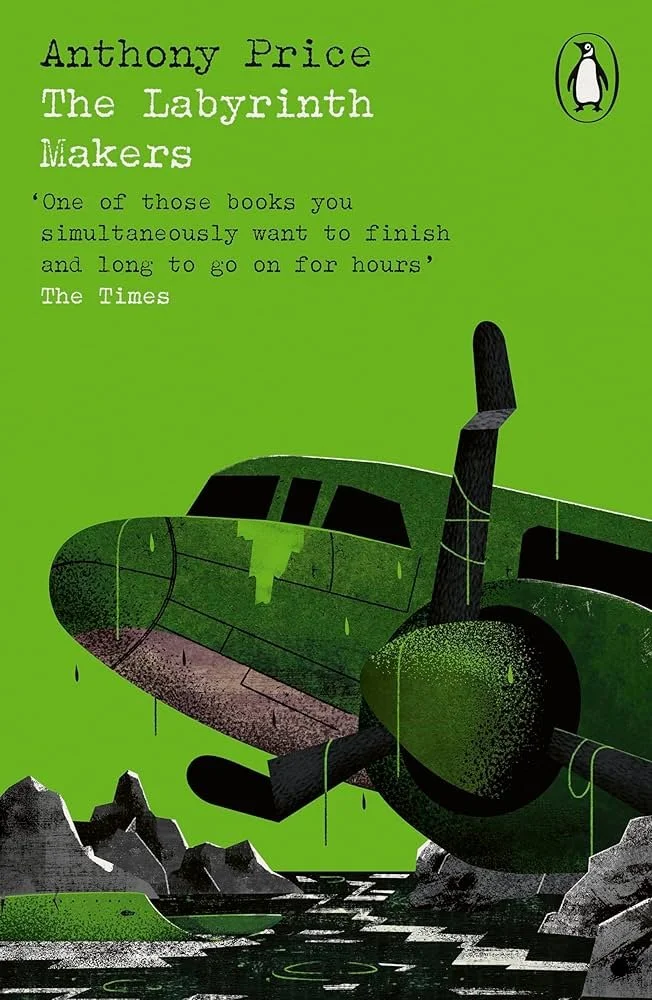
The Labyrinth Makers, by Anthony Price—A brisk espionage thriller in which the reemergence of a crashed RAF cargo plane from a manmade lake more than two decades after the end of World War II reopens the question of what happened to the pilot and why the Russians have always been so keen to find the wreck. The first of a long-running series by Price. I’ll be reading more.
The Cannibal Owl, by Aaron Gwyn—A brilliant novella about an orphan boy adopted and raised by the Comanches. Absorbing and brutal, with a strong touch of the uncanny, and sharply, powerfully written for maximum effect in a tight form. I read it in less than two hours but felt like I had spent the same hard years on the plains as the main character. I mean to reread it soon.
Judgment on Deltchev, by Eric Ambler—Foster, a British playwright, travels to an unnamed Eastern European country after of World War II to report on the Stalinist show trial of “Papa” Deltchev, a former agrarian politician accused of collaboration with the capitalist Western powers. Foster senses that something isn’t right—about the trial, about Deltchev, about Deltchev’s family, about Deltchev’s accusers, and most especially about Pashik, Foster’s repulsive local press contact—and he determines to get to the bottom of it. A good anti-Stalin novel—one that lost Ambler friends—and a good thriller. Full review on the blog here.
Dracula, by Bram Stoker—I made it to the age of 41 having never read Dracula. All through high school and college the received wisdom was that it was boring and dumb. Nothing could be further from the truth. This was a gripping novel, and the best evidence for its greatness is that I already knew virtually every beat of the story but still couldn’t put it down. A classic for a reason.
The Stress of Her Regard, by Tim Powers—I had heard that this was Powers’s most horrifying novel and so far that’s proven true. This is the story of Michael Crawford, an English doctor who unwittingly invites the conjugal attentions of a possessive female spirit. After a horrific wedding night incident results in Crawford being wanted for murder, he flees into the heady world of the great Romantic poets Shelley and Byron (with a small but important role for my man Keats along the way). It turns out that they not only lead the original high-flown and debauched “tortured poet” lifestyles, they do so at least in part because of the attentions of their own predatory, consuming otherworldly lovers. By turns eerie and horrifying, with a thrilling descent deeper into the mad worlds both of the poets and of the ancient vampirical entities—I don’t want to give away who they really are at the root of things—this is both powerfully imagined and believably oppressive. As in, I had a few restless nights of sleep until I was able to see Shelley and Byron buried and our heroes freed of their possessors. Reading this immediately after Dracula proved a knockout one-two punch. The Stress of Her Regard is brilliantly done, and I think I’m quite finished with vampires for a while.
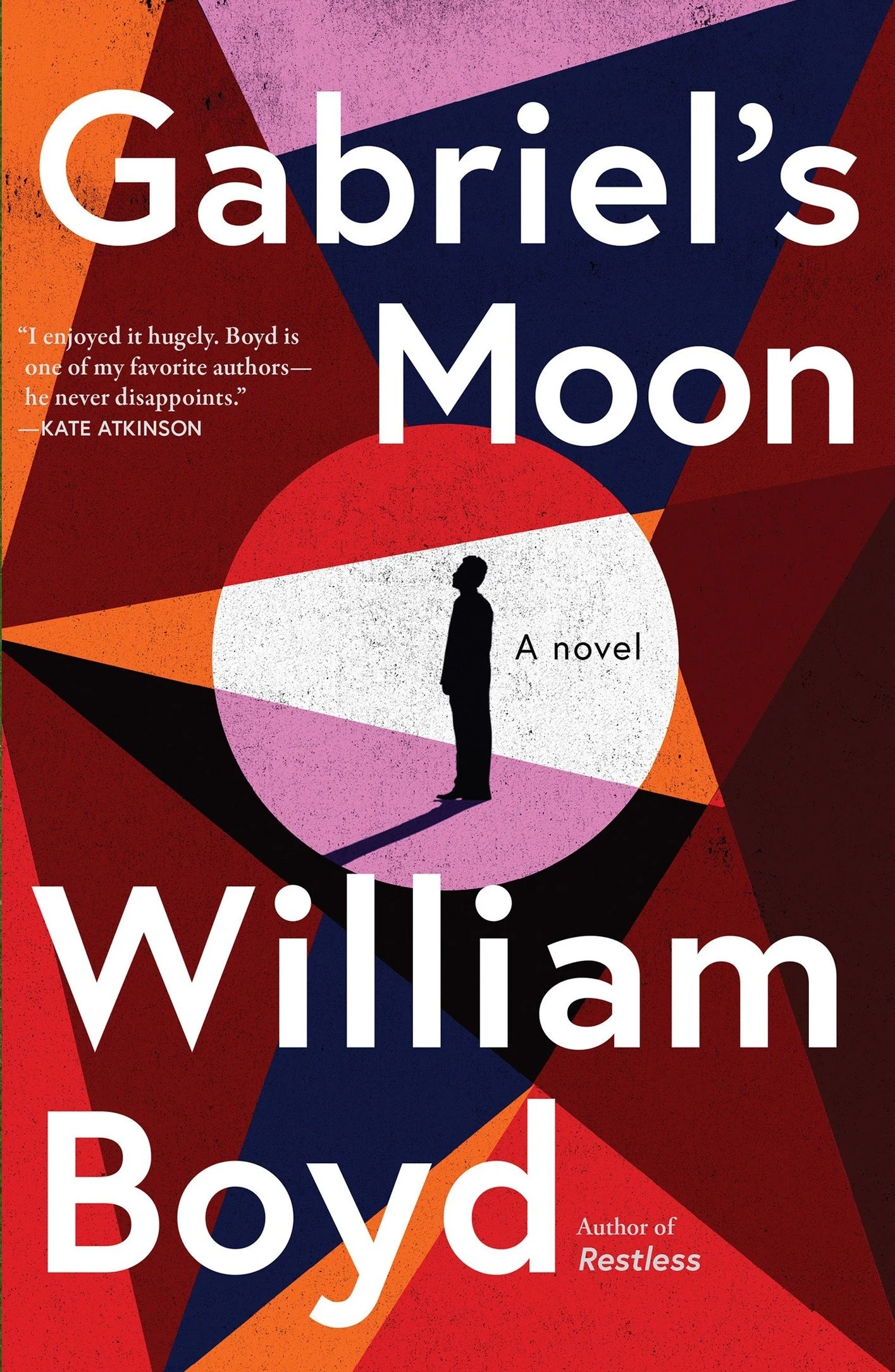
Gabriel’s Moon and The Predicament, by William Boyd—A new historical spy series about Gabriel Dax, a British travel writer, who is slowly pulled into the paranoid world of Cold War espionage—dead drops, surveillance, “artifice” (tradecraft), “termites” (moles), double and triple agents, clandestine weapons training, and betrayal—as well as a strange, shapeless romance with his handler, Faith Green. I’ve enjoyed these first two entries, which are short and well paced. Gabriel reminds me of an Eric Ambler protagonist in starting off as a naive everyman and, though gradually learning how to cope with the dangers of espionage, is a bit dense and sometimes makes decisions out of frustration or spite—none of which ends well. Boyd nicely integrates Gabriel’s missions with some real-life events in the contested Third World. The second book veers into some conspiracy-mongering territory, which annoyed me but didn’t detract from what a good read it was. Hoping for more in this series soon. Full review of Gabriel’s Moon on the blog here.
John Burnet of Barns and The Path of the King, by John Buchan—A rambling, high-spirited historical adventure in the Scottish Borders and a novel-in-stories spanning everything from the Viking Age to the American Civil War. Two of my favorite reads for this year’s John Buchan June (for a full list, see the summer reading list). Full John Buchan June reviews on the blog here and here.
The Anubis Gates, by Tim Powers—Brendan Doyle, an undistinguished scholar of Romantic poetry is offered a strange gig by an eccentric businessman: accompany a tour group to London in 1810 to listen to a lecture by Coleridge. The businessman’s engineers have discovered a method that allows for some limited time-travel and he seems eager to use it—for reasons beyond meeting literary greats, as will become clear later. Complications arise when Doyle is left behind in Regency London and desperately fends for himself through begging, where he encounters increasingly strange and unsettling people like Horrabin, the disfigured street-performing clown to who commands an army of beggars from his underground lair, or Dog-Face Joe, a predatory body-hopping werewolf. Their inexplicable activities become more and more threatening and more and more obviously magical. Intricately plotted, totally engrossing, and with one of the most satisfying conclusions in my year of reading. Another excellent historical fantasy, and close to being my favorite of the year.
Runners up:
Eight Hours from England, by Anthony Quayle—A solid short novel about the unique environment and frustrations of Allied commandos fighting the Nazis in Albania during World War II. Full review on the blog here.
A Deadly Shade of Gold, by John D MacDonald—“Salvage consultant” Travis McGee travels to Mexico to avenge the death of an old friend who had gotten mixed up in some business involving Aztec gold. An involving and suspenseful crime classic.
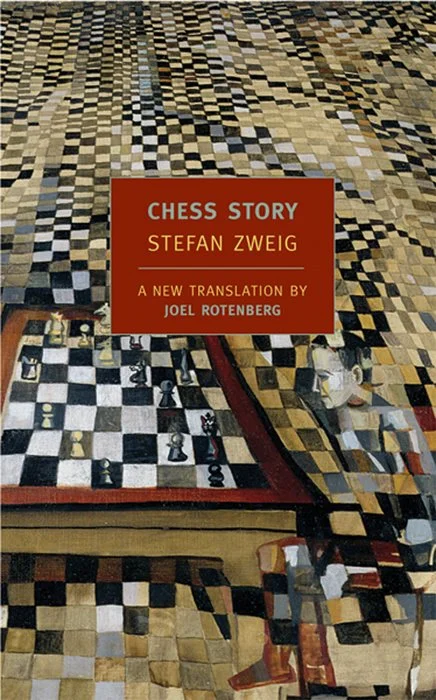
Chess Story, by Stefan Zweig—An involving, moving novella about the passengers of an ocean liner competing at chess with two men: a machinelike prodigy and a mysterious tortured man who, we learn, gained his expertise at terrible cost. Short, absorbing, and powerful. I mean to reread it soon.
Call for the Dead and The Looking Glass War, by John Le Carré—Two solid early spy novels involving, in a greater or lesser role, George Smiley before the magnum opus of Tinker Tailor Soldier Spy. The second of these two is an ironic take on the public response to Le Carré’s Spy Who Came in From the Cold.
The Watcher by the Threshold, by John Buchan—A great early collection of weird fiction and horror from John Buchan. Some especially eerie stories about relict forces—ancient people, restless spirits—beyond the ken of modern man. Full review for John Buchan June here.
Lucky Jim, by Kingsley Amis—Jim Dixon, a young, feckless historian at an English university, is up for the review that could make his probationary lecturer position permanent. You know what they say about everything that can go wrong. Surely my worst case scenario as an academic, and hugely entertaining.
Best of the year: the year of man and machine
As with my non-fiction post yesterday, I’m cheating a bit by naming multiple “bests” thanks to a coincidental overlap across a few really good novels: war stories of men depending on their skills, training, and courage to survive combat in unforgiving environments aboard sophisticated and dangerous machines.

Bomber, by Len Deighton, tells the vast story of a single RAF bombing raid over Germany on a single day during World War II. Deighton gives us the civilian and military authorities in an ill-fated German town, the Luftwaffe defenders both in the air and at radar installations, the ground crews and command staff at a RAF base in England, and the bomber pilots and crewmen.
The characters’ personal lives, relationships, jealousies, misunderstandings, and preoccupations—a widowed German officer who has just begun an affair with his housekeeper, a bomber crew about to fly its last mission, an insomniac pilot and his anxious wife who works at the base, a squadron commander who mistakes one of his best pilots for a leftwing subversive—all develop alongside their assigned tasks, so that this sometimes technical novel always remains intimately personal.
But Deighton’s omniscient perspective also shows the reader things no character could be aware of as the story unfolds, especially the interplay of unwitting decisions, technical errors, and pure bad luck that direct the bombers over a small German town instead of their industrial target—and this is only the largest and most obvious of many such mistakes, some of which no one will ever know about. A harrowing account of all dimensions of a single raid, Bomber is also deeply, bitterly ironic. It’s gripping from start to finish and very moving.
The Cruel Sea, by Nicholas Monsarrat, is another British novel of World War II, but this time about the Royal Navy and of almost the exact opposite scope of Bomber, encompassing the whole war for a handful of men. (Not all war novels are the same, folks—you can do a lot with the genre.) Beginning with Commander Ericson’s assignment to a brand-new corvette, HMS Compass Rose, in Scotland in 1939, The Cruel Sea introduces as well junior officers Ferraby and Lockhart and other key officers and enlisted men. Compass Rose has been assigned convoy escort duties in the dangerous waters of the North Atlantic between Greenland and Britain, and as the war escalates the German U-boat presence increases as well.
Monsarrat conveys the physical and mental strain—and occasional excitement—of protecting the convoys and hunting the U-boats brilliantly, and like Deighton’s later Bomber balances the dangers of the war with the vicissitudes, disappointments, and joys of the home front. A powerful novel and rightly regarded as a naval classic.
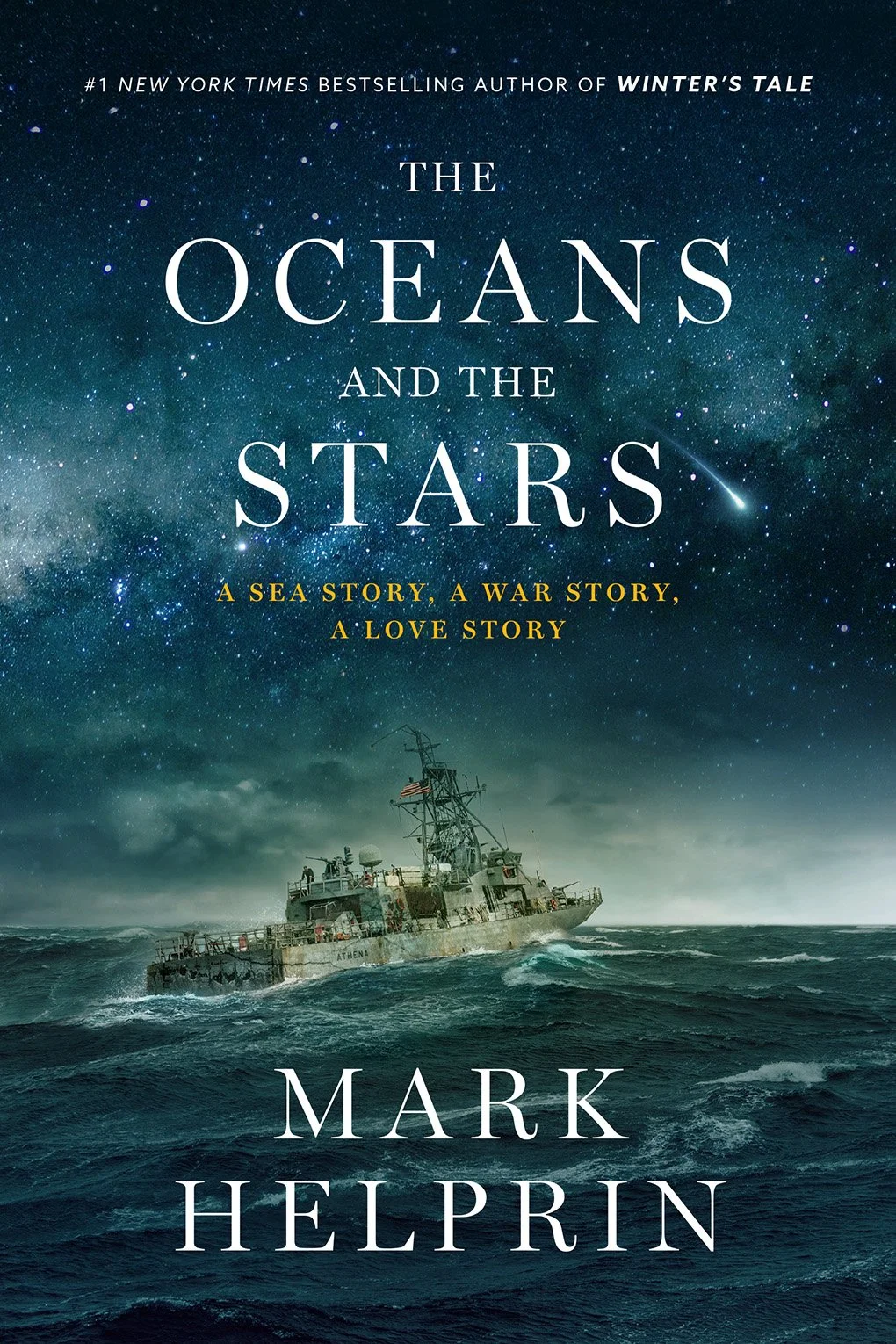
Finally, The Oceans and the Stars, by Mark Helprin, is a contemporary novel of the US Navy, Somali piracy, Iran, and ISIS, but as a loose, subtle retelling of the Odyssey it brilliantly and vividly evokes the spirit and pathos of Homer. Bookended with a court martial, the novel follows aging Captain Stephen Rensselaer, who loses a cushy Pentagon job after speaking too honestly with the president. He’s assigned a dead-end final command meant to finish his career as an embarrassment: overseeing the construction and finally taking to sea the last of the Navy’s smallest class of combat vessels, a patrol coastal or PC he christens Athena. While at the dockyards in New Orleans he meets another marooned soul, Katy Farrar, a lawyer whose husband abandoned her. Together these two well-matched, intelligent souls kindle a poignant mid-life romance. What they had thought were their lives and careers have passed them by; they can start over together.
Then war with Iran breaks out and Rensselaer must put to sea, where he does combat in the Indian Ocean and even on land—engaging superior Russian-built Iranian ships, rushing to the aid of a cruise ship attacked by ISIS pirates, chasing after them when they retreat into Somalia with hostages. It’s technically interesting, thrilling, and emotionally rich and moving. I found the first part of the novel, when Rensselaer and Katy are simply washed up and finding each other, achingly moving.
You’ve probably picked up at least some parallels with Homer. There are more. But this isn’t a simple retelling or slavish point-by-point modern adaptation; you could certainly read The Oceans and the Stars and never catch the allusions. But they do enrich the novel and create dramatic irony and suspense. After all, the prologue details the beginning of a court martial, and the war keeps Rensselaer and Katy separate and vulnerable. What will happen, and how will they be reunited?
Despite their differences in time period, subject, structure, and style, Bomber, The Cruel Sea, and The Oceans and the Stars all offer interesting, compelling characters in suspenseful and deadly circumstances, with the former—character, family, relationships—only enhancing the danger of the latter. All three of these are stellar, and while some might resist reading novels like them out of some kind of Tom Clancy impression that war novels are all technical specs, ballistics, and tough-talking, invulnerable men, these showcase the richness of war as a subject for literature. Homer is apropos here—remember that before the Odyssey came the Iliad, the great war story.
Two of these I reviewed in full on the blog this year: The Oceans and the Stars here and The Cruel Sea here. Any one of these three would be well worth your time. I hope y’all will check one out in 2026.
Favorite kids’ books
The Reluctant Dragon, by Kenneth Grahame, illustrated by Ernest Shepard—I loved the Disney cartoon as a kid and only learned as an adult that it was based on a story by the author of The Wind in the Willows. A lark, and lots of fun to read aloud—which I did twice, once to my kids while camping and once to my wife.
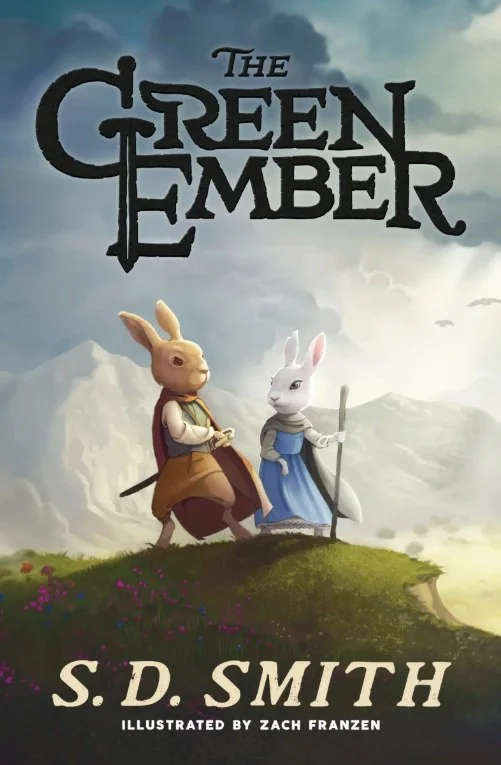
The Green Ember, by SD Smith, illustrated by Zach Franzen—A fun fantasy series about a kingdom of rabbits at war with wolves and predatory birds. When the novel begins, the rabbits are on the back foot, their king having fallen and the kingdom in disarray, with isolated bands longing for the coming of “the Mended Wood.” Main characters Picket and Heather have a believable brother-sister relationship, and Smith includes numerous fun side characters like warrior and preparedness obsessive Helmer. My daughter ate these up and demanded I read them. I’m glad I finally got to the first one.
The Book of Three, The Black Cauldron, The Castle of Llyr, Taran Wanderer, and The High King, by Lloyd Alexander—A classic fantasy series that is well worth reading in its entirety, as my wife and I did aloud over the first few months of the year.
Troubled Waters, by Sophie de Mullenheim—Another good entry in this series about a group of boys in Diocletian’s Rome solving mysteries and gradually getting to know the persecuted Christians in their midst. Just got my daughter the fifth and sixth in the series and plan to read them aloud to the kids in the new year.
James and the Giant Peach, by Roald Dahl—Fun and bizarre. I had never read any Roald Dahl before last year. His status as a classic children’s author is well-deserved.
The God Contest, by Carl Laferton, illustrated by Catalina Echeverri—A picture book based on one of my favorite Old Testament incidents: the mountaintop contest between the prophet Elijah and King Ahab’s prophets of Baal. Not the kind of story that gets a lot of traction in our modern therapeutically-oriented Christianity, so this book, with its clear explanation of the handy victory of God in a competition for divine authority, was refreshing. A good read-aloud with all five kids.
Macbeth: A Graphic Novel, by William Shakespeare, adapted by Gareth Hinds—A good, atmospheric comic book adaptation of my favorite Shakespearean tragedy. I’m a big fan of Hinds’s work. Check it out if you haven’t heard of him.
Rereads

Lots of good rereads this year, with my two favorites probably being Emma and The Prestige, a book I last read in college and barely remembered. As usual, audiobook “reads” are marked with an asterisk.
Emma, by Jane Austen
The Prestige, by Christopher Priest
The Hobbit, by JRR Tolkien
Athelstan: The Making of England, by Tom Holland
Freaky Deaky, by Elmore Leonard*
Hombre, by Elmore Leonard*
Mr Majestyk, by Elmore Leonard*
The Spy Who Came in From the Cold, by John Le Carré
Heart of Darkness, by Joseph Conrad
Starship Troopers, by Robert Heinlein
On the Marble Cliffs, by Ernst Jünger*
The Book of Three, by Lloyd Alexander
The Black Cauldron, by Lloyd Alexander
Looking ahead
I’ve gradually realized that I’m pretty bad at predicting what I will or won’t be reading over the next year, so while I have some goals and ambitions I’m going to refrain from sharing those. Like the mass of people playing “cheat the prophet” in that line from Chesterton, I tend to listen politely to my own predictions and then go and do something else. So we’ll see what the next year brings. If it’s a crop of reading as good as this year’s, I’ll be satisfied.
In the meantime, I hope y’all have found something good here to read yourself in 2026. Thanks as always for reading—your attention to this blog means a lot to me—and happy New Year!