The art (and danger) of inference
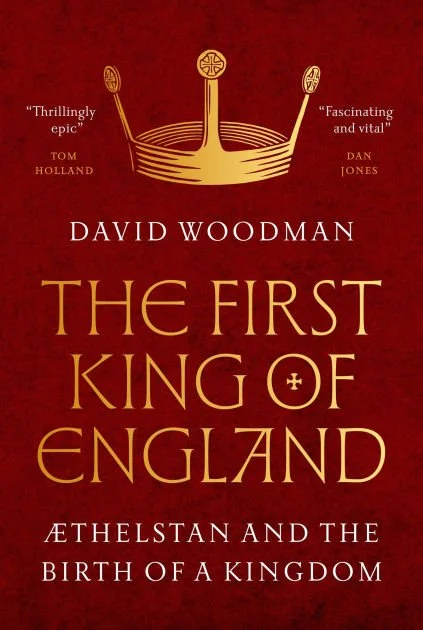
/I’m currently reading David Woodman’s new book The First King of England: Æthelstan and the Birth of a Kingdom. It’s excellent so far, despite Woodman having to do a significant amount of the endemic hazard of Anglo-Saxon history: parsing, in sometimes excruciating detail, the available sources, squeezing them for every drop of potentially helpful information. This is always a laborious bit of reading, but where some books make this a chore, Woodman keeps it moving and interesting.
One of the difficulties of reconstructing the past in a period like Anglo-Saxon England is the incompleteness of the literary record. The historian must place great weight on documents originally intended for specific limited purposes, like royal writs (letters to members of local courts), diplomas (short records of land grants made by the king), and law codes. Early in the book, Woodman points out that in the typical diploma
[t]hose who were present at the meetings of the royal assemblies at which various grants of land were made are listed as witnesses at the end . . . These lists are set out hierarchically, beginning with the name of the king himself, from the form of whose title (known as his ‘royal style’) various kinds of important information can be gleaned; then there follow, most often, the names of the archbishops of Canterbury and York, then the bishops of the kingdom, then the ealdormen and thegns (both types of royal officials). Because of this hierarchical structure, and because the diplomas themselves are dated, they provide crucial detail for the realpolitik of tenth-century England, of the peaks and troughs of individuals’ careers.
It is possible to note, for example, that a particular family member may be listed higher than another in a witness list in one year with their positions reversed later—or one of them disappearing entirely. This suggests—one can infer—a change of status or favor. Æthelstan himself shifted up and down in his father Edward’s lists, and Woodman gives attention to a bishop from the north who, judging from his presence in such lists and the broader political situation at the time, must have gone over to supporting northern rivals to Æthelstan for a time.
This kind of thing is not stated outright, of course. Woodman points out that, as important as Æthelstan’s reign is, there is no good contemporary narrative source for it. Much must be reconstructed from later sources—like William of Malmesbury, writing after the Conquest—or the spotty annual narrative of the Anglo-Saxon Chronicle, or simply inferred from documents like these.
You can learn a lot this way. Inference is a powerful tool, especially with a large body of such legal texts to work from. But it also has dangers. Here’s Woodman later, first recapitulating the potential use of diplomas before exploring their dangers:
From the lists of attendees included in royal diplomas . . . quite a lot of detail can be reconstructed about the composition of the royal assembly, not least the peaks and troughs of individuals’ careers, since the lists are set out hierarchically according to status. But these lists require a certain circumspection. Most of the diplomas in question survive only in later copies, made long after the original grant of land had been issued. The copyists responsible could make mistakes—for example, in the spelling of names, in the order in which the names should have been listed, or in the omission of names that should have been recorded. We should also be aware that there may have been individuals present who went unrecorded.
One might also add: individuals who were not present but were still important.
The modern historian has a wealth of tools at his disposal, but his most important may be judgment. He can only infer so much from the composition of such a document, and he should not press his inferences further than the documentary evidence will allow. Less prudent historians have read entire imaginary histories into such sources. Woodman avoids that, which is one of the things that has, so far, made The First King of England a valuable read.
A good reminder of why, despite all the technical tools available now, history is an art, not a science.