The Fantastic Four: First Steps
/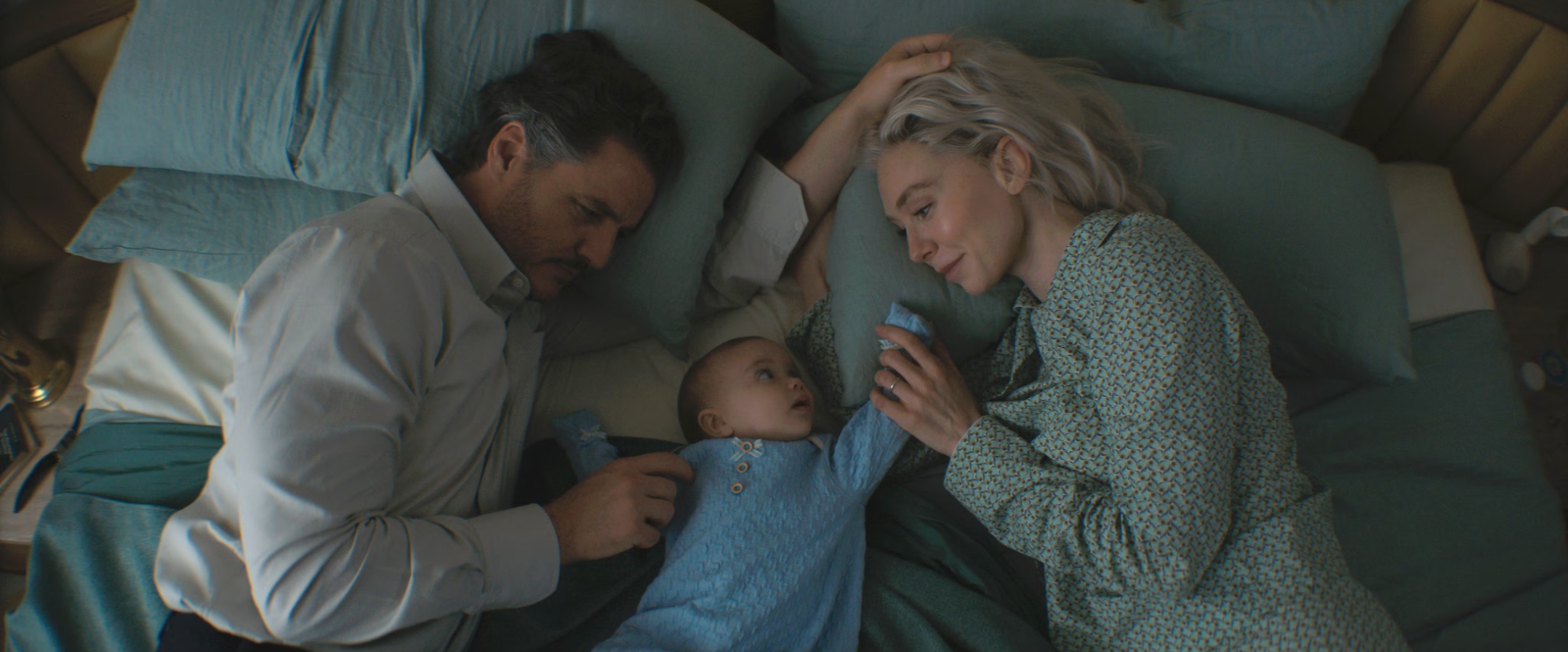
Pedro Pascal and Vanessa Kirby as Reed Richards and Sue Storm in The Fantastic Four: First Steps
I recently watched The Fantastic Four: First Steps with the kids. It was okay—enjoyable without thrills, funny without big laughs, suspenseful without surprises. But it was also inoffensive, had a creative retro-futuristic look that took me back to The Incredibles, and had one compelling subplot that held the entire movie together and made it just a bit more than the sum of its parts. This won’t be a proper review of the entire movie, but a recommendation on the basis of its straight-down-the-middle quality and this one surprising aspect of the story.
The movie begins with husband and wife Reed Richards/Mr Fantastic and Sue Storm/The Invisible Woman discovering that, after two years of trying without success, they are finally expecting a baby. This might seem an odd place for a superhero movie to start, but the pregnancy and baby subplot—which I heard a lot about when the movie came out—turns out to be central to the story. The film’s villain, Galactus, who means to devour the Earth, offers to spare the planet in exchange for the Richards’s unborn child. They refuse. The public turns on the Fantastic Four.
This was a refreshing surprise for two reasons:
First, the baby, even before birth, is presented unquestioningly as living and important. The most moving scene in the film comes when Reed wants to scan the baby in utero and Sue, in an attempt to show that his science is distracting him from the truth of the situation, uses her powers of invisibility to reveal their son in her stomach. He squirms, kicks, and responds to them—all stuff I’ve seen on ultrasound monitors many times, that my wife has felt many more. In a culture that persists in dehumanizing the unborn—for pernicious, devouring reasons of its own—this lingering meditation on their life and value stunned me.
Second, the film explicitly positions the Richards’s refusal to give up their baby against a utilitarian, consequentialist ethic. Saying no to Galactus means he will eat the Earth. The fickle public, who adore the Four one moment and revile them the next, want to know why the fate of one baby should doom the entire planet. This is the Caiaphas argument: it is more expedient for one to die than the whole nation.
Reed and Sue steadfastly refuse to give in. It is wrong for parents to sacrifice the life of the child gifted to them. They won’t give up on saving the world, but that route—the path of least resistance, of giving in to the pressure of numbers and a short-term vision of salvation—is closed to them. I can’t think of the last time a film made such a deontological move, presenting something as morally wrong under any circumstances. Their refusal in the face of public pressure and the threat of Galactus makes them more heroic.
The latter aspect of the film not only drives the events of the climax, it reinforces the message of the former. If Sue and Reed, in their joy at the news, their preparation for the baby’s arrival, and their refusal to give him up show that life is too precious to bargain, the climactic action, in which all four demonstrate their willingness to die for the innocent, shows us that they mean it. Life is valuable. How valuable? This valuable!
Again, The Fantastic Four: First Steps is not an earth-shattering movie. It’s enjoyable entertainment with a unique aesthetic and more thought put into it than the last several Marvel movies combined—a low bar. What sets it apart is its wholehearted commitment to a vision of the value of human life—even in the womb—and its courage in allowing the characters to live that out without compromise. This was a great surprise, and I hope we can see more like this.