Does it matter if the movie is faithful to the book?

Over the weekend Substack, in its mysterious way, showed me a month-old note by a literary critic I follow and respect. Since this is a month old and there was already some debate along these lines in the comments, I’ll share and gloss it anonymously:

It doesn’t matter if the film is faithful to the book.
It’s a film! Judge it as a film.
And anyway, you cannot faithfully turn prose into film.
It’s an affront to literary genius to think otherwise.

I’m not actually sure what the last line is supposed to mean. How does holding a filmmaker to a high standard when adapting a writer’s work degrade the writer? But I strenuously object to the rest of it.

To work backwards, the critic here is asserting that the difficulty of adaptation from one medium into another actually makes it impossible—“you cannot faithfully” adapt from book to film, he says. An appalling oversimplification. What does he mean by “prose,” here? When we talk about how a book is adapted into a film and the film isn’t faithful, we might mean it fails with regard to one or more of the following:

  • The literal events of the book

  • The overall story arc of the book

  • Particular details of the settings and/or characters

  • The narrative structure of the book

  • The meaning or thematic import of the book

  • The tone of the book

I’ve tried to arrange that list from simplest to most complex. The events narrated in a story are the easiest to get on screen. The meaning, what the author is apparently both getting out of the story and trying to share through it, and the tone of his storytelling are much harder. We’ve probably all seen movies that more or less adapted a book’s events without capturing the immaterial elements that give the book personality. A Handful of Dust, a quite literal adaptation of the great Waugh novel, comes to mind, as does the John Wayne True Grit. But other films might deviate here and there from the original while nailing its tone and moral register. The Coens’ No Country for Old Men and True Grit, both of which capture most of the events of their respective novels while, much more importantly, faithfully adapting their tones, are masterpieces in this regard.

All of this, according to our critic, is just “prose,” which “cannot faithfully” be made into a film. Cannot. This is not only oversimplified but wrong. Adaptation is difficult, but that we want to judge faithfulness at all indicates that it can be done, and can be done well.

Our critic is on firmer ground in asserting that films and books should be judged by different artistic standards, but this is common sense. Novels and movies tell stories in different ways and may or may not do so well, of course. But—still moving backwards—to assert a novel and its film adaptation are so separate that “it doesn’t matter” whether the adaptation is true to the book is foolishness.

Of course it matters. It matters because if a film adaptation of a book exists it exists because of the book. If a movie presumes to share a title with an author’s book, if it is meant to please readers of the book at all and not to be purely parasitic on the writer’s work and readership—we’re all familiar with the term cash-grab by now—the filmmakers owe it to the book to be faithful in at least some of the areas listed above. And having established that faithfulness is not, in fact, impossible, they owe it to the original to try.

I think it also matters because this kind of talk about the difficulty or impossibility of faithful adaptation has far too often served as an excuse for vandalism. Some vandalism originates with filmmakers contemptuous of their literary source material and wanting to drag it down to their level. Some comes from filmmakers who hubristically think they can improve on great literature. But perhaps the most common problem is the filmmaker with neither contempt nor reverence for the original, who sees it only as raw material to be reworked according to his preferences. It’s all content, after all.

This was my problem with two of the worst film adaptations I’ve seen in the last few years, The Green Knight and All Quiet on the Western Front, both of which—if you look at my reviews—I tried to judge on their merits as films while also noting their utter failure as adaptations. They don’t adapt the events, characters, meaning, or tone of the originals even a little bit faithfully. Are we to give them a pass because they have nice cinematography? Because they try to flatter our present assumptions?

There are other reasons to demand faithfulness of a film adaptation—the movie may be the one and only time many viewers, especially students, encounter any version of an author’s story—but these, I think, are the strongest. There is room for debate, of course. Arguments about whether and how Peter Jackson succeeded in adapting The Lord of the Rings, for example, have been fruitful for an appreciation of both the film trilogy and the novel. But handwaving even the possibility of faithfully adapting a book is bad for both.

A film might be just a film, but a film based on a book exists in relation to that book. If an author cared enough to write it and readers cared enough to read it, filmmakers owe them something more than apathy, hubris, or contempt. So do critics.
Back in ’82

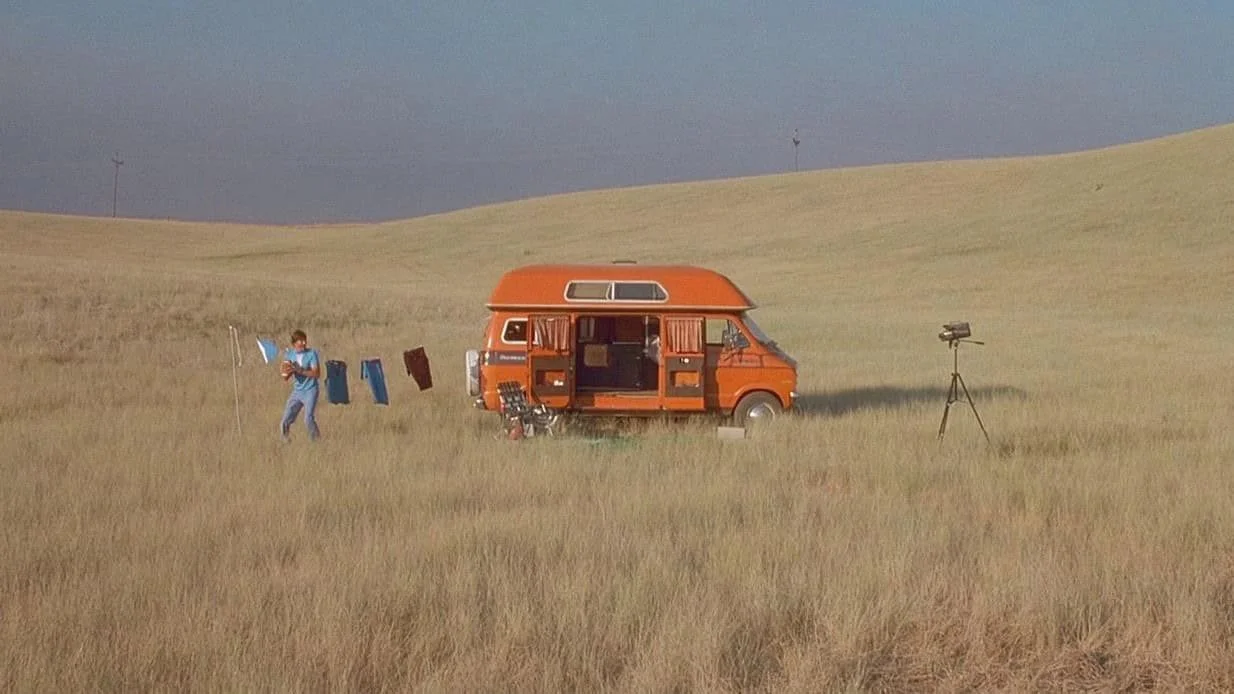
Our first glimpse of Uncle Rico (Jon Gries) in Napoleon Dynamite (2004)

Just about this time a couple years ago, I reflected on the pain and melancholy running through some old kids’ films like Angels in the Outfield and The Land Before Time. I’ve been pondering that again thanks to an unlikely film: Napoleon Dynamite, which I introduced to my kids over the weekend.

Napoleon Dynamite, like I noted about those other movies, is not Shakespeare or serious drama, but it’s well enough made and true enough to life to suggest more upon repeat viewings—especially when those viewings are separated by a decade or so. It’s been at least fifteen years since I watched it. When I last saw it in my twenties, it was pure quirky goofiness, like Mormon Wes Anderson costumed by a rural thrift store. Watching it with my kids in my early forties, I was not surprised to laugh again—especially since my kids thought it was a such a hoot—but I was surprised at how sweet, poignant, and melancholy I found it.

There’s a lot of unremarked upon pain in Napoleon Dynamite. Why do Napoleon and Kip live with their grandma? Where are their parents? How long has it been like this? Years, to judge by Napoleon’s behavior. His diaphragm-deep sighs are both hilarious and suggestive of repeated disappointment and frustration. Pedro, too, as comically stoic as he is, panics at least twice in the movie and develops psychosomatic fevers. They’re both holding a lot in. One sympathizes.

But there is also the case of Uncle Rico. He’s one of the movie’s sort-of villains, but is perhaps more fully developed than almost all of the other characters and actually talks about his melancholy several times. We learn that he is separated from Tammy, who is presumably his wife. His bluff, cocky way of dismissing Kip’s concern is funny when you’re in your twenties and suggests he’s hiding something—his own misbehavior, or simply how much it hurts—in your forties. He approaches his pitiful door-to-door Tupperware sales job with a confidence that smacks of desperation. He’s trying, but trying to do what?

The movie backs all this up visually. It introduces Uncle Rico utterly alone, in a beautiful and desolate landscape shot. His weird behavior only underlines what we grasp intuitively. And his first substantial scene, eating steak on the steps with Kip, gives us his “Back in ’82” monologue, which is hilariously pathetic, recognizable (the guy who peaked in high school is such a well known type he would be a cliche if he weren’t real), and sad. Uncle Rico is lonely and filled with regret—the football memories are just the way he can safely handle it.

It helps immensely that Jon Gries is a good actor. Watch him in that scene and look at the emotions that pass over his face. As with so much else in the movie, it’s both funny and poignantly done.

Not that Uncle Rico should be viewed more sympathetically. He’s a manipulative con man and liar who turns into a creep as the movie goes on. If this were his story rather than Napoleon’s, it’d be about hitting rock bottom. But at my age Uncle Rico is less of a joke than he used to be. He’s a there but for the grace of God caricature who proves both poignant and cathartic to laugh at.

I don’t want to get too far up the movie’s own tail end, because Napoleon Dynamite is a comedy. But part of what makes it funny is how identifiable it is—at least for those of us who were awkward and frustrated in high school. And, like all great comedies, that seam of melancholy only makes the humor deeper and richer and its little notes of redemption, as for Uncle Rico, to whom Tammy returns in the final seconds, more moving.

In dreams

I’ve taken on a somewhat wistful tone since the beginning of the year, at least partly because of feeling exhausted and downcast. Mercifully, I have improved a lot over the last few weeks—especially with regard to being able to sleep—but there’s still a good way to go. Being able to write again has helped. So has improved sleep. With that in mind, here’s a dream I had two nights ago:

After several odd dreams—including trying to liberate British POWs from a Japanese rowboat, something almost stereotypically predicable—my middle son, who is almost seven, and I stepped out of those dreamscapes onto a broad carpeted staircase on a completely imaginary campus of my college. At the top we walked into a large conference hall filled with tables, all crowded with school leadership. In the middle of the room, very close to us where we stood near the door, was my late grandmother, enthusiastically presenting a proposal for a new arts program.

My grandmother was a talented and prolific artist and so this was unsurprising. What I did note was that she looked much younger, probably around the age she was when I was born. What did not cross my mind at all in the dream was that she is no longer alive. (Knowing this within the dream has made it hard to talk to or interact with other relatives in other dreams.)

My son (named after her) and I just stood and listened. I appreciated how eloquently she was speaking to the movers and shakers at my school and was hopeful for the program she was describing.

And that was it. I woke up.

What’s curious about this dream is that, rather than deepening my sense of loss or sickheartedness, seeing my grandmother was a comfort. Purely and simply.

As I’ve written before, I dream a lot—what feels like all night, every night. (This has been a helpful measure of how much better I’m feeling; a month ago my dreams were completely jumbled fragments. Now they at least cohere into nonsense.) I’ve incorporated this into my fiction; I wouldn’t know how to understand my characters otherwise. Georgie Wax in particular—who, like my son, is also named for my grandmother—has the same sorts of dreams I do in Griswoldville, and in the end gets the same comfort from some of them. “O, what a foretaste,” he writes near the end.

I don’t know what such dreams mean, if anything—though I would like to think, as Georgie Wax does, that they are a booster shot of hope for the resurrection—but I am grateful for them when they come along.

Goodreads Inferno

In a longish state-of-the-publishing-world essay on Substack, independent publisher Sam Jordison gives special consideration to the disappearance of the negative book review—the hatchet job—as a symptom of decline. He notes that author and critic DJ Taylor, whose excellent guide to Orwell I wrote about here last year, described the disappearance of “tough-minded” reviews, criticism that “often bordered on outright cruelty,” ten years ago. According to Jordison, the tepid positivity of book review pages has only worsened since then.

What caught my attention was Jordison’s second mention of Taylor’s phrase “outright cruelty,” which Jordison notes we shouldn’t want or need to come back: “We have Goodreads for that.” This observation is glossed with the following footnote:

Goodreads has risen just as professional book pages have declined. The nastiness and ignorance on display there is a reflection of internet culture, and the way everything Jeff Bezos touches is infected with his mean spirit. But I do also wonder if some people think they are restoring some kind of balance?

The nastiness on Goodreads is well known. Goodreads users mob and harrass authors over single lines, engage in character assassination, try to preemptively get books canceled before they’re even published, and even the authors who use Goodreads join in the bad behavior. Imagine the vitriol of Twitter, the politics of Tumblr, and the righteous self-assurance of a school librarian in a Subaru and you have the predominant tone of Goodreads today.

Thanks to the nastiness the profound ignorance on Goodreads is perhaps less visible. But as it happens, it was fresh on my mind because this morning, as I searched for a brand new one-volume edition of The Divine Comedy that I’m about to start reading, I made the mistake of looking at its top review.

According to the user responsible, Dante has written this “OG” “self-insert bible [sic] fanfiction” because he “thanks he is very special” (stated twice), “has a bit of a crush . . . on both Beatrice,” “his dead girlfriend,” and “his poetry man crush” Virgil, and wants “to brag about Italy and dunk on the current pope.” All of this is wrong, for what it’s worth, but here’s the closing paragraph:

TLDR: Do I think everyone should read this? No, it’s veryyyyy dense. But I think everyone should watch a recap video or something to understand a lot of famous literary tropes that become established here.

Read The Divine Comedy for the tropes. Or better yet, “watch a recap video.”

This is a five-star review, by the way.

I wish this were the exception on Goodreads, but it’s not. Here’s a person with the capacity and the patience—perhaps? the review is short on details of anything beyond Inferno—to read the Comedy but who is utterly unprepared to receive and understand it, presumably having lost the good of intellect. This review reads like those parody book review videos that were popular a decade ago, except Thug Notes actually offered legitimate insight as well as laughs.

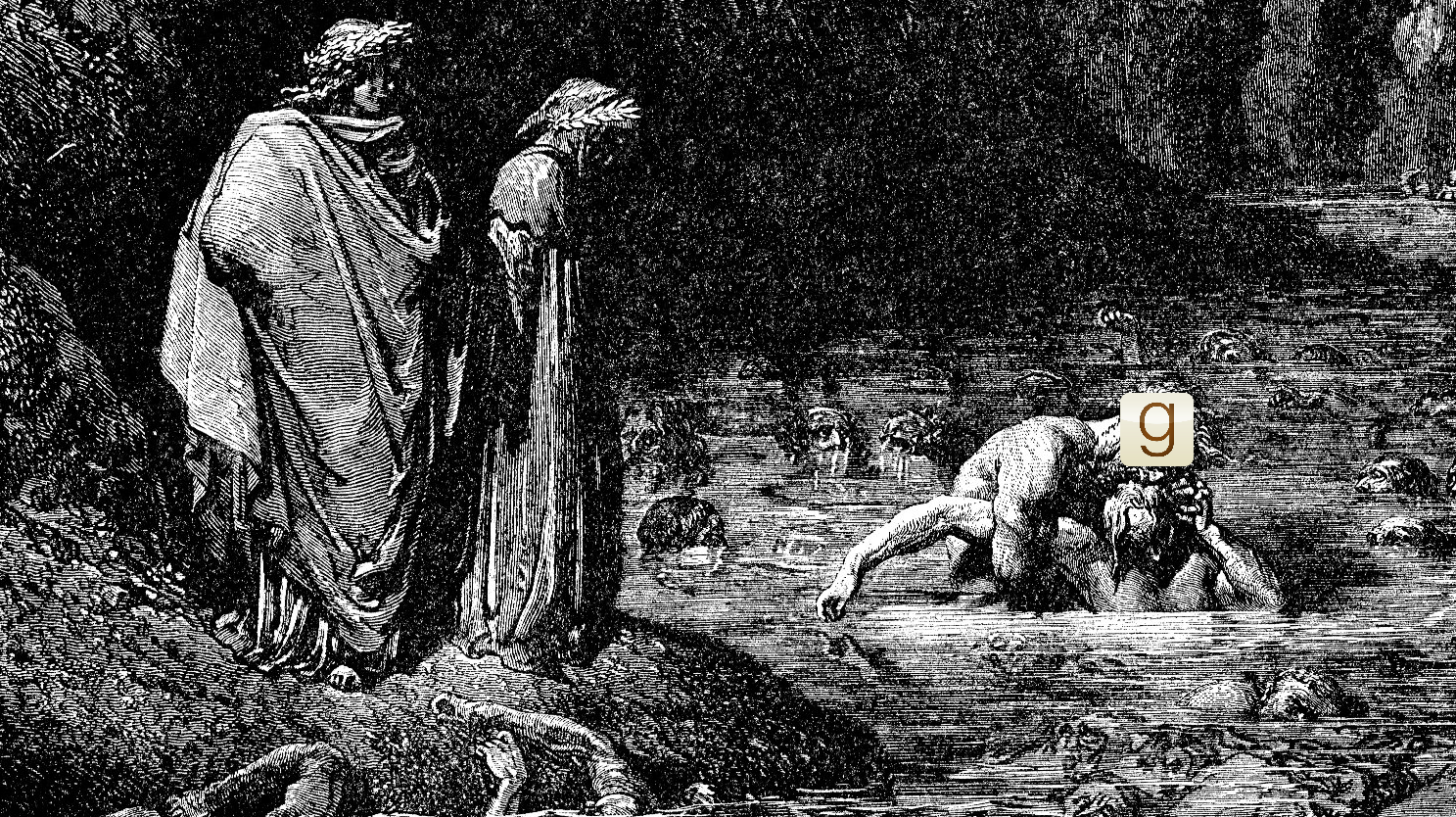
I have a love-hate relationship with Goodreads. I signed up fourteen years ago and still use it every day. But I can only do so and maintain my sanity by sticking to my tiny corner of online acquaintances and people I actually know and avoiding the hellscape of popular fiction, where the fights that can break out in review comment sections resemble nothing so much as Dante’s damned striving against each other even in death. Finding a legitimate, thoughtful, accurate review is harder than ever. One must dig, sometimes through hundreds of reviews like the one above, to find something helpful. And it’s even harder if you’re interested in older books, for which the temptation toward glibness or snark—omg so outdated! so racist! so sexist!—is for many irresistible.

And, for authors whose books are on Goodreads, it’s hard not to let a latent anxiety build up. Sometimes it feels like, inevitably, it’ll be your turn in the crosshairs.

Jordison blames Jeff Bezos, who he correctly points out—as I just did in my Tech & Culture class last week—started selling books not because he loves them but because they’re easy to catalog and ship. I’m sure that’s a factor, but it’s not sufficient to explain the whole problem. His other culprit, “internet culture,” that broad and protean devil, plays a crucial role as well. Regardless, Jordison ends his essay on a note of hope:

But I don’t counsel despair. Because the truth is that there is still good work being done. There are a few decent book sections left. Writers are producing fine books. Publishers are bringing them into the world. People are reading them.

At least some of those books will endure.

Truly encouraging to remember. But that this must happen despite rather than because of the technologies we’ve created from an ostensible love of books is a judgment on our culture.

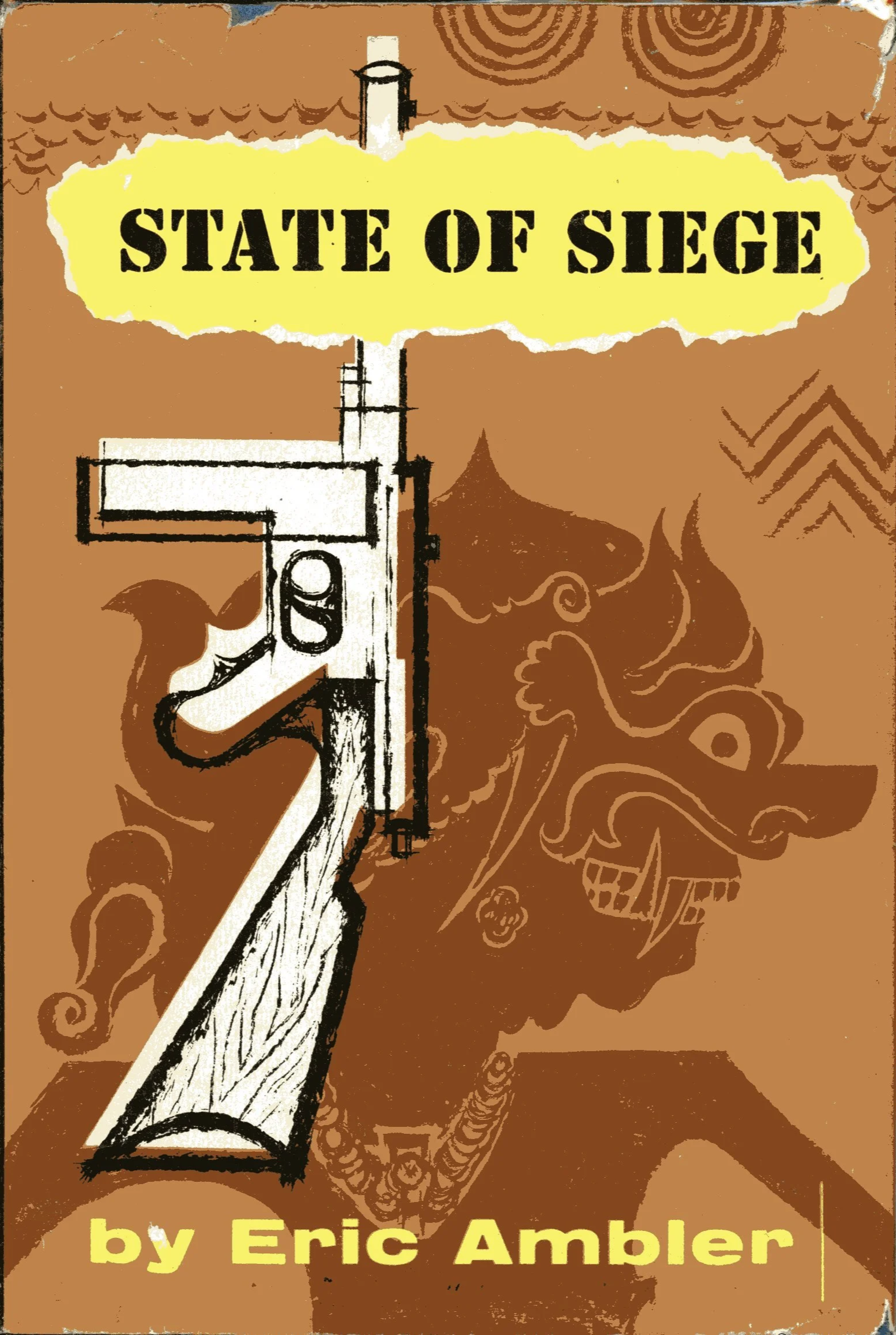
State of Siege

In reviewing Eric Ambler’s Judgment on Deltchev last year, I noted that Ambler’s postwar novels, while focusing on polyglot, cosmopolitan, but out-of-the-way worlds unsettled by global events like his early classics, are marked by a broader scope and more mature perspective. Deltchev, his first postwar thriller, takes place in an unnamed Eastern European state faced with imminent Stalinist takeover. His next, The Schirmer Inheritance, follows an American lawyer tasked with settling an old lady’s estate on a journey through postwar West Germany, its scarcely buried past, and the lingering dangers of guerrilla warfare in Greece. Passage of Arms sprawls across British-controlled Malaya, newly independent and unsettled Indonesia, arms trafficking, Communist insurgency, Chinese organized crime, and American tourists.

These are tense and well-plotted but slower, statelier, with seemingly more at stake than the fates of their characters. State of Siege, published in 1956 between The Schirmer Inheritance and Passage of Arms, comes as a bit of a surprise then.

When the novel begins, British engineer Steve Fraser has finished a three-year assignment to build a dam on the island of Sunda, a former Dutch colony that has gained its independence from both the Dutch and Sukarno’s Indonesia. The dam is part of an international development scheme for southeast Asia. Fraser believes in the work but is happy to be leaving. Rampant local corruption and a succession of inept, unqualified native liaisons with the Sundanese government have left him disillusioned if not embittered. Only one local, Major Suparto, has proven tough, intelligent, competent, and genuinely involved with the project—suspiciously so.

Fraser flies to the capital, Selampang, and has only to wait a few days for the regularly scheduled cargo plane out. An Australian friend sets him up with female company, a half-Dutch, half-Sundanese girl named Rosalie van Linden, and his apartment on the town square by the radio station. Fraser is set for a pleasant few days before flying home but for one discordant note: while walking with Rosalie in the garden of a club, he overhears a voice he recognizes—Major Suparto.

The major has arrived by jeep from the dam, a strenuous daylong drive on seasonal roads through territory controlled by leftwing nationalist rebels under General Sanusi, who hopes to root out corruption and turn Sunda into an Islamic republic. That Suparto has arrived on the same day as Fraser, who flew, suggests that he is a part of the rebel movement, and his overheard conversation with “the general” seems to prove it.

Fraser puts it out of his mind. Whatever Suparto, the rebels, and local mobsters are up to, he’s leaving. He continues his preparations to return home, has a second date with Rosalie, and takes her back to his friend’s apartment.

That night, revolution breaks out.

The army having left Selampang on maneuvers, Sanusi’s rebels seize the opportunity to take over the capital and declare a regime change. His troops occupy the city and take over the radio station. Fraser and Rosalie, in their friend’s apartment nextdoor, find their building turned into the headquarters of Sanusi himself.

There they sit, trapped at the center of the revolution, watching and waiting through aerial and naval bombardment, street fighting, the revelation of competing loyalties and betrayal among the revolutionaries, and the growing pressure in Sanusi’s inner circle to eliminate any potential threat to the revolution, including Fraser and Rosalie: one a foreigner, the other a child of the former colonial oppressors.

I began by saying that State of Siege proved a bit of a surprise among Ambler’s postwar thrillers. Like the others I mentioned it has a sweeping, utterly realistic and plausible scope. Sunda is a fictitious island—one of several Ruritanias Ambler dreamed up for his stories, and likely the most vividly realized of them—but it feels of a piece with that part of the world at that time. Ambler never bludgeons the reader with explanation but allows the corruption and mismanagement of the national government, the idealism and brutality of the Islamic rebels, the broader political situation, the ethnic hodgepodge of Selampang, with its foreign engineers, Chinese business class and gangsters, and benighted native population, and even the geography of the conflict to emerge effortlessly, through Fraser simply telling his story.

That gives State of Siege a real-world believability and convinces the reader of the danger Fraser and Rosalie face, but Ambler combines this quality with the best of his pre-war thriller pacing. His typically skillful use of foreshadowing helps sets the story in motion from the first page and, once underway, the action and suspense build steadily right up to the end.

Fraser and Rosalie are also standouts among Ambler’s protagonists. His novels typically feature unadventurous, nose-to-the-grindstone types—often engineers, as Ambler had formal education in engineering—who find themselves embroiled in international intrigues not of their own making, and Steve Fraser seems at first to fit the standard Ambler type. But he proves unusually resourceful and plucky and, perhaps uniquely for Ambler’s put-upon main characters, keeps his cool in danger. A mid-story sequence in which Fraser is forced to work for the rebels in order to protect himself and Rosalie is arduous, tense, and makes his engineering an exciting and integral part of the plot.

And Rosalie may be Ambler’s best leading lady, not only working as a foil and romantic interest to Fraser but contributing, through her personal story growing up among the Dutch plantations in the back country, a strong sense of dread over the outcome of the revolution. Fraser is a tough, fundamentally honest man who wants to think well of people. Rosalie has no illusions whatsoever about what will happen to her if Sanusi’s side wins. Her perspective not only heightens the tension but adds to the realistic murk of Sunda. One’s sympathies may be pulled in one direction or the other—a tension maintained by the complicated and surprising rebel characters—but one cannot sensibly call either side in the revolution the “good guys.”

Finally, one of the unusual joys of State of Siege is watching Fraser and Rosalie’s casual, transactional relationship deepen through the danger they share. Ambler was not known for his romantic plots, but this works wonderfully, not least—without giving too much away—by adding a bittersweet note to the novel’s ending.

Short, briskly paced, but rich and surprising and centered on two of Ambler’s most sympathetic characters, State of Siege may well be my favorite of postwar Ambler. I hope to read it again soon.

Me and the Southern accent

Last month on his microblog, Alan Jacobs linked to this short Atlantic piece—now paywalled—about the slow extinction of the Southern accent. Quoting the author of the essay on the decline of distinctive Southern accents among the young and the eventual reality that the accents will only survive among the old in out-of-the-way places, Jacobs noted, “I’m part of the trend too: I certainly have a Southern accent, but it’s not as pronounced as it was when I was younger, and I profoundly regret that.”

Likewise and likewise. The regret is painful.

My speech, like Jacobs’s, is identifiably Southern to outsiders, but largely through syntax (e.g. double modals), vocabulary (e.g. y’all, fixing to), and peculiarities of emphasis (e.g. saying umbrella instead of umbrella). My accent, in terms of pronunciation, is limited to ineradicable features like the long I noted in that Atlantic essay, yod-dropping, hanging on to the H in wh- words, and the occasional dropped G. I have neither a drawl nor a twang.

This is a regret to me because I feel it severs me from previous generations and the place I come from in one of the most fundamental ways. We learn speech at our mother’s breast and from those closest to us, not only in terms of family but in physical proximity. Gradually losing that means losing a part of me that participates in them and in home.

And I cherish those accents—of which The Atlantic rightly notes there are many. I learned two kinds of Georgia accent growing up. My dad’s parents, natives of Clarke County and the Athens area, spoke a lot like Flannery O’Connor—a Savannah native with her own peculiarities of pronunciation—does in this recording, a soft, non-rhotic accent that outsiders read as genteel. My maternal grandparents, Rabun County natives, spoke in a strongly rhotic accent with heavy Appalachian features. Both of these are from “north Georgia,” broadly speaking, but couldn’t be more different. Southern accents have immense county-by-county variety.

Generation adds more variation. My parents’ accents, both still marked by their parents’ roots, nevertheless grew toward each other, and my own is a yet finer blend—dominated by my maternal side’s Appalachian terseness. It comes out when I try to say iron (arn) or Florida oranges (Flarda arnjes).

In old home movies I have a shrill, squeaky, very country little voice. I’m not sure when the most obvious marks of family and home began to fall away, but it must have been around middle or high school. Unlike the writer in The Atlantic, it was never intentional. I never wanted to blend in, was never ashamed of being Southern—far from it, I grew a sizable chip on my shoulder during an undergrad career surrounded by Yankees and Midwesterners who thought nothing of moving South and mocking the locals for saying umbrella—and, if anything, I wanted more of an accent than what I ended up with.

Faking it is not, I decided long ago, an option. Better to let it emerge occasionally, a nice surprise. (I’ve noticed myself, in the classroom, pronouncing opportunity without the R lately, a real surprise.) I try to comfort myself with examples of other provincials who unintentionally lost their accents—namely CS Lewis, a Belfast native who, quite unconsciously, slowly conformed to the speech of whomever surrounded him and ended up sounding like this.

But when I remember my grandparents’ voices, and talk to my parents and aunts and uncles and siblings, and think about those home movies, and then recall my own kids’ sweet speech—in which very little Southern remains—all I can do is regret. Time isn’t the only thing that gets away from us. And this, the Ubi sunt? sense of loss, is perhaps the only thing more Southern than the accent I used to have.

Easy to serve, difficult to please

This week I learned that a former department head at a college where I’ve taught adjunct classes off and on for a decade had died.

I first worked for her the semester my eldest was born. A colleague facing some unexpected surgery offered me a Western Civ II course at this other school and put me in touch with the department head there. She gave me the course on the spot, with just a few weeks to go before the spring semester. I had a hard time keeping up—I began that spring with five adjunct classes at two colleges, an ESL tutoring job for a German elementary student at Sarah’s school, and part-time work at a sporting goods store—but I was most grateful because we needed the money and the work was good. As so often, it was exactly what we needed when we needed it.

My department head didn’t have another class for me after that spring but said she would be in touch as the need arose. Lo and behold, as Sarah and I expected our second child two years later, she reached out with another spring class. I gratefully accepted. Again—just enough, when needed.

That summer I found out about a full-time position at Piedmont Tech and that’s where I’ve been ever since. When I let my department head at this other school know, she thanked me and wished me luck, and said to let her know if I ever needed anything. A generous offer, and she meant it. Over the next few years she’d check in regularly on LinkedIn—yes, LinkedIn can actually be helpful!—always encouraging me and letting me know that if I needed work all I had to do was ask.

I asked when Sarah and I found out we were expecting twins, children four and five. And my department head happily set me up with an online class, semester after semester until her retirement.

She will be missed. She not only played a willing role in God’s providential care for our family—something, as a fellow believer, she would have happily acknowledged—but was simply a good boss.

I’m old enough now to have lost several former bosses: my first boss, a family friend who managed the seafood restaurant where I kept the buffet line supplied with clean plates in middle school, and then her husband, an auctioneer and antiques appraiser who employed me for the year between college and grad school and where I learned a lot about old stuff—as well as how to properly load a moving truck. My department head joins them.

As I’ve reflected on this over the last couple days, their authority reminded me of Confucius’s concept of the junzi, the “superior” or “noble man,” a subject I once taught in an adjunct World History course for this department head: the superior man is “easy to serve but difficult to please.” A rare combination. They were gentle but demanding, graciously insisting on high standards of work, encouraging me to live up to my potential. It was never difficult to work for any of them but I always knew I could do better, and improved as I worked for them. I’m glad to say these are not the only such bosses I’ve had.

The internet is full of vindictive, cynical, hostile takes on the relationship between employer and employee, and it’s not hard to understand why so many people assume it must be adversarial. But I’ve been blessed to see a number of genuinely good bosses, including my current and former deans and department heads at my full-time work, and to cherish the memories of these who have passed away. Precisely by being a good boss they proved to be more. RIP.

Upcoming event: Greenville Local Author Expo

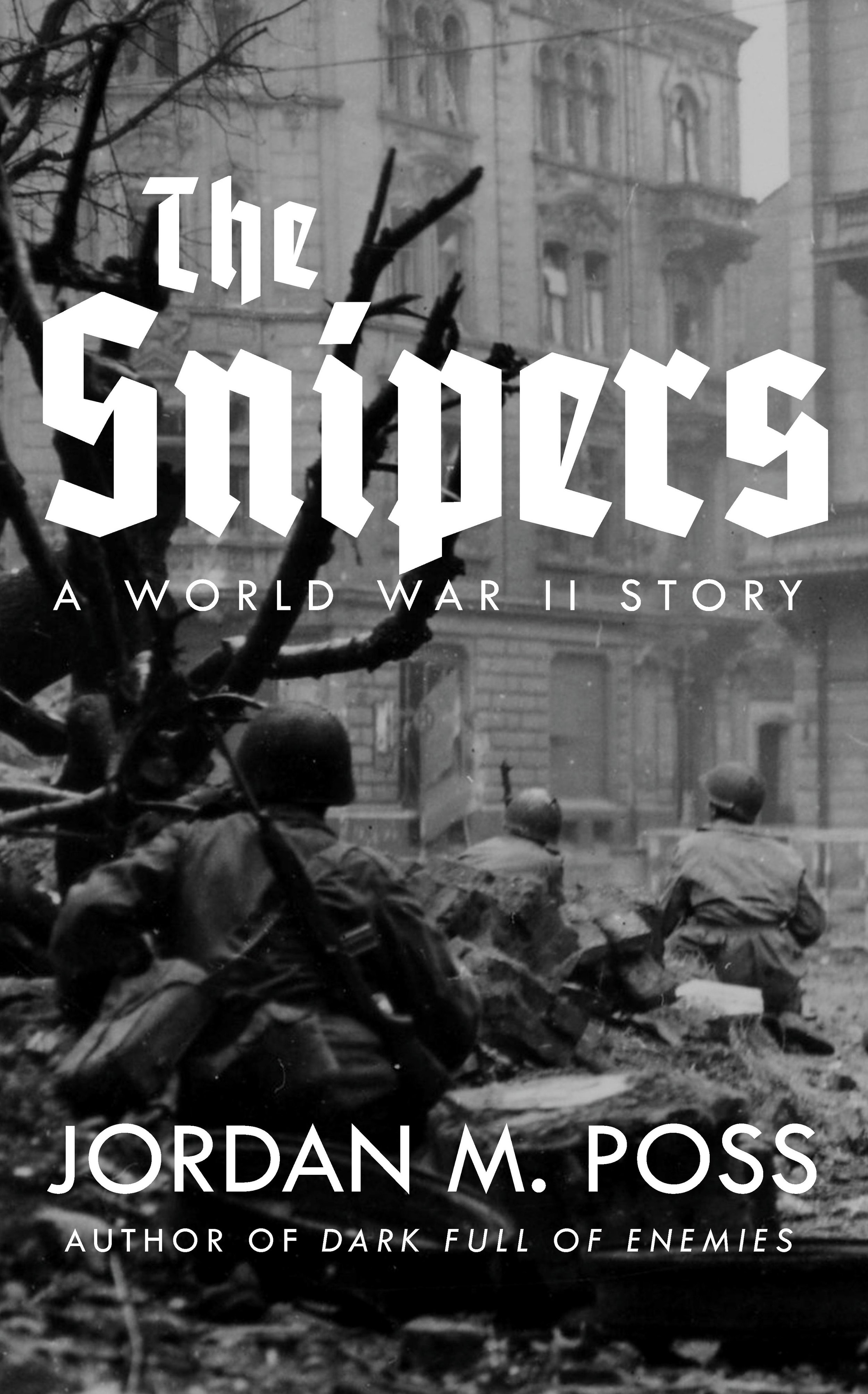
I was honored to participate in the first few Local Author Expos hosted by the Greenville Library, including a virtual expo hosted on Zoom during the COVID epidemic. I missed a few years and told myself I’d apply again when I had a new book out—then I published The Snipers and forgot. Might have had something to do with newborn twins.

Well, I’m pleased to say I’ll be back at the expo this year. I’ll have all my books on display and for sale and will be happy and talk and sign copies.

The event will take place Saturday, March 14th at the Hughes Main Library branch in downtown Greenville and lasts from 10:00 AM to 1:00 PM. The library hasn’t announced its featured speakers or panelists yet but year by year they’ve had some good ones. (I regretted missing last year, when David Joy, a North Carolina novelist whose books I’ve read, was a guest.) You can find a full list of participants and look for event updates here.

I’m grateful to be able to participate again and am looking forward to it. If you live in the upstate area it’s convenient to you, I hope to see y’all there.

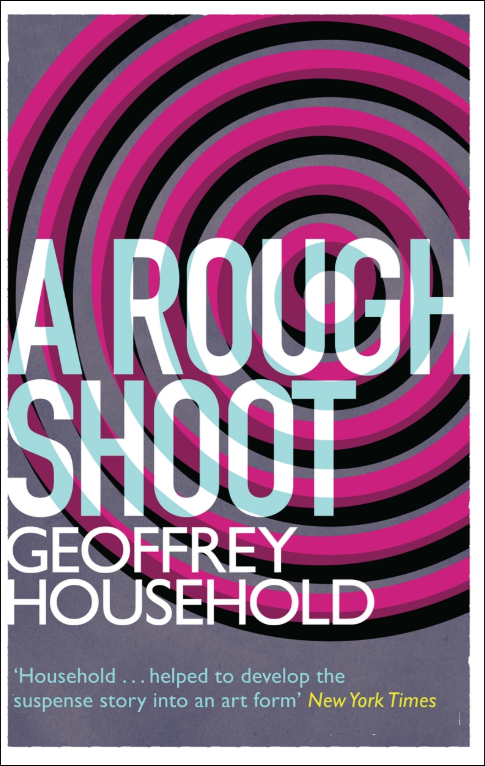
A Rough Shoot

Geoffrey Household knew how to open a thriller. His most famous book, Rogue Male, published in 1939 and which I read just over three years ago, begins with its unnamed protagonist in the hands of an unnamed central European dictatorship’s unnamed secret police, who have tortured him nearly to death and are about to dispose of him using a convenient cliff. Believe it or not, the situation escalates from there.

A Rough Shoot, published in 1951, continues this tradition. Roger Taine, a former British Army infantry colonel and now a salesman and family man, is walking the patch of Dorset farmland to which he’s purchased the hunting rights when he spots two men in the bushes. The sun is going down and he can’t see clearly what they’re doing, but they seem to be rigging up traps and he assumes them to be poachers. When one of them, backing through the hedge on hands and knees, presents his backside as a target, Taine decides to give the poachers a painful scare. He levels his shotgun and gives the man a load of birdshot.

The man collapses and his companion flees. Taine realizes that something has gone wrong. He approaches the man he shot where he lies unmoving on the ground and rolls him over. The men had been putting down big triangular stakes for some kind of device and, when Taine shot him, the man had fallen chest-first onto one of them.

None of this is a spoiler—it all happens in the first three pages. The rest of the novel is Taine’s attempt to deal with the consequences and discover who the two men were and what they were doing.

A Rough Shoot, like Rogue Male, has the Buchanesque qualities of vividly realized landscapes and the continuous chase. Taine’s predicament evolves as newer and greater dangers present themselves, keeping the ongoing action fresh and exciting. From Taine’s attempt to conceal the body and his realization that more and more suspicious men are poking around his shoot, asking questions of the tenant farmer and landowner and wanting to find out more about him, to his meeting with an former Polish commando whose story of exile, unofficial espionage, and a rising neo-fascism coordinating itself across Western Europe, A Rough Shoot escalates continuously in tension and stakes. What begins as a personal crisis for Taine—he is guilty, by his estimation, of manslaughter at least—turns into a tiny local battle in the ruins and upset of the postwar.

I can’t say much more without revealing too many specifics, but Taine’s business, wife, and children are inevitably drawn into a plot begun by Taine’s one impetuous, high-spirited act, and the first half’s smothering tension of concealment, silence, and stalking—the suspense of hunting—gives way in the final third to the chase: the prey flushed, the hunters pursuing.

I reflected a couple years ago on what it must have been like, in the 1940s and 50s, to visit the bookstalls and see a steady stream of novels like this—unpretentious gems of pure craft and enjoyment—flowing from publishers. Reading A Rough Shoot, a slender novel with no chapter divisions, just steadily building story, I could imagine myself traveling by train and needing a good page turner. A Rough Shoot would have fit the bill back then and, thanks to the strength of its simple but tense and Household’s exquisite craft, it still does. It’s inventive and exhilarating and was one of the joys of our recent time snowed in. This is only the second Household thriller I’ve read, but there will be more.

Worn slap out

One of my favorite moments of serendipity when learning German in college was when our teacher introduced us to the word schlapp. This was a synonym, he said, for müde, “tired,” and unless I’m misremembering he pantomimed dangling limply like a puppet. Ich bin schlapp.

I say this was serendipitous because a common expression where I grew up is “worn slap out.” I have no idea if there’s any actual relation between the words, but the cognate, false or not, leapt out at me. The slap is an intensifying particle—I’m not just worn out, I’m worn slap out. I can take no more wear.

Well, I’m worn slap out.

I and the whole family had the flu over Christmas and, with the new semester, I’ve had a lot of residual exhaustion compounded by insomnia. As a result I’ve missed the last two weeks here, the longest I’ve gone without writing anything on the blog since 2020 or before. I’ve begun a few posts but haven’t gotten anywhere on them. I’m hoping to fix that in the coming weeks.

I saw my doctor earlier this week and I think I’m on track to manage and reverse the tiredness. A lot of it is simply the results of the good things going on in life right now—plenty of work, the kids God has blessed us with. But the flu and the two weekends of bad winter weather have built up a deficit I’m maybe just a bit too old to bounce back from like before.

So I’m still here, but may not achieve my former pace of blogging for a while. I appreciate those of y’all who I know check in regularly. Your readership means a lot.

I doublechecked schlapp this morning, by the way, as it’s been nigh on twenty years since that German class and I wondered if I could be misremembering. It is used as slang for tired but properly means “limp,” “flabby,” or even “nerveless.” All accurate, too. But hopefully not for long.