My one Lindsey Graham story

This is not a political post—at least not in the sense of partisan politics and policy debates. I have opinions about all that stuff, but for today: de mortuis nil nisi bonum.

One evening early on in our marriage, Sarah and I were walking down Main Street in downtown Greenville. As we crossed Broad Street in front of the Peace Center, two men in suits passed us in the crosswalk and headed uphill, talking and nodding as they went. I glanced at them and didn’t think anything of it, but after a few steps Sarah said, “Did you see that?”

“What?”

“That was Lindsey Graham.”

I realized that one of them had looked familiar. I looked back and watched Graham and the other man walk on, still talking. We had just walked past a United States senator.

Not much of a story, but the incident stuck with me. I’ve told it in class ever since to illustrate a specific point when I teach ancient Rome in Western Civ.

After explaining the expulsion of Rome’s Etruscan kings, the creation of the Republic, and something of the divide between patricians and plebs and patron-client relationships, I put a picture of a Roman consul entering a Senate meeting onscreen. It’s a Victorian engraving and despite including some good details it’s not well composed artistically, so the subject of the picture is not immediately apparent. I ask the class who the most important person in the picture is. They’ll often guess one or other of the senators because they’re seated. I then point out the consul, his signs of rank, and especially his retinue: clients, political allies, advisors, soldiers, slaves, even some bearded Gauls.

That’s when I tell my Lindsey Graham story. It would have been unthinkable in ancient Rome, even when the republic was strongest, to pass a man of that importance on the street without noticing, without seeing his gaggle of attendants and hangers on.

That little incident offers a useful contrast and helps build an understanding of Roman social life in my students’ imaginations. It’s also a good reminder—as much as I love the Romans—of what an American republic is supposed to be like. We have neither monarchy nor patricians and plebs, but as political culture and politicians themselves have become progressively more imperial, complete with retinues and armies of bodyguards—seriously, look at the vast apparatus used just to move the president, ostensibly a fellow citizen, by car—this ideal, however imperfect and never fully realized, is worth remembering. As long as a national politician can walk down the street more or less unnoticed, as even such Caesarian presidents as Jackson and Lincoln would and did, something of that republican culture still lives.

I suppose this did turn out to be a political post, though about politics at a more fundamental level.

As for Lindsey Graham himself, he was undoubtedly a devoted son of South Carolina. I was surprised to learn that, having been born in Central, where I spent some time during my Clemson years, he lived in Seneca, town of more than a dozen redlights. For all I know we could have sat in traffic near each other many times long before that crosswalk encounter. RIP

Not once but whenever he wants it

The Battle of Gettysburg was in its second day right now in 1863. This justly celebrated passage about the third and final day from Faulkner’s Intruder in the Dust has been making the rounds again:

For every Southern boy fourteen years old, not once but whenever he wants it, there is the instant when it’s still not yet two o’clock on that July afternoon in 1863, the brigades are in position behind the rail fence, the guns are laid and ready in the woods and the furled flags are already loosened to break out and Pickett himself with his long oiled ringlets and his hat in one hand probably and his sword in the other looking up the hill waiting for Longstreet to give the word and it’s all in the balance, it hasn’t happened yet, it hasn’t even begun yet, it not only hasn’t begun yet but there is still time for it not to begin against that position and those circumstances which made more men than Garnett and Kemper and Armistead and Wilcox look grave yet it’s going to begin, we all know that, we have come too far with too much at stake and that moment doesn’t need even a fourteen-year-old boy to think This time. Maybe this time with all this much to lose and all this much to gain: Pennsylvania, Maryland, the world, the golden dome of Washington itself to crown with desperate and unbelievable victory the desperate gamble, the cast made two years ago[.]

Faulkner’s vision of the instant before Pickett’s Charge on July 3 powerfully evokes both the anticipation and the what-might-have-been of the moment, but I think an overlooked parenthetical right at the beginning is especially important for his point: “not once but whenever he wants it.”

This moment, with “all in the balance,” is not just remembered but lived in. The imagination can dwell for years in an instant like the one Faulkner describes. The poignancy and suspense of the minutes before Pickett’s Charge are irresistible, not despite but because of the result. Neither Faulkner nor his Southern boy, as they are sometimes accused, “romanticize” the war; far from it. What critics of the romantic fail to understand is that romance acknowledges and embraces danger. If it didn’t it wouldn’t be romantic. This moment’s very bitterness and danger, the last instant before the plunge, is part of the allure. One returns to it again and again—Faulkner’s “This time” does not mean merely “a second time”—to relive it. “Whenever he wants it” is often.

This bit of Faulkner has lasted because it is true. It captures precisely not just the potential and inevitability and weight of July 3, but the feel of a Civil War-obsessed Southern boy’s Sehnsucht. Ask me how I know.

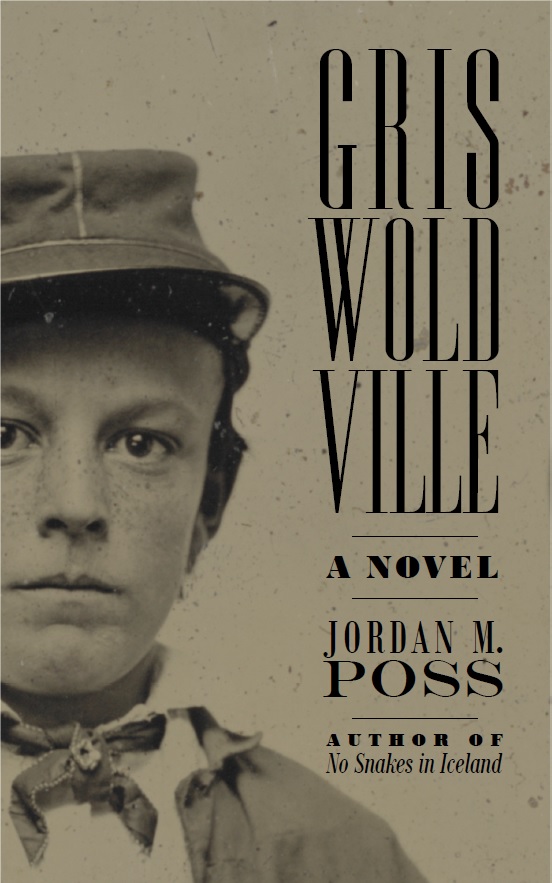
By the way, Georgie Wax, the narrator of Griswoldville, is fourteen at the time of the novel’s climactic action. I wrote it that way, with Faulkner far from my mind, to be true to the boy-soldier aspect of the late-war Georgia militia, and because that age corresponds with the peak of my own Civil War obsession and was the age at which I lost my grandfather. A coincidence better than anything I could have planned.

Obvious headline is obvious

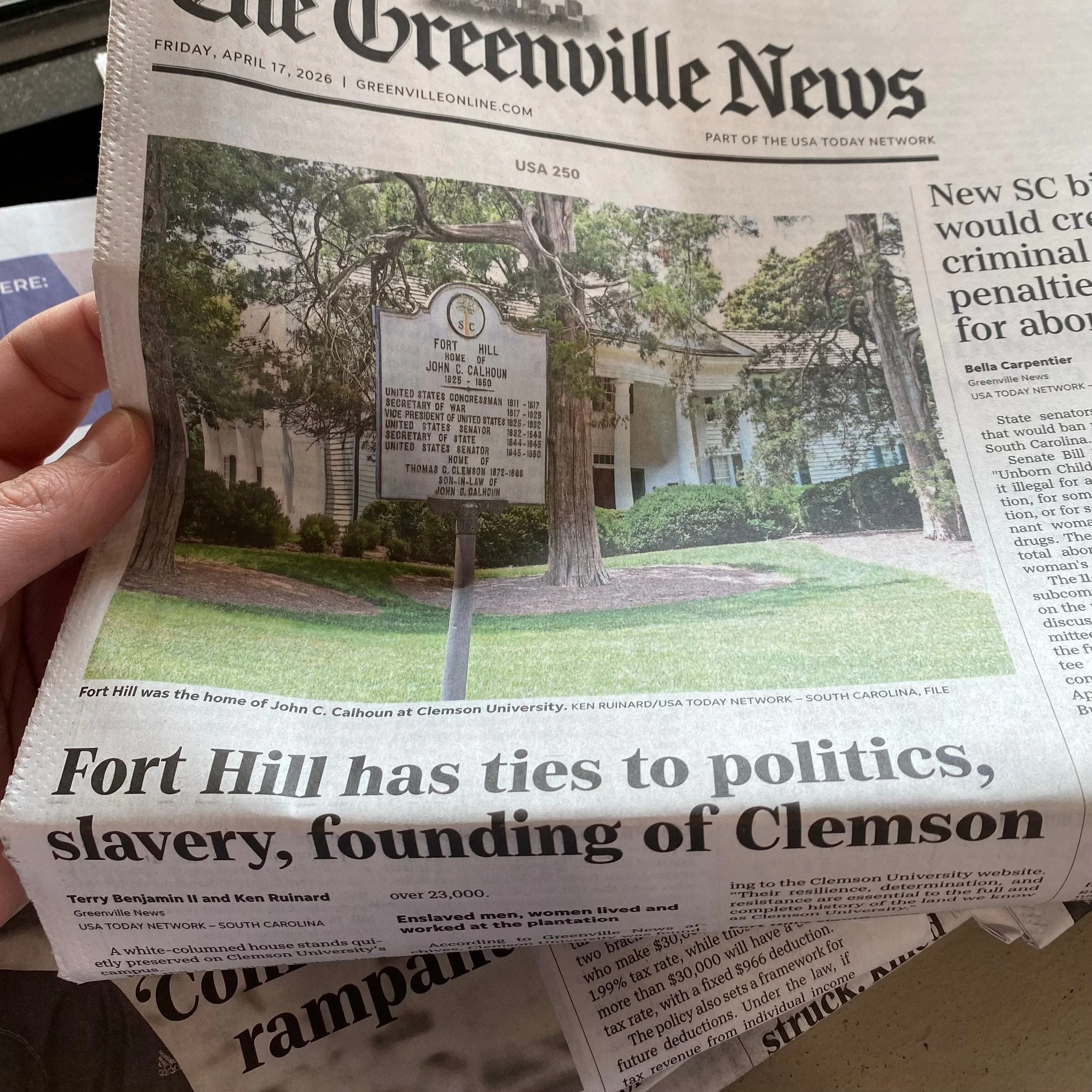
Late last week I happened to see this front-page headline in the print edition of the Greenville News: “Fort Hill has ties to politics, slavery, founding of Clemson.”

Fort Hill is the name of the plantation house now situated on the campus of Clemson, a few hundred feet away from where I spent grad school in Hardin Hall. It belonged to John C Calhoun, one of the most influential politicians—and one of the only important American political theorists—of the Republic’s second generation. His son-in-law, Thomas Green Clemson, bequeathed the former plantation property to the state for the creation of an agricultural college, which was founded the year after his death in 1888. So one could rewrite the Greenville News’s headline like this:

Plantation house of former congressman, senator, Secretary of War, Secretary of State, and VP John C Calhoun on campus of Clemson University has ties to politics, slavery, Clemson.

The only headline I’ve ever seen that exceeded this one in obviousness was in the New York Times in 2021: “With the Suez Canal Blocked, Shippers Go Around Africa.”

My chief question when looking at the original headline was “Who is this for?” Anyone who attended Clemson (and cares about the university for more reasons than football) already knows this, as do locals and anyone interested in upstate history. The paranoid part of my mind, which I usually hold firmly in check, perked up: was this meant as some kind of agitation for the legions of outsiders swarming into the area? A certain kind of newcomer to the South, a devout worshiper at the altar of the genetic fallacy, loves to discover “ties” that they can be outraged about. I’ve seen it happen.

I actually drafted a version of this post sitting in my kids’ car line Friday afternoon, right after seeing this newspaper lying on a lonely shelf in a Spinx. But before I could post it I began to doubt myself. I had skimmed the article just enough to roll my eyes at the predictable appearance of the circumlocution “enslaved people,” which I’ve picked apart here before. Had I misremembered the headline? Was this actually a front-page, above-the-fold article, or had I seen an accidentally separated travel section?

Well, that newspaper was still sitting there Saturday when I stopped at that same Spinx on the way to the dump. I made a point of doublechecking: it was a front-page story, and I hadn’t misremembered the headline. But looking through the whole article, I finally discovered what it really was—a poorly put-together travel article for a USA Today history initiative called USA 250, assembled mostly from spare parts of previous Greenville News items. The online version of the article makes this clearer without the apparent intent to stir something up: “How to visit historic home at Clemson University.”

The paranoid part of my mind could be safely returned to its cage. The truth was both more mundane and sadder: that print headline was an attempt to inform trying a bit too hard to be interesting. (Though the same article, shared on the paper’s Facebook page, did attract the following comment from one Boomer: “Calhoun bigot and racist.” Speaking of the obvious and predictable.)

Nevertheless: a slow week at the Greenville News. And people wonder why newspapers are dying.

Me and the Southern accent

Last month on his microblog, Alan Jacobs linked to this short Atlantic piece—now paywalled—about the slow extinction of the Southern accent. Quoting the author of the essay on the decline of distinctive Southern accents among the young and the eventual reality that the accents will only survive among the old in out-of-the-way places, Jacobs noted, “I’m part of the trend too: I certainly have a Southern accent, but it’s not as pronounced as it was when I was younger, and I profoundly regret that.”

Likewise and likewise. The regret is painful.

My speech, like Jacobs’s, is identifiably Southern to outsiders, but largely through syntax (e.g. double modals), vocabulary (e.g. y’all, fixing to), and peculiarities of emphasis (e.g. saying umbrella instead of umbrella). My accent, in terms of pronunciation, is limited to ineradicable features like the long I noted in that Atlantic essay, yod-dropping, hanging on to the H in wh- words, and the occasional dropped G. I have neither a drawl nor a twang.

This is a regret to me because I feel it severs me from previous generations and the place I come from in one of the most fundamental ways. We learn speech at our mother’s breast and from those closest to us, not only in terms of family but in physical proximity. Gradually losing that means losing a part of me that participates in them and in home.

And I cherish those accents—of which The Atlantic rightly notes there are many. I learned two kinds of Georgia accent growing up. My dad’s parents, natives of Clarke County and the Athens area, spoke a lot like Flannery O’Connor—a Savannah native with her own peculiarities of pronunciation—does in this recording, a soft, non-rhotic accent that outsiders read as genteel. My maternal grandparents, Rabun County natives, spoke in a strongly rhotic accent with heavy Appalachian features. Both of these are from “north Georgia,” broadly speaking, but couldn’t be more different. Southern accents have immense county-by-county variety.

Generation adds more variation. My parents’ accents, both still marked by their parents’ roots, nevertheless grew toward each other, and my own is a yet finer blend—dominated by my maternal side’s Appalachian terseness. It comes out when I try to say iron (arn) or Florida oranges (Flarda arnjes).

In old home movies I have a shrill, squeaky, very country little voice. I’m not sure when the most obvious marks of family and home began to fall away, but it must have been around middle or high school. Unlike the writer in The Atlantic, it was never intentional. I never wanted to blend in, was never ashamed of being Southern—far from it, I grew a sizable chip on my shoulder during an undergrad career surrounded by Yankees and Midwesterners who thought nothing of moving South and mocking the locals for saying umbrella—and, if anything, I wanted more of an accent than what I ended up with.

Faking it is not, I decided long ago, an option. Better to let it emerge occasionally, a nice surprise. (I’ve noticed myself, in the classroom, pronouncing opportunity without the R lately, a real surprise.) I try to comfort myself with examples of other provincials who unintentionally lost their accents—namely CS Lewis, a Belfast native who, quite unconsciously, slowly conformed to the speech of whomever surrounded him and ended up sounding like this.

But when I remember my grandparents’ voices, and talk to my parents and aunts and uncles and siblings, and think about those home movies, and then recall my own kids’ sweet speech—in which very little Southern remains—all I can do is regret. Time isn’t the only thing that gets away from us. And this, the Ubi sunt? sense of loss, is perhaps the only thing more Southern than the accent I used to have.

Jenkins on regionalism and contingency

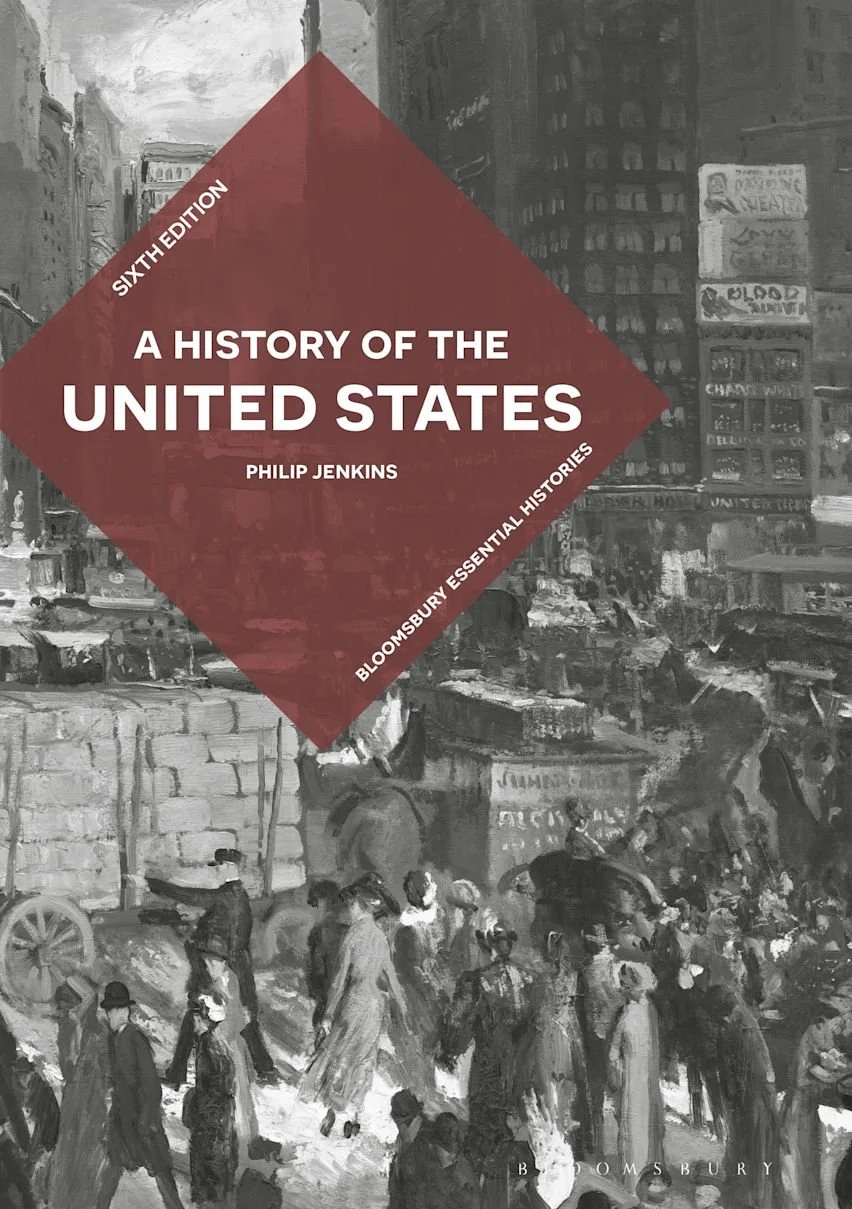
One of the best perks of teaching is the opportunity to review examination copies of textbooks. This morning I received a copy of the new sixth edition of A History of the United States, by Philip Jenkins, part of Bloomsbury’s Essential Histories series. Jenkins is a historian of religion whose work I’ve greatly appreciated over the years, and I was excited to discover that he’s also written a short, one-volume American history text. I’m reading it with a view to replacing the late Robert Remini’s Short History of the United States in one of my online adjunct courses.

So far it’s off to a good start. One of the challenges of teaching history is trying to draw attention to recurrent patterns or themes. The standard multi-author committee-produced textbook—what you think of when you hear the word—usually does this clumsily, if at all. A single-author text that pays a bit more attention to literary qualities, like Remini’s Short History or Wilfred McClay’s Land of Hope, can develop these themes and throughlines narratively as it goes—which is also, not coincidentally, how I teach the subject.

Jenkins begins by explicitly laying out the themes he wants the reader to notice in a dedicated introductory chapter. Ordinarily this wouldn’t be my favorite approach, but it allows Jenkins to describe some of the peculiar parameters of American history very specifically, priming the reader to detect them. I especially liked what he had to say about two in particular:

First, having established “the tyranny of distance” as one of the key factors in the story, he points toward the differing trajectories and cultures of the US’s many regions, the two earliest and most important of which are the north and the South:

Different regions produced their own distinct cultures, the exact nature of which has given rise to much debate. The question of “Southern-ness” has been a popular topic for such works, though the very term betrays the prejudice that it is the south that is untypical from an American or even world norm. In terms of its history of slavery and racial hierarchy, the American South closely resembles the worlds of the Caribbean and of much of Central or South America. We could equally well argue that it was rather the north of the early nineteenth century that produced a set of cultural and intellectual assumptions that were bizarre by the standards of the contemporary Western world, while the aristocratic, rural, and deferential south was a much more “normal” entity than its egalitarian, urban, and evangelical neighbors. For anyone acquainted with the astonishing social turbulence of the Northern cities before the Civil War, it is startling to hear claims that it was the south that had a peculiar tendency to violence.

This is not just about geography but about culture and historiography. For a long time, the extent to which New Englanders have portrayed their story as normative, as the story of the US to which recalcitrants and rebels have to be brought into conformity, has been invisible. (Why, for example, did the entire country just celebrate a holiday inspired by the Pilgrims?) This can lead to especially warped interpretations since, as Jenkins points out, the culture that arose in the northeastern US is such a weird historical outlier. Restoring a broader perspective creates a better understanding not only of north and South, but of the whole.

Even more crucially, Jenkins pushes back against whiggishness, the assumption that history moves determinedly along toward a particular endpoint, both of the present and the past:

Yet when we tell the story of US expansion, it is tempting to describe a natural and even inevitable process, by which the Lower Forty-Eight acquires its predestined dimensions and natural borders. That was certainly how Americans thought, and how they recorded events, and we still use the phrase that was commonly cited to describe this process. . . . 

The speed and seemingly irresistible weight of American expansion make such a narrative of Manifest Destiny tempting. US histories can look like a map on a television documentary, with an illuminated core region along the East Coast, which spreads swiftly and inevitably over those hitherto dark regions, which in turn become lit up as they achieve their authentic destiny of being included in that United States. It is hard not to write the story backward, as if the ending was always predetermined. The problems with such an account are many[.]

Among these problems is the implied sense of inevitability Jenkins mentions, a sense rooted in the most subtle and insidious bias of historical study, historian’s fallacy, which erases the fog in which historical figures operated. Jenkins emphasizes contingency and the fact that historical actors didn’t know the end of the story. Here’s an example I mentioned, with reference to this piece by Jeremy Black, in my Substack digest over the weekend:

For much of American history, many Americans were convinced that the lands that became Canada would inevitably fall into the possession of the United States. That was a real prospect during the War of 1812, and frequent later tensions between the United States and Great Britain made it highly likely that Canada would someday be a theater for American conquest and annexation.

There’s what word inevitably again. (A helpful rule: when trying to understand a past culture, look at what the movers and shakers thought was inevitable at the time.) Jenkins expands on the problems of assuming inevitable outcomes, of “arcs” “bending” toward particular results:

Quite apart from any cultural or racial biases, the whole idea of “inevitability” is shaky. The emergence of the continental United States with its boundaries, that Lower Forty-Eight, was contingent, dependent on the outcome of political struggles and social movements. It is easy to imagine scenarios when the United States would have acquired a very different shape, and this is no mere issue of speculative alternative history. We are dealing with what well-informed people believed or hoped in those earlier eras. Most basically, it was far from obvious to contemporary observers that the United States would have resisted multiple serious efforts at secession or partition, which reached their peak during the 1860s. In retrospect, we know that the nascent Confederate States of America created in 1860 would not endure as a major New World power, or that the remnant United States of America would not be confined to the north-east and Midwest; but Abraham Lincoln could not take that fact for granted.

What happened was not inevitable, things could have turned out differently, and uncertainty is an important part of every historical story. Conveying these facts is an important part of my approach to teaching, and I’m hopeful that the rest of Jenkins’s book will underscore these themes.

For what it’s worth, I’d still recommend Remini’s book, but Remini’s narrative is a little too complacently satisfied with the postwar liberal consensus—the idea of America as an idea, gradually developing its doctrines to ever fuller and broader degrees—which is itself a kind of whiggishness. And when initially selecting a text for this course I considered McClay’s book, but its otherwise excellent narrative has a few too many major omissions (the Plains Indians Wars)—yet another historiographical and teaching problem.

Young Washington trailer reaction

“COLD DEAD HANDS!” William Franklyn-Mille in Young Washington (2026)

Let me start with a favorite passage from Nathaniel Hawthorne, writing in 1858, less than sixty years after George Washington’s death:

 
Did anybody ever see Washington nude? It is inconceivable. He had no nakedness, but I imagine he was born with his clothes on, and his hair powdered, and made a stately bow on his first appearance in the world.
 

This is not only funny—and I love the reactions it gets from students—it succinctly gets at a problem with iconic historical figures. Some are so important, so mythic, that a version of them with ordinary human qualities stripped, planed, and sanded away supplants them in our historical imaginations. In American history this may be more true of George Washington than anyone else. Tellingly, even in commenting on this phenomenon Hawthorne gets something wrong: Washington didn’t wear powdered wigs.

Last week a new trailer for an Angel Studios release called Young Washington came to my attention—fortuitously as I was pulling up a video for my US History I class. The film appears to cover George Washington’s experiences during the first couple years of the French and Indian War, from the ill-fated patrol in which, as the 21-year old commander of a small force of Virginia militia, he accidentally precipitated a global war, through the Battle of the Monongahela, in which a British force was cut apart and nearly annihilated and where, as a volunteer aide-de-camp to the fatally wounded British General Edward Braddock, Washington helped save what was left of the army.

Here are Variety and The Hollywood Reporter with more details.

As it happens, this is one of my favorite stories to tell in class, and I’ve long thought it would make a great movie. So discovering a trailer for Young Washington has gotten me both excited and anxious.

If you want to get at the person beneath the mythology and iconography—especially of great and consequential leaders like Washington—it requires deep interest and long, purposeful study. Most people can manage perhaps one of these, more often neither. For them, a good historical movie can untangle the bundle of traits and props that make up the imaginary versions of historical figures, presenting them with a real human being perhaps for the first time. But the movie has to be good. The damage of a false movie portrait can be permanent.

What follows are rough impressions and questions based on this early trailer for Young Washington:

  • This teaser is heavy on battle scenes—not that I’m complaining. I’m pleased to see throughout the representation of regulars (paid, uniformed professionals), militia in a wide variety of clothing, and allied Indians on both sides. I doubt Young Washington will nail this the way The Last of the Mohicans did but that this complexity is so clearly visible even in this trailer is heartening.

  • Ben Kingsley plays Lieutenant Governor of Virginia Robert Dinwiddie. Dinwiddie was Scottish and twenty years younger than Kingsley when the French and Indian War broke out.

  • The Angel logo appears over what looks like Braddock’s expedition, which set out into the wilderness of western Pennsylvania with a long wagon train and no road. Great atmosphere in this shot.

  • Washington’s leather-looking coat at approx. 0:20 is a good spot to talk about uniforms and costumes. I’m not a mid-18th century guy but beyond the basic red-for-British/white-for-French the uniforms don’t look right to me. The leather coat is of a piece with modern Hollywood’s tendency to give the star slightly more contemporary-looking costumes, e.g. Orlando Bloom’s boot-cut hose in Kingdom of Heaven. The Revolutionary War spy series “Turn” gave Abraham Woodhull similar modern takes on 18th-century clothing: leather when everyone else is in wool, hipster toboggan, bad boy scowl. At least our young Washington isn’t constantly glowering.

  • Scenes of Washington surveying the Virginia wilderness: A+ for effort. Can’t comment on 18th-century surveying equipment but the outdoor clothing looks better than the uniforms and the landscape looks exactly right. People tend to forget Washington’s work as a surveyor (and his chance to get a look at what’s out there right before it became available to speculators) so it’s good to see him working his day job.

  • The film provides Jane Austen fans with a ball. Washington is accurately shown not wearing a wig but inaccurately—unless this is an accident of low light and color grading—as a brunette. Washington had red hair. He was also 6’2” at a time when that placed him head and shoulders above most other men, something you don’t really get here (but that HBO’s “John Adams” miniseries nailed). Even as a young man he was striking and physically imposing.

  • A French officer goads Washington with “You are not British yet they send you to speak for them. So that when you fail they’ll have someone to blame.” This introduces some sketchy interpretation. Washington and all the other colonials absolutely considered themselves British at this time. It’s a later nationalist myth that we strapping Americans had already discovered ourselves to be a new, independent species and were just waiting for the right time to buck off the shackles of the Old World. (Even the great Last of the Mohicans tacks into these waters a bit.) See Fred Anderson’s books below for more on that.

  • The wagon train in the woods features in a few quick shots, presumably of Braddock’s defeat at the Monongahela. Can’t comment at this point how accurately the film will portray the battle overall, but these shots capture the chaos well.

  • After the Battle of Jumonville Glen and his surrender at Fort Necessity (and I can’t be sure that anything in this trailer relates to that event), Washington left the Virginia militia to volunteer as a gentleman aide-de-camp to General Braddock, played by Andy Serkis. As with Kingsley’s Dinwiddie, we don’t get much to judge by here, but Braddock comes across as rather hostile to Washington—a bit of lordly British stereotype. Washington actually liked Braddock, wrote positively of him, and learned a lot during his month under his command.

  • Scenes of combat in the forest look appropriately messy, panicked, and dirty, with a mix of men fleeing and courageously holding their positions. It’s also atmospheric as heck. Points for that. The one thing we miss is the massive primeval trees of the colonial American woodlands, something no movie would probably be able to recreate now.

  • We also get Washington taking unofficial charge of part of the battle. Washington was not only physically large and powerful, he was ridiculously brave. You might know that he found multiple bulletholes in his coat following the Battle of the Monongahela (which Kingsley’s Dinwiddie seems to allude to at the beginning of the trailer) but he also had two horses shot out from under him. Braddock, before he was mortally wounded, also demonstrated immense courage and had several more horses killed beneath him. I’ll be curious to see how the film treats his relationship with Washington and how they’re depicted in battle. A lot of movies about heroic figures downplay the courage of others to make their subjects look better—a trap I hope they avoid.

  • Some other famous names associated with Braddock’s expedition: Daniel Morgan, Horatio Gates, Benjamin Franklin. Curious to know if any of these will show up in the film. It would make sense to include Franklin, as he later told stories—including in his Autobiography—of having tried to warn Braddock about his plan of attack.

  • A blink-and-you’ll-miss-it shot at 1:27 seems to show the moment Washington’s patrol started a global war: allied Iroquois leader Tanaghrisson “The Half-King” killing French officer Joseph Coulon de Jumonville in cold blood. Describing this moment never fails to startle students.

  • A final name-drop shot gives us an appropriately young-looking Young Washington. He doesn’t seem to have much human personality in this teaser but, well, it’s a teaser.

Lots to dig into here, and for what it’s worth I enjoyed the trailer—and picking it apart for historical clues. For now I’m curious but not particularly optimistic. I hope to be pleasantly surprised.

In the meantime, if you want make an effort to get at the real young Washington and his time—whether you end up seeing the movie or not—let me recommend the following:

  • For a good shorter biography that pays attention to Washington’s early experiences in the French and Indian War as well as his pre-Revolution life of surveying and land speculation: Washington’s Revolution: The Making of America’s First Leader, by Robert Middlekauff.

  • For the fascinating, underappreciated story of the French and Indian War, I’d recommend either of two books by Fred Anderson: The War That Made America: A Short History of the French and Indian War or, for a much more detailed version, his mammoth Crucible of War: The Seven Years’ War and the Fate of Empire in British North America, 1754-1766.

  • For Braddock’s expedition against Fort Duquesne specifically there’s Braddock’s Defeat: The Battle of the Monongahela and the Road to Revolution, by David Preston.

Young Washington just started shooting in Ireland last month and won’t be out until next July 4th, so who knows what the final product will be like? We certainly don’t need, per Hawthorne, Washington nude—even HBO didn’t give us that, shockingly—but if we can get past the stately bows and powdered wigs to the real young man who fought for king and crown in the French and Indian War, who struggled to master his temper, who trooped through the forest bearing chains and compass and later rifle and sword, and who wrote to his brother describing how “charming” the sound of whizzing bullets was, I’ll be glad.

Wildcat trailer reaction

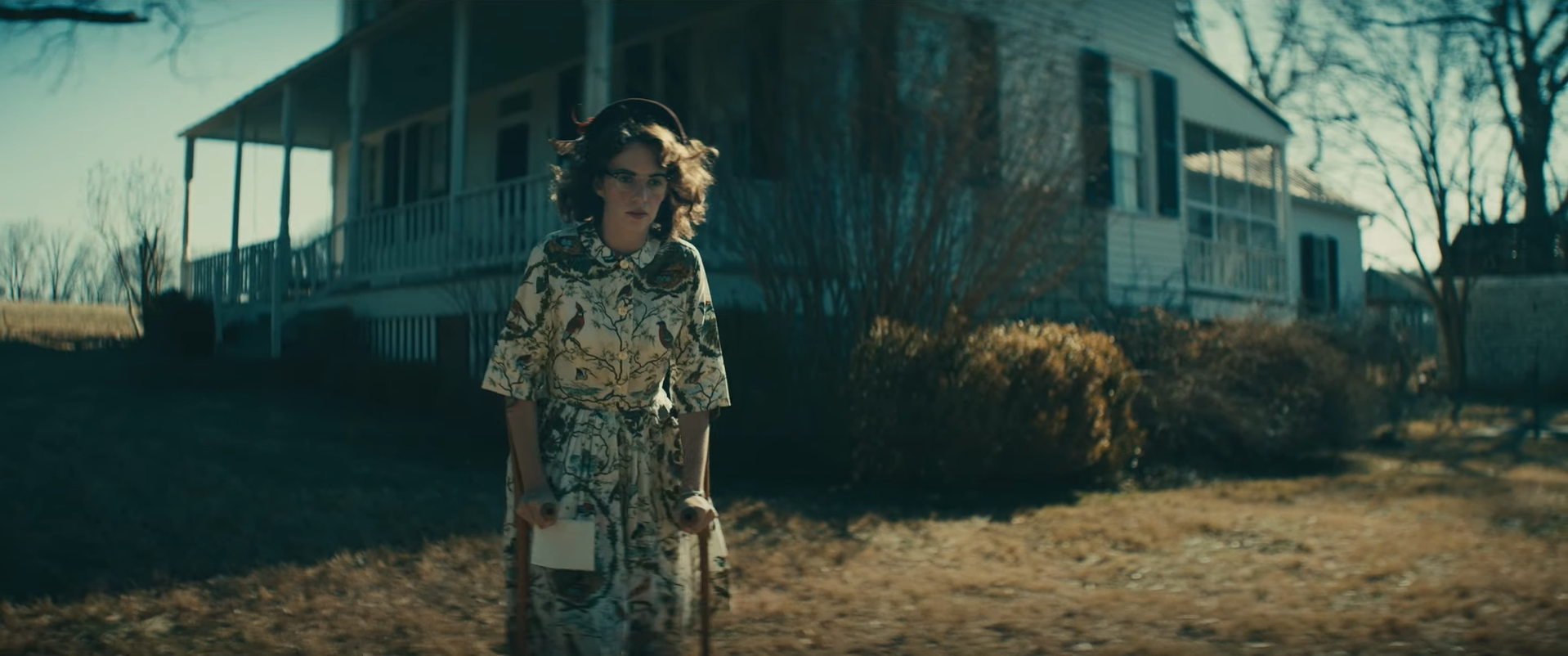
Maya Hawke as Flannery O’Connor in Wildcat

As I noted in my 2023 movie year-in-review, Wildcat is one of the films I’ve been looking forward to this year. Though it was completed and premiered at a film festival last year I hadn’t heard any news about its distribution or release until yesterday, when a great trailer appeared on YouTube.

Wildcat takes place over a short stretch of the early 1950s, when young writer Flannery O’Connor (Maya Hawke) moves back home to Milledgeville, Georgia and is diagnosed with lupus, the same disease that had killed her father when she was sixteen. While struggling with her illness and its severe effects she tries to sell her first novel, a searing Southern gothic religious fable called Wise Blood. Like her short stories, it’s deeply Catholic and Southern and poignant in the sense of sharp, cutting. It’s a hard sell.

It’s unclear from the trailer precisely how much of O’Connor’s life Wildcat covers, but there are scenes suggesting her time among the literary elite in the northeast in the late 1940s, after she had graduated from the Iowa Writers’ Workshop and when she was laboring over Wise Blood. The trailer suggests a strong contrast between the world O’Connor leaves behind and the clay-banked roads and nosy church ladies back home in Georgia—a contrast O’Connor was certainly aware of and wrote about.

Perhaps the most intriguing thing in the trailer are the scenes from several of her short stories—”Parker’s Back,” “The Life You Save May Be Your Own,” “Revelation,” and especially “Good Country People”—in which O’Connor and her mother Regina (Laura Linney) play major characters like the cynical Hulga or the self-righteous Mrs Turpin. Catching even short glimpses of scenes I’ve imagined many times—a crowded doctor’s office waiting room, a Bible salesman running across a field carrying a prosthetic leg—got me excited in a way I haven’t felt for a movie in a while. Apparently these are intricately intertwined with the events of O’Connor’s real life. I’m curious to see how this works, especially since it’s so easy for a film about a writer to slip into the biographical fallacy (or what CS Lewis called The Personal Heresy): the idea that everything a writer writes is based on his or her actual experiences.

But I’m most pleased to see that Wildcat takes O’Connor’s Christianity seriously. Apparently Ethan Hawke, who directed and co-wrote the film, was inspired to make it when he read the Prayer Journal that O’Connor kept as a writing student in Iowa. O’Connor, in addition to being a brilliant writer, was prickly, hard-edged, had a chip on her shoulder as an outsider in the postwar literary world, and was fervently orthodox and devout. Her faith suffuses her work not only coincidentally but by design. Wildcat’s trailer manages to evoke all of this. Here’s hoping that the full film delivers.

A few other notes:

  • The Southern accents sound pretty good. O’Connor was originally from Savannah and, though recordings of her remind me a lot of my paternal grandmother, an Athens native, O’Connor’s speech has some peculiarities that must be down to her roots, Savannah having some distinctive dialect features even by Southern standards. Listen to her read “A Good Man is Hard to Find” sometime.

  • I’m interested to see how the film explores what some people perceive as O’Connor’s cruelty (“Sometimes I feel like you’re trying to stick pins in your readers,” her editor says in the trailer). The question of just how unpleasant a writer can or should make the reader feel in order to make a point has concerned me for a long time.

  • Maya Hawke looks a lot more like O’Connor than I would have guessed was possible based on what I’ve seen of her in “Stranger Things” and Once Upon a Time in Hollywood. Kudos to her and the film’s hair and makeup folks.

  • I like the cinematography a lot. It’s clearly digital but has some creative composition choices and lens work—e.g. the way the focus and bokeh fall off at the edges off the frame, which reminds me of The Batman. A distinctive look will probably help support O’Connor’s story and give it the otherworldly feel it will probably need.

  • Wildcat was apparently shot mostly in Kentucky rather than Georgia. From what I can see in the trailer it looks like a good stand-in, though it’s funny to me that, with so many movies shooting in Georgia as a substitute for more expensive locales, such a Georgia-centric story wound up being shot elsewhere.

It’s striking, having watched the trailer several times now, how present O’Connor’s crutches are. The final “coming soon” shot of O’Connor at the family mailbox, which has been one of the only images available for a while, has them plainly visible but I never noticed them. And there they are behind her as she types up a manuscript or struggles even to walk around the house. Some early film festival reviews I’ve read suggest that Wildcat is not just a story about a writer publishing a novel but a meditation on suffering, the threat of death, and God’s grace. I’m here for it.

Wildcat is currently scheduled for a big-city release on May 3 with wider availability to follow, though I haven’t been able to find any details about that yet. Hopefully we can look forward to a time in the late spring or early summer when we can catch Flannery O’Connor in theatres.

How fragility honors the dead

I’m currently reading and almost finished with Ron Rash’s latest novel, The Caretaker. One of the main characters, Blackburn Gant, is a disfigured polio survivor and the titular caretaker of a church graveyard in Blowing Rock, North Carolina. Blackburn, owing to his occupation, his outsider status in the town, and the events of the novel, has a mind consumed with death, regret, and his quiet duty to render proper respect to the dead in his little patch of ground.

Late in the novel, as the plot builds toward a climactic confrontation, Blackburn walks into town and has this small moment:

 
As he neared Middlefork, Blackburn saw to the left where, among broken slabs of stone, small blue flowers bloomed. If you came upon periwinkle in woods or a meadow, Wilkie said a graveyard likely had been there. It had always struck Blackburn how something fragile as a flower could honor the dead longer than stone. Longer than memory too, a lot longer.
 

A beautiful and evocative passage. Sarah has told me that daffodils, which might surprise you in scattered clusters or even great bright patches in the middle of the woods as you drive through the rural South, often mark the sites of old homeplaces. Ever since she pointed that out I’ve noticed them everywhere, vanished homesteads, without even the usual stone marker of a lonely chimney, and I’ve often felt something of what Blackburn feels here.

At least in the South, businesses that cut tombstones describe themselves as selling monuments. One wonders just how much of our purposeful effort to remember or be remembered—no matter how monumental—will survive while the small, accidental, fragile things with which we’ve marked a loss or even just the passing of time will outlast both them and us.

Portis on the New South

Main Street in a purportedly Southern city

Since rereading Gringos back at the beginning of this month I’ve been revisiting more of the late lamented Charles Portis’s work, particularly the short stories and travel essays collected in Escape Velocity. This comes from his magnificent memoir “Combinations of Jacksons,” published in the Atlantic in 1999. Throughout, Portis uses the phrase “combinations of Jacksons” to denote a certain kind of rural, unsophisticated, rambunctious, indeed ungovernable but good Southerner. Salt of the earth, good folks—an instantly recognizable type.

Here, Portis moves from describing how the support of a great uncle who rode with Quantrill and Jesse James for Theodore Roosevelt, a New York Republican, infuriated other Confederate veterans in 1904 (“Unseemly spectacle, coots flailing away”) to make an aside about the gradual, creeping fulfilment of the hopes of the Henry Gradys of the South:

For more than a century now, at intervals of about five years, southern editorial writers have been seeing portents in the night skies and proclaiming The End of the War, at Long Last, and the blessed if somewhat tardy arrival of The New South. By that they seem to mean something the same as, culturally identical with, at one with, the rest of the country, and this time they may be on to something, what with our declining numbers of Gaylons, Coys, and Virgils, and the disappearance of Clabber Girl Baking Powder signs from our highways, and of mules, standing alone in pastures. Then there is the new and alien splendor to be seen all about us, in cities with tall, dark, and featureless glass towers, though I’m told that deep currents are flowing here, far beyond the ken of editorial wretches in their cluttered cubicles. A little underground newsletter informs me that these peculiar glass structures are designed with care, by sociologists and architects working hand in glove with the CIA, as dark and forbidding boxes, in which combinations of Jacksons are thought least likely to gather, combine further, smoke cigarettes, brood, conspire, and break loose out of a long lull.

The essay is tinged throughout with a ubi sunt melancholy, perhaps nowhere more pointedly than here.

I live just outside a city of exactly the New South described here—glossy, polished, deracinated, full of outsiders. Not so much out-Yankeeing the Yankee as letting him take over. (Here’s a spoof I recently discovered. You laugh so you don’t cry.) I think Portis was onto something. I also hope he turns out to be wrong, that the pendulum will swing back, that his Jacksons will “break loose” and combine again.

What are you doing here?

I’m currently reading Thomas Nevin’s Ernst Jünger and Germany: Into the Abyss, 1914-45. In his chapter on the Weimar Era, Nevin describes how, after several years of writing for nationalist military magazines and other right-wing outlets, Jünger branched out in the intellectual company he kept:

He was friendly to the national Bolshevist Ernst Nieckish, to the Bohemian anarchist Erich Mühsam, to the putschist Ernst von Salomon, to the national socialist Otto Strasser, to the communists Bertolt Brecht and Ernst Toller. These men could get together in a room and talk in a civil way. It is facile to conclude they were united in opposing the republic. In fact, strong in intelligence, they were political weaklings.

One sympathizes.

This is a rich cross-section of Weimar political persuasions, with these men belonging to groups that were sometimes literally fighting each other in the streets. Indeed, the left-wing Nazi Otto Strasser and the anti-Nazi nationalist Ernst von Salomon were veterans of the Freikorps. (Von Salomon lightly fictionalized his experiences in The Outlaws, which I read two years ago.)

Nevin goes on to describe the regular salons Jünger and others would hold throughout 1929:

Regularly on Friday evenings . . . Jünger and brother Fritz met at the home of Friedrich Hielscher on Berlin’s Friedrichstrasse. These gatherings usually included von Salomon, the publisher Rowohlt, Otto Strasser, the expressionist writer Arnolt Bronnen, and Vormarsch illustrator Paul Weber, soon famous for his prophetic drawings depicting Nazism as a cult of death.

Again—so far, so Weimar, especially when you look into some of the lesser-known figures and find that peculiar cocktail of playwrights, businessmen, and neopagans that could only make sense in that time and place. But then, just before describing how Joseph Goebbels himself began attending these meetings with the express aim of winning Jünger over to the Nazis, Nevin casually tosses this in:

The American novelist Thomas Wolfe also attended.

I, like Jim Halpert, have just so many questions.

In all seriousness, this was a great surprise, and something unexpected and new to look into. I’ve already had this out-of-print Wolfe biography, which gives good coverage to the years he spent in Germany, where Look Homeward, Angel was apparently a huge hit, recommended by a co-worker and Wolfe relation.

A reminder that one of the purest and strangest delights of studying history is stumbling across connections between seemingly separate things you’re interested in, connections that throw both subjects suddenly into a strange new relief—in this case, Ernst Jünger and interwar Germany and the Southern literary world of the same period.