All of us undomesticated writers
/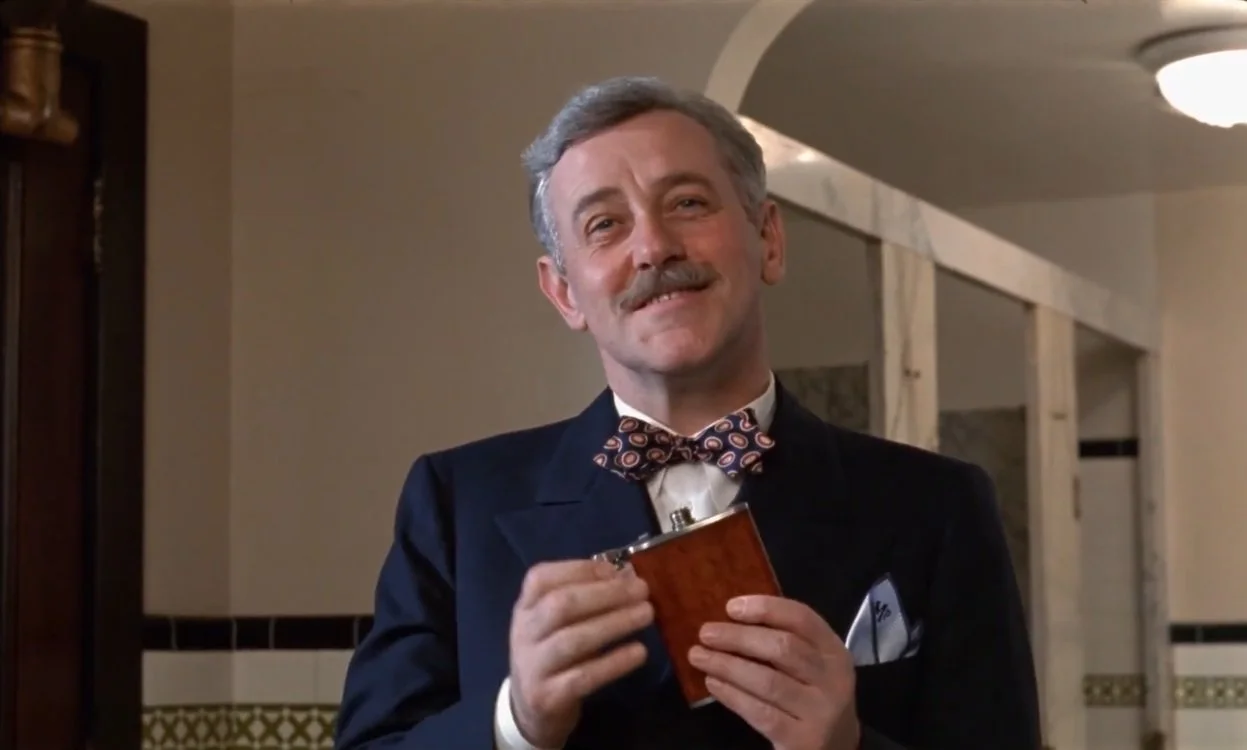
John Mahoney as W.P. Mayhew in Barton Fink (1991)
In Barton Fink, one of my favorite movies, put-upon playwright Fink has relocated from New York to LA to work “in pictures” as a screenwriter. He’s overawed and unsure of himself. Then, in a chance encounter in the bathroom of a swanky Hollywood restaurant, he meets WP Mayhew, an acclaimed Southern novelist of modernist gothic literary fiction (and a souse—a great souse) clearly modeled on Faulkner. They have this exchange:
Barton: I had no idea you were in Hollywood.
WP [producing a flask]: All of us undomesticated writers eventually make our way out here to the great salt lick. Must be why I always have such a powerful thirst.
Annoyingly, this line has been recorded on the internet—at IMDb, in the Google AI summary, and elsewhere—as “make our way out here to the Great Salt Lake.” This is annoying not only because it’s inaccurate, but because it makes nonsense of a nice bit of dialogue, one that demonstrates the Coens’ powers of specificity.
Mayhew could simply have said that he’s working for Hollywood because he needs the money. That’s the import of his line, and his personal problems will have an important role to play later in the movie. But phrasing it this way does a several things at once:
First, it reveals character. Remember, this scene is his introduction. On the most superficial level, he is a Southerner. The self-deprecation, implying that he is in some way untamed, a sort of unapologetic apology, and the agricultural image sound right in his mouth. The Coens have always been minutely attentive to dialect and, paired with John Mahoney’s performance and accent, their writing here makes WP an instantly and utterly believable character.
Related—a subpoint of the above—WP’s ability to switch registers from high to low, which we get more of throughout the rest of the scene, is indicative of his education and literary talent. He’s capable of both rhetorical flight and the prosaic or crude. This duality will came back later in the movie.
Thematically, WP’s cattle metaphor plays into the movie’s already established satirical theme of the way Hollywood treats writers and, in WP’s specific case, reveals his dismissive attitude. He recognizes what Hollywood is doing, feels above this sort of thing, and can be wry about it. (And wry understatement of this kind is, in character terms, exactly right for this kind of Southerner.)
Finally, it introduces WP’s drunkenness, which, like Hollywood’s treatment of him, he shows he is aware of while treating it as a joke. The nice construction of the joke (salt… thirsty… ha!) also downplays just how bad his problem is. And like his treatment by the studio, he is content to do nothing about it.
That’s a lot going on in two sentences. (At least, if you understand and record them accurately.) Masterful work—not least because it seems so natural and effortless when you watch it—and something to strive for in one’s own writing.
I’ll also add that it’s funny—the whole scene is, including WP’s introduction barfing in a toilet stall while kneeling on a monogrammed hankie and Fink’s awkward, starstruck gushing once he realizes who he’s talking to. Unfortunately I can’t find anything more than a shot or two in trailers or video essays, so I’ll just have to encourage y’all to watch Barton Fink if you haven’t. Just be sure, as I advised in my Coen’s ranking post linked above, to watch it knowing as little about it as possible.