Does it matter if the movie is faithful to the book?
/
Over the weekend Substack, in its mysterious way, showed me a month-old note by a literary critic I follow and respect. Since this is a month old and there was already some debate along these lines in the comments, I’ll share and gloss it anonymously:
It doesn’t matter if the film is faithful to the book.
It’s a film! Judge it as a film.
And anyway, you cannot faithfully turn prose into film.
It’s an affront to literary genius to think otherwise.
I’m not actually sure what the last line is supposed to mean. How does holding a filmmaker to a high standard when adapting a writer’s work degrade the writer? But I strenuously object to the rest of it.
To work backwards, the critic here is asserting that the difficulty of adaptation from one medium into another actually makes it impossible—“you cannot faithfully” adapt from book to film, he says. An appalling oversimplification. What does he mean by “prose,” here? When we talk about how a book is adapted into a film and the film isn’t faithful, we might mean it fails with regard to one or more of the following:
The literal events of the book
The overall story arc of the book
Particular details of the settings and/or characters
The narrative structure of the book
The meaning or thematic import of the book
The tone of the book
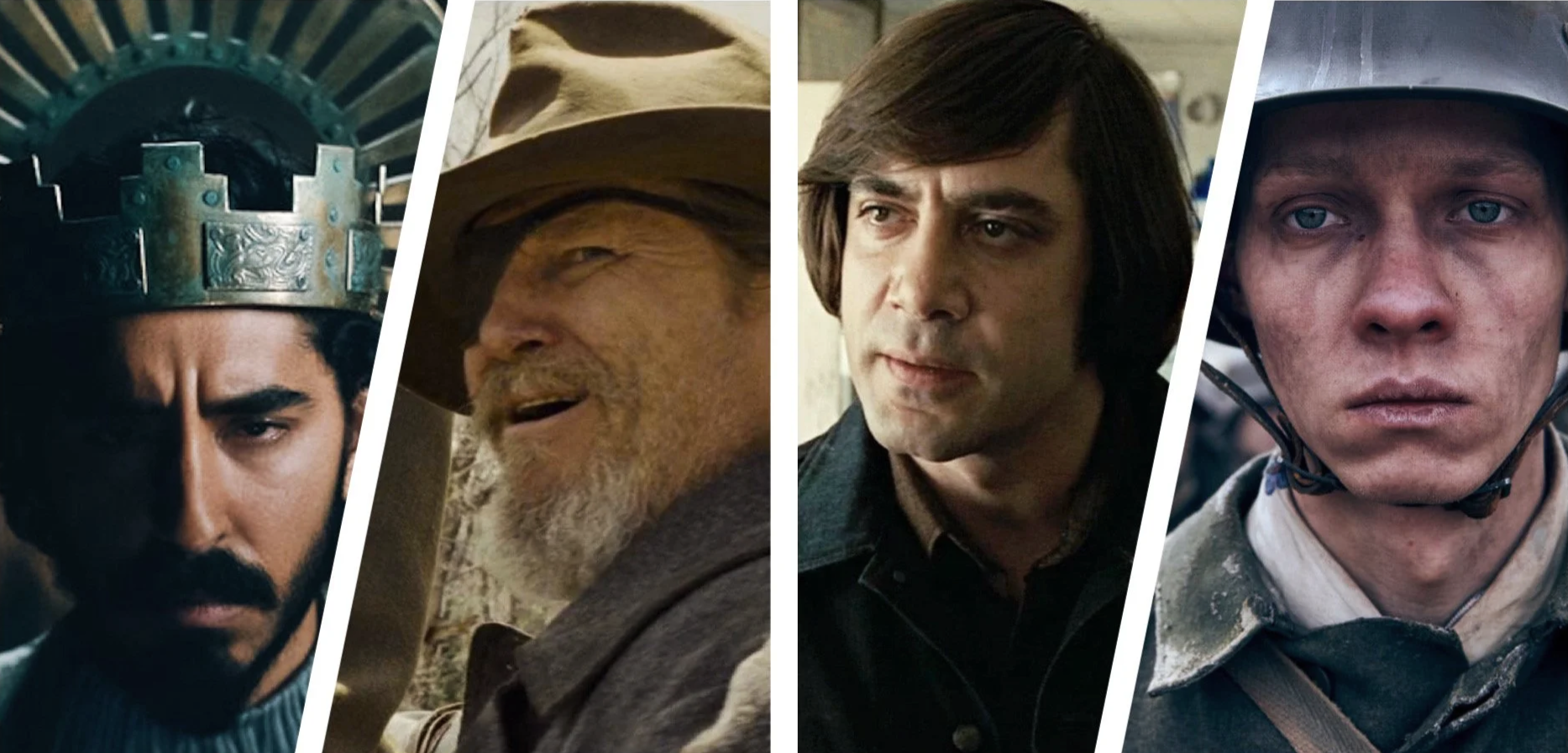
I’ve tried to arrange that list from simplest to most complex. The events narrated in a story are the easiest to get on screen. The meaning, what the author is apparently both getting out of the story and trying to share through it, and the tone of his storytelling are much harder. We’ve probably all seen movies that more or less adapted a book’s events without capturing the immaterial elements that give the book personality. A Handful of Dust, a quite literal adaptation of the great Waugh novel, comes to mind, as does the John Wayne True Grit. But other films might deviate here and there from the original while nailing its tone and moral register. The Coens’ No Country for Old Men and True Grit, both of which capture most of the events of their respective novels while, much more importantly, faithfully adapting their tones, are masterpieces in this regard.
All of this, according to our critic, is just “prose,” which “cannot faithfully” be made into a film. Cannot. This is not only oversimplified but wrong. Adaptation is difficult, but that we want to judge faithfulness at all indicates that it can be done, and can be done well.
Our critic is on firmer ground in asserting that films and books should be judged by different artistic standards, but this is common sense. Novels and movies tell stories in different ways and may or may not do so well, of course. But—still moving backwards—to assert a novel and its film adaptation are so separate that “it doesn’t matter” whether the adaptation is true to the book is foolishness.
Of course it matters. It matters because if a film adaptation of a book exists it exists because of the book. If a movie presumes to share a title with an author’s book, if it is meant to please readers of the book at all and not to be purely parasitic on the writer’s work and readership—we’re all familiar with the term cash-grab by now—the filmmakers owe it to the book to be faithful in at least some of the areas listed above. And having established that faithfulness is not, in fact, impossible, they owe it to the original to try.
I think it also matters because this kind of talk about the difficulty or impossibility of faithful adaptation has far too often served as an excuse for vandalism. Some vandalism originates with filmmakers contemptuous of their literary source material and wanting to drag it down to their level. Some comes from filmmakers who hubristically think they can improve on great literature. But perhaps the most common problem is the filmmaker with neither contempt nor reverence for the original, who sees it only as raw material to be reworked according to his preferences. It’s all content, after all.
This was my problem with two of the worst film adaptations I’ve seen in the last few years, The Green Knight and All Quiet on the Western Front, both of which—if you look at my reviews—I tried to judge on their merits as films while also noting their utter failure as adaptations. They don’t adapt the events, characters, meaning, or tone of the originals even a little bit faithfully. Are we to give them a pass because they have nice cinematography? Because they try to flatter our present assumptions?
There are other reasons to demand faithfulness of a film adaptation—the movie may be the one and only time many viewers, especially students, encounter any version of an author’s story—but these, I think, are the strongest. There is room for debate, of course. Arguments about whether and how Peter Jackson succeeded in adapting The Lord of the Rings, for example, have been fruitful for an appreciation of both the film trilogy and the novel. But handwaving even the possibility of faithfully adapting a book is bad for both.
A film might be just a film, but a film based on a book exists in relation to that book. If an author cared enough to write it and readers cared enough to read it, filmmakers owe them something more than apathy, hubris, or contempt. So do critics.