Richard Cory and ambiguity
/One of my favorite poets is Edwin Arlington Robinson. Though both popular and respected in his day, winning the Pulitzer for poetry three times, he seems largely forgotten now. I suspect this is largely a matter of timing: he mastered traditional form and meter, especially the sonnet and villanelle, just as Pound and Eliot and company were coming along to blow it all up.
Robinson’s skill also makes his tightly constructed verse seem effortless, even conversational. It’s clear and understandable—something else the modern poetry establishment, which came more and more to resemble a clique or cult, won’t abide—and mines powerful emotions from everyday scenes and images. Perhaps his best-known poems in this regard are a series of character sketches describing people from a fictitious New England village: “Reuben Bright,” “Aaron Stark,” “Luke Havergal,” “Cliff Klingenhagen,” and my personal favorite—read it and you’ll get why—“Miniver Cheevy.”
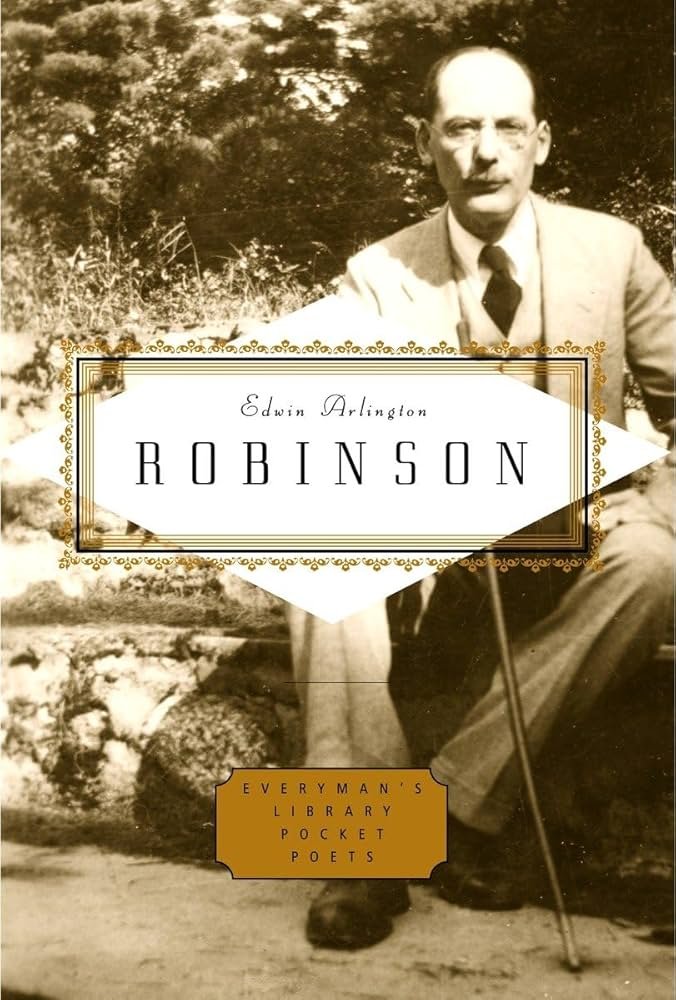
Another favorite, and one of Robinson’s most memorable, challenging, and dark, is “Richard Cory.” Take a minute and read it—I’m going to spoil it.
In sixteen lines, Robinson introduces us to a handsome, elegant, popular, courteous, and, yes, wealthy local gentleman, a man with everything going for him. Envy is perhaps too strong a word for the community’s attitude—Richard Cory is too well respected, if not beloved, to warrant envy—but the anonymous speaker of the poem makes it clear that Richard Cory lives in a world everyone else only aspires to. And then Richard Cory kills himself.
I still feel the shock of the final line all the years later, and the bitter irony with which it reframes the entire preceding poem. There is some ambiguity there—was Richard Cory discontent? ungrateful? depressed?—but the import is fairly clear: money can’t buy happiness, and you never know what troubles afflict someone of seemingly greater privilege than you.
The Simon and Garfunkel version, released on Sounds of Silence in 1966, traffics in a different kind of ambiguity. It’s less than three minutes long—listen to it here.
Paul Simon, in adapting Robinson’s poem, makes some noteworthy thematic changes. Where Robinson began with the impression Richard Cory gave his neighbors on the street and mentions his wealth last, Simon leads off with his wealth and even explains where it came from—an inheritance from his banker father, though we’re told later he owns a factory—highlighting the extent of his property and influence. “He had everything a man could want,” in this version, “Power, grace, and style,” which is the reverse of the human view Robinson gives us. (Simon also updates the outward signs of Richard Cory’s wealth for the swingin’ sixties with “the orgies on his yacht.”)
But the biggest change is the inclusion of a chorus, in which the anonymous speaker of Robinson’s poem, one of Richard Cory’s neighbors, comments on his own situation:
But I, I work in his factory
and I curse the life I’m living
and I curse my poverty
and I wish that I could be (3x)
Richard Cory.
The chorus comes around three times and, on its final repetition, which comes immediately after the announcement of Richard Cory’s suicide, it takes on a powerful irony. Much the way Richard Cory’s fate in the last line of Robinson’s original changes the feeling and meaning of the rest of the poem, in Simon’s lyric version it changes the tone and meaning of the chorus.
This is where the ambiguity arises. Just what kind of envy—certainly the appropriate word here—is the speaker revealing?
If Simon has directly addressed his adaptation anywhere, I haven’t seen it. But an interpretation I’ve run across again and again online takes the final repetition of the chorus to be an admission by the speaker that he wants, like Richard Cory, to kill himself. (This is the interpretation presented in the Wikipedia summary, which cites no sources.)
I don’t think this is correct. For one, it makes the speaker far too individual, where in both Robinson and the rest of Simon’s version the “we” and the “I” stand in for the whole community. It’s also nihilistic in a way I don’t feel jibes with the rest of the song or Simon’s general oeuvre. But, most importantly, I think it has a simpler, more straightforward meaning related to that of the original poem: people don’t learn. The desire for wealth and material comfort lead us to overlook, ignore, or wish away the problems that come with them. We all know money doesn’t buy happiness—it’s a cliche for a reason—but who actually lives as if they know that? Literature and mythology, not to mention real life, are full of people who choose wealth and success knowing it will destroy them.
The yearning-for-suicide reading, which is rooted in an apparent ambiguity, bothers me. I think it’s a misreading of the song, yes, but I also think ambiguity, which can be a valuable tool in the hands of a purposeful artist, is overvalued today. The ambiguous ending is a mainstay of twee arthouse cinema. But ambiguity ceases to be cute when applied to suicide.
While feeling down and exhausted over the last month I’ve been doing a slow reread of Chesterton’s Orthodoxy. Chesterton’s light and frothy reputation is belied by his serious treatment of a subject like suicide. Here he is in Chapter V, “The Flag of the World,” writing forcefully about the deadly sin at the heart of it:
Not only is suicide a sin, it is the sin. It is the ultimate and absolute evil, the refusal to take an interest in existence; the refusal to take the oath of loyalty to life. The man who kills a man, kills a man. The man who kills himself, kills all men; as far as he is concerned he wipes out the world. His act is worse (symbolically considered) than any rape or dynamite outrage. For it destroys all buildings: it insults all women. . . . [H]e is a mere destroyer; spiritually, he destroys the universe.
The power of Robinson’s poem and Simon’s song derives from the assumed heinousness of Richard Cory’s act. That’s why it’s shocking in both. His wealth, personal elegance, and position in life only make it ironic, not less terrible. If Richard Cory’s suicide is just one more option, one a person with far more reasons to be bitter might justifiably desire to take, the entire story loses its meaning and weight.
Maybe that’s what Simon intended. I don’t know—but it would ruin the song. As good a song as it is, Robinson’s poem, in its structure and its properly used ambiguity, is better, and better for us.