Len Deighton, RIP
/I was sorry to learn yesterday that novelist Len Deighton had died Sunday, aged 97. Deighton has an important place in the history of the spy novel and the thriller and a well-earned reputation for style, precision, and craftsmanship in his fiction. His excellence in these areas sets him apart from many of his successors in both genres.
I can’t remember when or where I first heard Deighton’s name. I seem to always have been aware of it. As my interest in the thriller genre deepened, his name came up more and more often as an innovator, an influence, and one of the masters. Shortly after Sarah and I married—when I had the first draft of Dark Full of Enemies on ice—I found a used copy of his name-making first novel, The IPCRESS File, and dove into it.
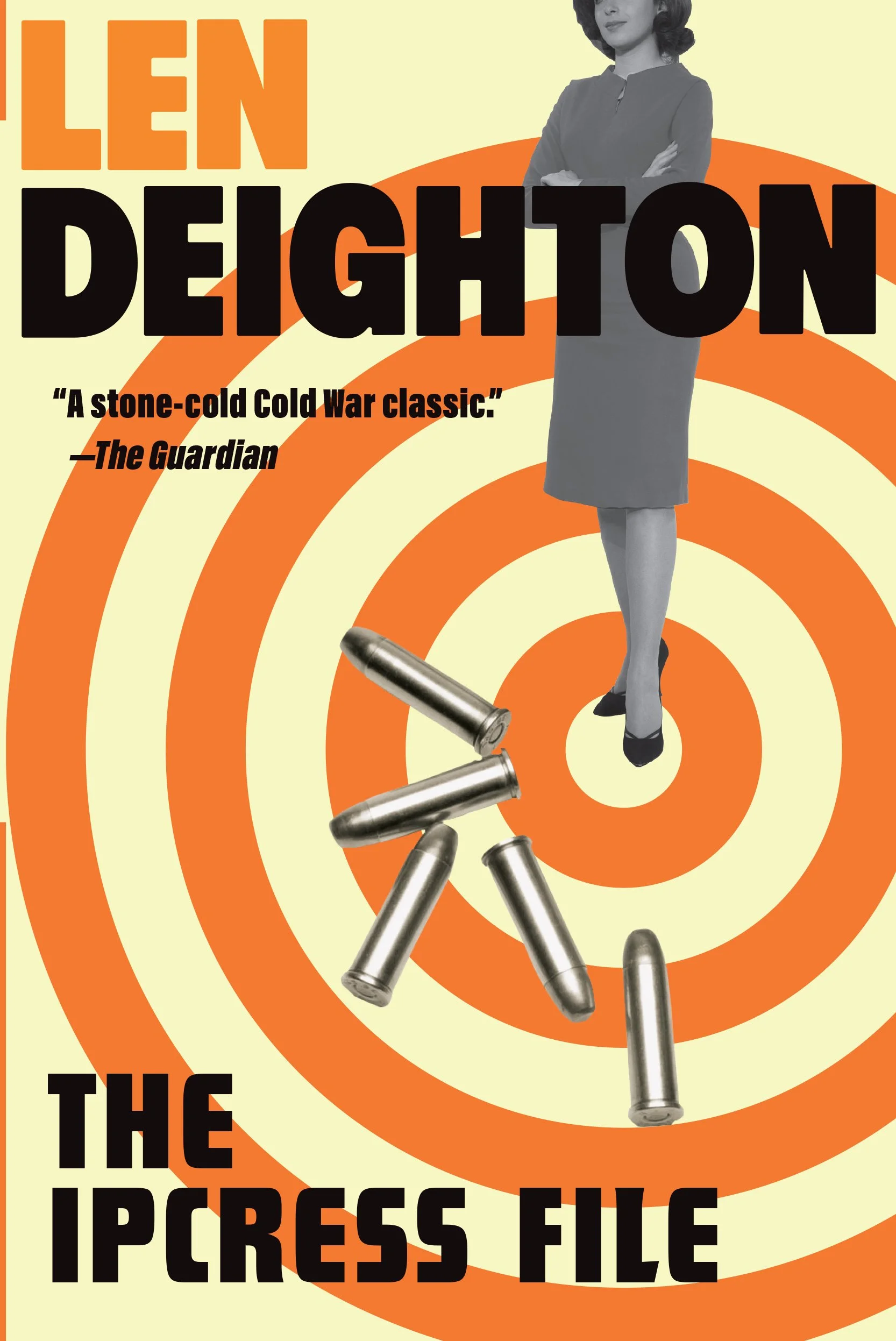
Here’s where my story may depart from other fans’: I didn’t care much for it. I found it disjointed and hard to follow. But it stuck with me—I still can’t say why. When I finished it I was dissatisfied but wanted to read more, and suspected that not getting The IPCRESS File was due to some failure on my part. I had to be missing something.
Fast forward some years and, after almost picking it up at the used book store many time, I splurged on Grove Atlantic’s new paperback of Berlin Game, the first in his Game Set Match trilogy centered on British spy Bernie Samson. I loved it from the first page, and followed it quickly with Mexico Set and London Match. I was irrevocably a Deighton fan. Bomber was one of my three favorite fiction reads last year. And I was delighted to learn, as I started collecting the new reissues, that Deighton was still alive in his late nineties.
He hadn’t published much more than afterwords to his previous work or this short, gossipy memoir of Ian Fleming and Kevin McClory in thirty years, since the final Bernie Samson novel, Charity. As one of his obituaries put it, he simply “appeared to switch off his word processor and, without fanfare, retire.” As was his right. But, just like with Charles Portis, I wonder what further joys we might have had of him.
You can get further details of Deighton’s life from the articles and memorials I’ve gathered below. What I most appreciate about Deighton is his work, of course, which is detailed without being overstuffed, technical without getting bogged down in irrelevant minutiae or wrecking the pacing, intricately plotted without turning his characters into automatons, character-driven without navel-gazing. Few thriller writers since have struck such a precise balance.
And his tone: I’ve seen his voice or characters or storytelling called “cynical” in a number of places, often in an attempt to belittle the thriller writers who came before him, but I don’t see it. Bomber may reflect bitterly the waste and confusion of modern war but it is intensely earnest. Deighton’s work is characterized not so much by cynicism as a studied wryness, an awareness of the tragedy and futility of the world that is often appropriate to the situations in his books, and just as often a life-saving skill. Not that his stories are grim or nihilistic. His ironic sense of humor pervades his books, adding an edge where needed and taking the edge off when things get grim. Deighton was an artist and brought a sharp sense of proportion to his craft.
Beyond the books, I appreciated his self-effacing manner in the handful of interviews he gave and his unmysterious nuts-and-bolts approach to his work. He had no pretensions, just dedication and skill. In this he was like another favorite writer: Elmore Leonard. Listening to both was a pleasure, and I’ve learned a lot from both. We all could. We shall not see their like again.
The Guardian had an unusually but justifiably long obituary that is well worth your time to read. Here’s a shorter BBC obit that is also worthwhile, and a sweet personal reminiscence by food journalist Tim Hayward on his surprising chance to interview Deighton. You can listen to the interview here or, if you can’t get that link to work (I couldn’t), on Apple Podcasts here. Finally, here are two older interviews that I’ve enjoyed and revisited several times—one with Melvyn Bragg for the BBC in 1977 and a studio interview for Thames TV in 1983. I blogged about a few comments from the former, about the writer’s duty to entertain, almost exactly a year ago.
Len Deighton, artist, entertainer, and exacting literary craftsman, RIP.