Summer reading 2026
/
The last few weeks have been maddeningly hot and busy, so the descriptions in the fully assembled reading list below may be a bit more laconic than usual, but I had a very good summer of reading and am excited to share the best of it. I hope y’all will find something good here to read this fall or winter.
For the purposes of this post, “summer” begins with my summer in-service in early May and ends today, Labor Day. As usual, audiobook “reads” are marked with an asterisk.
Favorite fiction
The Inklings Detective Agency, by John R Kelly—The Inklings, an informal club of Christian literary scholars at Oxford including, most famously, CS Lewis, JRR Tolkien, and Owen Barfield but with many other, less appreciated members like Hugo Dyson, Nevill Coghill, Adam Fox, and Warren “Warnie” Lewis, are approached by a famous benefactor, a man long thought dead who asks them to solve a series of murders. A fun gothic mystery studded with literary stars like Dorothy Sayers and, in a cameo, GK Chesterton, the story is satisfying and the way Kelly evokes the world and personalities of the Inklings is wonderful. Full review on the blog here.
Watcher in the Shadows, by Geoffrey Household—An obscure zoologist living in rural England finds himself the target of an obsessive but careful murderer. Both have secrets. A gripping and surprising thriller, one of my favorites yet from Household. Full review here.
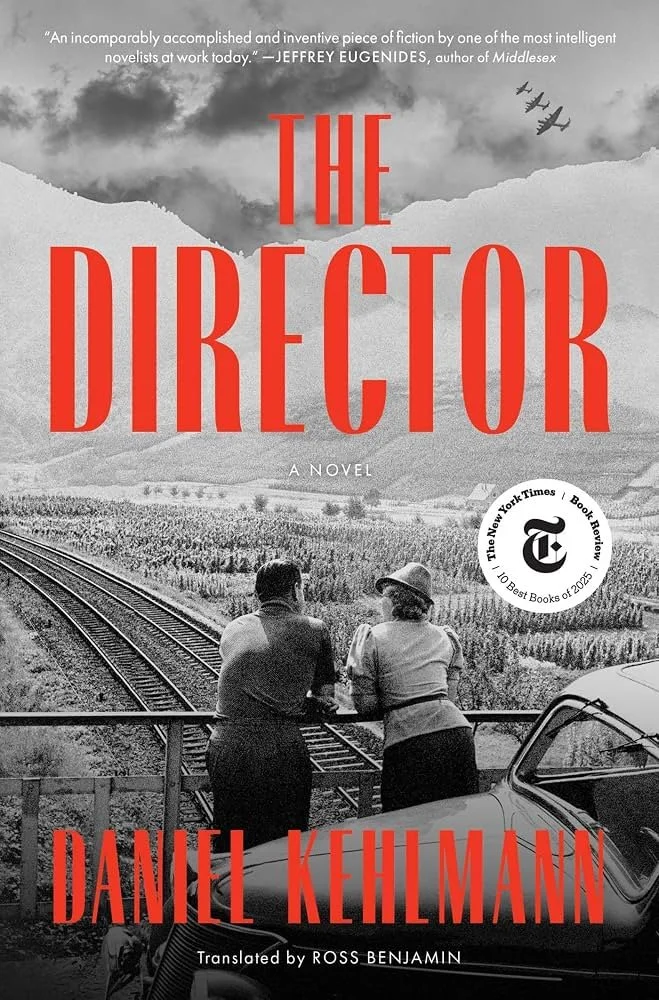
The Director, by Daniel Kehlmann, trans. Ross Benjamin—A fictionalized portrait of the great German film director GW Pabst who, after coming up in the early days of silent film and pioneering modern film editing, made acclaimed Weimar-era movies. When the novel begins, Pabst is working in Hollywood, misunderstood and frustrated. He ends up back in Germany just in time for the Second World War to begin, trapping him geographically. He also finds himself trapped artistically, convinced, through a combination of coaxing, flattery, and intimidation, to produce films under the Nazi aegis. Pabst, an anti-Nazi, tells himself is he not making propaganda for the regime, but his artistic singlemindedness rather than his ideology gradually compromises him. A brisk but rich novel with an incredibly dramatic climax—Pabst desperately shooting and cutting a movie in Prague as the Soviets take the city—and a complicated picture of a complicated situation. Likely my favorite novel this summer and one I had hoped to write a full review of here but, alas, I could not make time.
Bad Actors, by Mick Herron—Another solid entry in the Slough House series, with some nicely interwoven plots and good teamwork from a surprising pair of characters. The original protagonist, River Cartwright, is offstage for the entirety of this one but apparently returns in the most recent installment, which came out in paperback last month. Looking forward to it.
At Home in Mitford, by Jan Karon—Portraits and incidents in the life of an aging smalltown priest. Not the kind of book I’d have ever picked up on my own, but when we finished our previous bedtime reading my wife asked me to read this: and it was wonderful. Fun, funny, peopled with charming and recognizable characters and set in a sharply observed Southern mountain town, it was also not infrequently moving. And in keeping with its main character’s vocation, the occasional meditations on Scripture and the faith were always surprisingly well-timed for me.
I, Ripper, by Stephen Hunter—A meticulously researched picture of late Victorian London and the events of the Whitechapel Murders, fused with an ably plotted and surprising thriller. Grim but engrossing. Full review on the blog here.
A Farewell to Arms, by Ernest Hemingway—A powerful novel, full of irony and pathos and regret, and a classic of modern literature. I hated A Farewell to Arms when I read it in high school but, over time, decided that I might have missed something. I finally revisited it this summer and found that, yes, the problem was me—namely seventeen-year old me. A reflection on revisiting the book after a quarter-century here.
Special mentions
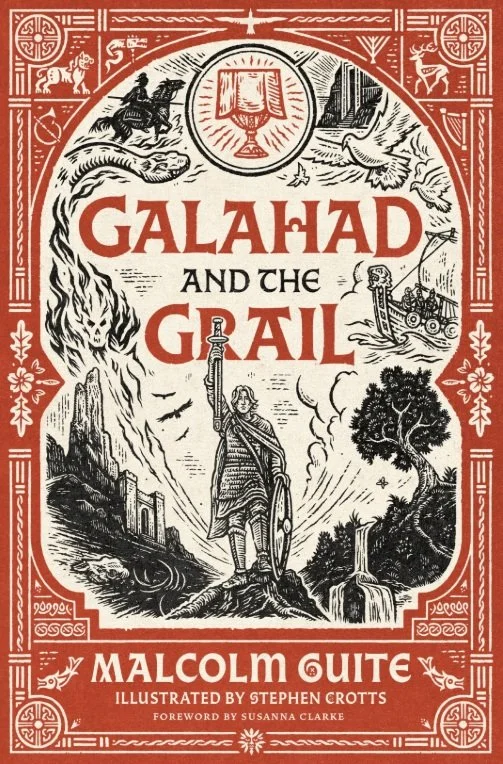
Galahad and the Grail, by Malcolm Guite, illustrated by Stephen Crotts—A birthday gift from my wife, who correctly intuited that it was right up my alley. This is the first (but chronologically third) volume in Merlin’s Isle, a four-book cycle of ballads based on King Arthur by Malcolm Guite. The story, which fuses and expands upon several medieval versions of the Grail quest, is epic-length but told in ballad stanzas that can be read silently or aloud to great effect, and the illustrations are magnificent. Guite follows more of the later Arthur traditions in reducing the role of Sir Perceval, in whose story the Grail first appeared, but the end result is still great. Beautiful through and through. Looking forward to the second book (chronologically the first), The Coming of Arthur, which is due out this fall and my wife preordered as part of my birthday.
The Odyssey, by Homer, a graphic novel adaptation by Gareth Hinds—Marvelous artwork and a respectful approach to Homer’s story distinguish Hinds’s adaptation from many other retellings. Even as a comic book, Homer’s power shows clearly.
Vita Nuova, by Dante, trans. Joseph Luzzi—A solid, readable new translation of Dante’s first book, beautifully designed and printed by Liveright. For whatever reason, despite loving the Comedy and reading and rereading it many times, I’ve always struggled with La Vita Nuova. I had no problem this time.
Favorite non-fiction
The Medium is the Massage: An Inventory of Effects, by Marshall McLuhan, designed by Quentin Fiore—Brisk, enjoyable, insightful, and prescient. McLuhan, extrapolating from his understanding of the mode of communication mattering more than what is communicated and from the history of such modes leading up to his time (1967), more or less predicts the re-barbarization of culture, the collapse of linear thinking and communication under the influence of interconnected information like the internet, and even self-publishing accessible to everyone. An important work that, given its loop-the-loop structure and sometimes jarring mid-century collage style (which, to be honest, hasn’t dated well), demands a reread soon.
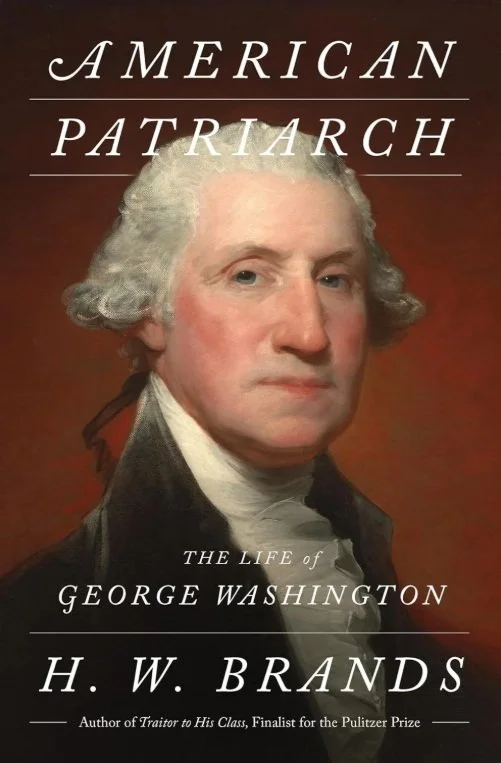
American Patriarch: The Life of George Washington, by HW Brands—A solid new biography making extensive use of primary source quotations. Perhaps too much—there were a few times I wished Brands would simply summarize and comment upon events. But getting the words of the participants themselves is always valuable, and Brands’s approach to his subjects is largely descriptive, allowing the reader to see the people of Washington’s world as they saw and talked about themselves—a charitable and all too rare approach. The one thing that has most consistently challenged my Tory attitude toward the Revolution is Washington’s personal character, which Brands allows to shine. I find I admire Washington most before his presidency, when he allowed the baleful influence of Hamilton to warp the entire forward trajectory of the country. Brands’s brief conclusion, in which he sums Washington up as a man of a lost age who, through his peculiar strength of character and old-world virtues, ushered in a new world, is surprising but certainly right. Washington, for better or worse, helped create a country that would eventually prove unable to create men like him.
Man-Eaters of Kumaon, by Jim Corbett*—My favorite non-fiction of the summer. Corbett, a big game hunter and conservationist who lived most of his life in British India, retells the stories of man-eating tigers and leopards and what it took to stop them. Moving, dramatic, and exciting. Full review on the blog here.
Chaucer, by Peter Ackroyd*—One of a series of short biographies by Ackroyd (another is his Poe: A Life Cut Short, which is excellent), Chaucer offers a good portrait of the poet’s life and work. Ackroyd pays particular attention to Chaucer’s connections to London (including the detail, which I somehow didn’t know, that Wat Tyler’s rebels entered London through the gate above which Chaucer and his family were living in 1381) and the strengths and influence of his work. I listened to this on a long drive and would very much like to revisit it in print soon.
Thomas More: A Very Short Introduction, by Peter Marshall—A readable succinct overview of More’s life and work—as lawyer, philosopher, writer, and politician. Marshall is especially helpful on Utopia, a book whose meaning and seriousness I’ve never been able to settle on, and the more controversial episodes of More’s career. And as much as I love A Man for All Seasons, Marshall also quite rightly pushes back on Robert Bolt’s admirable but foreshortened version of More, aiming to present more of the man rather than the seasons. With Cicero: A Very Short Introduction, which I read back at the beginning of the year, that’s two excellent little books on principled but doomed lawyers this year.
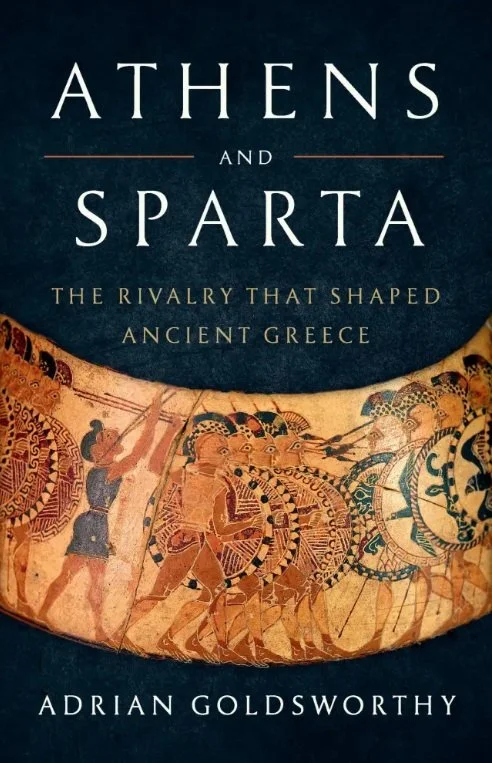
Athens and Sparta: The Rivalry that Shaped Ancient Greece, by Adrian Goldsworthy—A sort of prequel to Goldsworthy’s Philip and Alexander, this book begins in the Mycenaean Era, tracing the development Athens and Sparta both as poleis with distinct cultures and institutions and as rivals in prestige and military power. Goldsworthy notes that most of what we know about Sparta comes from outsiders and is correspondingly careful in his analysis and judgments but without chucking all of the evidence as fiction the way some postmodern classicists do. The chapters on Athenian politics, the Persian Wars, and especially the two stages of the Peloponnesian War—which Goldsworthy, contra Thucydides, presents as the result of a two-way contest in status and prestige, all Greeks being keen to be seen as excellent—are clear, vivid, and appropriately dramatic. I especially appreciated Goldsworthy’s emphasis on contingency and the role of culture—nothing in this book was inevitable, and what finally drove Athens and Sparta into a destructive cycle of warring was not actually how different they were from each other but what they had in common.
Tame Your Thoughts: Three Tools to Transform Your Mind and Renew Your Life, by Max Lucado*—A simple book about worry, intrusive thoughts, and other problems. Lucado’s emphasis on rebutting untruth with truth and recognizing how the worrier gets caught up in false narratives of his own creation is especially helpful. The second half’s thematic chapters offer more more focused guidance on specific problems.
Nemesis: Medieval England’s Greatest Enemy, by Catherine Hanley—A biography of Philip II Augustus, King of France for forty-three years, as seen through his decades of conflict with four Plantagenet kings of England—Henry II, Richard the Lionheart, John, and Henry III. The focus is primarily political and strategic, though Hanley does a good job of bringing personality and culture into her pictures of all the major players. An extremely helpful book; though I have been long familiar with most of this story I had always learned and studied it from the Plantagenet perspective, and Hanley’s portrait of Philip as both a cunning and politically adept manipulator—a well-established image—and a king willing to master the hard work of siegecraft and take the field with the army was a revelation.
John Buchan June
With this fifth John Buchan June, I’ve finally exhausted the supply of Buchan novels and dipped a little further into his body of biography. A solid set of more obscure works. John Buchan June will return next year, but in what form I’m not yet sure. In the meantime, all reviews are linked below:
Augustus (1937)
The Half-Hearted (1900)
The Magic Walking Stick (1932)
A Lodge in the Wilderness (1906)
The Thirty-Nine Steps (1915)
The Long Traverse (1941)
Sir Quixote of the Moors (1895)
It’s hard to name overall favorites with such an eclectic batch. The Half-Hearted represents some good early Buchan adventuring and Buchan’s two children’s novels, The Magic Walking Stick and the unfinished, posthumously published The Long Traverse, were both imaginative and fun. Probably the best book—considered as a book—was Augustus, an excellent and insightful biography that’s still worthwhile almost ninety years later, but I think I enjoyed The Magic Walking Stick most. Check out the reviews above!
Favorite kids’ books
The Wind in the Willows, by Kenneth Grahame—I read this aloud to the kids before bed over several weeks. I may have read excerpts in high school Lit but, if so, I didn’t remember a thing. The hype is real. The Wind in the Willows is a pure delight: beautifully written, strange and surprising, and funny throughout. I hesitated to class this under “kids’ books” but if there’s a children’s literature canon this would certainly be an important part of it, and rightly so. Brief reflection on how Grahame uses his fun, well-realized characters to introduce what in a lesser book might be called a plot contrivance here.
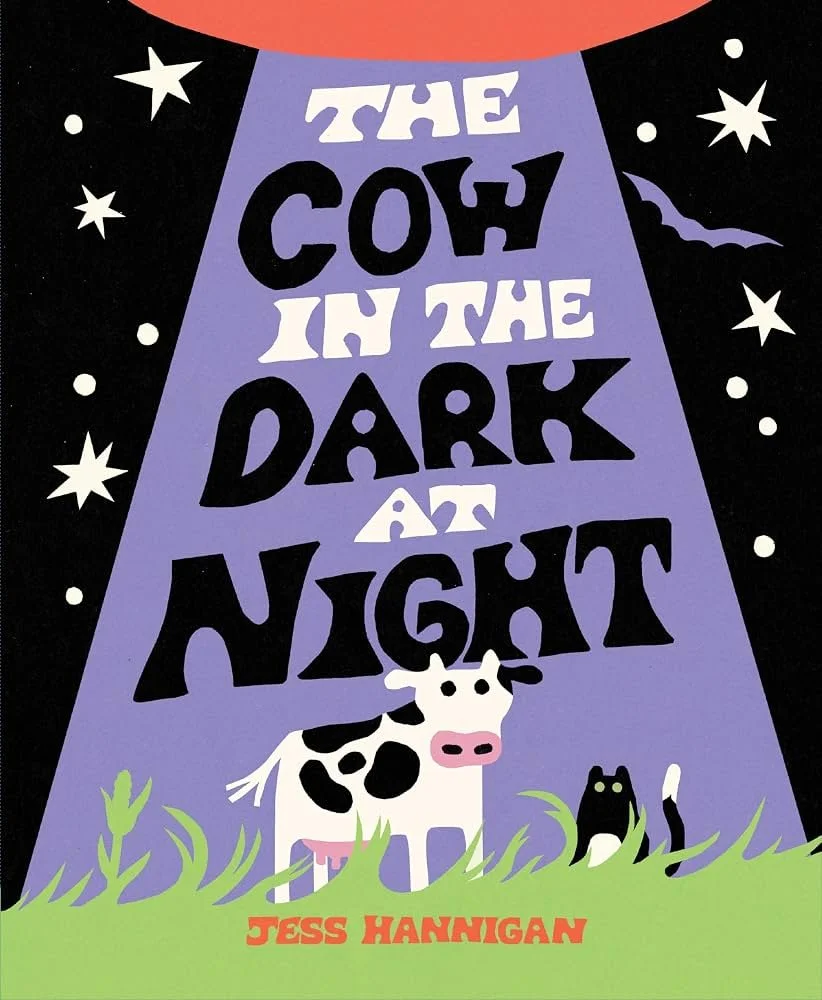
The Cow in the Dark at Night, by Jess Hannigan—An oblivious cow decides to stay awake all night to see what all the fuss is about and meets some interesting “night people” on her adventure. I can’t give anything else away—go into this book as cold as you can. It’s a hoot. A fun read-aloud for both adults and kids; I read this first to my wife after I picked it up at the library, then to our two older boys, and finally to our daughter, and all of them laughed out loud more than once.
Rereads
La Vita Nuova, by Dante, trans. Joseph Luzzi
A Farewell to Arms, by Ernest Hemingway
Vincent Can’t Sleep: Van Gogh Paints the Night Sky, by Barb Rosenstock, illustrated by Mary GrandPré—Brief personal reflection on what this book has meant to me after a terrible bout of insomnia earlier this year here.
The Thirty-Nine Steps, by John Buchan—Reread for the first time since the first John Buchan June for an interview on The Wade Show with Wade, available here.
Fahrenheit 451, by Ray Bradbury—Short reflection on the book’s most accurate and realistic “prediction” here.
Looking ahead
Having reread a couple books from high school—one I hated, one I loved—to see how they’ve held up, I’m doing the same with The Guns of Navarone, the basis of one of my favorite movies but a novel I found disappointing twenty-five years ago. After deliberately trying to read some of the good history I’ve had on standby near the end of the summer I plan to read more this fall, and hope to take a crack at a second Chestertober after a year without. And of course I will read fiction. I plan to leaven the last couple years’ steady diet of spy novels and classic thrillers with some bookish novels—literature about literature.
I have big plans. I hope y’all will be here for it. In the meantime, thanks as always for reading!