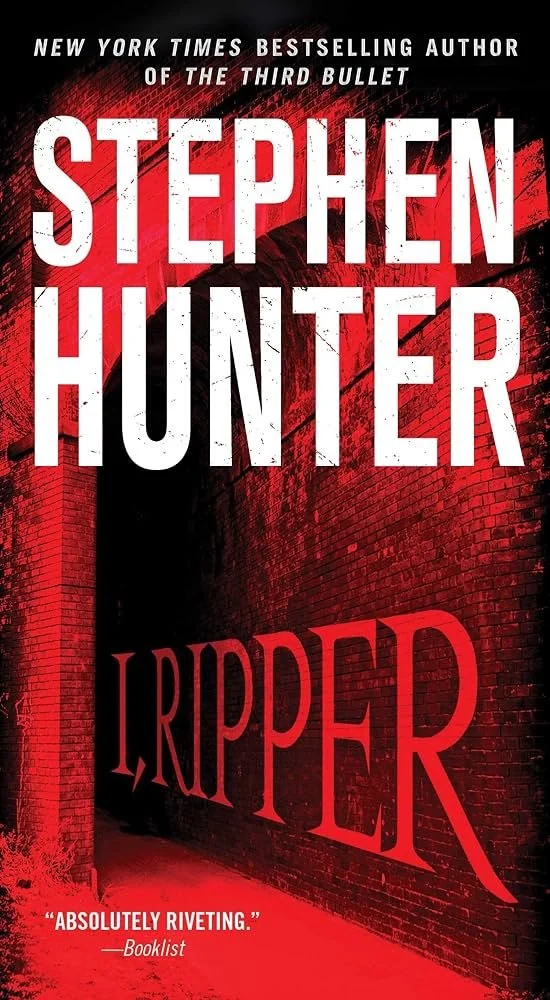
I, Ripper
/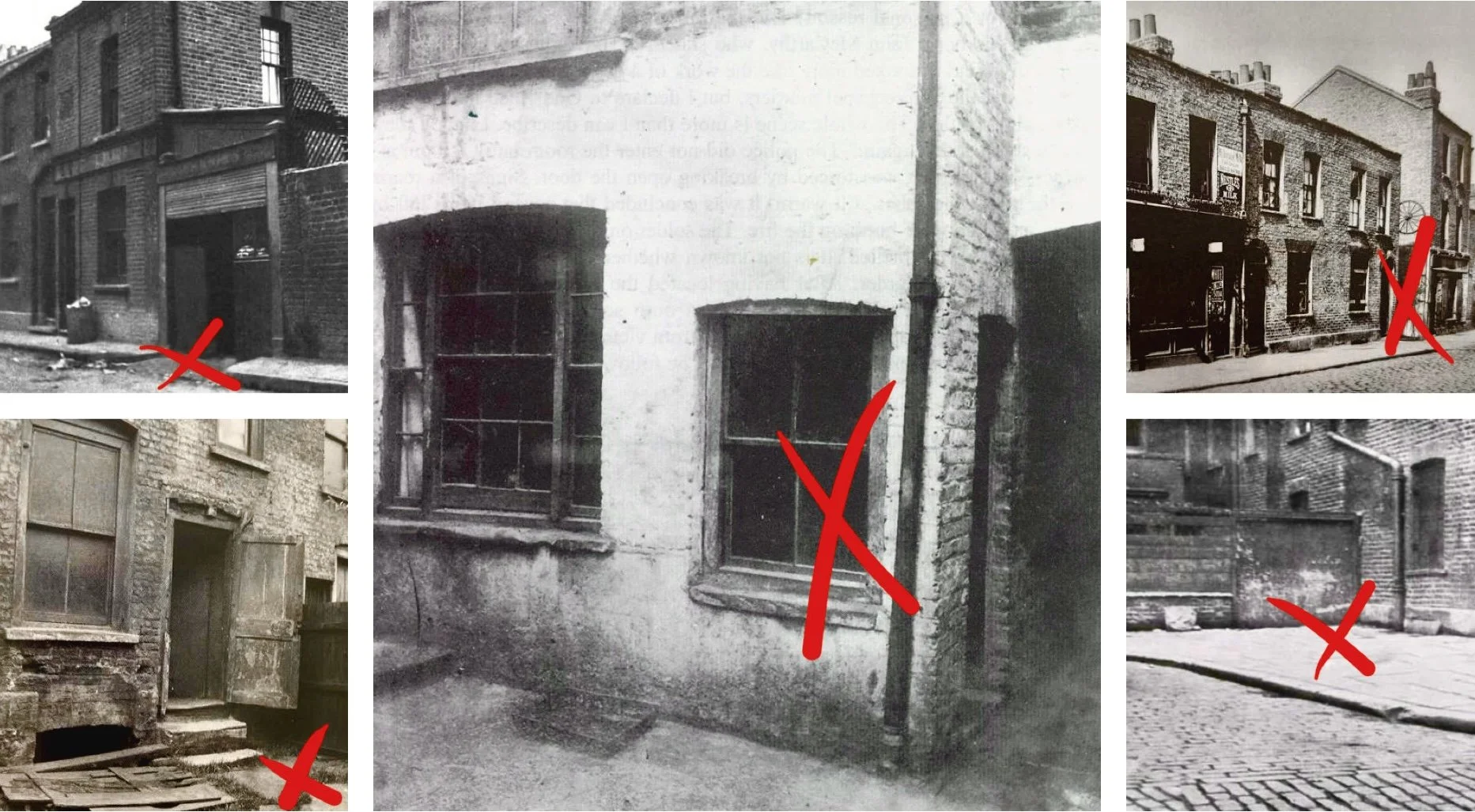
The scene of the crime in Jack the Ripper’s five “canonical” murders
I’ll begin this review with a caution—Stephen Hunter’s I, Ripper is thrilling entertainment but not for the faint of heart. Hunter himself noted, at a booksigning at the time of the book’s release in 2015, that he was concerned about the novel’s violence when he submitted the first chapters to his editor. Her response: “Why don’t you move the violence to the front and really start the book off with a bang?”
He did, and it does. Be warned.
Jack the Ripper killed five women—that we are certain of—in the fall of 1888. All of the victims were occasional or professional prostitutes and most of them were alcoholics who spent the money they earned from their johns—thruppence at a time—on gin and, occasionally, one night in a rented bed in a dosshouse. Whitechapel teemed with such as well as recent immigrants from Ireland, Scandinavia, and Eastern Europe—the latter of which included lots of Jews, political radicals, and Jewish political radicals, all on the run from Tsarist persecution—and a constantly changing mob of sailors and industrial workers. The district’s dense network of shops and rowhouses and unlighted maze of small streets and alleys hummed with activity even during the night, as workers walked to or from late shifts at slaughterhouses and factories and the docks and upper class types went slumming in the pubs or, perhaps, looking for a “judy.”
From the first page, in which Jack, as yet unnamed but in his own voice—a found diary—cuts the throat of his first victim, Hunter evokes the jungly tumult and grime of this world brilliantly. I, Ripper’s authentic atmosphere is one of its greatest strengths.
Another is its structure. Telling the story in alternating chapters of Jack’s diary and a 1912 memoir by Jeb, an Irish reporter working under a penname for the Star, a London tabloid, Hunter pits the two against each other as initially unwitting foes. Jack, roaming Whitechapel and brutalizing the lone prostitutes, is driven by some unexplained mission. Jeb, ambitious and cold by his own admission, breaks crucial news about the first murders and starts to make a name for himself.
Jack, not insane but monstrous, is mysterious only in the sense that we hope to learn who he is and why he is doing this. Jeb is a more complicated creature. He realizes he is taking advantage of Jack’s crimes—and his mutilated victims—to build up his own reputation as a writer but genuinely believes in reporting the facts and castigates himself when lured into helping fake the letter that coins the killer’s name. A fellow reporter on the Star, an American, routinely speculates in print and fixates on anti-Semitic theories early on in the crime spree. Jeb worries that his reporting may cause vigilantism or—if his colleague has his way—pogroms.
Just as he develops qualms about his work, Jeb meets Professor Dare. A linguist and an advocate of what might later be called psychological conditioning, Dare offers to share his theory about Jack with Jeb—the killer is dyslexic, and has experience in the remote reaches of Afghanistan, where the women of the tribes disembowel prisoners in exactly the manner Jack does. Find a man matching this description—they decide to call it a “profile”—and they find Jack.
Added to his ambition and his unquiet desire to report accurately and responsibly, Jeb takes on detective work. This will place him on a path to a final collision with Jack the Ripper himself.
I don’t think I can reveal more without giving away too much. I, Ripper’s fictional plot, elegantly interlaced in the imagined diary of Jack and the memoir of Jeb—who turns out to be a real person with a famous name that I don’t want to give away—is solidly constructed and resolves in several good twists, some with surprisingly literary implications. It is one of this grim, gory book’s great enjoyments.
But only one. Another is Hunter’s imagining of the rumbustious world of London journalism. The former movie critic for the Washington Post, his Star newsroom and its combination of jocularity and callousness feels utterly real. A standout chapter is that in which Jeb, goaded into it by his editor and a colleague, forges the first and most famous Jack the Ripper letter. The calculated poetry of the letter and the group effort to get it notoriety is entertaining, convincing—the “Dear Boss” letter has been suspected of fakery since it appeared, but I had never considered its artistic and linguistic character before—and revealing.
“Newspapers,” Jack muses about halfway through. “What’s the point of existing if you’re always going to get everything so wrong?”
That’s the fictional side of I, Ripper. Another pleasure of the book is Hunter’s attention to the actual facts of the Jack the Ripper case. I’ve mentioned his vivid recreation of the grungy, bestial world of Whitechapel—which is not quite on the same level of depravity as a James Ellroy novel but might still leave you wanting to take a shower—but the crimes, the crime scenes, the victims, and many of the other real people involved are painstakingly imagined without the stiff, lifeless effect of some similarly detailed historical novels. The historical figures have personality, living and breathing as convincingly as the fictional characters.
This is especially important in the case of the victims. Hunter doesn’t soft-pedal their lifestyles or recast them as somehow noble, and yet, though staggering drunk, winkingly offering mortal sin to the passerby, or both at the same time, they feel like real people and worthy of sympathy. Their encounters with Jack evoke dread and pity and his treatment of them as objects, mere matter to be parted and manipulated for his own ends, seems more monstrous as a result.
Hunter committed himself to changing as few known historical details as possible, working around the truth rather than altering it for his fiction. In an afterword, he notes four minute details he tweaked, only two of which actually relate directly to Jack’s actions. An impressive achievement. And if you know the case well, he includes enough detail to pinpoint where his fictional story is weaving into the truth. For example, as Jack approaches Elizabeth Stride, the Swedish-born third victim, he passes a man wearing a deerstalker cap. This was a real man seen in conversation with Stride by the penultimate witness to see her alive, a police constable. This places Jack’s assault in time and in relation to other witnesses like Israel Schwartz, who, based on Hunter’s fictional reconstruction of events, did not actually see Jack.
Real life informs the fiction, which convincingly creates an alternative explanation for the known facts. This is a tricky bit of business for a novelist to pull off, and Hunter does it effortlessly—and, for the reader who doesn’t know their Jack the Ripper lore, invisibly and unobtrusively. His fictional solution, rooted as it is in the facts, offers enjoyable resolution to a real life mystery.
If I have any complaints whatsoever about I, Ripper they are minor: a handful of anachronisms (Belloc’s famous line about the Maxim gun, from 1898, is paraphrased by Jack ten years too early) and some tonal convergence of Jack’s diary and Jeb’s memoir that led me to suspect, briefly, that Jeb would turn out to be Jack (he doesn’t; Hunter is much better than that). I suspected the ultimate culprit early—it’s a whodunnit, or maybe who’s-doing-it, after all—but Hunter successfully obscures, misleads, and distracts so that the final reveal was still satisfying.
Finally—an odd complaint—I, Ripper is simply too good. I don’t think I can recommend it to just anyone. This is a gripping, disturbing thriller and a masterpiece of historical fiction, and Hunter’s success in conveying Jack’s horror is what makes it difficult to recommend. But if you’re interested in the case, enjoy a well-constructed crime and suspense novel, and think you can handle a few months in Whitechapel and the company of one of the worst people who ever lived, you should definitely check it out.