Lukacs on Hitler as Antichrist

Several weeks ago I shared a longish passage from the late John Lukacs’s 1997 study The Hitler of History in which Lukacs warns against thinking of or describing Hitler as insane or mad. Doing so, he argues, absolves Hitler from responsibility for his actions. Likewise with thinking of Hitler as demonic.

I finally finished The Hitler of History today. It’s excellent, and I highly recommend it if you’d like a deep dive into some of the history of the study of Hitler. But a passage in the final chapter—indeed, in the very last pages—jumped out at me. In concluding the book, Lukacs returns to his warnings against the folly of ascribing madness or demonic power to Hitler but notes that there is one spiritual parallel that can, in some circumstances, be appropriately applied—and not only to Hitler, but to other populist leaders in the age of mass politics, a point he makes clear in this chilling footnote:

In this respect we ought to, again, reject the “demonization” of Hitler, or the temptation to attribute to him the qualities of being “diabolical” or “satanic.” To the contrary, we can see elements in his career that bear an uncanny reminder of what St. John of the Apocalypse predicted as the Antichrist. The Antichrist will not be horrid and devilish, incarnating some kind of frightful monster—hence recognizable immediately. He will not seem to be anti-Christian. He will be smiling, generous, popular, an idol, adored by masses of people because of the sunny prosperity he seems to have brought, a false father (or husband) to his people. Save for a small minority, Christians will believe in him and follow him. Like the Jews at the time of the First Coming, Christians at the time of the Antichrist—that is, before the Second Coming—will divide. Before the end of the world the superficial Christians will follow the Antichrist, and only a small minority will recognize his awful portents. Well, Hitler did not bring about the end of the world, but there was a time—not yet the time of the mass murders but the time of the Third Reich in the 1930s—when some of St. John’s prophecies about the Antichrist accorded with this appearance and this appeal. And it may not be unreasonable to imagine that in the coming age of the masses he was but the first of Antichrist-like popular figures.

Let the reader understand.

Gladwell and Lewis on transactive memory

I’m currently reading Malcolm Gladwell’s latest book, The Bomber Mafia: A Dream, a Temptation, and the Longest Night of the Second World War, about the tension between the ideals of precision bombing and the pragmatic and brutal reality of “area” bombing within the US Army Air Forces. It’s very good so far.

As is his wont, Gladwell includes many interesting asides to buttress his story. Among them is the following:

The psychologist Daniel Wegner has this beautiful concept called transactive memory, which is the observation that we don’t just store information in our minds or in specific places. We also store memories and understanding in the minds of the people we love. You don’t need to remember your child’s emotional relationship to her teacher because you know your wife will; you don’t have to remember how to work the remote because you know your daughter will. That’s transactive memory. Little bits of ourselves reside in other people’s minds. Wegner has a heartbreaking riff about what one member of a couple will often say when the other one dies—that some part of him or her died along with the partner. That, Wegner says, is literally true. When your partner dies, everything that you have stored in that person’s brain is gone.

Transactive memory” gives me a term for a phenomenon described quite memorably and movingly by CS Lewis in his 1960 book The Four Loves. Though Gladwell focuses on romantic or spousal relationships (via the modish but vague “partners”), Lewis’s context is a discussion of friendship. The concept applies to both. Lewis:

Lamb says somewhere that if, of three friends (A, B, and C), A should die, then B loses not only A but “A’s part in C,” which C loses not only A but “A’s part in B.” In each of my friends there is something that only some other friend can fully bring out. By myself I am not large enough to call the whole man into activity; I want other lights than my own to show all his facets. Now that Charles is dead, I shall never again see Ronald’s reaction to a specifically Caroline joke. Far from having more of Ronald, having him “to myself” now that Charles is away, I have less of Ronald. Hence true Friendship is the least jealous of loves. Two friends delight to be joined by a third, and three by a fourth, if only the newcomer is qualified to become a real friend. They can then say, as the blessed souls say to Dante, “Here comes one who will augment our loves.” For in this love “to divide is not to take away.” Of course the scarcity of kindred souls—not to mention practical considerations about the size of rooms and the audibility of voices—set limits to the enlargement of the circle; but within those limits we possess each friend not less but more as the number of those with whom we share him increases.

Is there any more wonderful mystery than friendship? “Transactive memory” names just another facet of the way, through relationship, mere individuals enrich each other.

By the way, the “Charles” and “Ronald” in the passage from Lewis are not substitutes for Tom, Dick, and Harry but real people—Charles Williams and JRR Tolkien, members with Lewis of the writers’ group the Inklings. Charles Williams died suddenly in 1945 at the age of 58, unexpectedly reducing the Inklings by one.

In praise of cows

Detail from Grazing Cows, by Daniel Strain

Detail from Grazing Cows, by Daniel Strain

Four items in praise of cows, occasioned by my browsing of photos from Scotland and the Alps on Instagram:

  • First, dairy and beef, against which I will hear no ill spoken. I invoke this not in a sense of gluttony but of sincere appreciation.

  • There are a great many regional varieties of cow, all of which have interesting histories, all of which have rich local traditions bound up with them, and all of which, viewed in their home context, adorn their landscapes or, viewed in isolation, suggest them. Look at the Highland without feeling a cool breeze, the Braunvieh without hearing cowbells, or the Texas longhorn without hearing the dry rustle of the mesquite, and I’d suggest checking your imagination for fault.

  • Very few landscapes cannot be improved by a scattering of grazing cows. They provide a sense of both scale and restfulness, the latter of which you do not get from the presence of human figures.

  • Bovine—from Latin bovus, “cow”—literally means “cow-like” but is often used metaphorically for, as Dictionary.com puts it, “stolid, dull.” As the cow, to me, radiates a humble equanimity, I’d love to see bovine rehabilitated as a term of praise.

One addendum, after I had already pondered the above silliness:

  • On cowbells: these are intensely annoying at high school graduations but, heard at a distance in a meadow, as good as windchimes for relaxation.

Spring reading 2021

gandalf archives.jpg

These seasonal reading lists kind of fell by the wayside last year, another victim of COVID, the shutdowns, and systemic whatever. I’m resurrecting them, both for my own sake and for y’all’s. I’ve had an unusually good spring of reading—43 books by my admittedly arbitrary cutoff date for the season—and I hope this recap of my favorites (and a few I did not like) will give y’all at least a few ideas if you’re looking for something good to read.

Before I start listing things, for the purposes of this reading list, “spring” will be defined as the period from New Year’s Day to the middle of my college’s break between the spring and summer semesters, May 8.

Non-fiction

Here, in no particular order, are my favorite non-fiction reads of the spring, with a few near-favorites that I’d still recommend highly:

This Terrible Sound: The Battle of Chickamauga, by Peter Cozzens—A massive, exhaustively researched, and dramatically written account of the second bloodiest battle of the Civil War. Cozzens gives extensive coverage both to the high-level planning and maneuvering of the commanders on both sides, an important part of his narrative as Chickamauga was a terribly confusing battle, as well as the experiences of the soldiers themselves, many of whom lived through hair-raising and horrific firefights. Read this ahead of my family’s visit to the battlefield at the beginning of March. Really excellent.

Whatever it is, the way you tell your story online can make all the difference.

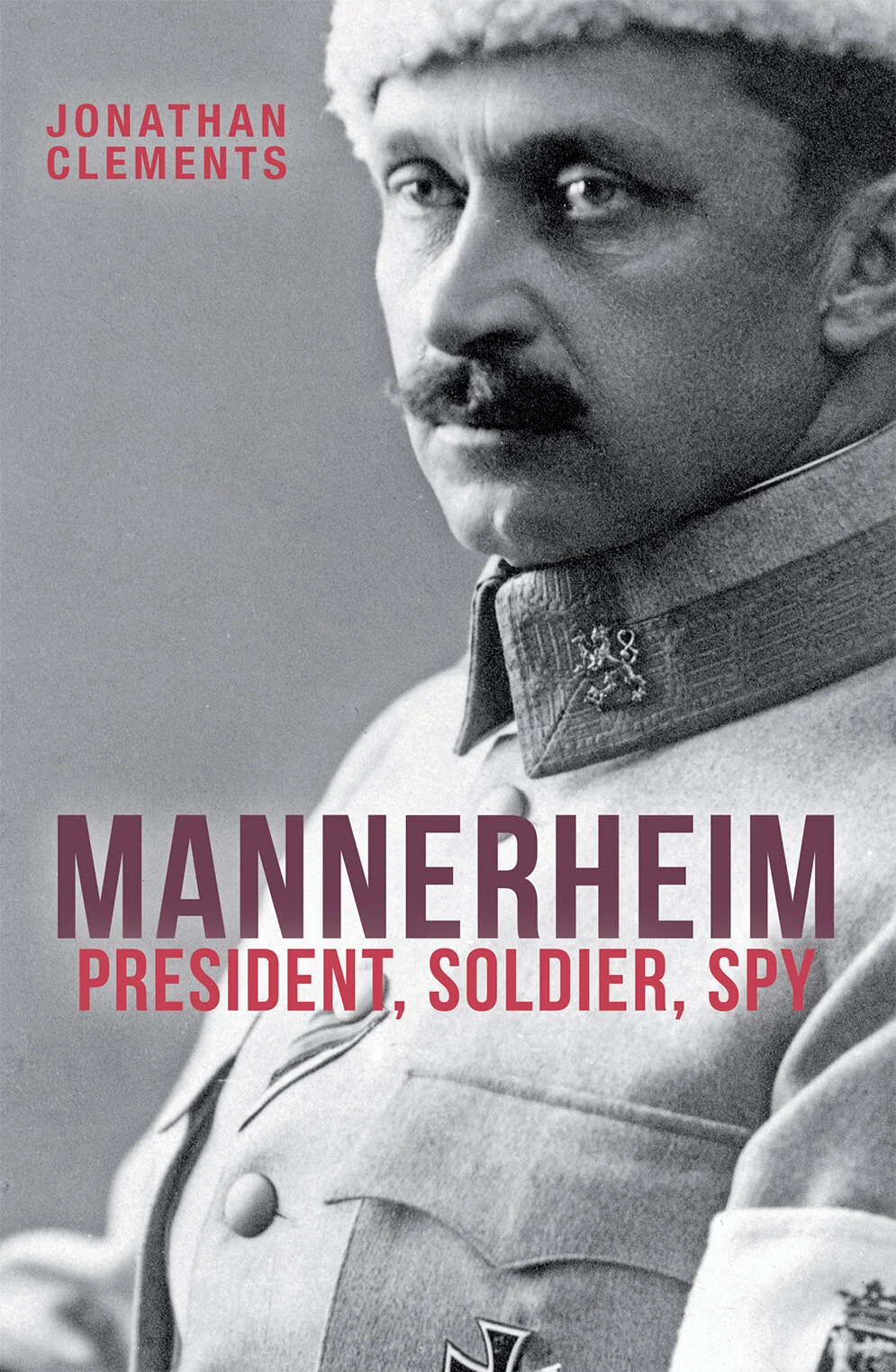
Mannerheim: President, Soldier, Spy, by Jonathan Clements—A well-written and lively biography of Carl Gustaf Emil Mannerheim: soldier, cavalryman, world traveler, secret agent, personal acquaintance of Tsar Nicholas II and Hitler, commander in chief of the Finnish military, president of Finland, and stalwart and implacable defender of his country. A Finn of Swedish ancestry who served in the Russian military, went to war against the Japanese, spied on the Chinese, narrowly avoided murder at the hands of the Bolsheviks, and fought both against and with the Germans in multiple wars, Mannerheim is an excellent life to study if you’d like to see some of the manifold complexities of the twentieth century. Clements does an excellent job of keeping this complicated story understandable and well-paced. It’s also lavishly illustrated with high-quality photographs. Highly recommended.

Technopoly: The Surrender of Culture to Technology, by Neil Postman—Another good cultural critique from Postman, building on his more famous Amusing Ourselves to Death. In this book Postman further develops his argument that our prioritization of technology and innovation has gotten the cart before the horse, meaning that we now let the technology dictate our needs rather than simply using it. This fact was clear in the early 1990s, when Postman published this book, and should be indisputable now. Deftly written and argued, thought-provoking, and bracingly frank.

George III: Majesty and Madness, by Jeremy Black—A very good short biography of a king mostly (mis)remembered in America as an insane tyrant. Black does an especially good job illuminating George’s complicated but upright personal character and the influence that it had on his approach to policy and the tone of his rule. Blog review forthcoming.

The Revolt of the Masses, by Jose Ortega y Gasset—An incisive and scathing critique of the era of mass culture—its origins, tendencies, prejudices, and its probable destiny—from the years just before Europe and the West blew itself apart. I blogged briefly about some of Ortega’s insights earlier this year.

The White Sniper, by Tapio Saarelainen—A very short biography of Finnish sniper Simo Häyhä, who during the Winter War of 1939-40 killed an estimated 500 Russians. Saarelainen, who got to know Häyhä in his old age and is himself a Finnish army sniper, supplements Häyhä’s story with appendices on sharpshooting, the locations of Häyhä’s deeds, and the rifles and ammunition used. This last may be a deeper dive than most general readers want, but Saarelainen’s portrait of Häyhä—a quiet, modest farmer, hunting guide, and dog breeder who proved skilled and tenacious under unimaginably bad conditions, who suffered mightily but uncomplainingly from his severe wounding late in the war, and who made no fuss about his heroic exploits in later life—is inspiring and worth your while.

Runners up:

  • The Politics of James Bond, by Jeremy Black—A wide-ranging and masterly examination of how real-life politics—especially the global politics of the early Cold War era, in which Britain seemed to play an increasingly marginal role—shaped the fictional James Bond both in book form and onscreen. This book only covers up to the release of The World is Not Enough in 1999. Black has recently published an updated edition which I hope to read soon.

  • Ship of Fate: The Story of the MV Wilhelm Gustloff, by Roger Moorhouse—A short, briskly written, well-researched history from beginning to end of the Wilhelm Gustloff, the Nazi cruise liner whose sinking in 1945 was the deadliest in history. A horrific tragedy carefully and vividly presented. More detailed Goodreads review here.

  • CS Lewis on Politics and the Natural Law, by Justin Buckley Dyer and Micah J Watson—A very good scholarly look at Lewis’s political thinking and how natural law philosophy informed it. My friend Coyle of City of Man Podcast interviewed the authors a few years ago, which you can listen to here and here.

  • St Patrick of Ireland: A Biography, by Philip Freeman—An excellent short biography, especially helpful in describing the world in which Patrick lived and worked. Read more in my St Patrick’s Day reading recommendations here.

Fiction

Here, in no particular order, are several of my favorite fictional reads of the spring, plus a few near-favorites. Several of these I have already written about in my reflections on my COVID quarantine reading. I’ve linked to that post in the relevant places below.

The Son of Laughter, by Frederick Buechner—An earthy and poetic retelling of the biblical story of Jacob. Buechner succeeds in making this familiar story alien and fresh again. One of the best books I’ve read this year. Read more about it here.

through the wheat.jpg

Breakout at Stalingrad, by Heinrich Gerlach—A sweeping story of one of the biggest and bloodiest battles of World War II told through the lives of a handful of characters who begin on the periphery of the battle and are pulled—or, in many cases, pushed—deeper and deeper into the German collapse. Thrilling, disturbing, and very moving. I wrote a full review of this novel here.

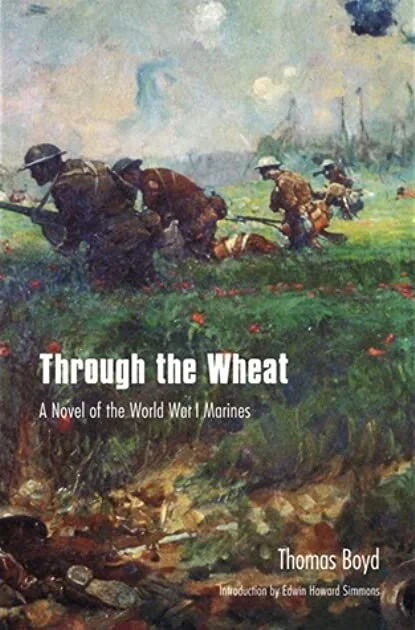
Through the Wheat, by Thomas Boyd—Based on the author’s experiences as a Marine on the Western Front in the spring and summer of 1918, Through the Wheat is an engrossing, frenetic read and really draws you into the exhaustion and delirium of war—not only in combat, which is harrowing enough, but in the hard work and tedium of the before and after, too. As brutal, realistic, and direct as All Quiet on the Western Front, though perhaps—perhaps—not quite as bleak. Critically acclaimed upon its publication in the 1920s, Through the Wheat has been forgotten by the broader public but remained a classic among military men. It deserves to be better remembered.

HHhH, by Laurent Binet—Both the story of Czech resistance fighters plotting to assassinate one of the most evil men in the Third Reich and the story of the author’s struggle to tell the story. Brilliantly done. I wrote a full review of this novel here.

The Eighth Arrow: Odysseus in the Underworld, by J Augustine Wetta, OSB—Odysseus and Diomedes, finding themselves temporarily freed from their place in hell, must find a way out. Forces Odysseus can’t even begin to understand work on him throughout his journey, and he finds himself slowly changed. A thrilling, moving, mythic, funny, and theologically rich riff on Homer by way of Dante. This has been my biggest surprise of the year. Read more about it here.

The Shootist, by Glendon Swarthout—A short and strongly written novel about a gunfighter’s confrontation with mortality. The frontier has closed, the age of the Wild West is passing, and JB Books learns that the pain he has been in for weeks is advanced prostate cancer. He settles down in an El Paso boarding house to await the end, mulling what he has to show for his life, whether he knows anyone at all who doesn’t want to use him for their own ends, and whether he can make something of himself yet. Poignant and unsparing, one of the best Westerns I’ve read.

Runners up:

  • The Tale of Despereaux, by Kate DiCamillo—Read to my kids. A fun fantasy adventure that isn’t afraid to let in some real darkness, the better to show how brightly hope and grace shine. Inspired this blog post about writing dialect in fiction.

  • A Man at Arms, by Steven Pressfield—A Greek mercenary formerly of the Roman legions is recruited to track down a messenger carrying a seditious letter written by one Paul the Apostle. Read more about it here.

  • Glitz, by Elmore Leonard—A wounded cop on medical leave falls hopelessly in love with a doomed hooker and finds himself stalked by a vengeful ex-con he once arrested. The book got off to a confusing start but the story came together very quickly after the first few chapters. Worth sticking with.

  • 52 Pickup, by Elmore Leonard—A Detroit businessman crosses swords with murderous extortioners. One of the most involving and fast-paced of Leonard’s crime novels that I’ve read. Read more about it here.

  • The Great Gatsby, by F Scott Fitzgerald—My first time ever reading this classic. It’s great. Read more about it here.

Rereads

Whatever it is, the way you tell your story online can make all the difference.

Here are a few books I revisited this spring, most of which I listened to as audiobooks on my commute. These are marked with asterisks.

I’ve been listening back through the original James Bond series for about a year and a half now thanks to some excellent audiobook performances on Audible. Goldfinger is read by Downton Abbey’s Hugh Bonneville; the short story collection For Your Eyes Only, one of my favorites in the series, by Samuel West; and Thunderball by Jason Isaacs of The Patriot, the Harry Potter series, and many other movies. I’ve been keeping fairly detailed notes on these as I finish them; you can read these short reviews on Goodreads via the hyperlinks above.

Three to avoid

Most of what I got to read this spring was good, but, alas, not all of it. There were a number of good-not-great or mediocre books in there, but the following three actively annoyed me:

  • Gentle and Lowly: The Heart of Christ for Sinners, by Dane Ortlund—An overlong, plodding, extremely repetitive meditation on two or three New Testament references to Jesus’s heart. Explicitly modeled on Puritan navelgazing. Recommended for Calvinists who are easily impressed by parallel sentence structure and clumsy metaphors. Goodreads review here.

  • Indiana Jones and the Peril at Delphi, by Rob MacGregor—That the adventure in this novel is somehow both dull and too complicated is bad enough, but the character referred to throughout as “Indiana Jones” does not feel like any plausible younger version of the man we know from the movies. There are several more books in this series but I doubt I will move on to any of them, which is a shame.

  • Later, by Stephen King—One of my quarantine reads. A briskly written supernatural adventure that unfortunately falls back into too many of King’s well-worn ruts. Nevertheless reasonably enjoyable until the ending, which is utter crud. More in my blog post about quarantine reading.

Of these three, only the last may be worth your while as pure entertainment. But I would recommend avoiding all of them.

Special mention—a worthy picture book

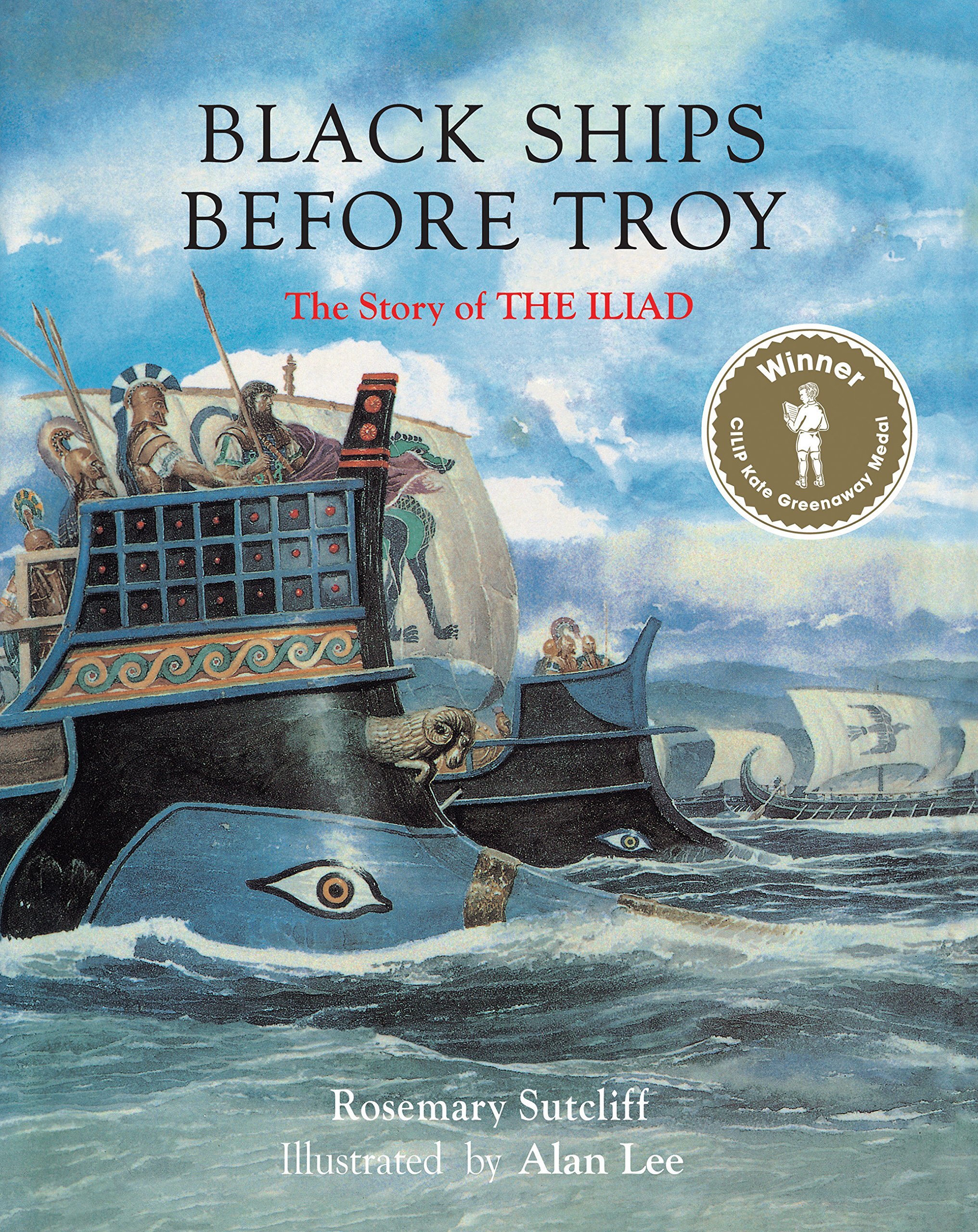
I want to give specific attention to Rosemary Sutcliff’s Black Ships Before Troy, a picture book illustrated by Alan Lee that tells the story of the Trojan War, specifically focusing on the events in Homer’s Iliad. I read it to my kids at bedtime over several weeks—it was wonderful. Full review here.

Currently reading

Whatever it is, the way you tell your story online can make all the difference.

I’ve got several books I’ve been plugging away at for the last several weeks that I didn’t finish in time to count as “spring reads,” but which I nevertheless want to acknowledge. These include:

  • Battleground Prussia: The Assault on Germany’s Eastern Front 1944-45, by Prit Buttar—A massive history of one of the grimmest and most unremittingly brutal phases of World War II. Research for a project I’ve been mulling over for four years now.

  • Beyond Order: 12 More Rules for Life, by Jordan Peterson—The follow-up to Peterson’s first book, which I read a couple years ago.

  • Scoop, by Evelyn Waugh—One of the first novels by Waugh that I read, this is a blistering and hilarious satire of the news media. Currently reading it to my wife before bed every night.

  • Politics, by Aristotle—Reading for the forthcoming season of Core Curriculum.

  • The Hitler of History, by John Lukacs—An excellent historical and historiographical study of Hitler and aspects of the study of Hitler’s life. I’ve blogged about this book before here.

These have all been good so far, especially the two historical works by Buttar and Lukacs, and I’d recommend any of them.

Coming up this summer

After a trying and difficult spring I’m hoping for a somewhat more sedate and relaxed summer. We’ll see about that. Nevertheless, I’m looking forward to some more good reading, particularly the first in a popular fantasy series that I’ve finally been persuaded to try. We’ll see about that, too.

Thanks for reading! Hope y’all have a great summer and have found something here to enjoy.

Frictionless news

Apropos of nothing: pre-prepared headlines in Citizen Kane

Apropos of nothing: pre-prepared headlines in Citizen Kane

Two more thoughts, which are really one thought, in my ongoing meditations about the baleful influence of news media on our culture and our minds.

First, I have returned several times to this post from Alan Jacobs, written in the aftermath of the riots on Capitol Hill. Jacobs begins by noting two facts:

  1. During a crisis one turns instinctively and desperately to the internet for news;

  2. During a crisis the worst thing one can do is turn to the internet for news.

Jacobs notes that with something as (seemingly) monumental as those riots going on, it is natural and understandable that so many people tried to keep track of it in real time. However:

But you know what? It did me no good. I got mixed messages, unreliable reports, rapidly changing stories; and I heard repeatedly from fools and knaves. If I had waited a day, or two days, or three, I wouldn’t have had all the emotional upheaval and I wouldn’t have missed anything significant. What possible difference could it make to me to learn about the Capitol Disgrace on Wednesday or on the following Monday (which is my usual news-reading day)? The only answer: None. None at all.

Instantly available information is often bad information. Which brings me to a possible partial solution—friction.

Last year on his blog, novelist Robin Sloane wrote that “Browsing Twitter the other day, I once again found myself sucked into a far-off event that truly does not matter, and it occurred to me that social media is an orthographic camera.” This refers to a system of 3D projection that renders objects the same size regardless of their distance from the viewer. Social media functionally “standardiz[es] all events, no matter how big or small, delightful or traumatic, to fit the same mashed-together timeline.” By contrast:

Before electronic media, news was attenuated by the friction and delay of transmission and reproduction. When it arrived on your doorstep, a report of a far-off event had an “amplitude” that helped you judge whether or not it mattered to you and/or the world.

That’s not the case with social media, where even tiny, distant events are reproduced “at full size” on your screen. This has been true of electronic media for a long time—I’m thinking of all the local TV news broadcasts that have opened with the day’s grisliest murder—but/and there was, before social media, at least an argument that it was important to have good “news judgment” if you were responsible for putting events on screens, particularly at the highest levels.

Indeed, working out the relative importance of events was, and is, a big part of what newsrooms do. The front page of a print newspaper was, and is, the tangible result: its allocation of paper and ink to different stories a direct and costly indication of their relative weight.

Note the roles of distance, elapsed time, and judgment required here. All forms of friction that can scour away the useless, the trivial, and the merely controversial.

Compare my thoughts on a very different social media flap from two years ago here, or the line from Neil Postman that I’ve been invoking since I first started these reflections shortly thereafter. After the invention of the telegraph and its capacity for the near-instantaneous relay of news, “the whole world became the context for news. Everything became everyone’s business. For the first time, we were sent information which answered no question we had asked, and which, in any case, did not permit the right of reply.” The result? “[W]e have here a great loop of impotence: The news elicits from you a variety of opinions about which you can do nothing except to offer them as more news, about which you can do nothing.”

Sloan offers two helpful thoughts in conclusion, the most helpful being a set of questions we could constantly and deliberately ask ourselves as we take in items presented to us as news:

I think a practical and healthy thing that any user of social media can do when confronted with a free-floating cube of news is ask: how big is this, really? Does it matter to me and my community? Does it, in fact, matter anywhere except the particular place it happened? Sometimes, the answer is absolutely yes, but not always—and these platform[s] don’t make it easy to judge.

Restore a bit of friction to your news consumption—most of all, give it time—and see what burns away.

I wrote about the news and our consumption of it earlier this year here and here. I discovered Sloane’s excellent post (read the whole thing when you can) via this article from The Hedgehog Review, which offers an interesting application of friction to our own writing. And I’m fixing to read a specifically theological examination of these issues in Jeffrey Bilbro’s Reading the Times: A Literary and Theological Inquiry into the News, a book I’ve been looking forward to for some time. Should be worth your while if you’re interested in this topic, too.

Black Ships Before Troy

Odysseus leads a peacemaking delegation to Achilles in Black SHips Before Troy, illustrated by Alan Lee

Odysseus leads a peacemaking delegation to Achilles in Black SHips Before Troy, illustrated by Alan Lee

One night last week I closed our copy of Black Ships Before Troy and set it aside. It was bedtime, and I had just read to my six-year-old daughter and four-year old son about the long-fated duel of Achilles and Hector, of Hector’s death, his father King Priam’s pitiful trip into the night to beg for his son’s body, of the weeping of Troy’s women as they washed and dressed the body for the pyre, and the funeral rites performed for the dead prince.

We sat quietly for a moment. At last my daughter, who had watched me intently throughout this chapter, said, “I’ve never seen a daddy cry before.” And then, “That was weird.”

I picked up Black Ships Before Troy for three reasons: first, my lifelong love of the story of the Trojan War and my constant search for good ways to introduce my kids to these stories; second, the fact that it was written by Rosemary Sutcliff, author of much classic children’s historical literature, like her novel The Eagle of the Ninth; and third—and decisively—the illustrations by Alan Lee, one of the great illustrators of Tolkien. The book proved excellent on all three counts.

black ships before troy.jpg

Despite its subtitle, Black Ships Before Troy: The Story of the Iliad tells the story of the whole Trojan War. Sutcliff gives special attention to the events of the Iliad—which takes place across only a few weeks near the end of the ten-year siege—but Sutcliff bookends the story of Achilles’s rage with chapters that explain the backstory and the war’s ultimate outcome, from Eris’s fatal wedding gift and the judgment of Paris to the construction of the Trojan Horse and the final sacking of the city. Along the way she also incorporates incidents like the arrival of Penthesilea’s Amazons, Odysseus and Ajax’s dispute over Achilles’s armor, and the story of Philoctetes. It’s very well done.

I appreciate two things especially about Sutcliffe’s treatment of the war:

First, she doesn’t oversimplify the parts based on the Iliad. Black Ships Before Troy teems with characters and the plot rises and falls with the tidelike motion of the armies in Homer’s poem, in which the heroes on both sides first drive and then are driven by the enemy. She also includes the actions of the gods—Aphrodite saving Paris’s bacon during his duel with Menelaus, Apollo striking the Achaian camp with plague, Thetis rising from the waves to comfort her sulking son—and thereby preserves a lot of the tone and integrity of Homer’s original.

Second, and relatedly, she doesn’t soften the characters or the action. Her descriptions of things like the capture and enslavement of Briseis or the sacrifice of captive Trojans on Patroclus’s funeral pyre are neither gratuitous nor apologetic; she simply presents Homer’s heroes as Homer presented them, warts and all. This gave me with lots of opportunities for conversation with my kids, especially where deceit and cruelty factored into the plot as it does in so many places. Relatedly, Sutcliff does not stint on the violence of the combat. Again, it is neither gratuitous nor euphemized, but it is clear in this story that this terrible war ends lives in terrible ways, including those of characters we love.

Hence the anecdote at the beginning of this post. Although I was ready for it, revisiting Hector’s death and reading about the grief of a father, a wife, and a whole city while flanked by my children was overwhelming. It made the most moving moments in Homer newly fresh and impressed that story that much more upon my kids.

The upshot is that Black Ships Before Troy presents, on a kid-friendly level, the same themes of heroism and excellence and the same sense of tragedy as the Iliad itself. I had some great conversations with my daughter in particular about the relative virtues of Achilles and Hector—who was more of a hero, and why, and what we thought might happen when the two of them finally met. By about the midpoint of the book she had stopped asking which side was the good guys and which the bad guys but had decided opinions about which characters were good and which bad—a sign of Homer at work.

This is a children’s version but it is not a modernization or ideological reinterpretation, thank God. This is as close as I’ve seen it get to pure Homer for kids. We loved it.

Finally, Alan Lee’s illustrations. The book is lavishly illustrated. There are pictures on almost every page, from dramatic action scenes teeming with characters—picking out who was who in the battle scenes became a fun game, a Mycenaean Where’s Waldo? for the kids—to halcyon scenes of the peaceful times before the war. A recurring statue of Aphrodite proves particularly poignant. Lee clearly worked hard to make the figures, landscapes, architecture, and equipment as authentic feeling as possible, striking a balance in style between what we’ve recovered from Trojan War-era archaeological sites and later Greek fashions. It’s beautiful, and it works magnificently. The pictures evoke a feeling both of gritty reality as well as of heightened myth. Of one scene in which Achilles, newly armed by Thetis in a panoply forged by Hephaestus himself, charges across the blood-flowing river Scamander toward the gates of Troy, my daughter said, “He looks glorious!

The publisher recommends Black Ships Before Troy for ages 7-10 or older. That’s probably about right if the child is doing the reading, as the language is slightly elevated and consciously old-fashioned. I read it aloud to my two older kids, which gave me a chance to stop and explain new words and refresh them on who was who. My six-year-old got a lot out of it and really responded to the story. My four-year old enjoyed the pictures and the fighting and had favorite characters (Hector especially) but didn’t seem to track with the story. But that didn’t seem to bother him. Both enjoyed it, and I savored the chance to share this with them.

Black Ships Before Troy is an excellent children’s retelling of the Trojan War. I highly recommend it if you’re looking for a beautifully illustrated way to introduce Homer to and enjoy one of the great legends of Western civilization with your kids.

Addendum: The illustrated edition of Black Ships Before Troy was apparently out of print for a long time before being reissued recently. This can make it difficult to find the correct edition on Amazon, where used copies are currently listed for over $300. I’ve linked to the correct hardback reissue, which is less than $20, in this review.

Buechner on the challenge and blessing of children

Jacob wrestles the angel by the ford of Jabbok in this engraving by Gustave Doré

Jacob wrestles the angel by the ford of Jabbok in this engraving by Gustave Doré

A good friend of mine and his wife had their third child yesterday. When he texted me to let me know, after the initial round of pleasant surprise (“It’s time already?!”) and congratulations we reflected on how his life is about to change—has, in fact, already changed. Having three children is a delight and a challenge. A new member has joined the fellowship and new adventures are about to unfold that would have been unimaginable even a few weeks ago. And of course some of these adventures are the children themselves.

It’s hard and it’s an unceasing joy. I never understood, prior to becoming a father, how both could be true. A challenge, a struggle, and a blessing?

Reflecting on this later I remembered a passage from The Son of Laughter that moved me terribly. As I wrote a few weeks ago, Frederick Buechner’s novel is a poetic, imaginative retelling of the story of Jacob and his lifelong struggle with God, whom the characters reverently refer to as “the Fear.” It is part of Jacob’s lot to live in the promises made by the Fear to his grandfather Abraham, something it proves exceedingly difficult to do in the hurly-burly of life in the tribal world of the Patriarchs.

In this passage, Jacob, so who has run away from his father Isaac (translated literally as “Laughter” throughout, hence the title of the book) and his brother Esau; taken up with his shifty uncle Laban; worked long years to earn marriages first to Leah and then to Rachel, his beloved; and fathered ten children (so far), sits among his tents and flocks and wives and teeming brood, overwhelmed:

I was like a man caught out in a storm with the wind squalling, the sand flailing me across the eyes, the chilled rain pelting me. The children were the storm, I thought, until one day, right in the thick of it, I saw the truth of what the children were.

One boy was pounding another boy’s head against the hard-packed floor. Another was drowsing at his mother’s teat. Three of them were trying to shove a fourth into a basket. Dinah was fitting her foot into her mouth. The air was foul with the smell of them.

They were the Fear’s promise. That is what I suddenly saw the children were. I had forgotten it. They were the dust that would cover the earth. The great people would spring from their scrawny loins. Kicking and howling and crowing and pissing and slobbering food all over their faces, they were the world’s best luck.

I started to weep. Just a trickle at first, the tears hot on my cheeks, salty at the corners of my mouth. Then it was as if I couldn’t catch my breath for weeping. Laban came over and pounded me between the shoulders. He thought I was choking to death. Rachel took my head in her arms. Leah held my feet. It was as close as the two sisters had come to each other for years.

A deep hush fell over the children. They stopped whatever they were doing. Their eyes grew round in their heads.

“You are so—so noisy,” I choked out at them.

They were the Fear’s promise to Abraham, and I had forgotten it.

It was with Abraham’s ancient eyes that they were watching me. “You are—so hopeless,” I said. “So important.”

Their silence, as they listened to my sobs, was Abraham’s silence as he waited all those years for the Fear to keep his promise.

While I and my friend are obviously not the recipients of the specific promise the Fear made to Abraham, this is the truest and most succinct depiction of the challenge and the blessing—and how wonderfully overwhelming both are—of children that I’ve come across. Thank the Fear for these noisy, hopeless, important ones.

God is good, and he remembers even when we forget. Rachel—who has had to see child after child born to her older sister and rival, Leah—reflects on this later in the same chapter:

Rachel’s womb was opened at last, and when she gave birth to my son Joseph, I told her it was Reuben and his mandrakes that she had to thank. Still exhausted from her labor, she reached out and placed her hand across my lips. “No,” she said. “No, no, my dear.”

They had laid the child at her breast though it was still too weak to drink from her. Her cheek was grazing his round, bald head. His head looked too big for him, as though already it was full of dreams.

“I thought he had forgotten me, but he remembered me,” she said. “At last he remembered Rachel.”

Like my mother, she rarely if ever named his name, but I knew the one she was thanking without naming him.

The Son of Laughter makes these promises and hopes feel real, lived in, and I hope you’ll read it sometime. It’s one of the best things I’ve read so far this year, and the passage above is only one of several that moved me to tears.

Adding the third to your family—so that you and your wife are outnumbered—is exciting for all kinds of reasons, and I’m excited for my friends and praying for them. After the birth of our own third child I also reflected on the miracle of birth and life, that time with reference to Beowulf and GK Chesterton. You can read that here.

A Night to Remember

Kenneth More as Officer LightOller in A Night to Remember

I mentioned last week that my wife and I had recently watched A Night to Remember. Despite the film’s age—it premiered in 1958—this was a first for both of us. I had gathered through the ether that the film was a classic and even that it was, in fact, the most accurate and serious Titanic movie. (Did you know there are others? Naturally you have in mind the 1943 German Titanic produced a the behest of Joseph Goebbels.) I was finally able to sell my wife on the idea of watching it thanks to Kenneth More in the lead role—a man we know primarily as Father Brown.

When we settled in to watch it I was expecting A Night to Remember to be good. To my surprise, it proved overwhelming.

More plays Second Officer Charles Lightoller, the highest ranking Titanic officer to survive the sinking. The film begins with him aboard a train on his way to join the ship’s crew. When he wryly comments on a newspaper ad that uses the Titanic to shill soap, we get a reminder of the remove at which this story takes place from us when he is loudly reprimanded by another passenger for mocking the pride of Britain. Lightoller gently corrects him, and the man apologizes. It’s a simple scene, but economically sets the stage—this is a world of unironic national pride, of fiercely observed courtesies, of rank and custom, and especially finery. It’s also a threatened world. It’s impossible to watch any film about the Titanic without its fate—and the fate of all of Europe two years later—haunting your imagination.

We meet other characters, most of them real historical figures—Captain Edward Smith, shipbuilder Thomas Andrews, passengers Molly Brown, Benjamin Guggenheim, Archibald Gracie, radio operator Harold Bride, and many others. (A few, like White Star Line executive J Bruce Ismay and a wealthy British couple, who behaved dishonorably during the sinking, are never explicitly identified for legal reasons.) Other characters—Murphy, an Irishman who falls instantly in love with a Polish girl in steerage; Mr and Mrs Lucas, a young couple with three children; and Mr and Mrs Clarke, newlyweds sailing off on their honeymoon—are composites of multiple real-life people meant to streamline the narrative, part of the film’s light but judicious fictionalization. We also meet the crews of two other ships, the Californian and the Carpathia, in what will prove to be the most infuriating subplot of the movie.

You know what happens next. Throughout, the filmmakers do an excellent job imparting the geography of the ship to the viewer so that this vast, complex event is visually comprehensible—no mean feat. And even where you may not know the names of particular characters—many of them are not introduced in the traditional Hollywood manner—their faces remain familiar and so it is easy to distinguish the many converging and interweaving storylines.

The film is beautifully shot in black and white, with excellent sets (albeit not on the scale of Cameron’s ridiculously overindulgent mid-nineties film) and costumes. The special effects are good for their time, an effective blend of miniatures, matte paintings, and optical composite shots. Furthermore, in pacing and editing, and via a series of shots capturing the ship’s increasingly steep angle down into the sea, the filmmakers build unbearable tension. The joke with all Titanic movies is that we know what happens—here it remains suspenseful, with dread steadily rising into panic, not because we doubt what will happen but because we sense the inevitable catching up to the characters.

And A Night to Remember is excellently cast from top to bottom—something especially important in a film with so little traditional characterization. More is a standout in a type of role he played several times—just a few years later in Sink the Bismarck! for instance—the stalwart and principled British mid-level leader. The man who quietly gets the job done. A very, very young David McCallum (The Great Escape, “The Man from UNCLE,” and “NCIS”) plays Harold Bride, one of Titanic’s two radio operators who remain at their posts far longer than duty requires. Michael Goodliffe as Andrews and Laurence Naismith as Captain Smith are also excellent as two men who are doomed and know it. There are many other bit players who put in good turns in one- or two-scene parts—Arthur Rostron, captain of the Carpathia, rushing determinedly toward a disaster from which he may be able to save no one; the ship’s band, playing to set the mood whether anyone notices them or not; the stokers in the boiler room; the drunken baker; an old man who tenderly tries to comfort a lost boy as the ship begins its plunge.

Perhaps the best performance is that of John Merivale as Mr Lucas, who learns the terrible truth about what is happening to the ship and then downplays it to his wife (Goldfinger’s Honor Blackman) and children—all while gently urging them to hurry to the lifeboats—so that they won’t be scared. The moment he hands his sleeping son into a lifeboat and says goodbye, knowing full well that it’s the last time he will see any of them, is the purest heartbreak you can put on film. My wife and I wept.

After all, the story of the Titanic must always be a story about death. Two-thirds of the people who sailed aboard her from Europe died that night, and despite its age and whatever stereotypes we may have about films from the 1950s, A Night to Remember never looks away from that fact. And, what is more, it does so without cheap sentimentality, without caricaturing real people, and without the kind of cheap Hollywood gimmicks—love triangles, lazy class politics, manipulative music—meant to pull at the heartstrings. This is a film that tells its true story as straight as possible and remains beautiful, gripping, horrifying, and finally a reverent and deeply moving tribute because of it.

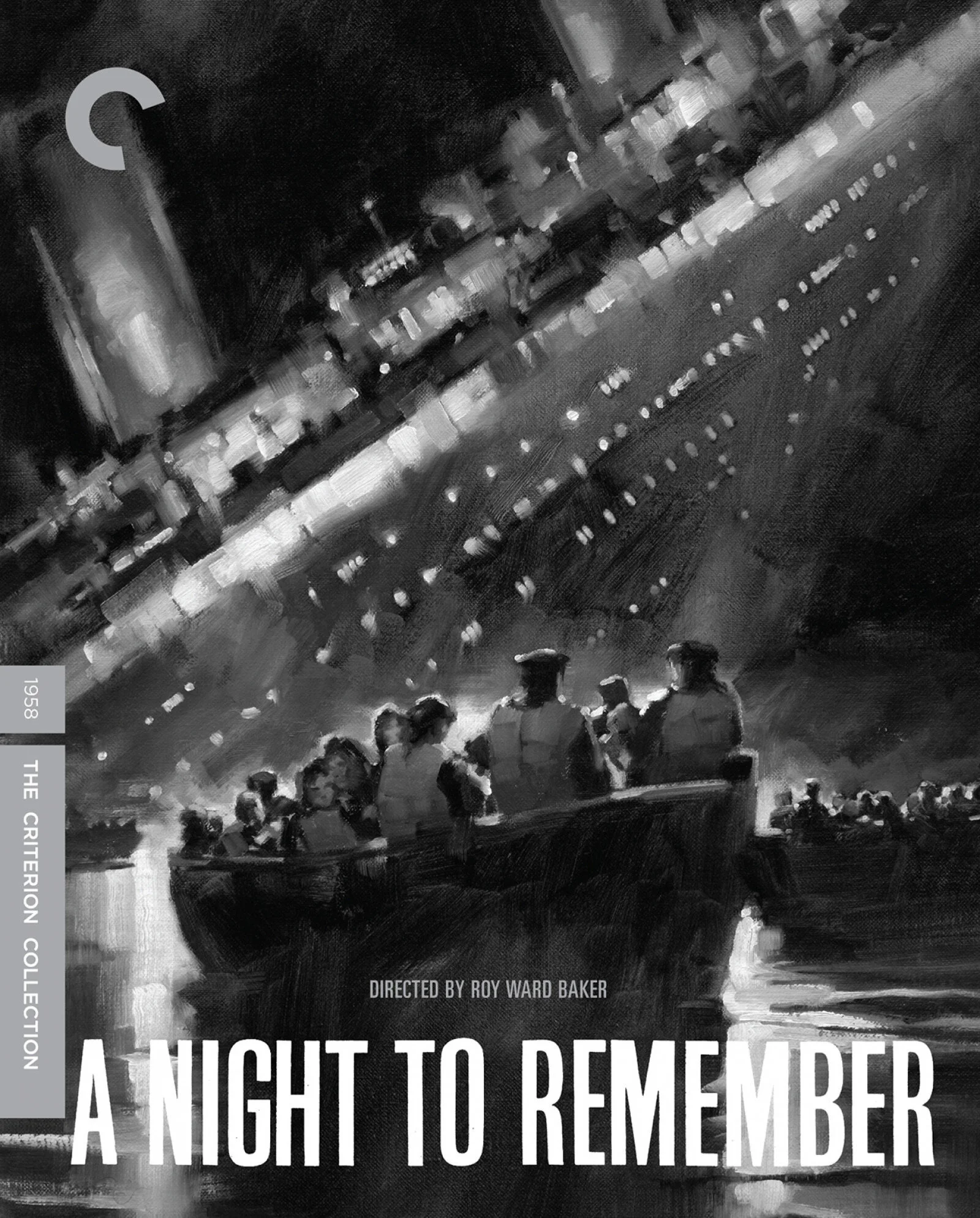
We watched A Night to Remember on an excellent Blu-ray from the Criterion Collection. I highly recommend it.

More if you’re interested

The film is, of course, based on the classic book by Walter Lord, who interviewed scores of Titanic survivors in the process of researching it. With the exception of a few questions only settled by the discovery of the wreck in 1985—such as whether or not the ship broke in half as it sank—it remains highly accurate. Its engaging writing is another draw.

Two books that I’ve used to introduce the story of the Titanic to my kids are Titanic: Lost and Found, a short Step-Into-Reading illustrated chapter book by Judy Donnelly which my daughter has enjoyed many times, and Robert Ballard’s Exploring the Titanic, which includes an interesting narrative of the loss and rediscovery of the ship by Ballard as well as many, many excellent illustrations. As a kid I pored over this book’s cross sections of the ship, the schematics of its sinking, and the before-and-after illustrations of the ship’s bridge. It also has many period photos as well as photos from Ballard’s dives to the wreck.

Leonard's rules: No. 7, regional dialect

pappy.png

I’ve written here before about Elmore Leonard’s ten rules of writing, and have for some time been mulling a series of occasional posts in which I take each rule and consider it from a few angles, adding glosses and commentary. Here’s the first, inspired by a book I read to my kids every night before bedtime last month: The Tale of Despereaux, by Kate DiCamillo.

Leonard’s seventh rule states:

 
Use regional dialect, patois, sparingly.

Leonard adds:

Once you start spelling words in dialogue phonetically and loading the page with apos­trophes, you won't be able to stop. Notice the way Annie Proulx captures the flavor of Wyoming voices in her book of short stories Close Range.

Leonard provides a further gloss on the rule in a 2002 interview.

Such the disappointment

I have not read any Annie Proulx, but this rule came to mind as I read Despereaux because of DiCamillo’s expertly written dialogue for Despereaux’s mother, Antoinette. Antoinette is a French mouse who has never settled comfortably into life wherever the story takes place. “Disappointment” is her watchword. Here’s Antoinette arguing with her husband Lester about Despereaux’s strangely un-mouselike behavior:

despereaux.jpg

“He cannot, he simply cannot be my son,” Lester said. He clutched his whiskers with his front paws and shook his head from side to side in despair.
“Of course he is your son,” said Antoinette. “What do you mean he is not your son? This is a ridiculous statement. Why must you always make the ridiculous statements.”
“You,” said Lester. “This is your fault. The French blood in him has made him crazy.”
C’est moi?” said Antoinette. “C’est moi? Why must it always be I who takes the blame? If your son is such the disappointment, it is as much your fault as mine.”
“Something must be done,” said Lester. He pulled on a whisker so hard that it came loose. He waved the whisker over his head. He pointed it at his wife. “He will be the end of us all,” he shouted, “sitting at the foot of a human king. Unbelievable! Unthinkable!”
“Oh, so dramatic,” said Antoinette. She held out one paw and studied her painted nails. “He is a small mouse. How much of the harm can he do?”
“If there is one thing I have learned in this world,” said Lester, “it is that mice must act like mice or else there is bound to be trouble. I will call a special meeting of the Mouse Council. Together, we will decided what must be done.”
“Oh,” said Antoinette, “you and this council of the mouse. It is a waste of the time in my opinion.”

Leonard championed the kind of dialogue that, invisibly styled—he spoke often of the “attitude” or “sound” of his writing—indicates character and action through suggestion. This is partly being able to imagine what the characters are doing—with gestures, body language, and facial expressions. Read a conversation written by Leonard, like the one I sample below, and you can see what the characters are doing just by the way they talk. Likewise with Antoinette and Lester above. The stage directions economically indicate telling gestures, gestures that only underline the attitudes the reader already picks up from the two characters’ spoken words.

The power of suggestion

I think the key word in Leonard’s rule is sparingly. He does not rule out phonetic spellings but using them sparingly means you’ll have to rely on the power of suggestion, which I think is the most important aspect of writing dialect. Reread the passage above and look for what, precisely, indicates Antoinette’s Frenchness in her speech. Here’s what sticks out to me:

  • One French phrase, “C’est moi?” spoken in high dudgeon immediately after Lester draws attention to her Frenchness.

  • Misplaced or unnecessary definite articles, a part of speech that differs dramatically even within related languages (disappearing entirely in others) and trips up a lot of people. Notice how consistent the misuse is—this is a verbal habit.

  • More subtly, the short declarative sentences indicate someone proficient in a second language but probably still thinking in her mother tongue.

All of which suggests Antoinette’s accent and even her tone very precisely without littering her dialogue with phonetic spellings.

Counterexamples

It’s instructive to imagine how else this might have been done. Below are three samples pulled more or less at random from a few other books I’ve read. I’ll reflect on them collectively afterward.

patrol.jpg

At the time I read Despereaux to my kids I also started an old war adventure, Patrol, by Philip MacDonald, in which a squad of British troopers are ambushed in the desert. The characters are well done but broad types—the old sergeant, the Cockney, the Jew, the Scot—and their dialogue reads like this:

Brown . . . scrubbed at his lips, first with his naked forearm, then, more usefully, with a foul but at least not sand-covered handkerchief. “Thank God!” he said.
“Ah,” Morelli agreed. “An’ a gink can’t even spit. Christ! I’m dry.” . . .
“What about a swig?” Brown spoke doubtfully, feeling with tentative fingers at the string of his water-bottle cork.
“Shouldn’t,” said Morelli.
“‘Spose not.” Brown reluctantly lifted his hand back to the reins again.
Both men, on a common train of thought, turned to look behind them. There, ten yards away, rode Hale. He had no companion, but led a spare horse across whose back was a pack-saddle of curious shape: at each side of this saddle, below other cases, was strapped a long leather case like a bolster.
“We’re windy!” Morelli said.
“Oy!” called Hale. “Wot yer worryin’ abaht? Fink I’ve drunk it all!”

Later in the same chapter, the Sergeant talks to MacKay and Cook, the two Scots in the squad, as they attend to the horses:

MacKay, the nostrils done, slipped the reins of Cook’s black up over his arm, and, with both hands thus free, opened the chestnut’s mouth and scrubbed with the damp sponge at the gums and tongue and roof. . . . The horse pushed its head against the man’s shoulder, then fumbled with caressing lips at his ear.
“Ye great carrl!” said MacKay gently. He turned to Cook. “Matlow,” he said, and held out the sponge. “Ye just gi’ yon a drop out ye’ boatle.”
“Ar,” Cook said. He took the sponge, held it over the neck of the bottle, and shook water on to it.
MacKay repeated his work upon the black. When he had finished, the Sergeant spoke.
“It does brighten ‘em up,” he said.
“Ay.” MacKay took his rifle from Cook’s arm, slung it by its webbing band over his shoulder, and surveyed the two horses. They stood noticeably more alert than their fellows. Their heads hung, but not with such utter dejection. They had not, now, that appearance of being upon the point of lying in the sand. “Ay,” said MacKay again. “‘F there waur ony ither so’jers heere, horrses wud a’ be like yon.” He tilted back his topee and wiped at the sweat on his forehead with his forearm: the action showed the white hair at his temples and the radiating mesh of wrinkles about his bloodshot eyes. He added: “So they wud, too, ‘f Ah waur in charrge.”

American writers have experimented with elaborate phonetic spellings of their characters’ many dialects forever. Here’s a passage pulled at random from Norman Mailer’s 1948 novel The Naked and the Dead, in which rural Southern and urban Yankee soldiers argue:

Ridges . . . had a lively discernment of injustice toward other men and toward himself, and thought it was decidedly unfair for Goldstein and him to work more than the other pair. “Ah done the same work you done,” he would complain. “Ah went up the same river you did, an’ they ain’t no reason ‘tall why Gol’stein and me gotta be doin’ all yore work.”
“Blow it out,” Minetta shouted back.
[Sergeant] Croft had come up behind them. “What’s the matter with you men?” he demanded.
“Ain’t nothin’,” Ridges said after a pause. He gave his horsy guffaw. “Shoot, we jus’ been talkin’.” Although he was displeased with Minetta and Roth, he did not think of complaining to Croft. They were all part of the same team, and Ridges considered it heinous to complain about a man with whom he was working. “Ain’t nothin’ wrong,” he repeated.
“Listen, Minetta,” Croft said with scorn, “if you an’ Roth ain’t the meanest wo’thless shiftless pair of bastards I ever had. You men better get your finger out of your ass.” His voice, cold and perfectly enunciated, switched them like a birch branch.
Minetta, if harried enough, was capable of surprising courage. He threw down his machete, and turned on Croft. “I don’t see you working. It’s pretty goddam easy . . .” He lost all idea of what he wanted to say, and repeated, “I don’t see you working.”

Looking further back, here’s a passage from the 1923 novel Two Little Confederates, by Thomas Nelson Page, who based this story on his childhood in wartime Virginia sixty years before. Here two young white Virginians, scions of the planter class, talk to an elderly slave who has found an intruder in his cabin:

The boys could see that [a man unknown to them] was stretched out on the floor, apparently asleep, and that he was a soldier in uniform. Balla stepped inside.
“Is he dead?” asked both boys as Balla caught him by the arms, lifted him, and let him fall again limp on the floor.
“Nor, he’s dead-drunk,” said Balla picking up an empty flask. “Come on out. Let me see what I gwi’ do wid you?” he said, scratching his head.
“I know what I gwi’ do wid you. I gwi’ lock you up right whar you is.”
“Uncle Balla, s’pose he gets well, won’t he get out?”
“Ain’
I gwi’ lock him up? Dat’s good from you, who was jes’ gwi’ let ‘im out ef me an’ Frank hadn’t come up when we did.”
Willy stepped back abahsed. His heart accused him and told him the charge was true. Still he ventured one more question:
“Hadn’t you better take the hens out?”
“Nor; ‘tain’ no use to teck nuttin’ out dyah. Ef he comes to, he know we got ‘im, an’ he dyahson’ trouble nuttin’.”

Before I examine these samples, note two things: they are all realistic renderings of closely observed dialects and they all come from good books. One could find much, much more badly handled dialect elsewhere. And yet they illustrate abundantly the danger Leonard’s rule is meant to help us avoid.

So what’s the problem?

There are two basic problems with the samples above.

The first is that, as Leonard implies, dialogue written this way is next to impossible to read, especially when the dialect in question is something as foreign to the reader as a early 20th century Scots packhorse wrangler or an elderly 19th century American slave. The meaning, even the thread of the story or the import of the conversation, becomes lost as the reader puzzles out what the characters are saying.

In the case of MacDonald’s characters, perhaps the bit of dialect that works best is the simple line “What about a swig?” This is regionally distinct—an American would probably say “How about a swig” or even “You want a swig?”—but rendered directly and simply, making it easy both to read and understand. The rest of the passage overdoes it.

In the case of Page’s Uncle Balla, without getting into the politics of this kind of writing—which was immensely popular in the late 19th century but has a bad rap nowadays—even where Uncle Balla’s dialogue is an accurate representation of antebellum black dialect it is almost impenetrable, especially in that final line. How long did it take you to figure out that Uncle Balla’s dyahson’ is the word doesn’t? Page is being very careful to capture precisely how Uncle Balla speaks and—as with MacDonald’s various Brits—it kills the rhythm of the scene dead. More about rhythm later.

But that care brings me to the second, closely related problem. Look again at the passage from The Naked and the Dead. Mailer doesn’t go as far as either other writer in terms of phonetic spellings or apostrophes, but look at all the stage direction surrounding and glossing each line of dialogue. This bespeaks either a lack of confidence in the reader to perceive what is happening or a control freak concern to describe it as exactly as possible. (This is also part of the problem with over-specific dialogue tags and adverbs generally, a topic for the future.) It feels worked at, overproduced. It smells of the lamp. This is especially the case when things that have been made clear—Croft’s fury, Minetta’s sudden courage and just as sudden collapse—are elaborated upon in the narration. And there’s the further danger of contradiction: note that what I certainly read as an angry and obscene harangue from Croft is then described as “cold and perfectly enunciated,” despite including words like an’ and ain’t and wo’thless.

Whatever the reason behind it for each author, it’s this concern with absolute precision—capturing exactly how someone speaks down to the last dropped g—that all three samples have in common. As Leonard hints in his rule, the danger for writers is fussiness or overindulgence or getting lost in the effort to capture dialect this way. It can prove an inescapable trap. The danger for readers is giving up on the story.

Speech tunes

As I mentioned above, DiCamillo nails this in The Tale of Despereaux. A lot of that has to do with her skill in looking past mere accent to the rhythm of a character’s speech. Here, in his Mercer University Lamar Memorial Lectures published in 1985 as The Language of the American South, Cleanth Brooks describes how much more there is to a person’s speech than accent:

 
Of course pronunciation is only one aspect of a language. Its vocabulary, its characteristic figurative expressions and sayings, its idioms and locutions, its rhythms and ‘speech tune’ are very important. They are particularly important to the writer of fiction, poetry, or plays.
— Cleanth Brooks, The Language of the American South
 

“Speech tune” is apt; there is a musical quality to speech that we neglect to our peril. Look again at Brooks’s examples of elements that harmonize to create these tunes:

  • Pronunciation—This is only the most noticeable and superficial aspect of a character’s speech, and is also highly variable. For some characters—like those moving between cultures—pronunciation and accent can change depending on the situation.

  • Vocabulary—Here we go a layer deeper. How do a character’s words reflect their background, education, and age? What words does a character commonly use (or misuse)? How deftly do they use their words? Where did they learn them and how? How much jargon do they use? How much and what kind of slang? How much—to return to our topic—specifically regional argot?

  • Characteristic figurative expressions and sayings—Going yet deeper into the foggy cultural side of a character’s speech to the shared body of proverbs, cliches, and mental pictures that characterize how or from what direction a group approaches thought and expression.

  • Idioms and locutions—Here we get into style, the often unpredictable particulars of the way people use all of the previous elements together.

  • Rhythms—This is the overall sound of a person’s speech and how it flows movement by movement, slowing or quicking and especially responding to the introduction of other people’s speech.

Here are a few other examples of dialect done well: three short ones to show how economical the use of suggestion can be, and three longer passages to look at how a sparing use of dialect, trusting instead to the rhythms of regional speech, can play a character’s speech tune to good effect.

Getting it right—the short version

Here’s a very short example—not even dialogue, really. In The Magician’s Nephew, by CS Lewis, the main character’s haughty Uncle Andrew, a dabbler in the black arts, meets the evil witch Jadis and is overwhelmed with her. Smitten. Here Uncle Andrew talks to himself after their encounter:

Children have one kind of silliness, as you know, and grown-ups have another kind. At this moment Uncle Andrew was beginning to be silly in a very grown-up way. Not that the Witch was no longer in the same room with him he was quickly forgetting how she had frightened him and thinking more and more of her wonderful beauty. He kept on saying to himself, “A dem fine woman, sir, a dem fine woman. A superb creature.” He had also somehow managed to forget that it was the children who had got hold of this “superb creature”: he felt as if he himself by his Magic had called her out of unknown worlds.
“Andrew my boy,” he said to himself as he looked in the glass, “you’re a devilish well preserved fellow for your age. A distinguished-looking man, sir.”

Two things I want to point out: First, note how well this passage illustrates the sparing aspect of Leonard’s advice. We have one very precisely selected phonetic spelling—how long did it take you as a kid to realize Uncle Andrew was saying damn fine woman?—that not only tells us how Uncle Andrew talks but even a little bit about his attitude. It’s not just dialogue, it’s characterization.

Further, almost as a bonus, dem fine even gives us Uncle Andrew’s oral posture—say it out loud and you’ll find yourself flaring your nostrils, pursing your lips rather preciously, and perhaps even sticking your nose in the air. You can both see and feel how he speaks, and the whole time you’re learning about the character—and laughing at him.

gringos.jpg

In this passage from Charles Portis’s Gringos, Jimmy Burns, an American expatriate from Arkansas now living in the Yucatan, talks to a Mexican friend who, though fluent in English, is drunk:

A few minutes later there was more rapping at the door. It was Nardo again. He had to brace himself with both hands against the door jambs. “I forgot to tell you something,” he said. “Did you notice I was feeling low tonight?”
“No, I thought you were in good form.”
“It was off just a little, my natural charm, you know, that everybody talks about. You must have noticed. A touch of opresión. I wanted to explain.”
“I didn’t notice anything.”
“But you already know, don’t you?”
“Know what?”
“Is there any need to explain? I think you can guess why I’m feeling low.”
“No, I can’t.”
“The yanquis took half my country in 1848.”
“They took all of mine in 1865. We can’t keep moping over it.”

Not the difference in expression between Jimmy Burns and Nardo, which clearly distinguishes them without calling attention to itself. Jimmy Burns’s speech is direct, colloquial, and simple. Nardo speaks in considerably more high-flown, periodic style, and while one might assume he has a trace of an accent he uses only two foreign words. The rest is pure suggestion—we hear this conversation accurately in our heads without a lot of phonetic spelling or apostrophes to render it exactamente.

That passage is also, you’ll note, a perfectly structured joke. One of Portis’s many skills.

Here’s another model of economy, one that I’ve shared before in reflecting on creating distinct and memorable minor characters, from Cormac McCarthy’s No Country for Old Men:

[Anton Chigurh, the novel’s main antagonist] drove down and parked in front of the [trailer park] office and went in. Yessir, the woman said.
I’m looking for Llewelyn Moss.
She studied him. Did you go up to his trailer?
Yes I did.
Well I’d say he’s at work. Did you want to leave a message?
Where does he work?
Sir I aint at liberty to give out no information about our residents.
Chigurh looked around at the little plywood office. He looked at the woman.
Where does he work.
Sir?
I said where does he work.
Did you not hear me? We cant give out no information.
A toilet flushed somewhere. A doorlatch clicked. Chigurh looked at the woman again. Then he went out and got in the Ramcharger and left.

I’ll note briefly what I noted in that previous post. We don’t get much information about Chigurh but his directness is unsettling. The lady working in the trailer park office, whom we only “see” in this passage, is economically but vividly drawn. And while McCarthy draws no attention to her dialect, we perceive it with one aint, one yessir, and careful attention to her syntax and “speech tune.” I especially admire her recognizable blend of informality and officiousness. McCarthy’s writing is full of dialect like this.

An aside on italicizing foreign words

Here’s a more minute mechanical note: Something else I picked up from McCarthy was his refusal to italicize words or speech in foreign languages. (Portis also does not italicize or otherwise draw attention to Nardo’s opresión or yanquis.) In No Country for Old Men and other novels, English and Spanish are exchanged with no typographic indication to indicate the difference.

This is matter of pure preference, I think, but I really like that. I think it more accurately depicts the way we hear each other, and I’ve also grown increasingly distrustful of any writing that is dependent on typography to be comprehensible. I haven’t gone the whole hog and given up even quotation marks yet, but I have stopped italicizing foreign speech in my own writing. For example, depending on the viewpoint character in a given passage, the German characters in Dark Full of Enemies speak untranslated and unitalicized German.

Getting it right—letting the rhythms play out

Now for the deep dive. I include these three longer samples to show how a skilled writer can bring out the rhythms of regional speech and let them play out across a scene, creating new rhythms of their own as they harmonize with the speech of other characters.

In this passage from from Chapter IV of The Great Gatsby, F Scott Fitzgerald presents us with two Midwesterners—one of whom is putting on airs—and a New York Jew having a conversation over lunch:

Gatsby took an arm of each of us and moved forward into the restaurant, whereupon Mr. Wolfshiem swallowed a new sentence he was starting and lapsed into a somnambulatory abstraction.
“Highballs?” asked the head waiter.
“This is a nice restaurant here,”’ said Mr. Wolfshiem, looking at the Presbyterian nymphs on the ceiling. “But I like across the street better!”
“Yes, highballs,” agreed Gatsby, and then to Mr. Wolfshiem: “It’s too hot over there.”
“Hot and small—yes,” said Mr. Wolfshiem, “but full of memories.”
“What place is that?” I asked.
“The old Metropole.”
“The old Metropole,” brooded Mr. Wolfshiem gloomily. “Filled with faces dead and gone. Filled with friends gone now forever. I can’t forget so long as I live the night they shot Rosy Rosenthal there. It was six of us at the table, and Rosy had eat and drunk a lot all evening. When it was almost morning the waiter came up to him with a funny look and says somebody wants to speak to him outside. ‘All right,’ says Rosy, and begins to get up, and I pulled him down in his chair.
“‘Let the bastards come in here if they want you, Rosy, but don’t you, so help me, move outside this room.’
“It was four o’clock in the morning then, and if we’d of raised the blinds we’d of seen daylight.”
“Did he go?” I asked innocently.
“Sure he went.” Mr. Wolfshiem’s nose flashed at me indignantly. “He turned around in the door and says: ‘Don’t let that waiter take away my coffee!’ Then he went out on the sidewalk, and they shot him three times in his full belly and drove away.”
“Four of them were electrocuted,” I said, remembering.
“Five, with Becker.” His nostrils turned to me in an interested way. “I understand you’re looking for a business gonnegtion.”
The juxtaposition of these two remarks was startling. Gatsby answered for me:
“Oh, no,” he exclaimed, ‘‘this isn’t the man.”
“No?” Mr. Wolfshiem seemed disappointed.
“This is just a friend. I told you we’d talk about that some other time.”
“I beg your pardon,” said Mr. Wolfshiem, “I had a wrong man.”
A succulent hash arrived, and Mr. Wolfshiem, forgetting the more sentimental atmosphere of the old Metropole, began to eat with ferocious delicacy. His eyes, meanwhile, roved very slowly all around the room—he completed the arc by turning to inspect the people directly behind. I think that, except for my presence, he would have taken one short glance beneath our own table.
“Look here, old sport,” said Gatsby, leaning toward me, “I’m afraid I made you a little angry this morning in the car.”
There was the smile again, but this time I held out against it.
“I don’t like mysteries,” I answered, “and I don’t understand why you won’t come out frankly and tell me what you want. Why has it all got to come through Miss Baker?”
“Oh, it’s nothing underhand,” he assured me. “Miss Baker’s a great sportswoman, you know, and she’d never do anything that wasn’t all right.”
Suddenly he looked at his watch, jumped up, and hurried from the room, leaving me with Mr. Wolfshiem at the table.
“He has to telephone,” said Mr. Wolfshiem, following him with his eyes. “Fine fellow, isn’t he? Handsome to look at and a perfect gentleman.”
“Yes.”
“He’s an Oggsford man.”
“Oh!”
“He went to Oggsford College in England. You know Oggsford College?”
“I’ve heard of it.”
“It’s one of the most famous colleges in the world.”
“Have you known Gatsby for a long time?” I inquired.
“Several years,” he answered in a gratified way.

Notice how Fitzgerald makes each man’s dialect distinct enough that he doesn’t have to rely on dialogue tags to tell us who’s speaking. Carraway and Gatsby, the two Midwesterners, speak very similarly, despite Gatsby’s pretensions. Wolfshiem’s speech is the most obviously regional. (I pause here to note the usual arrogant Midwestern assumption that their English is normal English.) Fitzgerald uses more phonetic spellings here than the other writers we’ll look at, but by doing so he gives us a distinct sense of the overall tone of Wolfshiem’s speech. We intuit that his voice is deeper and throatier than Gatsby or Carraway’s. And while no one would characterize his English as broken, some of the rhythms of his speech are foreign—“It was six of us at the table” is how you would phrase that idea in German or Yiddish, not English—and this slightly more florid idiom, especially the grandiloquent circumlocutions in his remembrance of “the old Metropole,” give us a good sense of his character. This is the speech tune in action.

In this early passage from Flannery O’Connor’s short story “A Good Man is Hard to Find,” a family on a roadtrip stops at the Tower, a barbeque joint run by a man named Red Sammy Butts, for lunch:

“Ain’t she cute?” Red Sam’s wife said, leaning over the counter. “Would you like to come be my little girl?”
“No I certainly wouldn’t,” June Star said. “I wouldn’t live in a broken-down place like this for a minion bucks!” and she ran back to the table.
“Ain’t she cute?” the woman repeated, stretching her mouth politely.
“Arn’t you ashamed?” hissed the grandmother.
Red Sam came in and told his wife to quit lounging on the counter and hurry up with these people’s order. His khaki trousers reached just to his hip bones and his stomach hung over them like a sack of meal swaying under his shirt. He came over and sat down at a table nearby and let out a combination sigh and yodel. “You can’t win,” he said. “You can’t win,” and he wiped his sweating red face off with a gray handkerchief. “These days you don’t know who to trust,” he said. “Ain’t that the truth?”
“People are certainly not nice like they used to be,” said the grandmother.
“Two fellers come in here last week,” Red Sammy said, “driving a Chrysler. It was a old beat-up car but it was a good one and these boys looked all right to me. Said they worked at the mill and you know I let them fellers charge the gas they bought? Now why did I do that?”
“Because you’re a good man!” the grandmother said at once.
“Yes’m, I suppose so,” Red Sam said as if he were struck with this answer.
His wife brought the orders, carrying the five plates all at once without a tray, two in each hand and one balanced on her arm. “It isn’t a soul in this green world of God’s that you can trust,” she said. “And I don’t count nobody out of that, not nobody,” she repeated, looking at Red Sammy.
“Did you read about that criminal, The Misfit, that’s escaped?” asked the grandmother.
“I wouldn’t be a bit surprised if he didn’t attact this place right here,” said the woman. “If he hears about it being here, I wouldn’t be none surprised to see him. If he hears it’s two cent in the cash register, I wouldn’t be a tall surprised if he . . .”
“That’ll do,” Red Sam said. “Go bring these people their Co’-Colas,” and the woman went off to get the rest of the order.
“A good man is hard to find,” Red Sammy said. “Everything is getting terrible. I remember the day you could go off and leave your screen door unlatched. Not no more.”
He and the grandmother discussed better times.

O’Connor’s dialect is always good, and here we see her introducing multiple layers of character—class most obviously but generation throughout—through the way each character speaks. Everyone in this scene is “a Southerner,” but notice how different each is, how vividly we can picture all of them, and how clearly we can hear. This in spite of O’Connor’s very spare use of a few dialect words—Co’-Cola, attact, fellers. This is owing to her attention to the differing rhythms of each character’s speech. Look back at Red Sammy’s wife’s dialogue in particular, and compare it to the prim and proper eluction of the grandmother.

You can listen to O’Connor herself read this story here. Listen to the whole thing, and pay close attention to how natural the dialogue sounds as O’Connor—whose accent reminds me a great deal of my late grandmother, an Athens native—reads it.

Finally, it would be bad form to work through some examples of this rule in action without looking at what Leonard himself does with it. Here’s a longish chunk from the opening chapter of his crime novel Freaky Deaky. Members of the Detroit PD bomb squad have been called to the home of Booker, a lowlife gangster, who has been told there is a bomb in his armchair that will explode if he stands up. (Language warning for those concerned.)

Chris said most of the squad was out on a run, picking up illegal fireworks, but there was another guy coming, Jerry Baker. Chris said, “You know what today is?” And waited for the guy from Narcotics to say no, what? “It’s my last day on the Bomb Squad. Next week I get transferred out.” He waited again.
The guy from Narcotics said, “Yeah, is that right?”
He didn’t get it.
“It’s the last time I’ll ever have to handle a bomb, if that’s what we have, and hope to Christ I don’t make a mistake.”
The guy still didn’t get it. He said, “Well, that’s what Booker says it is. He gets up, it blows up. What kind of bomb is that?”
“I won’t know till I look at it,” Chris said.
“Booker says it’s the fucking Italians,” the guy from Narcotics said, “trying to tell him something. It makes sense, otherwise why not shoot the fucker? Like we know Booker’s done guys we find out at Metro in long-term parking. Guy’s in the trunk of his car, two in the back of the head. Booker’s a bad fucking dude, man. If there was such a thing as justice in the world we’d leave his ass sitting there, let him work it out.”
Chris said, “Get your people out of the house. When my partner gets here, don’t stop and chat, okay? I’ll let you know if we need Fire or EMS, or if we have to evacuate the houses next door. Now where’s Booker?”
The guy from Narcotics took Chris down the hall toward the back of the house, saying, “Wait’ll you see what [Booker] did to the library. Looks like a fucking tent.”
It did. Green-and-white striped parachute cloth was draped on four sides from the center point of the high ceiling to the top of the walls. The Jacuzzi bubbled in the middle of the room, a border of green tile around it. Booker sat beyond the sunken bath in his green leather wingback. He was holding on to the round arms, clutching them, his fingers spread open. Behind him, French doors opened onto a backyard patio.
“I been waiting,” Booker said. “You know how long I been waiting on your? I don’t know where anybody’s at, I been calling—you see Juicy Mouth?”
“Who’s Juicy Mouth?”
“Suppose to be guarding my body. Man, I got to go the toilet.”
Chris walked up to him, looking at the base of the chair. “Tell me what the woman said on the phone.”
“Was the bitch suppose to be in love with me.”
“What’d she tell you?”
“Say I get up I’m
blown up.”
“That’s all?”
“Is that
all? Man, that’s final, that’s all there is all, nothing else.”
Chris said, “Yeah, but do you believe it?”
“Asshole, you expect me to stand up and find out?”
Chris was wearing a beige tweed sportcoat, an old one with sagging pockets. He brought a Mini-Mag flashlight out of the left side pocket, went down flat on the floor and played the light beam into the four-inch clearance beneath the chair. The space was empty. He came to his knees, placed the Mini-Mag on the floor, brought a stainless Spyder-Co lockback pocketknife from the right side pocket and flicked open the short blade with one hand in a quick, practiced motion.
Booker said, “Hey,” pushing back in the chair.
“Cover yourself,” Chris said. “I don’t want to cut anything off by mistake.”
“Man, be careful there,” Booker said, bringing his hands off the chair arms to bunch the skirts of the robe between his bare legs, up tight against his crotch.
“You feel anything under you?”
“When I sat down it felt… like, different.”
Chris slit open the facing of the seat cushion, held the edges apart and looked in. He said, “Hmmmmm.”
Booker said, “What you mean hmmmmm? Don’t give me no hmmmmm shit. What’s in there?”
Chris looked up at Booker and said, “Ten sticks of dynamite.”
Booker was clutching the chair arms again, his body upright, stiff, telling Chris, “Get that shit out from under me, man. Get it out, get it out of there!”
Chris said, “Somebody doesn’t like you, Booker. Two sticks would’ve been plenty.”

There are only three characters here but each has an utterly distinct attitude, even “the guy from Narcotics” who we won’t see again. As with the sample from O’Connor above, there’s a lot going on here—with the added layers of race and whether or not one is on the right side of the law, Chris being a white cop and Booker being a black gangster—and though Leonard tells us one or two of these things we really get to know them through the dialogue. Notice how little actual narration or exposition or even dialogue tags there are, and yet we understand these characters and can even hear them.

You can see Leonard himself read the whole first chapter here.

What all three of the above excerpts have in common:

  • Minimal and precisely applied phonetic spelling.

  • Careful attention to syntax and rhythm.

  • Use of dialogue not only for characterization but for action

Building on Leonard’s rule

As I’ve said before, one of the things I appreciate about Leonard’s ten rules is his frequent emphasis that they are his rules and may not work for others. In fact, there are several that I take exception to. In the original article in which he published his ten rules he even provides examples of writers who “break” some of his rules but do so with excellent results—but not this one.

This is perhaps the one of the ten that I agree with most strongly. Having thought a lot about dialect in fictional speech, both before and after discovering Leonard’s rules, let me offer my elaborations or glosses on this one:

  • Use dialect-specific words judiciously, selecting them for maximum impact rather than sprinkling them in randomly.

  • Ditto foreign words used in English. Don’t settle for oui oui or si, Señor or jawohl or nyet! Make meaningful choices about which native words your character will still use—especially if they slip into them when emotional.

  • Use context to make regionalisms or dialect words clear. Even if a given word or expression is unknown to the reader, he should be able to infer the meaning from the context.

  • Keep phonetic spelling to a minimum, using it always to suggest a broader pattern that you don’t render.

  • Pay more attention to syntax and rhythm than accent. Render the “speech tune” properly with standard spelling and the reader’s imagination will supply the accent.

And, finally, for the sake of flexibility and adaptability:

  • However you choose to render regional speech, be consistent.

Suggested exercises

Here are two possible exercises for working out the mechanics of regional dialect and finding your own best way to render it.

  • Watch a movie with strong regional dialect and transcribe the dialogue twice. First, do it as exactly as possible, with phonetic spellings, apostrophes for dropped letters—the works. Then, transcribe it using those features as sparingly as possible while still preserving what Brooks calls the “speech tune” or Leonard calls the “flavor” of the dialect. I’d suggest any of the Coen brothers’ movies, but perhaps start with Raising Arizona, Fargo, O Brother, Where Art Thou? or The Big Lebowski, all of which have very specific and very carefully observed regional speech. An alternative might be any of the slew of Boston-based crime movies of the last fifteen years.

  • A second possible exercise, and probably the better of the two, is field work. Wherever you live, go to the places the locals—that is, people who have always lived there—hang out. Restaurants, especially non-chain restaurants serving regional cooking (see Red Sam’s barbeque joint above), are your best bet. Talk to people, but most especially listen. Listen to your waitress, to the kitchen staff (in a real local dive you’ll certainly hear them), and especially to the other customers. But don’t just listen for accent, listen through the accent for the components of each individual’s speech tune as described by Brooks above. Later try to write as much of what you heard as you can remember (being able to hear and remember dialect is a key part of developing an ear for it) without using phonetic spellings.

Conclusion

It should be obvious by this point that dialect is a topic I care a lot about. Perhaps too much. But if you’ve stuck with me this far, I hope you’ve found this deep dive into the topic helpful. Dialect is a powerful tool for fiction writers and getting it right will strengthen your characters, your work generally, and your readers’ enjoyment.

If you’d like to see how I’ve tried to practice what I’m preaching here, I’ve written two novels set in the modern era. The aforementioned Dark Full of Enemies is my earliest serious experiment with some of what I set out here, and my Civil War novel Griswoldville is the book I worked hardest on in this regard. I hope you’ll check them out, and certainly you should check out the books I’ve sampled above. There’s more good writing where those came from.

Thanks for reading!

Tuchman's Law

Yesterday evening my wife and I watched A Night to Remember. About midway through the film, as the decks started to slope and the Titanic’s passengers grew truly frantic for the first time, my wife turned to me and said, “I don’t think I’m ever getting on a boat again.”

I had to agree. The ocean bothers me anyway, and I’ve been reading and thinking a lot about sinkings lately—from teaching the Lusitania earlier this semester to passing the anniversary of the sinking of the Titanic earlier this month to reading up on the deadliest sinking in history, that of the Wilhelm Gustloff, last week, which led me to revisit the Goya and the the Cap Arcona and the General von Steuben and…

But is this really reasonable? Don’t most ships make it safely to port? Aren’t these noteworthy precisely because of how much went wrong on their voyages, placing them well outside the norm?

All this brought to mind something else I’ve been thinking about a lot lately, especially in relation to the way we keep up with the news: Tuchman’s Law.

distant mirror.jpg

The Tuchman there is Barbara Tuchman, author of The Guns of August among many other bestselling works of history. In the introduction to her book A Distant Mirror, about “the calamitous fourteenth century”—a century I revisited twice in my Years Worse than 2020 series in December—Tuchman examines the formidable obstacles faced by modern people seeking to understand the Middle Ages. In addition to the vast cultural differences—differences in belief and worldview, imagination and priorities, among others—there is the inherent bias of all written records:

A greater hazard, built into the very nature of recorded history, is overload of the negative: the disporportionate survival of the bad side—of evil, misery, contention, and harm. In history this is exactly the same as in the daily newspaper. The normal does not make news. History is made by the documents that survive, and these lean heavily on crisis and calamity, crime and misbehavior, because such things are the subject matter of the documentary process—of lawsuits, treaties, moralists’ denunciations, literary satire, papal Bulls. No Pope ever issued a Bull to approve of something. Negative overload can be seen at work in the religious reformer Nicolas de Clamanges, who, in denouncing unfit and worldly prelates in 1401, said that in his anxiety for reform he would not discuss the good clerics because “they do not count beside the perverse men.”

Disaster is rarely as pervasive as it seems from recorded accounts. The fact of being on the record makes it appear continuous and ubiquitous whereas it is more likely to have been sporadic both in time and place. Besides, persistence of the normal is usually greater than the effect of disturbance, as we know from our own times. After absorbing the news of today, one expects to face a world consisting entirely of strikes, crimes, power failures, broken water mains, stalled trains, school shutdowns, muggers, drug addicts, neo-Nazis, and rapists. The fact is that one can come home in the evening—on a lucky day—without having encountered more than one or two of these phenomena. This has led me to formulate Tuchman’s Law, as follows: “The fact of being reported multiplies the apparent extent of any deplorable development by five- to tenfold” (or any figure the reader would care to supply).

Or the way I often explain this concept to students: the mere fact that something is given media attention makes it seem X times more common than it actually is.

I appreciate the way Tuchman herself applies her law to the news media. Clearly we are wired to build probably scenarios out of the stories we hear, especially when they bring to light shocking dangers—however remote. There’s a natural pattern-seeking at work there which will inevitably skew your perceptions of what is normal, especially when overwhelmed with information.

What Tuchman clearly does not anticipate is the manipulation of this tendency, the artificial construction of narratives out of the news media’s vast sea of white noise—so aptly described by Postman, who I’ve mentioned in this connection before. These narratives may or may not actually reflect real world trends, but the mere fact that stories supporting the narratives are reported makes it that much harder to determine. And this is not even to factor in deliberate dishonesty, of which there is plenty.

I’ve found Tuchman’s Law a helpfully specific way to apply skepticism when looking at a news story, especially one, as the news is wont to do, meant to shock, disturb, or scare you—or, increasingly, call you to some kind of righteous indignation. In addition to basic questions like those proposed by Alan Jacobs here, ask something like: Barring intentional dishonesty about this story, how common is what it describes? It has a salutary effect on the intellect not unlike getting away from the computer and taking a walk in the sunshine and fresh air. You know—the real world.

I’ve critiqued the news and especially our consumption of it before here and most recently here.