Storybook war

public.jpeg

On this day in 1863, elements of Robert E Lee’s Army of Northern Virginia and elements of the Union Army of the Potomac, under the still new command of George Meade, clashed on the hills north of Gettysburg, Pennsylvania. This meeting engagement would concentrate both armies into the hills and farmland around the town and, by its end on July 3, become the biggest, bloodiest battle fought in North America.

To commemorate the battle I’ve been reading Cain at Gettysburg, a 2012 novel by Ralph Peters and the first in a five-book series concluding with Lee’s surrender at Appomattox. Peters tells the story from multiple points of view on both sides, from Lee and Meade and their subordinates to the sergeants and privates doing the fighting, and is particularly good at evoking the mixed emotions—the sudden and jarring confluences of excitement and horror, irritation and affection, exhilaration and pathos—that characterize battle. It’s excellent so far.

I wanted to point out this passage that I read last night. It’s narrated from the point of view of a German immigrant private, a utopian socialist and idealist who fled Europe for the United States after military defeat in the revolutions of 1848. Now serving in the 26th Wisconsin, as his regiment passes through Gettysburg on the way to the line on the first day of battle he sees a collection of Confederate prisoners. Peters writes:

For all his professed hatred of those who had forced war upon the country, Schwertlein empathized with the captive soldiers. He had never been a prisoner, but he knew only too well how men felt when they gave all they had, yet were condemned to failure. War was a sorrier business than storybooks told.
— Ralph Peters, Cain at Gettysburg

That last line is the stinger in the passage.

It also neatly expresses a large part of the trajectory of my own interests, studies, and writing. Like a lot of young boys, I became interested in military history through stories of heroes—brave men worth emulating. I still believe in those, and believe wholeheartedly in emulating the great departed (as I’ve written before, Lee is one of mine), but my studies have sobered me on war proper. I’ve learned that the glory of war is like the light of the moon—a reflection of something else, in this case the reflected glory of the handful of men who accomplish great things in those awful circumstances. Our admiration is itself a giveaway. Why else would heroism stand out if it weren’t against the odds and in spite of every conceivable misery—and the scads more modern man has spent all his energies creating?

I mention this because over the course of the holiday week we’ll get plenty of rah-rah, support-the-troops sentimentality without a lot of consideration of what it is we’re supporting or why they need support. (Or, if you really want to play with fire, whether we should.) The flagwaving, fireworks, Lee Greenwood, and beer commercials are fine, but absent a sense of the misery and tragedy of war—its barely fathomable sorriness—such commemoration will only give us storybook images. And, what is more, we won’t understand any side, even our own.

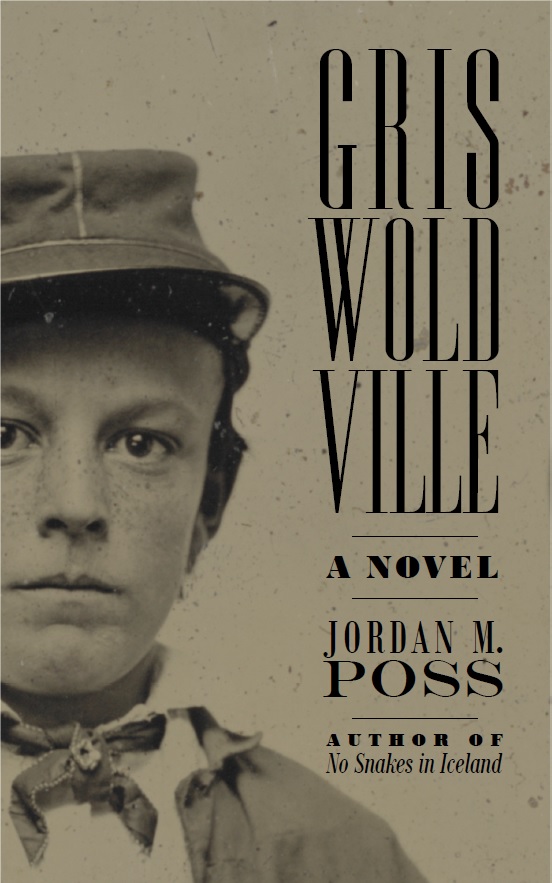
For my part, I’ve tried to convey a little of all this in my own Civil War novel, Griswoldville: what the war was like, how it wore men out and used them up, destroyed them body and soul, and just what it’s like to lose—something our success-obsessed culture can hardly conceive of, much less understand.

Cain at Gettysburg does it exceptionally well. Check it out.

The fine art of minor characters

Kathy Lamkin as “Desert Aire Manager” in the Coen brothers’ adaptation of No Country for Old Men

Kathy Lamkin as “Desert Aire Manager” in the Coen brothers’ adaptation of No Country for Old Men

I just finished reading a fine novel called This Dark Road to Mercy, by North Carolina novelist Wiley Cash. It’s a worthwhile read, but as I was entering the homestretch last night I read a scene that got me thinking about the great but often untapped potential in minor, incidental characters in fiction—the kind of characters who appear for only one or two scenes and may not even have names.

The context:

This Dark Road to Mercy tells the story of Easter and Ruby Quillby, young girls living in a foster home in Gastonia, North Carolina after their mother overdoses. Their estranged father, failed minor league baseball player Wade Chesterfield, discovering some principle and responsibility late in life, decides that he should take them in even though he signed away his parental rights years ago. He convinces them to run away with him. They are pursued by two implacable men: Brady Weller, a disgraced former detective with Gastonia PD who now works as an ad litem advocate for the girls, and Pruitt, a bouncer on a mission to recover cash that Wade stole from his boss. Pruitt also has a personal score to settle with Wade.

The scene:

Having made a grisly discovery that indicates Pruitt is very close to catching them, Wade takes the girls to a convenience store and has Easter, the older of the two, go inside to get the bathroom key so he can change clothes. Here’s the first appearance of the character(s) I want to look at:

The store was empty except for a fat blond-headed woman and a guy with a ponytail who were both standing behind the counter. When I walked in the woman was trying to light a cigarette, but she kept laughing at something the guy had said to her. I stood in front of the register until she’d lit her cigarette and tossed the lighter onto the counter.
“Can I help you?” she asked. The guy laughed again like he remembered what was so funny about what he’d said before I came in. He turned and walked back into a little office, and the woman watched him go. She looked at me again. “What do you need, baby?”
“I need to use the bathroom,” I said. “It’s locked.”
The woman reached under the counter and pulled out a long piece of wood with a key attached to the end of it. “Don’t leave this in there,” she said. “The door locks behind you.” I took the key and walked back to the bathroom.

Later, after Wade has changed, he sends Easter back inside to return the key.

The woman was alone behind the register when I went back into the store. I set the key on the counter.
“You okay?” she asked.
“I’m fine.”
“You were in there a long time,” she said. “I almost came looking for you.”
“I’m sick,” I said. “Sorry.”
“I hope you feel better,” she said.
“Thank you,” I said. “I hope so too.”

So far so good. A realistically rendered but mundane series of exchanges. Anyone who has grown up in the South has had this interaction, right down to the “baby” (or perhaps “honey” in other circumstances, as “baby” is reserved for children).

But then the scene I’m about to describe came along and I appreciated the craft Cash had put into these characters. Pruitt, following not long after, snookers a cop into revealing the likely place he can find Wade and reaches the same convenience store. He goes inside to pursue his own investigation and we meet these employees again:

The closest gas station had a pay phone in the corner of the parking lot. The girl’s picture was somewhere in the glove compartment, and my hands riffled through the papers looking for the same face that had been stapled to the cafeteria wall back in Gastonia.
Inside the station, a skinny kid with a ponytail and an older woman stood behind the counter and stared while the picture was unfolded on the counter in front of them. My finger pointed down at the photo. “Have you seen this girl?”
The kid with the ponytail took his eyes off the photo and looked at me, but the woman put on a pair of glasses that hung from a string around her neck and stretched her neck until her face was close to the picture. She took her glasses off and looked up. “And who are you?” she asked.
“It doesn’t matter. Have you seen this kid or not?”
“It certainly does matter,” the woman said, leaning her hip into the counter and folding her arms across her chest. “Are you the police, or are you just some kind of weirdo?”
“Police.”
“Well,” she said. “I’d like to see a badge.”
Both the kid’s and the woman’s eyes followed my hand as it reached for my back pocket. They waited, expecting to see a badge, but instead they saw five twenties laid out on the counter. “Have you seen her or not.”
The kid looked at me, and then he looked down at the money. He reached out and scooped it up and folded it into his pocket. “She was in here,” he said. “It wasn’t even twenty minutes ago.”
“Damn it, Cody,” the woman said. She smacked his arm.
Cody raised his finger and pointed out the door behind me. “They went across the street.”

And away we go.

For comparison’s sake:

The scene reminded me, upon reflection, of a favorite from Cormac McCarthy’s No Country for Old Men, another cat-and-mouse story of pursuit across the margins of the South. In this passage, the ruthless cartel hitman Anton Chigurh has just finished searching protagonist Llewelyn Moss’s trailer. He suspects Moss has fled but, just to be sure, decides to get more information. He stops at the trailer park office. McCarthy:

He drove down and parked in front of the office and went in. Yessir, the woman said.
I’m looking for Llewelyn Moss.
She studied him. Did you go up to his trailer?
Yes I did.
Well I’d say he’s at work. Did you want to leave a message?
Where does he work?
Sir I aint at liberty to give out no information about our residents.
Chigurh looked around at the little plywood office. He looked at the woman.
Where does he work.
Sir?
I said where does he work.
Did you not hear me? We cant give out no information.
A toilet flushed somewhere. A doorlatch clicked. Chigurh looked at the woman again. Then he went out and got in the Ramcharger and left.

All stories have minor characters, so what makes these stand out? Why do they feel like real people—one can certainly imagine these being distant cousins, or maybe attending the same women’s Bible study—when so many authors’ minor characters are flat, interchangeable, and immediately forgotten?

Two standout traits:

Look back at these two passages and see how Cash and McCarthy craft these characters. A few things stand out to me:

First and foremost—the language they use. McCarthy’s trailer park manager is informal but, when Chigurh presses her, adopts a terse, official tone (“aint at liberty” is a wonderfully suggestive blend of everyday dialect and the language of pronouncement). She gives as good as she gets and—remarkably—is the only person in the novel to resist Chigurh and live.

The gas station cashier in Cash’s book is more fully developed and we also benefit from a binocular view of her—we see her in two different situations, which gives her depth. With Easter she is informal and sweet in the way of Southern ladies to children. She freely expresses concern and wishes Easter well. She uses simple interrogative or declarative sentences (“And who are you?” and “It certainly does matter” and “I’d like to see a badge”) and pushes back against every move Pruitt makes. She has him sized up the moment he enters the store and tries to ice him out.

Which brings me to the second thing that stands out—body language. As much or as little as each author gives us, you can see these characters. McCarthy’s woman gets no direct physical description but we do read this: “She studied him.” This comes before she has even spoken a word. If you’re paying attention, you know Chigurh is in trouble the moment you read that line. (A side note: Where would the South be without the obstructive middle aged ladies who act as our gatekeepers?) This one line of action gives us all we need to know to understand what she’s about to do.

Cash includes more detail. The cashier is fat, blonde, smokes, and is old enough not just to use reading glasses but to wear them around her neck. The telling bit of body language comes when Pruitt shows her his stolen photo of Easter: “the woman put on a pair of glasses that hung from a string around her neck and stretched her neck until her face was close to the picture. She took her glasses off and looked up.” Cash does something subtle here, suggesting her slow, drawn out movements (notice the repetition of “neck”) which heighten the message she’s transmitting: sarcastic dismissal. She’s not going to cooperate.

So Cash and McCarthy present us with a pair of nicely drawn minor characters. So what?

The use of minor characters:

There’s a few important things I think writers can take away from these examples. In no particular order, here are some of the uses I see of the well-realized minor character:

  • Characterizing the major characters—Cash’s gas station cashiers offer a particularly fine example, and it all comes down to perspective. We see these characters two ways—first, Easter, a young girl, sees them as “a fat blond-headed woman and a guy with a ponytail,” the kinds of attributes a kid would notice. Pruitt, when he arrives, thinks of them dismissively as “a skinny kid with a ponytail and an older woman.” At this point in the novel we’re already two-thirds of the way in, but Cash is still characterizing his narrators by showing us how they perceive the same minor characters differently.

  • Obstructing the major characters—I’ve already used the word obstructive in this post, and intentionally so. No real-life plan or story proceeds on a perfectly straight line, just jokes and Reader’s Digest anecdotes. Things get in the way. Most of the great action movies excel at throwing physical obstacles in front of their heroes: in The Guns of Navarone the commando team’s explosives are sabotaged, Ethan Hunt’s team in Mission: Impossible—Ghost Protocol deal with repeated equipment failure, and in Raiders of the Lost Ark Indy has to travel, avoid assassination, disguise himself and sneak into a Nazi camp, knock down walls, steal a horse, chase and take over a truck, and fight or kill snakes, a giant airplane mechanic, and a host of other enemies before he can get the Ark. What Cash and McCarthy offer us here are character-driven versions of those obstacles, which complicate and intensify the plot—even if only for a few pages or lines—and, again, reveal things about the major characters who encounter them.

  • Making the world feel real—I’ve slowly developed a loathing for the term world-building and I’m not fond of the word realistic any more; what I prefer to emphasize is truth or at least truthfulness. Introducing well-realized minor characters makes your story feel true. Because of their speech, their gestures, the shifts in their attitudes that reveal their priorities, the ladies in This Dark Road to Mercy and No Country for Old Men seem to have their own lives that we, along with the characters, have blundered into. We get the sense that we’re just seeing a slice of them. And the upshot for the main characters—and the rest of the story—is that such minor characters make it feel like they have a more spacious world to move around in.

  • Surprising the reader—A lot of fiction features obliging minor characters who show up just to convey information to or do things for the main characters. When an antagonist like Pruitt or Chigurh is suddenly stopped and has to reckon with an unexpected obstacle—especially one so unassuming—it should be a jolt to the reader as well. Running across someone like the cashier or the trailer park manager is a nice surprise.

There are plenty of other reasons to give minor characters a bit of depth, to make them feel real or true, but these are a few good ones to start with.

A final thought on method—and a bit of a warning:

Cash and McCarthy brought these characters to life through the details they selected to present us. John Gardner, in The Art of Fiction, writes that “vivid detail is the life blood of fiction.” Elsewhere in the same book he writes of “closely observed detail,” “concrete detail,” “authenticating detail,” and warns against “insufficient detail.”

This is not to advocate the Victor Hugo kitchen sink style, including everything. Note the adjectives: vivid, closely observed, concrete, authenticating detail. Carefully, precisely chosen from life. We do not need every gesture a character makes, just the ones that show us what we need, the ones that tell us who this person is in the two or three pages in which we get to know them. (See again that Ciardi line about poetry being “the art of knowing what to leave out.”)

Read both of these books if you haven’t. I’ve just dwelt at a little length on two minor characters. But these minor characters are excellent case studies of what a good, careful, purposeful writer can do with material that not everyone takes the time to develop.

Midway trailer reaction

Dick Best’s squadron of SBD Dauntless bombers dives toward the Japanese carriers in Roland Emmerich’s Midway

Dick Best’s squadron of SBD Dauntless bombers dives toward the Japanese carriers in Roland Emmerich’s Midway

Update: I saw Midway over Thanksgiving break and, as it surprised me and this post continues to get a lot of traffic, I’ve written a full length review. You can read that here.

A new teaser trailer for Roland Emmerich’s forthcoming historical action film Midway dropped this morning. I first heard about the project last year and, despite a basic reaction of Oh no, decided to reserve judgment. This trailer hasn’t done much to change my initial reaction, but I am still withholding judgment. We’ll see.

The Battle of Midway is a seminal moment in American military history and the course of the Second World War. It deserves a serious, sober dramatization that will convey the seriousness of the Japanese threat, the courage of the sailors and aviators involved, something of the longterm consequences of the victory—and, of course, the terrible cost.

So I’m in favor of a new Midway film—the Charlton Heston Midway, which I’ve never seen all the way through, came out 43 years ago—especially given the potential of modern special effects to simulate something like the incineration of the Akagi.

However, I’m not sure Roland Emmerich is the best person to handle this story. In fact I’m pretty sure he’s not. He’s helmed some of the worst big-budget schlock Hollywood has had to offer for a quarter century. He made the climate change Chicken Little fables The Day After Tomorrow and 2012, the misbegotten historical adventure 10,000 BC, went down the Oxfordian conspiracy rabbithole with Anonymous, and is most famous for his mindless sci-fi crowdpleasers like Independence Day and the American Godzilla. Even what I think is his best movie, The Patriot, is a ridiculously simplistic retelling of the Revolution in the South that’s riddled with falsehood.

So I’m not terribly optimistic.

All that said, like my initial reaction to the first real trailer for Tolkien, I’m just going to list a few thoughts:

midway poster.jpg
  • After all my negativity about Emmerich, there are some definite wins in the casting, especially Woody Harrelson as Admiral Nimitz. Harrelson was great as Texas Ranger Maney Gault in The Highwaymen, which I loved, so I look forward to him playing a similarly legendary figure again.

  • The first half of the trailer covers a lot of Pearl Harbor ground, with a lot of similar shots—CGI Japanese torpedo planes zipping through battleship row, fighters strafing people on the ground, and even the departure of Jimmy Doolittle’s squadron of B-25 Mitchells for the first bombing of Japan. Two of my favorite historical movies of the last few years—Dunkirk and Darkest Hour, for my thoughts on which click here and here—cover almost exactly the same events but do so in radically different ways. If Midway is going to double up on some of the material Pearl Harbor covered, I hope it’s significantly more different than what we’ve got in this trailer.

  • Aaron Eckhart plays Doolittle, which could be quite good, and some publicity stills show him in China after the raid on Tokyo. But again—just how much does this film cover before it gets to Midway?

  • Lots and lots of CGI, not all of it impressive looking. One doesn’t have to go as far as Christopher Nolan did with practical effects on Dunkirk, which gave that film such a spare, austere look, but some detectable real planes and ships would be nice—and help convince our brains that we’re not watching a cartoon.

  • My wife and I just rewatched Jumanji: Welcome to the Jungle, which is a real hoot. Nick Jonas looks exactly the same here.

  • This film also features two alumni of my favorite underappreciated historical film, The Alamo—Dennis Quaid (Sam Houston there, Bull Halsey here) and Patrick Wilson (William Barret Travis there, US naval intelligence officer Edwin Layton here).

  • I’m intrigued to get a bit of the personal life of Dick Best, the divebomber pilot who dropped a bomb into the elevator of the Akagi. He’s played by Ed Skrein and Mandy Moore (familiar to me, many times over, as Rapunzel) plays his wife. Done well this could lend some depth to the often anonymous men who fight America’s wars. But given Emmerich’s track record of developing romantic relationships—or any kind of human relationship—I’m withholding judgment.

  • Best’s dive toward the Japanese fleet, which we get snippets of at the end of the trailer, knotted my stomach. So, mission accomplished there.

  • A number of other figures from the battle—ordinary pilots and sailors who did incredible things—are listed in the cast elsewhere online, men like Wade McClusky and George Gay, who survived their flights to attack the Japanese fleet, and Eugene Lindsey, who did not. I hope Midway does them justice.

You can watch the teaser trailer for Midway embedded in this post above. The film comes out November 8, timed for Veterans Day.

Chesterton on the spiritual benefit of heatwaves

Current staTus

Current staTus

I ran across the following Chesterton quotation today and found it apropos for two reasons. First, today is the anniversary of Chesterton’s death at the age of 62 in 1936. Second, while the weather here in upstate South Carolina has been mild—even occasionally pleasant—for about two weeks now, the three weeks or so before that were an increasingly miserable foretaste of late July or August heat. No cloud, no wind, just sizzling on the griddle of the piedmont.

From a June 11, 1910 column in The Illustrated London News:

The chief gift of hot weather to me is the somewhat unpopular benefit called a conviction of sin. All the rest of the year I am untidy, lazy, awkward, and futile. But in hot weather I feel untidy, lazy, awkward, and futile.
— GK Chesterton
IMG_2305.jpeg

I resemble that remark. You can read a longer chunk here.

Leave it to Chesterton to find some kind of spiritual benefit in what would otherwise just be inconveniently hot weather. Of course what he’s cheekily describing here is the self-knowledge and humility that should come through all hardship, something he is by no means the first to comment on.

A good reminder for the next time I’m doubling up on anti-perspirant.

Oh—my “Mount Writemore” t-shirt arrived in the mail yesterday. It depicts Chesterton, CS Lewis, George MacDonald, and JRR Tolkien on a much more interesting version of Mt. Rushmore. It’s available in a variety of sizes and colors (mine is “asphalt”) from the Babylon Bee. It’s also available as a poster. It’s deeply silly and I’m very excited about it—a very Chestertonian response I think.

Constantine on City of Man Podcast

The City of Man Podcast’s Ancient Aside series returns with its tenth episode. In this episode, regular host Coyle Neal and I cover the life and reign of Constantine, one of the most consequential and controversial figures of the late Roman Empire—and in all of Western history. We talk about the post-Diocletian political context of Constantine’s career, his personal background, his military campaigns, his conversion to and patronage of Christianity, and much, much more.

You can see this episode’s shownotes here. Visit City of Man on Facebook or the Christian Humanist Radio Network’s flagship website, and listen in via iTunes, Stitcher, and other fine podcasting apps. I’ve also embedded the episode in this post for your convenience. Enjoy, and thanks as always for listening!

Waking into the world

11103055_10153230654252682_3550645454597726169_o.jpg

About a week ago, Alan Jacobs posted a short bit of one of his favorite Auden poems on his blog. I enjoy but am no great fan of Auden and began to skim, but then stopped short when Jacobs invoked Beowulf. It seems that in his poem “Horae Canonicae,” Auden borrowed from Beowulf what struck me as a beautiful image.

Here’s the relevant passage—some genealogical framing from near the beginning of the poem—in the translation of Beowulf I happen to be reading right now, that of R.M. Liuzza:

Four children, all counted up,
were born to that bold leader of hosts.

Liuzza’s translation is good—I want to emphasize that—but here it translates the meaning rather than the literal words of the text. Here’s the same passage in the original Old English:

ðæm feower bearn     forðgerimed
in worold wocon     weoroda ræswan

And to give my own roughly literal version:

to him four children counted forth
woke into the world…

Waking into the world.

Today is my birthday, the day I woke into the world thirty-five years ago (an age with plenty of its own significance). But that’s not what was on my mind when I ran across this beautiful phrase. Rather, a few days earlier, my wife and I had welcomed our third child, a healthy baby boy, our second son, into the world. That has a way of preoccupying you.

So after spending a few days in the hospital, attending the birth and holding this stunned, fearful, hungry, and not a little drowsy new life in my arms, waking into the world seemed exactly right. Who isn’t a little shocked to wake up, who doesn’t expect breakfast, and who doesn’t carry sleep with them like the warmth of their blankets for a little while after rising? Waking into the world is a metaphor that strikes closer to the truth than plain English, the way all good poetry does.

While being born has its own poetic weight—each and every one of us is carried into life, just as each of us will be carried out—I think waking gets at what makes being born such a shock and delight. Beyond the fun, simple parallels, when we wake we come slowly or instantly into a world we were totally unaware of a moment before. It went on without us—had been going on for some time—with its own cast of characters and interests. We aren’t necessary to its existence and continuation. And so waking up and joining it is a gift.

Because I can’t keep him out of this blog for long, here’s a favorite bit from Chesterton, in Heretics, on the same point:

The supreme adventure is being born. There we do walk suddenly into a splendid and startling trap. There we do see something of which we have not dreamed before. Our father and mother do lie in wait for us and leap out on us, like brigands from a bush. Our uncle is a surprise. Our aunt is, in the beautiful common expression, a bolt from the blue. When we step into the family, by the act of being born, we do step into a world which is incalculable, into a world which has its own strange laws, into a world which could do without us, into a world that we have not made.

None of us has to wake into the world—indeed many never even get the chance. But my growing awareness of the gratuitousness of life, how totally unnecessary it all is, has made me more and more grateful to have received such a gift as waking. I don’t know how much time I have left in this world—I pray it’s many years, of course—but however long it is, I’m thankful for the grace of waking into it, and of being able to give that gift to my children.

Thanks to all who have passed along birthday wishes and greetings, and especially those who have helped us welcome our son. God bless, and thanks as always for reading.

Jack London predicts the internet

From his novel The Sea-Wolf, in which the narrator describes the crew of the Ghost in a heated argument:

 
Childish and immaterial as the topic was, the quality of their reasoning was still more childish and immaterial. In truth, there was very little reasoning or none at all. Their method was one of assertion, assumption, and denunciation. They proved [their point] by stating the proposition very bellicosely and then following it up with an attack on the opposing man’s judgment, common sense, nationality, or past history. Rebuttal was precisely similar. I have related this in order to show the mental caliber of the men with whom I was thrown in contact. Intellectually they were children, inhabiting the physical forms of men.
 

The topic of debate, by the way, is whether a seal pup can swim by instinct or has to be taught by its mother. Almost—but not quite—pointless enough for a comment section.

Leaving things out

Last year I wrote a short post about proportion in the arts, inspired by an offhand answer Jerry Seinfeld gave about turning down $5 million per episode for one more season of “Seinfeld.” There, I quoted the great poet, critic, and translator of Dante John Ciardi, who in the notes to his Inferno wrote that:

 
Poetry is, among other things, the art of knowing what to leave out.
— John Ciardi
 

A side note: Is there another phrase that evokes quite what “leaving things out” does? It suggests making things manageable—in all kinds of ambiguous ways. What I’m driving at in this post, of course, is leaving things out to get at the true shape of something, rather as I’m leaving things out of my diet right now to return to what I hope is a truer shape of me.

When I learned that the great historian of modern Europe and Churchill biographer John Lukacs had died a few weeks ago, I revisited a short book—a bound essay, really—he wrote for ISI’s Student Guide series, A Student’s Guide to the Study of History. There, in a passage describing the simple version of the historian’s process of preparing and gathering material, I read this footnote:

No matter how detailed and assiduous, your research will never be complete. The nineteenth-century monographic ideal was that certifiable historian who, having read every document and every writing related to his topic, is able to produce a complete and definitive history of it. This is no longer possible—because of the possibility that new documents, new treatments, and more publications about his topic, many in different places and languages of the world, may yet appear. (Of course some histories are more “definitive” than others. But never absolutely so.)

And then, on the next page, as Lukacs begins to explain the triage of sorting the material an historian has collected, he includes this wonderful parenthetical:

 
It is a great mistake to use everything.
— John Lukacs
 

Precisely because everything is not up to the same standard, is not relevant, is not part of the story you’re trying to tell. This is a succinct warning away from the kitchen sink approach, which every one of us has encountered at least once in some 800-page book, fiction or non-fiction.

Which brings me back to Ciardi: the art in poetry and history, as in so much of life, from cookery and dieting (see above) to marriage, is in choosing. This entails constraint (adherence to form), restraint (rejection of self-indulgence), and commitment (sticking with it even though you’ve just made it harder on yourself), and these in turn entail a certain amount of courage (say what you mean!) and discipline (mean what you say!).

Leaving things out—choosing—shapes both you and your art and will create order. And contrary to the modern suspicion that order only crushes creativity, it will in reality “give room for good things to run wild.”

Take a moment to read this detailed LA Times obit for Lukacs. He led a remarkable life, from surviving the Holocaust in Hungary to working as an historical adviser on Darkest Hour. And pick up one of his books sometime. I recommend The Duel: The Eighty-Day Struggle Between Churchill and Hitler, which I’ve recommended here before along with a few of his other books.

Spring reading 2019

DSC_3400.jpg

Although my spring semester was incredibly busy and stressful, I still made time to read. So while this blog was only updated intermittently while I worked on bigger projects, my reading never abated.

Here’s my spring reading list—“spring” here meaning something roughly analogous to my spring semester, from New Year’s to last weekend, May 11, just before our summer session began. The only organizing principle is that the books on this list are presented in the order I finished reading them.

Finally, anything I’ve reviewed, whether briefly on Goodreads or in more detail on my blog here, I’ve hyperlinked. Enjoy!

Spring Reading, January-May 2019

A few superlatives, just because

Best reread: It’d ordinarily be a very close race between Inferno, the first third of my favorite book, and All Quiet on the Western Front, which was for many, many years my favorite novel. Acknowledging the greatness of those two, though, I have to give this to A Study in Scarlet, which I read for the first time since 9th grade and enjoyed just as much. A small masterpiece of misdirection, tension, and suspense.

Biggest surprise: Tom Holland’s slender little volume for the new Ladybird Expert series, Æthelflæd: England’s Forgotten Founder. I was passingly familiar with Æthelflæd as Alfred the Great’s daughter, who married into the Mercian royal family and eventually ran the place, but had no idea what a fascinating and varied career she had as “the Lady of the Mercians.” Pick this up for a short, beautifully illustrated window into an important side-story of Anglo-Saxon England.

Biggest letdown: Shirley Jackson’s Haunting of Hill House. Some genuinely great moments of suspense and supernatural dread did not make up for the meandering plot and, especially, the tedious characters.

Best western: True Grit, which could also vie for best reread. But is it even fair to pit anything else against True Grit?

Best general non-fiction: I’m going to declare a tie between Russell Kirk’s Concise Guide to Conservatism and Peter Kreeft’s Symbol or Substance? I posted a full review of Kirk’s book yesterday but I’m still mulling Kreeft’s book, which is, like most of his work, brilliant and deeply challenging. Coming in at a close second to these two is Roger Scruton’s How to Be a Conservative, which is an excellent recent meditation on the subject.

Favorite classic: Again, I could give the nod to Inferno here, but this time around I’ll give it to How to Keep Your Cool, a new translation of the Roman stoic Seneca’s treatise De Ira (On Anger). A must read for anyone who appreciates Stoic philosophy, struggles with their temper, or both—like me.

Best Elmore Leonard: I’ve been on an Elmore Leonard kick since reading this piece from University Bookman last summer, and it’s been great. While I’ve decided I much prefer his westerns to his later crime novels—with a few exceptions—my favorite Leonard read this spring was an outlier even by that standard: The Moonshine War. A brisk, suspenseful story set in rural Kentucky during Prohibition, The Moonshine War is fun, has rousing action and interesting characters, and—almost as a bonus—presents these Appalachian archetypes without a lot of crass hillbilly stereotyping. It’s a blast. Check it out.

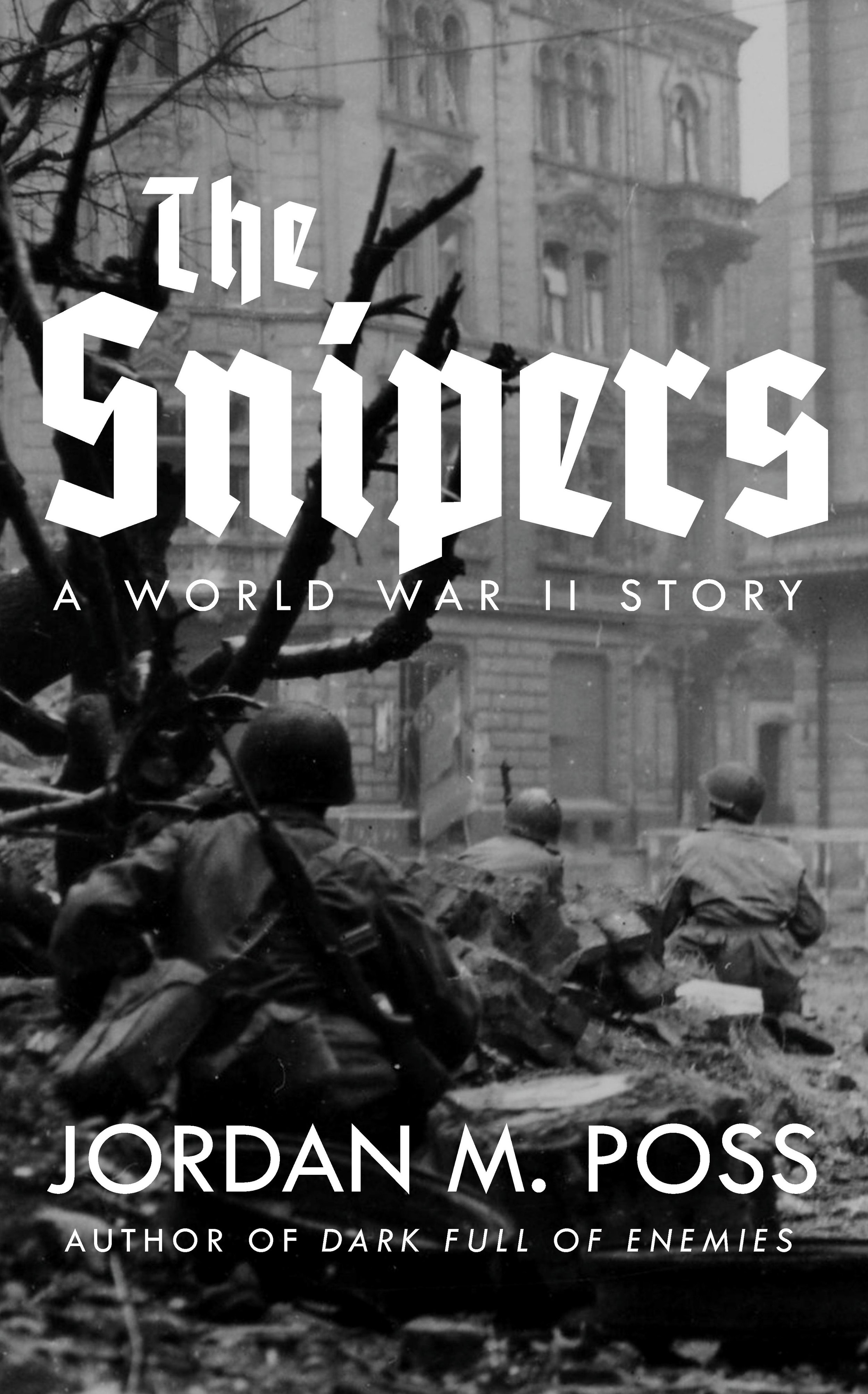
I read the whole thing: Ages ago, I used to give myself the I Read the Whole Thing Award for massive books I’d finished. Atlas Shrugged, City of God, War and Peace—I’ve read every word. This spring that book was Andersonville, Mackinlay Kantor’s monumental Civil War novel. I reviewed it at some length here.

Currently reading

A few books I'm currently reading as we head into the summer:

  • Normandy ‘44: D-Day and the Battle for France, by James Holland—A new history of Operation Overlord and the Normandy campaign, which lasted for almost two and a half months following the initial invasion. I received an uncorrected proof as part of a Goodreads giveaway; the book comes out in its final version next month.

  • The Holy Roman Empire: A Very Short Introduction, by Joachim Whaley—So far, another good volume from Oxford’s VSI series. This one is jam-packed with information, covering as it does over a thousand years of central European history.

  • The Seven-Per-Cent Solution, by Nicholas Meyer—I’m not much for novels written about classic characters by later fans, but this one, in which Sherlock Holmes beats his cocaine addiction with the assistance of Sigmund Freud, looked intriguing. It’s decent so far, but—barring some kind of monument plot development in the final third—good, not great.

Stuff I'm fixing to begin reading:

  • Lee, by Douglas Southall Freeman

  • The Death of Expertise: The Campaign Against Established Knowledge and Why it Matters, by Tom Nichols

  • The Vanishing American Adult, by Ben Sasse

  • Brave New World, by Aldous Huxley (third or fourth attempt, as this is one of those books I’ve never been able to get into)

I also intend to crack open another volume in my project to read some massive books this year, both fiction and non-fiction. I’ve tackled Andersonville; I’m considering Lonesome Dove, Gone with the Wind, and Kristin Lavransdatter for the next read. We’ll see.

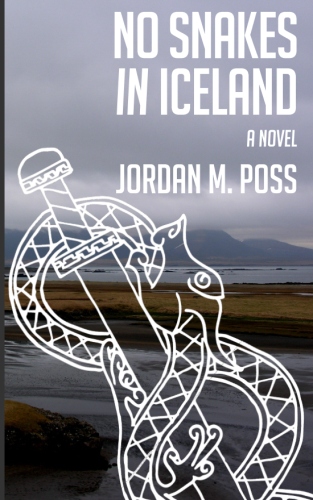
In the meantime, thanks for reading! And as always, if you’re looking for something good to read yourself, please check out one of my novels. You can find out about them right here.

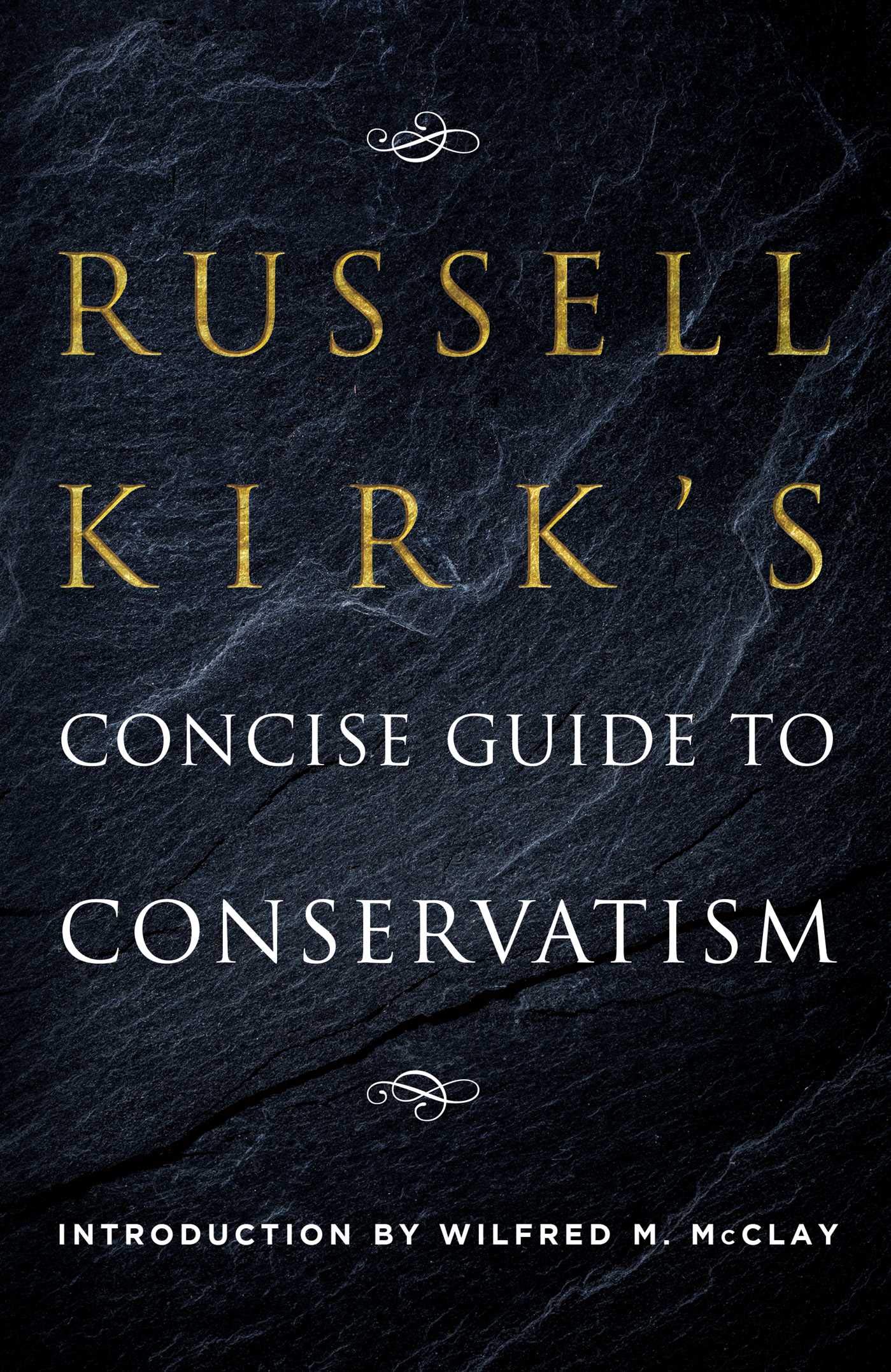
Russell Kirk's Concise Guide to Conservatism

Conservatism today is not in good shape. Like Rome in Nero’s day, where the historian Tacitus wrote that “all degraded and shameful practices collect and flourish,” one can find just about any terrible thing you want to in the fringes of the movement. But mainstream conservatism, so-called, is not much better, riven as it is by debates between nationalists and globalists, traditionalists skeptical of modernity and technological triumphalists, advocates of small businesses and massive corporations, family values activists and anything goes social liberals, hawks and doves, and just as many big government porkbarrel technocrats as the other side of the aisle. If Yeats’s famous phrase was “the centre will not hold,” conservatism seems to have no center in the first place.

Russell Kirk’s Concise Guide to Conservatism, a formerly out-of-print handbook by one of the twentieth century’s great conservative thinkers, offers one to a movement desperately in need of re-centering. Kirk—a man of letters rather than a strictly political thinker or, worse, the curse of today’s political scene, a policy wonk—helped frame the meaning of conservatism at the time of its American revival in the 1950s, and this book is a refreshing throwback. It’s winsomely written, engaging and even funny, and a brilliant introduction to the true core of a movement that has lost its way.

kirk concise guide.jpg

Originally published in 1957 as The Intelligent Woman’s Guide to Conservatism (the title being a riposte to George Bernard Shaw’s Intelligent Woman’s Guide to Socialism and Capitalism), Kirk’s book sets out the principles of true conservatism simply and straightforwardly, drawing on the modern tradition from Burke to the 1950s. Anyone who has read the book that put Kirk on the map, The Conservative Mind, will recognize the names of many of the British and American conservatives Kirk invokes there, including John Adams, Orestes Brownson, John Randolph of Roanoke, Tocqueville, John C. Calhoun, Irving Babbitt, and Paul Elmer More, but Kirk also builds support from an even broader group of thinkers ranging as far back as Aristotle and Cicero and up to the 20th century British traditionalist liberal GK Chesterton.

This book also presents a condensed version of Kirk’s concerns in The Conservative Mind: the threat of materialist ideologies like Marxism; the leveling effects of industrialism and consumerism; the danger of totalizing, centralized state power; the collapse of community; the erosion of virtue, discourse, learning, respect for—or even knowledge of—the past; and much more. Kirk passionately explains the conservative views of freedom of conscience; private property; variety and diversity; traditional education in the liberal arts and humanities; the transcendent vision of the world offered by religion; church, community, and the other “little platoons” that make us who we are; and the family.

One of the strengths of Kirk’s book is his handling of the tensions within conservatism, of which we have plenty. I think one of the reasons “conservatism” so-called today has been pulled so badly out of shape is the attempt eliminate these tensions one way or the other, creating a balkanized political movement of simplified, un-nuanced sub-conservatisms. This is an essentially ideological search for a resolution to tension, one that insists on consistency and going to the logical extremes. Kirk avoids that temptation—insisting throughout that true conservatism is properly non-ideological—and retains these tensions.

Kirk deals with the tension between the individual and the community—both objects of immense respect and importance within conservatism—especially well, rejecting both “‘Individualism’ as a radical political ideology” (cf. Ayn Rand) as well as pure collectivism. But the best example, and possibly the best chapter in the book, is his treatment of permanence and change. Call it the tension between stability and Progress, or the status quo and the god Change. “The conservative is not opposed to progress as such,” Kirk writes, “though he doubts very much that there is any such force as a mystical Progress, with a [capital] P, at work in the world.” Invoking Coleridge, he continues:

The permanence in society is formed by those enduring values and interests which give us stability and continuity; without that Permanence, the fountains of the deep are broken up, and society slips into anarchy. The Progression in a society is that spirit and that body of talents which urge us on to prudent reform and improvement; without that Progression, a people stagnate, and society subsides into an Egyptian or Peruvian lethargy.

Kirk wrote in 1957—the year my dad, now a 62-year old grandfather, was born—but his description of an affluent, technologically sophisticated but hollow society poised between anarchy and stagnation could have been written yesterday. A faithful advocate of what he, borrowing from TS Eliot, called “the permanent things,” he could not have produced a more permanently relevant little book.

Russell Kirk’s Concise Guide to Conservatism also includes a good introduction from historian Wilfred McClay. Coming in at just over 100 pages, this book is a much-needed refresher at a time of crisis. You won’t find much about economic theory or policy—those are all downstream of culture—but you will find a lot about principle, virtue, family and community, respect for the past, and the right ordering of affections that makes up the conservative worldview. I hope it gains a wide readership—both among those seeking to understand conservatives and conservatism, and conservatives in search of a center that will hold.