Pale Faulkner
/Last week I finished reading Pale Fire, my first and long overdue Nabokov. It’s the best possible version of what John Gardner described as a skilled writer “jazzing around,” a novel constructed of the implications within the text—which, superficially, is a long commentary on a long poem—and the inferences of the reader. A story told entirely between the lines, so to speak.
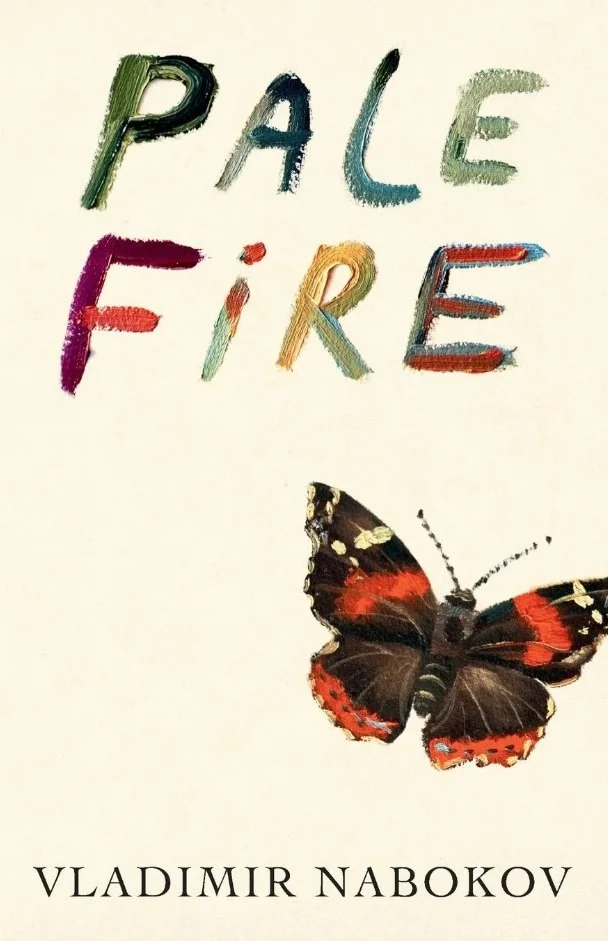
There’s a lot going on in Pale Fire and I look forward to a future second reading, but one of the most poignant aspects of the book is the way the painful personal reflection in the poem—which concerns the poet John Shade’s family life, including the apparent suicide of his only daughter—is ignored by the poem’s editor and commentator, Charles Kinbote (or, perhaps, “Charles Kinbote”). Kinbote, in notes that inevitably drift into tangents, spins or misinterprets every possible line and word of Shade’s poem as allusions to the imaginary kingdom of Zembla and its exiled king, about which he tells verbose, self-indulgent stories that the reader gradually infers are about himself—another layer of the story.
As TV Tropes puts it: “While Pale Fire is about a lot of things, one of the biggest is literary commentators who can't help but use other people's work as mirrors onto their own neurotic obsessions.” Or, even better, Man Carrying Thing (in a genuinely brilliant video): “It’s a hilarious maneuver watching this commentator wrangle a sincere poem about art and grief into something about his favorite subject.”
Nabokov parodies this brilliantly, and so this was all fresh on my mind when, having finished Pale Fire Friday, I picked up a book that I last read probably twenty years ago: The Sound and the Fury.
I didn’t bother with the introduction to this edition, a nice new paperback that I got for my birthday, but after a few days I flipped through it and was struck by the academic ability to Kinbote basically anything— “maneuver[ing]” a book into a discussion of one’s “favorite subject” or “their own neurotic obsessions.” We’re all aware of the way kooks like Kinbote do this, but he’s just more obvious about it because he is a kook. The tendency is present in all academics, and tolerated when the “favorite subject” is some kind of fashionable ism.
Faulkner’s novel, apparently, is mostly about racism, the legacy of slavery and white supremacy, and the Lost Cause (that bugbear, which I’m less and less sure actually means anything), or at least so thoroughly infused with the above that it becomes functionally about them. This TED Ed video, since the latter apparently wasn’t enough, adds Absalom, Absalom!’s supposed concern about “the region’s intolerable* history of genocide” to the mix.
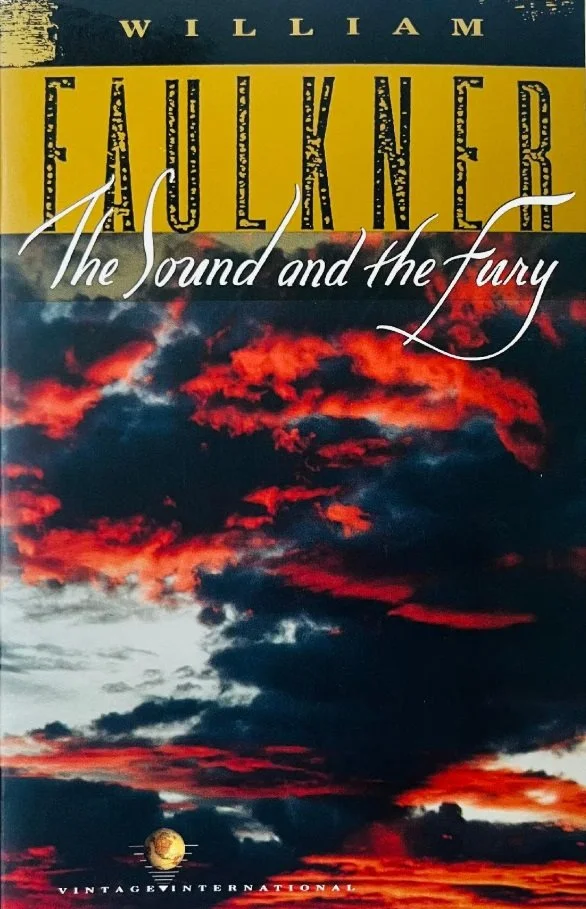
But is this really what The Sound and the Fury is “about”? I’ve written several times in recent years about the prevalence of theme over story. As annoying and distracting as that tendency is for genre fiction (not a distinction I pay much mind to, but bear with me), the way it dominates discussion of literary fiction is intolerable.
The Sound and the Fury is first and foremost a family drama. The alcoholic father and bedridden mother; the promiscuous daughter; the brothers—one jealous, another hardworking and embittered,** yet another mentally handicapped—the help, themselves by turns loyal, impatient, entitled, detached, but never deceived; the loss of patrimony and the entire bunch’s financial straits; the sense of decay and decrepitude and judgment hanging over everyone—this is what The Sound and the Fury is about. The characters themselves impotently fume or resign themselves and more than one talks of afflictions, of curses on the family. Quentin moons around Boston feeling the weight of his own sin, not the legacy of slavery. And it is hard to read the long opening section, told from Benjy’s perspective, and see how different people treat him when no one is looking, and think that Faulkner was animated or even cared about these big social themes. If you must have something more abstract and high-falutin’ than these, decline, disappointment, and guilt are still better options than those buzzword themes because they’re closer to the characters.
Not that the themes cited above and so beloved of critics and tastemakers—who want to shepherd us into the correct interpretation of Faulkner’s story just as surely as Benjy’s caretakers want to keep him off of the golf course—don’t matter at all. They are trappings, necessary component parts of the setting and its history. A story like The Sound and the Fury that did not have Jason Compson lashing out at the family’s black help in frustration would be unrealistic and lack an important means of revealing character, and the burden of defeat in the Civil War is an appropriate part of the atmosphere of Faulkner’s world. But these trappings are not the point, and making them the point is to turn Kinbote on Faulkner.
The difference is that, in Pale Fire, Kinbote is a lonely weirdo. Today the Kinbotes hold conferences.
* Thank goodness for that “intolerable,” otherwise I wouldn’t have known what to think!
** There is a strong sense of the elder brother in “The Prodigal Son” about Jason Compson—despite being the Compsons’ second son—that I haven’t really seen explored. Something for the future, perhaps.