2018 in Movies

Tim Blake Nelson as Buster Scruggs in The Ballad of Buster Scruggs

Tim Blake Nelson as Buster Scruggs in The Ballad of Buster Scruggs

2018 was not, by several reckonings I’ve read or heard, a great year for movies. There was a good bit of dreck, but a lot more sameness. Even the prestige Oscar-bait movies all look similarly tortured, similarly target the same progressive boogeymen, and look similarly self-congratulatory. And Lord help you if you’re pretty well burned out on superheroes. I’m getting close. I saw Black Panther, which was apparently a civic duty, but couldn’t muster the gumption to see Infinity War until this week. Still underwhelmed.

But there was good stuff mixed in there—and if you enjoyed the things I was just complaining about, more power to you! Seriously. I try not to begrudge people their entertainment, but I do wish we got more movies like the ones below.

Here are the five movies, in roughly ascending order, that I enjoyed most this year, along with a few honorable mentions and—to keep things positive—movies that looked good, that trusted friends recommended, but that I just haven’t had the chance to see yet.

A Quiet Place

John Krasinski in A Quiet Place

John Krasinski in A Quiet Place

A Quiet Place proved the most pleasant surprise of the year for me. I’m not much for horror—and apparently neither is John Krasinski,* the writer, director, and star of the movie. I think that’s a strength. Krasinski’s entry in the genre emphasizes character over gore, relationships over creature effects, and atmosphere over cheap jump scares, the things a talented outsider can bring to freshen up a genre piece. As it happens, the few horror films I like are the ones that slowly build dread—a more powerful emotion than horror, I think—through character and atmosphere.

It helps that Krasinski has fashioned a classically cinematic movie. With the dialogue mostly stripped out, A Quiet Place has to rely on that ever rarer of commodities—visual storytelling. It’s a spectacularly well made movie, visually and technically, with an excellent sense of place (always an asset in horror, c.f. The Shining), and evocative sound design. But the real strength, what gives the technical accomplishments life, is the performances. Krasinski and his wife, Emily Blunt, portray a committed, nigh desperate couple trying to raise a family in a world controlled by unstoppable monsters with powerful senses of hearing. Krasinski and Blunt are excellent, as are the kids—almost always a weak point in this kind of movie.

A Quiet Place’s depiction of a family also sets it apart. The nameless family we follow through the movie is intact, led by a husband and wife who need and rely upon each other, as stable as can be expected, and attempting to carry on in the face of a situation in which other people would give in to despair. Indeed, we see exactly two other people in the film, one of whom has reached that point. The easy Hollywood route—the cliched route—with a screen couple in a situation like this would be to emphasize preexisting rifts and have plenty of screaming matches, maybe an adultery subplot, but Krasinski and Blunt emphasize—touchingly, movingly—the ordinary: a husband and wife looking after their kids and preparing for the arrival of another in a hostile world. Which is what men and women have been doing since Eden.

I think the film also does something interesting in exposing a philosophical fault line among its viewers. The people who asked, bewildered, “Why would you have a baby in a world like that?” don’t get it. The answer is Because life is worth it, utilitarian arguments be damned. It’s a terrifying and starkly beautiful vision. I’ll refer y’all to this outstanding piece by Sonny Bunch for more.

*I can’t talk about this movie without reflexively referring to Krasinski’s character as “Jim.”

The Death of Stalin

Adrian McLoughlin as Stalin, Jeffrey Tambor as Malenkov, Steve Buscemi as Khrushchev, and Simon Russell Beale as Beria in The Death of Stalin

Adrian McLoughlin as Stalin, Jeffrey Tambor as Malenkov, Steve Buscemi as Khrushchev, and Simon Russell Beale as Beria in The Death of Stalin

The Death of Stalin could have gone wrong in so many ways, it’s amazing it works so well. Trickiest of all is its premise. This film stages the aftermath of the death of one of history’s greatest mass murderers—a man whose war against reality took the lives of at least twenty million of his own people; who oversaw one of the largest and most brutal concentration camp systems in the world; who led his country first into an alliance with and then in a war against Hitler, a war that killed another 11,00,000+ of his soldiers and as many as twenty million of his own civilians; who enslaved over half of Europe in a campaign of political suppression, ethnic cleansing, and murder—as a comedy.

There is a lot to laugh at in socialism or communism generally and even the Soviet Union specifically—the Russians under the Soviets had a famously mordant sense of humor—but the risk is that turning these events into effective comedy will trivialize Stalin’s unbelievable evil. Astonishingly, the film manages this tightrope walk brilliantly.

The director, Armando Iannucci, is also the creator of Veep, and so knows a thing or two about political satire. His approach to the humor of Stalin’s death is to play it straight—no one in The Death of Stalin is laughing about anything, and yet it is uproariously funny. The absurdity of life under communism, of the violent ideological whiplash caused by sudden reverses of supposedly infallible policy, of the grotesque toadying of Stalin’s subordinates even as the Man of Steel lies in a puddle of his own urine, of the comically self-serving narcissism of virtually every character—all factor into the comedy, not to mention the dark zingers the characters shoot back and forth and the Office-worthy awkward moments that ensue.

That both the comedy and tragedy work is due to the performances, which Iannucci’s documentary-style, improvisatory camerawork and editing allow to shine. Monty Python alumnus Michael Palin is an excellent Molotov, the most self-deluded true believer among the Soviet inner circle. Jason Isaacs (Harry Potter’s Lucius Malfoy) proves a delightfully crass and bro-ish Marshal Zhukov, the man who captured Berlin. Rupert Friend and Andrea Riseborough stand out in small roles as Stalin’s children, Vasily, who surely never forgot that his father refused a chance to exchange for him when he was captured by the Nazis, and Svetlana, who eventually defected to the United States. But the film’s strongest performances are the central three: Jeffrey Tambor as Georgi Malenkov, Stalin’s weak, malleable heir apparent*; Simon Russell Beale as Lavrenti Beria, head of the NKVD and a true devil in his own right, a serial rapist and mass murderer; and Steve Buscemi as a surprisingly great Nikita Khrushchev, a resentful, put-upon brute simultaneously chafing at and fearful of Beria’s power now that Stalin is dead.

While these magnificent bastards kiss butt, comically debase themselves, and jockey for a chance at greater control of the post-Stalin Soviet Union—and, to reiterate, this is all hilarious—The Death of Stalin never loses sight of the horrible, ironic tragedy of the story it’s telling. When Beria orders an end to political executions, one unlucky prisoner is shot after the order to stop is given and his executioner doesn’t quite catch it. While Beria plots against his rivals with an underling in the basement of the Lubyanka, prisoners are shot, tortured, and rolled down the stairs tied to logs behind him.

On a grander scale, The Death of Stalin portrays a system proclaiming peace at perpetual war with itself, that, in its pursuit of pure equality, has created the zero-sum game it accuses capitalism of creating. But it’s not just an indictment of a system, our culture’s current default critique of everything: The Death of Stalin depicts the rot of people, the moral decay of little daily choices, from Stalin and his lieutenants down to radio station managers and the lowliest Red Army privates. Everything in this film—everything—comes at someone else’s expense. It’s a nasty object lesson, but one we need more than ever.

The film does take historical liberties, but this isn’t the place for hashing that out. It’s worth watching, not only as a politically canny satire or historical comedy, but as an indictment against ideology, the abandonment of truth, and the worship of man in the place of God.**

*I watched The Death of Stalin for the second time while reading Jordan Peterson’s 12 Rules for Life a week or two ago. Afterward, I read this in his Rule 11: “And if you think tough men are dangerous, wait until you see what weak men are capable of.”

**The reaction of Khrushchev and company to the arrival of formerly exiled Orthodox bishops at Stalin’s funeral is worthy of a gang YouTube comment atheists, a subtle point of satire of its own.

Mission: Impossible—Fallout

Tom Cruise as IMF agent Ethan Hunt in Mission: Impossible—Fallout

Tom Cruise as IMF agent Ethan Hunt in Mission: Impossible—Fallout

The best action movie of the year doesn’t feature any superheroes. Mission: Impossible—Fallout* is both a great new entry in one of the most consistently excellent series yet running and a solid sequel to the last one.

Since III but certainly since IV (Brad Bird’s Ghost Protocol), the Mission: Impossible series has done two things exceptionally well: stage impressive practical stunts and make them matter to the plot. Far from the extraneous, time-wasting chaos of Transformers or self-indulgent cool of The Fast and the Furious franchises, Mission: Impossible’s action scenes advance the plot and are mostly real, refusing to lean on CGI as a crutch.

Fallout takes this to even greater extremes, with Tom Cruise doing scores of sunset parachute jumps to film the HALO dive sequence, racing against traffic in Paris for a motorcycle chase, doing his own helicopter flying, and actually dangling from a cliff over a Norwegian fjord (standing in for Kashmir) in the climax. The much ballyhooed shattering of Cruise’s ankle comes during a pretty standard footchase through London that, to the producers’, director’s, and Cruise’s credit, is far more exciting than it has to be.

And that’s what sets Fallout—and its predecessors—apart: the filmmakers care. You can’t take that for granted in our era of lazy cashgrabs and paint-by-numbers sequels.

It helps, of course, that Fallout has a good plot, with interesting development of the previous film’s villain (Sean Harris) and femme fatale (the excellent Rebecca Ferguson). Ving Rhames has an expanded role, as does Alec Baldwin, whose sinister bureaucrat from the previous film has an important role to play here. Henry Cavill, with his Justice League-wrecking mustache, is a physically imposing, resourceful, intelligent—and therefore threatening—villain. The film also resolves the Mrs. Hunt situation introduced in JJ Abrams’s Mission: Impossible III, explaining what happened to that hastily introduced and abandoned love interest, both paving the way for Hunt and Ilsa Faust to have something going on in future installments and giving the franchise a bit more of a solid footing, continuity-wise.

Well plotted, solid acting by a veteran cast (even Simon Pegg’s relative newcomer Benji has been in four out of six of these now), and exciting, believable action—you could do a lot worse for pure entertainment.

*They need to find a better way to punctuate these titles. I shouldn’t have to use order of operations to remember what goes where.

Sicario: Day of the Soldado

Benicio Del Toro as Alejandro in Sicario: Day of the Soldado

Benicio Del Toro as Alejandro in Sicario: Day of the Soldado

I love the last few Mission: Impossible films, but if you want that kind of thrilling action with a bit more real-world gravitas and ethical exploration, Sicario is the franchise to beat. Sicario proved a surprise hit when it came out three years ago, with an intriguing look into a complicated, morally dicey world given life by excellent writing and plotting. The writer, Taylor Sheridan, has emerged as one of most interesting talents in the last few years, with both Sicario films to his credit as well as Wind River and Hell or High Water. The performances were excellent as well, with Josh Brolin’s cagey CIA operative Matt Graver and Benicio Del Toro’s former cartel hitman Alejandro offering black and gray contrasts to the white morality of FBI agent Kate Macer (Emily Blunt, outstanding again). Thanks to the writing and performances and Denis Villeneuve’s direction, I’ve seldom been as tense as long as I was when I first watched Sicario.

This year’s sequel, originally simply titled Soldado, further complicates the world of the first film, first by expanding its scope, with events driven by terror attacks in middle America and Graver operating as far away as Somalia, and second by removing the first film’s conscience, Kate Macer. This film revolves around Graver and Alejandro, with side stories following an aspiring teenage sicario (Elijah Rodriguez) and the spoiled daughter (Isabela Moner) of a cartel don the US government has decided to take down. I don’t want to explain much more about the plot, but its tense blend of immigration politics, the war on drugs, government corruption on both sides of the border, the power of money, and the personal stakes involved in this kind of amoral Realpolitik challenge the characters to deal with the consequences of their actions. Even in a world already driven by revenge, Graver and Alejandro rely more and more on force—the only tool left to them, the laws all being flat. They ultimately choose different paths. I’m not sure either ends up happy about it.

Sicario: Day of the Soldado features a new director (Italian director Stefano Sollima) and cinematographer (Dariusz Wolski, replacing the legendary Roger Deakins) but the film is perfectly matched stylistically and especially tonally to the first one. If you’re looking for an engaging action drama that poses some hard questions about chaos, the line between good and evil, and our relationship to a government that increasingly solves its problems by killing people, Soldado is the next film you should check out.

The Ballad of Buster Scruggs

Zoe Kazan as Alice Longabaugh in “The Gal who Got Rattled,” the fifth story in The Ballad of Buster Scruggs

Zoe Kazan as Alice Longabaugh in “The Gal who Got Rattled,” the fifth story in The Ballad of Buster Scruggs

The Ballad of Buster Scruggs is my favorite film of the year. Hilarious and moving, beautiful and bleak, eerie and warmly romantic, this film shows Joel and Ethan Coen at the height of their powers, masters of the film medium. And they not only demonstrate their virtuosity technically and artistically, but they show that, coupled with their storytelling skill, they have something to say. This is not just art for art’s sake.

This film is an anthology, a collection of six short stories—presented literally so, with a hand opening and turning the pages of an illustrated book of Western stories as the film progresses. Each is markedly different from the others in style and tone. The first, “The Ballad of Buster Scruggs,” is almost a self-parody—intentionally so. Its verbose, aw shucks protagonist wends his way across a stereotypical Old Hollywood Western landscape, singing and engaging opponents in banter that shows off his vocabulary but that almost immediately descends into comical violence. The cherry on top is a country musical number with a tinge of the supernatural.

“Near Algodones,” about a hapless bank robber who isn’t hanged for a crime he committed but is for one he didn’t, is essentially an extended joke, complete with punchline, but it features a pinch of pathos at the end that prepares the way for the later stories. “Meal Ticket,” the bleakest of the set, is a mood piece. It follows a pair of traveling performers, an armless man who recites long passages from the classics (Harry Melling) and the man who cares for him (the great Liam Neeson, in an almost wordless performance). The story creates such a powerful sense of pathos and sadness, such a keen sense of the long years of this pair’s sad routine, that there’s almost no way it could have ended satisfactorily. It’s the most overtly tragic and least humorous of the six.

My two favorites come sandwiched in the middle. “All Gold Valley,” based on a short story by Jack London, tells the story of an old prospector (Tom Waits) seeking out and, despite some rather serious obstacles, finding a rich vein of gold. In this story the Coens show off their underappreciated skill of making people going through processes—just working on stuff—not only interesting but gripping (c.f. Llewellyn and Chigurh preparing their motel rooms in No Country for Old Men).

The longest, “The Gal Who Got Rattled,” based on a short story by Stewart Edward White, is the most sincerely moving. The story of a star-crossed man and woman on the Oregon Trail, it carefully builds a warm and involving relationship between two lonesome people who find, in each other, hope for something more. The landscapes—western Nebraska prairie—are stunningly shot and flat out beautiful. The performances by the leads—Zoe Kazan as Alice and Bill Heck as Billy Knapp—are wonderfully subtle and understated, as is that of Grainger Hines as Mr. Arthur, another in the Coens’ fine lineage of taciturn men who, when the crisis comes, get crap done. And Alice and Billy’s dialogue, in a sincerely presented religious conversation, introduce what I think is the heart of the whole film: the uncertainty of the ephemeral, fleeting world we travel through (what better image could you hope for than a wagon train?), an uncertainty that means our only hope can come in the world of the transcendent. The story tragically and movingly underlines the point at the very end.

The final story, “The Mortal Remains,” uses the Coens’ skill for humor and dialogue to cast the themes of mortality and the brevity of life in pretty stark relief, showing us out the door—quite literally—with a pair of closing doors, not to learn what happens on the other side in this life.

The Ballad of Buster Scruggs offers not only a great set of varied but thematically unified stories, but it’s also a cinematic delight. Cinematographer Bruno Delbonnel, working with the Coens for the second time (after Inside Llewyn Davis) composes the vast deserts and grasslands beautifully. Look for the lone trees on the horizon in “Near Algodones” or the beautifully untouched, Edenic “All Gold Valley.” The standout is probably “The Gal Who Got Rattled,” with its gorgeous twilight wagon circle (see above) and a genuinely exciting and terrifying action scene—comparable to Rooster’s showdown in True Grit*—at the end. Carter Burwell’s score is also excellent, incorporating folk songs and western motifs while being wholly original and appropriate to the tone of each short.

I can’t speak highly enough of this one. If you haven’t seen it, go out and watch it as soon as you can. If you’ve already seen it, watch it again—it rewards reviewing.

2018 may not have had a lot of good movies, but its good ones were great.

*There are a couple of True Grit Easter Eggs—such as an appearance by Mattie Ross’s boarding house nemesis Grandma Turner—sewn throughout Buster Scruggs. It’s a lot of fun.

Honorable mentions:

first+man.jpg

First Man—A solid, unexpectedly emotional depiction of Neil Armstrong’s journey to the moon. I saw this film with several other dads and there wasn’t a dry eye among us at the end. The depiction of mid-1960s NASA is great and should deepen our appreciation for the men who flew to the moon on the power of vacuum tubes and reel-to-reel tape, and Ryan Gosling’s intensely interior performance is Oscar-worthy. Ignore the completely fabricated controversy—something I hope the trolls who ginned it up will suffer consequences for—and watch this when you get the chance.

Crazy Rich Asians—Romantic comedies, as a genre, have been in rough shape, torpedoed if not completely sunk by the deconstructive, improvised Apatow comedies of a decade and a half ago. Crazy Rich Asians stands to revive the genre. It’s light, fun, and follows interesting characters in an interesting and unusual locale. Its subtle explorations and affirmations of family, marriage, and fidelity are also welcome.

The Incredibles II—A worthy follow up to the original. If it lacks somewhat in freshness that can only be because of the flux of superhero movies that have arrived in the intervening years—something these characters probably helped make possible.

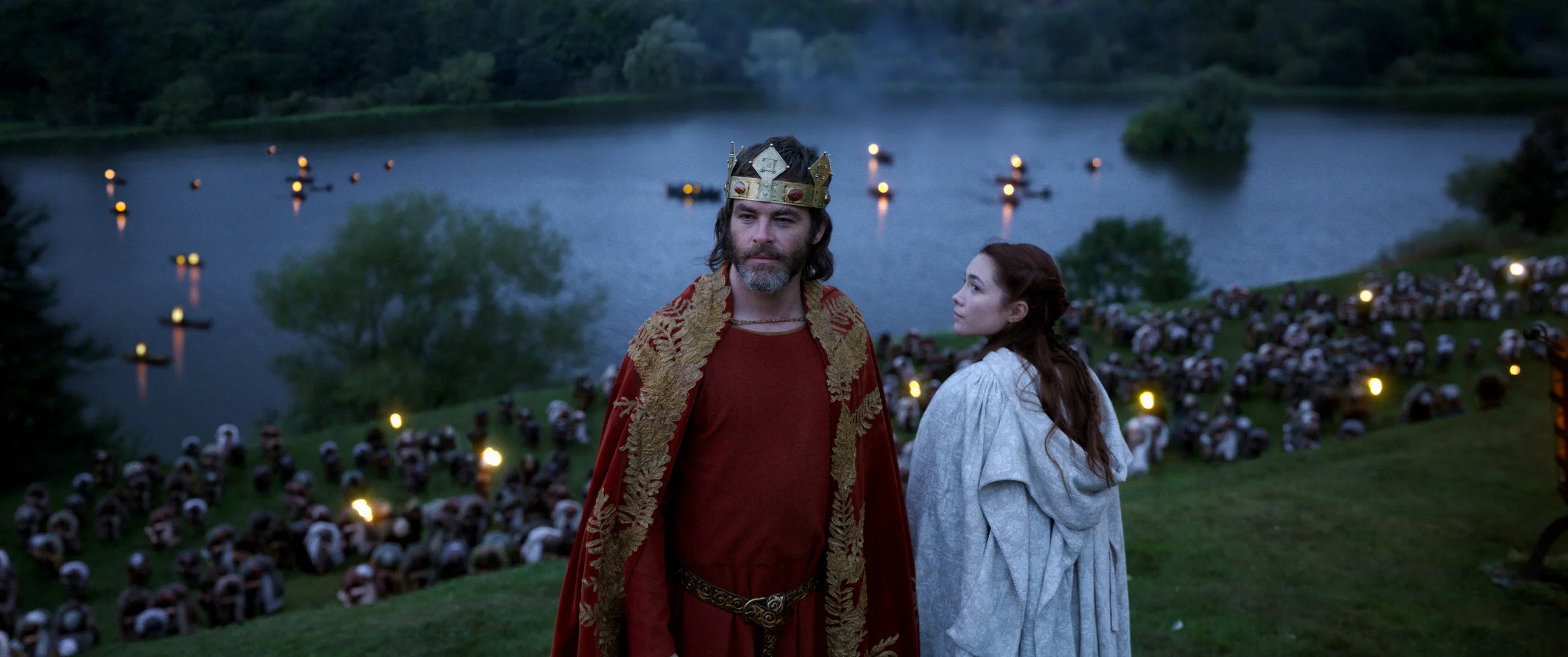
Outlaw King—The okayest historical epic in years. I eagerly anticipated this one and liked it, but couldn’t overlook some of its glaring problems, particularly in terms of pacing and characterization. And while it does have a few serious historical blunders, the film has its heart in the right place and is a more authentic depiction of the medieval world than we’ve gotten in years, and so I still appreciate it for what it is. You can listen to Coyle and I discuss the movie on City of Man Podcast here.

Ant-Man and the Wasp—Here’s my nod to Marvel. Ant-Man is a curiosity to me: I never look forward to an Ant-Man movie, and so far I haven’t made it to a theater for one, but I enjoy them a lot when I finally see them, and I enjoyed the heck out of this year’s Ant-Man and the Wasp. Maybe the low expectations are the key.

2018 films I missed but hope to catch in the new year:

  • Ralph Breaks the Internet

  • Won’t You Be My Neighbor?

  • BlacKkKlansman

  • Annihilation

  • Spider-Man: Into the Spider-Verse

  • Der Hauptmann (The Captain)

And finally…

Older movies I just saw this year:

Here are a couple of solid movies I saw this year and want to say a word or two of praise for. They are, by pure coincidence, all World War II movies, but pretty drastically different from one another.

1944—Perhaps the most unusual movie I saw this year, 1944 is an Estonian film that depicts both sides of the war, changing sides and perspectives completely at the halfway point. Estonia, one of the small, vulnerable Baltic states, was the object of Soviet aggression well before World War II, and when the Nazi-Soviet alliance broke down Estonian volunteers found themselves in both the Red Army and the SS. The film explores one of the war’s side stories—how a small country caught between two evil superpowers picks its poison. It’s a moving, unromanticized look from the vantage of a nation that will be defeated no matter who wins.

Talvisota (The Winter War)—One of the best war films I’ve ever seen. This is the story of a fictional squad of Finnish reservists called up to defend their country against Soviet invasion during the Winter War of 1939-40. Harrowing and unromantic. I wrote a lengthy Historical Movie Monday post on this film if you want to know more.

Darkest Hour—This technically came out last year, in late December, and I’ve already blogged about it, but I’d like to get one more good word in for it before the year is out. It’s great—a brilliantly cinematic drama with powerful performances. Watch it if you haven’t.

Looking ahead

I hope y’all have had a great year and a blessed Christmas holiday, and that you’ve enjoyed some good movies along the way. Thanks as always for reading, and I hope y’all have a happy new year!

Hallmark Xmas Movies on the Sectarian Review

Merry Christmas! Earlier this week, I sat down for a chat with Danny Anderson of the Sectarian Review Podcast, his wife Kim, and fellow guest Chris Pipkin. This week’s topic: the Hallmark Christmas movie phenomenon. We had a real blast talking through our own histories with Hallmark, the rise of the Christmas movie machine, how we pass the time while enduring these movies, what these movies do and do not do well, and, perhaps most importantly, what these movies are trying to say—if they’re trying to say anything. I had a great time recording this and hope y’all enjoy listening.

So drop your snooty big city fiance, head to a small town that’s planning its annual Christmas event, wrap up in a tasteful and modestly priced scarf, bake something, decorate something else, and listen in while you wait for the inevitable third-act snow!

You can find the episode embedded below, or at iTunes, Stitcher, and other fine purveyors of podcasts.

A warning for conservatives

Abtei im Eichwald, by Caspar David Friedrich

Abtei im Eichwald, by Caspar David Friedrich

While visiting home in Georgia this weekend, my wife and I went to my parents’ church. The sermon came from the Book of Exodus, but an aside from Ecclesiastes caught us both off guard and gave us a lot to think about:

 
Say not, ‘Why were the former days better than these?’
For it is not from wisdom that you ask this.
— Ecclesiastes 7:10
 

For my wife, this brought to mind changes at work, a difficult new generation of students, and a longing for years past, before present troubles. I thought immediately of conservatism—not the political position, but the attitude or temperament that is prior to any particular political idea: a disposition rather than an ideology, according to Michael Oakeshott; a state of mind, an instinct to preserve and maintain, to adhere to tradition and custom, to guarantee continuity, according to Russell Kirk; an understanding that good things are hard to create and easy to destroy, according to Roger Scruton. We could go on much further.

So while I am a conservative, both by temperament and because I agree with the above, I’m not talking about political conservatism, which is in bad shape in the United States anyway. I mean the general disposition, to which even self-described progressives are susceptible, and what I see as its besetting danger.

That danger is what is commonly called nostalgia now: a sentimentalized reverence for a past that—probably—never existed.

This shouldn’t be news—conservatives are accused of nostalgia all the time—but I do wrestle with a longing for a time without our present troubles. There were good things about the past, things it is good to preserve or recover, and there are serious problems at present, problems to which the past may—and I think often does—hold the solutions. But I have to remind myself that while the people of the past may not have had our problems, they had plenty of their own, and there were even then people like me who cast longing backward glances at their own simpler, more peaceful, less troubled pasts. It’s simpler times all the way down.

And there stand the words of the preacher. In the magisterial archaism of the KJV: “Say not thou, What is the cause that the former days were better than these? for thou dost not enquire wisely concerning this.”

This is not, of course, a resounding endorsement of nostalgia’s opposite error, progressivism—“a comparative of which we have not settled the superlative.” And it is good to remember that Ecclesiastes is hardly a straightforward collection of proverbial wisdom. But this passage is a good reminder of the unwisdom of two related mistakes: assuming the past was necessarily better than the present, and using that assumption as an excuse to neglect the present.

Mea culpa. This is a tall order for someone who is both a conservative and an historian, and I’ve been mulling it over ever since.

Food for thought at an obsessively nostalgic time of year. To conclude with a warning against focusing obsessively on the future—a New Year’s warning, perhaps—here’s the Gospel of Matthew:

 
Take therefore no thought for the morrow: for the morrow shall take thought for the things of itself. Sufficient unto the day is the evil thereof.
— Matthew 6:34
 

Semmes: Rebel Raider

CAPTAIN Raphael Semmes and his executive officer, John McIntosh Kell, aboard the CSS Alabama in Capetown, South Africa, August 1863

CAPTAIN Raphael Semmes and his executive officer, John McIntosh Kell, aboard the CSS Alabama in Capetown, South Africa, August 1863

I’ve studied infantry combat a lot and while you can never grasp every subtopic in your field, I’ve grown keenly aware of one big weakness in my studies—naval history. I’m trying to fix that, and just last week I ran across John M. Taylor’s Semmes: Rebel Raider at my local used book store. This book, otherwise an impulse buy, suggested itself for three reasons: I’m interested in the Civil War, I’m belatedly trying to learn as much as I can about maritime military history, and I also passionately enjoy short biographies of the sort that Paul Johnson writes. They’re a demanding form, the sonnet to the full-length biography’s epic, and push their authors to, in the words of Herbert Butterfield, “search . . . for a general statement that shall in itself give the hint of its own underlying complexity.” Happily, Taylor’s Semmes proves excellent in all three regards.

Raphael Semmes (1809-77), unlike the names Lee, Jackson, or Stuart, is probably unfamiliar to anyone with a less than an enthusiastic interest in the Civil War. Indeed, in the last round of protests of Confederate monuments, Semmes didn’t possess the notoriety to inflame even today’s protesters: “Although the protest was supposed to happen around 5 p.m.,” a Mobile news outlet reported regarding the city’s Semmes statue last year, “it appears the group never showed up.”

That Semmes is relatively unknown is strange—he was the most successful commerce raider before the era of the submarine—but not inexplicable, traits that could apply to his entire life. Born in Maryland, he joined the US Navy as as midshipman at 17 and spent almost all of the next forty years in the service, first for the United States and then for the Confederacy. Though a practicing Catholic from the South, he married into a Protestant family from Ohio and relocated to Alabama, where he tried to pursue both his naval career and a law practice. (This is not as strange as it might sound; lots of pre-Civil War military officers had side gigs, some of them much shadier than lawyering.) One can see his expertise in the law stemming from his strictly observed Catholic faith and Southern code of honor as well as his naval experience. After losing one of his first commands, the USS Somers, to a storm during the Mexican War, Semmes asked for, received, and was exonerated by a military investigation. His expertise in maritime law would prove useful for him during the height of his career.

semmes taylor.jpg

He served in and out of active duty in a variety of capacities—commanding naval artillery under General Winfield Scott in Mexico, a duty which acquainted him with Captain Robert E. Lee of Scott’s staff, commanding a store ship, working for the Lighthouse Service as both an inspector and Washington bureaucrat—until the secession crisis in 1860. An ardent secessionist, Semmes believed the Southern states lived under a tyranny crafted to benefit the industrial classes of the North and, especially, New England. When the Southern states began to secede following the election of Abraham Lincoln, Semmes resigned his commission and immediately accepted a position in the fledgling navy of the Confederate States of America.

After a variety of peacetime assignments (it is often forgotten that several months of peace separated the secession of the first seven Confederate states from the outbreak of war), Semmes was sent to New Orleans to take command of the CSS Sumter, a converted steam cruiser. When Semmes embarked from New Orleans in June 1861, it was the last time he would see the South for over three years.

Semmes immediately proved his mettle. He deftly escaped the Union blockade at the mouth of the Mississippi and began a rapid series of raids on northern merchant shipping. Semmes, suspicious as he was of the New England commercial class, was well-suited to the task, and captured eighteen American ships in six months. Without a friendly port to which to send captured ships, Semmes removed their crews, any useful cargo, and burned them. Of the eighteen he captured, only seven were sunk in this way, but he had sent a clear message and would have an outsize influence. Semmes’s raiding not only hurt the northern economy but also tied down valuable naval resources; “by the end of 1861 Semmes was being pursued by half a dozen vessels that otherwise would have been tightening the blockade of Southern ports (36).”

In serious need of repairs, Semmes brought the Sumter into port at Gibraltar in 1862 for refitting. There the Union navy caught up to him and kept watch for him to depart British waters. Eventually, with the Yankees too close and the estimated repairs to the Sumter too expensive, Semmes paid off his hired crew and he and his officers sailed to England, where they took command of the ship that would create his legend—the CSS Alabama.

Was there ever such a lucky man as the Captain of the Alabama?
— Admiral David D. Porter, US Navy

In a cruise that lasted just under two years, Semmes and the Alabama ranged from the Azores to the Caribbean, rounded the Cape of Good Hope twice, crossed the equator four times, and sailed as far east as Vietnam, a voyage of 75,000 miles without a stop in a single Confederate port. Along the way he captured 64 northern merchant ships, burning 52, causing nearly $7 million dollars in damage to northern shipping. Throughout, despite pursuit by the US Navy, Semmes eluded his enemies through a skillful combination of cunning, local intelligence, daring, and—once in a while—luck. Think JEB Stuart crossed with Captain Blood.

The Alabama’s cruise ended at the Battle of Cherbourg in June 1864, when the USS Kearsarge threatened to box the Alabama in and Semmes offered single combat. The Kearsarge sent the Alabama to the bottom. Semmes and his officers, rescued by a British yacht, escaped to England. Though Semmes would later claim the Kearsarge had an unfair advantage in that it had primitive armor plating—chains draped along the sides of the hull near the engine—the Alabama was in bad repair, much of its powder was wet, its shells had defective fuses (a problem for Lee at Gettysburg as well), and, most importantly, it did not need to engage the Kearsarge.

Taylor makes this seemingly unnecessary engagement understandable, because he makes Semmes understandable. Chivalrous to a fault, Semmes took extraordinary care over the legality of his seizures and chafed at northern accusations that he was no more than a pirate. He lived by a strict code strongly inflected both by his Southern culture and his religion and held himself to a high standard. That the Yankees he captured did not confirmed his prejudices against the northern industrial and commercial classes. He was appalled to capture multiple northern vessels to find that their captains enjoyed the services of “stewardesses” or “chambermaids.” Their true function could not be clearer to Semmes. “These shameless Yankee skippers,” he wrote after one such capture, “make a common practice of converting their ships into brothels (77).”

“Old Beeswax”

“Old Beeswax”

Taylor’s attention to Semmes’s character and beliefs make this short book (the main body of the text is 110 pages) especially valuable. Semmes—a short, aloof man who waxed and twisted the ends of his mustache (his men called him “Old Beeswax”), who smacked his lips as he talked, who seemed to take no special notice of anything happening below the quarterdeck but always knew what was going on aboard his ship; a strict disciplinarian; a gentleman who took pains to reassure his prisoners that they would be treated well; a Catholic who kept a shrine in his quarters; a crafty, intelligent, and aggressive raider who nevertheless had a wry sense of humor—is as colorful and timeless a seafaring character as any invented by Sabatini, Stevenson, Conrad, CS Forester, or Patrick O’Brian.

But he is also a man of his era. He not only believed in the legality of secession but came to believe it necessary: the north had a Puritan-bred culture of alien moneygrubbers that was incompatible with the older traditions of the agrarian South. He was a 19th century culture warrior. Though he only ever owned a few personal servants, he favored the expansion of slavery to provide a bulwark against the north’s economic oppression. His wartime raiding was not only his military duty, it was an opportunity to stick it to the New Englanders he held ultimately responsible for the crisis. He did not soften these attitudes post-war, either: “Avoiding the false humility and the evenhanded praise of friend and foe that would mark later memoirs,” Taylor writes,

Semmes portay[ed] the war as a struggle between good and evil in which the South is on the side of the angels. He repeatedly compares the South’s struggle for independence with the English civil war two centuries earlier. He likens the South to the king’s Cavaliers, the North to the barbarous Roundheads. As for slavery, Semmes could not conceive of blacks’ prospering in a situation where they were left to their own devices (106-7).

Taylor lays all of this out clearly and succinctly. He also writes elegantly, relating the entire career of the Sumter and the Alabama without turning the central 70 pages of the book into a litany of names, dates, and naval jargon—a striking achievement. Some passages, such as the duel with the Kearsarge or Semmes’s several daring escapes from the Union navy, are even exciting.

It’s also witty and fun, finding ways to portray the human side—that is, the absurd and surprising sides—of the war. For instance, after overtaking the Ariel, a steamer owned by Cornelius Vanderbilt bound for Panama and, presumably, the gold fields of California, Semmes discovered that instead of a haul of gold and goods “he had on his hands a packet with some five hundred passengers, including a rather embarrassed company of U.S. Marines.” When Semmes finally bonded the Ariel and let her go, the female passengers gave him three cheers. Another time, Semmes captured a ship with a personal “stewardess”—“a category of passenger of which Semmes was quite disdainful”—to the captain aboard:

In the case of [the Yankee captain’s] companion Semmes’s attitude was fully reciprocated; she was so reluctant to board the Alabama that the Confederates had to tie her into a boatswain’s chair to transfer her to the raider. Once on the Alabama, however, the feisty Irish-woman, whose name is lost to history, marched up to Semmes and denounced him as a pirate! This was one charge for which Semmes would never stand still; when the woman refused to stop her tirade, Semmes ordered that she be doused with water—the only time he treated one of his female prisoners so roughly (73).

If there is one flaw in Semmes: Rebel Raider, it is that the introductory chapter on Semmes’s pre-war life and the final chapter on his post-war career are too short, too cursory. This is more a problem with the final chapter, which passes from the publication of Semmes’s memoirs in 1869 to his death in 1877 with no description of anything in between. But this is a minor problem and natural to the form, which must be selective, and there are full length biographies of Semmes—including one by Taylor—for these details.

And speaking of “natural to the form,” Semmes’s relative lack of fame—strange but not inexplicable, as I said at the start—is due to his line of work. As a captain in a small, weak navy whose ports were all blockaded, forced to operate for years at a time without a trip home, sailing aboard a British-built ship with a hodgepodge crew of Liverpudlians and other foreigners, and commanding a few hundred rather than thousands of men, Semmes “had no legion of postwar admirers” and had won his victories at sea in what “has been perceived as a land conflict,” leaving “no ‘Little Round Top’ or ‘clump of trees’ to mark them (vii-viii).”

Semmes: Rebel Raider is an excellent short introduction to the tiny Confederate navy, to the complexity of the Civil War political scene, to the ways in which global warfare could effect events in the United States and vice versa, and to one of the great maritime commanders who is less well known than many of his contemporaries in the infantry and cavalry.

Roger Scruton talks to Jordan Peterson

IMG_9335.jpg

…or Jordan Peterson talks to Roger Scruton. Depends on which you were more familiar with first, I guess.

I’ve admired Sir Roger Scruton for some time. He’s the most eloquent and thoughtful voice advocating a Burkean conservatism rooted in tradition, prudence, and pietas today, and I owe him a debt for the influence he’s exerted on my own philosophical and—only secondarily—political thinking as I’ve matured. Jordan Peterson I’ve only “discovered” in the last year (as I’ve joked about elsewhere, my first awareness of him was Amazon’s autocomplete while searching for my own books), but I respect him for his intellectual honesty and genuine concern for human flourishing and the truth. While in many ways different men—one an English philosopher of aesthetics devoted to Burke and Kant, one a Canadian clinical psychologist influenced by Jung and Nietzsche—their thinking has several important points of convergence.

Last month, the Cambridge Centre for the Study of Platonism hosted this conversation—entitled “Apprehending the Transcendent”—between philosopher Scruton and Peterson, and it’s those points of convergence or overlap that provide their starting point. In a wide-ranging chat, Scruton and Peterson talk about what “the transcendent” is; the factual and the meaningful; the hermeneutics of suspicion pervading humanities programs; the obsession with power, privilege, and identity that undermines normality, tradition, and the ability of people to relate to and cooperate with one another; the transcendent power of art and especially music; cultural appropriation; and much more.

The latter half of the discussion touches on topics especially near to my heart, including teaching the humanities and the Western tradition as an act of love for one’s students, how to recover a shared understanding of ourselves as all commonly dependent on the transcendent, and the importance of gratitude to… everything. After all, to take it back to Cicero, as I am wont to do, gratitude “is not only the greatest of virtues, but the mother of all others.” Without mentioning Cicero, Scruton and Peterson both elaborate on that theme at some length.

It’s a really magnificent discussion with a lot of substance to it. While I hardly agree with them on everything, one of the reasons I respect both of these men is their facility in explanation. They are excellent communicators. (A striking contrast—Scruton tends to go for a quotation from an authority with a pithy summary that neatly encapsulates what he’s trying to say, while Peterson tends to tell stories from his clinical experience that concretely, and often stingingly, lay out any abstract ideas he’s discussing. Both valid, both interesting.) They also approach all of the topics of their talk from such specific and even idiosyncratic angles—see above—that it couldn’t fail to provoke a reexamination of some of what they were talking about. And it was a lot of fun: a winsome presentation of good ideas by two men who care about those ideas and their relation to the truth. I don’t think it’s widely enough appreciated how funny both Scruton and Peterson are despite—or perhaps because of—their earnestness, and both are in good form here. (Though Scruton’s deadpan burn of modern art in “Why Beauty Matters” is still my favorite one-liner of his.)

I plan to listen to it again sometime soon, but to quote one of the comments on YouTube: “I feel like my brain ran out of RAM.”

Check it out for yourself—it’ll be worth your while, particularly if this will be your introduction to one or both of them.

The Line that Held Us

It’s been quite a while since a novel has gotten its hooks into me the way The Line that Held Us did. Set in the rural North Carolina mountains near where I went to high school, this story by David Joy opens with an accidental killing that leads to lies, more lies, and ever more violence—including murder.

the line that held us.jpg

Darl Moody is hunting on another man’s property, hoping to shoot an out-of-season buck for some extra meat, when he spots what he takes to be a wild hog rooting around the forest in the twilight. He shoots it and finds that he’s actually killed Carol “Sissy” Brewer, a simpleminded man he knew in high school. Like Darl, Sissy was poaching—ginseng, in this case. Darl is terrified. He’s not only accidentally killed a man while committing a crime himself, the victim is a Brewer, and the Brewers are a white trash family known for their independence and violence. Sissy’s brother Dwayne is a ruthless giant who delights in provocation and cutting people down to size, and he’s the devoted protector of his little brother. If Darl confesses to the killing he’ll go to jail—and he’ll have to contend with Dwayne.

Faced with this dilemma, Darl tries to wriggle his way out of it and calls up his best friend, Calvin Hooper. After a lot of begging, Darl convinces Calvin to help him cover up the killing, and they bury Sissy in one of Calvin’s fields.

This accident and their response to it set in motion a cycle of lies, suspicion, and violence. Dwayne, whom we first meet bullying some bullies in the Franklin Walmart, proves an excellent detective and wreaks terrible vengeance as he works his way toward the truth of what happened to his missing brother. Darl and Calvin, for their part, repeatedly double down on their lies, seeking refuge in the continually shrinking cover of untruth and exposing themselves and the people they love to more and more danger.

I don’t want to say much more about the plot, but it surprised me several times—again, something I haven’t felt in a lot of my recent fiction reading. And I haven’t felt such a keen sense of dread in a long time, either. Both of these things—the surprising turns and the steadily mounting dread—stem from the powerful characters Joy has created.

Darl and especially Calvin feel like real people; I pictured them as some of the guys I grew up and went to high school with. I know the type—think of an Appalachian Llewellyn Moss—and their actions are authentically motivated and true to life. They’re independent minded but bound by bone-deep obligations to the land and their families. Perhaps the only tie that proves stronger is their friendship. Joy develops real and recognizable secondary and tertiary characters, especially Coon Coward, the old loner, fiercely protective of his ginseng patch, upon whose property the story’s tragic hamartia begins.

But the real standouts among the supporting characters are the women—the mothers, sisters, and aunts that shore up mountain communities: “For as tough as the men were in these mountains,” he writes, “the women had always been stone. They were used to loss, accustomed to never having enough. They were fit for the harshness of this world.” Chief among them is Angie Moss, Calvin’s girlfriend. Angie embodies a seemingly paradoxical pair of hillbilly qualities: intense personal independence and unshakeable loyalty to other people—in this case, Calvin, and, as we find out early in the book, their unborn child. Angie plays a small but crucial role in the book, raising the stakes both for Calvin, whose lies ensnare him and then threaten to undo his world, and for Dwayne.

Dwayne is an Old Testament prophet, moved to wrath by love.

For Dwayne Brewer is the most arresting character in the book. Scarred by his upbringing but defiantly embracing it, a bundle of ideals and resentments, violence and tenderness, Dwayne quotes the Bible with the facility of a seminarian and believes unyieldingly in the rightness and immutability of God’s law, but leaves no room for forgiveness. He is an Old Testament prophet, moved to wrath by love. His sole motive in life is to protect his beloved brother; deprived of that, his mission becomes to foretell and inflict as much suffering on the transgressors as possible. He’s at his most terrifying when he has a point.

These character traits and bonds of loyalty and obligation drive the novel. Calvin helps Darl cover up his manslaughter out of brotherly love. Angie finds deep reserves of steadfastness, endurance, and courage out of love for her unborn child. And Dwayne wreaks the havoc he does out of love for his dead brother. And all of these characters—with the exception of Angie—wrestle with the consequences of their misplaced and disordered loves.

In a novel so attentive to the damage done to relationships and human lives by one primordial sin, the ensuing deceit, and the inevitable death and damnation that must come without an unforeseen and un-hoped for mercy, it cannot be coincidence that one of the protagonists is named Calvin.

The Line that Held Us is dark; violent; grotesque in the right ways and the right places, with torture, exhumations, and brutality I haven’t even mentioned; elegantly written, with an evident love for the mountains in which it takes place; and utterly gripping. I lost sleep—and at the busiest time of the semester—to finish this book. If you want a hard look at some of the places we can go out of love and loyalty, pick it up.

*****

You can watch Joy read the first chapter of The Line that Held Us and discuss the book as a whole here. I’m not surprised to learn that Joy is a fan of Ron Rash, as am I, and he also mentions Cormac McCarthy’s Lester Ballard in describing Dwayne. A good interview, well worth watching if my review has piqued your interest in this excellent novel.

Heresy and Apologetics on City of Man Podcast

Another Ancient Asides episode of City of Man has dropped! In this episode, regular host Coyle Neal and I talk about the early Church’s incubation—including issues of heresy, persecution, and apologetics—under the heel of the Roman Empire between AD 150 and 300. Come for the history, stay for the gratuitous ragging of Dan Brown.

You can find the Christian Humanist Radio Network’s City of Man Podcast on iTunes, Stitcher, and other fine podcasting hubs, or listen in via the Stitcher player embedded in this post. Thanks for listening! Hope y’all enjoy.

Christmas giveaway

DSC_3125.JPG

For Christmas we’re giving away a set of all three of my novel-length works: Viking Age ghost story No Snakes in Iceland, World War II thriller Dark Full of Enemies, and my latest, Civil War coming of age story Griswoldville. To enter, simply visit my official Facebook page, find the photo of all three books posted above, and like it. That’s it. One entry could win you three books!

You can find out more about each book here on my website—I’ve linked each book’s page above—or by clicking through to my author pages on Amazon or Goodreads, where you can also see what previous readers think.

The giveaway ends Friday, December 14. The winner’s name will be drawn randomly and contacted directly via DM. You don’t have to share, tag, or like anything else to enter.

Best of luck, and thanks for reading!

With the Marines at Tarawa

Tarawa_beach_HD-SN-99-03001.JPEG

75 years ago today, the US Navy landed Marines on Betio, the largest island of Tarawa Atoll. The Japanese defenders had heavily entrenched themselves in sand and palm log bunkers and enormous bombproof dugouts. Though the island was just over a square mile in area it took the next three days to secure, with constant heavy fighting all the time. Over a thousand Marines were killed, and two thousand were wounded. Of the more than 2,600 Japanese defenders, seventeen were captured. The rest died fighting, along with over a thousand Korean forced laborers.

With the Marines at Tarawa is an Oscar-winning documentary short about the battle. Much of the footage was shot by Marine combat cameraman Norman Hatch—who just died last year aged 97—and who steeled himself for the project by pretending the assignment was just like any other. The film is an achievement, an unflinching, powerful depiction of modern war in all its terror, glory, and awful consequences. And it offers no false promises of easy victory, only a reminder that it will get worse before it gets better.

But as remarkable a film as With the Marines at Tarawa is, it almost didn’t come to be. Wartime censorship prohibited the depiction of dead Americans’ bodies, and so the producers of the film had to seek an audience with FDR himself in order to get permission to show the grisly footage of the battle. Roosevelt, moved by the footage and informed of the disconnect between what American troops were living through and what the folks back home were imagining—a disconnect explored in print by embedded reporter Robert Sherrod in his excellent Tarawa: The Story of a Battle—granted it.

I show this film to every US History II (1877-present) class that I teach. Despite its age, it always makes an impression. Take the twenty minutes to watch it today if you’ve never seen it before—and even if you have.

Outlaw King on City of Man Podcast

Chris Pine and Florence Pugh as Robert the Bruce and Elizabeth de Burgh in Outlaw King, directed by David Mackenzie.

Chris Pine and Florence Pugh as Robert the Bruce and Elizabeth de Burgh in Outlaw King, directed by David Mackenzie.

The much anticipated (by me, at least) medieval film Outlaw King dropped on Netflix Friday. The next day, Coyle Neal of the City of Man Podcast and I sat down to talk about it. Was the film just meh? A giant turd? A bloody muddle? A merely gorier Braveheart reboot? A flawed but interesting depiction of a narrow slice of medieval history? Or was it some combination of all five? Listen in to find out, and to hear Coyle and I discuss the complexity of medieval politics, the roles and difficulties of medieval kings, and the unavoidable Braveheart comparisons. (Click through for my Historical Movie Monday post on that movie from this past Spring.)

I’ve embedded the episode in this post via the Stitcher player, but you can also listen in on iTunes and other fine podcasting media. As always, I had a ton of fun and am honored to be a guest on the show. Hope y’all enjoy!