Chesterton and the Pout-Pout Fish
/In case you aren’t familiar with it, The Pout-Pout Fish is a rhyming kids’ picture book about a glum fish who is so downbeat and pessimistic he makes everyone around him miserable. Mr Fish fatalistically assigns his attitude to his frowny appearance: “It’s just the way I am.”
Over the course of the book, Mr Fish encounters four friends—a clam a jellyfish, a squid, and an octopus—who show decreasing amounts of patience with his sad sack ways. Finally, having rebuffed even the friend who is willing to tell it to him straight, Mr Fish is approached by a newcomer. A “bright and brilliant swimmer,” she doesn’t even say hello, just kisses him on the cheek and swims away. Mr Fish is transformed, and dedicates himself to spreading love and cheer to everyone around him.
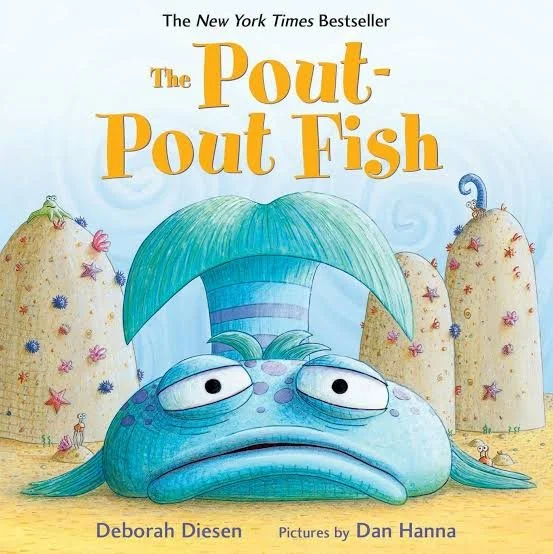
Our twins have picked The Pout-Pout Fish for their bedtime story almost every night for what feels like months. I don’t actually mind, because it’s fun to do Mr Fish’s voice and the boys enjoy his repeated refrain of “Blub, bluuub, bluuuuuub.”
But it has also brought Chesterton to mind every time I’ve read it. In Chapter IV of Orthodoxy, “The Ethics of Elfland,” Chesterton meditates on the truth we learn from fairytales. As a child, he writes, he was “fed on fairy tales” and derived an “ethic and philosophy” from them. He mentions several examples, but one in particular has always stuck with me:
There is the great lesson of “Beauty and the Beast”; that a thing must be loved before it is loveable.
As silly and fun as The Pout-Pout Fish is, this is the drama at the center of it. Mr Fish’s friends try sweet-talking, cajoling, playing on his sympathies as a friend, and bluntly telling him he’s a drag to be around, and all fail to reform him. Rational appeal, social convention, and force don’t work. But the newcomer’s wordless act of love converts him.
Chesterton notes that the “certain way of looking at life, which was created in me by the fairy tales, . . . has since been meekly ratified by the mere facts.” There are plenty of ideas vying for attention and space in our children’s imaginations. Only a few will be “ratified” by real life experience. Love as the ultimate tool of redemption, making lovable what was once intolerable, is an important one.