Learning outside one’s field and sharing enthusiasm
/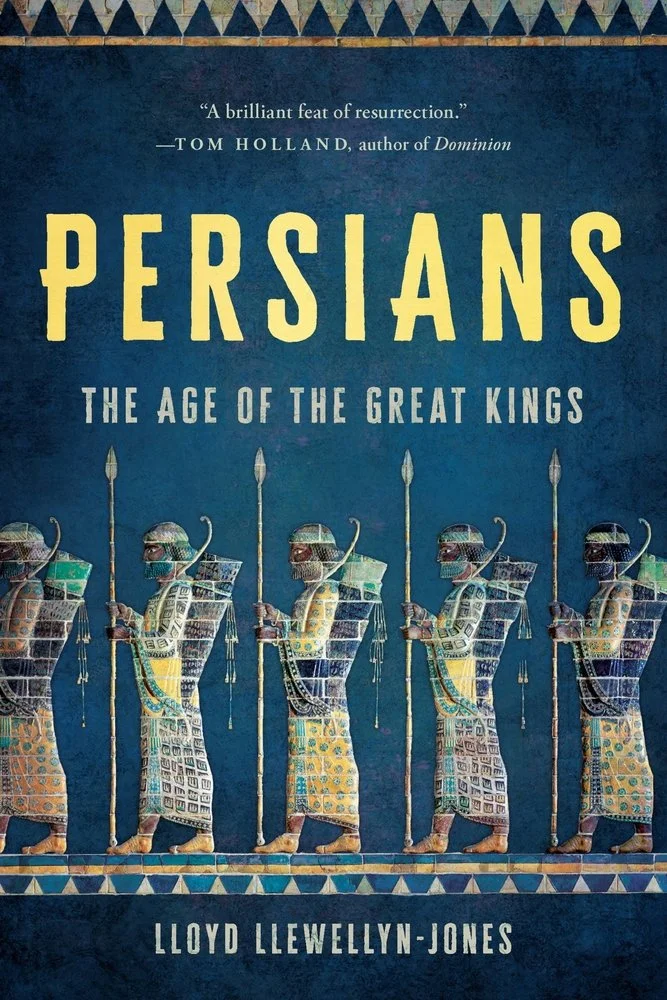
Roman historian Adrian Goldsworthy, who maintains an underrated YouTube channel that I’ve recommended on Substack before, dropped a new video this morning. It’s a conversation with historian Lloyd Llewellyn-Jones, whose book Persians: The Age of the Great Kings has been sitting high on my to-read stack for a while.
The conversation is informative and, since Goldsworthy and Llewellyn-Jones know each other from way back, a lot of fun, but Goldsworthy’s introductory remarks have some especially good insights. Noting that Persian history lies well outside the usual area covered by his channel, Goldsworthy notes
It’s slightly different from a lot of the stuff we tend to talk about and a lot of my own interest, but it’s complimentary, and the more you learn about different periods of history and how we try to understand them the greater the benefit for whatever your own focus is. It helps you to have that perspective of—sometimes it inspires you to ask slightly different questions to a topic that otherwise has become very familiar. It might suggest different approaches, different ways of using the evidence, or different types of evidence.
The same way a reader might alternate—as I do—a diet of spy thrillers with the occasional sci-fi novel or a string of mysteries with a western, it’s both refreshing and helpful for a historian to read outside his own field for precisely the reasons Goldsworthy lays out. It can give you new eyes, or at least clear the intellectual cobwebs away. Indeed, as Llewellyn-Jones discusses in the course of their conversation, his own approach to the classical past began with a theatre background and changed as he encountered and investigated new topics—Penelope’s veil in the Odyssey is an intriguing one—with surprising connections to each other.
Goldsworthy also points out the value of making history accessible to a public that always has an appetite for it:
“[I]f you can’t share that enthusiasm, share the excitement, and share some of that understanding . . . you’re less than useful.”
It’s all very well studying the past, coming to understand things, but if you can’t share that enthusiasm, share the excitement, and share some of that understanding—I think the awareness that this is fascinating, lots of people would be interested in this, it tells us important things about ourselves as human beings, it helps us to understand the world better, but unless you can actually communicate that, you’re less than useful.
He notes that courses on ancient history are popular with students and have no problem with enrollment. Such courses, however, are unpopular with the powers that be for non-academic reasons.
I could point out the same thing about military history (which is where my background overlaps with Goldsworthy’s somewhat). I’ve twice proposed development of an American Military History course that is listed as a possibility in the South Carolina Technical College System, each time making it to the curriculum committee stage before being shot down. I have no doubt it would be a popular class, not only because the well-known general interest in military history but also because some of our transfer students go to schools like Clemson with well-established ROTC programs. Maybe the third time is the charm.
Another significant topic of their conversation is the danger posed to Llewellyn-Jones’s program at Cardiff University. I’ll leave it at that but will note that it’s fun to hear some seasoned historians talk smack about administrators.
I haven’t quite finished the entire video but it’s been a pleasant and interesting discussion so far. I strongly recommend it. I’m hoping to pick up a copy of Goldsworthy’s latest, Athens and Sparta: The Rivalry that Shaped Ancient Greece, for my birthday next week and I mean to start Llewellyn-Jones’s Persians soon. Give their conversation a listen or a watch.