2025 in books: non-fiction
/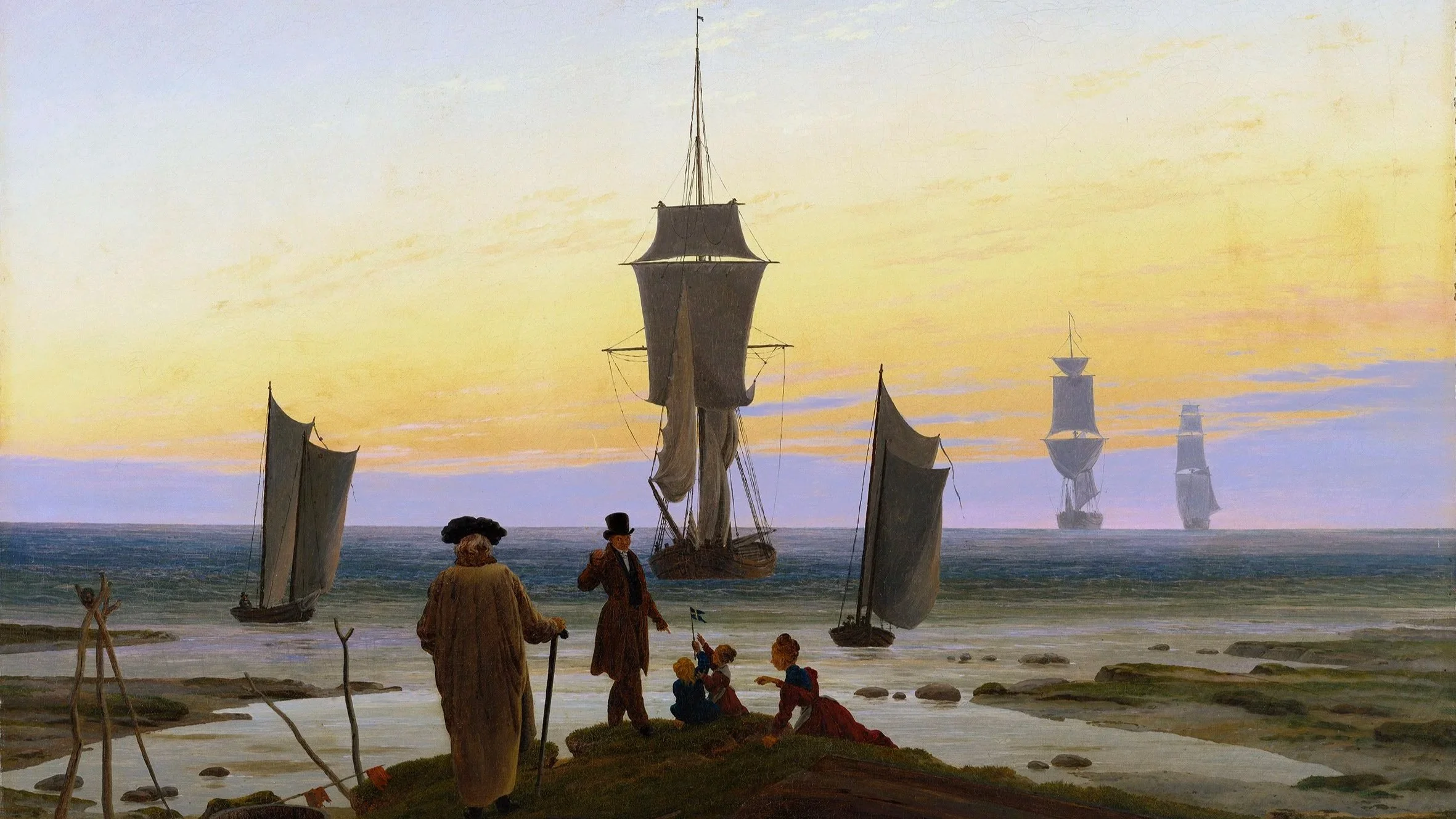
Die Lebestufen (The Stages of Life) (Detail), by Caspar David Friedrich
Though this has been a rough break with lots of sickness I’ve managed to find time here and there to make sure I at least get my annual reading list put together. But I realized this afternoon, as I was about to rouse a couple of recently sick kids from their naps and go check on the two people who are currently sick, that I wasn’t quite finished with the fiction section and the total post was already pushing 5,000 words. So I’ve done something I don’t think I’ve done since the heady reading days of 2020—split the post in half. This evening y’all will get my non-fiction and “special mentions.” Tomorrow I’ll follow up with fiction and a few other oddments.
After a couple years in which fiction has threatened to overwhelm my reading in history and other subjects, I deliberately tried to steer back to a slightly more balanced mix in the latter half of this year. And good thing, too, as 2025 turned out to be a good year for great big literary biographies and shorter works on a diverse variety of fun subjects. I hope y’all will find something good here for next year. Enjoy, and thanks for reading!
Favorite non-fiction reads
A Time to Keep Silence, by Patrick Leigh Fermor—Beautifully written, evocative, and meditative account of Leigh Fermor’s stays in several monasteries in northern France—twice with Benedictines and once with Trappists—and his visit to the abandoned rock monasteries used by medieval Christian anchorites in the rugged hills of central Asia Minor. A brisk but by no means light read.
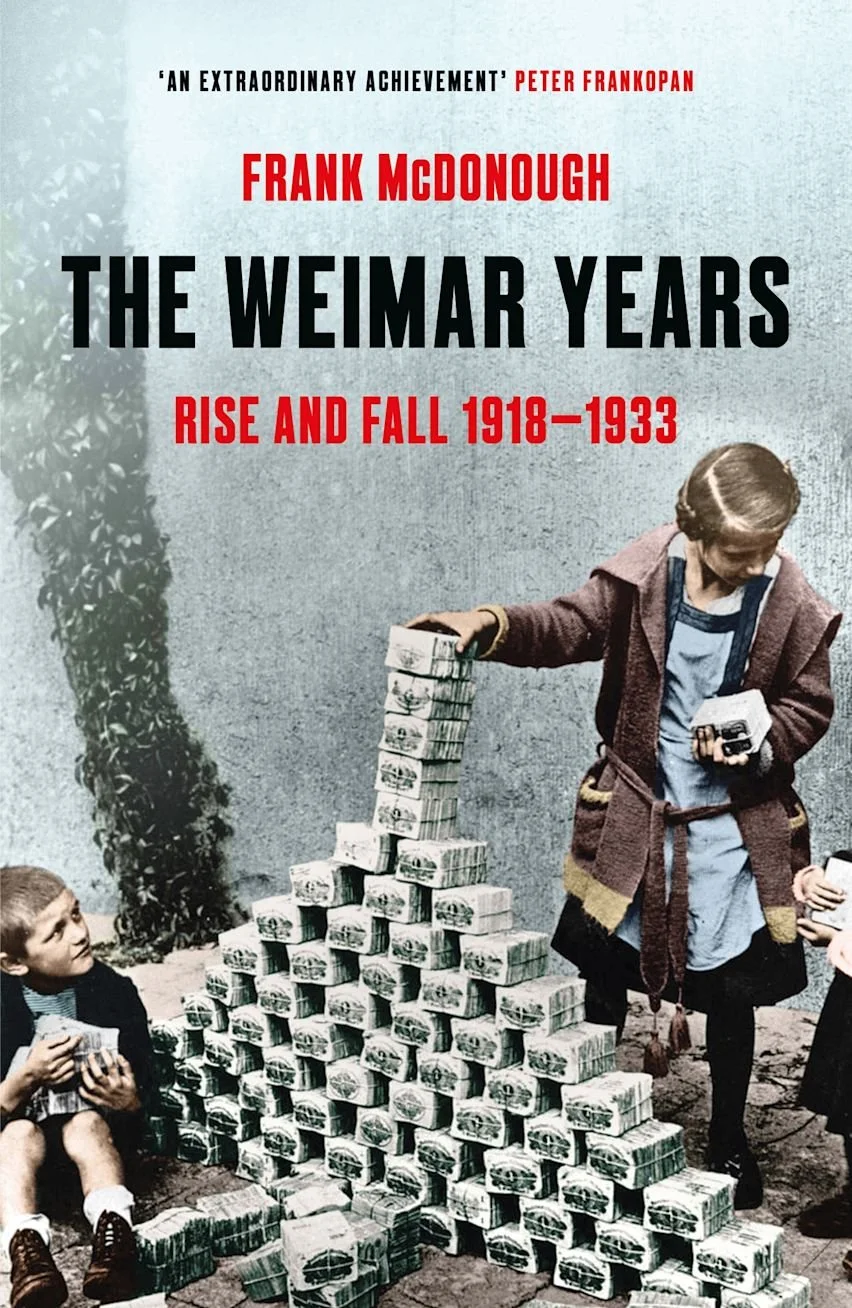
The Weimar Years: Rise and Fall, 1918-1933, by Frank McDonough—An exhaustive history, year by year, of the Weimar Republic from Kaiser Wilhelm’s abdication, the German military collapse, and the armistice in the fall of 1918 to the first month of 1933, when Hitler’s rise culminated in his assumption of the role of chancellor. There are isolated passages on cultural trends (e.g. the “New Woman,” cabaret life, Bauhaus architecture, silent cinema like Metropolis, literature like All Quiet on the Western Front) but the emphasis is almost entirely on nitty-gritty party politics. Given the chaos and corruption of the Weimar Republic and the proliferation of parties (at least 41 in one election), McDonough does an admirable job keeping the narrative clear and understandable and emphasizes contingency throughout. A Hitler dictatorship was not a foregone conclusion. But the epilogue, in which McDonough specifically blames Paul von Hindenburg for the death of “Weimar democracy,” is a bit of a fumble, as it is abundantly clear from McDonough’s own narrative—and even the earlier parts of the epilogue—that the Weimar Constitution had built-in weaknesses that were bound to weaken and undermine it. McDonough essentially faults Hindenburg for not believing in democracy hard enough. But if “democracy” in the abstract gave Germany this democracy in concrete, stubborn reality, it deserved to go. The pity is that when it went, it fell to Hitler, who only achieved electoral clout very late. This aside, The Weimer Years is a hefty expert introduction to an important period.
Bad Therapy: Why the Kids Aren’t Growing Up, by Abigail Shrier—A grim but necessary study of the outsized role of therapy and medication in the neuroticism, self-absorption, and worse among modern kids. Highly recommended if you’re skeptical of our therapeutic culture already or openminded enough to question the way therapy has become the panacea for everything we find disordered—or even out of the ordinary—about other people and ourselves.
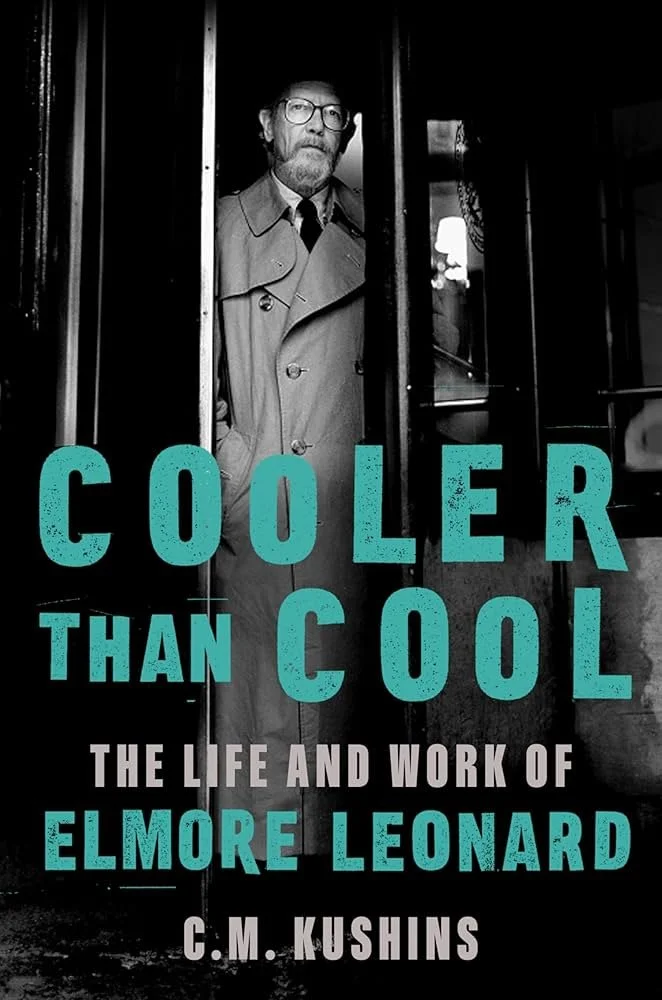
Cooler Than Cool: The Life and Work of Elmore Leonard, by CM Kushins—A welcome biography of one of my favorite authors, a comprehensive volume that illuminates Leonard’s life, work, and craft in almost equal measure. Most interesting to me were the sections on Leonard’s childhood, education, World War II service, and early career—when he balanced a full-time white collar job, daily Mass, and raising a family with researching and writing the Western stories that put him on the map—as well as insight into his creative process, which changed in slow and subtle but significant ways over the years. Also entertaining: stories of his struggles against Hollywood, including the exasperating abortive collaboration with Dustin Hoffman that inspired Get Shorty. If the book lacks in any area, it’s in the personal as it approaches the present. Kushins gives good attention to Leonard’s religiosity early in the book, so what precisely turned him from a devout Catholic into a gentle agnostic in the 1970s? What was going on with his final marriage? We can only infer. That is, however, a minor problem in an otherwise thorough book. This was very close to being my favorite read of the year.
The Magic of Silence: Caspar David Friedrich’s Journey through Time, by Florian Illies, trans. Tony Crawford—A study of the life and work of German artist Caspar David Friedrich, whose Wanderer Above a Sea of Fog you certainly know even if you don’t recognize his name. Strangely structured but full of surprises and insights. Full review on the blog here.
Ian Fleming: The Complete Man, by Nicholas Shakespeare—Another of the big fat literary biographies I read this year. Not just thorough but exhaustive, Shakespeare having apparently tracked down everyone who had any connection whatsoever to Fleming and his family in order to get insight into the man. This is a brilliant portrait of Fleming, one that emphasizes the pressures and frustrations of his life—especially the domineering, manipulative mother, the wife who despised and mocked his work, and the onetime film producing partner who sued Fleming into an early grave. Fleming, in Shakespeare’s telling, was a gifted man who did great work in a variety of fields, not least in military intelligence, where he was one of a handful of people to know the whole secret of the Bletchley Park codebreaking program, but who lived a fundamentally unhappy life. Some of this was Fleming’s own doing, and the womanizing, drinking, and smoking eventually caught up with him. The Complete Man deepened my admiration of Fleming’s strengths and my appreciation of his work, but troubled me with his tony but self-destructive lifestyle. An absolutely worthwhile read if one can soldier through the genealogy and namedropping in the first chapters.
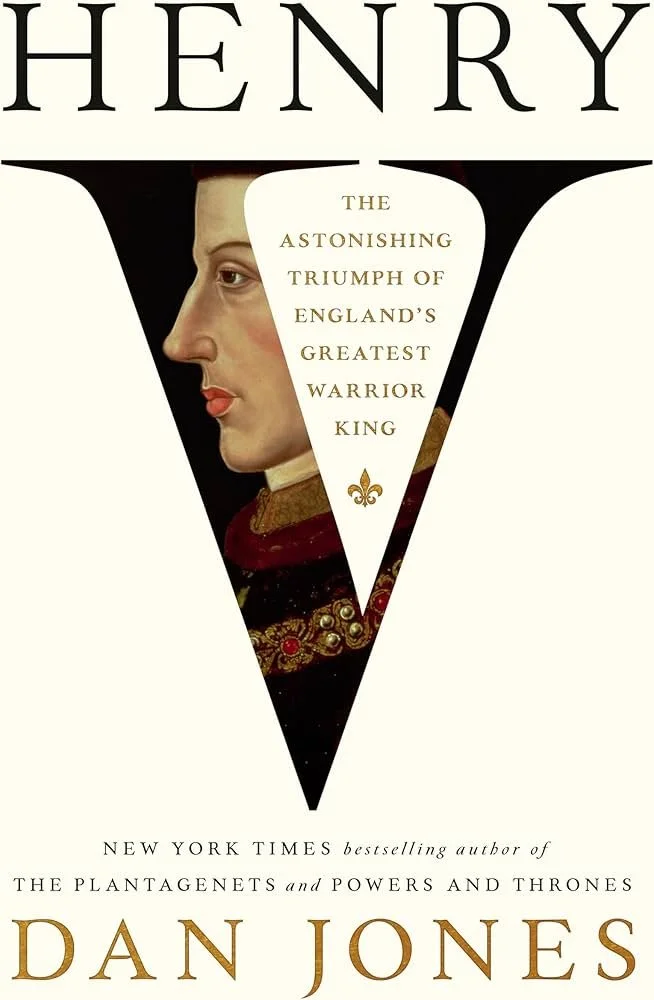
Henry V: The Astonishing Triumph of England’s Greatest Warrior King, by Dan Jones—A thorough, well-paced biography of Henry V that is both scholarly and approachable, though Jones’s decision to tell Henry’s story in present tense feels like an unnecessary gimmick. More importantly, however, Jones is evenhanded and fair to Henry and his time, avoiding some of the more popular modern misperceptions and false accusations (e.g. calling Henry a “war criminal”) and emphasizing his purposeful embrace of the divinely ordained duty of rule. A refreshing and worthwhile Late Medieval read.
The First Thanksgiving: What the Real Story Tells Us About Loving God and Learning from History, by Robert Tracy McKenzie—A good brief study not only of the First Thanksgiving and the people who experienced it—Pilgrims, Strangers, and Indians—but of how history works and how and why people remember and celebrate the things they do. It also implicitly conveys a truth I realized long ago: the true story of just about anything is always more complicated and much more interesting than the simplified versions people fight about. If I taught at a Christian institution I’d certainly assign this for US History both to give students the straight story on the Pilgrims—and how little we know about the meal mythologized as the First Thanksgiving—and to give them the rudiments of historiography. An excellent little book. I gifted my dad a copy on Audible and he greatly enjoyed it.
The UFO Experience, by J Allen Hynek—An interesting account of some genuinely inexplicable sightings from an astronomer who worked for years, through much frustration, as an expert consultant on the US Air Force’s Project Blue Book, and who sought to apply genuine scientific rigor to a phenomenon that was already evolving into folklore and crowdsourced mythology by the time he wrote this book. Also interesting as a window into a specific period of UFO history. Full review on the blog here.
Runners up:
UFO: The Inside Story of the US Government’s Search for Alien Life Here—and Out There, by Garrett Graff—Readable, wide-ranging, but flawed overview of the government and academia’s attempts—honest and otherwise—to research and understand the postwar flying saucer phenomenon. Full review on the blog here.
Van Gogh has a Broken Heart: What Art Teaches Us About the Wonder and Struggle of Being, by Russ Ramsey—Not quite as good as Ramsey’s first book on faith and art—which was easily my favorite non-fiction read last year—but a worthwhile read nonetheless, especially given its more specific focus on art and suffering.
George Washington: The Founding Father, by Paul Johnson—A good short biography by one of the masters of the good short biography. Thorough (for its length) and, more importantly, evenhanded.
Frederica: Colonial Fort and Town, by Trevor R Reese, illustrated by Peter Spier—A handy informative booklet about Fort Frederica on St Simons Island, with excellent drawings. Published in the late 1960s so some of the information may need updating from more recent research and archaeological work at the town, but still a solid introduction.
Caspar David Friedrich: The Painter of Stillness, by Norbert Wolf—Good short overview of the life and work of Friedrich with many, many good color plates of his work. From a series by art publisher Taschen.
Best of the year: Poe vs Poe
This year I read a number of good biographies, several of which I’ve mentioned above, but two of the most enjoyable and with the greatest interest to me concerned Edgar Allan Poe. One book was older, one was brand new; one was shorter and one was long; but both were good. It was hard to select a favorite read this year—especially among a crop of good biographies of writers I love—so I’ve cheated and gone with both of these.
Edgar Allan Poe: His Life and Legacy, by Jeffrey Meyers, is a biography published in 1992. Meyers gives good attention to Poe’s life and work and is fair to this perplexing, exasperating, much-maligned man, especially in controversial personal episodes like his marriage to his first cousin Virginia, his spats with various literary celebrities, the controversy and mudslinging stirred up by the female literary elite of New York City in a strange episode concerning letters between Poe and an admirer, and most especially his tragic final year. Meyers also approaches Poe’s work with good critical sense, avoiding the autobiographical and especially Freudian readings that had been popular with Poe for quite some time. (Not long after Meyers’s book, Kenneth Silverman published Edgar A Poe: Mournful and Never-ending Remembrance, which is famous for going whole-hog into autobiographical and psychological interpretation. That way lies madness.) Short, readable, and comprehensive without being overwhelming, Meyer’s insight and good judgement make this one of the best Poe biographies I’ve read.

But I read Meyers in the first place while awaiting the release of Edgar Allan Poe: A Life, by Richard Kopley, which my wife graciously got me as a birthday gift. This is a massive new biography of the kind usually called “magisterial,” and lives up to the hype. Kopley is a well-established and accomplished Poe scholar and his mastery of every bit of material on Poe’s life and work is evident on every page. Like Meyers, he approaches Poe sympathetically but not uncritically, faulting him where appropriate—e.g. his self-sabotaging tendencies and his violent feuds with former friends—and defending him likewise. This is most evident in his treatment of Poe and race, which had not become the obsession that it is today when Meyers wrote. Kopley, despite some nods to present pieties, situates Poe in his time and place and in the landscape of opinion common at the time, rubbishing simplistic accusations of racism in Poe and his work. Kopley is primarily a scholar of literature and gives more detailed critical attention to Poe’s work than Meyers, including some new and helpful insight into Poe’s use of structure and poetic effects. This is a strong, weighty, exhaustive biography, but I did find Kopley relied heavily—perhaps too heavily—on some late sources for Poe’s friendships and personal character, things like the reminiscences of Poe’s best friend’s stepdaughter, which offered strangely detailed commentary on a man she had never met. Some explanation of the reliability of sources like this might have been helpful, but the book was already over 800 pages long and this is mostly a quibble.
So I got a two ten-gauge barrels of Poe to the face and loved every bit of it. While I appreciate and would recommend both biographies, I think for general purposes I prefer Meyers’s slightly older book as shorter, more approachable, less burdened with present-day anxieties, and with a bit more context and explanation for how Poe came to have the reputation he does today. But either could be a worthwhile read depending on what kind of emphasis you want in a study of Poe or just how much Poe you need.
Special mentions
Here are three favorite reads that don’t neatly slot into the fiction or non-fiction categories: all medieval, all poetic, all with some good scholarly apparatus and/or great artistic merit in translation.

The Divine Comedy, by Dante, translated by Michael Palma—The Divine Comedy is my favorite book, and since I have no Italian I have always read it in translation. That said, I have read enough about the original Italian, the perils of translation, and specific translators’ rationales for their approaches that I thought 1) I had seen everything and 2) that a translation of the Comedy that was both rhymed and faithful to Dante’s original tone and style was impossible. I’m glad to say I was wrong. Palma’s recent translation manages to capture Dante’s force, directness, and vividness while retaining his difficult rhyme scheme, brilliantly conveying not just the feel of the original but its most often neglected formal quality. I’ve lost track of how many times I’ve read the Comedy but this is the most I’ve enjoyed it in some years. I reflected in more detail on Palma’s achievement with this translation here.
Waltharius, translated by Brian Murdoch, ed. by Leonard Neidorf—A good English translation—with the original Latin on the facing page—of a lesser-known Early Medieval epic concerning Walthari (Walter of Aquitaine), his beloved Hildigunda, their flight from Attila, and their confrontation with Walthari’s old friend and comrade-in-arms Hagano. I wrote about some of the moral and cultural aspects of the story, especially the binding (and sometimes entangling) role of “unchosen obligations,” here.
Old High German Poetry: An Anthology, trans. and ed. by Brian Murdoch—If you’ve read any medieval German literature it is almost certainly something like Parzival or the Nibelungenlied, Middle High German epics or Arthurian romances. German poetry came into full flower in the High Medieval period, but of course it had much earlier antecedents. This book collects a huge variety of fragmentary poetry in Old High German—bits of epic, devotional verse, charms, prayers, and more—with informative commentary and recommended reading. A great volume, though it is sad and frustrating to look at these fragments, palimpsests, and marginalia and infer how much else was lost to time. Ach, Weh!
Stay tuned
I’m thankful for so much good reading this year and hope y’all will find something in this post to read, enjoy, and think about in 2026. In the meantime, be on the lookout for the second half of this post—fiction, children’s books, and rereads—tomorrow morning, and have a fun and happy New Year’s Eve!