A visit to Antietam

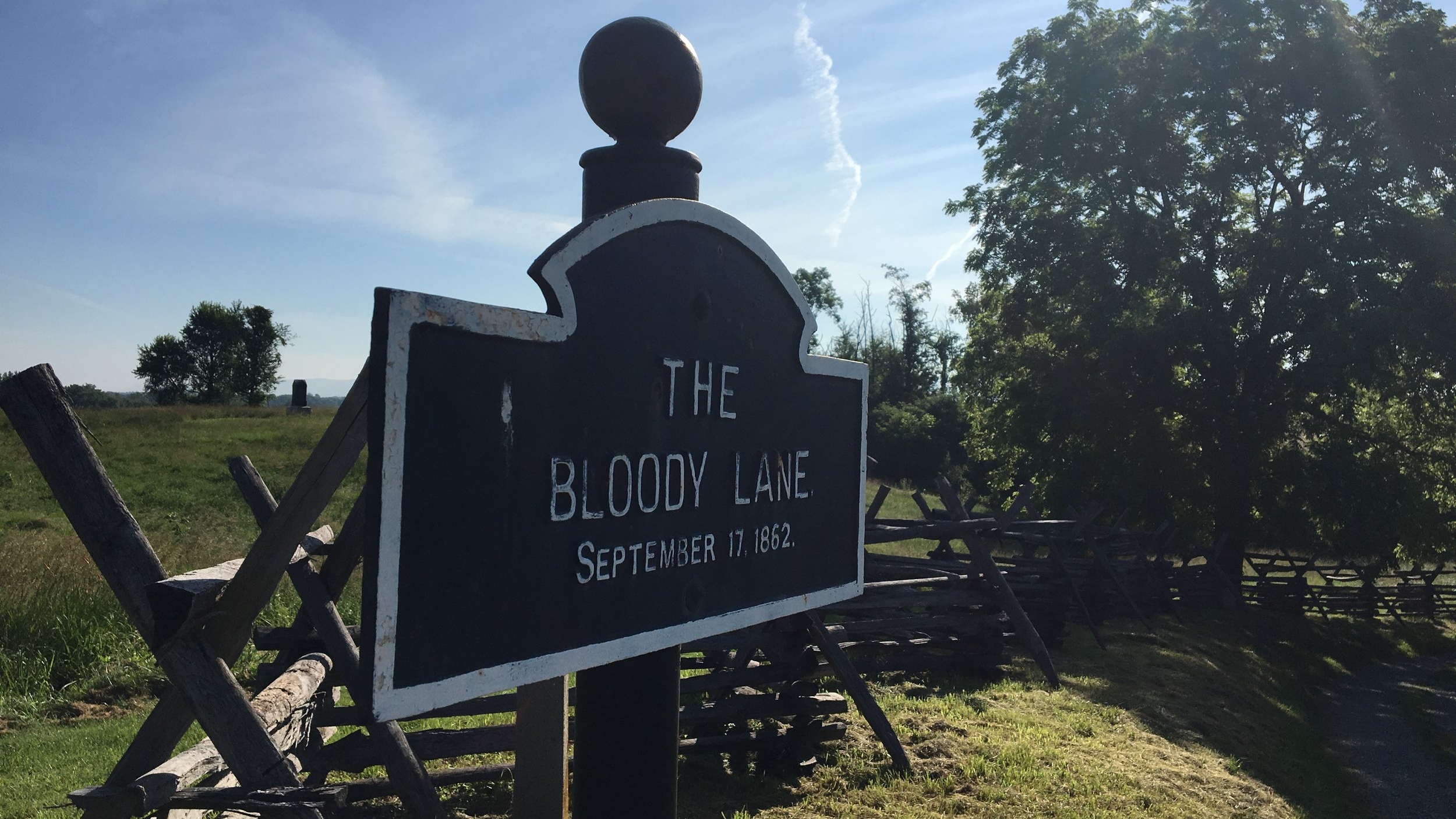
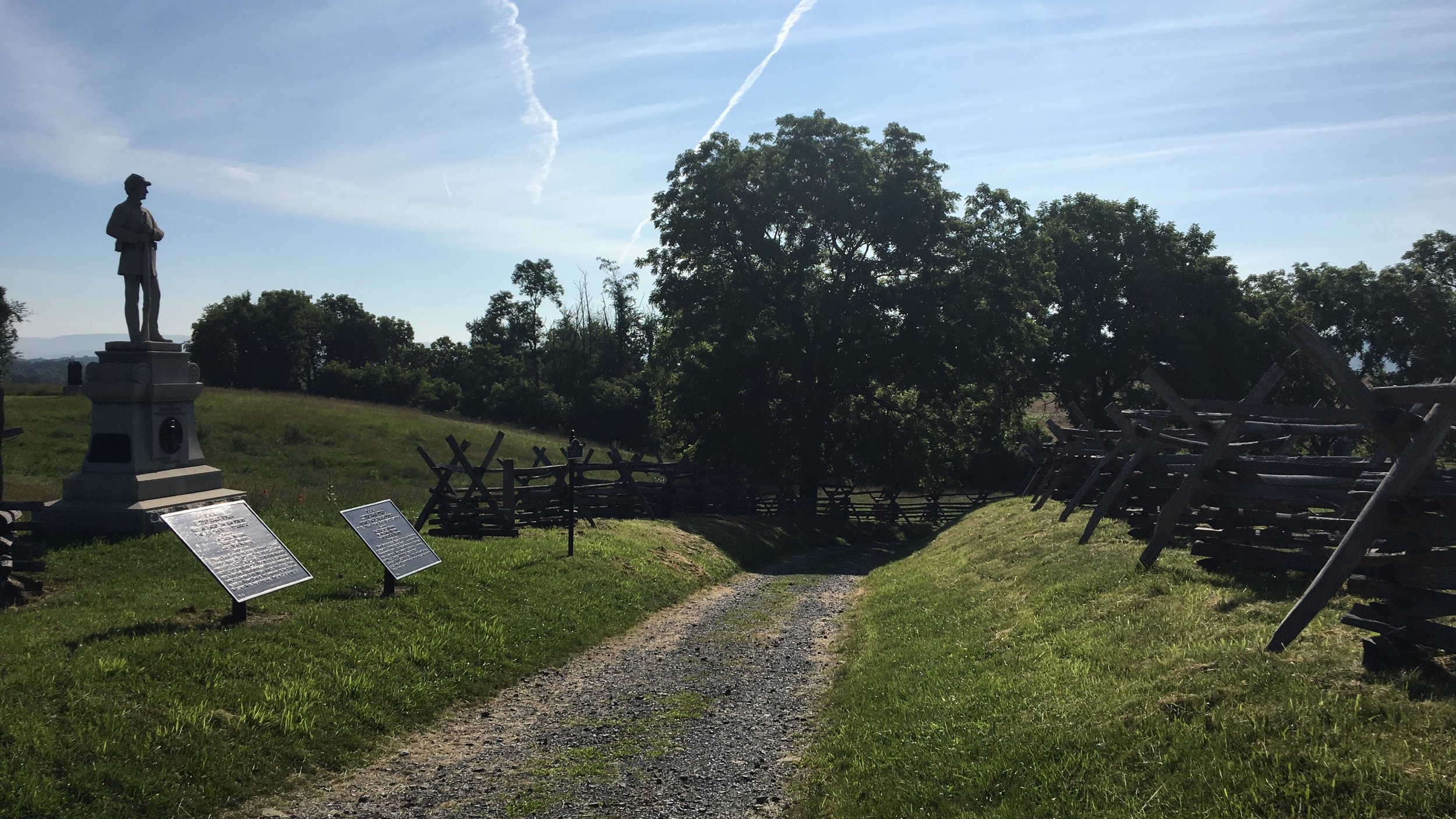
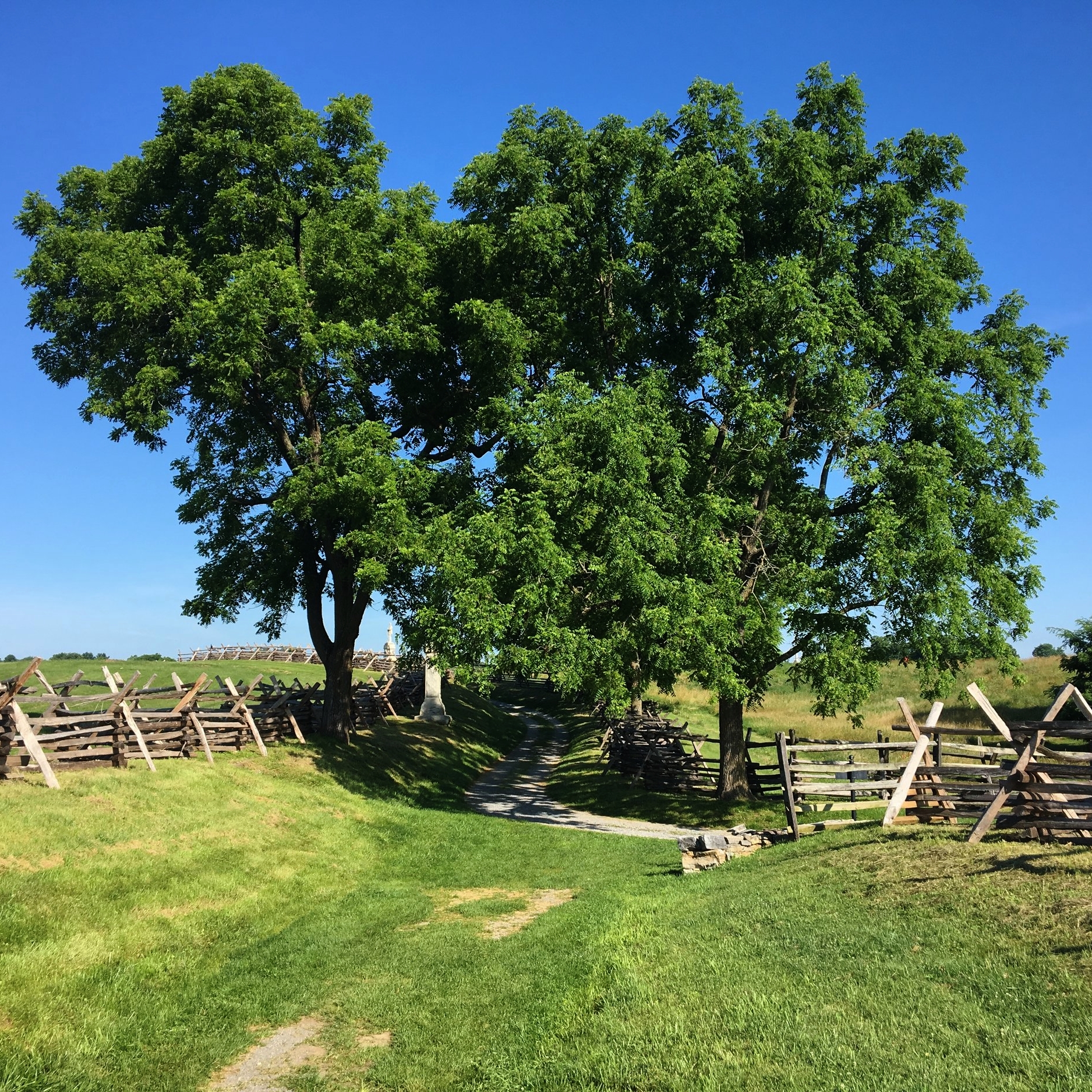
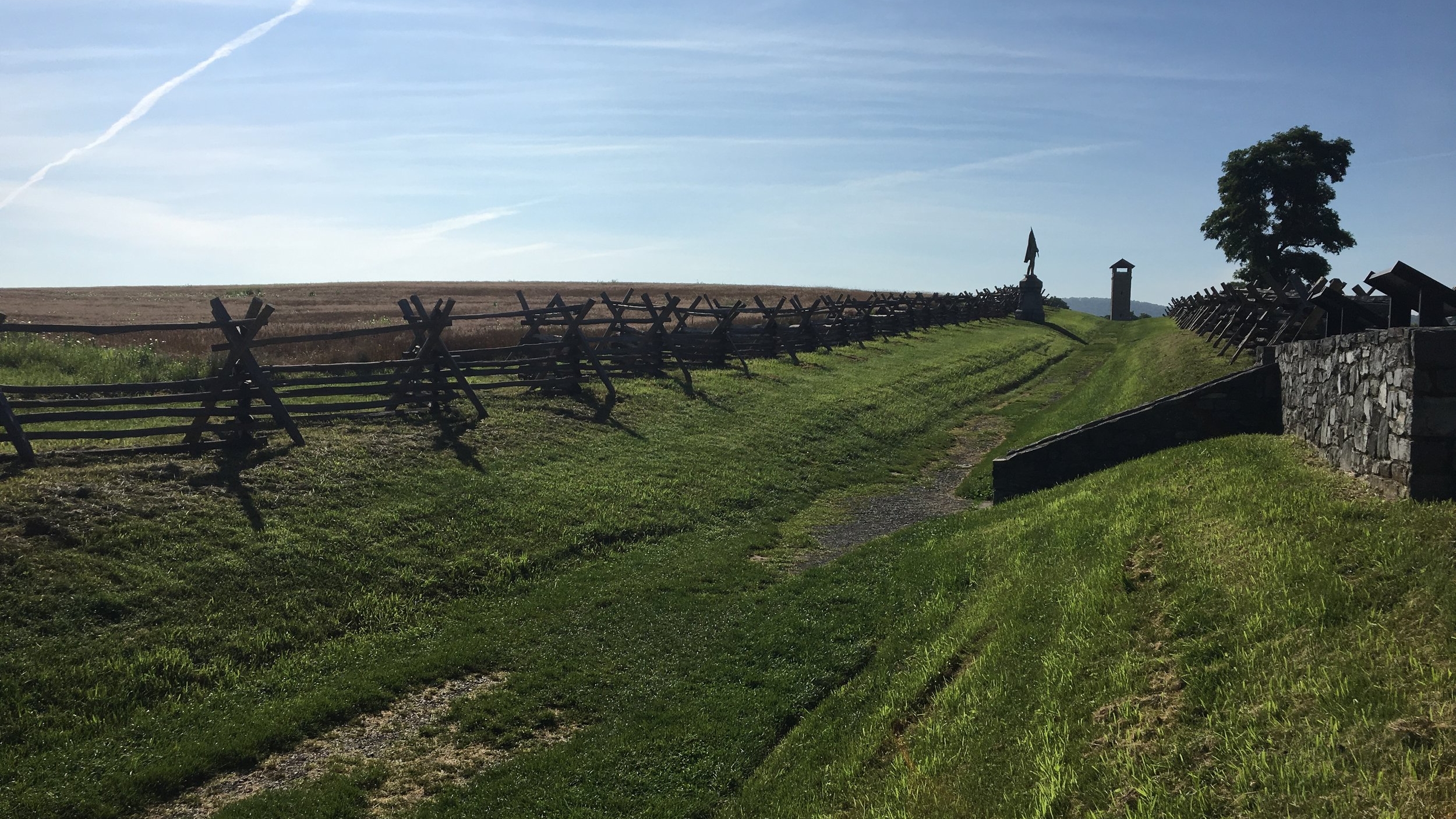
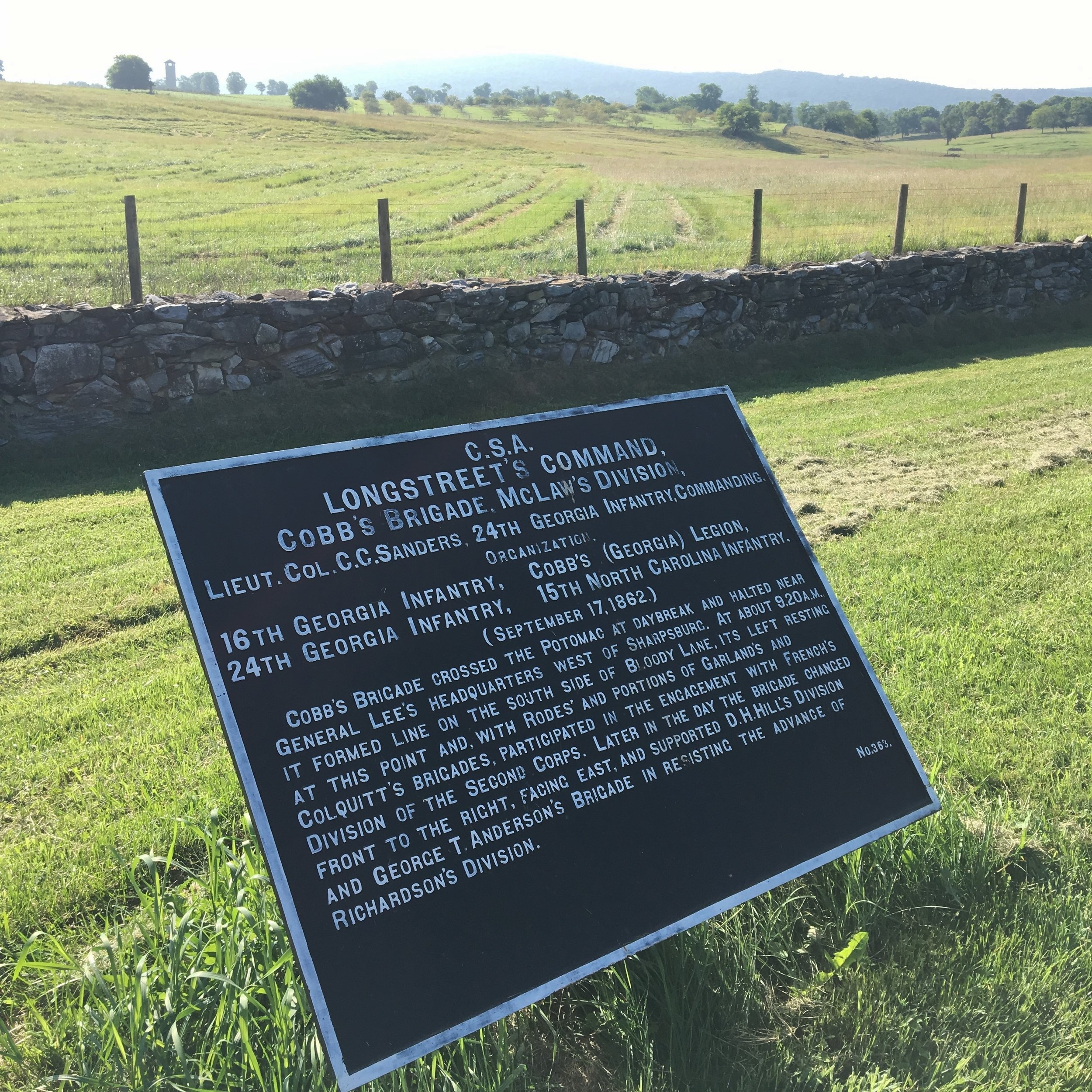
Bloody Lane, Antietam National Battlefield Park

Bloody Lane, Antietam National Battlefield Park

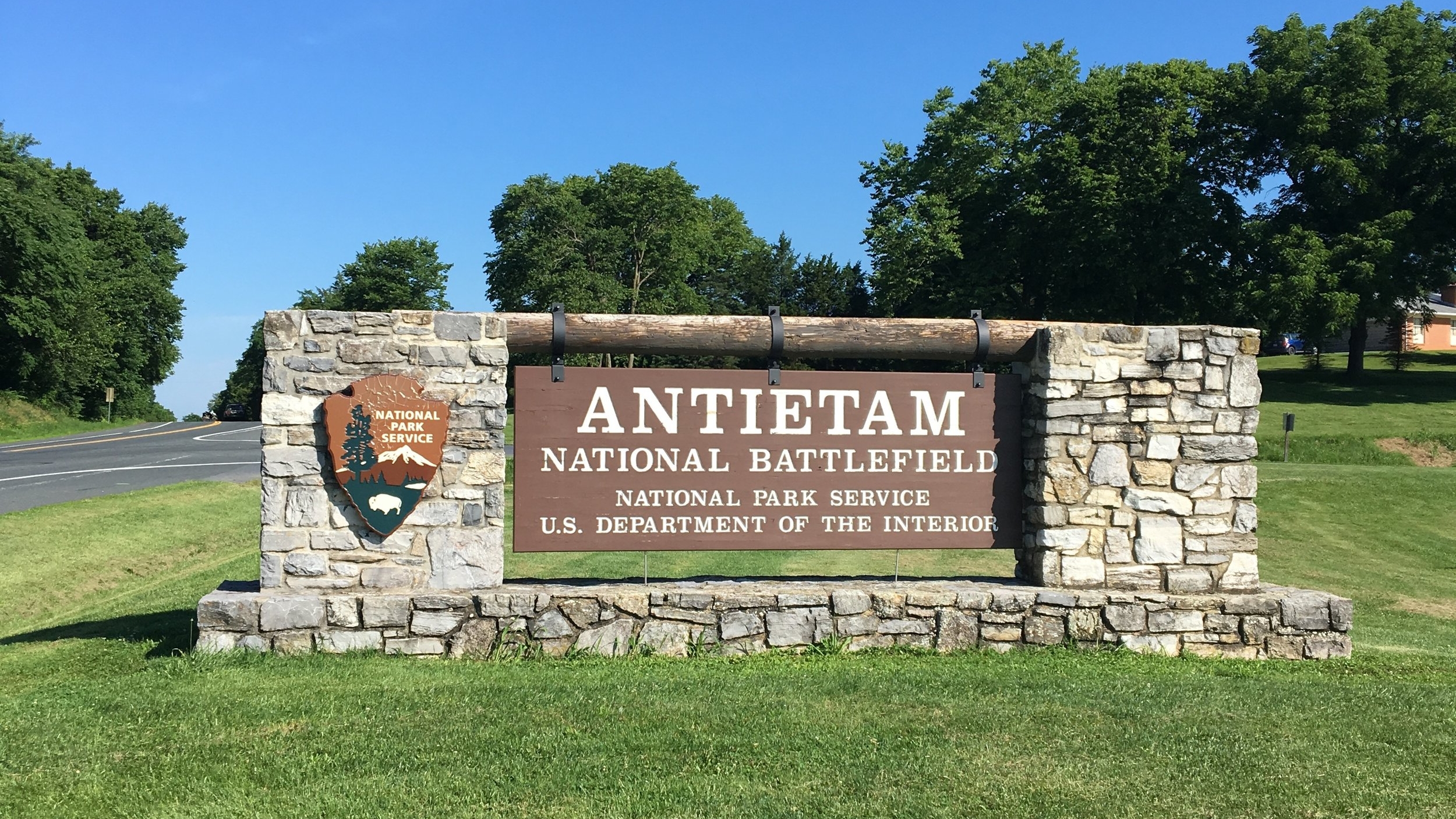
Friday I got to visit Antietam National Battlefield Park for the first time. Despite my interests, studies, and profession, this is only the fourth Civil War battlefield I've been able to visit, after Gettysburg (twice), Kennesaw Mountain, and Griswoldville. (I could count Atlanta, but that battlefield is buried beneath Jimmy Carter Boulevard now.) 

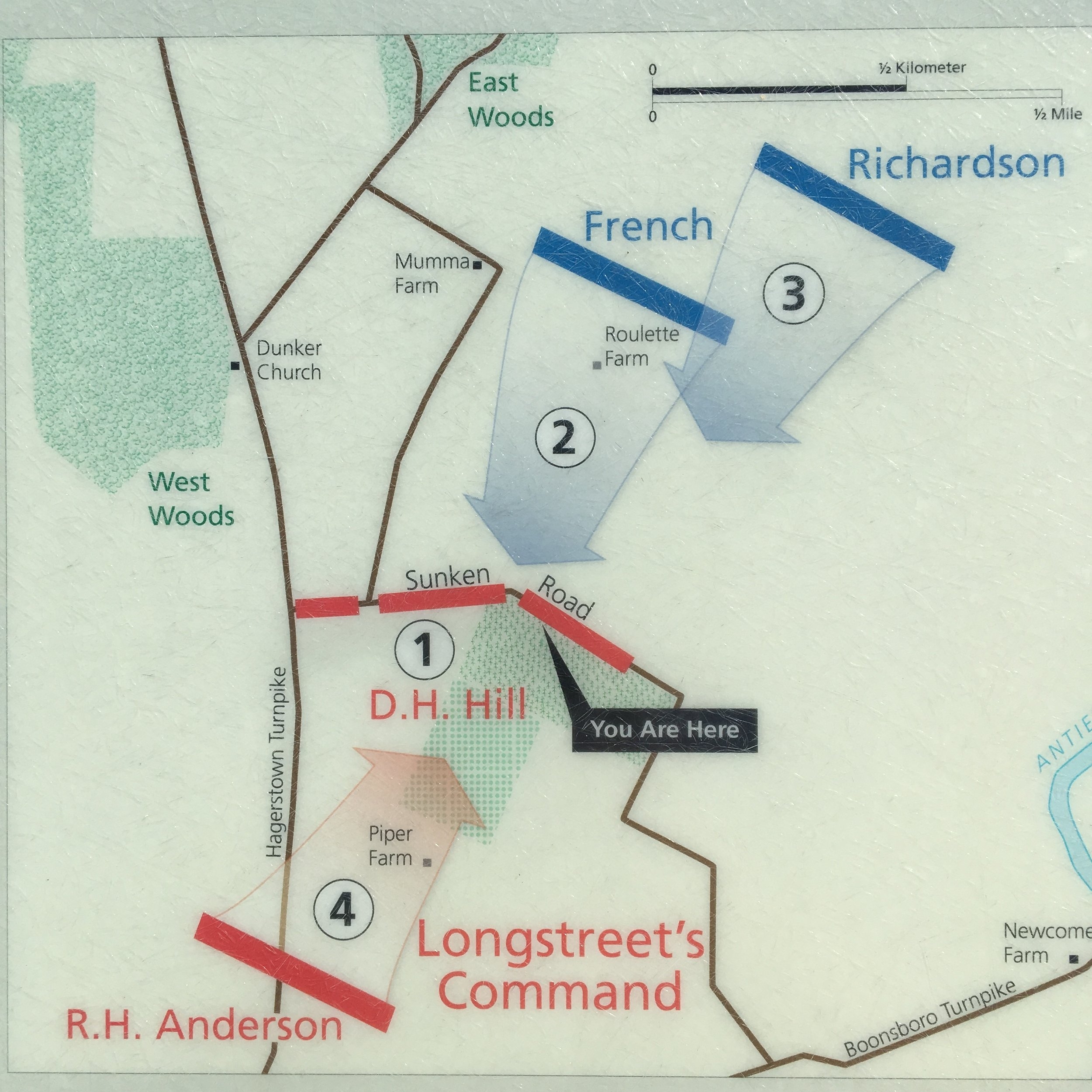
The Battle of Sharpsburg, a.k.a. Antietam, occurred September 17, 1862 in the fields surrounding Sharpsburg, Maryland. Major General George McClellan, the Union commander of the Army of the Potomac, having accidentally acquired a copy of Confederate General Robert E. Lee's marching orders for his invasion of Maryland and Pennsylvania, moved to confront Lee while his army was divided. Lee drew his army up around the town of Sharpsburg, where a few bends of the Potomac River created a defensible position. McClellan attacked, and his troops kept up pressure on Lee all day, but the battle proved indecisive. McClellan refrained from attacking the next day and Lee was able to escape across the river into Virginia. 

Two things make Antietam significant: First, it is the bloodiest single day in American military history. 23,000 men were killed and wounded in just twelve hours of combat. Second, as Antietam was the closest thing to a victory the Union had achieved in the east up to that point, the battle offered President Lincoln, hitherto an advocate of a limited war to preserve the union, an opportunity to expand the war's scope and put extra economic pressure on the Confederacy by announcing the Emancipation Proclamation, which would theoretically liberate all slaves in areas still under Confederate control if the war were not ended by January 1, 1863. This was not actually a popular move, especially since further disaster awaited the Union armies later that year.

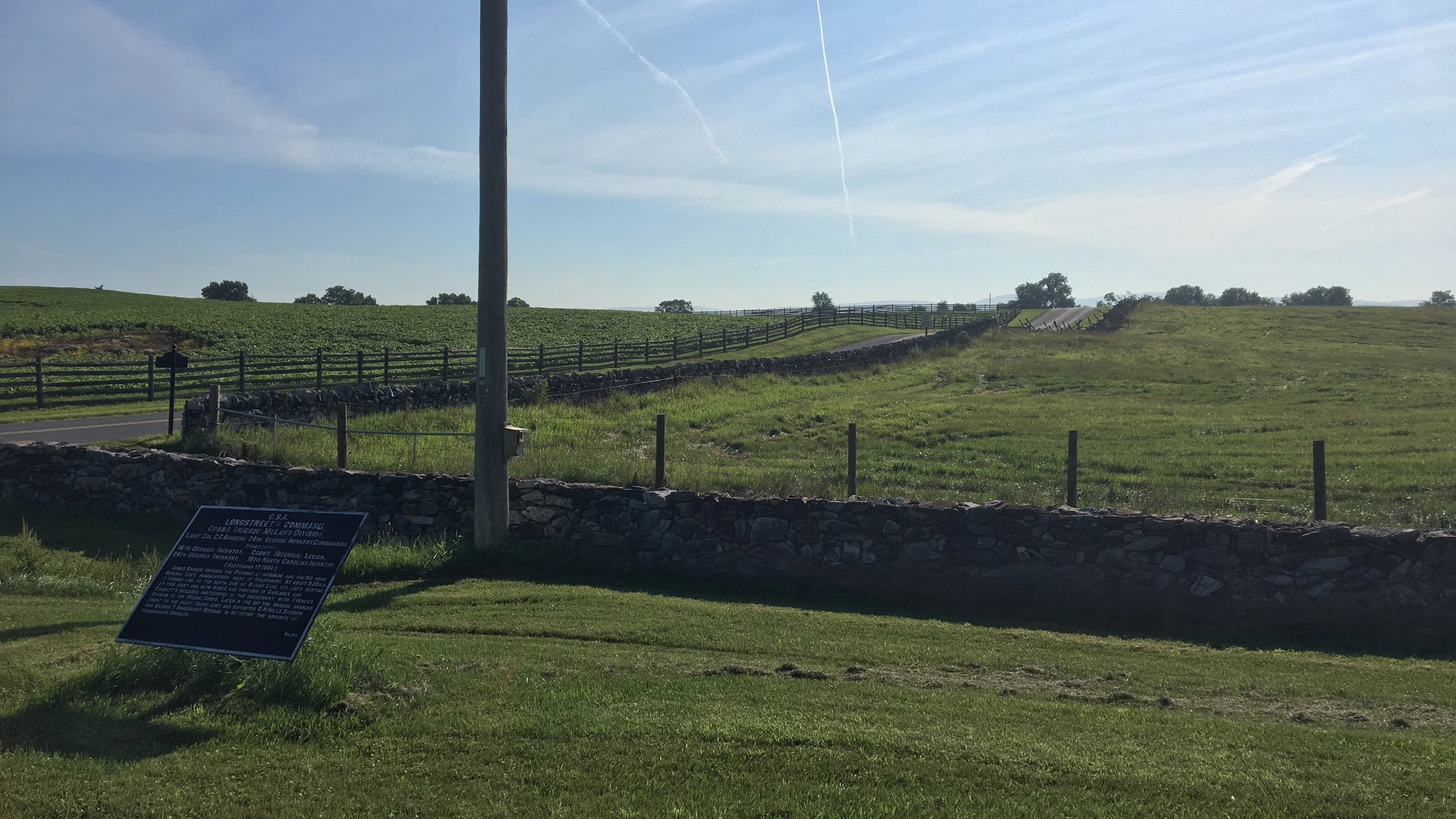
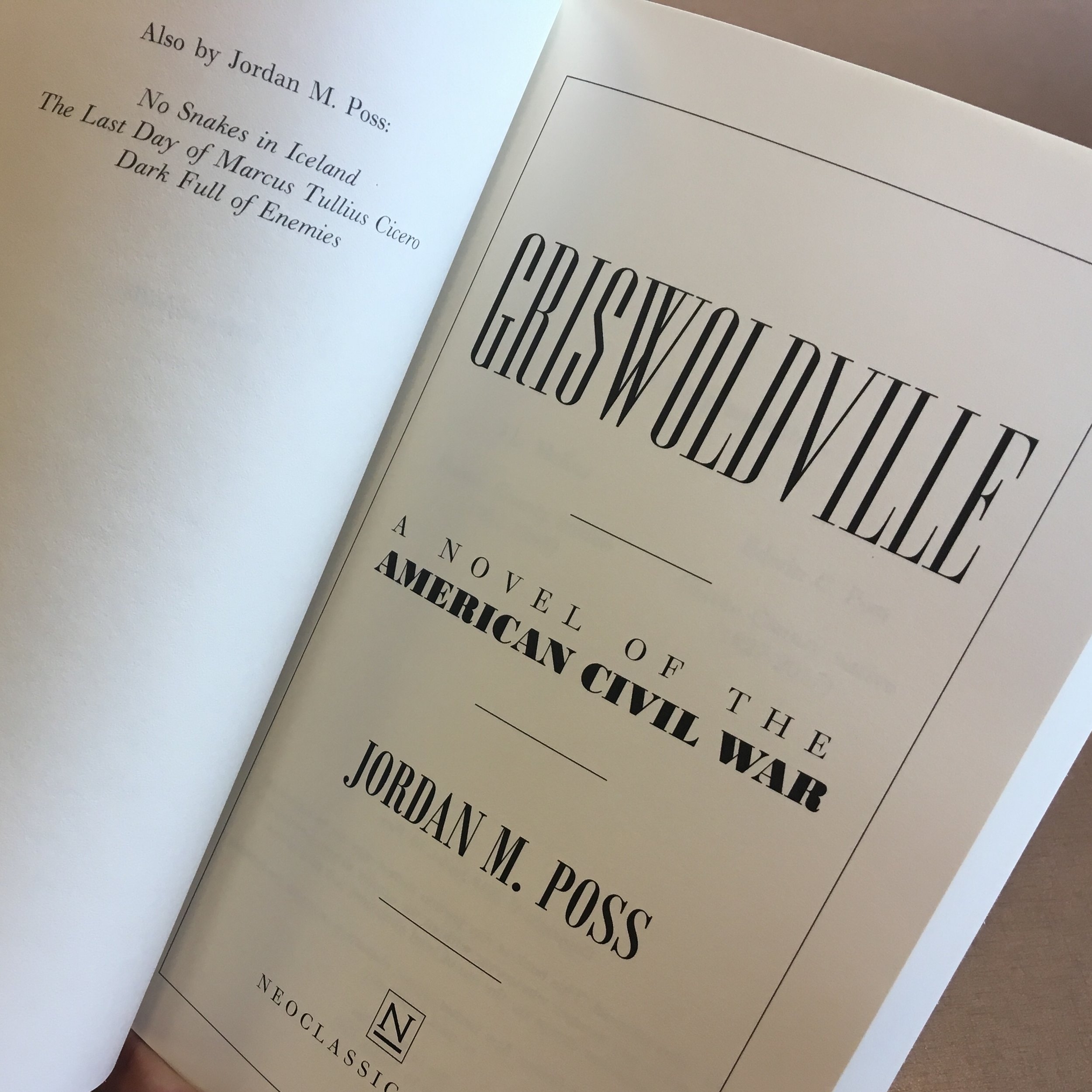
I arrived before the visitors' center opened and the first spot I walked to was the western end of Bloody Lane, where the 24th Georgia Volunteer Infantry deployed in support of Colquitt's Brigade during the battle. Among the privates of the 24th's Company E, "Rabun Gap Rifles," was Abraham Lafayette Keener, an ancestor on my maternal grandfather's mother's side. Abraham has a small role to play in my forthcoming novel Griswoldville.

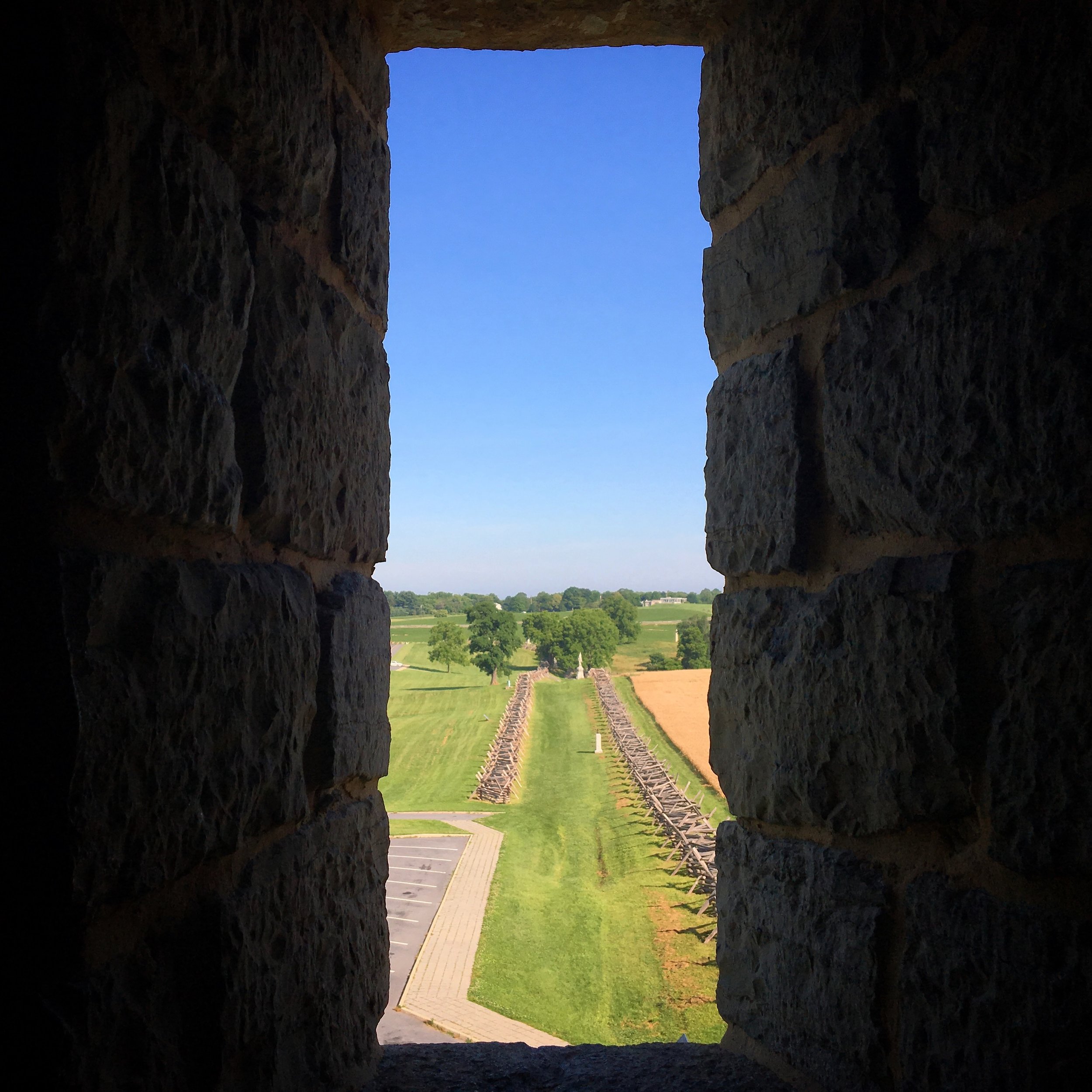
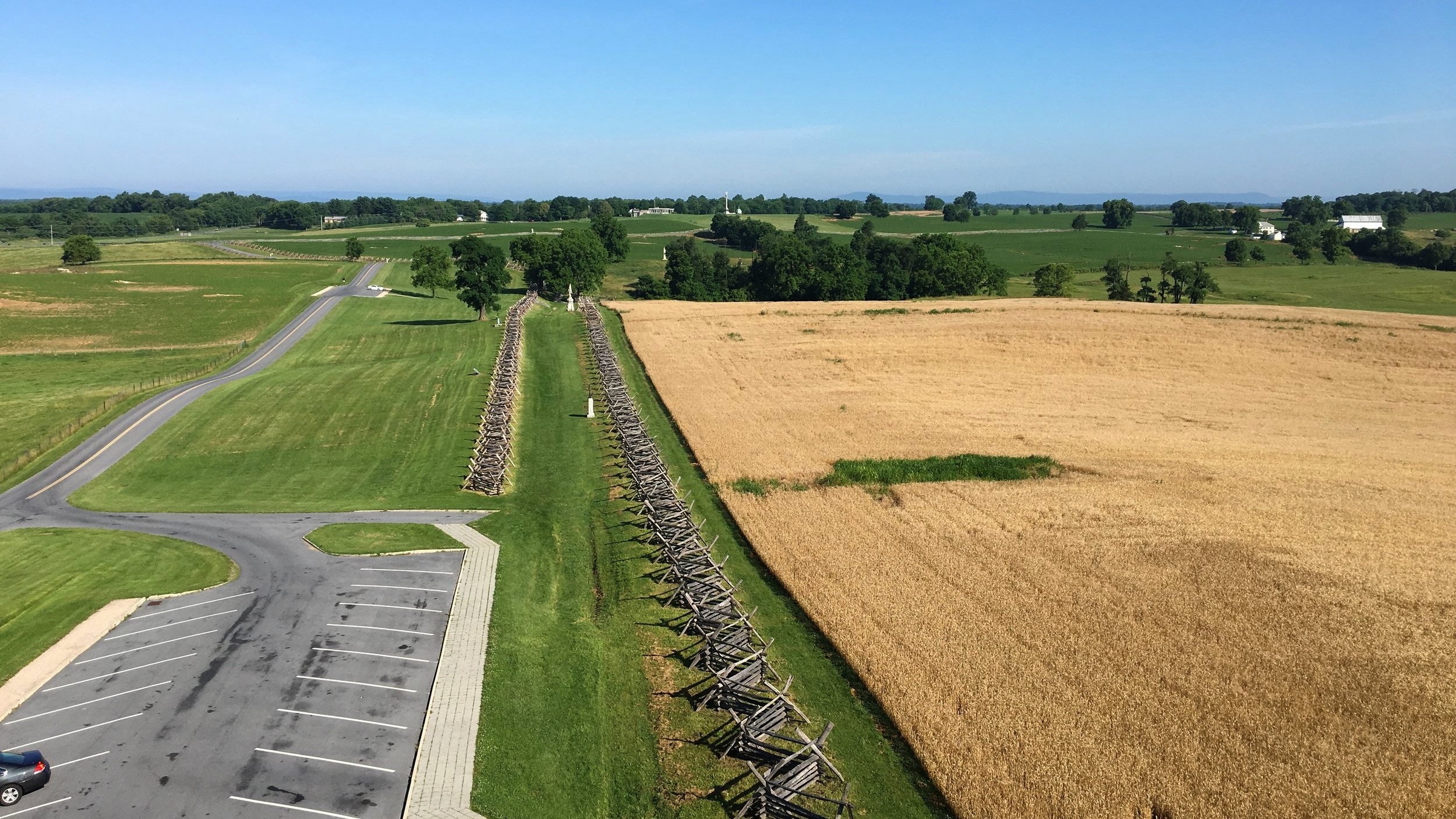
I walked the length of Bloody Lane to the park observation tower. Bloody Lane was a deeply rutted road at the time of the battle--natural entrenchments for the defending Confederates under D.H. Hill. Despite repeated assaults by much larger Union forces, Hill's men held out for nearly four hours. During that time, over 5,000 men were killed and wounded along that stretch of road. The Confederate dead lay three deep in a few places.

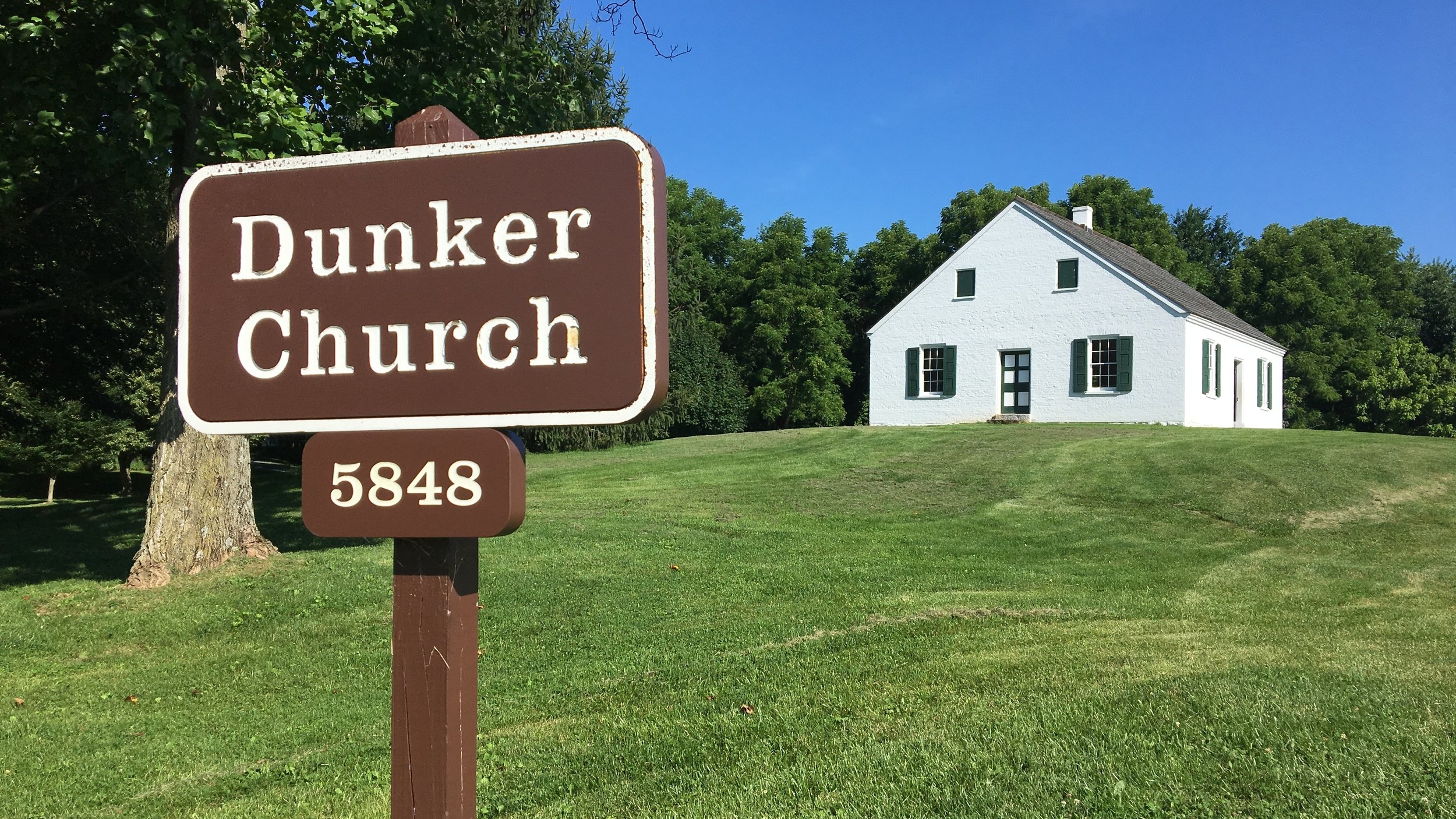
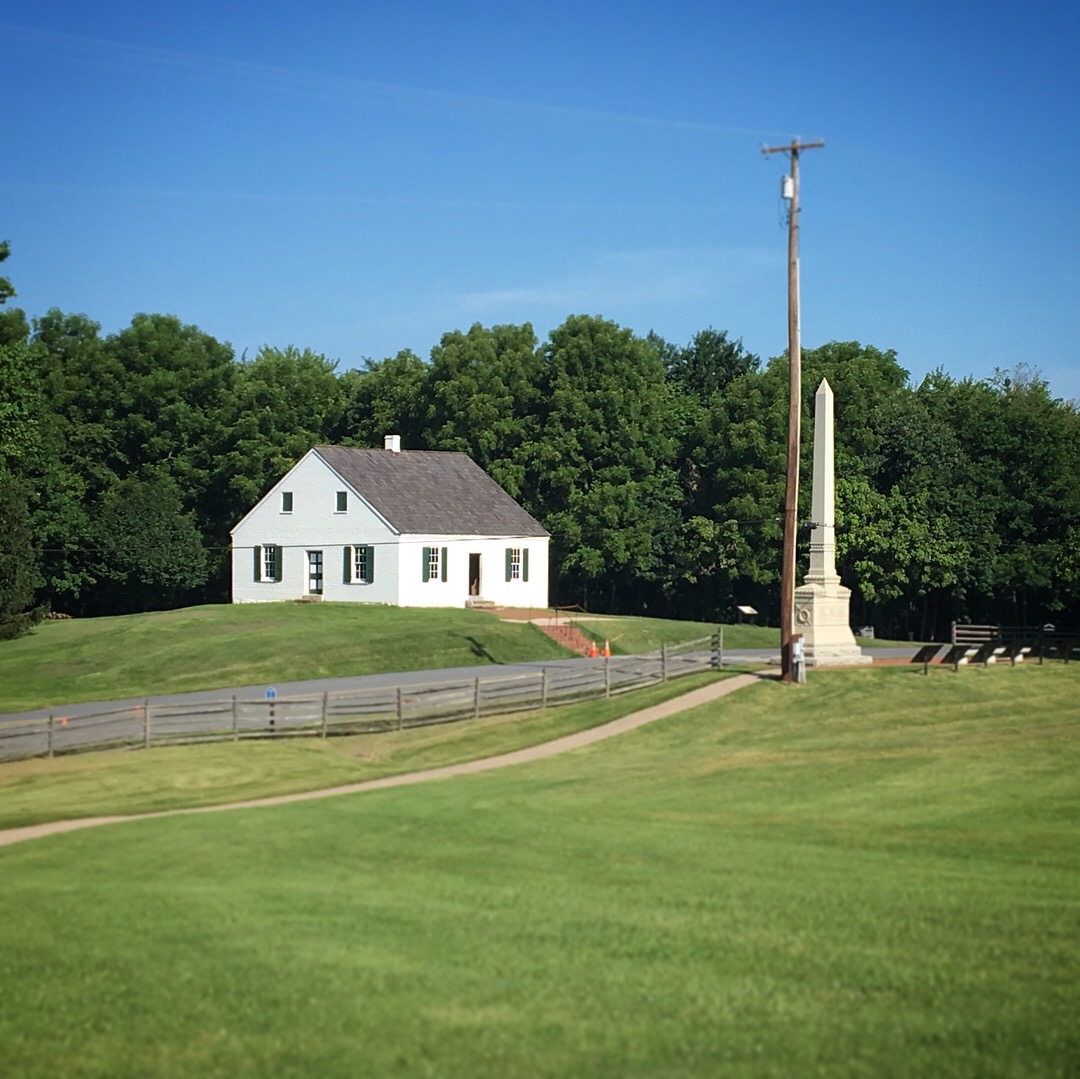
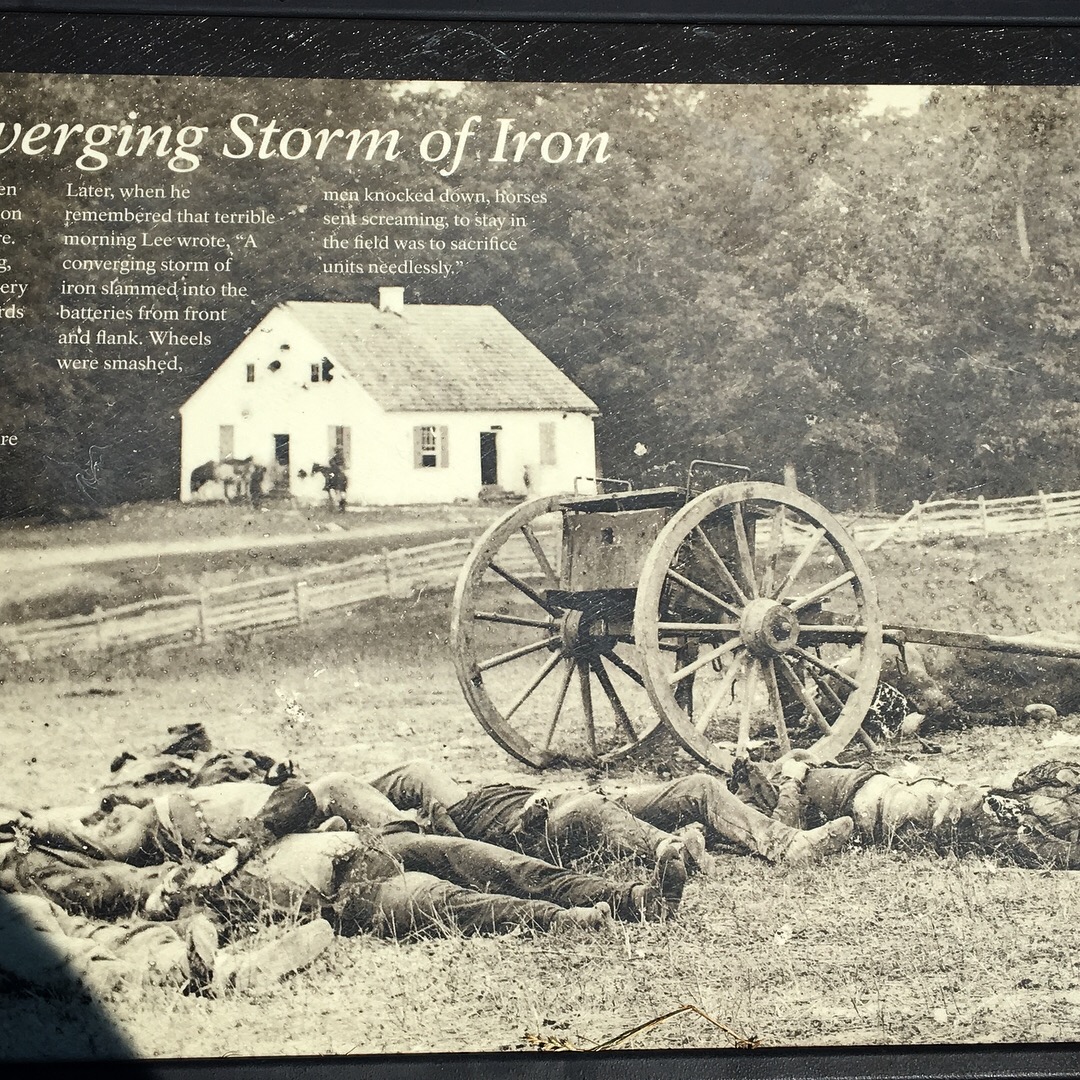
After climbing the observation tower I walked to Dunker Church, scene of some early fighting and maneuvering during the morning of the battle, and watched the excellent half-hour film available at the park visitors' center. I am, to be frank, usually underwhelmed by the films at national parks, but this one was produced to a high standard and featured dramatic and moving reenactments of some of the major events of the battle. I bought a DVD copy for use in the classroom.

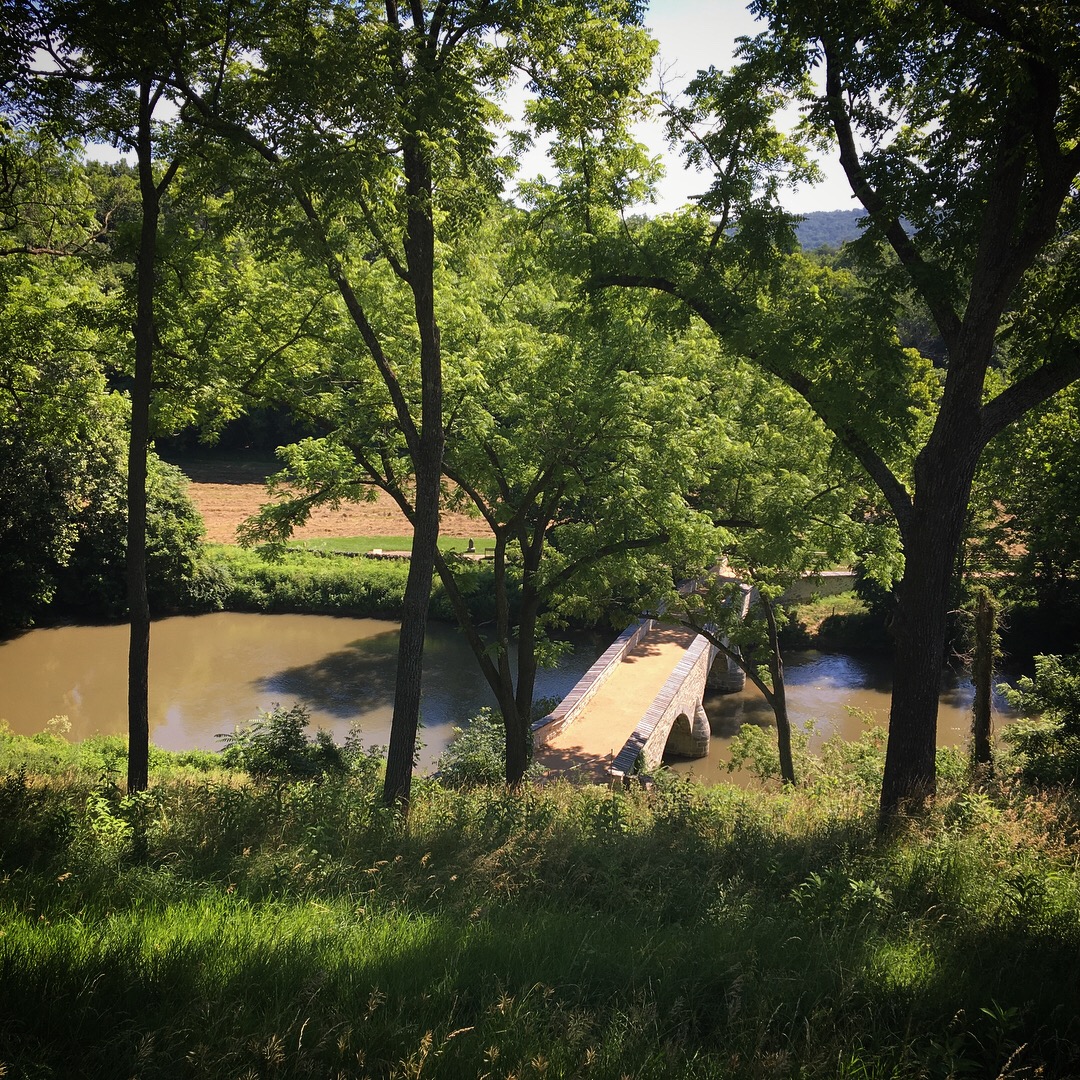
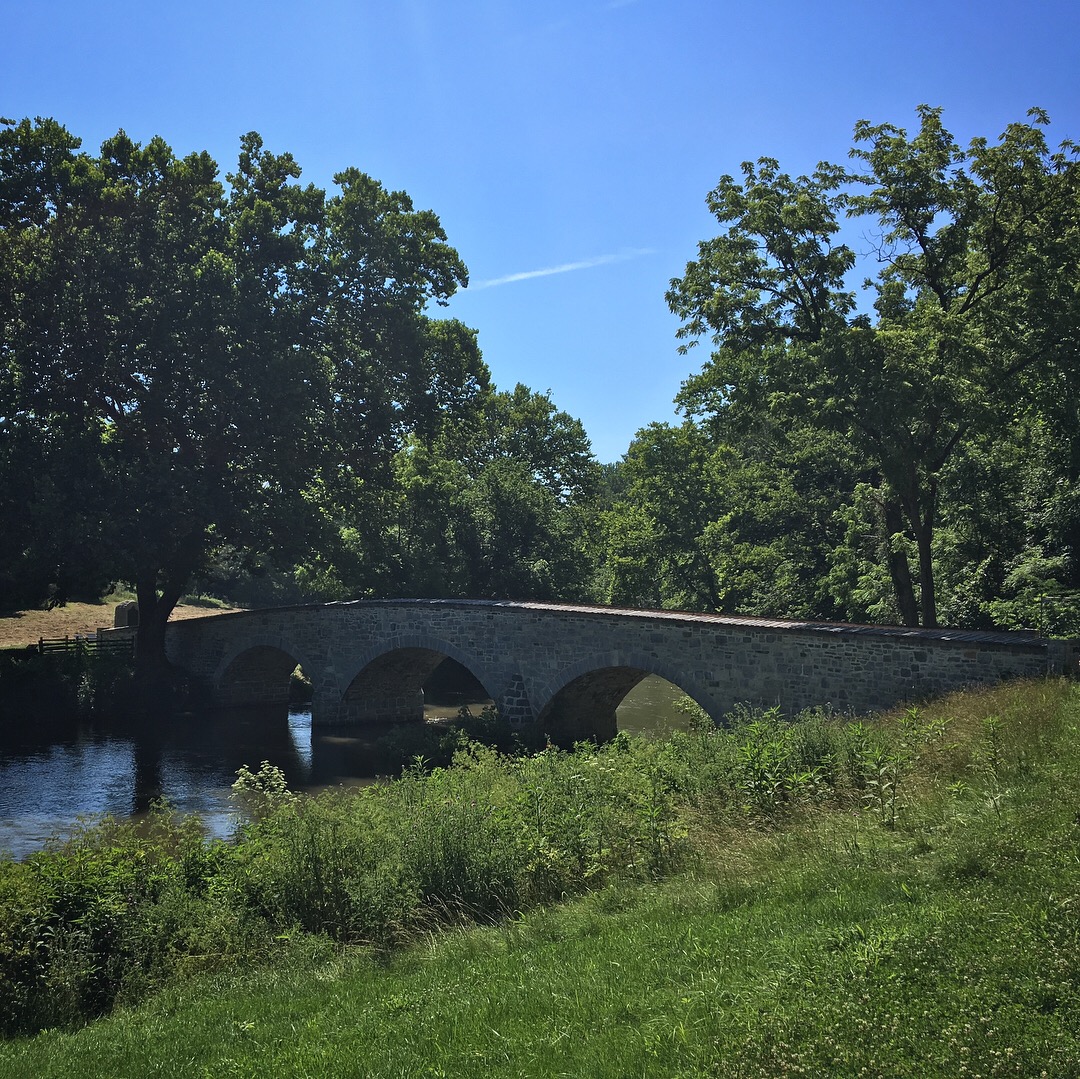
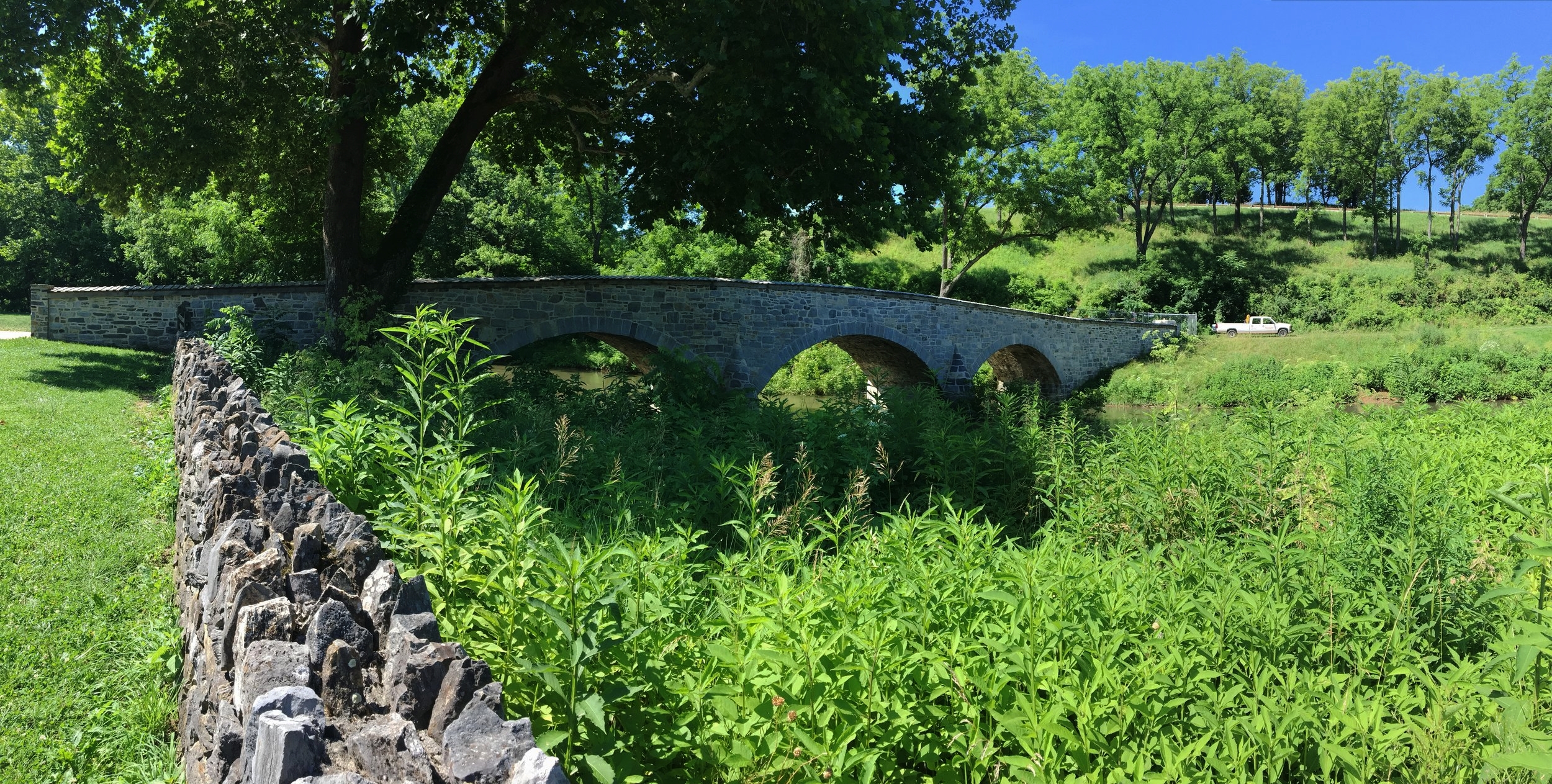
From there I drove to Burnside's Bridge to complete my visit. 

If you haven't visited Antietam, do so. It's an important site for Civil War history and the park is well-maintained and beautiful. Strikingly so. Walking around on a sunny, cloudless June morning, I found it hard to imagine all the death that occurred there. But it's important to try.

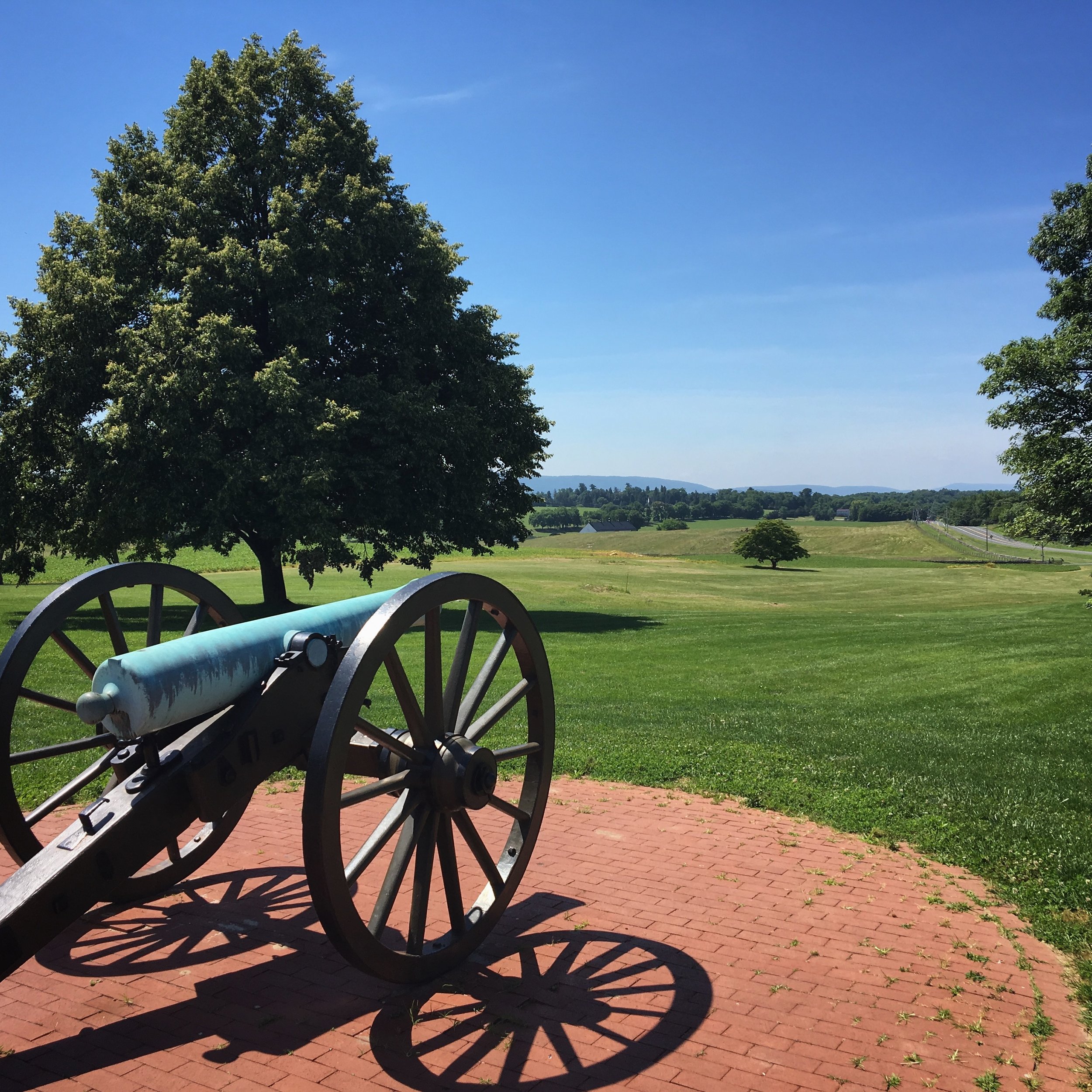
A gallery of the photos I took. I forgot my Nikon before I got on the road, but I hope my phone's camera suffices.
The penalty for ignoring two thousand years

Columns_Pompeii_Italy.jpg
 
The penalty for ignoring two thousand years is that you get stuck in the last hundred.
 

The Paris Review has shared an interesting piece from their archives, an undated letter between Donald Hall, their first poetry editor, and founding editor George Plimpton. The subject is poetry, and while the discussion suggests the mid- to late-1950s very specifically, Hall makes points about art, sincerity, and fakery that are still timely. Most striking is his assertion that you can't produce good art without attending to the tradition you find yourself in. From near the end of the letter:

You must understand that art is nothing to these men, nor history. The penalty for ignoring two thousand years is that you get stuck in the last hundred. They have the specious present of the barbarian. Art in this century demands a sense of the tragic dignity of history. These poor bastards are stuck in the last third of the 19th century and I swear they don’t know that anything happened before that. 

Belong to a tradition. Embrace it. You'll produce better art and not "get stuck in the last hundred years," an eternal provincialism that will render you irrelevant faster than any particular subject matter could.

That line on "the penalty for ignoring two thousand years" is wonderful. But as far as penalties go, even being stuck in the last hundred years is probably optimistic now. Even my sincerest, hardest working students, who come to me so profoundly ignorant of the past, are often stuck in the last five. 

Naturally, C.S. Lewis's introduction to St. Athanasius's On the Incarnation came to mind, as it so often does when I try to encourage people to read the old stuff. Making a point broadly similar to Hall's, Lewis writes that

Every age has its own outlook. It is specially good at seeing certain truths and specially liable to make certain mistakes. We all, therefore, need the books that will correct the characteristic mistakes of our own period. And that means the old books. All contemporary writers share to some extent the contemporary outlook . . . The only palliative is to keep the clean sea breeze of the centuries blowing through our minds, and this can be done only by reading old books. Not, of course, that there is any magic about the past. People were no cleverer then than they are now; they made as many mistakes as we. But not the same mistakes. They will not flatter us in the errors we are already committing; and their own errors, being now open and palpable, will not endanger us. Two heads are better than one, not because either is infallible, but because they are unlikely to go wrong in the same direction.

See also my thoughts from a few weeks ago on the value of studying the past, complete with two thousand year-old references to Polybius and Cicero.

Hall died last week aged 89. 

A Map of the Heart: the Icelandic sagas on the CBC

iceland glacier.JPG

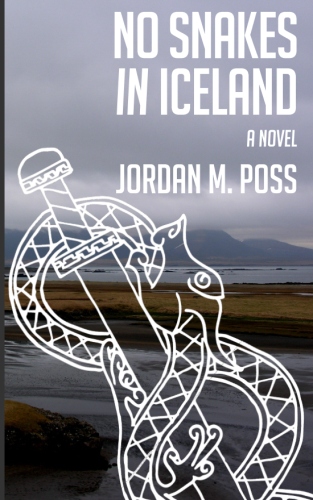
On my drive back from Georgia this weekend I listened to a two-part podcast series from the CBC on the Icelandic sagas, "A Map of the Heart." Part I provided some background on the settlement of Iceland during the Viking Age and the culture of the people who lived there, as well as where the sagas came from and how well they reflect that culture. The second part recapped some points from the first and spent a lot of time on an in-depth look at Egils saga, the story of Egill Skallagrimsson, one of the greastest works in the saga literature and one of the inspirations for my novel No Snakes in Iceland

I hope there will be more, because there are so many other great sagas—among my other favorites are Gisli Sursson's Saga, The Saga of Grettir the Strong, and Njal's Saga—and these two episodes were excellent. The CBC being Canadian, I hope they're working their way toward covering the Vinland sagas; those are fascinating bits of history.

You can listen to Part I here and Part II here. They're worth your while, especially if you've not yet had an introduction to the sweeping, dramatic, but deeply local and personal world of the sagas.

Chesterton on arguing

From GKC's Illustrated London News column, March 9, 1929: 

 
People generally quarrel because they cannot argue. And it is extraordinary to notice how few people in the modern world can argue. This is why there are so many quarrels, breaking out again and again, and never coming to any natural end.
 

Chesterton relished debate, and enjoyed deep and lasting friendships with a number of people diametrically opposed to his beliefs. Unsurprisingly, the difference between argument and mere quarreling is a topic he returned to over and over again.

From What's Wrong with the World, published nearly two decades before the above quotation: "If you attempt an actual argument with a modern paper of opposite politics, you will have no answer except slanging or silence." From his Autobiography, published after his death in 1936, reflecting on his younger brother Cecil, who died in World War I: "I am glad to think that through all those years we never stopped arguing; and we never once quarreled." And, as an aside:

 
Perhaps the principal objection to a quarrel is that it interrupts an argument.
 

Food for thought. Chesterton, as usual, being relevant from beyond the grave.

A good visit with The Front Porch Show

Last week I had the pleasure of joining Aaron, Tombstone, and Just Jeff for two segments of their Front Porch Show, the weekly podcast about everything. Click through to listen at their website, or one of the several podcasting services they air on including Spotify and iTunes, or see the embedded Stitcher link below. We talked about historical movies—what makes them good, what makes them bad—my books, and especially what the life and death of Cicero can teach us about virtue in politics today (with all due caution, of course). Had a great time. Thanks for having me on the show!

Words of warning

From The Whig Interpretation of History, Butterfield's must-read 1931 historiographical essay:

 
[T]he chief aim of the historian is the elucidation of the unlikenesses between past and present . . . It is not for him to stress and magnify the similarities between one age and another, and he is riding after a whole flock of misapprehensions if he goes to hunt for the present in the past.
— Herbert Butterfield
 

Or, in the oft-repeated saw of L.P. Hartley, "The past is a foreign country; they do things differently there." For an example of the "flock of misapprehensions" a present-minded investigator can run into, see my Historical Movie Monday post on Kingdom of Heaven.

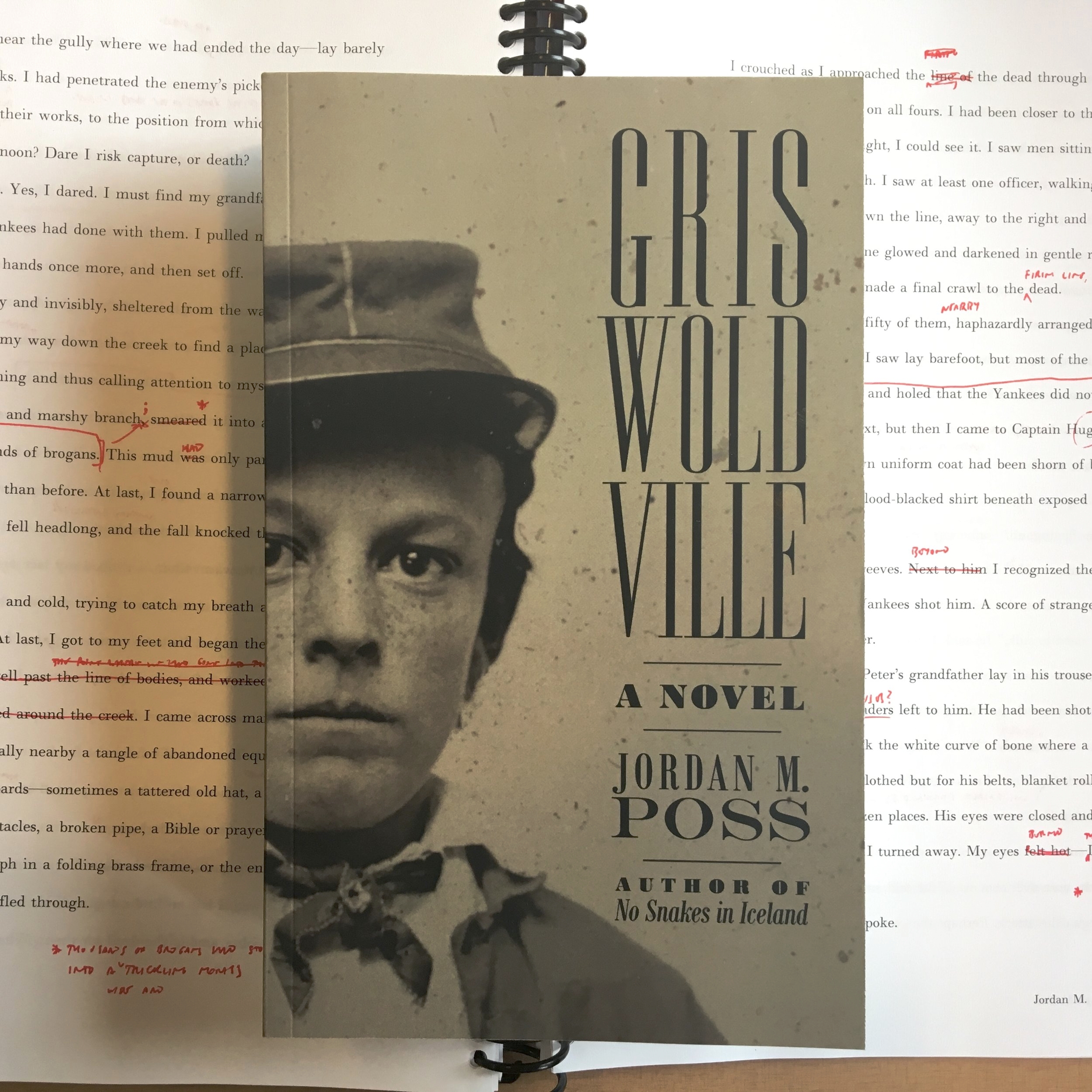
Presenting: the cover of Griswoldville

griswoldville cover 2.jpg

This summer has proven unexpectedly busy. If you listened to my guest appearance on Impolitic Podcast last week, you'll remember that Historical Movie Monday has taken a bit of a hiatus. It will return, but each post is time consuming to research and write and in addition I'm teaching summer classes for the first time in four years, spending the weekends hustling back and forth on various family vacations, and—not insignificantly—I've been working hard to complete revisions on my latest novel.

And the revisions have been going well! So today I'm pleased to present the cover of my soon to be released novel Griswoldville

The story unfolds over the course of the Civil War, as a young boy and his family slowly adjust to the absences of fathers and uncles, the pinch of inflation and government requisition, and finally service in the militia. The description of the novel from the back cover: 

Madison Co., Georgia, 1864—14-year old Georgie Wax has spent the three years since his father left for the war looking after the family farm. WIth his mother and young brothers, Georgie and his grandfather Lafayette "Fate" Eschenbach have brought in the crops every fall, slaughtered the hogs every winter, and kept the farm running as the faraway war stretches on longer and longer and his father seems ever farther and farther away.

But when the enemy reaches their own state, Georgie and his grandfather are called up to the militia to protect Georgia against the invaders. Drilled mercilessly, mocked for lack of experience, and put to work at manual labor, Georgie finds war isn't the adventure he imagined it to be. Only with Atlanta fallen and the enemy on the move will Georgie,  Fate, and their fellow Georgia militiamen find a chance to prove themselves and save their homes from destruction—at a railside factory town called Griswoldville.

The novel should be available before the end of summer. I'm pretty excited about this one, and I hope y'all will be, too. Stay tuned for more announcements! 

A good visit with Impolitic Podcast

Last week I was honored to be invited onto my old classmate Paul Matzko's Impolitic Podcast. Paul's show offers up "friendly arguments" between a libertarian (himself) and a socialist (his co-host, Sean). Paul asked me (a conservative) to substitute for Sean this week and we had a fun, freewheeling conversation about my books, historical fiction, World War II as "the Good War," Charles Portis, conspiracism, the Babylon Bee, and the soft censorship of the internet age. 

You can listen by subscribing to Impolitic on iTunes, clicking through to the Impolitic blog, or listening via Stitcher below. Enjoy, and thanks again, Paul!

Uproot evil in the fields you know

medieval plow.jpg

Alan Jacobs, a scholar and writer I particularly admire, has an interesting post on Tolkien and the possibility—nay, inevitability—of healing in his works. In discussing the way that "all victories over evil are contingent and limited and temporary . . . and the forgetfulness of all the races of Middle Earth tends to reinforce those limits," Jacobs quotes Gandalf from near the end of The Lord of the Rings

 
Other evils there are that may come; for Sauron is himself but a servant or emissary. Yet it is not our part to master all the tides of the world, but to do what is in us for the succour of those years wherein we are set, uprooting the evil in the fields that we know, so that those who live after may have clean earth to till. What weather they shall have is not ours to rule.
— Gandalf in The Return of the King
 

This is a frank, humble assessment of what people can do about evil. This has been on my mind a lot recently, both for longstanding reasons of my own and as I've been working over a post on the resilience of Marxism as an ideology despite its body count. Even beyond Marxism or leftism generally, people of all political persuasions tend to take concrete political or legal problems and abstract and universalize them immediately—as step one of the debate. All problems therefore become existential problems. All mistakes or disagreements become signs of fatal bad faith. All problems become problems that threaten the very fabric of the universe. You don't have to look far to find examples.

Gandalf's words here also happen to harmonize with a theme I've been mulling over for a work-in-progress: a novel about guilt and original sin, "a story with no good guy" as I've described it to a friend. What do to about evil—not just "systemic" evil, the activist concern du jour, or evil as it exists in the whole world, but evil in my own life? That's uncomfortably close. But a humble recognition that we can't solve all problems is the first step to solving some of them. Rather than aiming high, at unachievable universalist goals, find an evil in your neighborhood, something you can actually do something about, and face it. Or, as Admiral McRaven and Jordan Peterson have put it recently, "Make your bed" and "Clean your room."

Finally, also harmonizing with Gandalf, is this challenge from St. Paul that has goaded and bothered me since I rediscovered it last fall:

 
Make it your ambition to lead a quiet life: You should mind your own business and work with your hands, just as we told you, so that your daily life may win the respect of outsiders and so that you will not be dependent on anybody.
— I Thessalonians 4:11-12
 

Jacobs concludes his post by reflecting on how "tricky" Gandalf's vision is: "neither . . . succumb to despair (like Denethor) nor indulge the presumptuous delusion that one’s victories can be everlasting, but rather . . . live, simply, in hope." If there's a more necessary countercultural message today than "lead a quiet life," "mind your own business," "uproot evil in the fields you know," and "live in hope," I don't know what it is.