“Disproving” Lord of the Flies
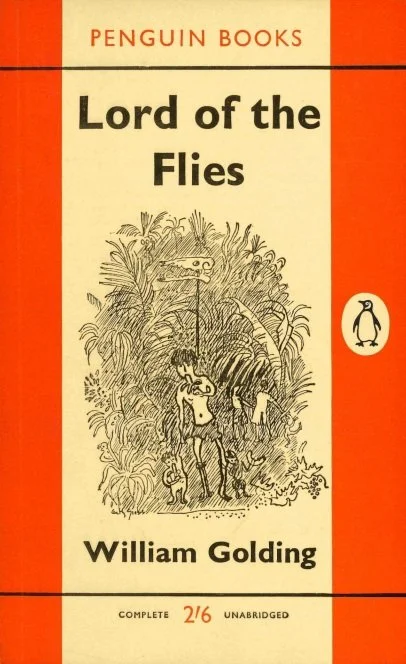
/I’m not sure how many people would say William Golding’s Lord of the Flies is one of their “favorite” novels, but its persistence on school reading lists and its resulting popular familiarity has given it a lot of influence. It has also attracted criticism, especially from those who, in our sentimental age, find it too “depressing” or “pessimistic.” The deeper critics will sometimes invoke a Rousseauian image of man as “basically good” and condemn Golding for his refusal to acknowledge this. I don’t have much to say in response to this; whether you believe in original sin or not, if you can’t see the potential in yourself to succumb to Lord of the Flies-like pressures, Golding’s book is the medicine you need.
A popular recent line of critique I’ve seen—especially on social media—is that a real-life incident from shortly after the book’s publication “disproves” or shows it to be unrealistic. In 1965, six Tongan schoolboys ran away from their boarding school in a stolen boat and, after being stranded on a desert island, lived fifteen months. They cooperated in finding food and shelter, established orderly routines, and, when finally discovered by a passing Australian fisherman, were in good health and high spirits.
I first recall seeing this argument around the time this Guardian piece came out in May 2020 (rough timing for someone flogging a “hopeful” history of mankind), but it comes up in cycles on Substack. It is usually presented as decisive, a gotcha for Golding and all the doomers who like his novel or at least found it compelling food for thought.
This is a weak argument and a poor comparison. The situation of the Tongan castaways is only superficially similar to Golding’s scenario—basically the only parallels are the school-age boys on an uninhabited Pacific island. The scale and circumstances are fundamentally different.
Consider: in the real-life incident, six teenage boys from similar backgrounds who were already friends planned and voluntarily ran away from their school. They brought preexisting community and shared goals to the island with them. Both collaboration and negotiation occurred at the level of intimate friendship.
In Lord of the Flies, dozens of boys, only some of whom actually know each other, are thrown together by happenstance when their plane is brought down in an apparent nuclear war. Their ages vary much more, they come from different backgrounds—the class and regional difference evinced by Piggy’s pronunciation of asthma is a significant repeated joke—and the only bonds they share are either created deliberately after the crash, as in the friendship of Ralph and Piggy or the entire community itself, or small preexisting cliques, like Jack and his crew of choirboys. Loyalty to these groups has to be subordinated to the whole, competing interests debated and judged, and peace maintained between strangers and enemies.
Golding is quite clearly concerned with the artificiality of society, which, to rise above the level of a mere organic group of friends, must combine and coordinate multiple such groups. The island setting is both a spoof of Victorian Robinsonades, novels in which decent chaps effortlessly remake civilization on remote islands, and a jab at the Enlightenment “state of nature” idea that undergirded them—and modern optimistic critics of the novel.
There may be legitimate lines of criticism to explore regarding Lord of the Flies—although not regarding its craft or magnificent science-fiction atmosphere—or the philosophical assumptions and worldview Golding expresses in it, but this isn’t one. The real-life Tongan boys’ adventure, as fascinating and dramatic as it is, bears more similarity to Huckleberry Finn than Lord of the Flies.