Dialogue, dialect, and expectations
/Back at the end of last month I made a dumb joke on Substack that went viral. A classical educator I follow shared this meme, which he captioned “Finally, dealing with the real issues…”
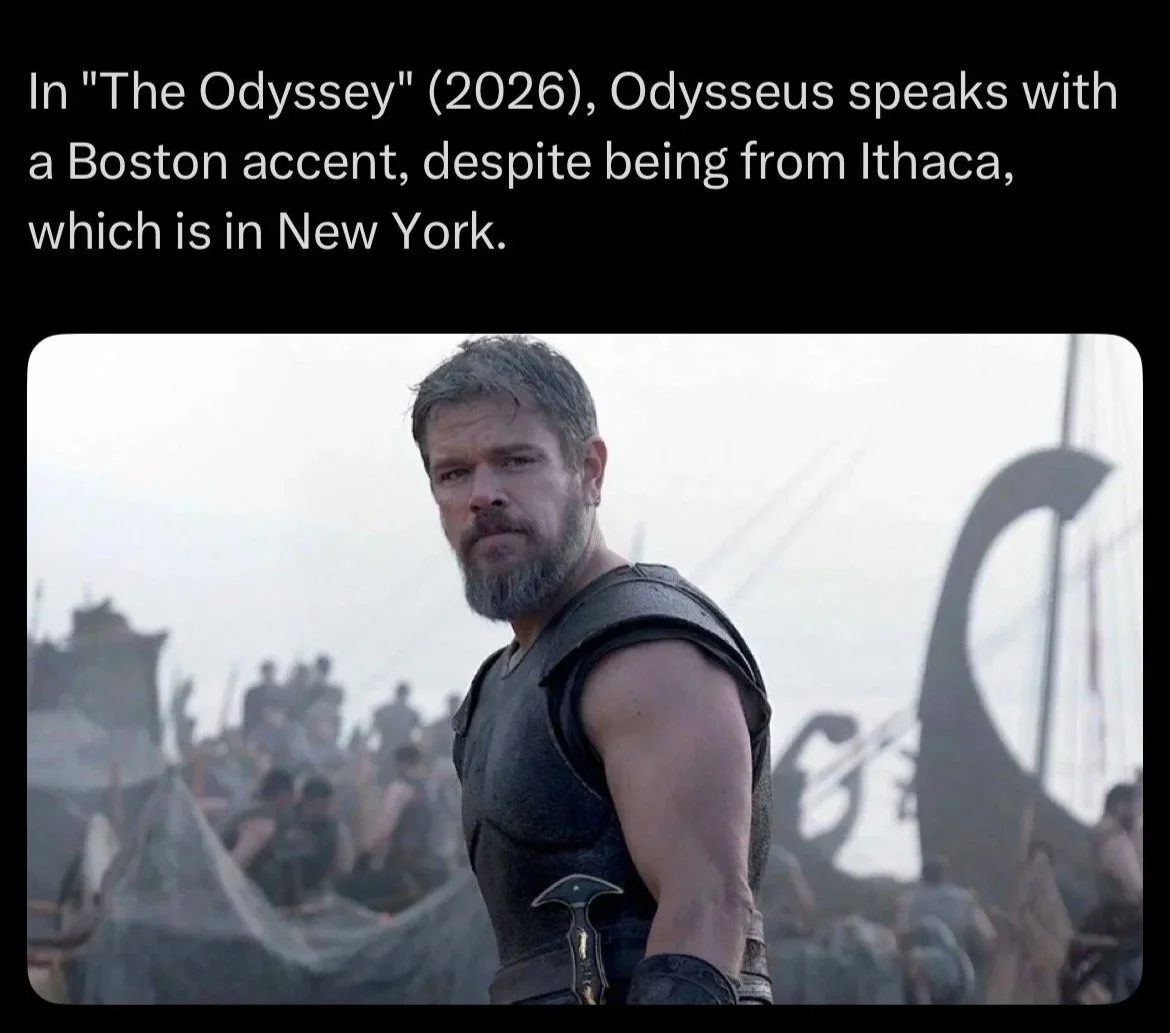
I restacked it and added, on the spur of the moment, “Muse, sing of a guy who was wicked smart…”
I don’t keep close track of my Substack analytics but I think this is now the most widely viewed thing I’ve shared on there. That was May 31st, and June is about to end and I still get multiple notifications a day that someone has liked it or restacked it or—the point of this post—commented on it. And the people commenting on it have made the same highly original joke over and over for a month. Maybe it’s already crossed your mind as you read my silly invocation above:
That should say “wicked smaht.”
I haven’t counted but I’ve gotten at least a dozen, maybe two dozen, versions of that joke. It’s actually given me cause to think, again, about writing dialect.
My abortive series of long-form posts on Elmore Leonard’s ten rules of writing ended with a single post about dialect. Leonard’s rule: “Use regional dialect, patois, sparingly.” After examining several long passages from different novels featuring different approaches to writing dialect, I arrived at six general guidelines, my personal approach to the problem. What I think is one of the most important is: “Keep phonetic spelling to a minimum, using it always to suggest a broader pattern that you don’t render.”
I have striven to follow this guideline, letting syntax and vocabulary suggest the way a character pronounces words—so that the reader hears it in his head—rather than spelling the pronunciation out. Heavy use of phonetic spelling becomes difficult to read, distracting, or, at worst, insulting to the dialect being rendered. But.
But sometimes some words are so distinctive to the way a dialect is spoken they become emblematic of that dialect. The result is that writing even a line of dialect speech that does not spell a distinctive word phonetically will be interpreted by the reader as a failure. An unforeseen pitfall, one I fell straight into.
In the 2004 film The Alamo, Billy Bob Thornton’s David Crockett only wears his buckskins and coonskin cap for what amount to PR appearances. When questioned by Jim Bowie about his hat later (“What happened to your cap? Crawl away?”), Crockett confesses to wearing it only because of his popular image: “People expect things.”
A useful point to keep in mind when writing dialect. Even as a joke.