Discarded
/
My office is on the first floor of the building that contains the college library, which takes up the entire upper floor. The building is slated for renovation starting after Christmas, meaning the entire building will be gutted and rebuilt. The architectural drawings we’ve been shown are not recognizable as the same building. I hope it will be an improvement.
In the meantime, we’re slowly emptying our offices. I have four full-size bookcases full of books that I’m trying to evacuate a few diaper boxes at a time. Upstairs, the library is culling its stock.
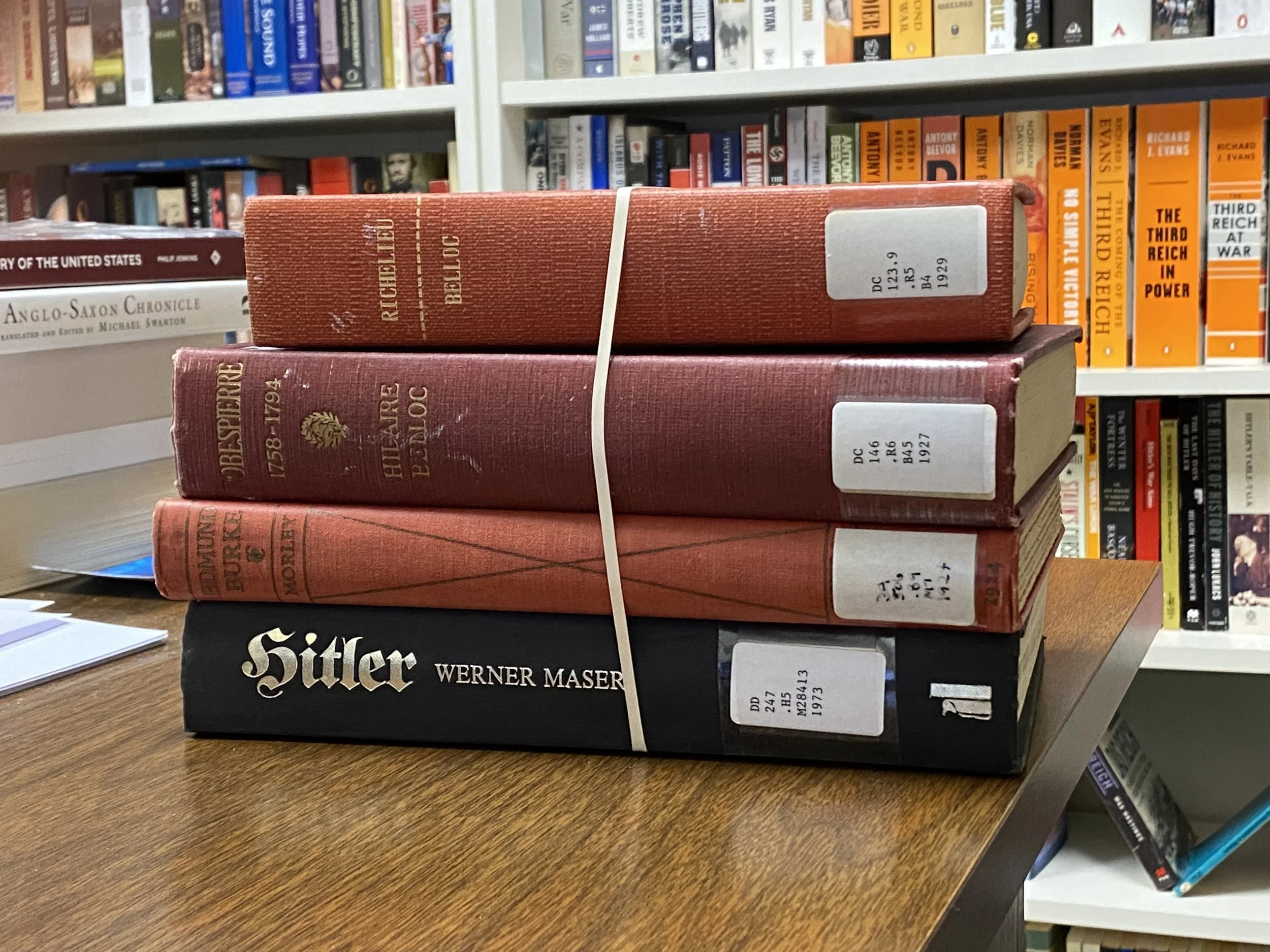
Last week they sent out an itemized list of books they’d withdrawn from circulation and made available free to whomever was willing to come get them. I put in a request for several and got these four:
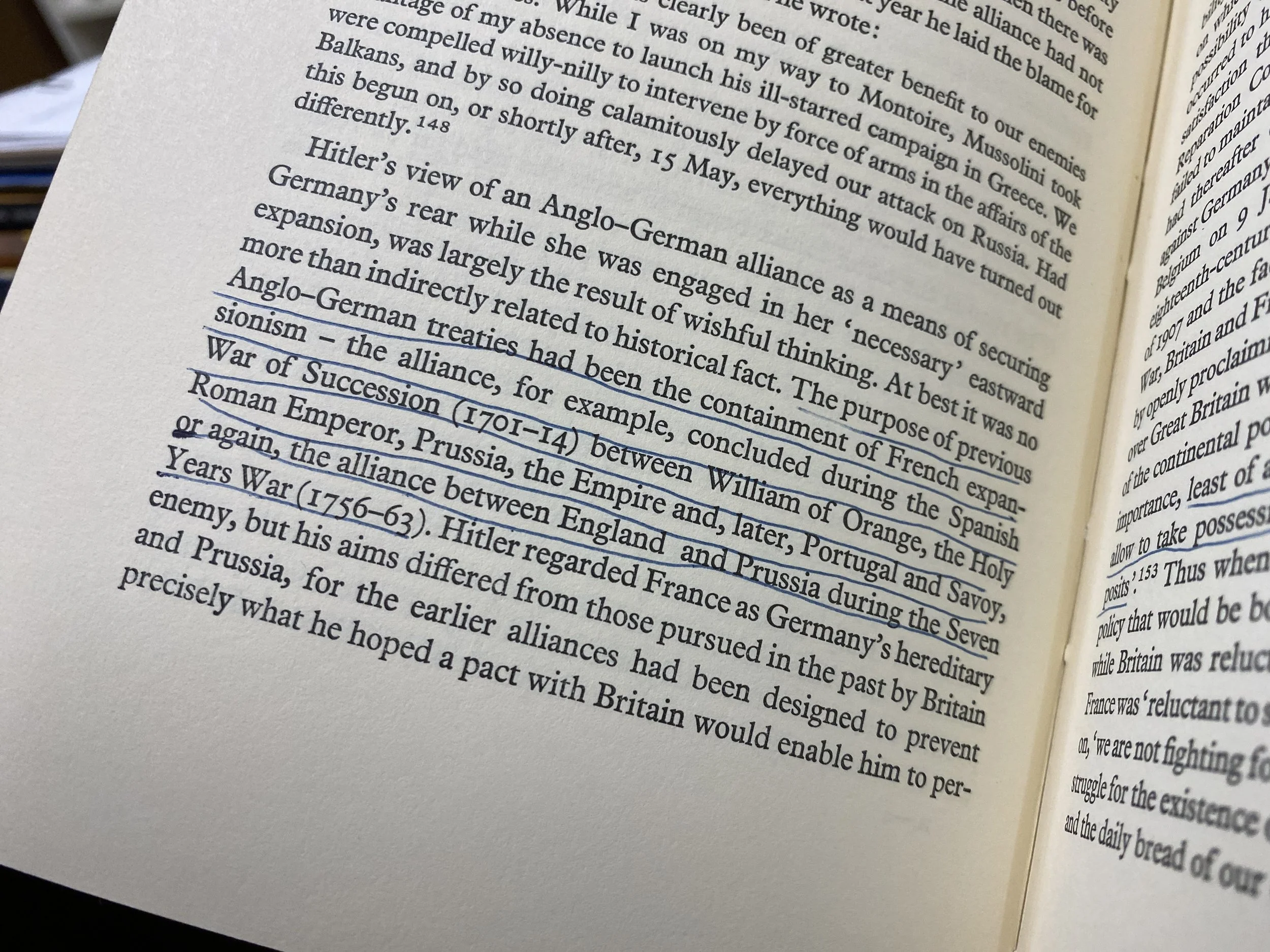
Hitler, by Werner Maser, trans. by Peter and Betty Ross
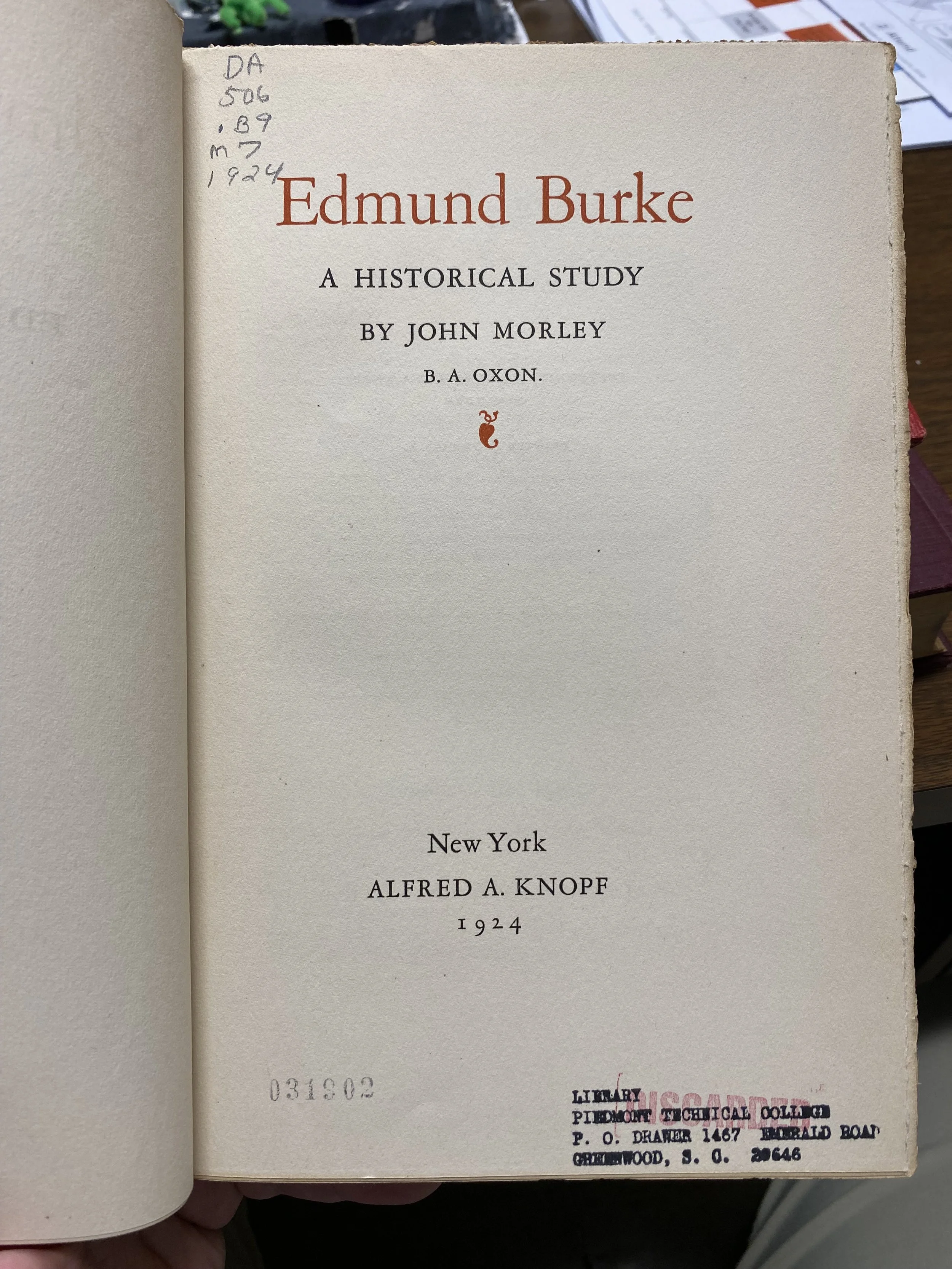
Edmund Burke: A Historical Study, by John Morley
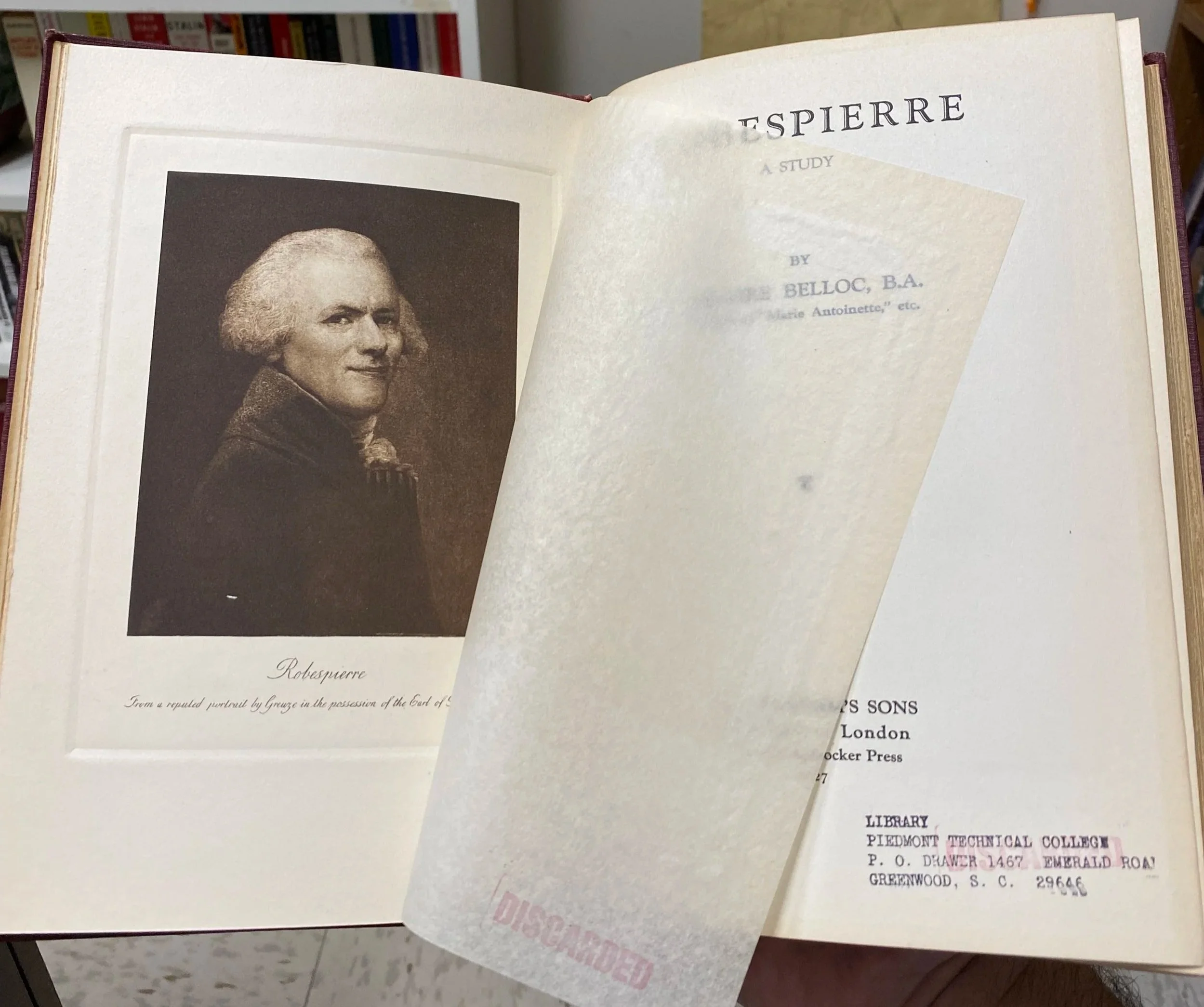
Robespierre: A Study and Richelieu: A Study, by Hilaire Belloc
I picked up Maser because I recalled him as one of the (many) subjects of the late John Lukacs’s The Hitler of History, which I wrote a bit about (here and here) when I was reading it five years ago. I looked Maser up in Lukacs again: indefatigable archival researcher who decisively put paid to several debated topics in the historiography but was apt to overrate his achievements, even a bit cranky. One thinks of Cicero boasting of saving the Republic. I’m glad to have a copy, though some past cad checked the book out and underlined a lot of passages throughout. I hope he got a good grade on his paper.
I was most excited about the two studies by Belloc. As much as I love Chesterton, I’ve read very little of Belloc and mostly know him by reputation. If he’s as pugnacious as people say, his perspective—hardcore traditionalist and reactionary (all adjectives meant as compliments)—on Robespierre should be bracing and enjoyable. These are nicely bound, too. “Beautifully got up,” as an older Brit might say. Robespierre includes the most flattering portrait I’ve ever seen of the Jacobin weasel, still protected by the original sheet of tissue guard.
The Burke book made me a bit melancholy. It’s a reprint of John Morley’s 1867 monograph. A preface clarifies that the publisher sought and obtained the rights to reprint the book because Morley’s perspective on Burke would be helpful, worthy to keep in print. Internet Archive has editions of the same work from 1888, 1893, and 1913. Morley died in 1923 and this reprint appeared a year later. It’s 102 years old. I shudder to think what would have been done with it if I hadn’t picked it up.
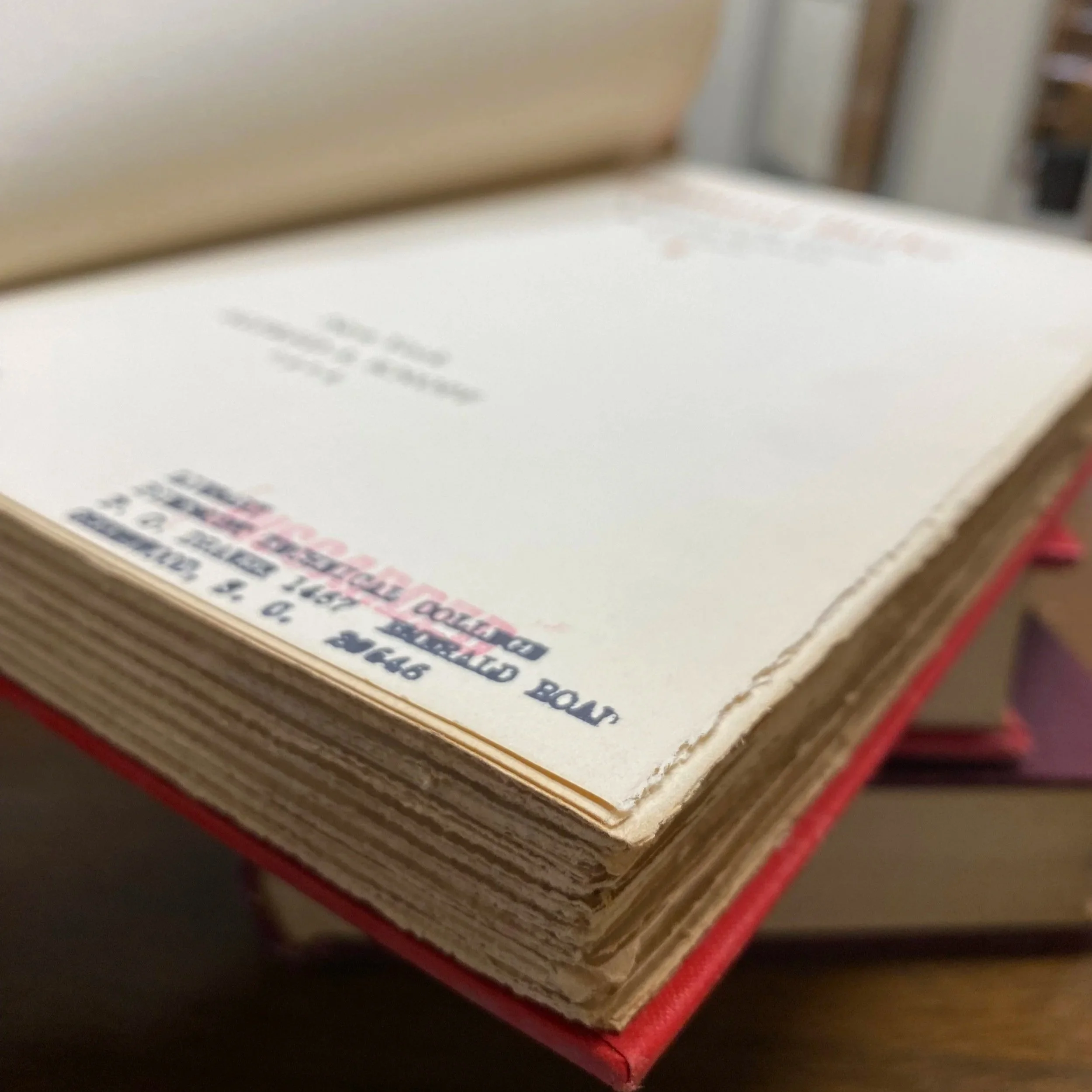
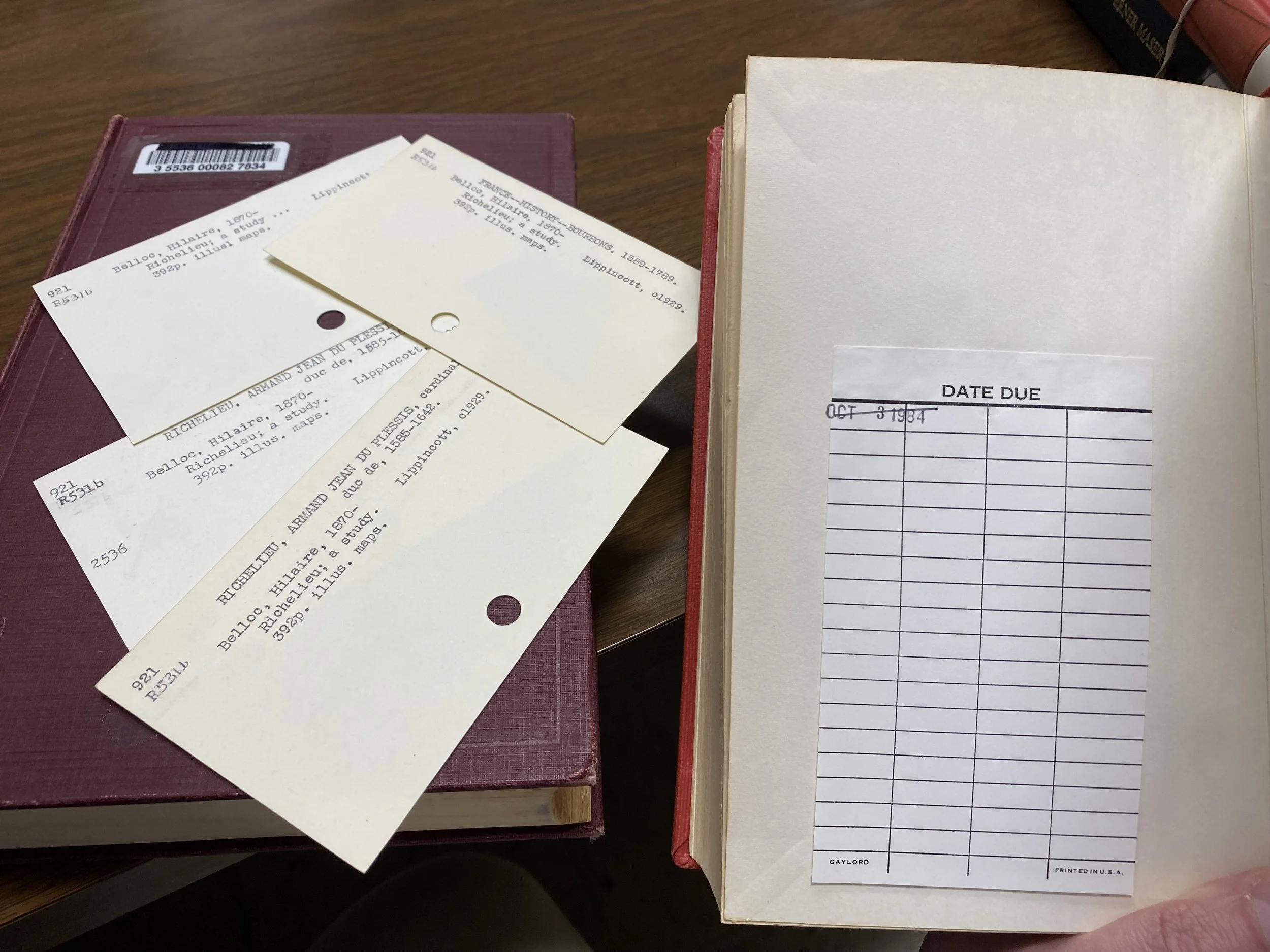
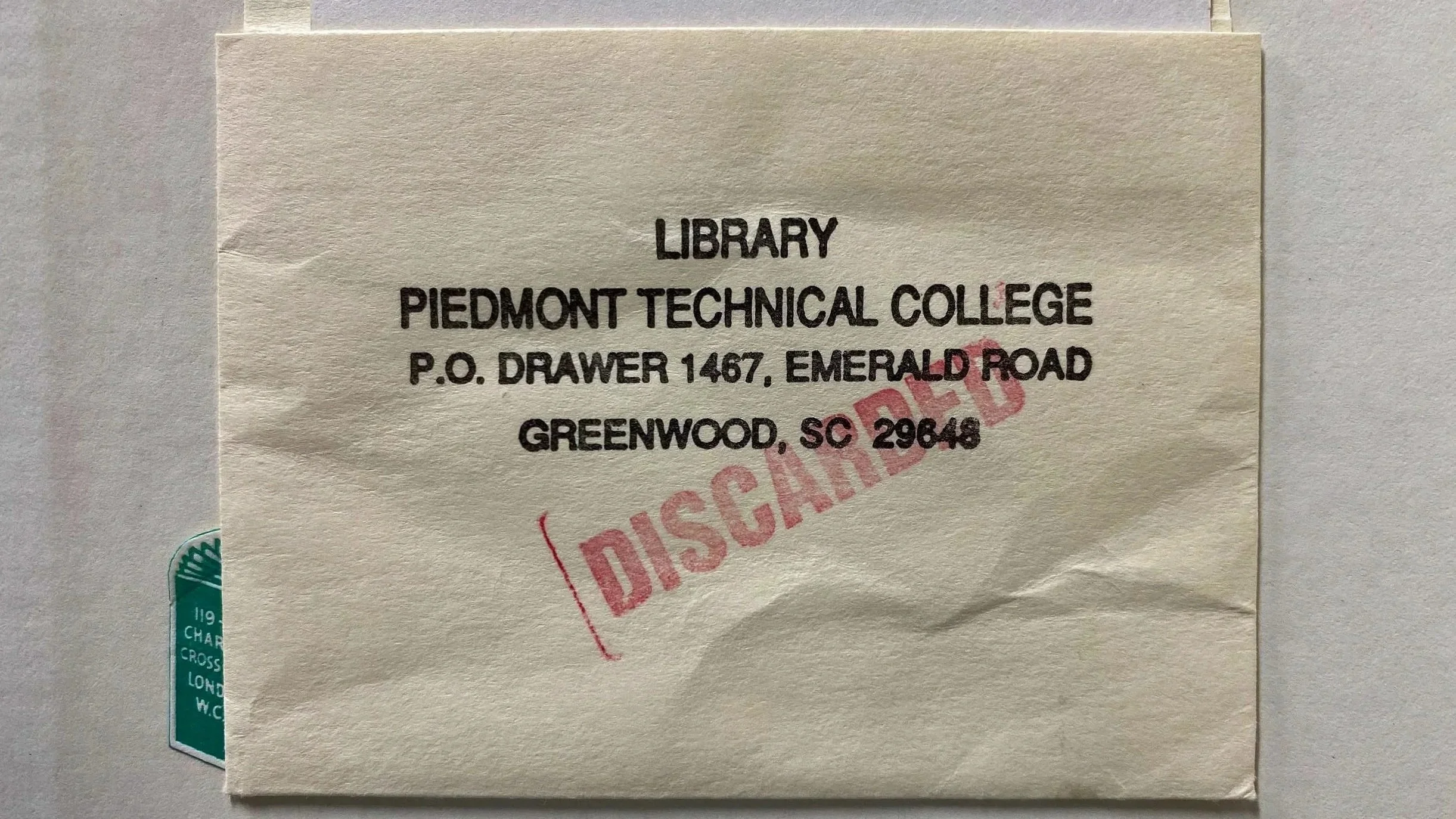
All four of them are blazoned all over with DISCARDED stamps, but still have most of their old-school library detritus: index cards, records of check-in and check-out pasted into the back flyleaf. I love this paraphernalia, and yet even this provokes melancholy. One of the Belloc volumes was last checked out when I was four months old. Now the library has decided it doesn’t need any of them.
It’s unclear to me what form the college library will take when it’s reconstituted in the refurbished building—though real libraries are still being built, more and more “libraries” are now “media centers” with vanishingly small numbers of actual books—but the volume of discards is alarming. (None of this should be construed as blaming the college’s excellent library staff; they’re responding to top-down and cultural changes just like we are.) I hope it’s just a fraction of the overall collection, but looking through the shelves of withdrawn and free-to-a-good-home books I saw a lot of good stuff, books I’d love to have on hand for future generations of students writing a paper, just browsing, or trying to find out more about something that piqued their interest in one of my classes.
But who am I kidding? I’ve been upstairs. The library is silent as the grave most of the time, and not out of the traditional respect. Extra-library enticements have failed: inviting stacks of boardgames and current magazines sit undisturbed, couches arranged for conversation sit empty. Even the study carrels are vacant. We all know where students go for study and research now, if they study and research at all.
It’s not the books so much that have been discarded, but the entire intellectual ecosystem. My copy of Morley’s Burke is freshly printed by comparison with the tradition the library represents. An institution that traces its lineage back to the collegium and the Benedictine scriptorium—if not yet further back to Roman archives and the great collection at Alexandria—is dying. These four are the fragments I have shored against my ruins.
I’ve never so hoped to be wrong.